
Advancing Safety Health and Wellbeing Exploring NIOSH Total
Advancing Safety, Health and Well-being Exploring NIOSH Total Worker Health® A Visit with Aspen’s Valley Health Alliance October 15, 2015 L. Casey Chosewood, MD, MPH Director, Office for Total Worker Health® National Institute for Occupational Safety and Health The findings and conclusions in this presentation have not been formally disseminated by the National Institute for Occupational Safety and Health, and should not be construed to represent any agency determination or policy.
Our Goals Today • An Introduction to Total Worker Health® • Seven Critical Strategies for Advancing Worker Health, Safety and Well-being • Explore specific issues for Colorado, Aspen and VHA • Rich discussion desired!
Seven Critical Strategies for Advancing the Health, Safety and Well-being of Your Workers


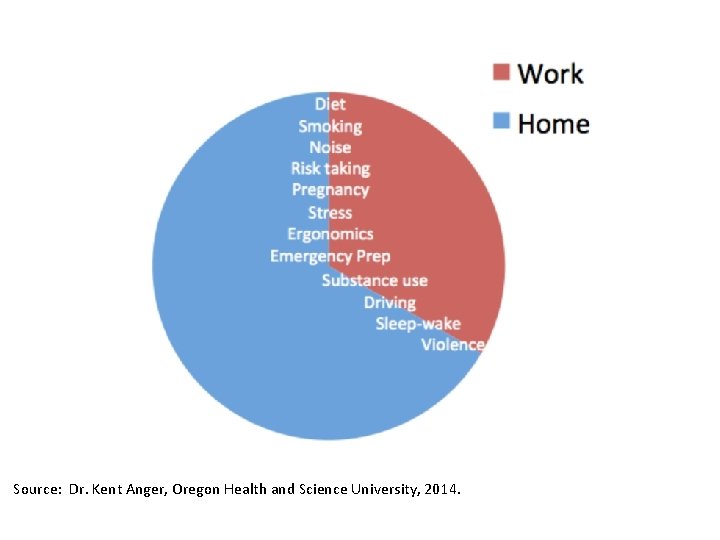
Source: Dr. Kent Anger, Oregon Health and Science University, 2014.
Critical Strategy #1 “Don’t under-estimate the connection between our health at work and our health away from work”

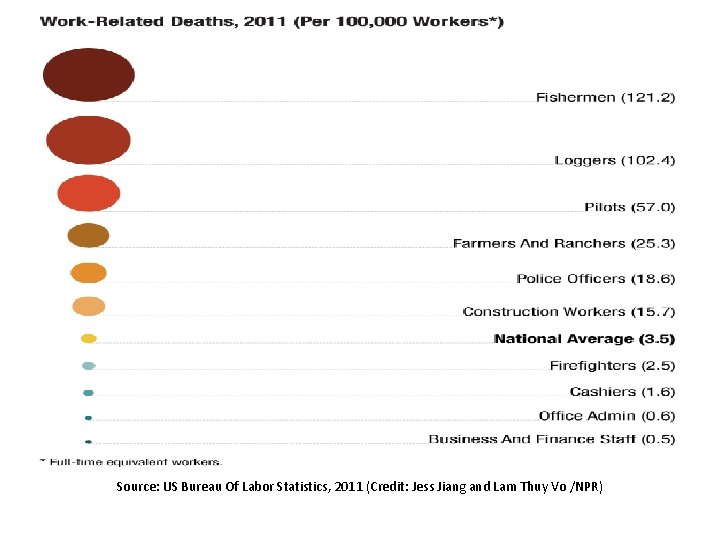
Source: US Bureau Of Labor Statistics, 2011 (Credit: Jess Jiang and Lam Thuy Vo /NPR)
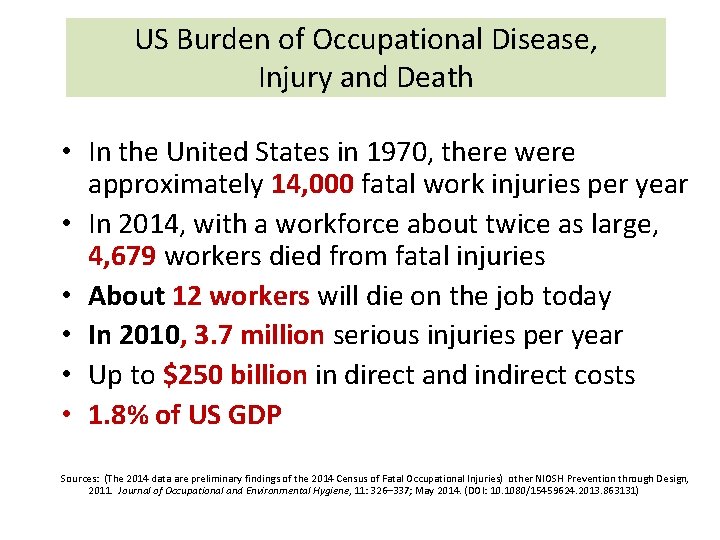
US Burden of Occupational Disease, Injury and Death • In the United States in 1970, there were approximately 14, 000 fatal work injuries per year • In 2014, with a workforce about twice as large, 4, 679 workers died from fatal injuries • About 12 workers will die on the job today • In 2010, 3. 7 million serious injuries per year • Up to $250 billion in direct and indirect costs • 1. 8% of US GDP Sources: (The 2014 data are preliminary findings of the 2014 Census of Fatal Occupational Injuries) other NIOSH Prevention through Design, 2011. Journal of Occupational and Environmental Hygiene, 11: 326– 337; May 2014. (DOI: 10. 1080/15459624. 2013. 863131)
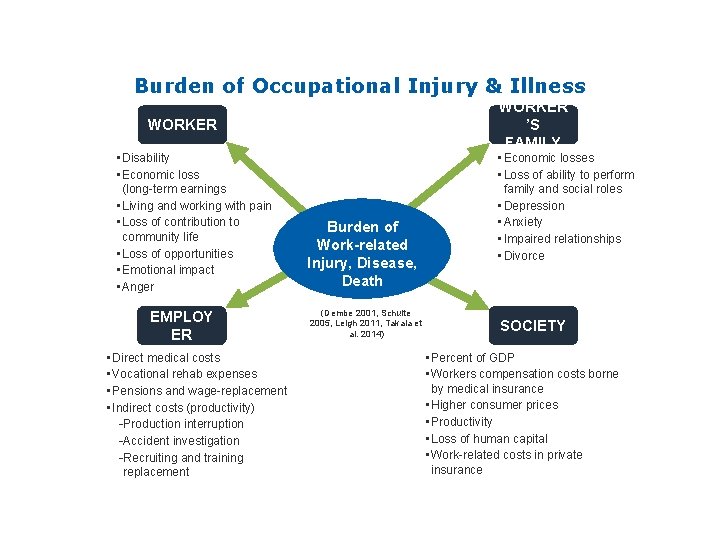
Burden of Occupational Injury & Illness WORKER ’S FAMILY WORKER • Disability • Economic loss (long-term earnings • Living and working with pain • Loss of contribution to community life • Loss of opportunities • Emotional impact • Anger EMPLOY ER • Direct medical costs • Vocational rehab expenses • Pensions and wage-replacement • Indirect costs (productivity) -Production interruption -Accident investigation -Recruiting and training replacement Burden of Work-related Injury, Disease, Death (Dembe 2001, Schulte 2005, Leigh 2011, Takala et al. 2014) • Economic losses • Loss of ability to perform family and social roles • Depression • Anxiety • Impaired relationships • Divorce SOCIETY • Percent of GDP • Workers compensation costs borne by medical insurance • Higher consumer prices • Productivity • Loss of human capital • Work-related costs in private insurance
![Sources: S. Hertlich, M. Hamilo, S. Kuvalehti [FI], WHO/ILO/J. Takala, as featured in: Journal](http://slidetodoc.com/presentation_image_h/f5495956febb8637fd14a3451dbae678/image-13.jpg "Sources: S. Hertlich, M. Hamilo, S. Kuvalehti [FI], WHO/ILO/J. Takala, as featured in: Journal")
Sources: S. Hertlich, M. Hamilo, S. Kuvalehti [FI], WHO/ILO/J. Takala, as featured in: Journal of Occupational and Environmental Hygiene, 11: 326– 337; May 2014. (DOI: 10. 1080/15459624. 2013. 863131)
Critical Strategy #2 “Be mindful of the significant, pervasive risks that work conditions represent to our overall health and well-being”
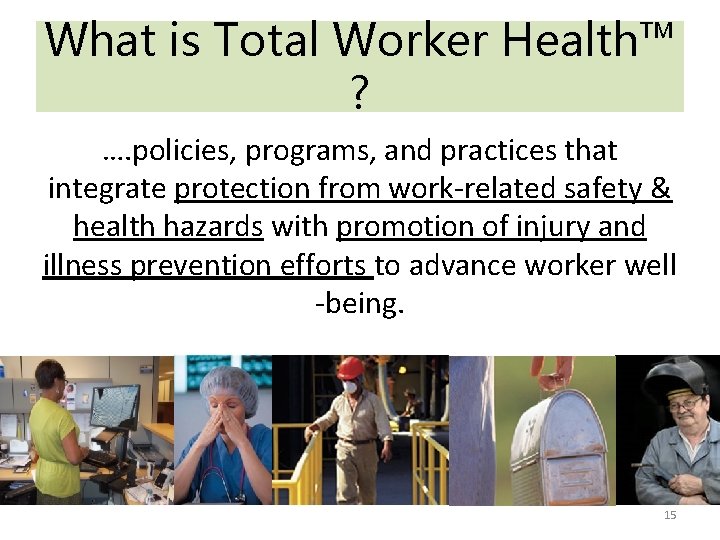
What is Total Worker Health™ ? …. policies, programs, and practices that integrate protection from work-related safety & health hazards with promotion of injury and illness prevention efforts to advance worker well -being. 15
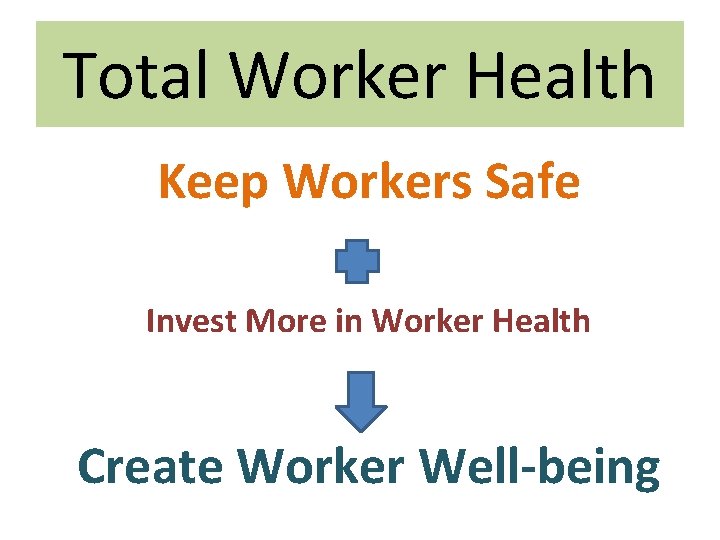
Total Worker Health Keep Workers Safe Invest More in Worker Health Create Worker Well-being

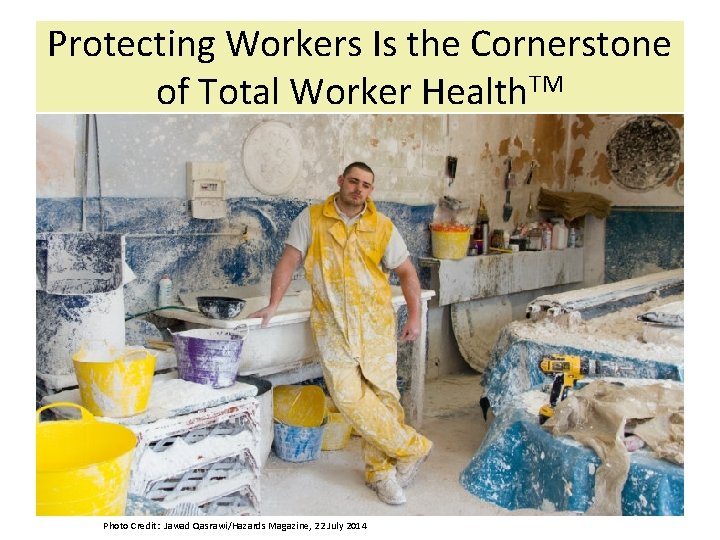
Protecting Workers Is the Cornerstone of Total Worker Health. TM Photo Credit: Jawad Qasrawi/Hazards Magazine, 22 July 2014
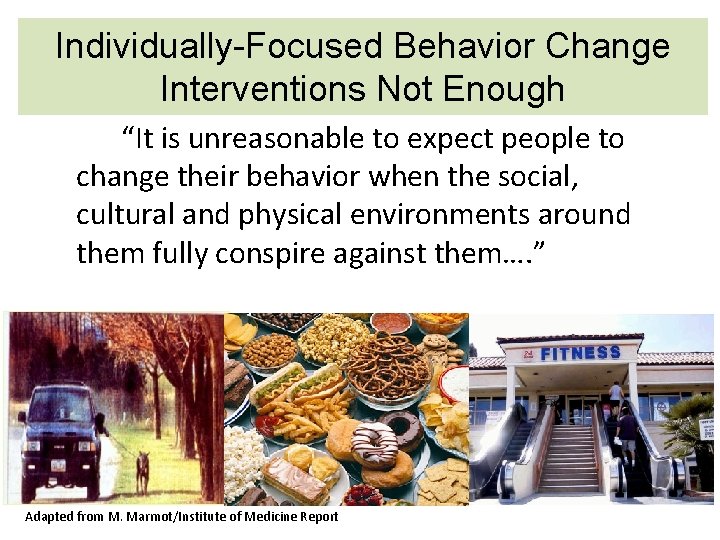
Individually-Focused Behavior Change Interventions Not Enough “It is unreasonable to expect people to change their behavior when the social, cultural and physical environments around them fully conspire against them…. ” Adapted from M. Marmot/Institute of Medicine Report
Total Worker Health. TM Is NOT Employee Wellness • When wellness programs take place in workplaces that are not providing safe and healthful working conditions. . . this is not Total Worker Health. • When wellness programs take place in workplaces in which the very way that work is organized and structured is actually contributing to worker injuries and illnesses…. (like) cardiovascular diseases, depression and anxiety. . . and the employee wellness program is oblivious to the contribution of work to ill-health, this is not Total Worker Health. • When workplaces promote wellness programs of unproven value for workers’ well-being and are completely disconnected from workforce protection, that’s not Total Worker Health. • When wellness programs do not ask employees about what work factors they think are contributing to their stress, that’s not Total Worker Health. Adapted from Opening Keynote, John Howard, Director of NIOSH, October 2014. Bethesda, MD. Photo credit:
Critical Strategy #3 “Focus first on culture-building; policies represent our “MO” and guide us to sustainable health outcomes”
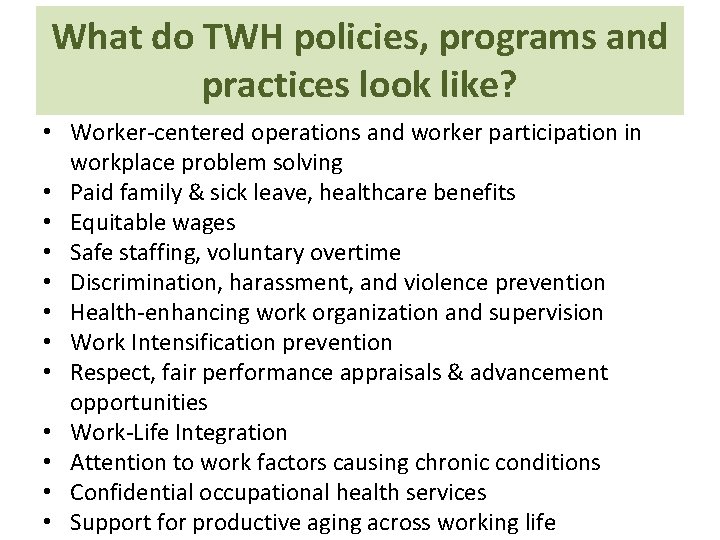
What do TWH policies, programs and practices look like? • Worker-centered operations and worker participation in workplace problem solving • Paid family & sick leave, healthcare benefits • Equitable wages • Safe staffing, voluntary overtime • Discrimination, harassment, and violence prevention • Health-enhancing work organization and supervision • Work Intensification prevention • Respect, fair performance appraisals & advancement opportunities • Work-Life Integration • Attention to work factors causing chronic conditions • Confidential occupational health services • Support for productive aging across working life
Question: Can the job I have predict my chances of being overweight or obese?
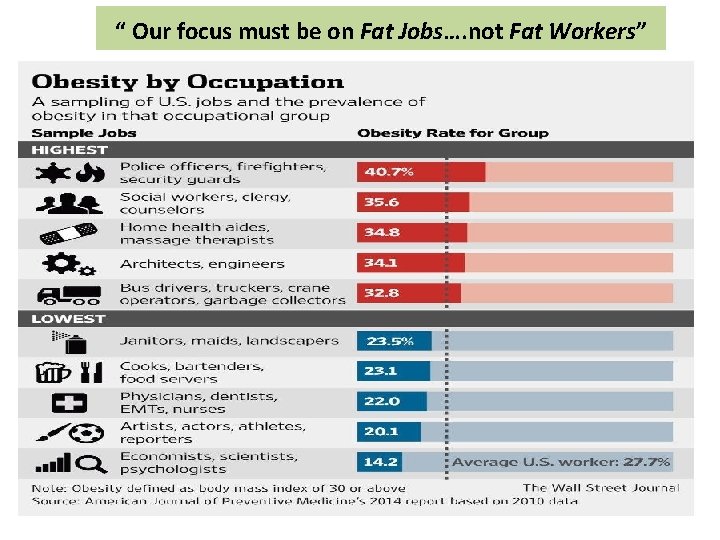
“ Our focus must be on Fat Jobs…. not Fat Workers”
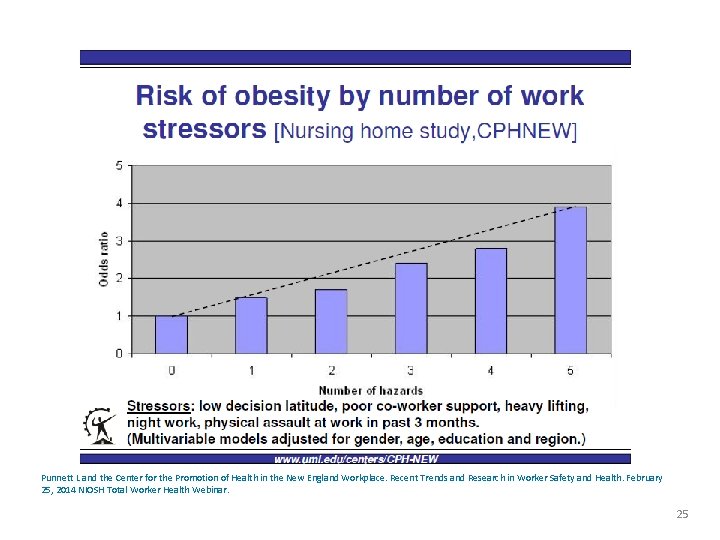
Punnett L and the Center for the Promotion of Health in the New England Workplace. Recent Trends and Research in Worker Safety and Health. February 25, 2014 NIOSH Total Worker Health Webinar. 25
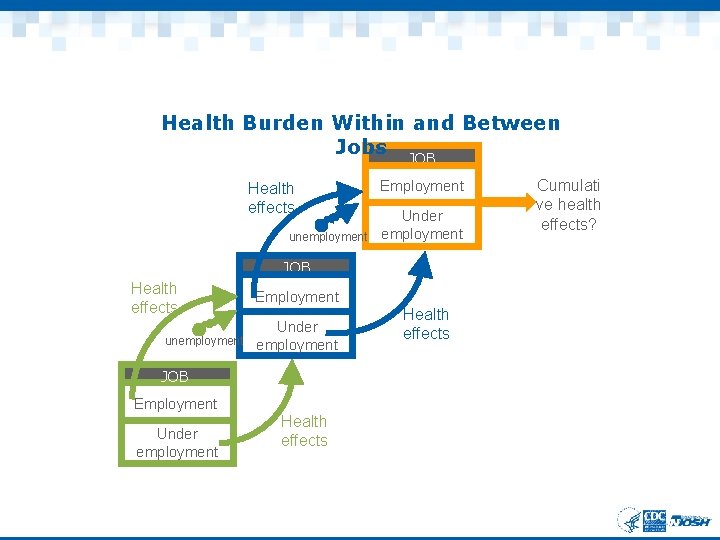
Health Burden Within and Between Jobs JOB Health effects unemployment JOB 1 Employment Under employment N Employment Under employment JOB 2 Employment Under employment Health effects Cumulati ve health effects?
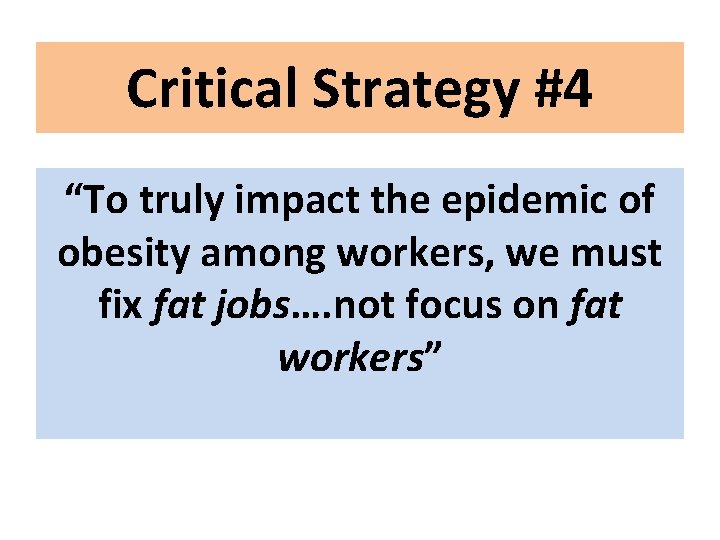
Critical Strategy #4 “To truly impact the epidemic of obesity among workers, we must fix fat jobs…. not focus on fat workers”
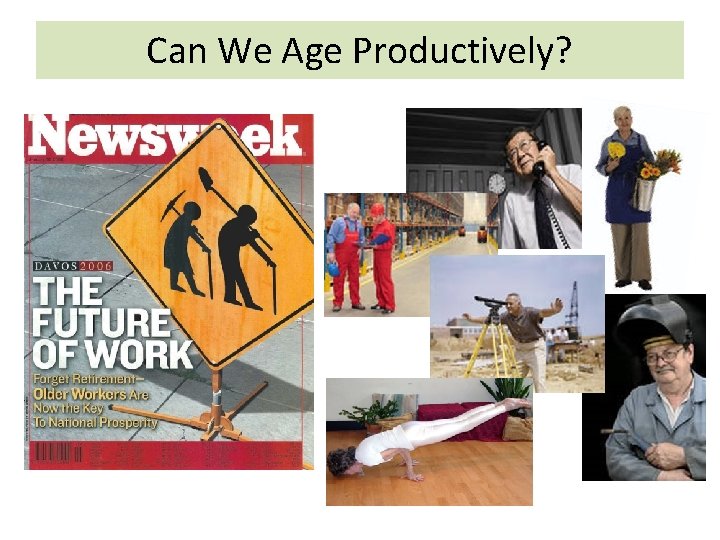
Can We Age Productively?
![5. Partnership for Solutions [2004]. Chronic conditions: making the case for ongoing care. Baltimore,](http://slidetodoc.com/presentation_image_h/f5495956febb8637fd14a3451dbae678/image-30.jpg "5. Partnership for Solutions [2004]. Chronic conditions: making the case for ongoing care. Baltimore,")
5. Partnership for Solutions [2004]. Chronic conditions: making the case for ongoing care. Baltimore, MD: Partnership for Solutions. [http: //www. partnershipforsolutions. org/DMS/files/chronicbook 2004. pdf].
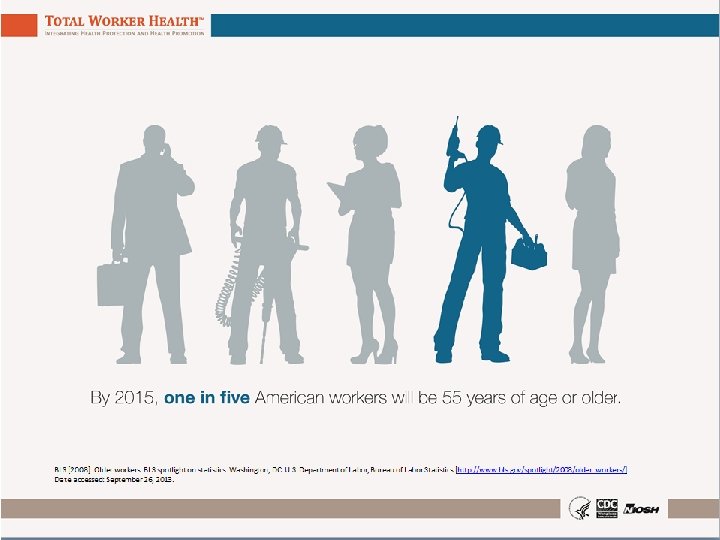
Creating Age-Friendly Workplaces • • • Prioritize workplace flexibility Match tasks to abilities Involve workers in job redesign efforts Avoid prolonged, sedentary work Manage physical hazards, e. g. , noise, slip/trip Provide ergo-friendly work environments Provide health promotion & lifestyle programs Accommodate medical self-care Invest in training & skill-building for all workers Encourage cross-generational interactions Manage reasonable accommodations & return to work Require aging workforce management skills training for supervisors Loeppke et al. , 2013; Silverstein, 2008 in Chosewood & Nigam, 2012; Grosch & Pransky, 2010 31
Critical Strategy #5 “Train supervisors with health outcomes in mind” Key Areas • New, younger, older, vulnerable workers • Work stress; work-family integration • Accommodation, return-to-work • Red flags, early interventions, social supports
33
21 st Century World of Work • Salariat – Those who hold steady, old-fashioned jobs at fixed workplaces, which are dwindling in the private sector and are now located mostly in government • Proficians – Those who are highly educated and sell advanced skills that have grown in value in the knowledge economy and who more and more are multinational and voluntarily migratory workers • Precariat – Those for whom employment is typically short-lived, uncertain, involuntarily migratory, and delivered without a health, injury compensation, or social pension benefits package (Adapted from: Dr. Guy Standing, Professor of Economics, SOAS, University of London; from his book, A Precariat Charter. )
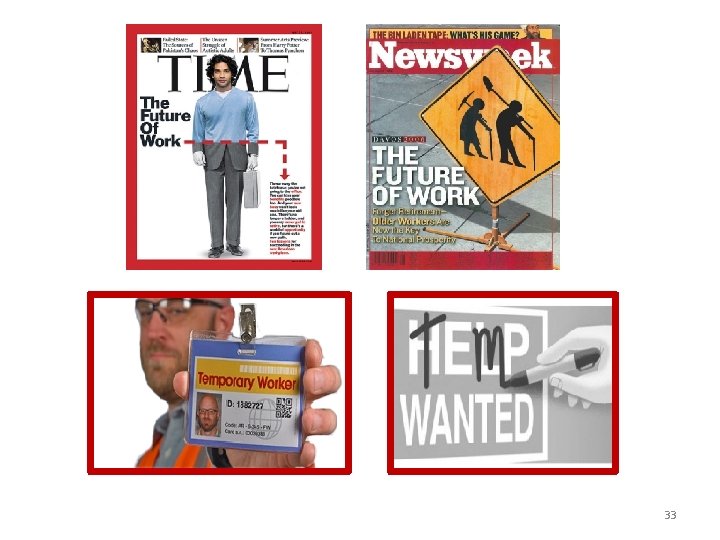
Newer Employment Patterns Affecting Worker Health • Precarious Employment – Contingent, Temporary or Independent Contractor • Serial Subcontracting • Dual Employers—Employee Leasing • Work Organizational Factors – Work intensification • Downsizing • Mandatory overtime – Lack of paid medical and family leave – Stressors arising from work itself
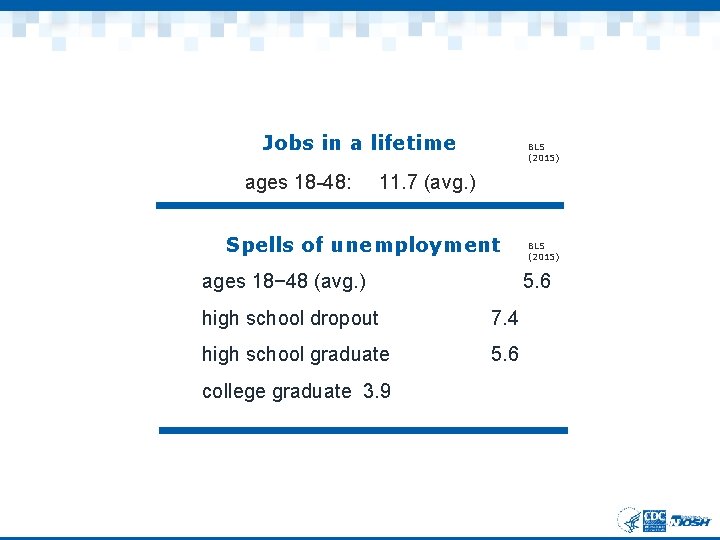
Jobs in a lifetime ages 18 -48: BLS (2015) 11. 7 (avg. ) Spells of unemployment ages 18− 48 (avg. ) 5. 6 high school dropout 7. 4 high school graduate 5. 6 college graduate 3. 9 BLS (2015)
Health Effects of Contingent Work • Contingent employment increases negative consequences for the injured worker and society: – Lack of job protections after injury can lead to job loss and few prospects of new employment – Employer-based health insurance is a rarity for contingent workers, so the costs of treating injuries are typically shifted to the worker or the public at large. – Employers do not directly pay for workers’ compensation and health insurance, so they may be insulated from actual costs of workers’ injuries and may not respond as readily to correct harmful conditions • What do you think? – Are contingent workers as protected by government safety and health regulatory enforcement as are non-contingent workers?
Critical Strategy #6 “Examine your workplace’s approach to work organization. Develop interventions to lower exposures and improve health opportunities”
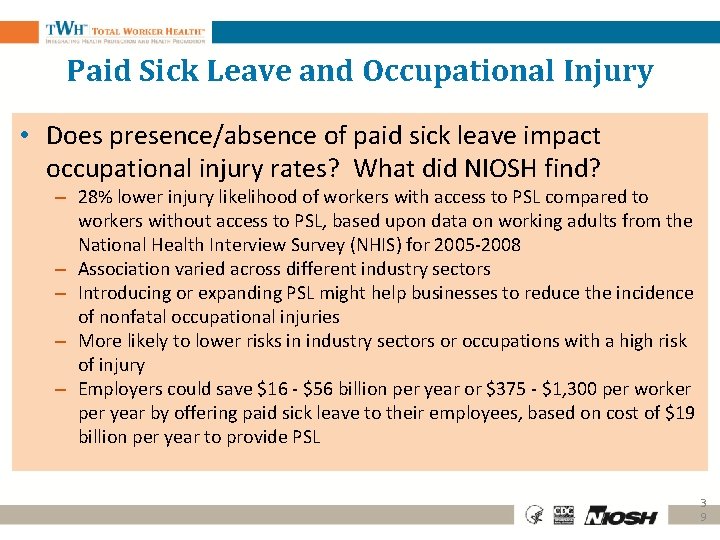
Paid Sick Leave and Occupational Injury • Does presence/absence of paid sick leave impact occupational injury rates? What did NIOSH find? – 28% lower injury likelihood of workers with access to PSL compared to workers without access to PSL, based upon data on working adults from the National Health Interview Survey (NHIS) for 2005 -2008 – Association varied across different industry sectors – Introducing or expanding PSL might help businesses to reduce the incidence of nonfatal occupational injuries – More likely to lower risks in industry sectors or occupations with a high risk of injury – Employers could save $16 - $56 billion per year or $375 - $1, 300 per worker per year by offering paid sick leave to their employees, based on cost of $19 billion per year to provide PSL 3 9
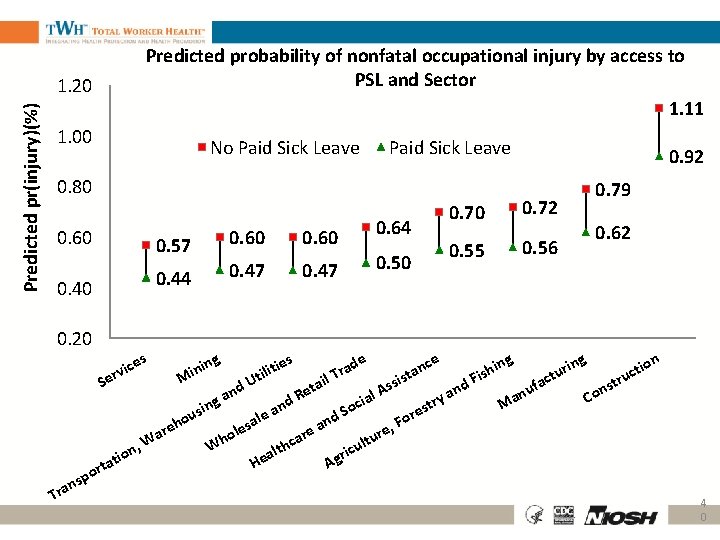
Predicted probability of nonfatal occupational injury by access to PSL and Sector 1. 11 Predicted pr(injury)(%) 1. 20 1. 00 No Paid Sick Leave 0. 80 0. 60 0. 40 0. 20 0. 57 0. 60 0. 44 0. 47 0. 64 0. 50 0. 92 0. 70 0. 72 0. 55 0. 56 0. 79 0. 62 es s g ce de ing ion n tie a r t i nin h r a l i c u s i t M il T Fi tru sis S act Ut a d s f s t d n n u A Re an an al Co y a i g r d c t M n n a So res usi e d l o o a n F a e, reh les e r r a o u , W hca ult Wh t c n l i o r a ati Ag He t r o ic v r e sp n Tra 4 0

Critical Strategy #7 “Craft benefits programs with worker safety and well-being in mind; provide flexibilities and supports so workers can actually use them”
Ways to Connect with Total Worker Health. TM Email TWH@cdc. gov Twitter (@NIOSH_TWH) Linked. In (NIOSH Total Worker Health) TWH in Action! e-Newsletter
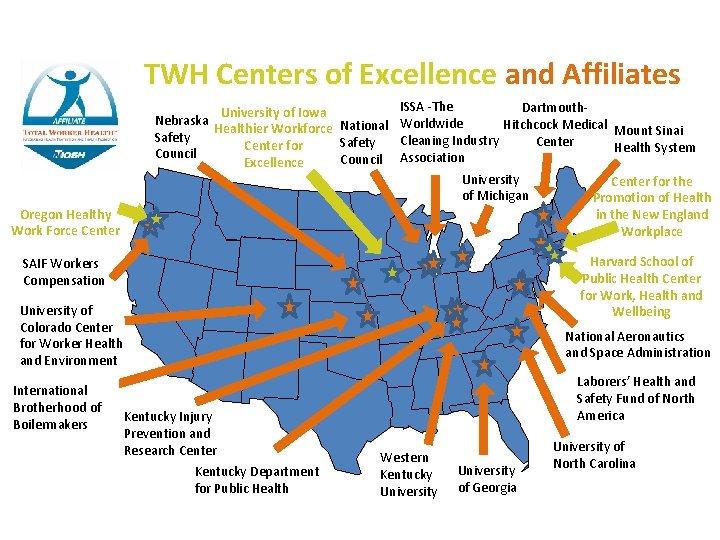
TWH Centers of Excellence and Affiliates University of Iowa Nebraska Healthier Workforce National Safety Center for Council Excellence ISSA -The Dartmouth. Worldwide Hitchcock Medical Mount Sinai Cleaning Industry Center Health System Association University of Michigan Oregon Healthy Work Force Center Harvard School of Public Health Center for Work, Health and Wellbeing SAIF Workers Compensation University of Colorado Center for Worker Health and Environment International Brotherhood of Boilermakers Center for the Promotion of Health in the New England Workplace National Aeronautics and Space Administration Kentucky Injury Prevention and Research Center Kentucky Department for Public Health Laborers’ Health and Safety Fund of North America Western Kentucky University of Georgia University of North Carolina
Why total worker health really matters. . .
Valley Health Alliance Additional Select Topics of Population Health Concern L. Casey Chosewood, MD MPH
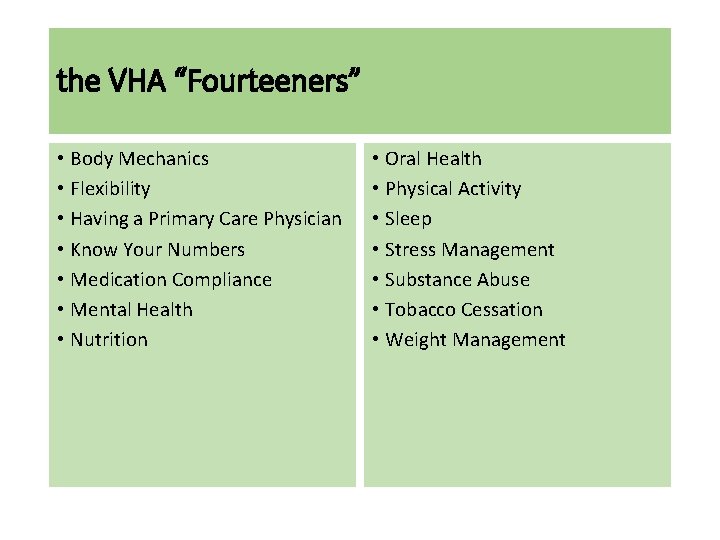
the VHA “Fourteeners” • Body Mechanics • Flexibility • Having a Primary Care Physician • Know Your Numbers • Medication Compliance • Mental Health • Nutrition • Oral Health • Physical Activity • Sleep • Stress Management • Substance Abuse • Tobacco Cessation • Weight Management

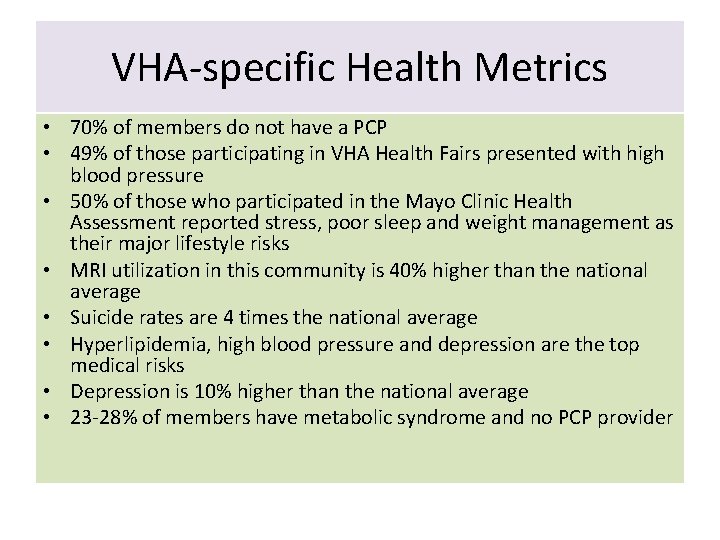
VHA-specific Health Metrics • 70% of members do not have a PCP • 49% of those participating in VHA Health Fairs presented with high blood pressure • 50% of those who participated in the Mayo Clinic Health Assessment reported stress, poor sleep and weight management as their major lifestyle risks • MRI utilization in this community is 40% higher than the national average • Suicide rates are 4 times the national average • Hyperlipidemia, high blood pressure and depression are the top medical risks • Depression is 10% higher than the national average • 23 -28% of members have metabolic syndrome and no PCP provider
Worker Safety is Patient Safety CARING FOR WORKERS = CARING FOR PATIENTS
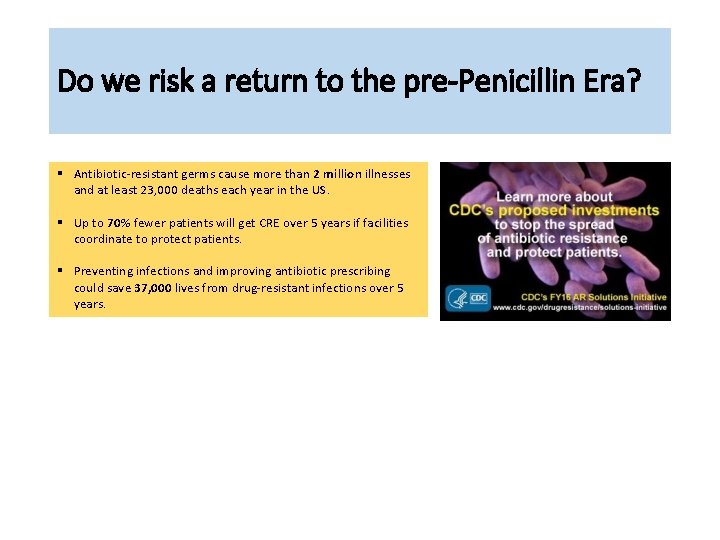
Do we risk a return to the pre-Penicillin Era? § Antibiotic-resistant germs cause more than 2 million illnesses and at least 23, 000 deaths each year in the US. § Up to 70% fewer patients will get CRE over 5 years if facilities coordinate to protect patients. § Preventing infections and improving antibiotic prescribing could save 37, 000 lives from drug-resistant infections over 5 years.
Antibiotic resistance is a threat. • Nightmare germs called CRE (carbapenem-resistant Enterobacteriaceae) can cause deadly infections and have become resistant to all or nearly all antibiotics we have today. CRE spread between health care facilities like hospitals and nursing homes when appropriate actions are not taken. • MRSA (methicillin-resistant Staphylococcus aureus) infections commonly cause pneumonia and sepsis that can be deadly. • The germ Pseudomonas aeruginosa can cause HAIs, including bloodstream infections. Strains resistant to almost all antibiotics have been found in hospitalized patients. • These germs are some of the most deadly resistant germs identified as "urgent" and "serious" threats. • C. difficile infections are at historically high rates. • C. difficile (Clostridium difficile), a germ commonly found in health care facilities, can be picked up from contaminated surfaces or spread from a healthcare provider's hands. • Most C. difficile is not resistant to antibiotics, but when a person takes antibiotics, some good germs are destroyed. Antibiotic use allows C. difficile to take over, putting patients at high risk for deadly diarrhea. Source: www. cdc. gov
Critical steps to take to break the cycle. Health care facility CEOs/administrators can • Implement systems to alert receiving facilities when transferring patients who have drugresistant germs. • Review and perfect infection control actions within your facility. • Get leadership commitment to start or join HAI/antibiotic resistance prevention activities in the area. • Connect with the public health department to share data about antibiotic resistance and other HAIs. • Make sure clinical staff have access to prompt and accurate laboratory testing for antibiotic -resistant germs. Prescribers and healthcare staff can • Prescribe antibiotics correctly. Get cultures then start the right drug promptly at the right dose for the right duration. Know when to stop antibiotics. • Be aware of antibiotic resistance patterns in your facility and area to protect your patients. • Ask patients if they have recently received care in another facility. • Follow hand hygiene and other infection control measures with every patient. • Source: www. cdc. gov
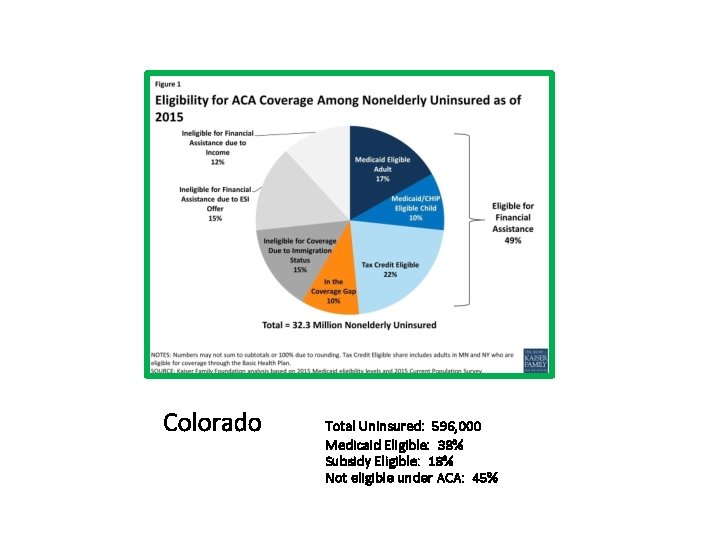
Colorado Total Uninsured: 596, 000 Medicaid Eligible: 38% Subsidy Eligible: 18% Not eligible under ACA: 45%

- Slides: 55