
Advancing Discovery Science Predictive Evidential and Meta Analytical
- Slides: 25
Advancing Discovery Science Predictive, Evidential and Meta Analytical Methods Michel Dumontier Associate Professor of Medicine Stanford Center for Biomedical Informatics Research Stanford University AAAI Fall Symposium Accelerating Science: A Grand Challenge for AI November 18, 2016 1
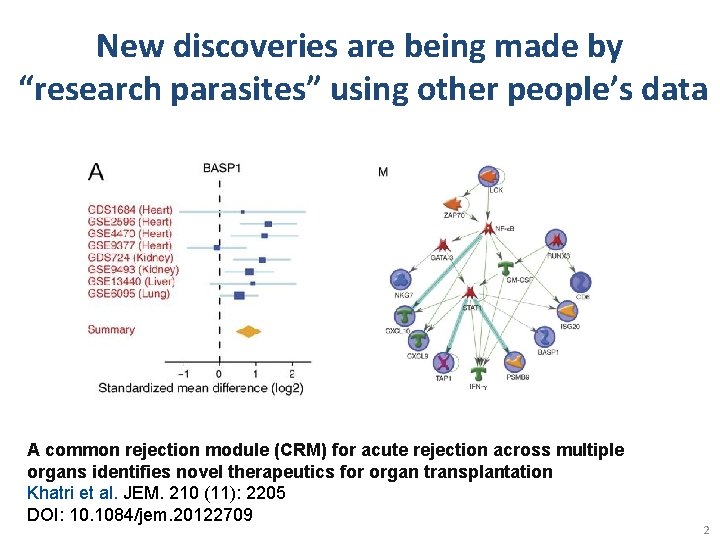
New discoveries are being made by “research parasites” using other people’s data A common rejection module (CRM) for acute rejection across multiple organs identifies novel therapeutics for organ transplantation Khatri et al. JEM. 210 (11): 2205 DOI: 10. 1084/jem. 20122709 2
towards automated knowledge discovery Dumontier: Maastricht
Development of an intelligent system for scientific inquiry using the totality of web-accessible data and services.
Challenge Efficient and uniform access to distributed, versioned and self describing data and services for reproducible analyses 5
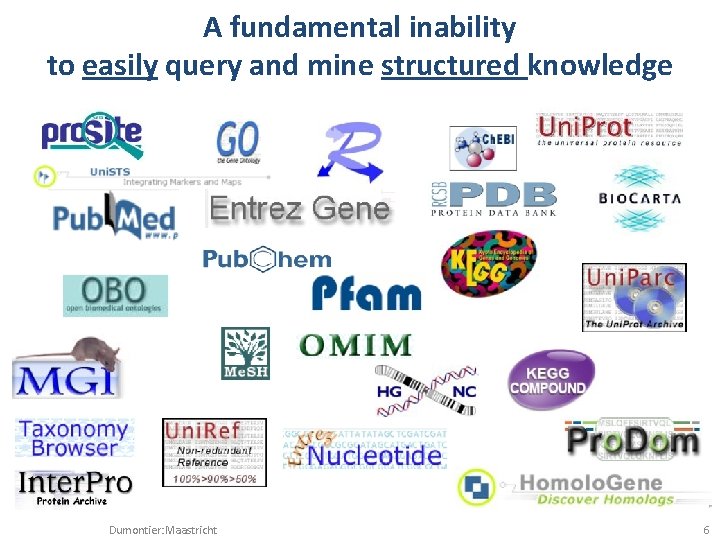
A fundamental inability to easily query and mine structured knowledge Dumontier: Maastricht 6
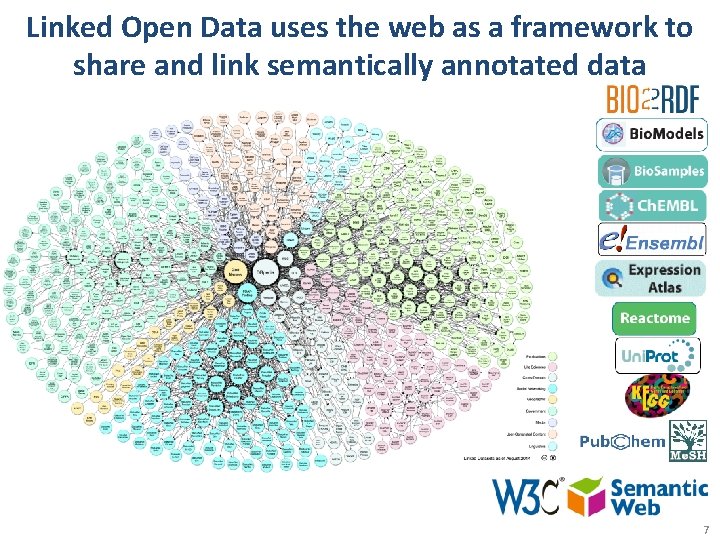
Linked Open Data uses the web as a framework to share and link semantically annotated data 7
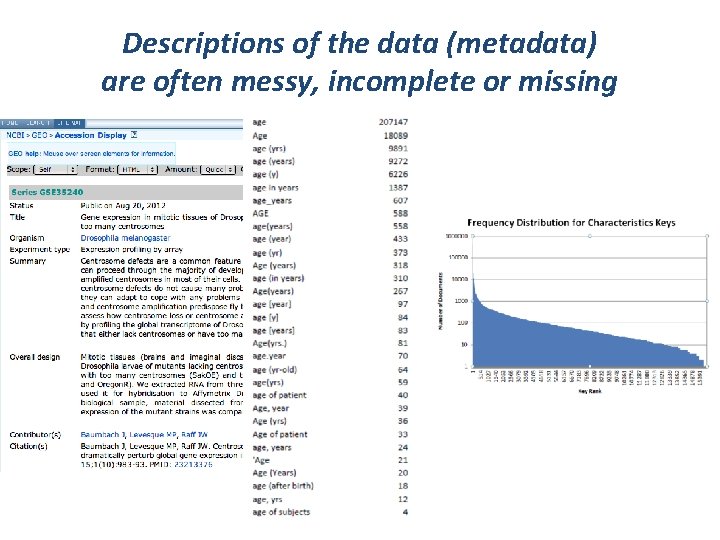
Descriptions of the data (metadata) are often messy, incomplete or missing
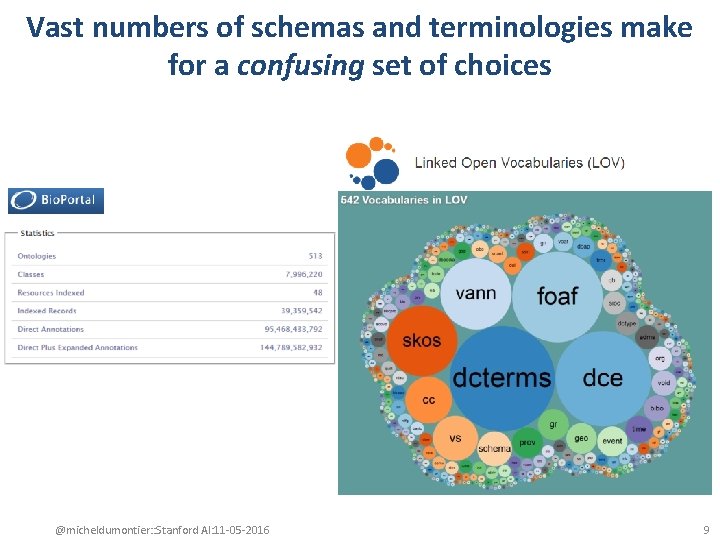
Vast numbers of schemas and terminologies make for a confusing set of choices @micheldumontier: : Stanford AI: 11 -05 -2016 9
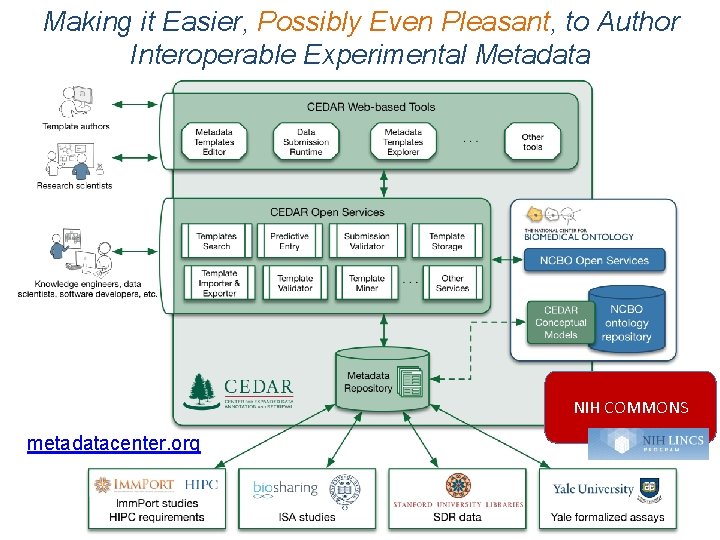
Making it Easier, Possibly Even Pleasant, to Author Interoperable Experimental Metadata NIH COMMONS metadatacenter. org 1 0
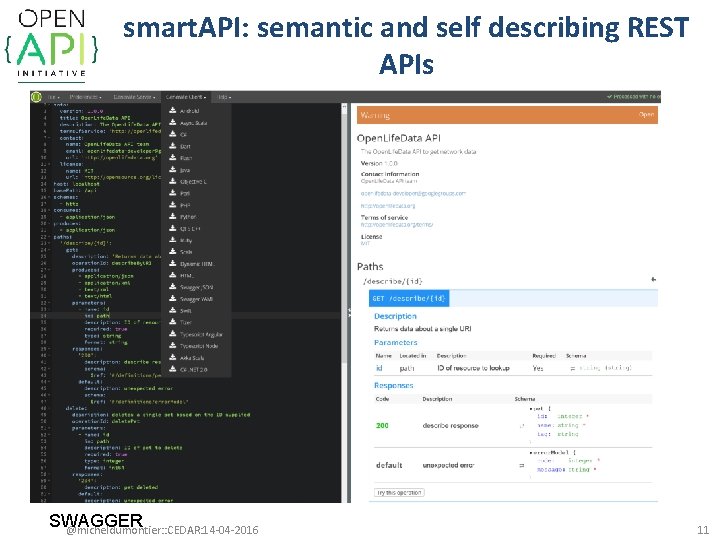
smart. API: semantic and self describing REST APIs SWAGGER @micheldumontier: : CEDAR: 14 -04 -2016 11
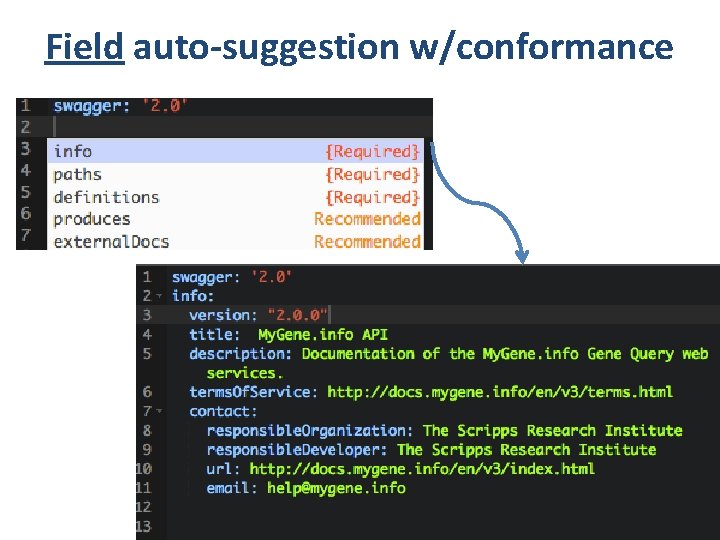
Field auto-suggestion w/conformance
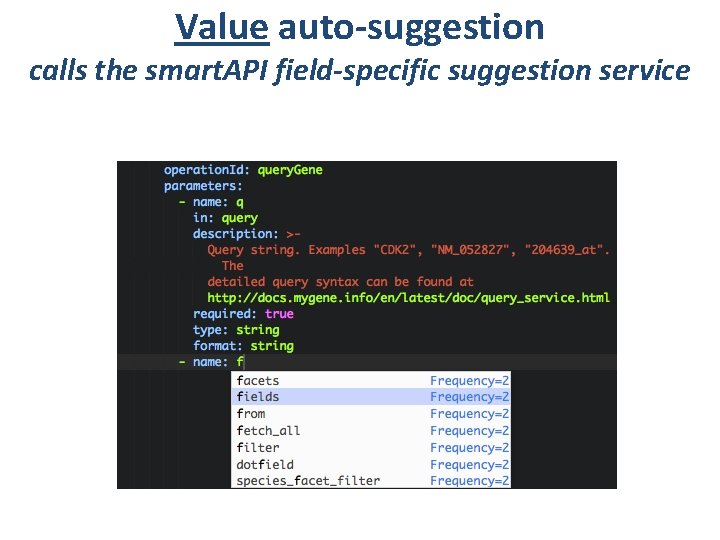
Value auto-suggestion calls the smart. API field-specific suggestion service
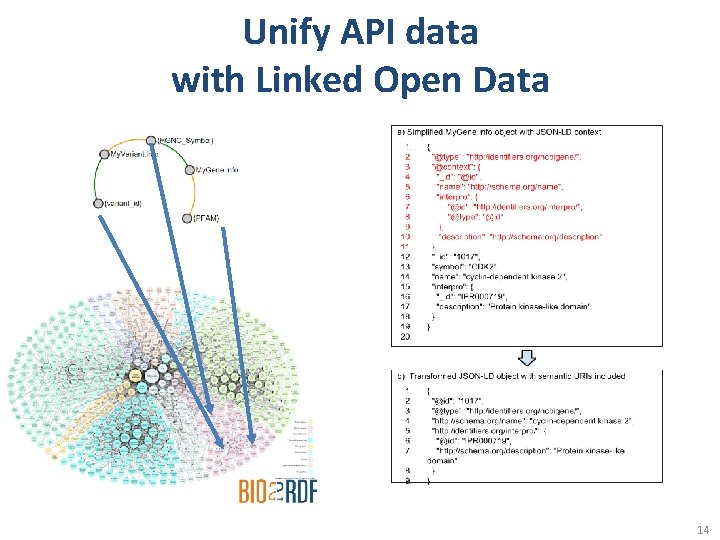
Unify API data with Linked Open Data 14
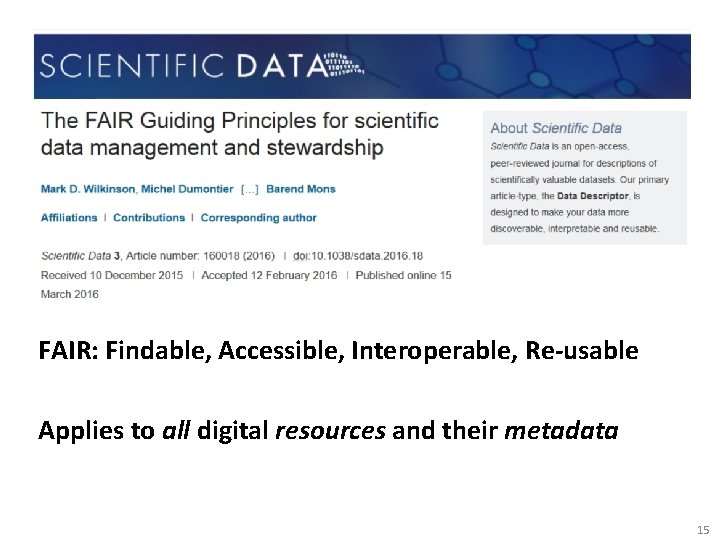
FAIR: Findable, Accessible, Interoperable, Re-usable Applies to all digital resources and their metadata 15
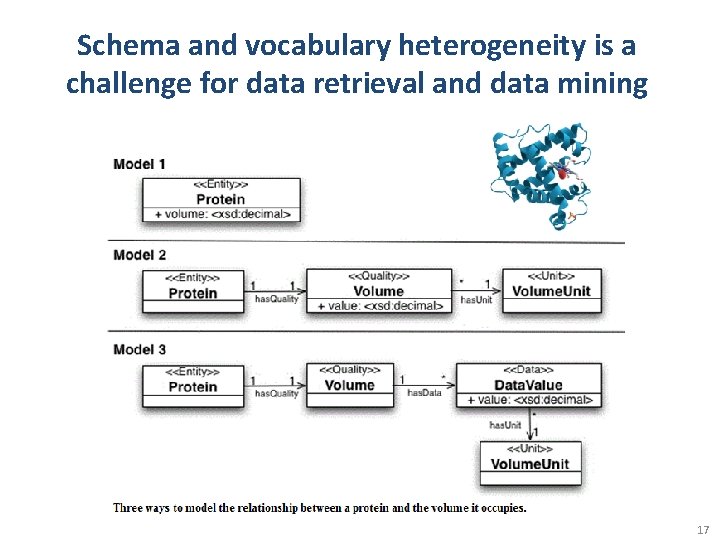
Challenge Data will always be described using different schemas and vocabularies. Does that still matter? Can we automate the integration of data? 16
Schema and vocabulary heterogeneity is a challenge for data retrieval and data mining 17
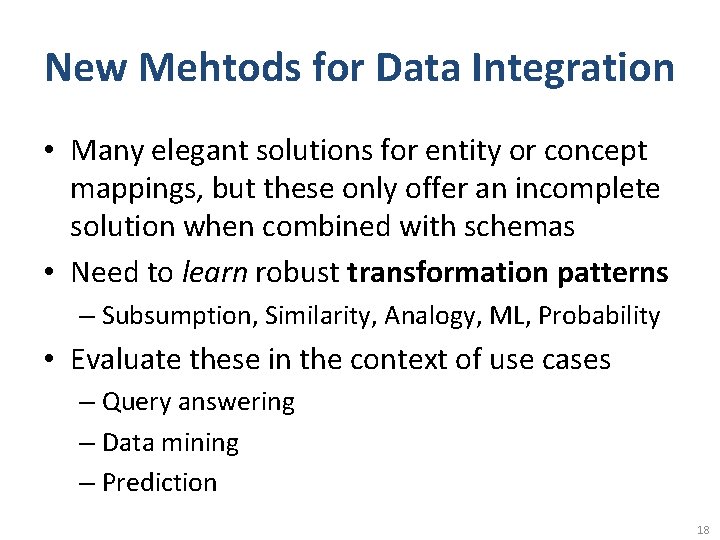
New Mehtods for Data Integration • Many elegant solutions for entity or concept mappings, but these only offer an incomplete solution when combined with schemas • Need to learn robust transformation patterns – Subsumption, Similarity, Analogy, ML, Probability • Evaluate these in the context of use cases – Query answering – Data mining – Prediction 18
Challenge Can we scale the validation of interesting findings? 19
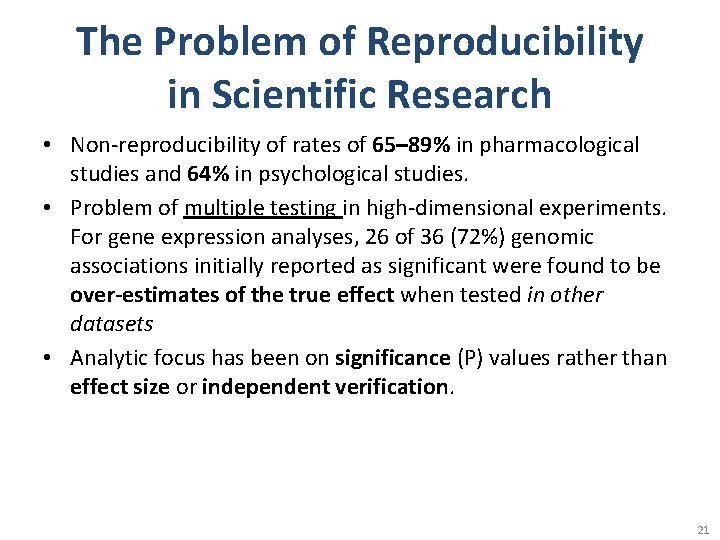
Most published research findings are false - John Ioannidis, Stanford University Ioannidis JPA (2005) Why Most Published Research Findings Are False. PLo. S Med 2(8): e 124. 20
The Problem of Reproducibility in Scientific Research • Non-reproducibility of rates of 65– 89% in pharmacological studies and 64% in psychological studies. • Problem of multiple testing in high-dimensional experiments. For gene expression analyses, 26 of 36 (72%) genomic associations initially reported as significant were found to be over-estimates of the true effect when tested in other datasets • Analytic focus has been on significance (P) values rather than effect size or independent verification. 21
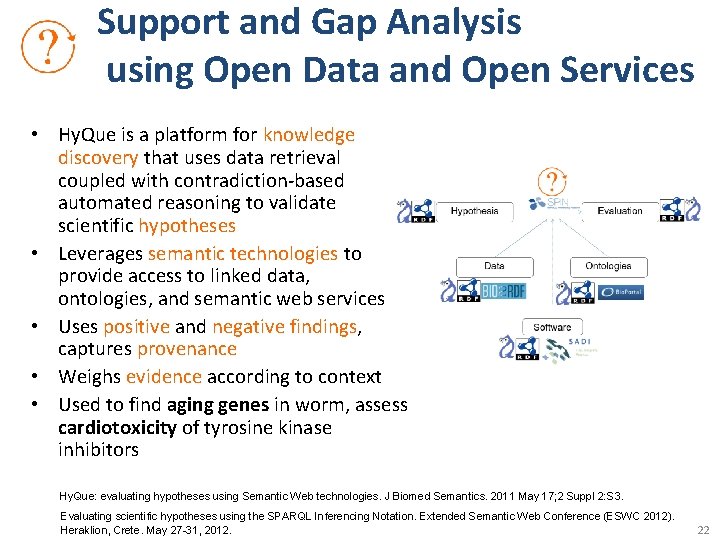
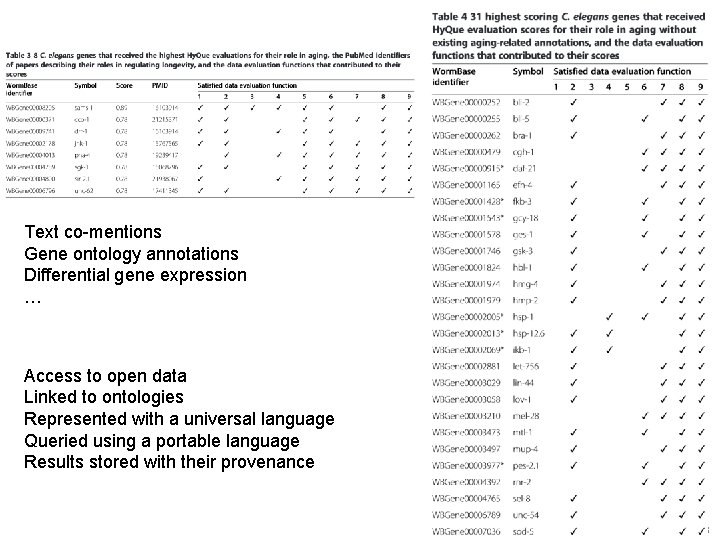
Support and Gap Analysis using Open Data and Open Services • Hy. Que is a platform for knowledge discovery that uses data retrieval coupled with contradiction-based automated reasoning to validate scientific hypotheses • Leverages semantic technologies to provide access to linked data, ontologies, and semantic web services • Uses positive and negative findings, captures provenance • Weighs evidence according to context • Used to find aging genes in worm, assess cardiotoxicity of tyrosine kinase inhibitors Hy. Que: evaluating hypotheses using Semantic Web technologies. J Biomed Semantics. 2011 May 17; 2 Suppl 2: S 3. Evaluating scientific hypotheses using the SPARQL Inferencing Notation. Extended Semantic Web Conference (ESWC 2012). Heraklion, Crete. May 27 -31, 2012. 22
Text co-mentions Gene ontology annotations Differential gene expression … Access to open data Linked to ontologies Represented with a universal language Queried using a portable language Results stored with their provenance 23
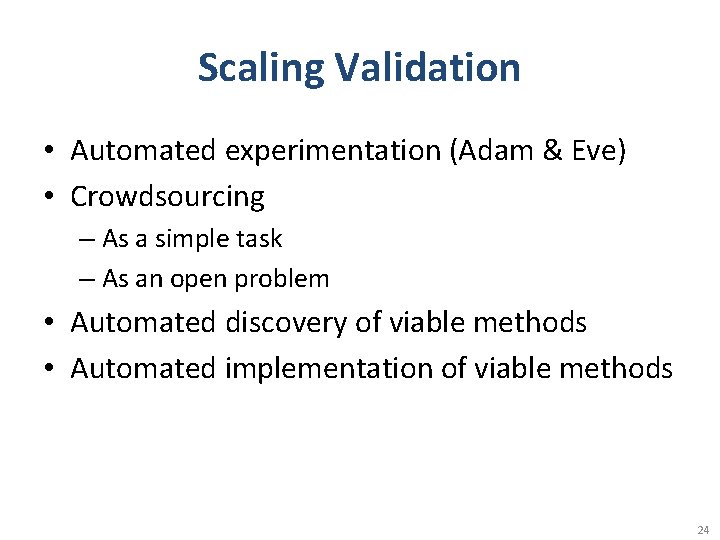
Scaling Validation • Automated experimentation (Adam & Eve) • Crowdsourcing – As a simple task – As an open problem • Automated discovery of viable methods • Automated implementation of viable methods 24
Key Research Challenges • Scalable, shared, fault-tolerant, and readily re-deployable frameworks for archiving and providing versioned and maximally FAIR biomedical (meta)data • Scalable methods for the prospective and retrospective authoring, assessment, and repair of metadata. • Scalable methods to learn equivalent representational patterns • Scalable frameworks for open, transparent, reproducible and recurrent analysis and meta-analysis of FAIR research data. • Methods to identify investigative biases and knowledge gaps • Scalable and reliable methods for the prioritization scientific hypotheses using evidence gathered across scales and sources • Scalable methods for validation of research findings. 25