
Advancing a Public Health Approach to Childrens Mental
Advancing a Public Health Approach to Children's Mental Health Topical Conference Call February 18, 2010 Neal M. Horen, Ph. D Joyce Sebian MS Ed Georgetown University Center for Child and Human Development National TA Center for Children’s Mental Health
Announcing!!!! New Publication: A Public Health Approach to Children’s Mental Health: A Conceptual Framework Authors: Searchlight Consulting LLC –Jon Miles, Ph. D. Georgetown University Center for Child and Human Development, National TA Center for Children’s Mental Health –Rachele C Espiritu, Ph. D. –Neal M Horen, Ph. D. –Joyce Sebian, M. S. Ed. –Elizabeth Waetzig, J. D. In partnership with SAMHSA/CMHS, Children Youth and Family Branch and Prevention Program Branch 2

Key Components of a Public Health Approach Integration elements: • Population Focus • Includes Promotion and Prevention • Addresses Determinants of Health • Process/Action Steps 3
Using a New Intervention Model: Moving beyond Prevention and Treatment 4
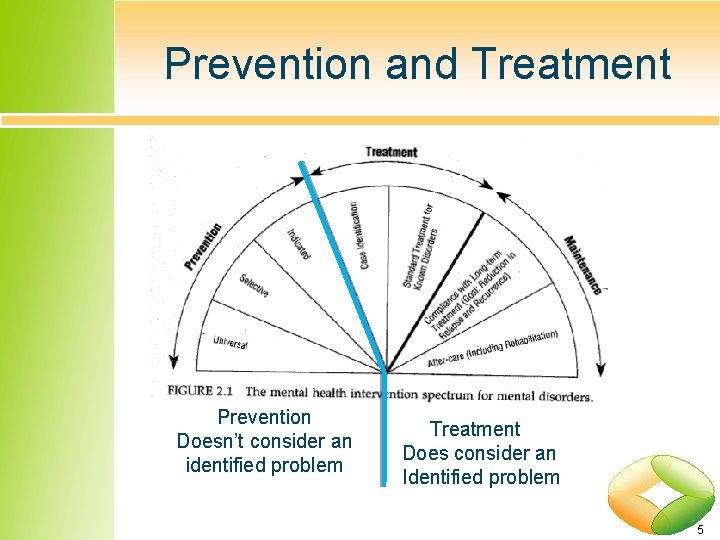
Prevention and Treatment Prevention Doesn’t consider an identified problem Treatment Does consider an Identified problem 5
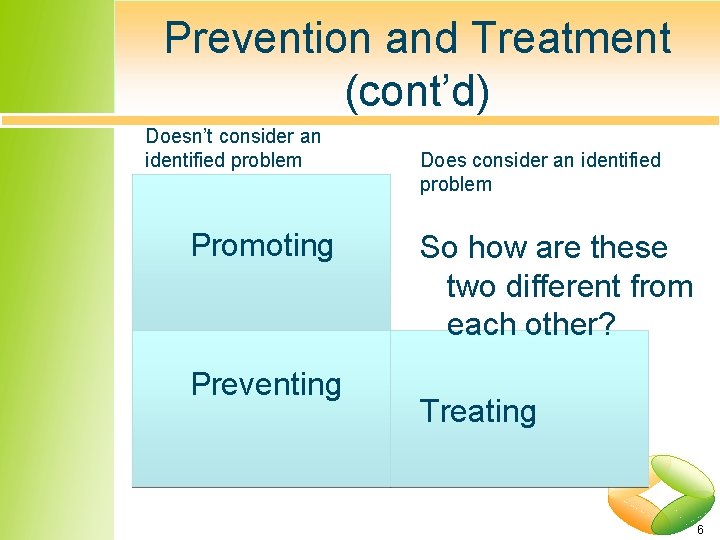
Prevention and Treatment (cont’d) Doesn’t consider an identified problem Promoting Preventing Does consider an identified problem So how are these two different from each other? Treating 6
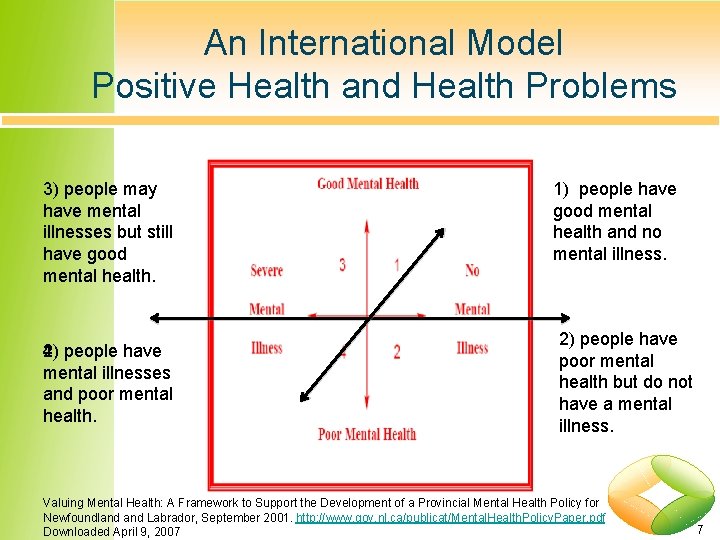
An International Model Positive Health and Health Problems 3) people may have mental illnesses but still have good mental health. 2) people have 4) people have mental illnesses and poor mental health. 1) people have good mental health and no mental illness. 2) people have poor mental health but do not have a mental illness. Valuing Mental Health: A Framework to Support the Development of a Provincial Mental Health Policy for Newfoundland Labrador, September 2001. http: //www. gov. nl. ca/publicat/Mental. Health. Policy. Paper. pdf Downloaded April 9, 2007 7
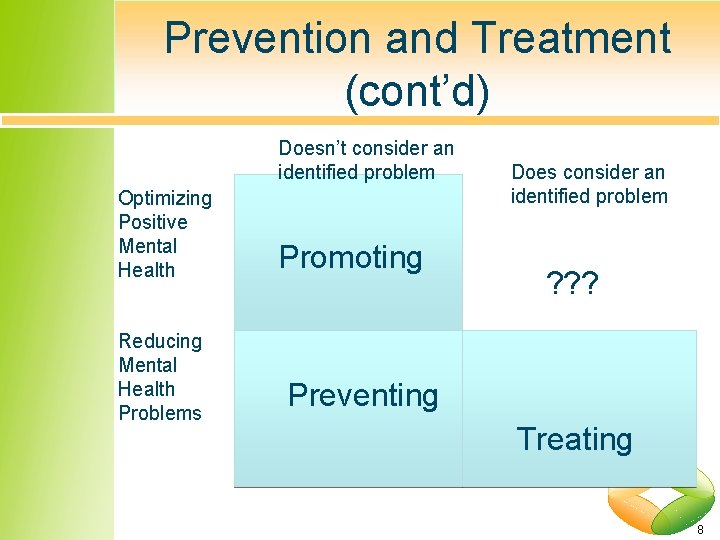
Prevention and Treatment (cont’d) Doesn’t consider an identified problem Optimizing Positive Mental Health Reducing Mental Health Problems Promoting Does consider an identified problem ? ? ? Preventing Treating 8
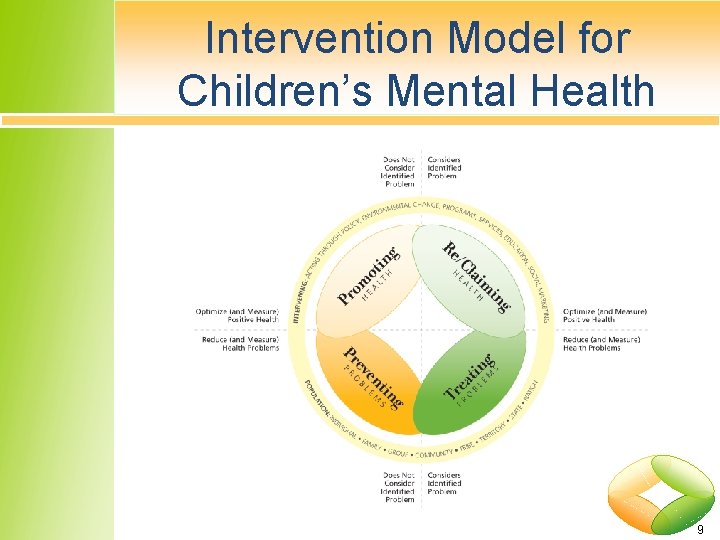
Intervention Model for Children’s Mental Health 9
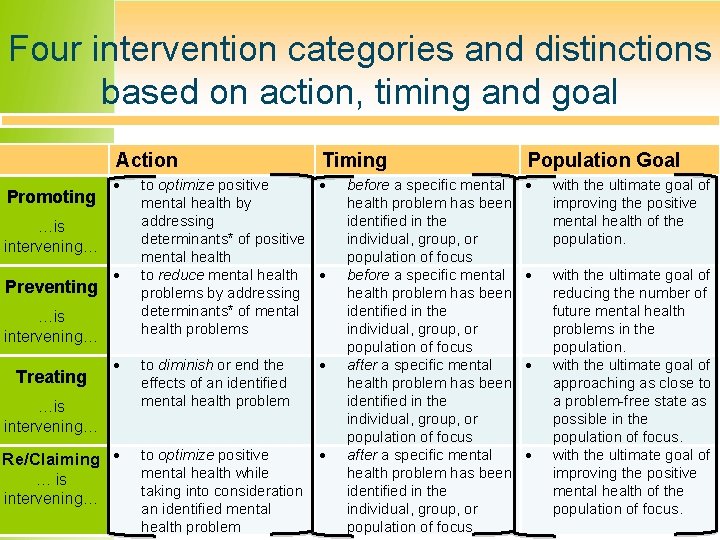
Four intervention categories and distinctions based on action, timing and goal Action Promoting …is intervening… Preventing …is intervening… Treating …is intervening… Re/Claiming … is intervening… Timing to optimize positive mental health by addressing determinants* of positive mental health to reduce mental health problems by addressing determinants* of mental health problems to diminish or end the effects of an identified mental health problem to optimize positive mental health while taking into consideration an identified mental health problem before a specific mental health problem has been identified in the individual, group, or population of focus after a specific mental health problem has been identified in the individual, group, or population of focus Population Goal with the ultimate goal of improving the positive mental health of the population. with the ultimate goal of reducing the number of future mental health problems in the population. with the ultimate goal of approaching as close to a problem-free state as possible in the population of focus. with the ultimate goal of improving the positive mental health of the population of focus. 10
A Paradigm Shifting away from a focus on children’s individual mental health problems and towards strengthening the mental health of all children requires • Working collaboratively across a broad range of systems and sectors • Engaging the child mental health care system, the public health system, and all the other settings and structures that impact children’s well-being 11
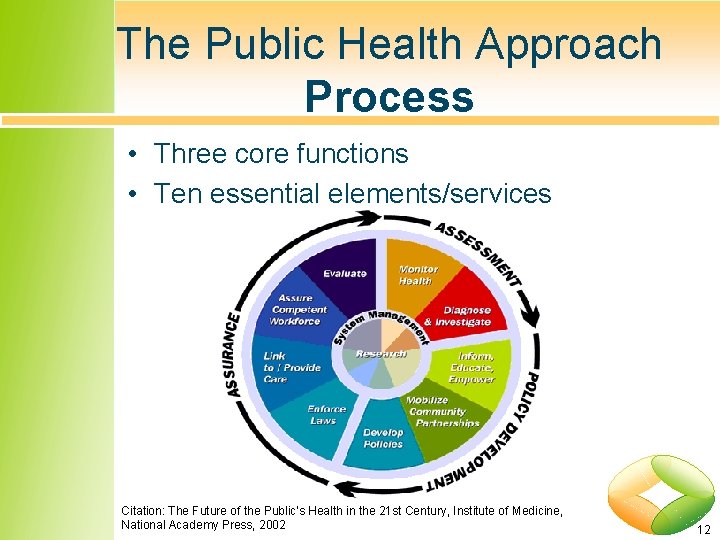
The Public Health Approach Process • Three core functions • Ten essential elements/services Citation: The Future of the Public's Health in the 21 st Century, Institute of Medicine, National Academy Press, 2002 12
The Process (cont’d) • Other models emphasize a process that is focused on intervention – Using data to identify a problem and determinant(s) to address – Developing or selecting evidence- based interventions – Evaluating those interventions • The approach for children’s mental health integrates these models 13
5 Guiding Principles • Population focus • Emphasis on creating supportive environments and building skills • Balanced focus between children’s mental health problems and positive mental health • Cross-system and cross-sector collaboration • Implementation driven by local context 14
Integrated Values of Children’s Mental Health and Public Health • Be driven by the fundamental value and dignity of every child • Be child centered, youth guided, and family driven • Be community based/locally adapted • Be culturally and linguistically competent • Be equitable, providing the resources for health for all children • Balance the rights of the individuals with the good of the collective, recognizing that each person’s actions affect other people • Be collaborative, with systems and sectors working together to be optimally effective • Use scientific knowledge to drive decision making whenever possible • Operate with accountability, respect, and integrity. 15
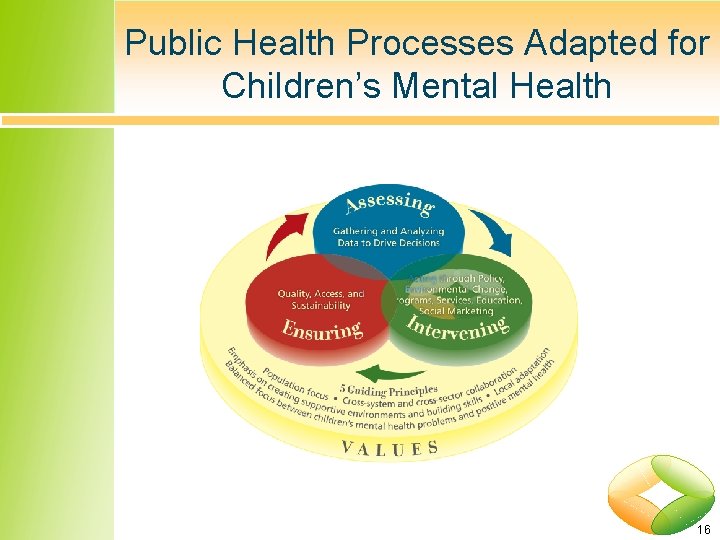
Public Health Processes Adapted for Children’s Mental Health 16
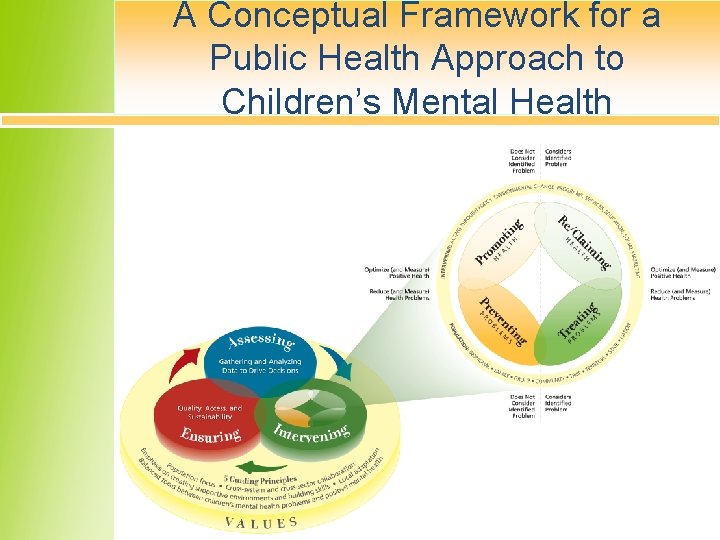
A Conceptual Framework for a Public Health Approach to Children’s Mental Health 17
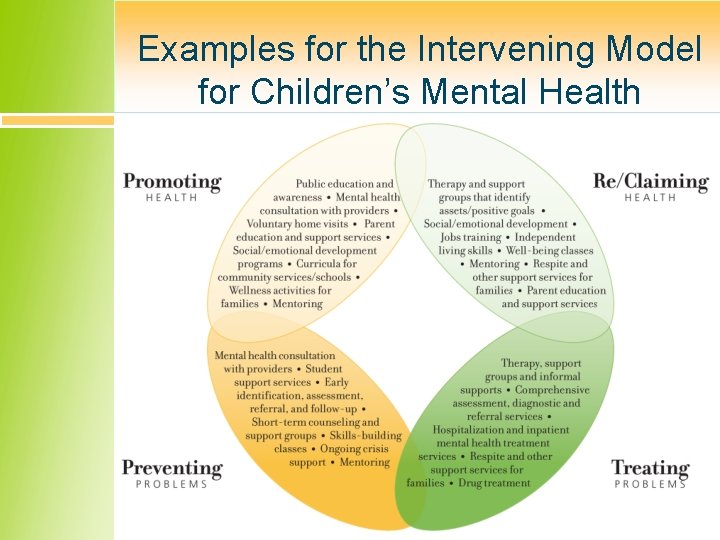
Examples for the Intervening Model for Children’s Mental Health 18
- Slides: 18