
ADVANCES IN CRT What Is The Patient Profile


- Slides: 58
ADVANCES IN CRT What Is The Patient Profile Who Can Benefit from CRT-P only? Progressi nella CRT Quale è il profilo del paziente che può beneficiare della sola CRT ? Dr. Maurizio Gasparini UO Elettrofisiologia ed Elettrostimolazione Istituto Clinico Humanitas, IRCCS, Rozzano-Milano
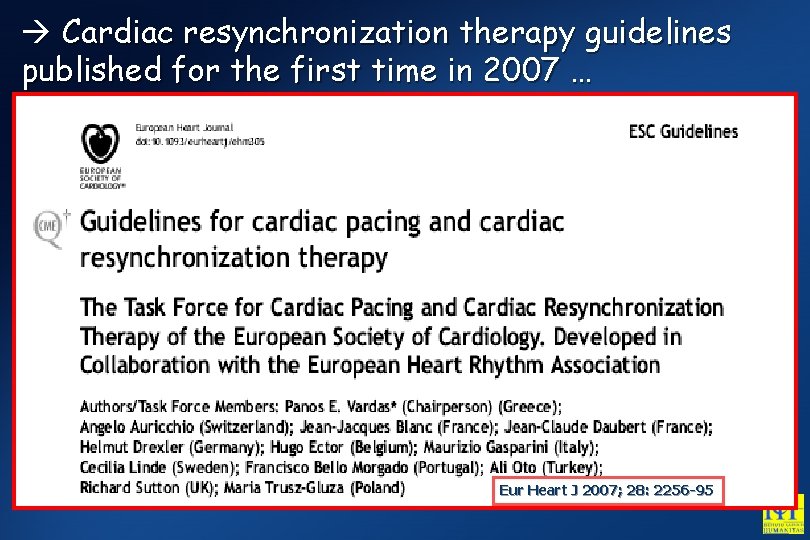
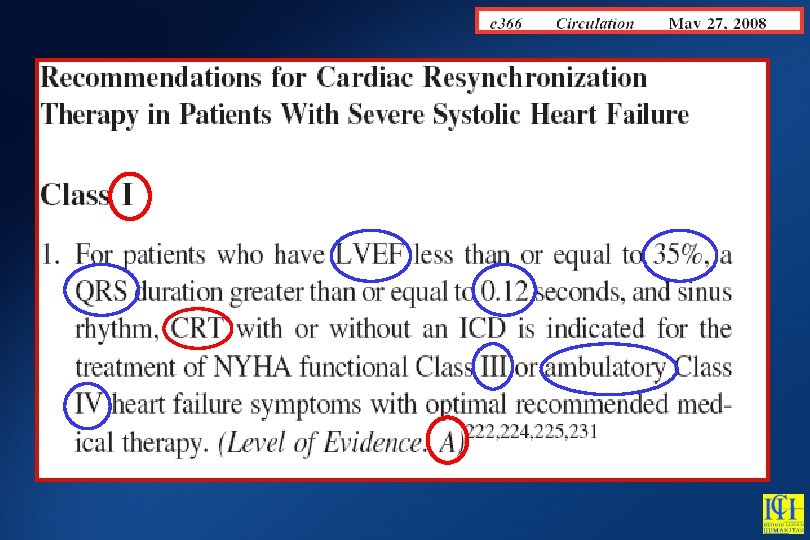
Cardiac resynchronization therapy guidelines published for the first time in 2007 … Eur Heart J 2007; 28: 2256 -95
Few months later , American GL published…
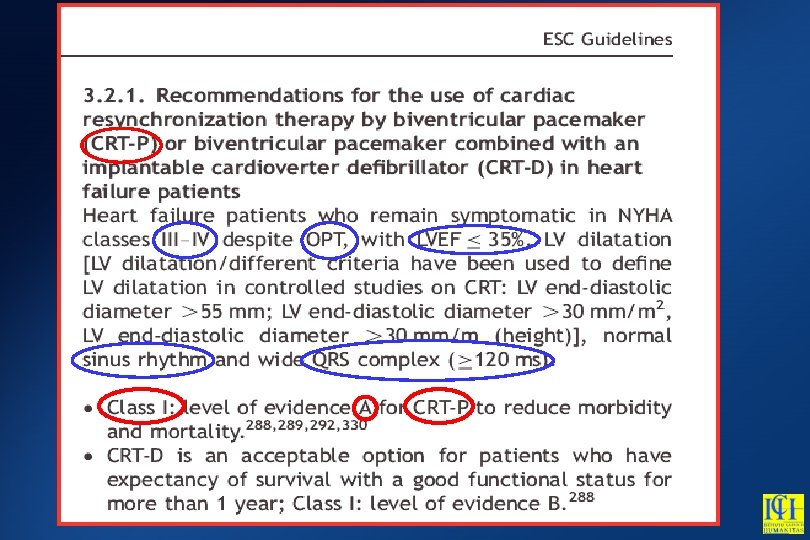
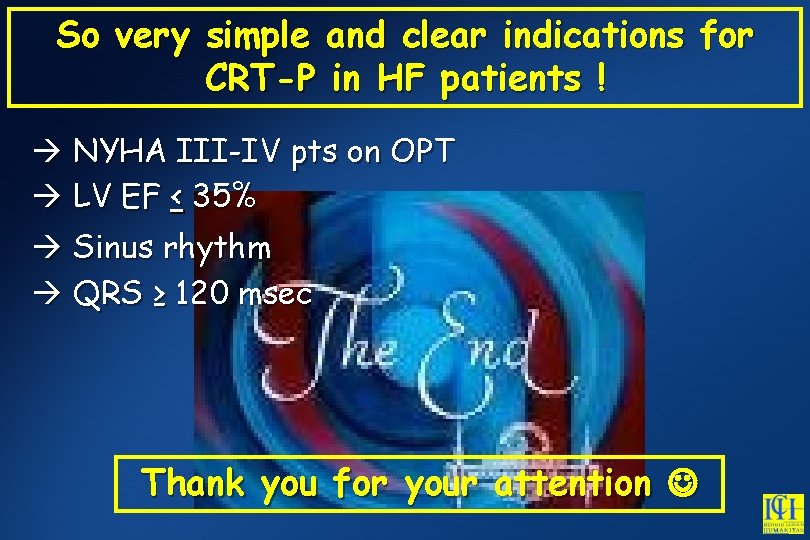
So very simple and clear indications for CRT-P in HF patients ! NYHA III-IV pts on OPT LV EF < 35% Sinus rhythm QRS ≥ 120 msec Thank you for your attention
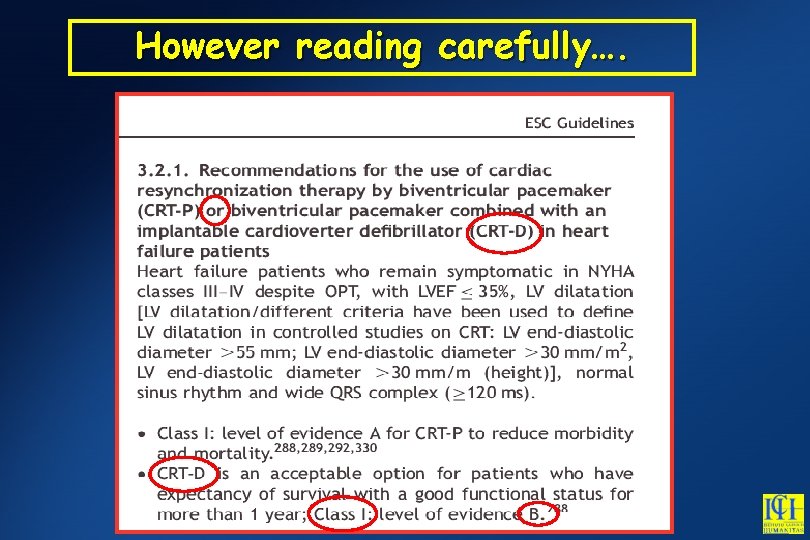
However reading carefully….
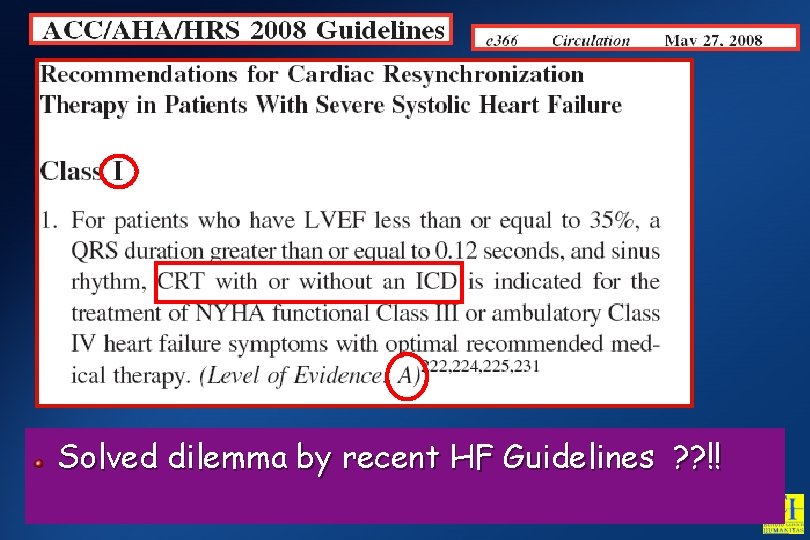
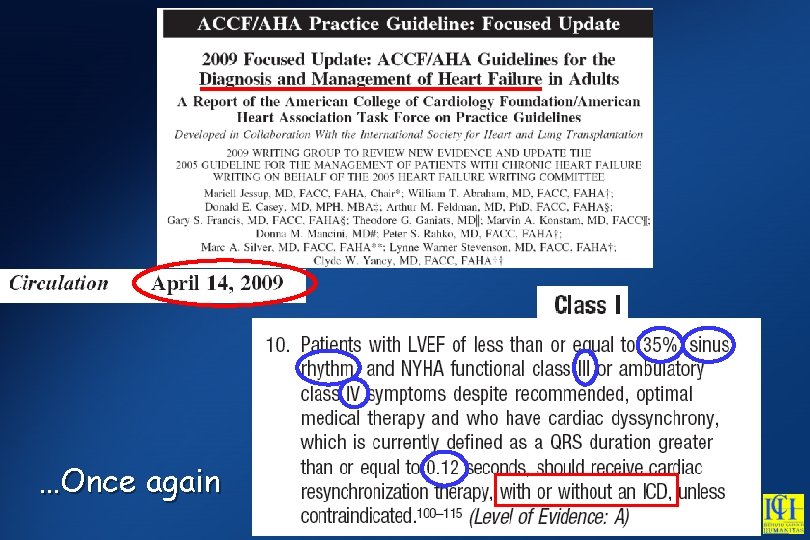
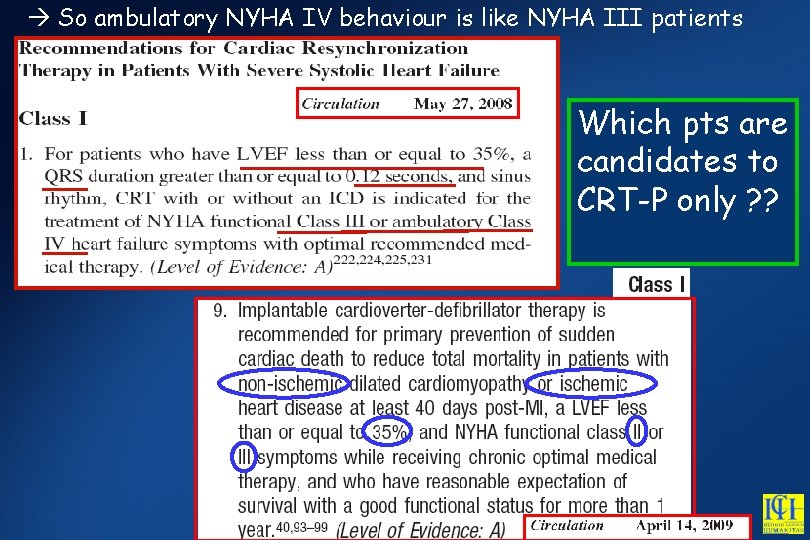
The ESC and AHA/ACC/HRS Guidelines on indications for Solved dilemma by recent HF Guidelines ? ? !! device therapy do not clearly indicate which patients are candidates to CRT-P only
…Once again
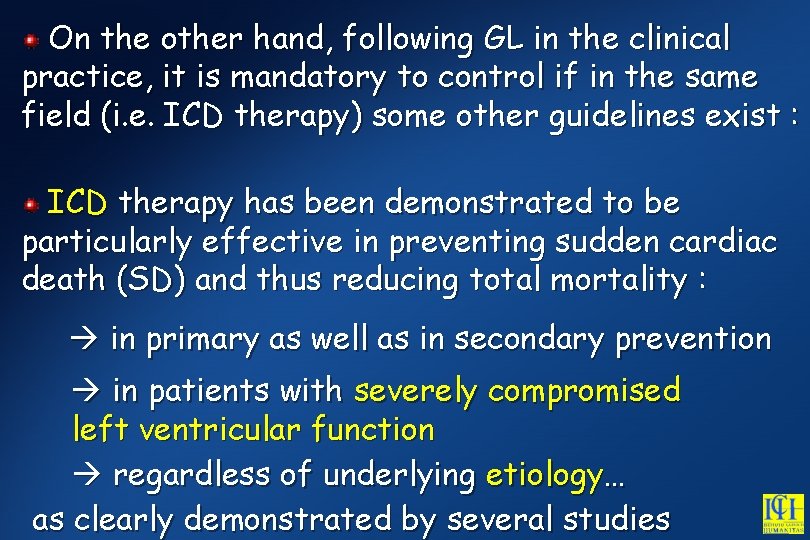
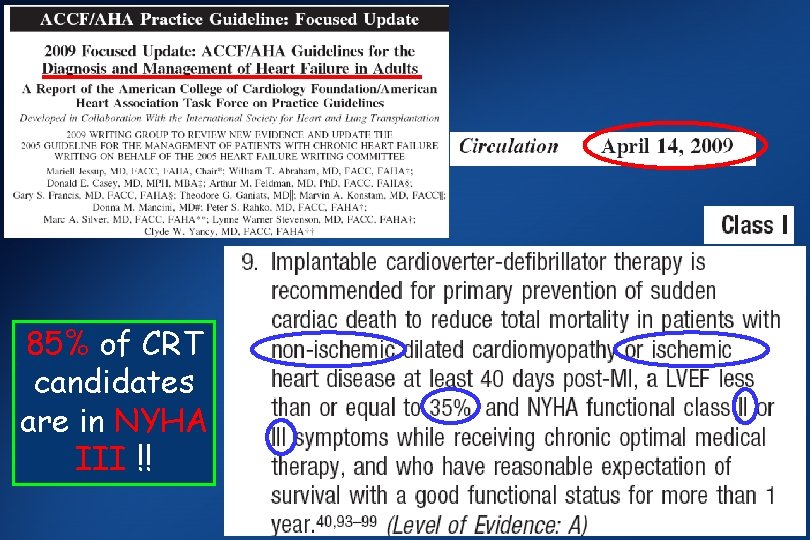
On the other hand, following GL in the clinical practice, it is mandatory to control if in the same field (i. e. ICD therapy) some other guidelines exist : ICD therapy has been demonstrated to be particularly effective in preventing sudden cardiac death (SD) and thus reducing total mortality : in primary as well as in secondary prevention in patients with severely compromised left ventricular function regardless of underlying etiology… as clearly demonstrated by several studies
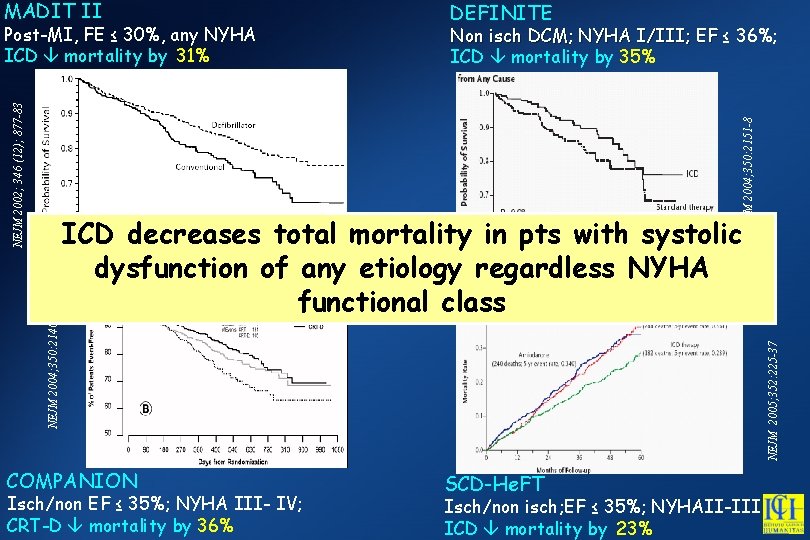
MADIT II Non isch DCM; NYHA I/III; EF ≤ 36%; ICD mortality by 35% ICD decreases total mortality in pts with systolic dysfunction of any etiology regardless NYHA functional class COMPANION Isch/non EF ≤ 35%; NYHA III- IV; CRT-D mortality by 36% NEJM 2005; 352: 225 -37 NEJM 2004; 350: 2140 -50 NEJM 2004; 350: 2151 -8 NEJM 2002; 346 (12); 877 -83 Post-MI, FE ≤ 30%, any NYHA ICD mortality by 31% DEFINITE SCD-He. FT Isch/non isch; EF ≤ 35%; NYHAII-III ICD mortality by 23%
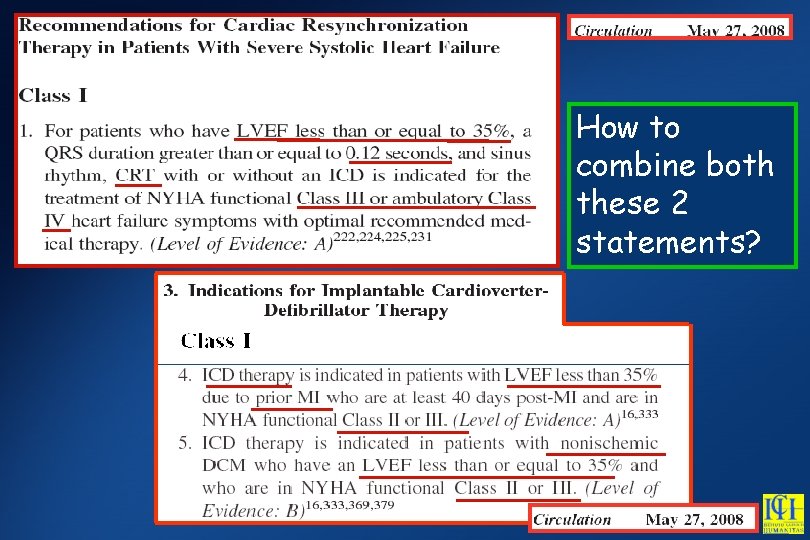
How to combine both these 2 statements?
85% of CRT candidates are in NYHA III !!
Long-term follow up after cardiac resynchronization therapy: poor clinical outcome in patients enrolled in advanced NYHA class IV Maurizio Gasparini Istituto Clinico Humanitas - Rozzano, Milano (Italy) Presented at AHA Congress 2003 Published on the. Heart. org
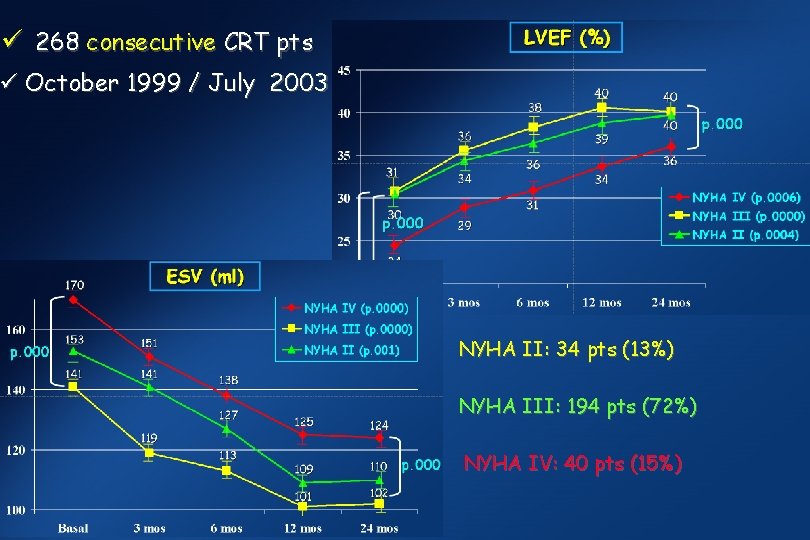
ü 268 consecutive CRT pts ü October 1999 / July 2003 NYHA II: 34 pts (13%) NYHA III: 194 pts (72%) NYHA IV: 40 pts (15%)
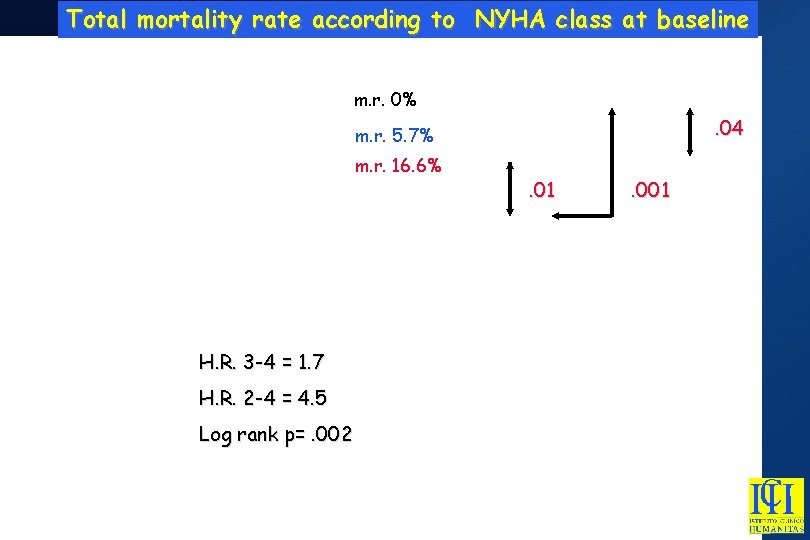
Total mortality rate according to NYHA class at baseline m. r. 0% . 04 m. r. 5. 7% m. r. 16. 6% H. R. 3 -4 = 1. 7 H. R. 2 -4 = 4. 5 Log rank p=. 002 . 01 . 001
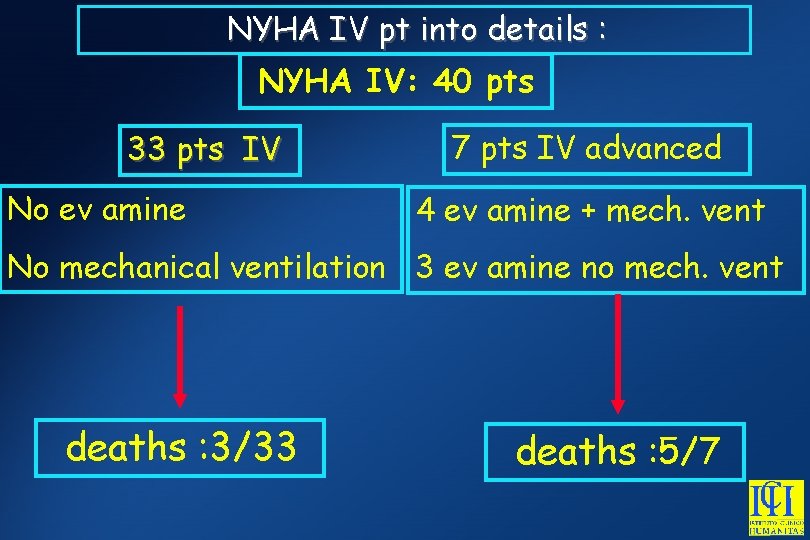
NYHA IV pt into details : NYHA IV: 40 pts 33 pts IV No ev amine 7 pts IV advanced 4 ev amine + mech. vent No mechanical ventilation 3 ev amine no mech. vent deaths : 3/33 deaths : 5/7
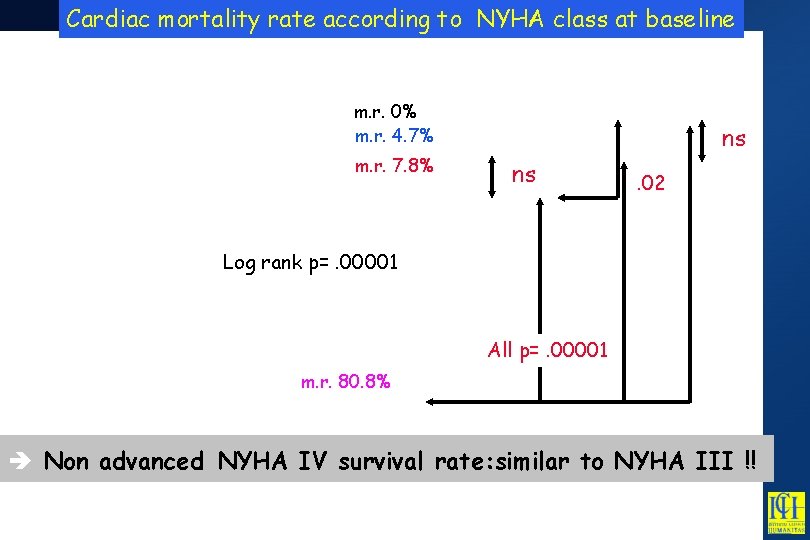
Cardiac mortality rate according to NYHA class at baseline m. r. 0% m. r. 4. 7% m. r. 7. 8% ns ns . 02 Log rank p=. 00001 All p=. 00001 m. r. 80. 8% è Non advanced NYHA IV survival rate: similar to NYHA III !!
So ambulatory NYHA IV behaviour is like NYHA III patients Which pts are candidates to CRT-P only ? ?
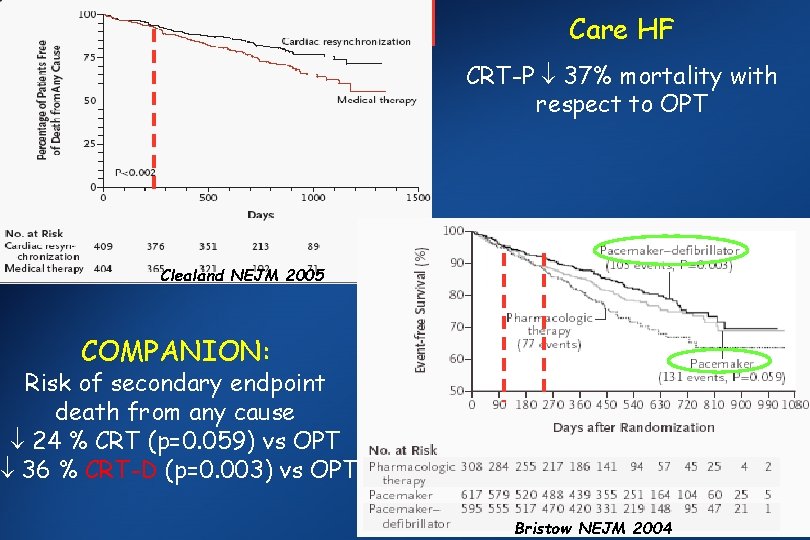
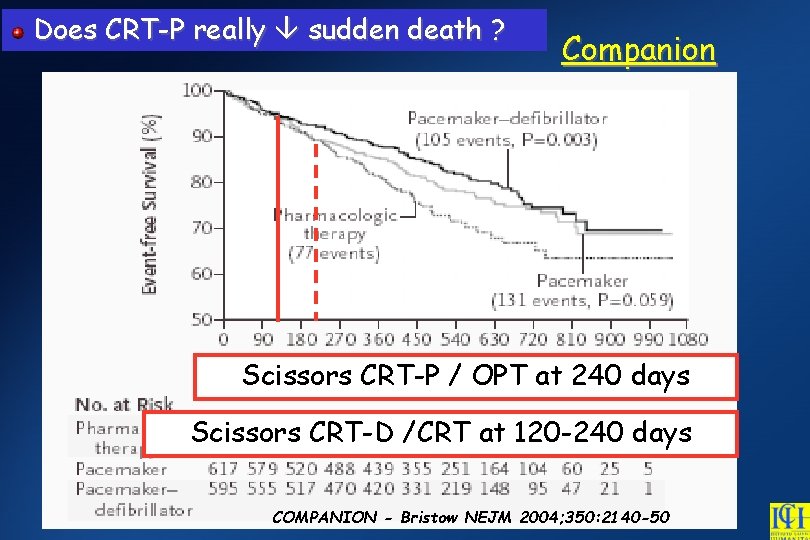
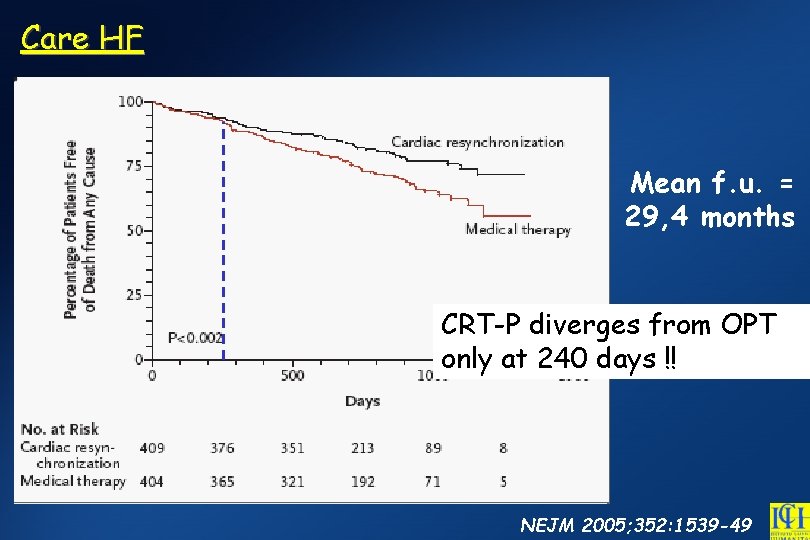
Which data in the literature? Care HF CRT-P 37% mortality with respect to OPT Clealand NEJM 2005 COMPANION: Risk of secondary endpoint death from any cause 24 % CRT (p=0. 059) vs OPT 36 % CRT-D (p=0. 003) vs OPT Bristow NEJM 2004
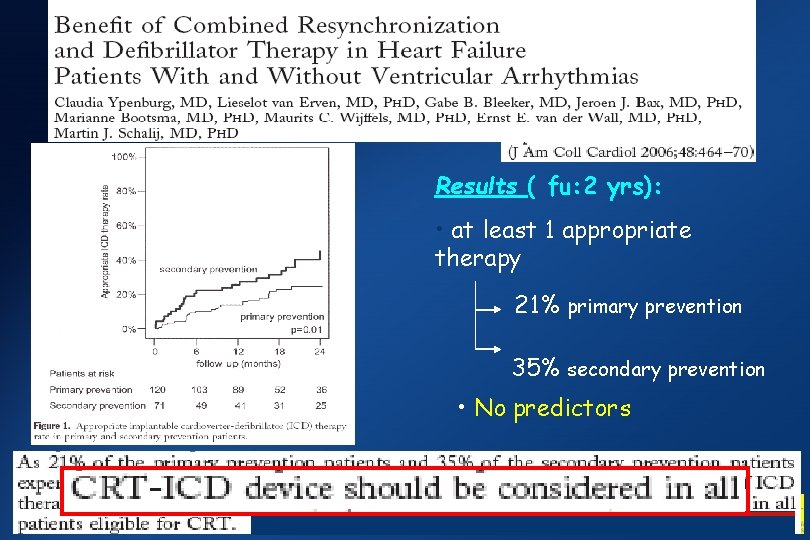
Inclusion criteria : NYHA III-IV, EF< 35%, QRS > 120 191 pts CRT-D 120 primaryprevention 71 secondary prevention Results ( fu: 2 yrs): • at least 1 appropriate therapy 21% primary prevention 35% secondary prevention • No predictors
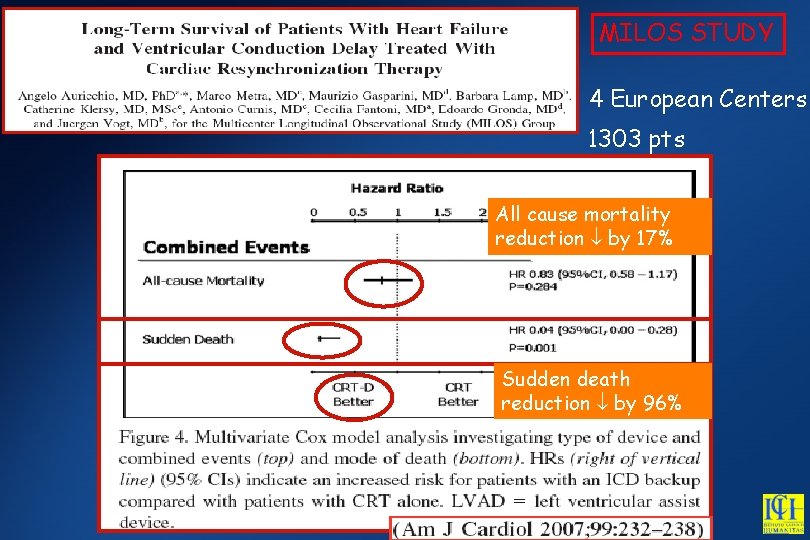
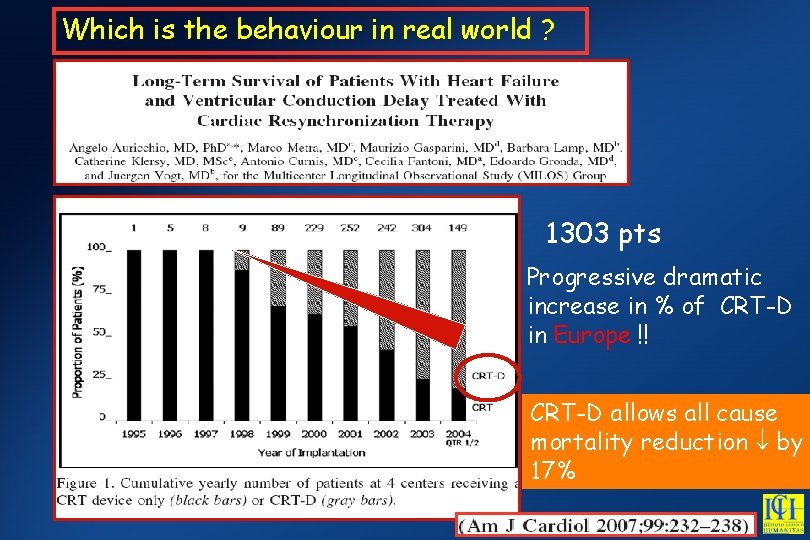
MILOS STUDY 4 European Centers 1303 pts All cause mortality reduction by 17% Sudden death reduction by 96%
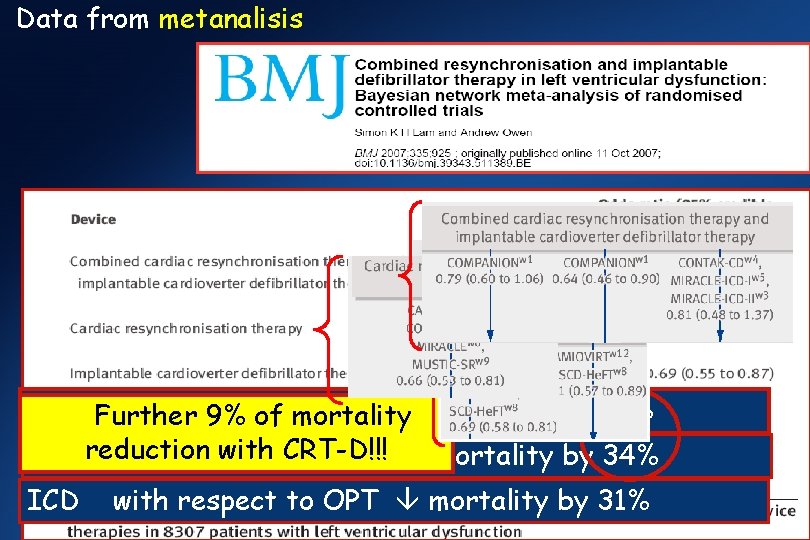
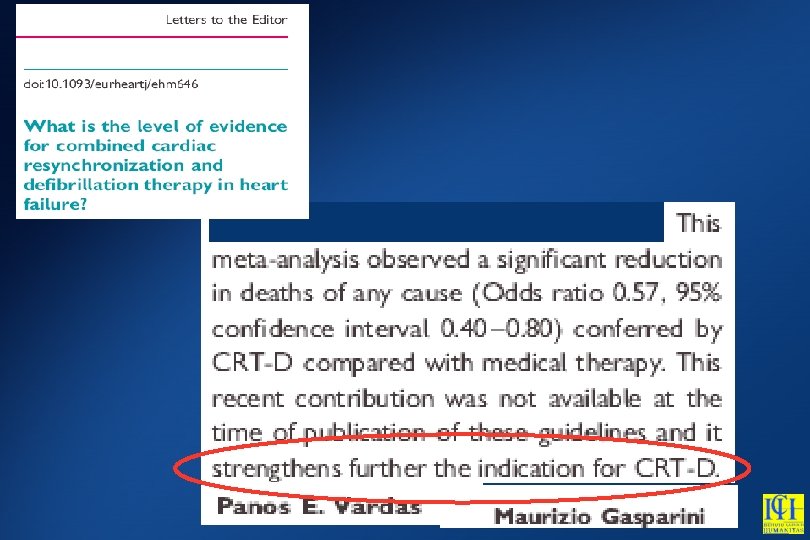
Data from metanalisis CRT-D with respect to OPT mortality by 43% Further 9% of mortality reduction with CRT-D!!! CRT-P with respect to OPT mortality by 34% ICD with respect to OPT mortality by 31%
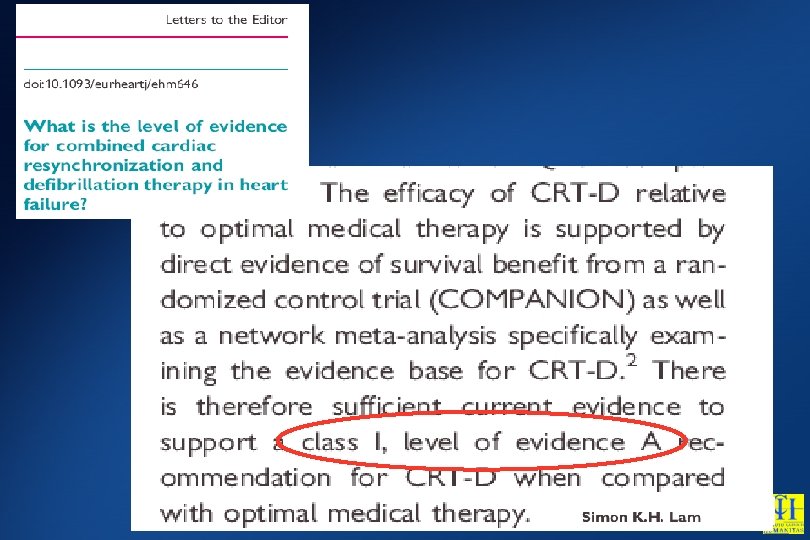
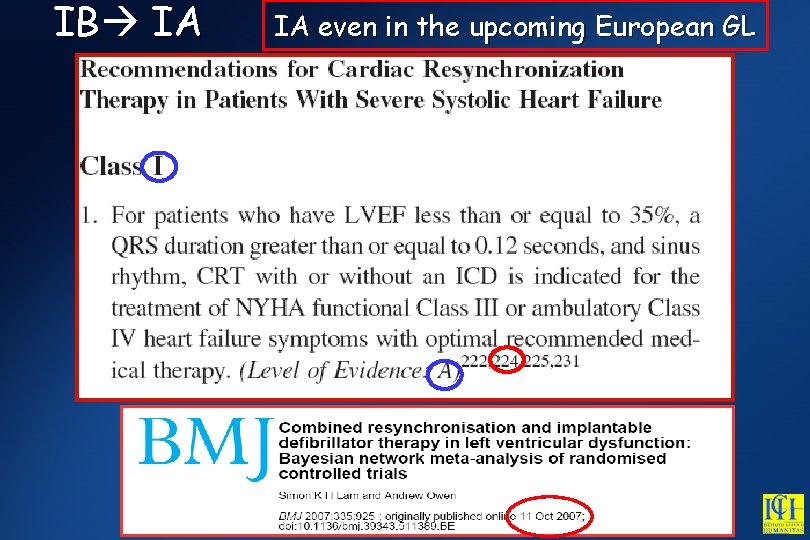
IB IA IA even in the upcoming European GL
Which is the behaviour in real world ? 1303 pts Progressive dramatic increase in % of CRT-D in Europe !! CRT-D allows all cause mortality reduction by 17%
CRT-P Similar behaviour in USA (small rate of CRT-P implant with respect to CRT-D)
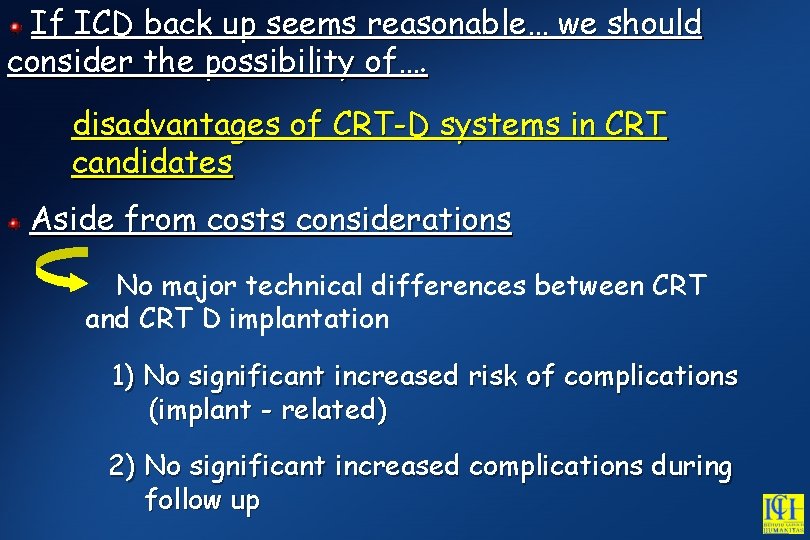
If ICD back up seems reasonable… we should consider the possibility of…. disadvantages of CRT-D systems in CRT candidates Aside from costs considerations ü No major technical differences between CRT and CRT D implantation 1) No significant increased risk of complications (implant - related) 2) No significant increased complications during follow up
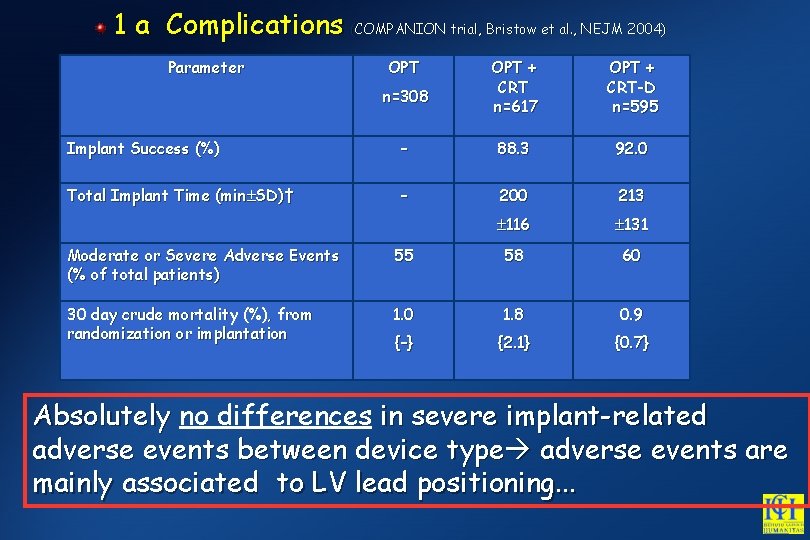
1 a Complications (COMPANION trial, Bristow et al. , NEJM 2004) Parameter OPT n=308 OPT + CRT n=617 OPT + CRT-D n=595 Implant Success (%) – 88. 3 92. 0 Total Implant Time (min SD)† – 200 213 116 131 Moderate or Severe Adverse Events (% of total patients) 55 58 60 30 day crude mortality (%), from randomization or implantation 1. 0 1. 8 0. 9 {–} {2. 1} {0. 7} Absolutely no differences in severe implant-related adverse events between device type adverse events are mainly associated to LV lead positioning. . .
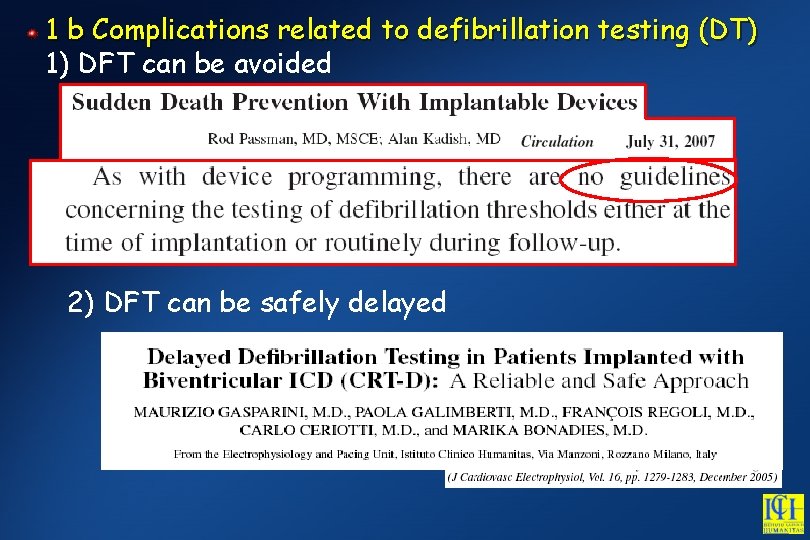
1 b Complications related to defibrillation testing (DT) 1) DFT can be avoided 2) DFT can be safely delayed
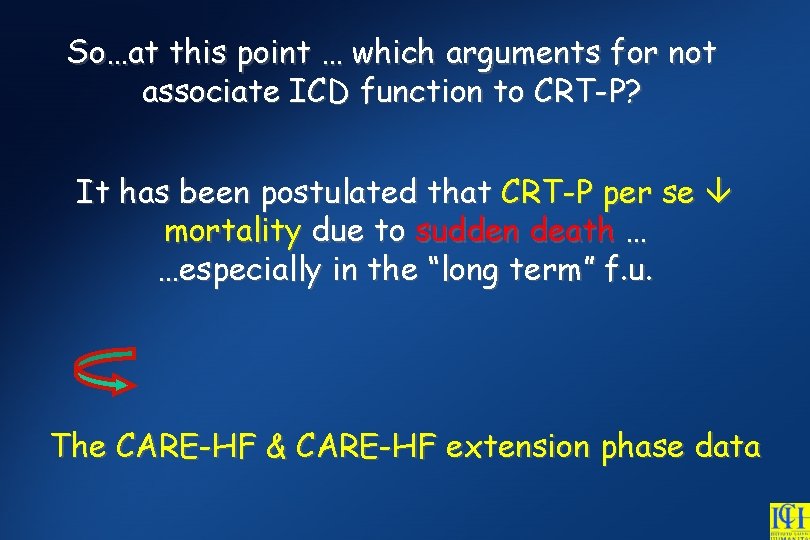
So…at this point … which arguments for not associate ICD function to CRT-P? It has been postulated that CRT-P per se mortality due to sudden death … …especially in the “long term” f. u. The CARE-HF & CARE-HF extension phase data
Does CRT-P really sudden death ? Companion Scissors CRT-P / OPT at 240 days Scissors CRT-D /CRT at 120 -240 days COMPANION - Bristow NEJM 2004; 350: 2140 -50
Care HF Mean f. u. = 29, 4 months CRT-P diverges from OPT only at 240 days !! NEJM 2005; 352: 1539 -49
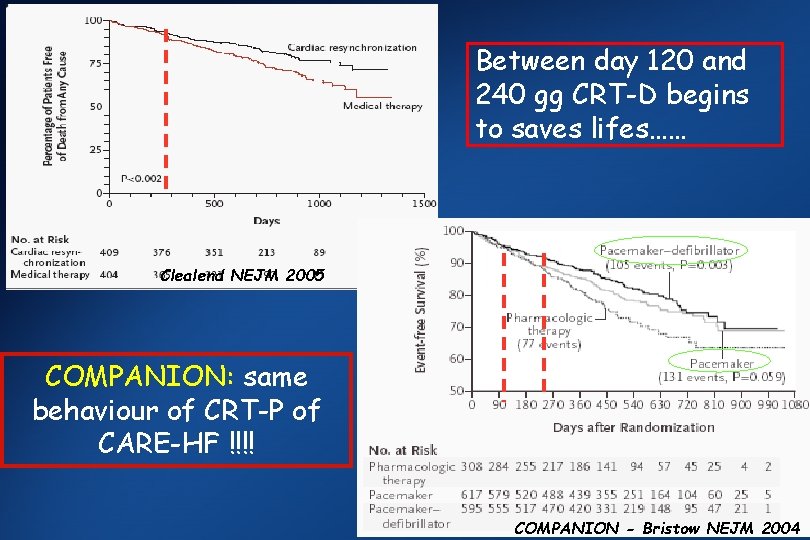
Between day 120 and 240 gg CRT-D begins to saves lifes…… Clealend NEJM 2005 COMPANION: same behaviour of CRT-P of CARE-HF !!!! COMPANION - Bristow NEJM 2004
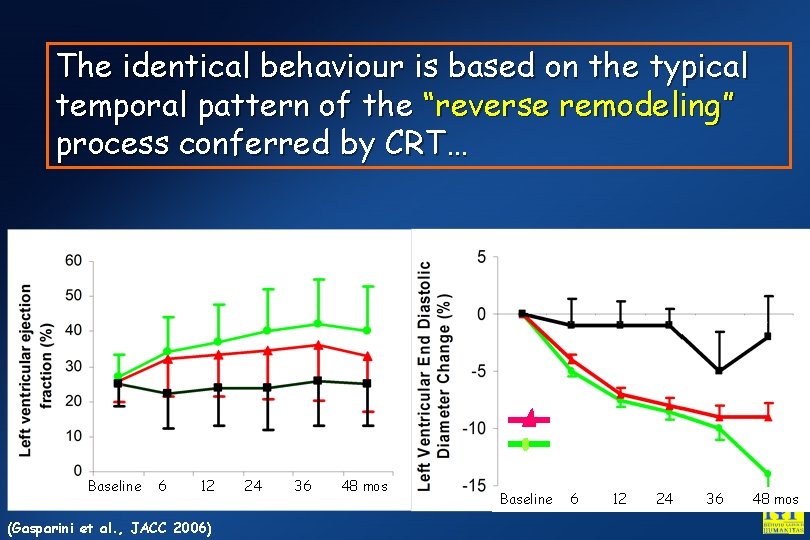
The identical behaviour is based on the typical temporal pattern of the “reverse remodeling” process conferred by CRT… SR AF + AVJ Ablation Baseline 6 12 (Gasparini et al. , JACC 2006) 24 36 48 mos AF no AVJ Ablation Baseline 6 12 24 36 48 mos
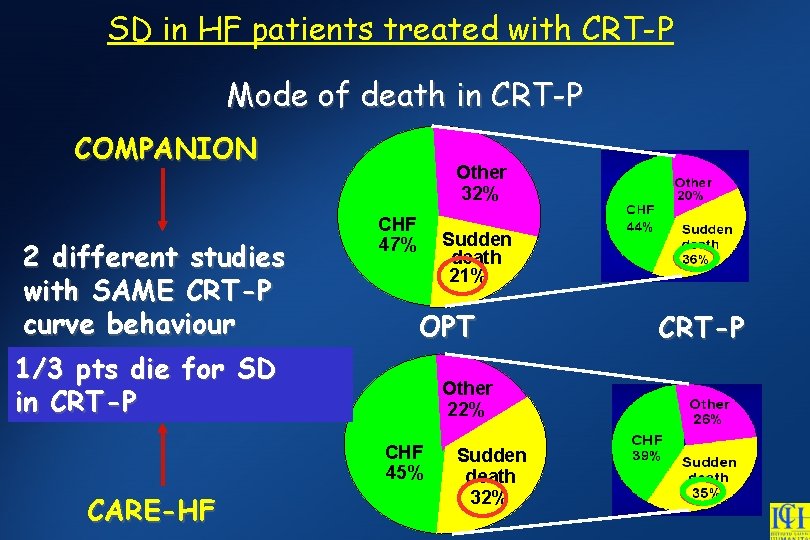
SD in HF patients treated with CRT-P Mode of death in CRT-P COMPANION 2 different studies with SAME CRT-P curve behaviour Other 32% CHF 47% Sudden death 21% OPT 1/3 pts die for -with SAME SDSD % in in CRT-P Other 22% CHF 45% CARE-HF Sudden death 32% CRT-P
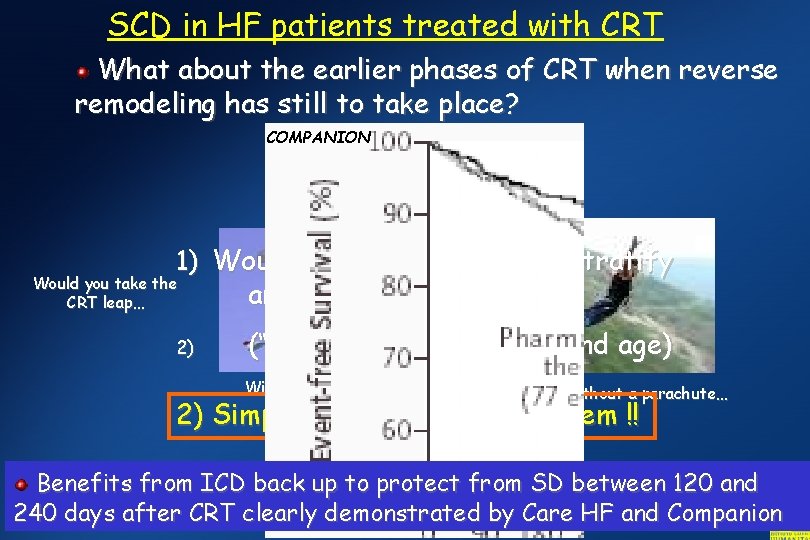
SCD in HF patients treated with CRT What about the earlier phases of CRT when reverse remodeling has still to take place? COMPANION 1) Would it be worthwhile to stratify Would you take the CRT leap… 2) arrhythmic risk? (“ethical” issue this day and age) With a parachute (ICD) or without a parachute… 2) Simply implant a CRT-D system !! 6 mos Benefits from ICD back up to protect from SD between 120 and 240 days after CRT clearly demonstrated by Care HF and Companion
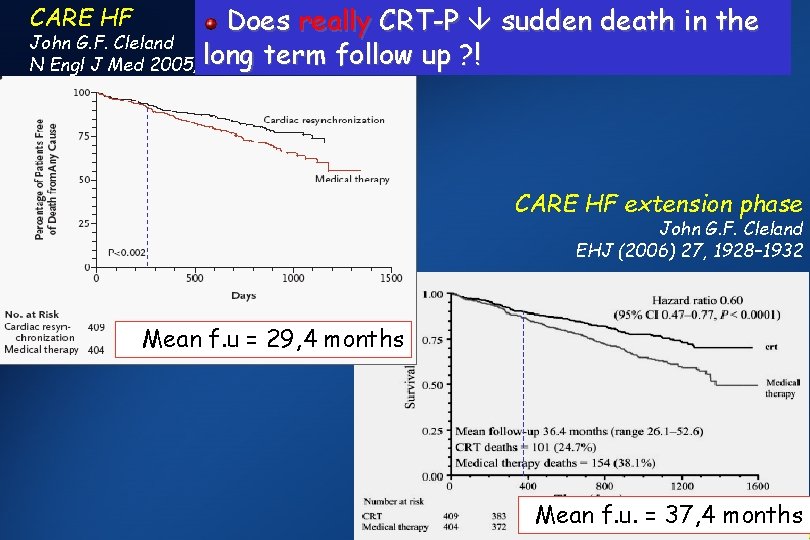
Does really CRT-P sudden death in the John G. F. Cleland long term follow up ? ! N Engl J Med 2005; 352: 1539 -49 CARE HF extension phase John G. F. Cleland EHJ (2006) 27, 1928– 1932 Mean f. u = 29, 4 months Mean f. u. = 37, 4 months
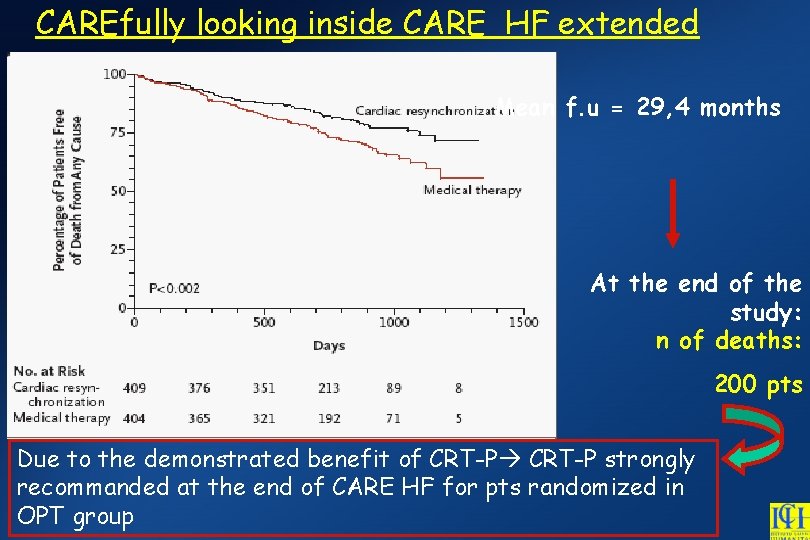
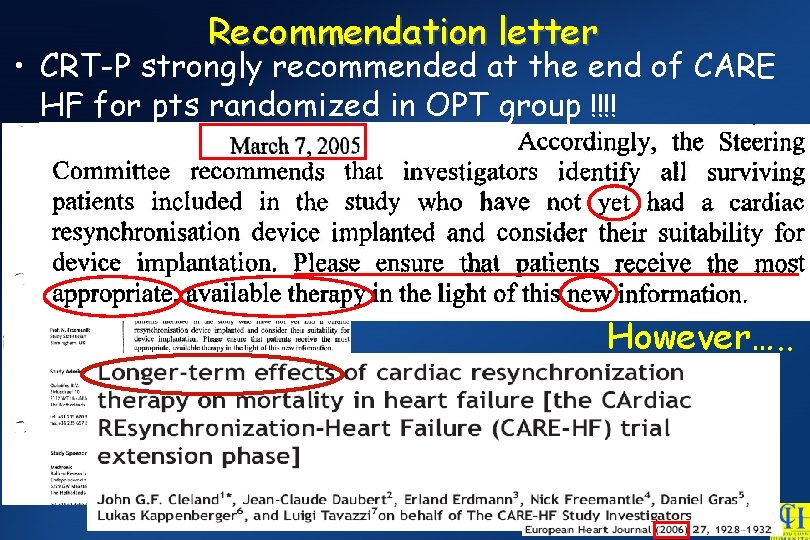
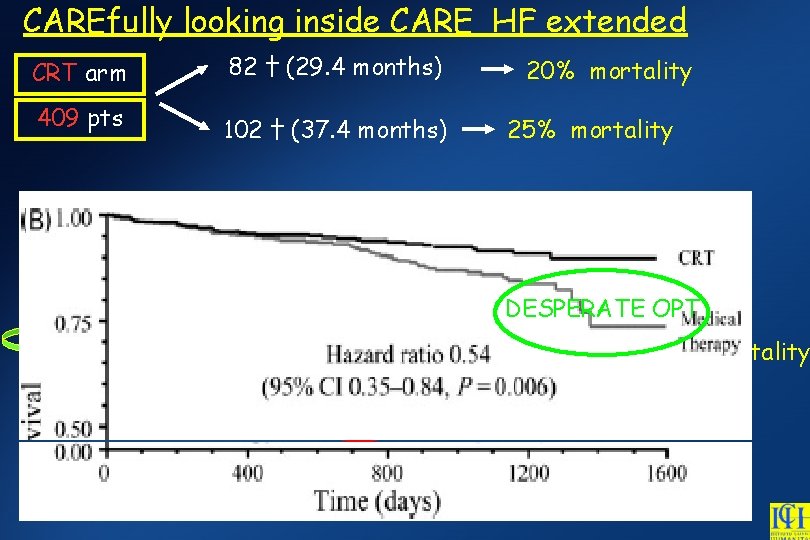
CAREfully looking inside CARE HF extended Mean f. u = 29, 4 months At the end of the study: n of deaths: 200 pts Due to the demonstrated benefit of CRT-P strongly recommanded at the end of CARE HF for pts randomized in OPT group
Recommendation letter • CRT-P strongly recommended at the end of CARE HF for pts randomized in OPT group !!!! However…. .
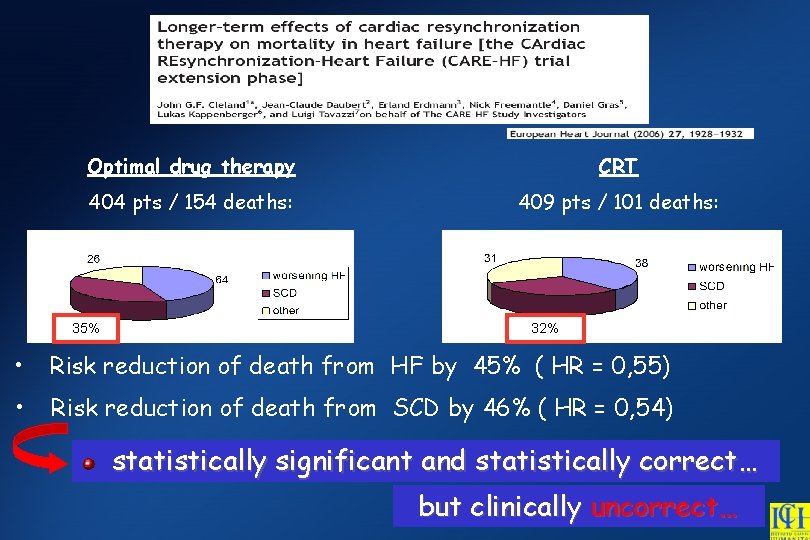
Optimal drug therapy CRT 404 pts / 154 deaths: 409 pts / 101 deaths: 35% 32% • Risk reduction of death from HF by 45% ( HR = 0, 55) • Risk reduction of death from SCD by 46% ( HR = 0, 54) statistically significant and statistically correct… but clinically uncorrect…
Does really CRT-P sudden death in the long term f. u. ? Why such a big spaceball ? !
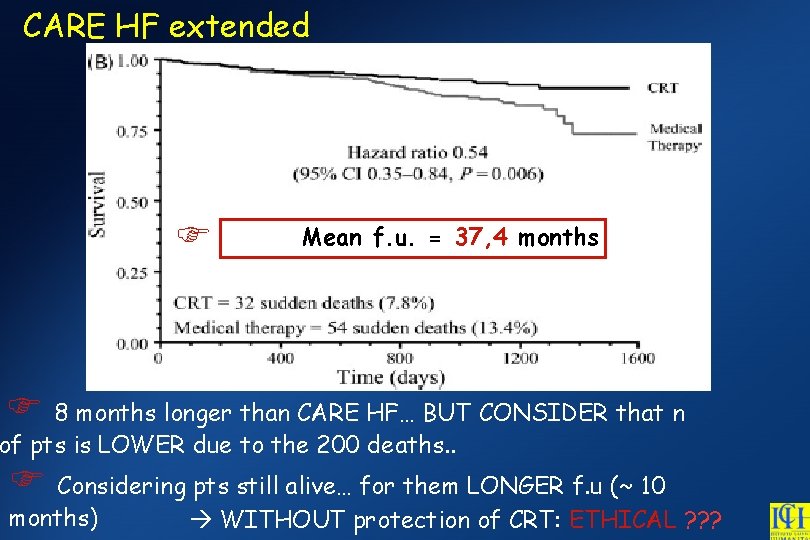
CARE HF extended Mean f. u. = 37, 4 months 8 months longer than CARE HF… BUT CONSIDER that n of pts is LOWER due to the 200 deaths. . Considering pts still alive… for them LONGER f. u (~ 10 months) WITHOUT protection of CRT: ETHICAL ? ? ?
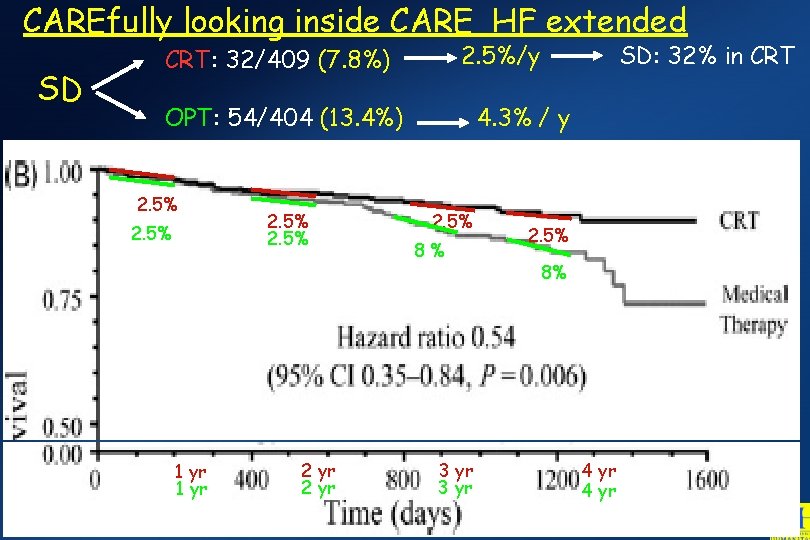
CAREfully looking inside CARE HF extended SD 2. 5%/y CRT: 32/409 (7. 8%) OPT: 54/404 (13. 4%) 2. 5% 1 yr 2. 5% 2 yr SD: 32% in CRT 4. 3% / y 2. 5% 8% 3 yr 2. 5% 8% 4 yr
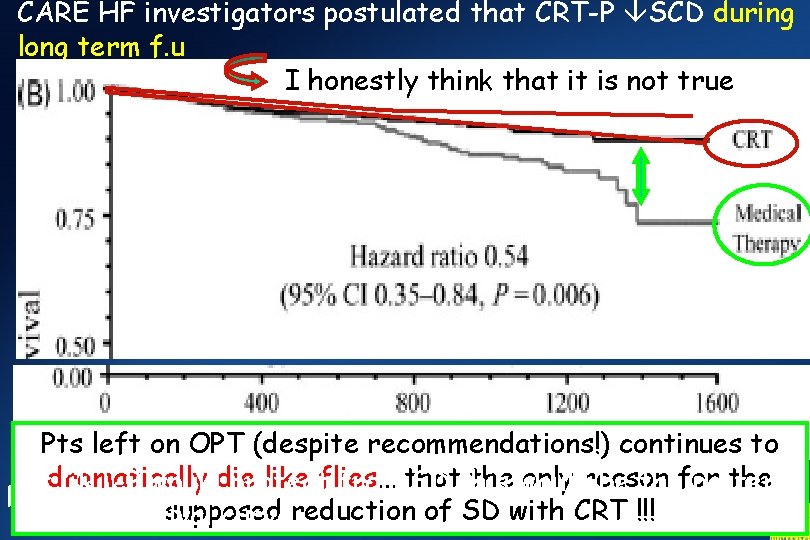
CAREfully looking inside CARE HF extended CRT arm 82 † (29. 4 months) 409 pts 102 † (37. 4 months) OPT arm 404 pts BUT… 404 pts 120 † (29. 4 months) 154 † (37. 4 months) 20% mortality 25% mortality 29. 7% mortality 38% mortality DESPERATE OPT 95 OPT CONVERTED to CRT: 22 † 23. 2% mortality 309 pts: 132 † (DESPERATE OPT!!) 42. 7% mortality
CARE HF investigators postulated that CRT-P SCD during long term f. u I honestly think that it is not true Pts left on OPT (despite recommendations!) continues to like flies… the would only reason the Ifdramatically CRT-P woulddie protect from that SD this be thefor pattern but SD rate supposed in CRT-P REMAIN THE SAME over time !! of the survival curvereduction of SD with CRT !!!
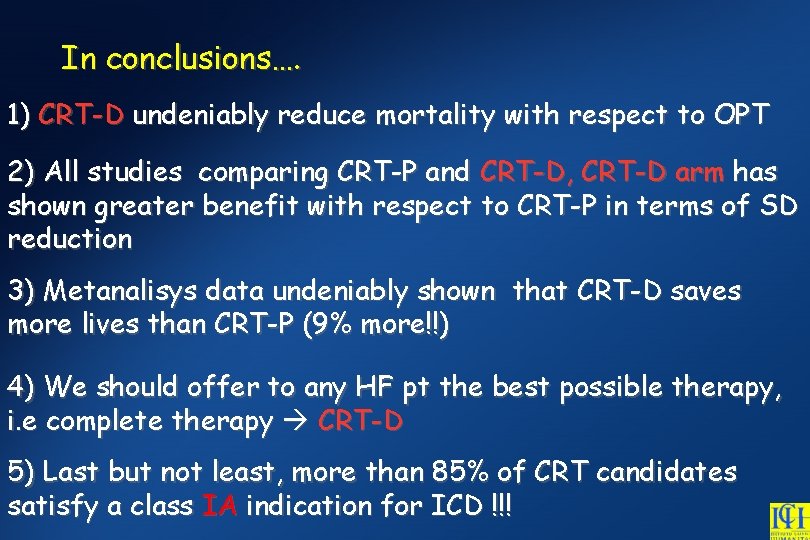
In conclusions…. 1) CRT-D undeniably reduce mortality with respect to OPT 2) All studies comparing CRT-P and CRT-D, CRT-D arm has shown greater benefit with respect to CRT-P in terms of SD reduction 3) Metanalisys data undeniably shown that CRT-D saves more lives than CRT-P (9% more!!) 4) We should offer to any HF pt the best possible therapy, i. e complete therapy CRT-D 5) Last but not least, more than 85% of CRT candidates satisfy a class IA indication for ICD !!!
Is there still place for CRT-P ?
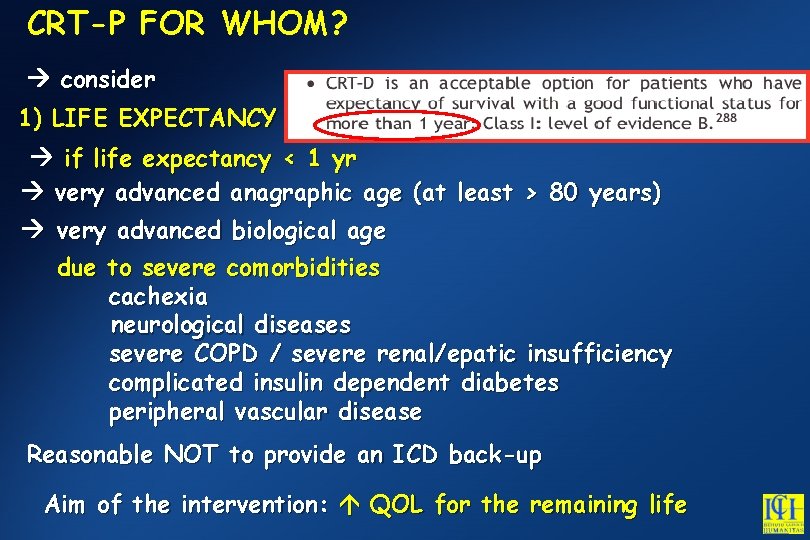
CRT-P FOR WHOM? consider 1) LIFE EXPECTANCY if life expectancy < 1 yr very advanced anagraphic age (at least > 80 years) very advanced biological age due to severe comorbidities cachexia neurological diseases severe COPD / severe renal/epatic insufficiency complicated insulin dependent diabetes peripheral vascular disease Reasonable NOT to provide an ICD back-up Aim of the intervention: QOL for the remaining life
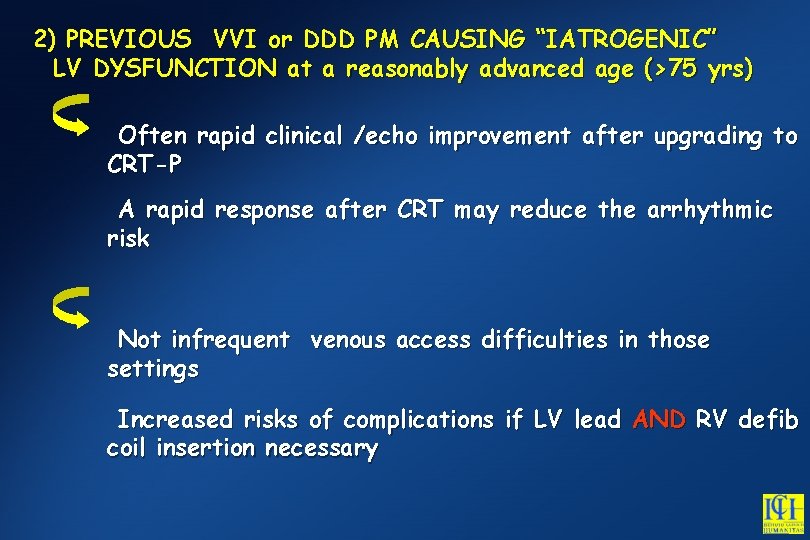
2) PREVIOUS VVI or DDD PM CAUSING “IATROGENIC” LV DYSFUNCTION at a reasonably advanced age (>75 yrs) Often rapid clinical /echo improvement after upgrading to CRT-P A rapid response after CRT may reduce the arrhythmic risk Not infrequent venous access difficulties in those settings Increased risks of complications if LV lead AND RV defib coil insertion necessary
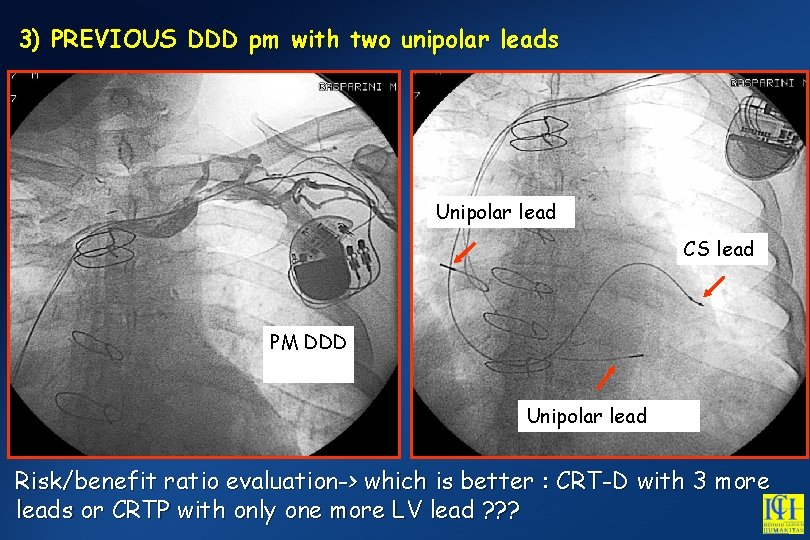
3) PREVIOUS DDD pm with two unipolar leads Unipolar lead CS lead PM DDD Unipolar lead Risk/benefit ratio evaluation-> which is better : CRT-D with 3 more leads or CRTP with only one more LV lead ? ? ?
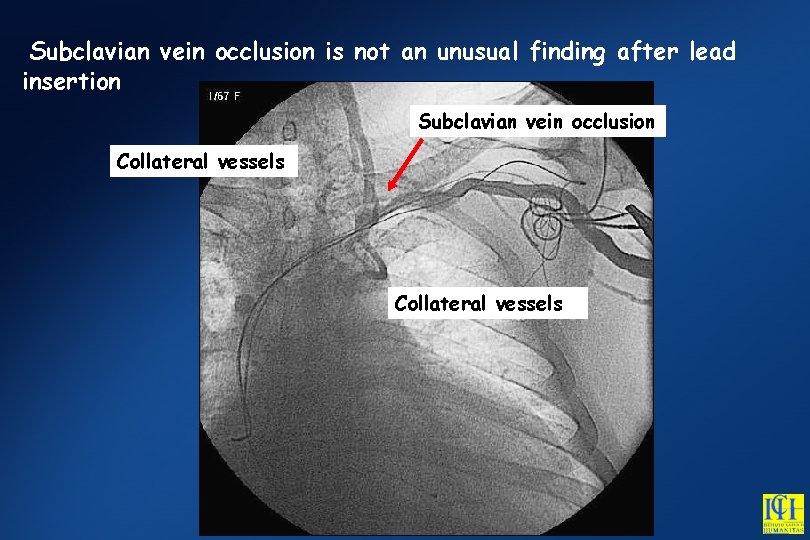
Subclavian vein occlusion is not an unusual finding after lead insertion Subclavian vein occlusion Collateral vessels
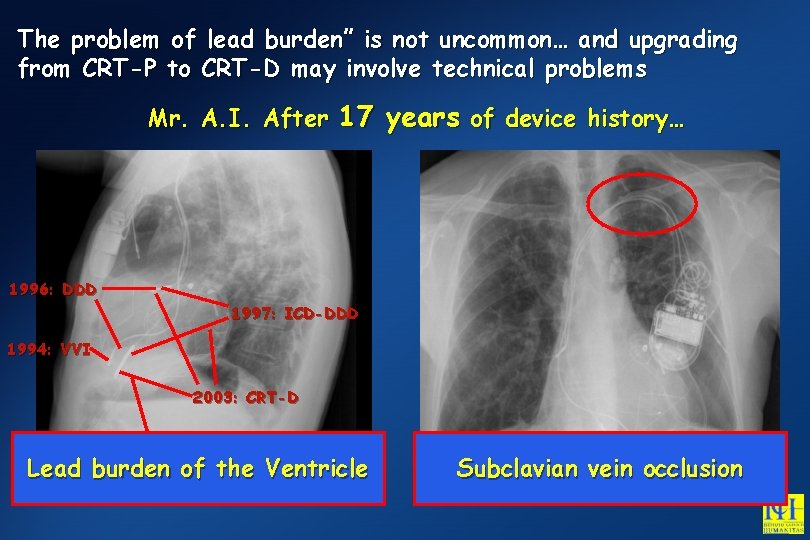
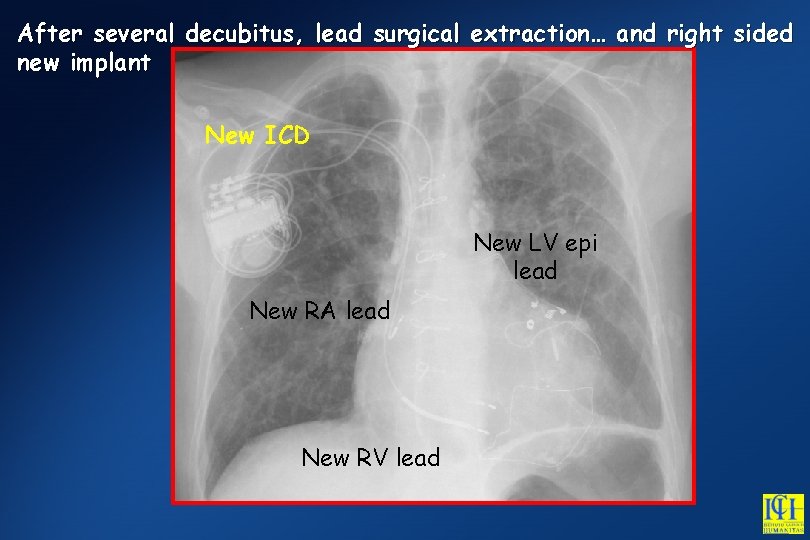
The problem of lead burden” is not uncommon… and upgrading from CRT-P to CRT-D may involve technical problems Mr. A. I. After 17 years of device history… 1996: DDD 1997: ICD-DDD 1994: VVI 2003: CRT-D Lead burden of. Epi-ICD the Ventricle 1989: Subclavian vein occlusion
After several decubitus, lead surgical extraction… and right sided new implant New ICD New LV epi lead New RA lead New RV lead
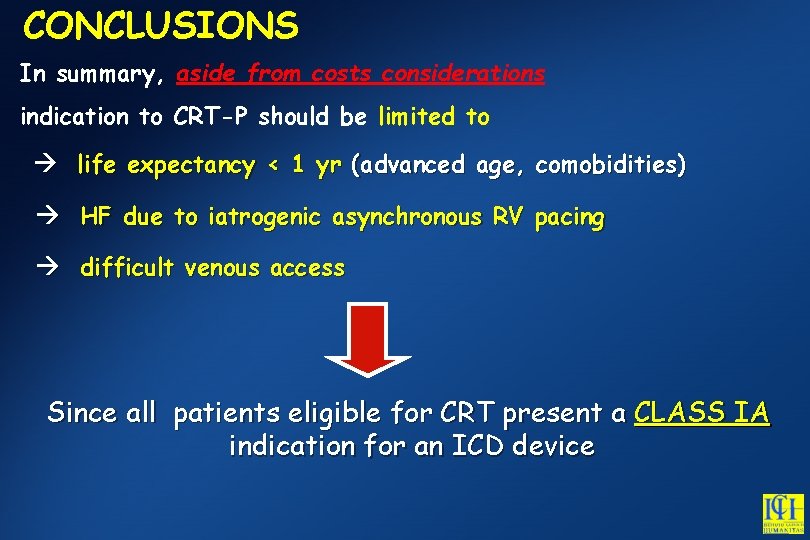
CONCLUSIONS In summary, aside from costs considerations indication to CRT-P should be limited to life expectancy < 1 yr (advanced age, comobidities) HF due to iatrogenic asynchronous RV pacing difficult venous access Since all patients eligible for CRT present a CLASS IA indication for an ICD device
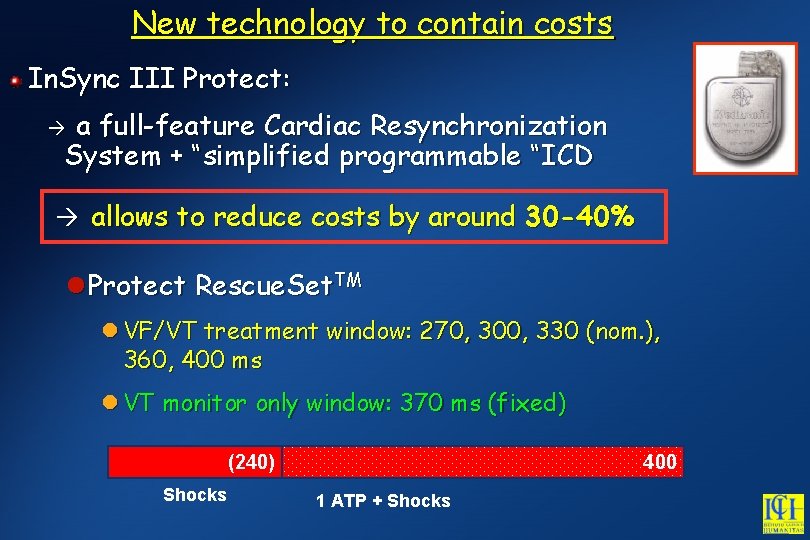
New technology to contain costs In. Sync III Protect: a full-feature Cardiac Resynchronization System + “simplified programmable “ICD allows to reduce costs by around 30 -40% l. Protect Rescue. Set. TM l VF/VT treatment window: 270, 300, 330 (nom. ), 360, 400 ms l VT monitor only window: 370 ms (fixed) (240) Shocks 400 1 ATP + Shocks
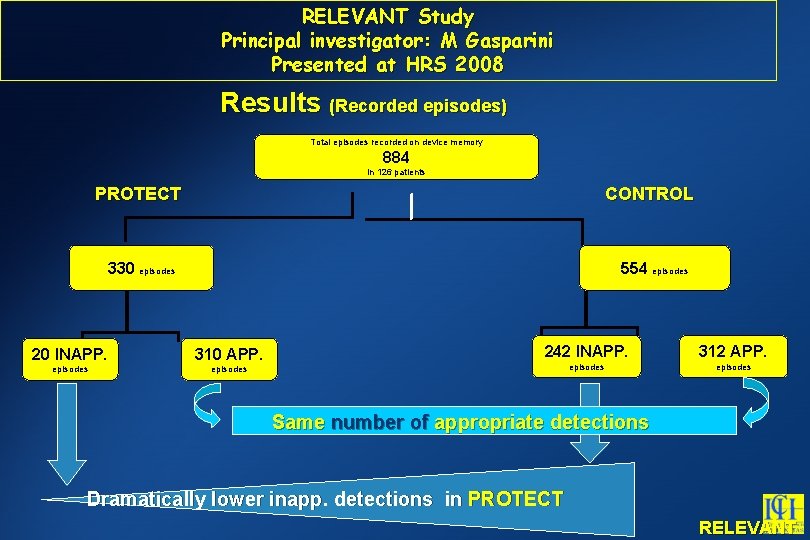
RELEVANT Study Principal investigator: M Gasparini Presented at HRS 2008 Results (Recorded episodes) Total episodes recorded on device memory 884 in 126 patients PROTECT CONTROL 330 episodes 554 episodes 20 INAPP. 310 APP. episodes 242 INAPP. 312 APP. episodes Same number of appropriate detections Dramatically lower inapp. detections in PROTECT RELEVANT