
Advanced Waves Coherent Sources Interference Interference Constuctive Phase








- Slides: 47
Advanced Waves
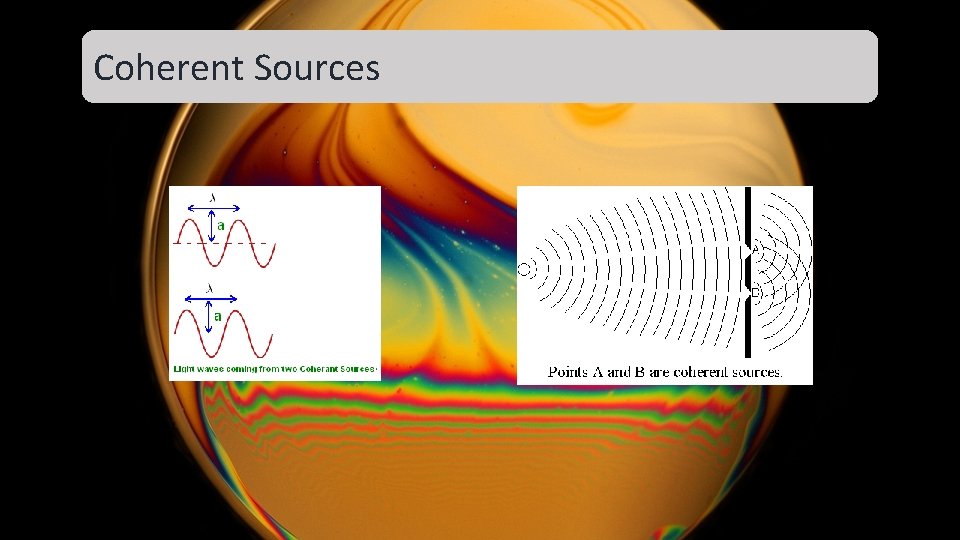
Coherent Sources
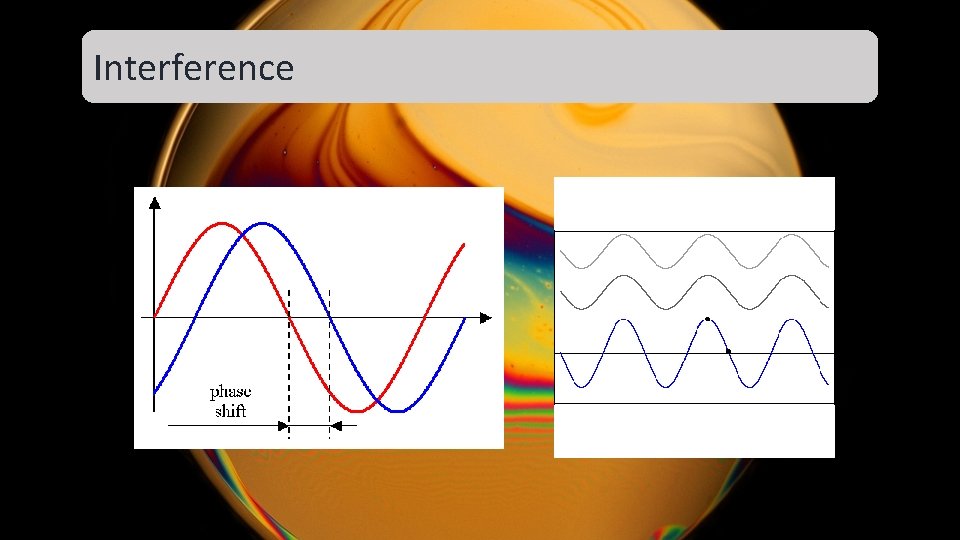
Interference
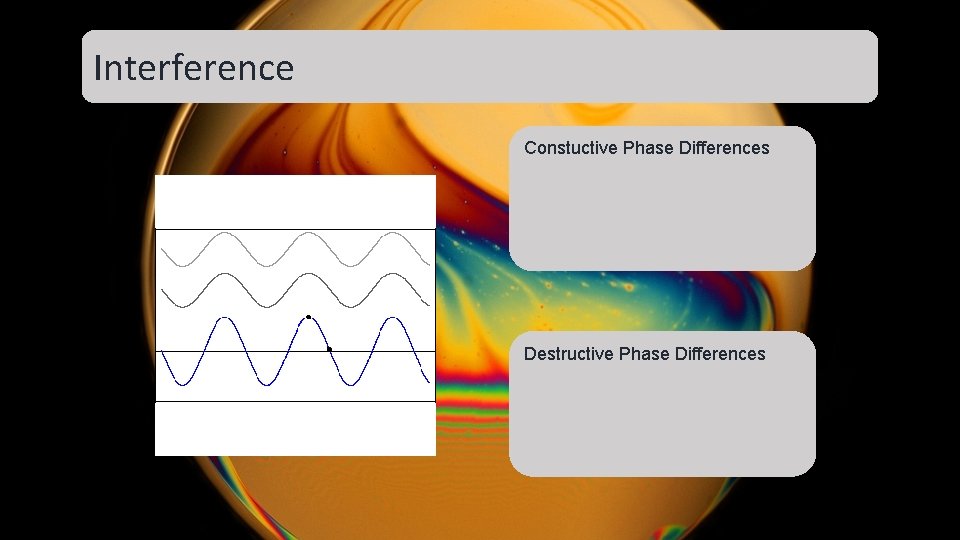
Interference Constuctive Phase Differences Destructive Phase Differences
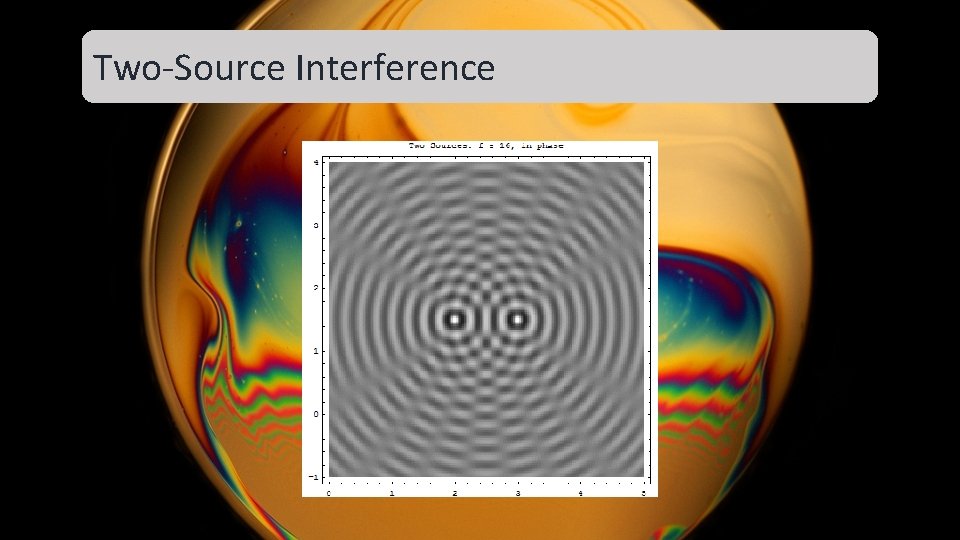
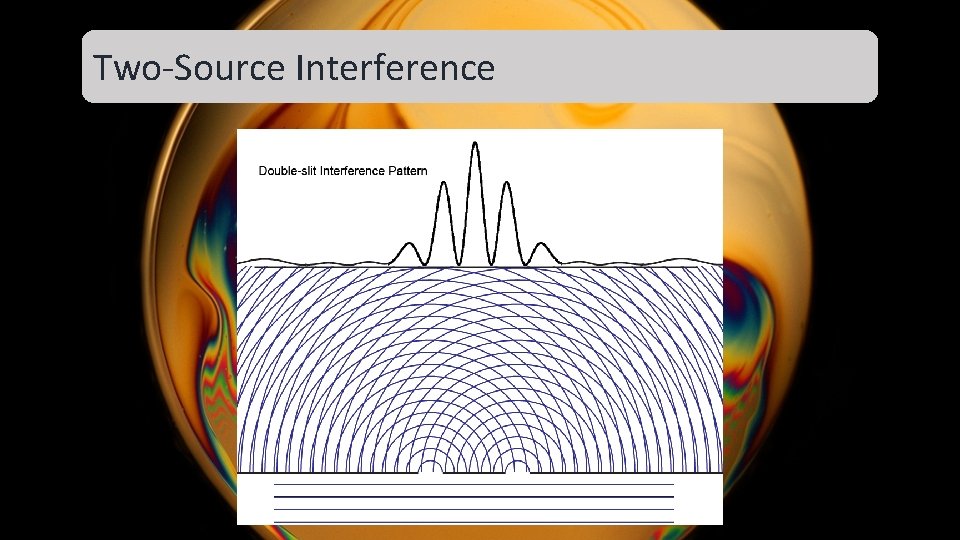
Two-Source Interference
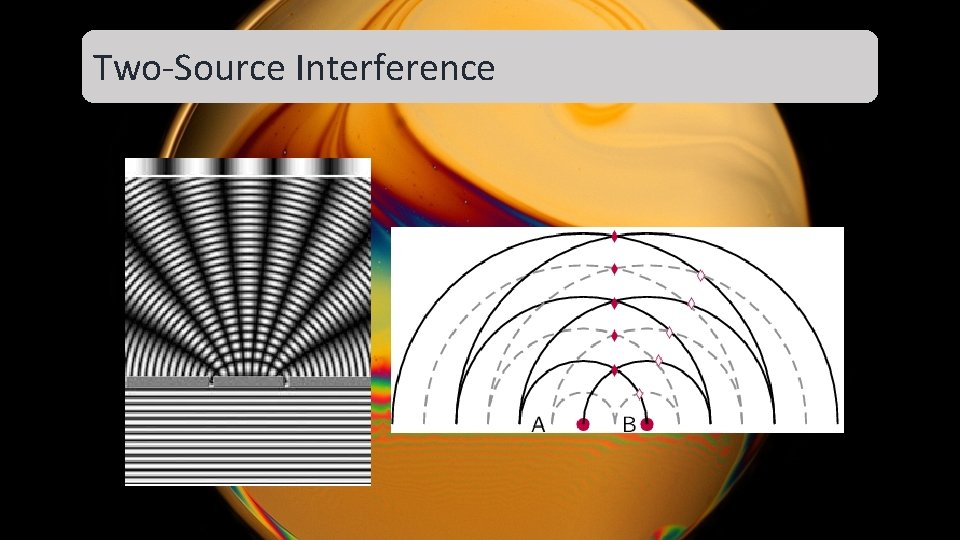
Two-Source Interference
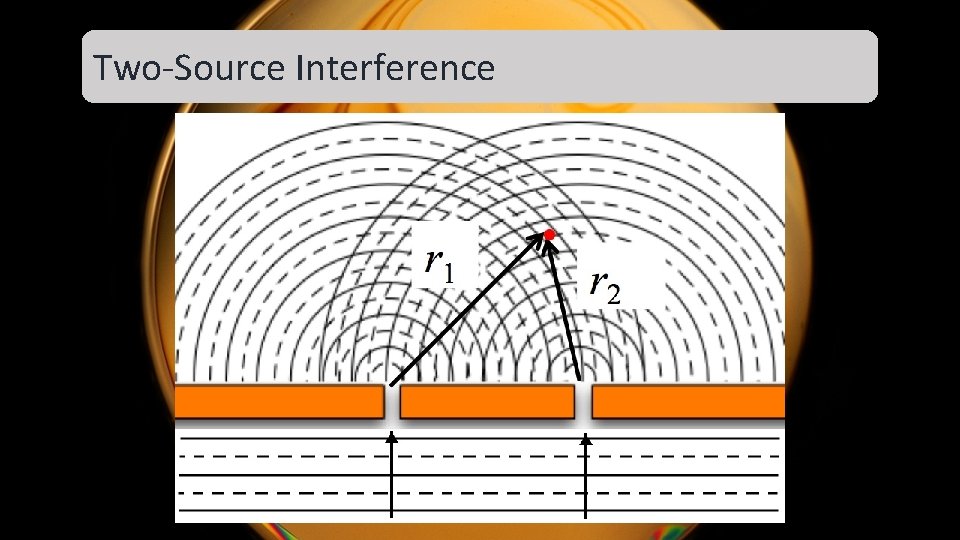
Two-Source Interference
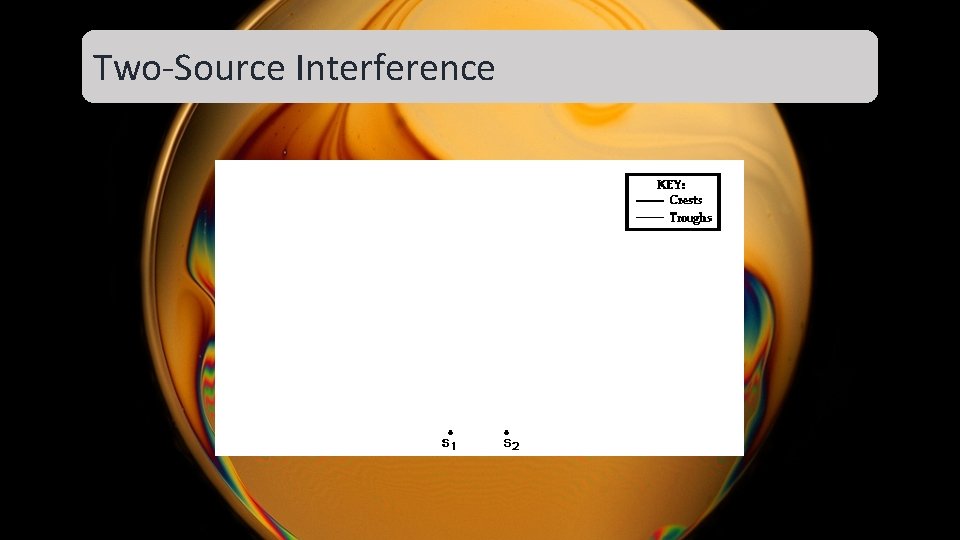
Two-Source Interference
Two-Source Interference
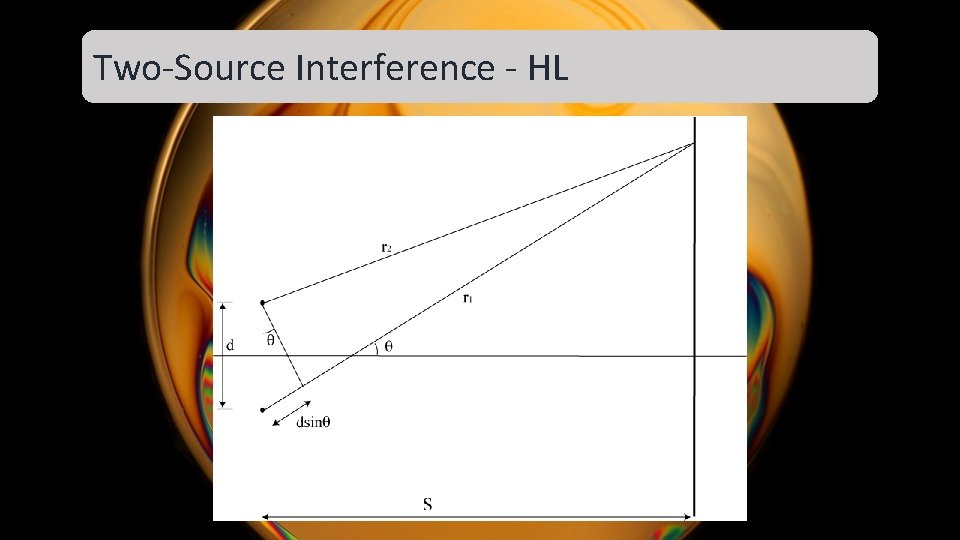
Two-Source Interference - HL
Two-Source Interference - HL Derivation:
Two-Source Interference - HL • A pair of narrow slits is illuminated with green light of wavelength 546. 1 nm. The resulting interference maxima are found to be separated by 1. 10 mm on a screen 1. 00 m from the slits. What is the separation of the slits? • Red light of wavelength 633 nm is incident on a pair of slits whose center-to-center separation is 0. 120 mm. What is the linear separation of the maxima corresponding to m=+7 and m=-7 if they are observed on a wall 5. 75 m away from the slits? • A pair of narrow slits is illuminated with blue light of wavelength 434 nm. The resulting interference maxima are separated by 1. 00 mm on a screen 1 m from the slits. What would be the separation of the maxima if the illuminating light were red of wavelength 656 nm?
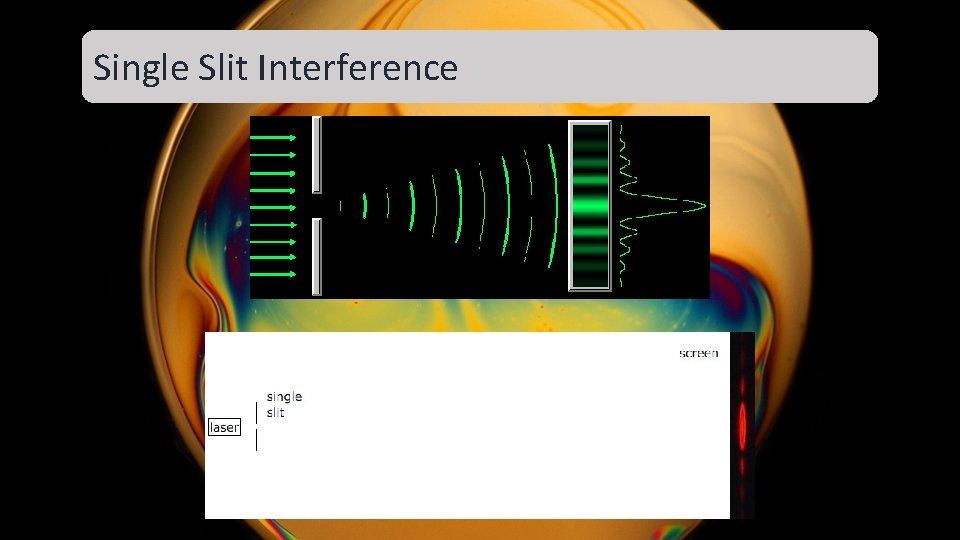
Single Slit Interference
Two-Source Interference - HL
Single Slit Interference - HL Derivation:
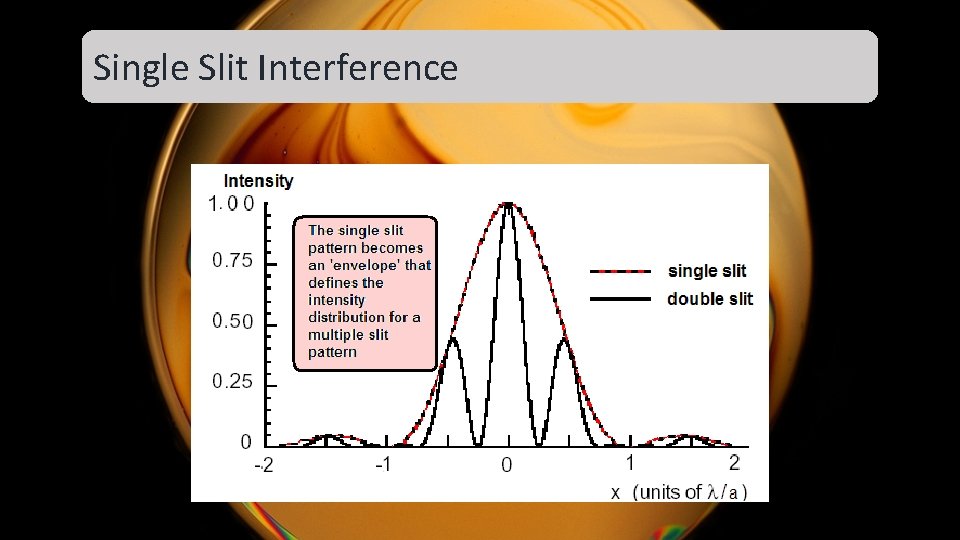
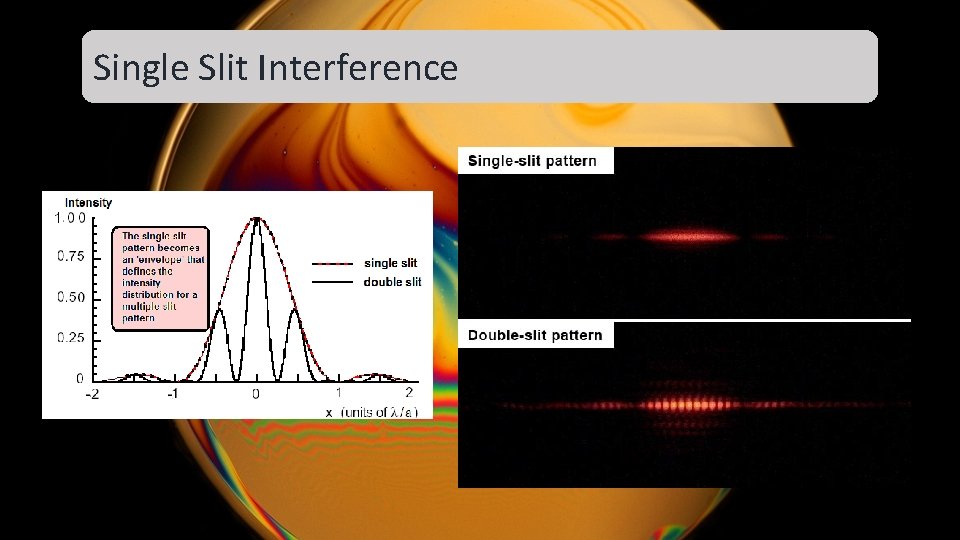
Single Slit Interference
Single Slit Interference
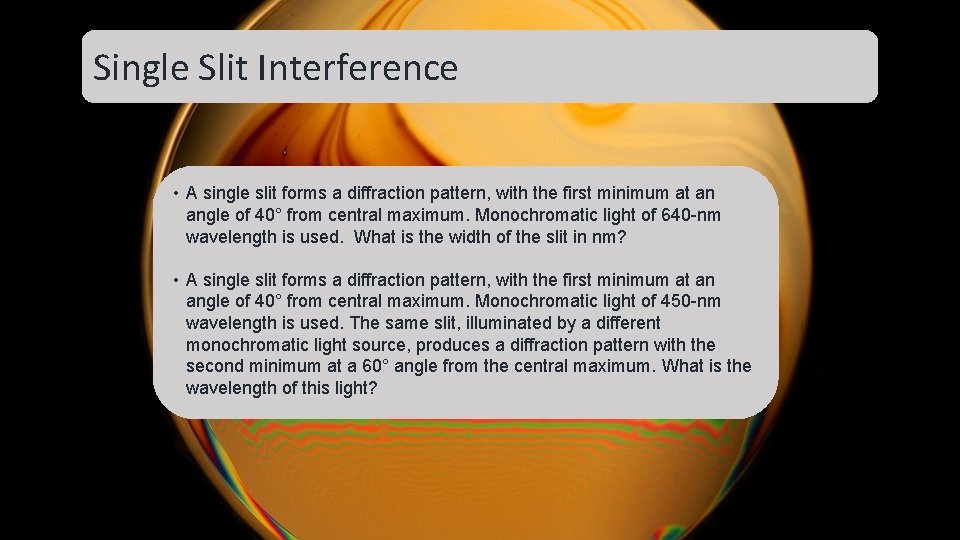
Single Slit Interference • A single slit forms a diffraction pattern, with the first minimum at an angle of 40° from central maximum. Monochromatic light of 640 -nm wavelength is used. What is the width of the slit in nm? • A single slit forms a diffraction pattern, with the first minimum at an angle of 40° from central maximum. Monochromatic light of 450 -nm wavelength is used. The same slit, illuminated by a different monochromatic light source, produces a diffraction pattern with the second minimum at a 60° angle from the central maximum. What is the wavelength of this light?
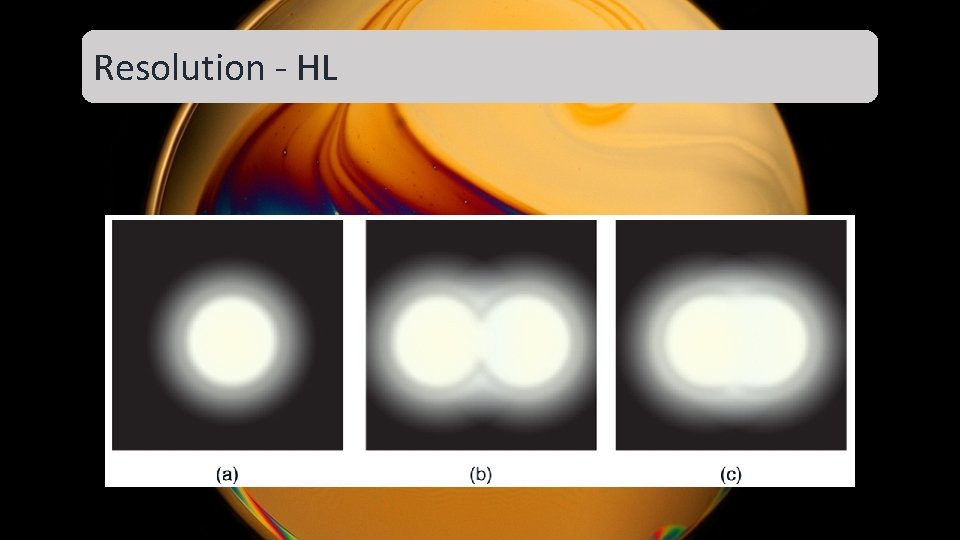
Resolution - HL
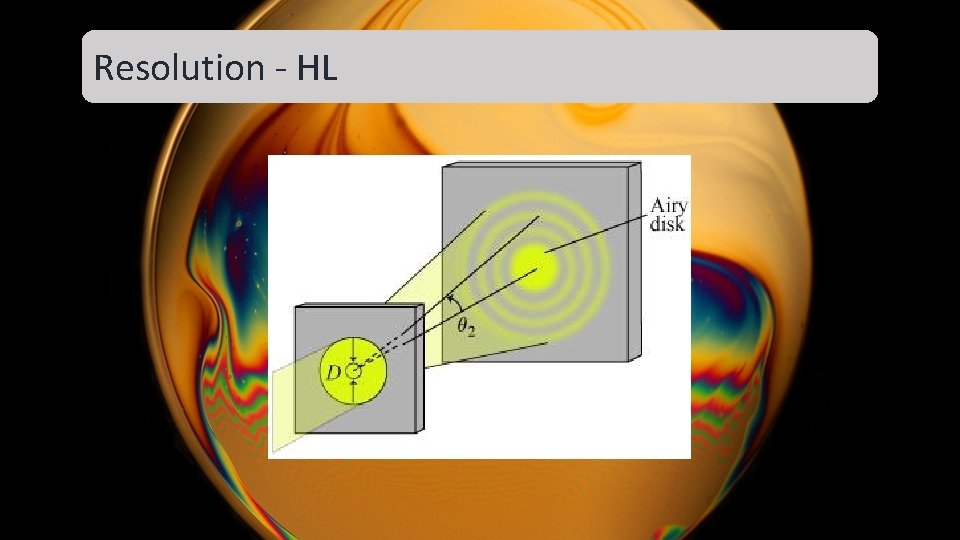
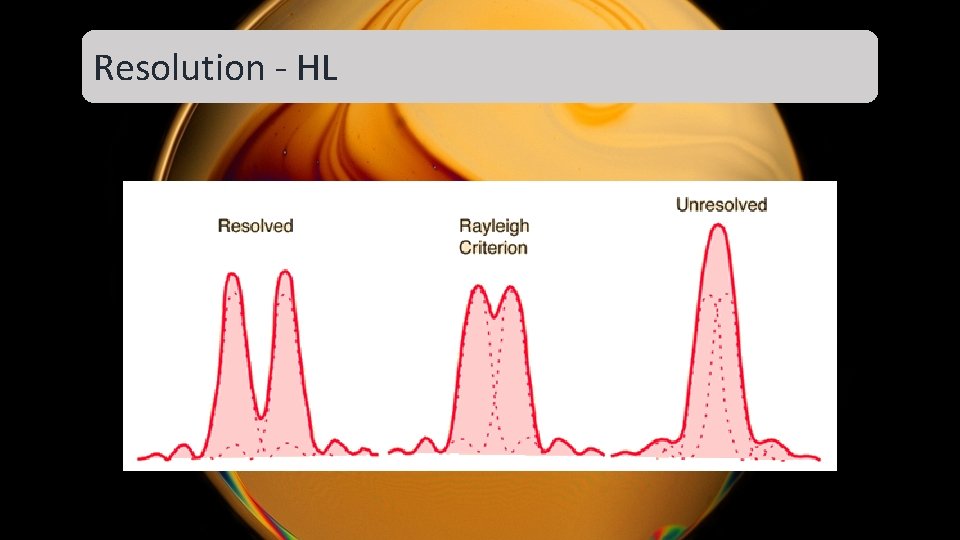
Resolution - HL
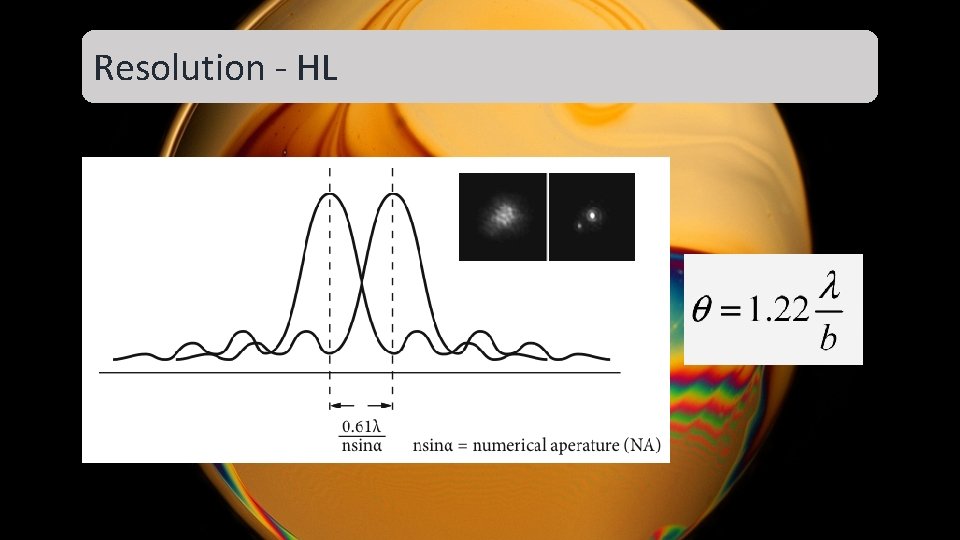
Resolution - HL
Resolution - HL
Resolution - HL
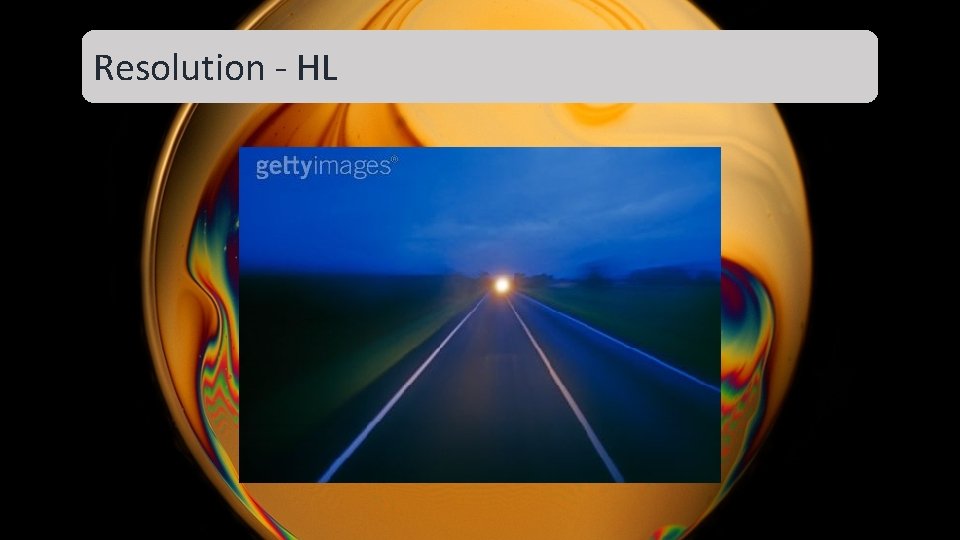
Resolution - HL • A car driving down the highway has two headlights of wavelength 600 nm and separated by a distance of 1. 5 m. The average eye has an aperture of diameter 3 mm. How far away are the headlights distinctly separate? How far away will a photo be clear if the aperture of the camera is 50 mm? • Two stars 15 light-years away are barely resolved by a 55 cm (diameter) telescope. How far apart are the stars? Assume a wavelength of 550 nm.
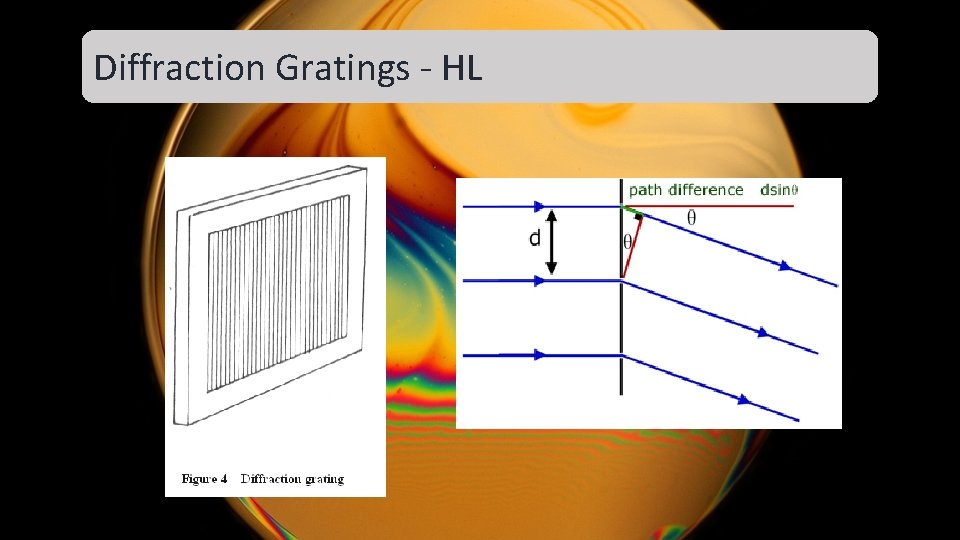
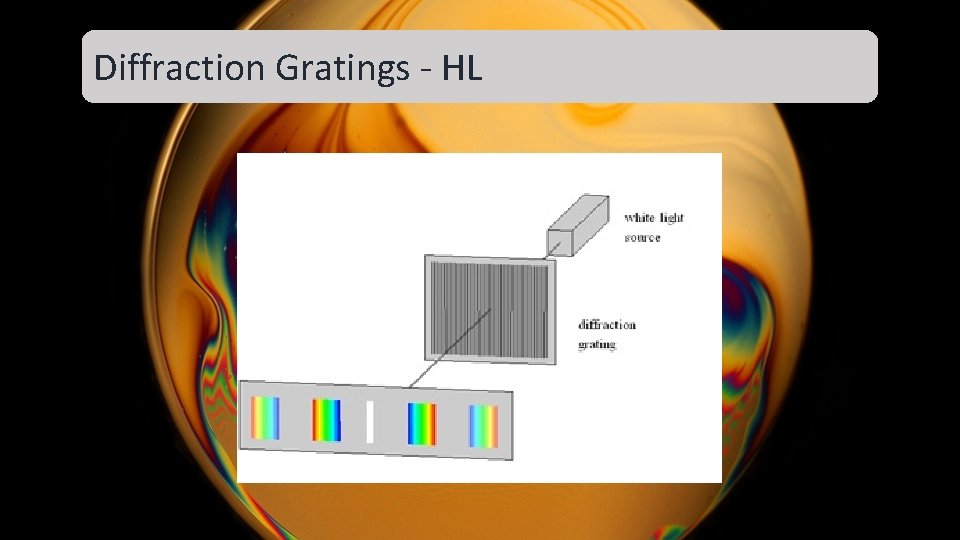
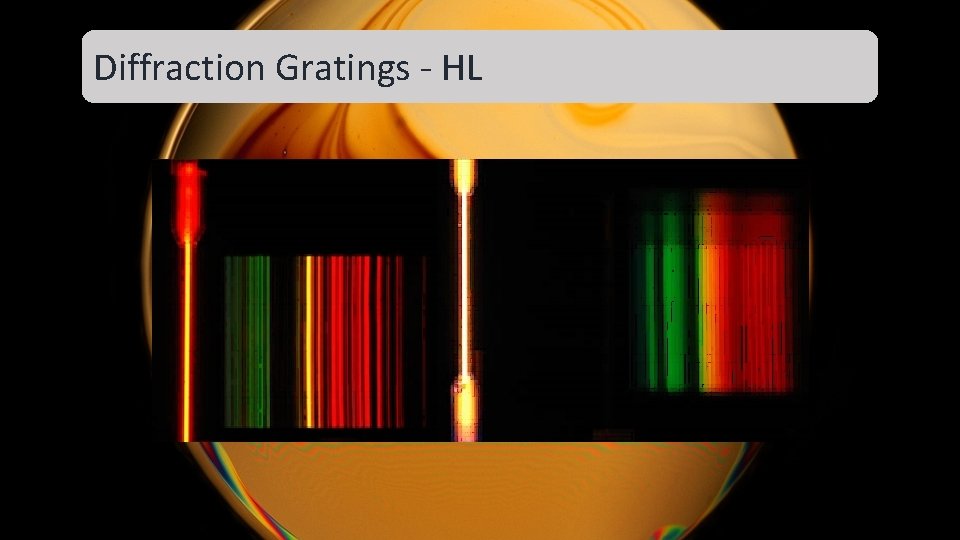
Diffraction Gratings - HL
Diffraction Gratings - HL
Diffraction Gratings - HL
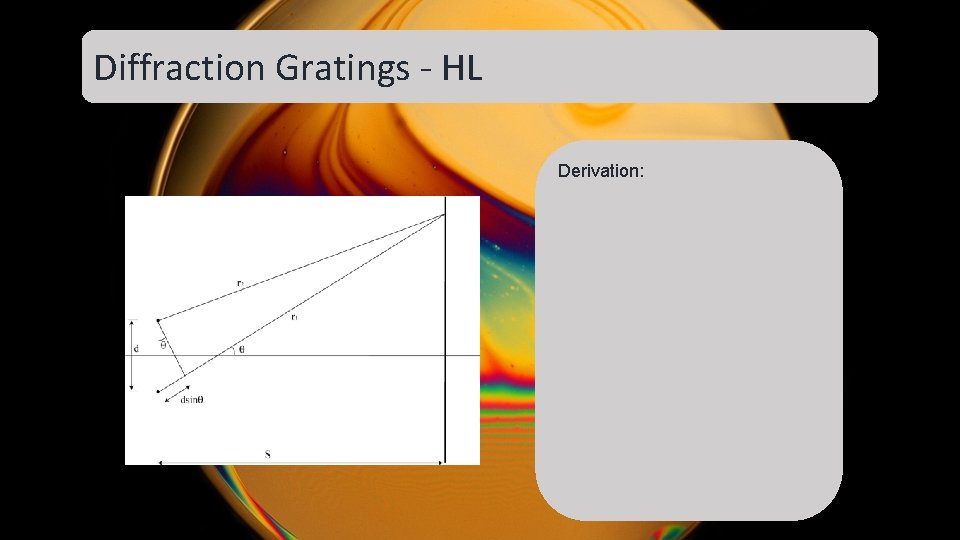
Diffraction Gratings - HL Derivation:
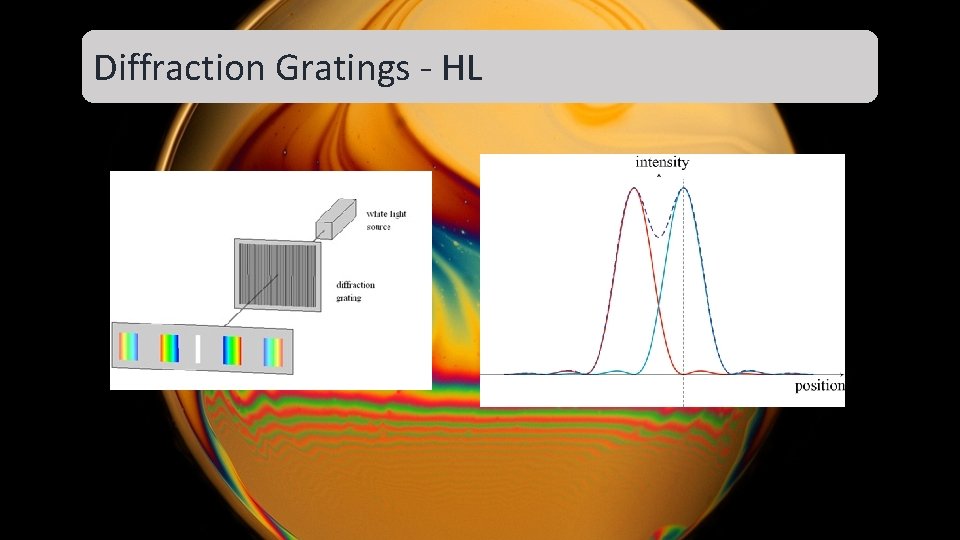
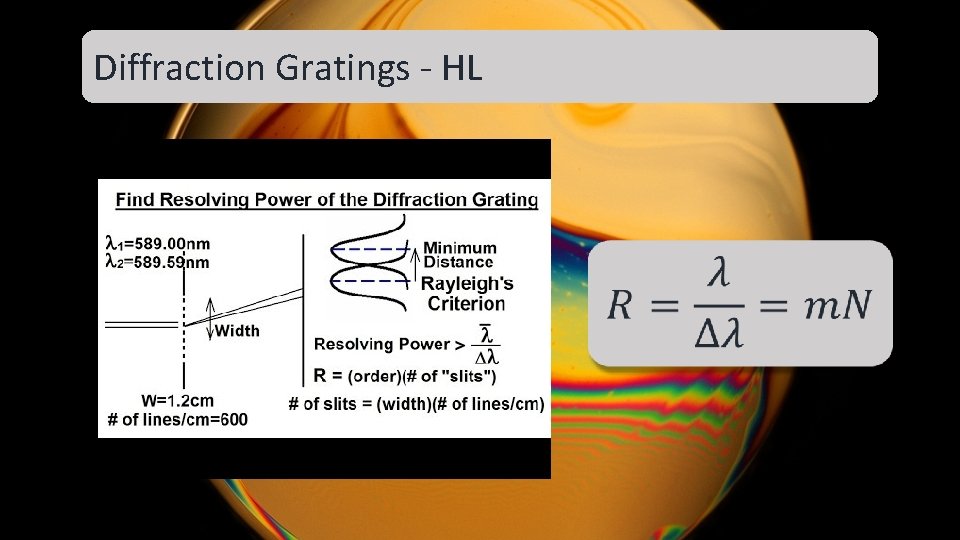
Diffraction Gratings - HL
Diffraction Gratings - HL
Diffraction Gratings - HL
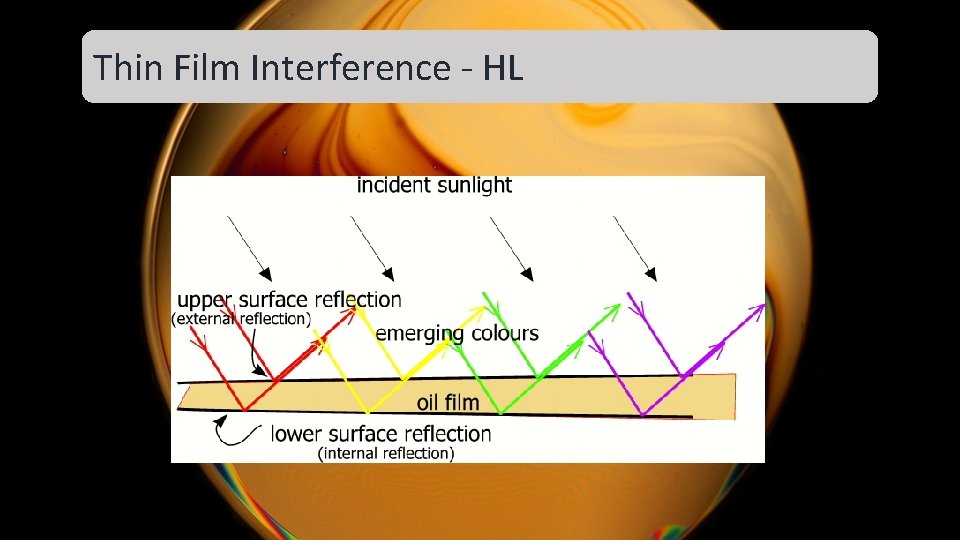
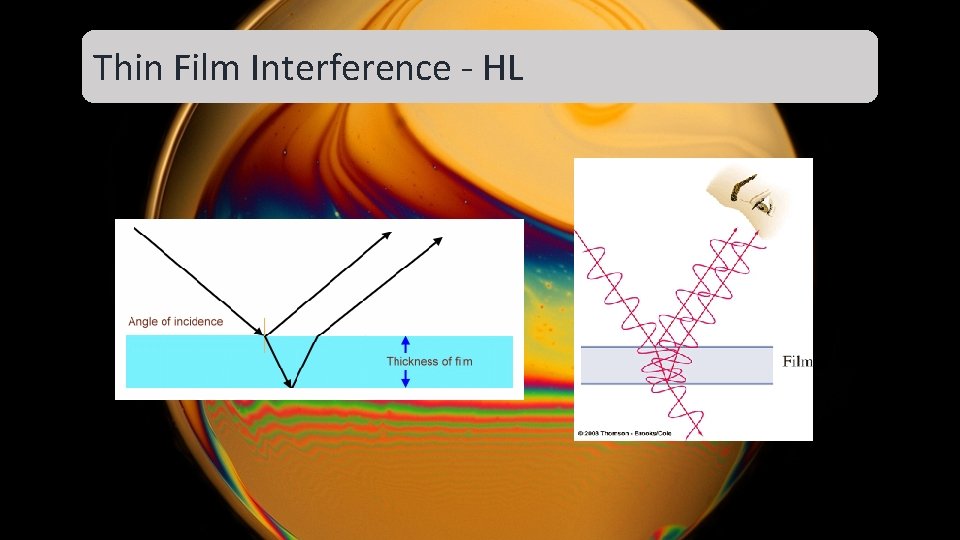
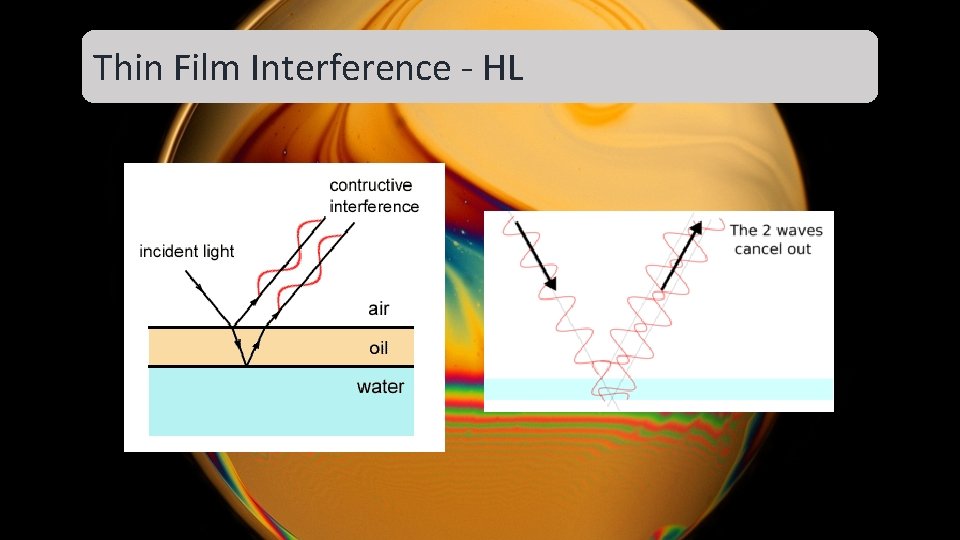
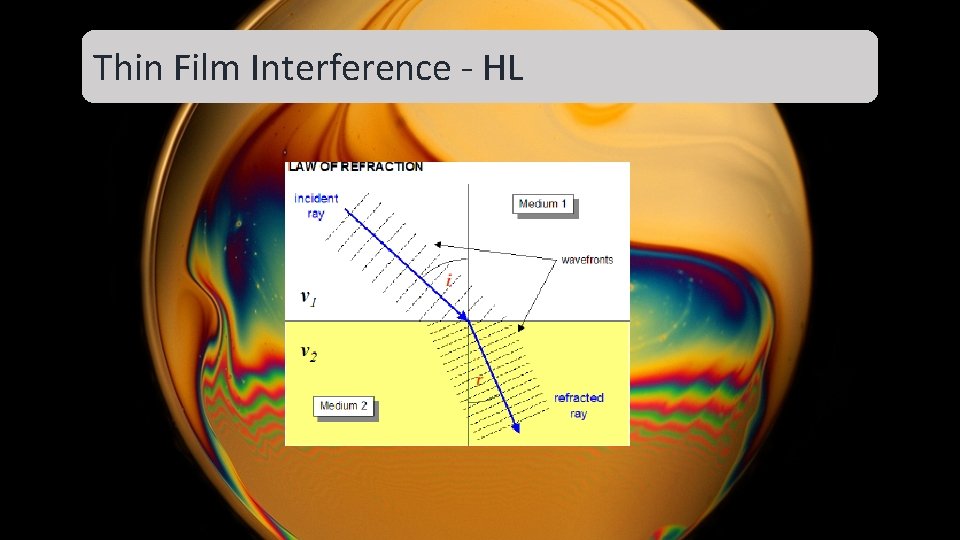
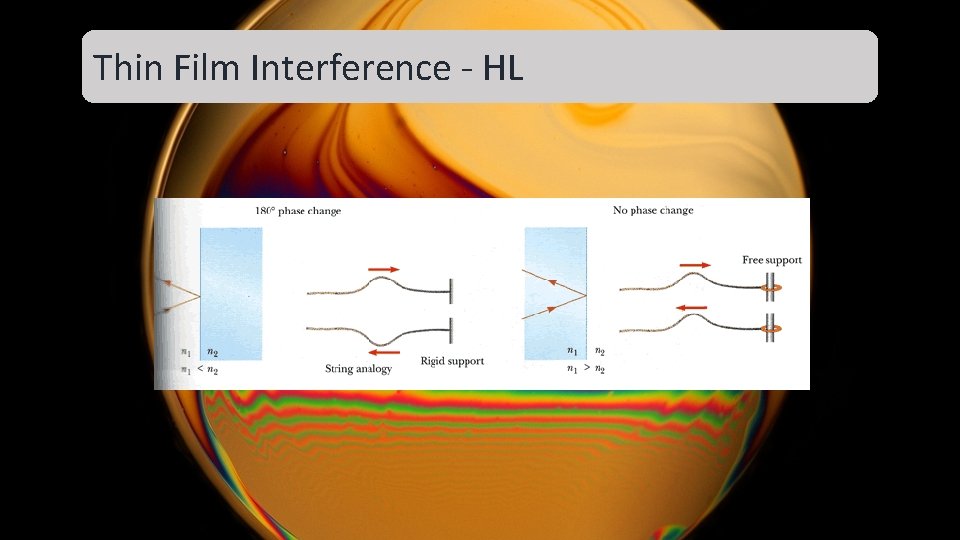
Thin Film Interference - HL
Thin Film Interference - HL
Thin Film Interference - HL
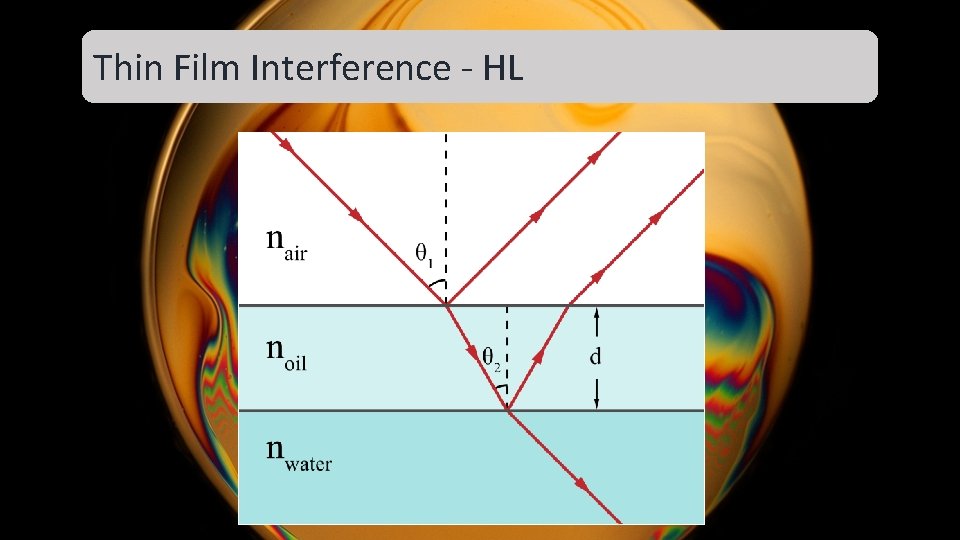
Thin Film Interference - HL
Thin Film Interference - HL
Thin Film Interference - HL
Thin Film Interference - HL • A scientist notices that an oil slick floating on water when viewed from above has many different rainbow colors reflecting off the surface. She aims a spectrometer at a particular spot and measures the wavelength to be 750 nm (in air). The index of refraction of water is 1. 33, and the index of refraction of oil is 1. 20. What is the minimum thickness of the oil? • Thin-film interference is responsible for the fact that certain birds and insects appear can different colors from different angles. Consider a very thin layer of oil (n = 1. 30) stretched between the wisps of a bird feather, so that it has air on either side. Assume that the oil layer has uniform thickness t. When you look at the feather with normal incidence, it strongly reflects green light of wavelength 550 nm. What is the minimum possible thickness of the oil layer?
Doppler Effect - HL
Doppler Effect - HL
Doppler Effect - HL
Doppler Effect - HL
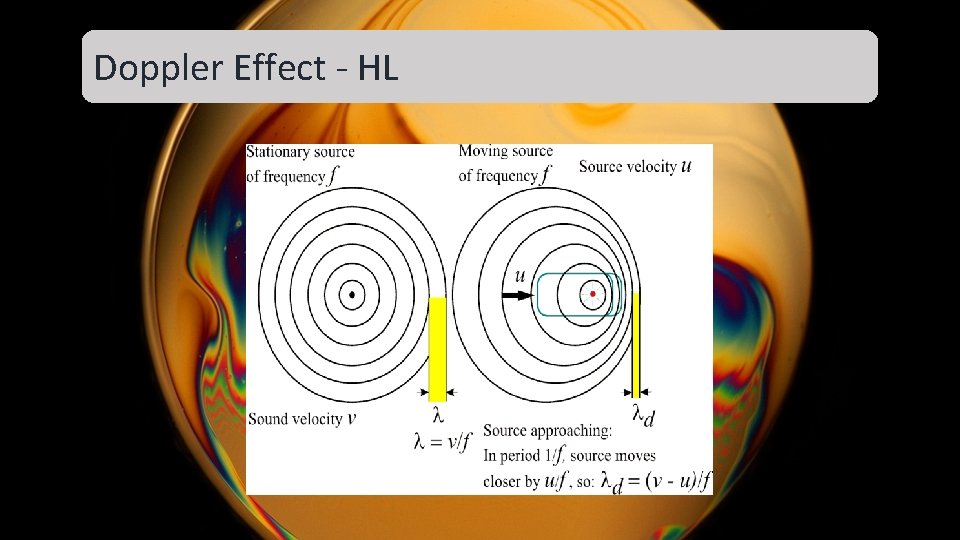
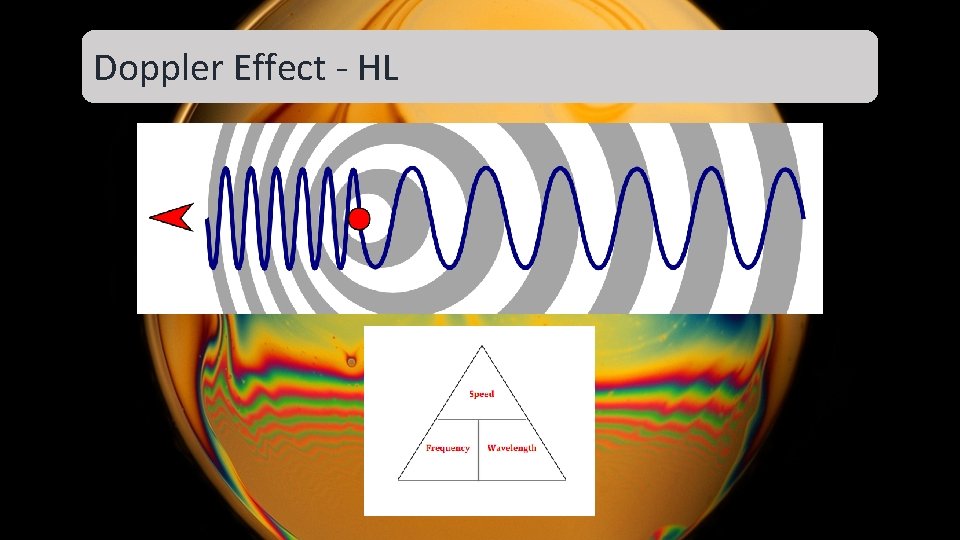
Doppler Effect - HL • A train moving at 50 ms-1 down a track blows its whistle as it passes through a station. The source frequency of the whistle is 400 Hz. Determine the change in frequency as the train passes through the station. • Mike is speeding down a highway when he hears the honking cars of traffic ahead. He hears a frequency of 1200 Hz, but knows most car horns emit sounds at 1100 Hz. How fast is Mike going? • Scientists are measuring the speed of a new star by looking at the emission spectrum of the light. Hydrogen creates light with a wavelength of 656 nm, but the scientists observe light with wavelength 670 nm. Is the star moving towards or away form earth? How fast?
Doppler Effect - HL
Doppler Effect - HL
Doppler Effect - HL
Waves Goodbye…