
Advanced Waiting Line Theory and Simulation Modeling Chapter
- Slides: 19
Advanced Waiting Line Theory and Simulation Modeling Chapter 6 - Supplement
6 S Chapter Objectives Be able to: § Describe different types of waiting line systems. § Use statistics-based formulas to estimate waiting line lengths and waiting times for three different types of waiting line systems. § Explain the purpose, advantages and disadvantages, and steps of simulation modeling. § Develop a simple Monte Carlo simulation using Microsoft Excel. § Develop and analyze a system using Sim. Quick. Copyright © 2013 Pearson Education, Inc. publishing as Prentice Hall 6 S - 2
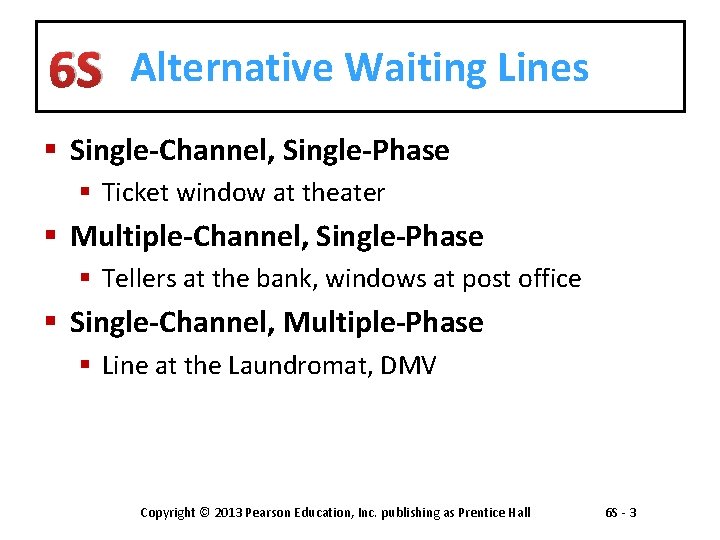
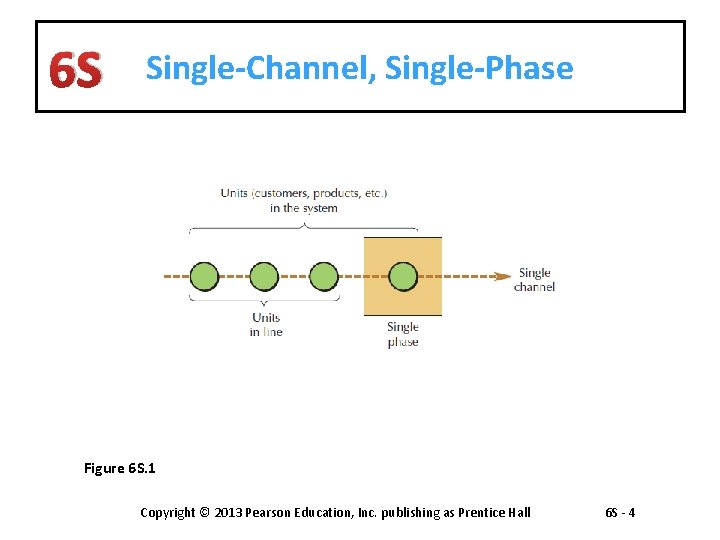
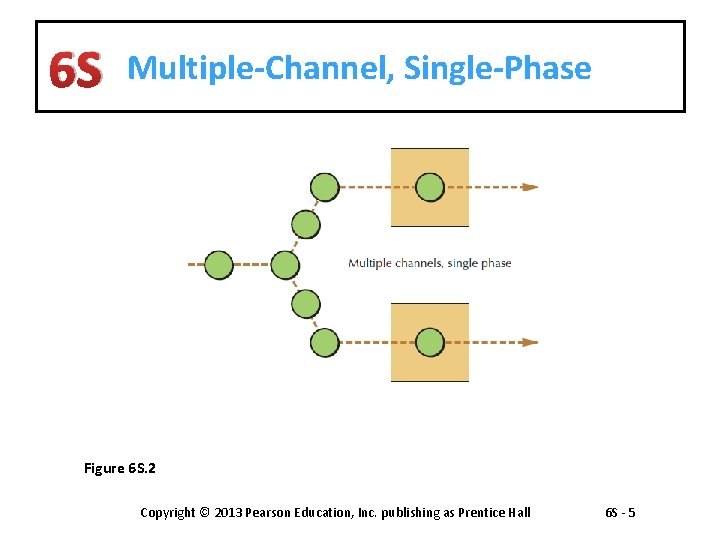
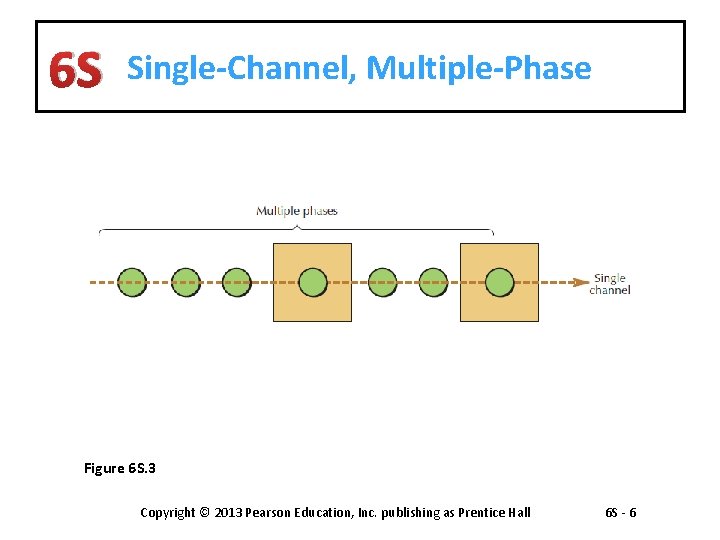
6 S Alternative Waiting Lines § Single-Channel, Single-Phase § Ticket window at theater § Multiple-Channel, Single-Phase § Tellers at the bank, windows at post office § Single-Channel, Multiple-Phase § Line at the Laundromat, DMV Copyright © 2013 Pearson Education, Inc. publishing as Prentice Hall 6 S - 3
6 S Single-Channel, Single-Phase Figure 6 S. 1 Copyright © 2013 Pearson Education, Inc. publishing as Prentice Hall 6 S - 4
6 S Multiple-Channel, Single-Phase Figure 6 S. 2 Copyright © 2013 Pearson Education, Inc. publishing as Prentice Hall 6 S - 5
6 S Single-Channel, Multiple-Phase Figure 6 S. 3 Copyright © 2013 Pearson Education, Inc. publishing as Prentice Hall 6 S - 6
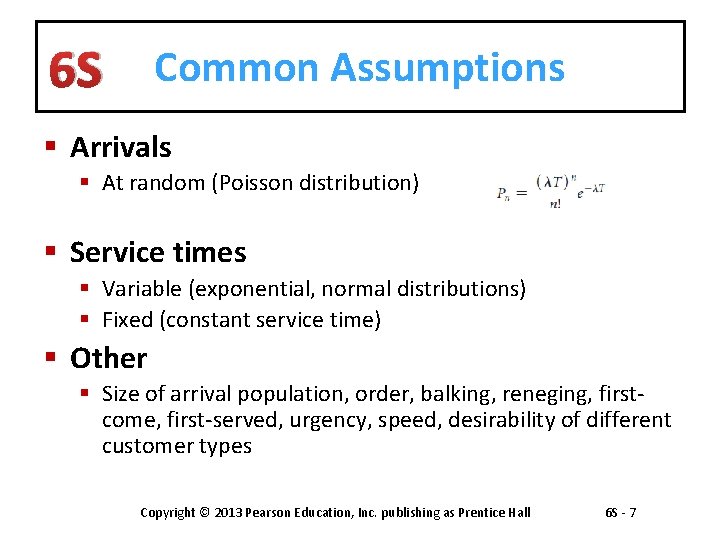
6 S Common Assumptions § Arrivals § At random (Poisson distribution) § Service times § Variable (exponential, normal distributions) § Fixed (constant service time) § Other § Size of arrival population, order, balking, reneging, firstcome, first-served, urgency, speed, desirability of different customer types Copyright © 2013 Pearson Education, Inc. publishing as Prentice Hall 6 S - 7
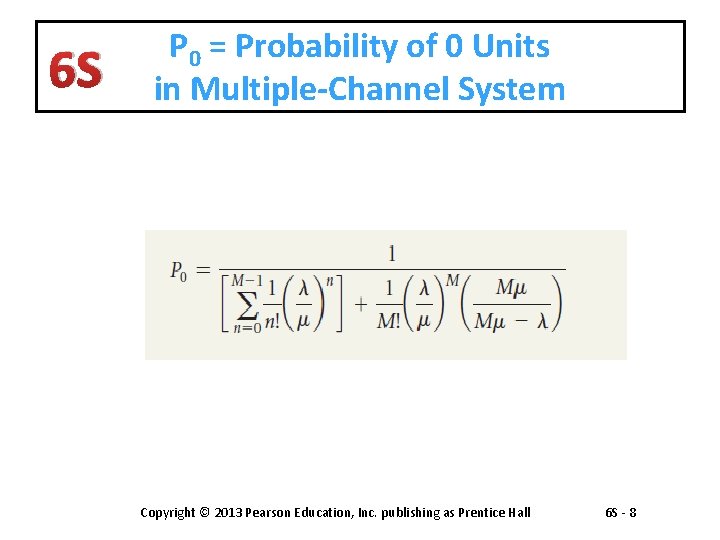
6 S P 0 = Probability of 0 Units in Multiple-Channel System Copyright © 2013 Pearson Education, Inc. publishing as Prentice Hall 6 S - 8
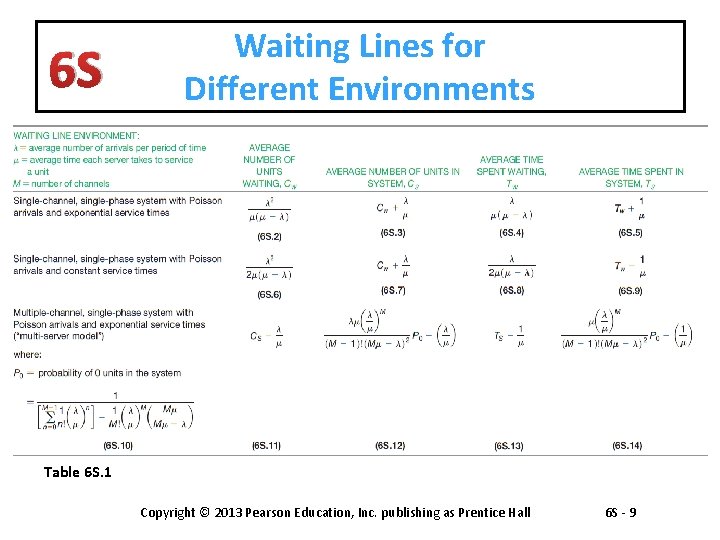
6 S Waiting Lines for Different Environments Table 6 S. 1 Copyright © 2013 Pearson Education, Inc. publishing as Prentice Hall 6 S - 9
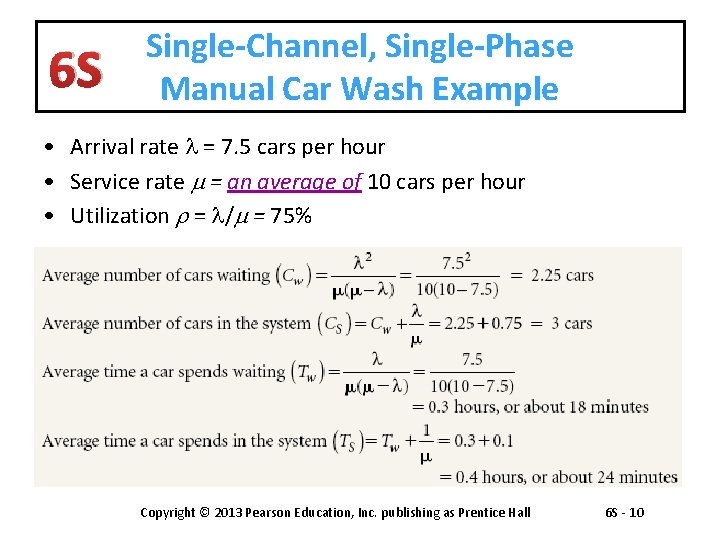
6 S Single-Channel, Single-Phase Manual Car Wash Example • Arrival rate = 7. 5 cars per hour • Service rate = an average of 10 cars per hour • Utilization = / = 75% Copyright © 2013 Pearson Education, Inc. publishing as Prentice Hall 6 S - 10
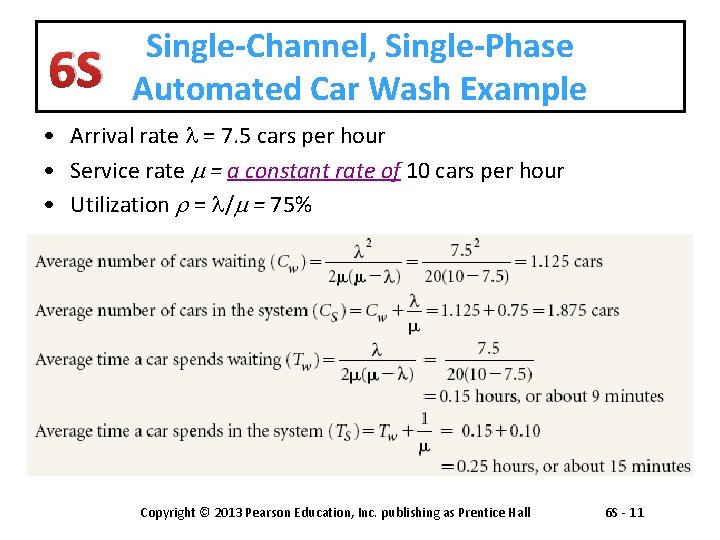
6 S Single-Channel, Single-Phase Automated Car Wash Example • Arrival rate = 7. 5 cars per hour • Service rate = a constant rate of 10 cars per hour • Utilization = / = 75% Copyright © 2013 Pearson Education, Inc. publishing as Prentice Hall 6 S - 11
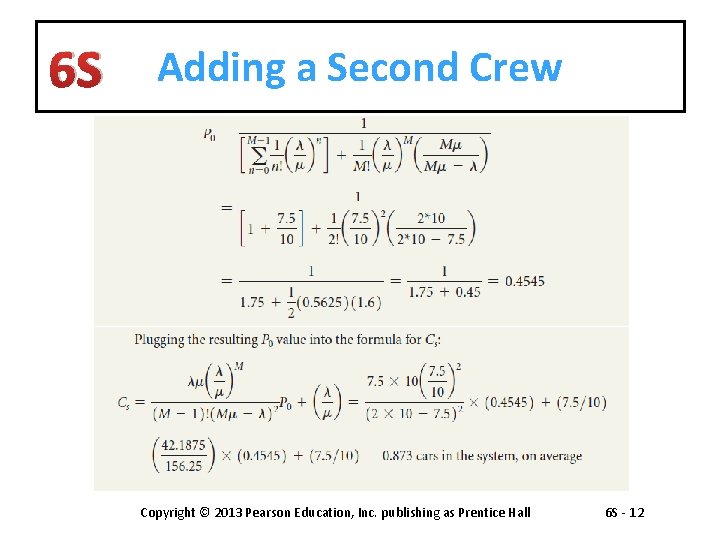
6 S Adding a Second Crew Copyright © 2013 Pearson Education, Inc. publishing as Prentice Hall 6 S - 12
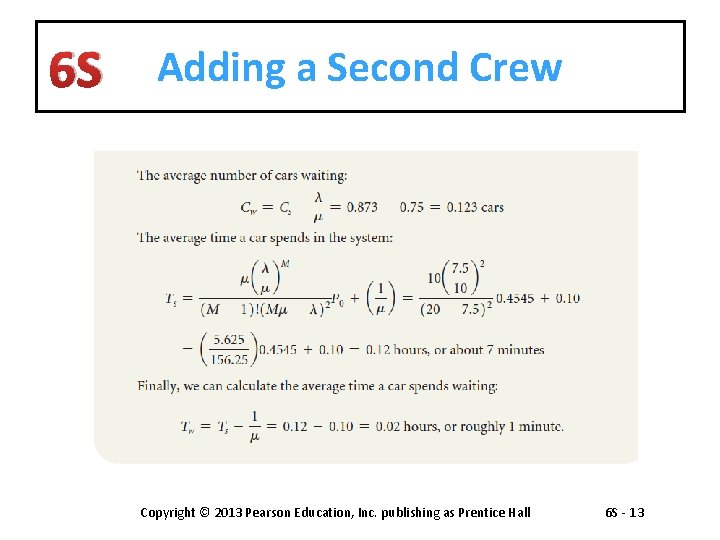
6 S Adding a Second Crew Copyright © 2013 Pearson Education, Inc. publishing as Prentice Hall 6 S - 13
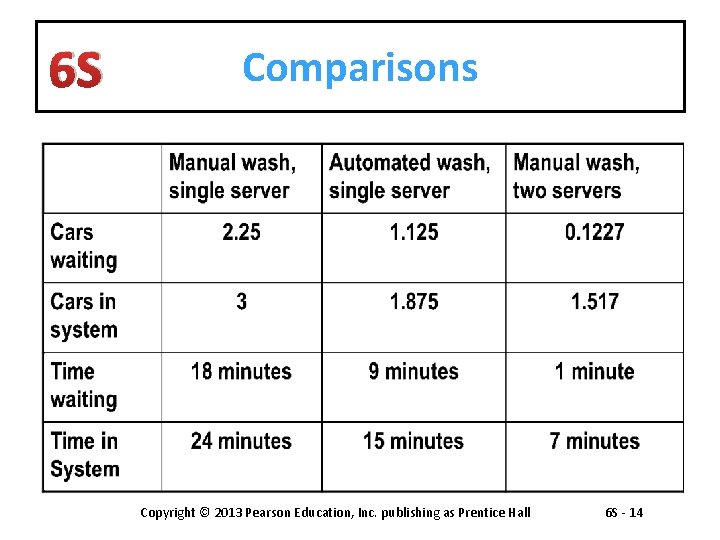
6 S Comparisons Copyright © 2013 Pearson Education, Inc. publishing as Prentice Hall 6 S - 14
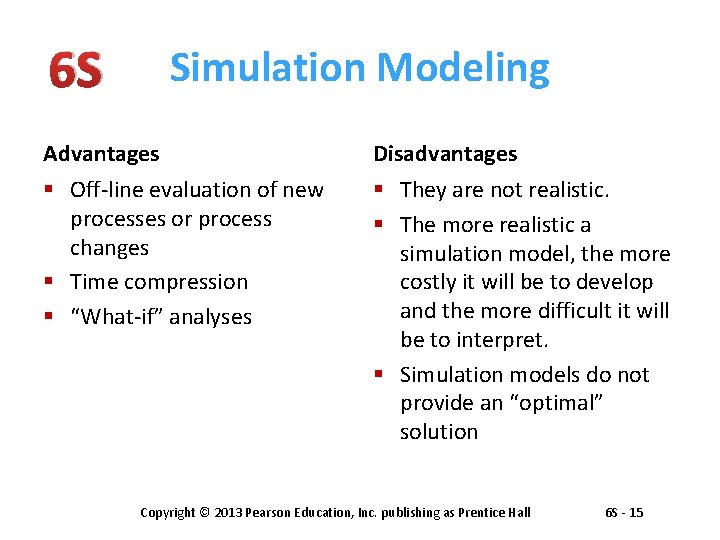
6 S Simulation Modeling Advantages Disadvantages § Off-line evaluation of new processes or process changes § Time compression § “What-if” analyses § They are not realistic. § The more realistic a simulation model, the more costly it will be to develop and the more difficult it will be to interpret. § Simulation models do not provide an “optimal” solution Copyright © 2013 Pearson Education, Inc. publishing as Prentice Hall 6 S - 15
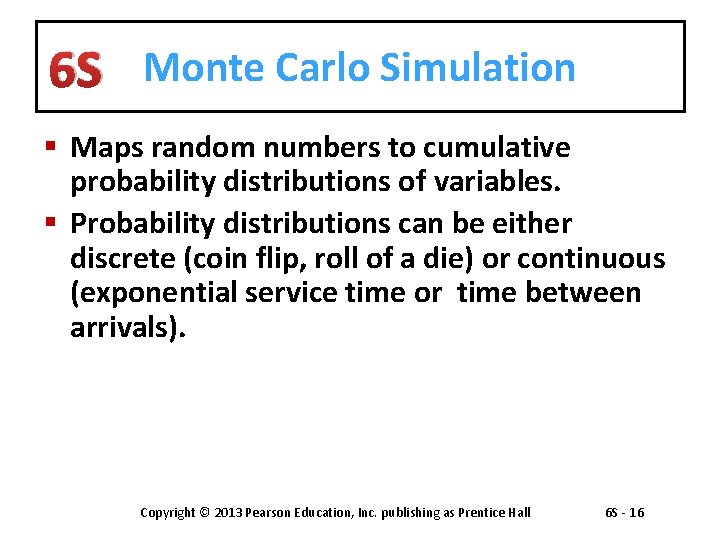
6 S Monte Carlo Simulation § Maps random numbers to cumulative probability distributions of variables. § Probability distributions can be either discrete (coin flip, roll of a die) or continuous (exponential service time or time between arrivals). Copyright © 2013 Pearson Education, Inc. publishing as Prentice Hall 6 S - 16
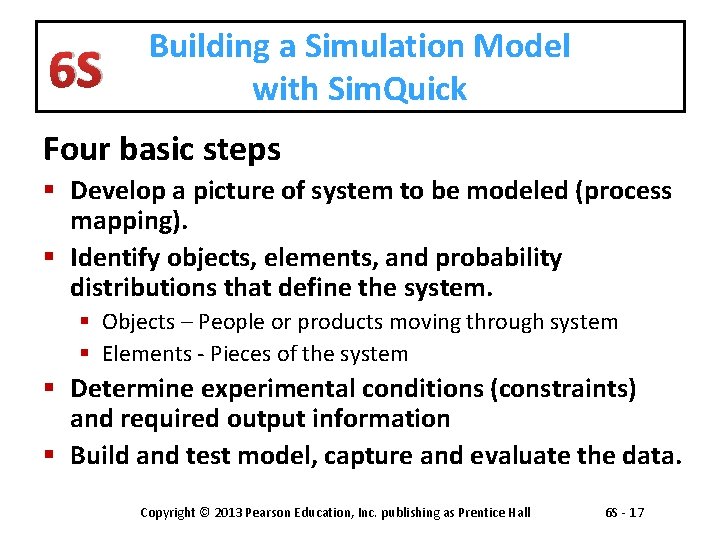
6 S Building a Simulation Model with Sim. Quick Four basic steps § Develop a picture of system to be modeled (process mapping). § Identify objects, elements, and probability distributions that define the system. § Objects – People or products moving through system § Elements - Pieces of the system § Determine experimental conditions (constraints) and required output information § Build and test model, capture and evaluate the data. Copyright © 2013 Pearson Education, Inc. publishing as Prentice Hall 6 S - 17
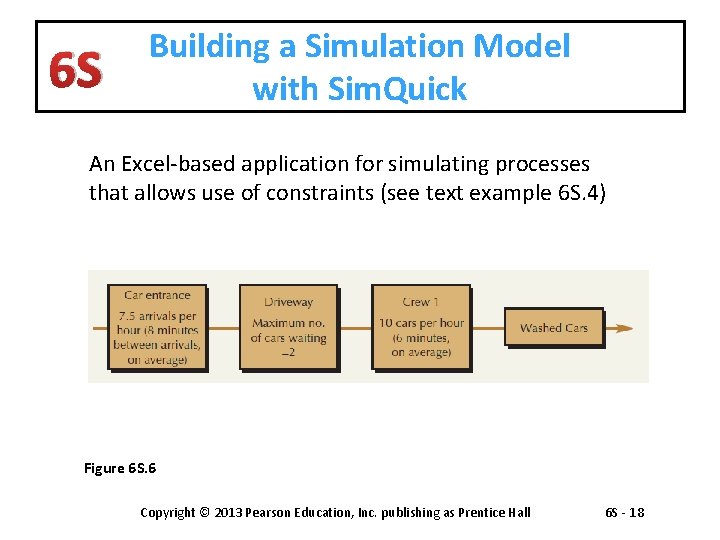
6 S Building a Simulation Model with Sim. Quick An Excel-based application for simulating processes that allows use of constraints (see text example 6 S. 4) Figure 6 S. 6 Copyright © 2013 Pearson Education, Inc. publishing as Prentice Hall 6 S - 18
All rights reserved. No part of this publication may be reproduced, stored in a retrieval system, or transmitted, in any form or by any means, electronic, mechanical, photocopying, recording, or otherwise, without the prior written permission of the publisher. Printed in the United States of America. Copyright © 2013 Pearson Education, Inc. publishing as Prentice Hall 6 S - 19