
Advanced Theory of Concrete Structures Chapter 3 Bond
Advanced Theory of Concrete Structures Chapter 3 Bond and Anchorage Yong Zhou College of Civil Engineering, Tongji University yongzhou@tongji. edu. cn
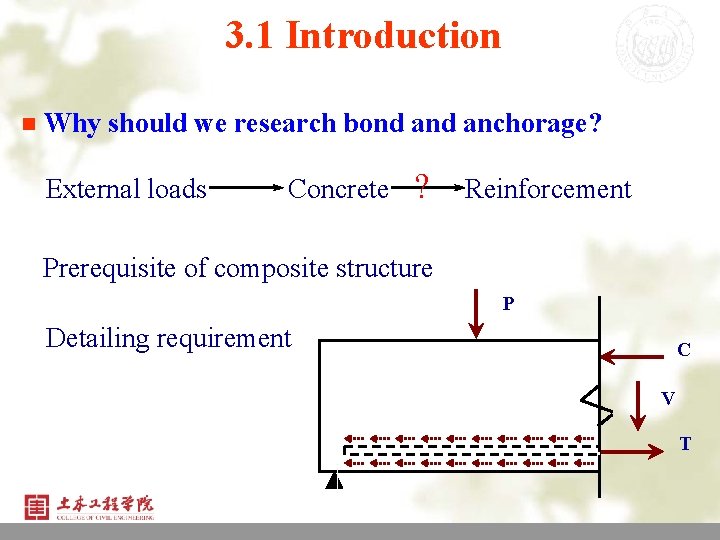
3. 1 Introduction n Why should we research bond anchorage? External loads Concrete ? Reinforcement Prerequisite of composite structure P Detailing requirement C V T 2
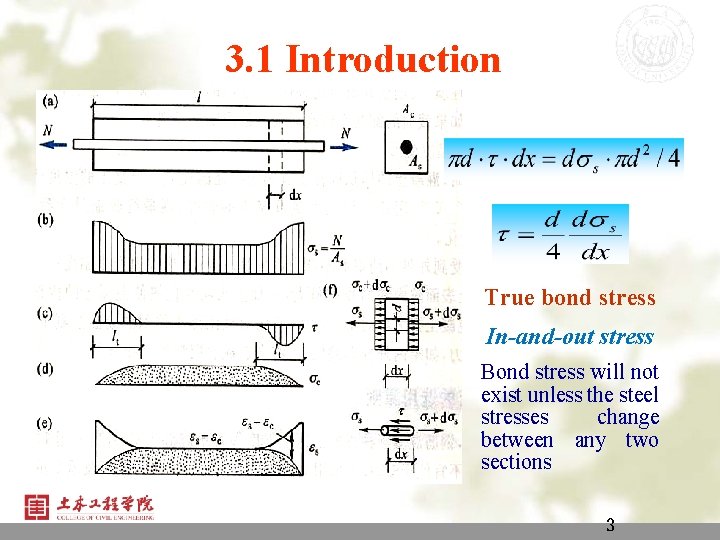
3. 1 Introduction True bond stress In-and-out stress Bond stress will not exist unless the steel stresses change between any two sections 3 3
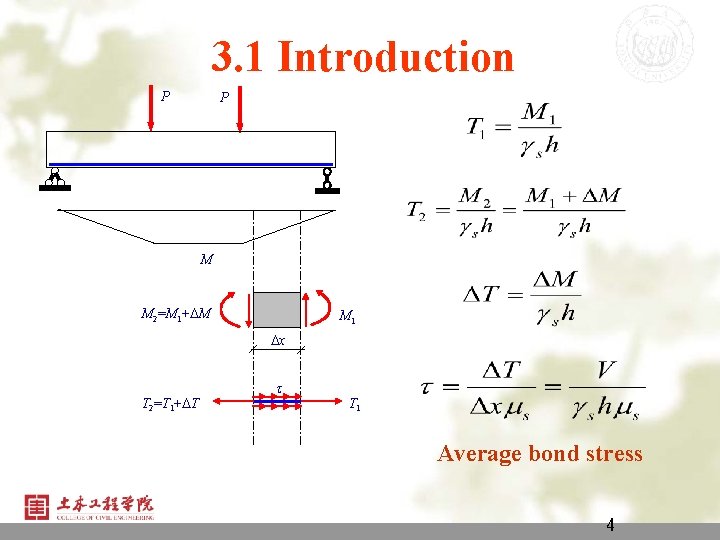
3. 1 Introduction P P M M 2=M 1+ M M 1 x T 2=T 1+ T T 1 Average bond stress 4 4
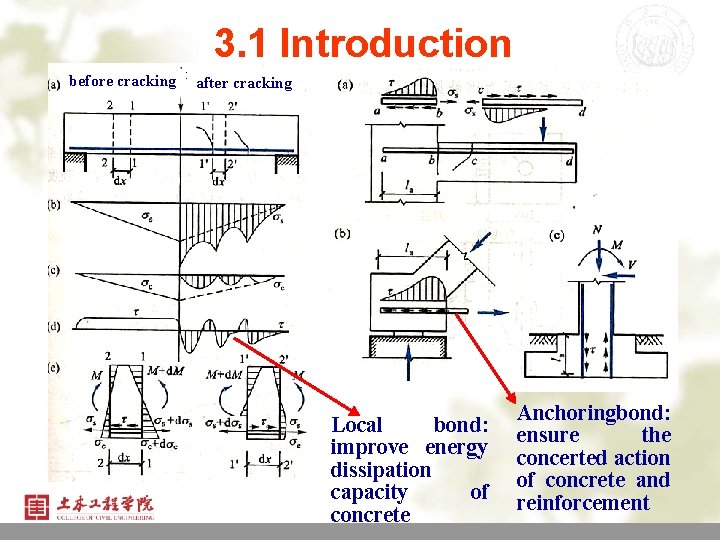
3. 1 Introduction before cracking after cracking Local bond: improve energy dissipation capacity of concrete Anchoringbond: ensure the concerted action of concrete and reinforcement 5
3. 1 Introduction n Components of Bond n Chemical adhesion n Friction n Mechanical interlock n Embedded end anchorage 6
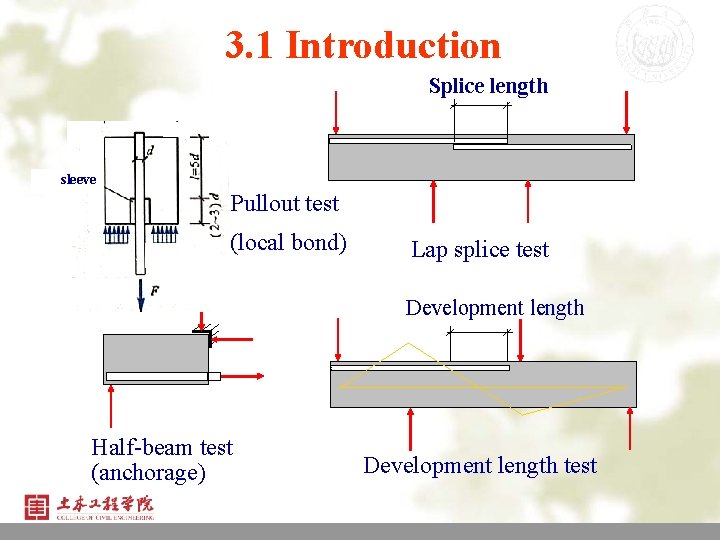
3. 1 Introduction Splice length sleeve Pullout test (local bond) Lap splice test Development length Half-beam test (anchorage) Development length test 7
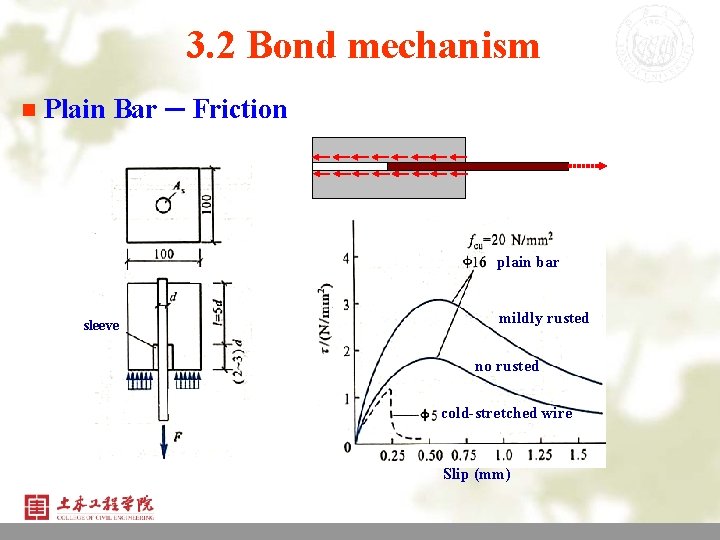
3. 2 Bond mechanism n Plain Bar ─ Friction plain bar sleeve mildly rusted no rusted cold-stretched wire Slip (mm) 8
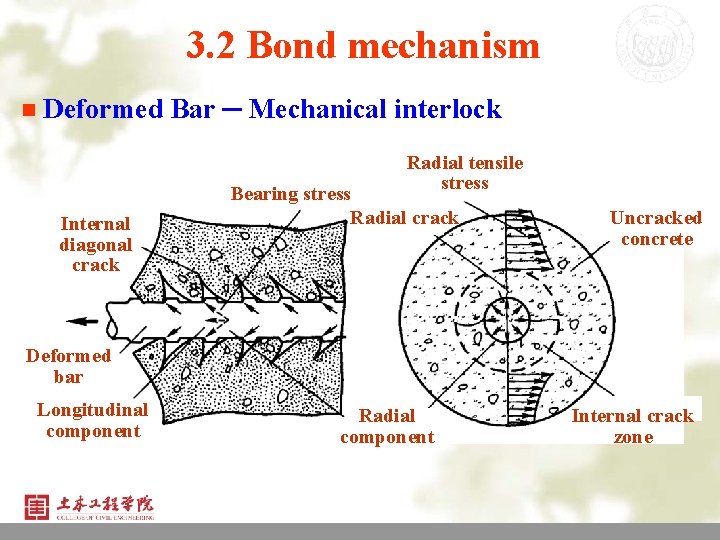
3. 2 Bond mechanism n Deformed Bar ─ Mechanical interlock Radial tensile stress Internal diagonal crack Bearing stress Radial crack Uncracked concrete Deformed bar Longitudinal component Radial component Internal crack zone 9
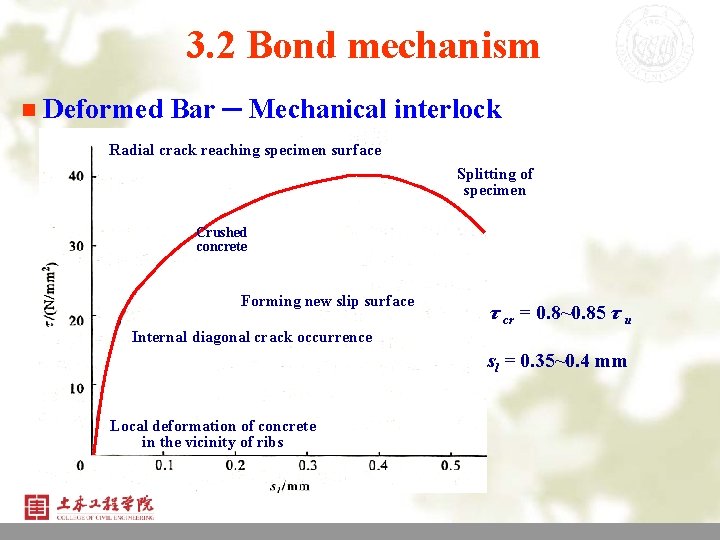
3. 2 Bond mechanism n Deformed Bar ─ Mechanical interlock Radial crack reaching specimen surface Splitting of specimen Crushed concrete Forming new slip surface τ cr = 0. 8~0. 85 τ u Internal diagonal crack occurrence sl = 0. 35~0. 4 mm Local deformation of concrete in the vicinity of ribs 10
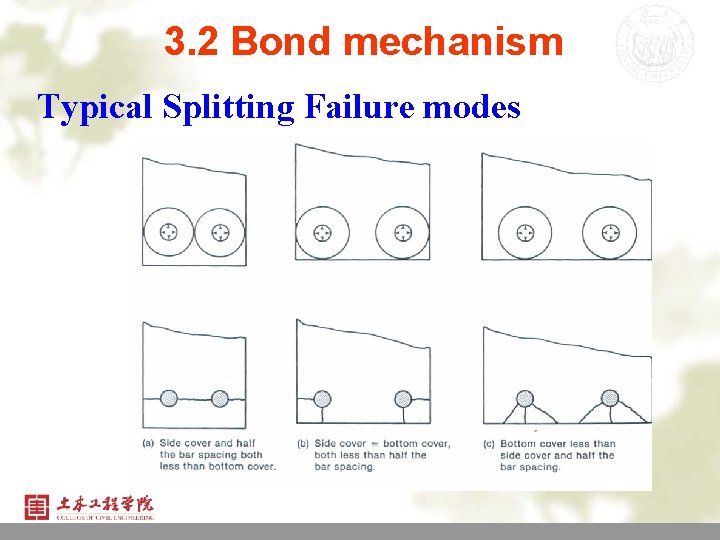
3. 2 Bond mechanism Typical Splitting Failure modes 11
3. 2 Bond mechanism n Factors influencing bond strength: n Properties of concrete n. Strength: bong strength tensile strength n adhesion and mechanical interlock n splitting strength n. Superplastizer n concrete of high slump → low bond strength n. Fibers: strength 12
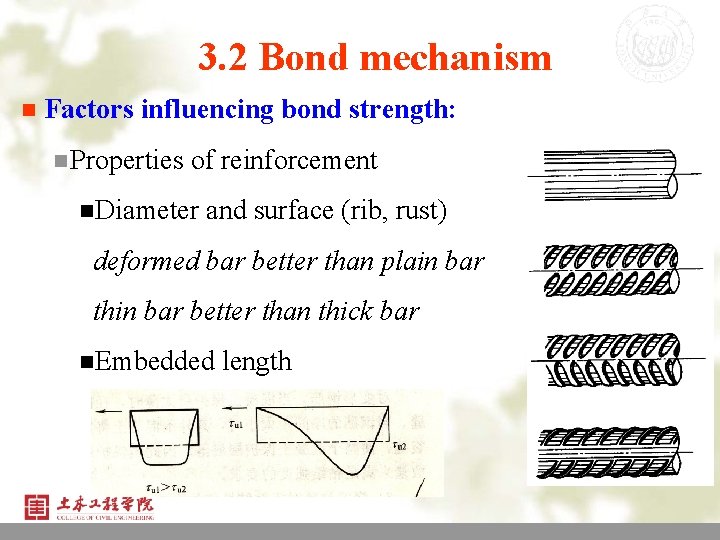
3. 2 Bond mechanism n Factors influencing bond strength: n Properties of reinforcement n. Diameter and surface (rib, rust) deformed bar better than plain bar thin bar better than thick bar n. Embedded length 13
3. 2 Bond mechanism n Factors influencing bond strength: n Others n Stirrups delay the splitting failure n Transverse compression increase the friction n Reinforcement in compression or tension Possion effect → friction 14
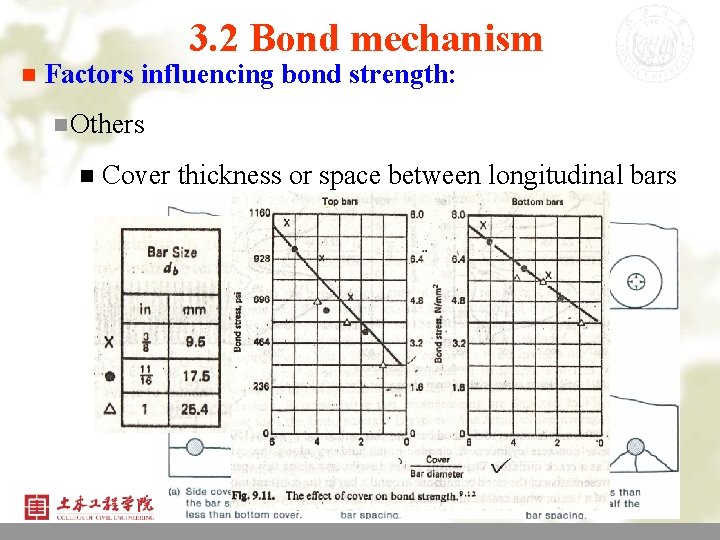
n Factors 3. 2 Bond mechanism influencing bond strength: n Others n Cover thickness or space between longitudinal bars 15
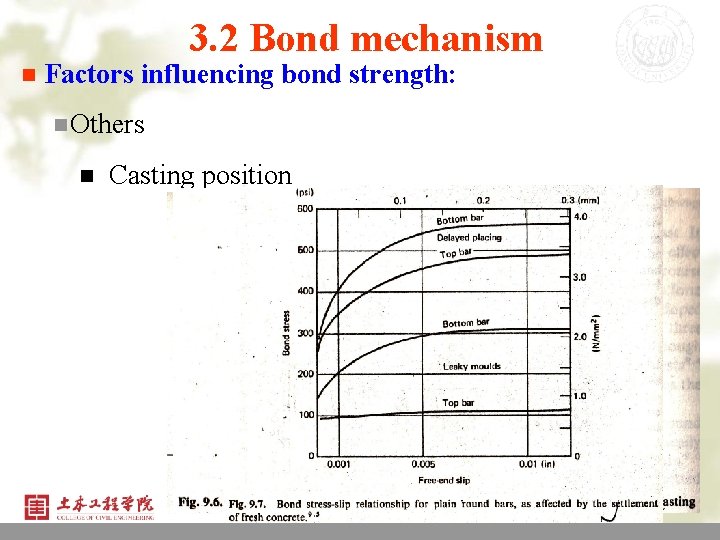
n Factors 3. 2 Bond mechanism influencing bond strength: n Others n Casting position 16
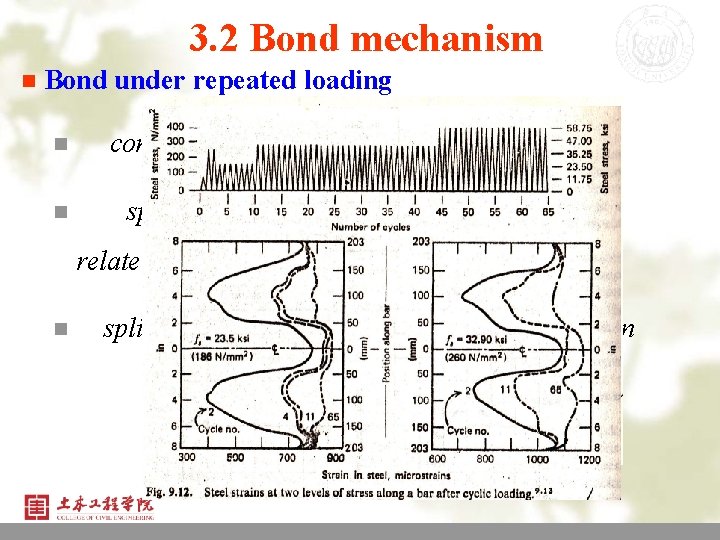
3. 2 Bond mechanism n Bond n n under repeated loading continuous increase of slip speed and degree of degradation are closely related to bond stress level n splitting symbols the divergence of degradation 17
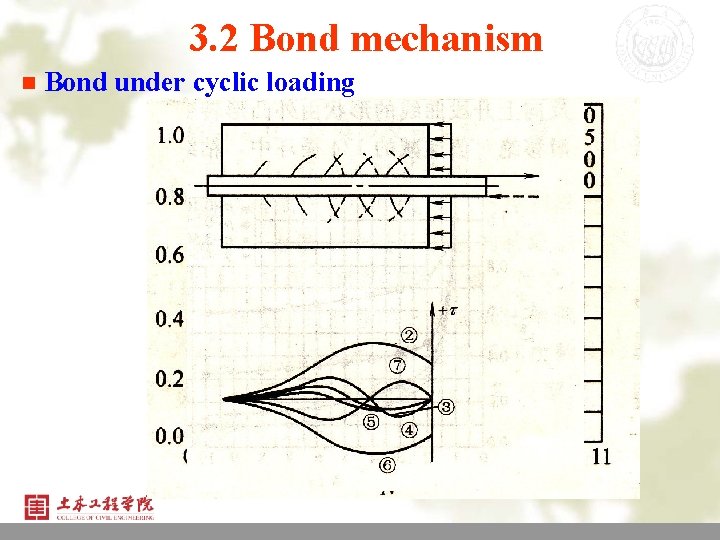
3. 2 Bond mechanism n Bond under cyclic loading 18
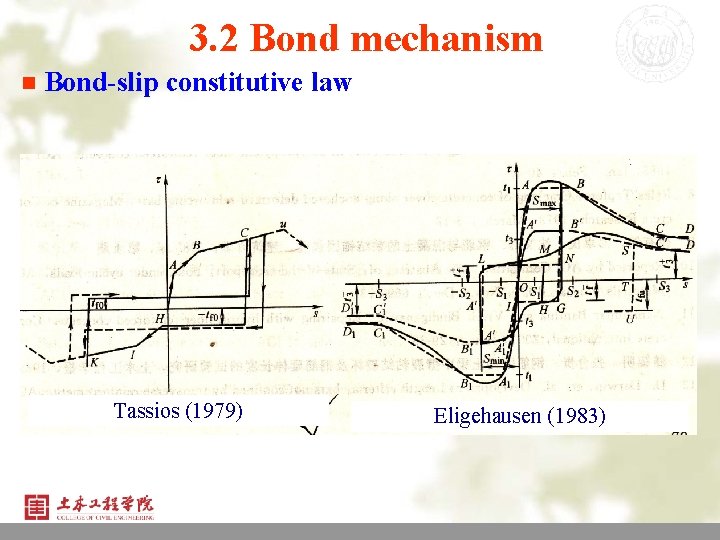
3. 2 Bond mechanism n Bond-slip constitutive law Alsiwat (1992) Tassios (1979) Haraji (1992) Eligehausen (1983) 19
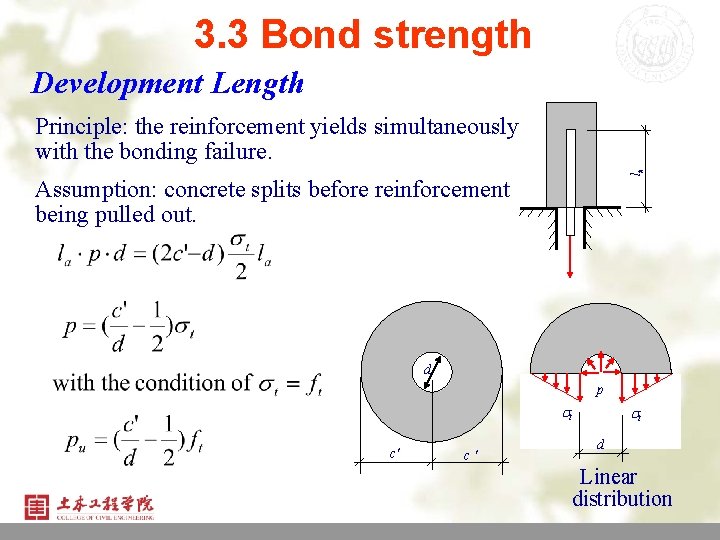
3. 3 Bond strength Development Length la Principle: the reinforcement yields simultaneously with the bonding failure. Assumption: concrete splits before reinforcement being pulled out. d p t c′ c′ t d Linear distribution 20
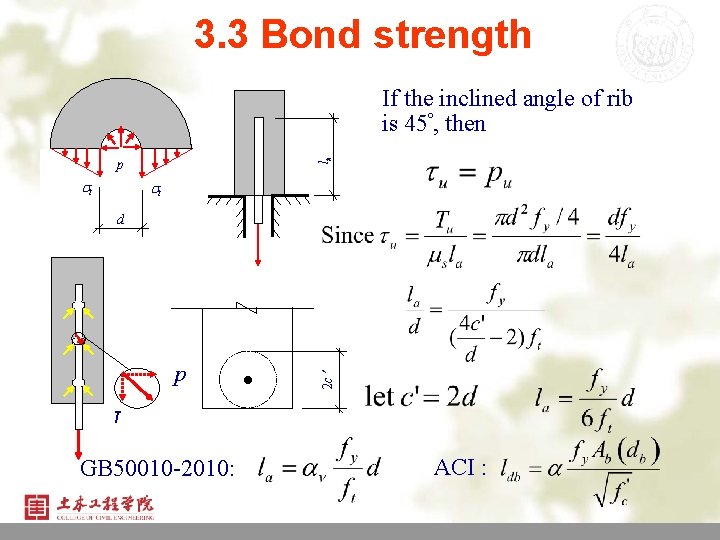
3. 3 Bond strength If the inclined angle of rib is 45º, then t la p t p 2 c d τ GB 50010 -2010: ACI : 21
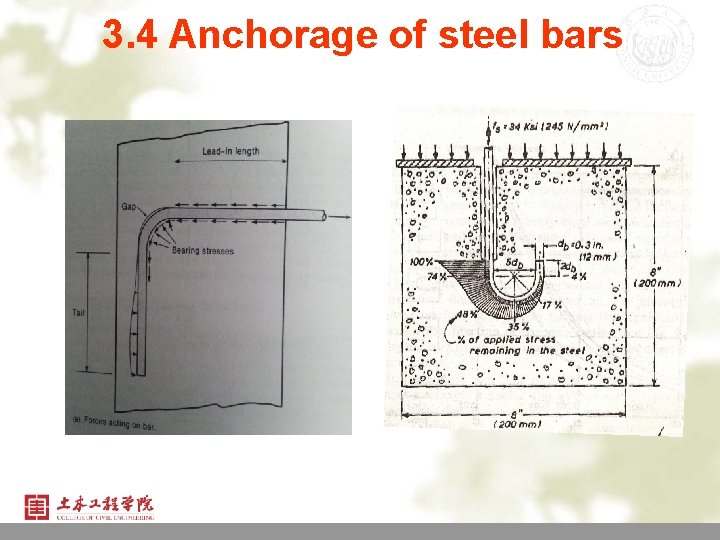
3. 4 Anchorage of steel bars 22
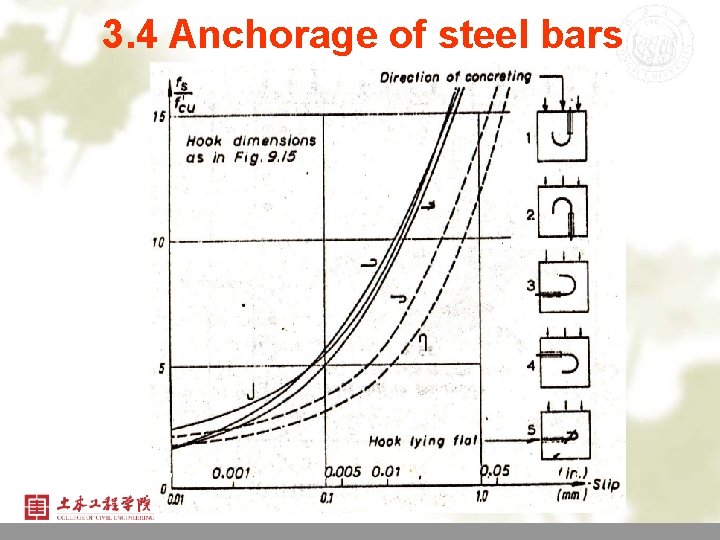
3. 4 Anchorage of steel bars 23
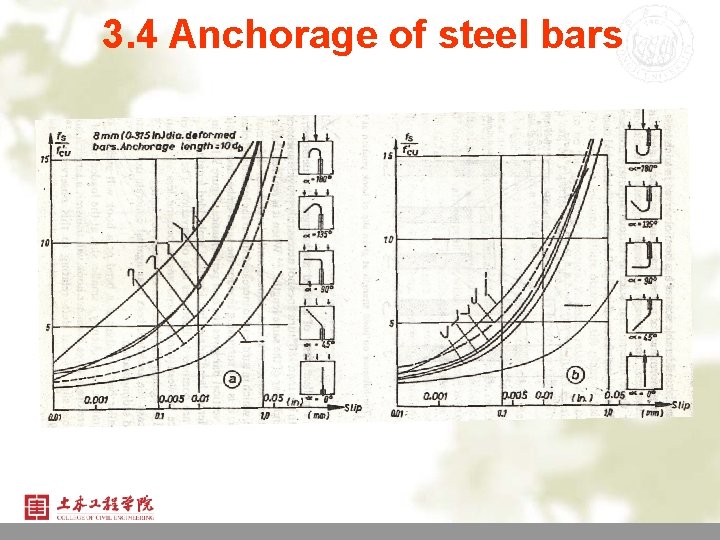
3. 4 Anchorage of steel bars 24
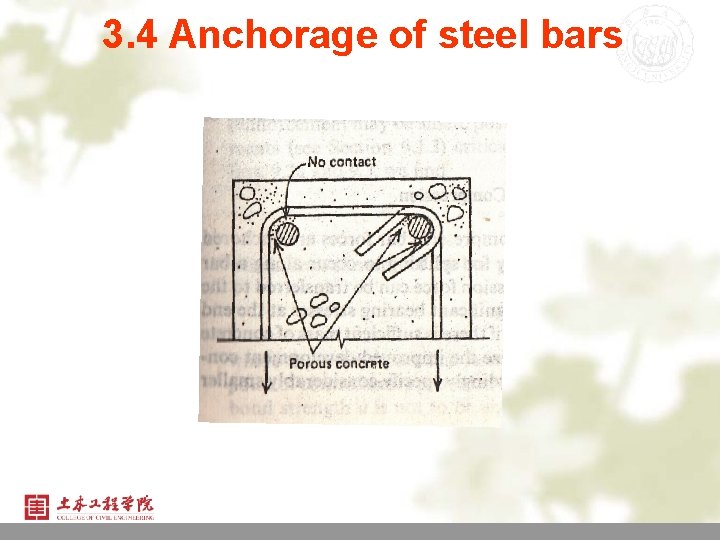
3. 4 Anchorage of steel bars 25
3. 5 Lap splices 26
3. 5 Lap splices Force transfer mechanism 27
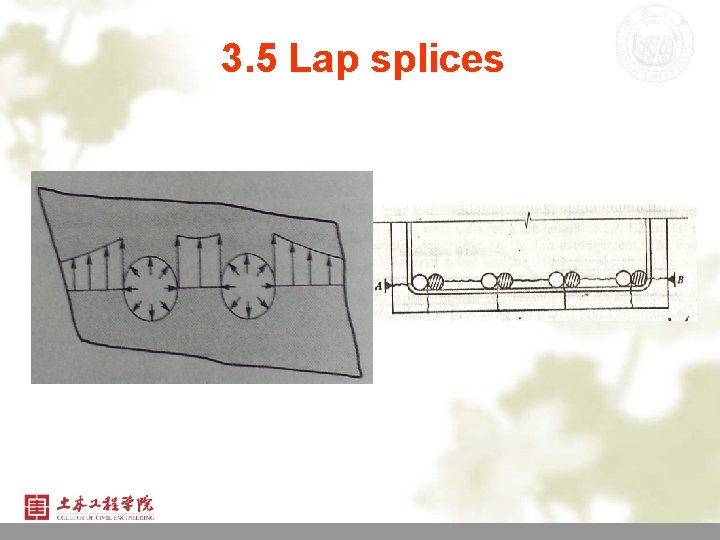
3. 5 Lap splices 28
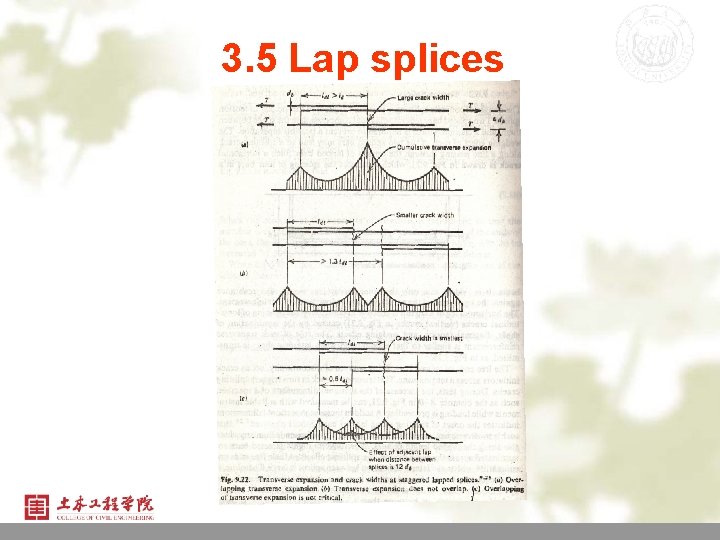
3. 5 Lap splices 29

Thank you! 30
- Slides: 30