
Advanced Remote Sensing Land Use Land Cover Change

- Slides: 13
Advanced Remote Sensing Land Use / Land Cover Change Analysis Module 1 Planning a Remote Sensing Project Stacy Bogan 2/13/2018
Module Outline Planning for a land use / land cover change analysis remote sensing project � Collect � Select a classification scheme � Select a remotely-sensed dataset � Build 2 background information a scene model
Collect Background Information � What is the phenomenon you want to study? � What reflectance would you expect in the different areas of the electromagnetic spectrum? � What are the other land covers that you need to differentiate? � What are the physiological processes dictating the spectral reflectance patterns? � Are there different patterns during different times of the 3 year?
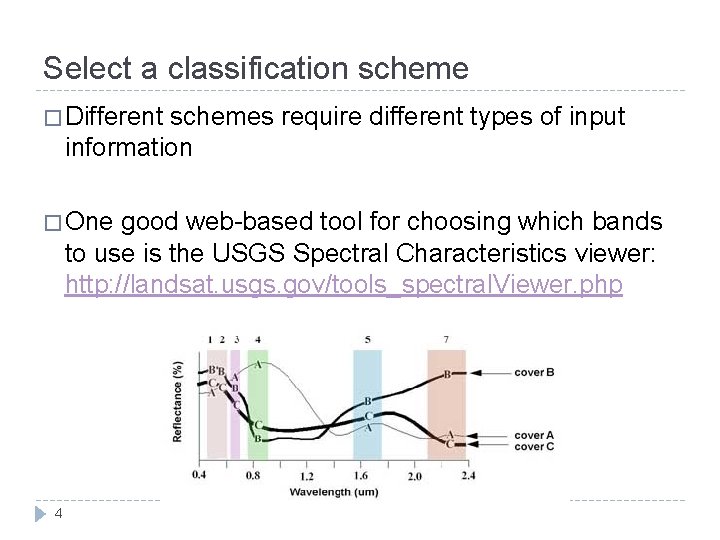
Select a classification scheme � Different schemes require different types of input information � One good web-based tool for choosing which bands to use is the USGS Spectral Characteristics viewer: http: //landsat. usgs. gov/tools_spectral. Viewer. php 4
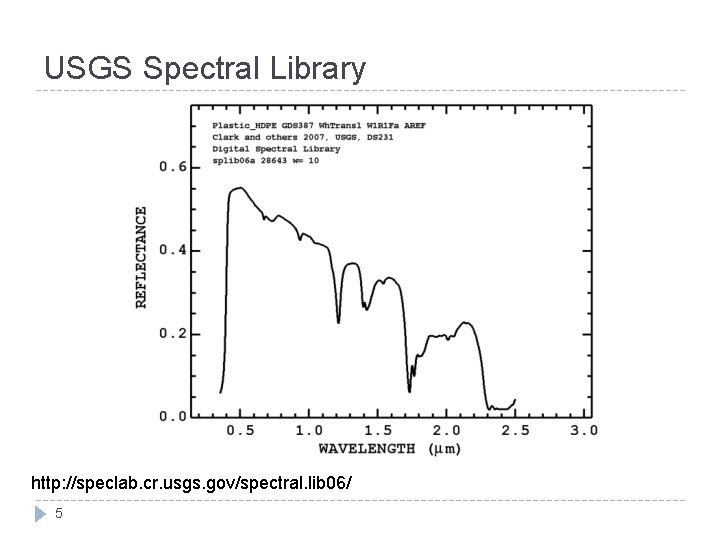
USGS Spectral Library http: //speclab. cr. usgs. gov/spectral. lib 06/ 5
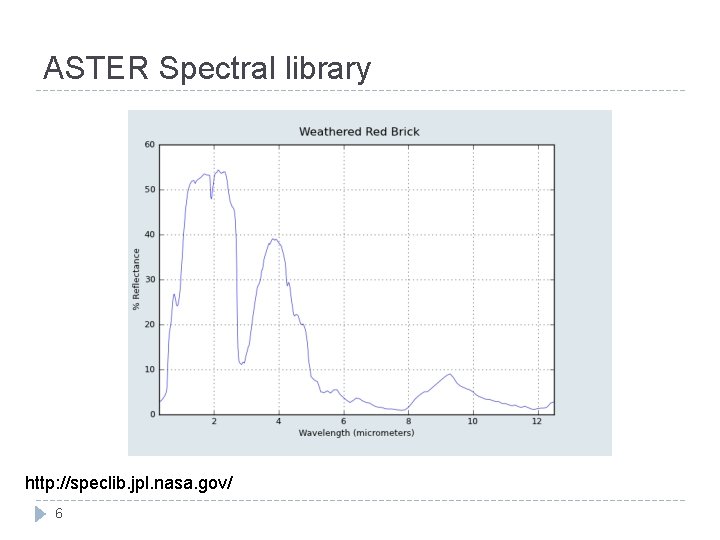
ASTER Spectral library http: //speclib. jpl. nasa. gov/ 6
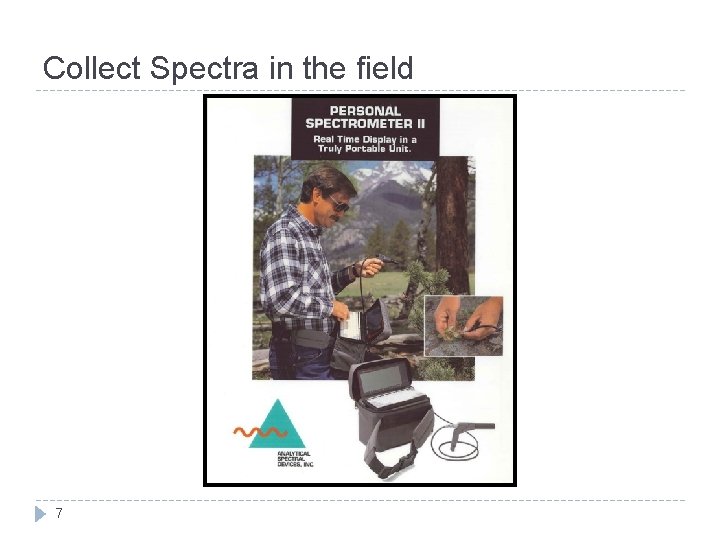
Collect Spectra in the field 7
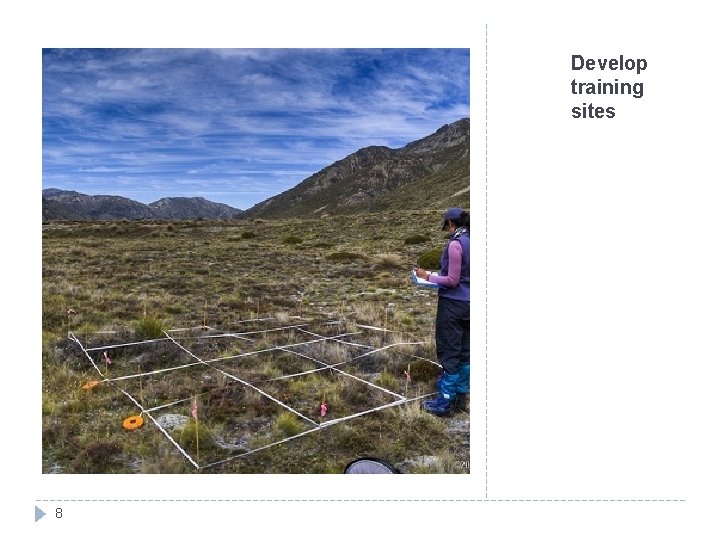
Develop training sites 8
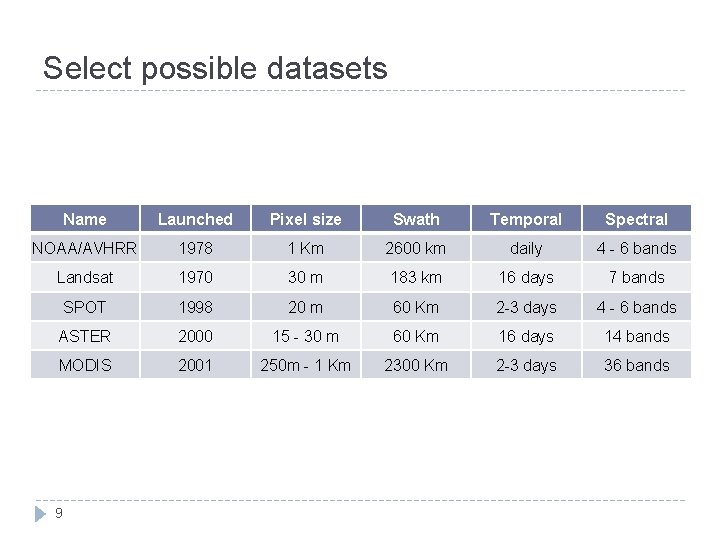
Select possible datasets Name Launched Pixel size Swath Temporal Spectral NOAA/AVHRR 1978 1 Km 2600 km daily 4 - 6 bands Landsat 1970 30 m 183 km 16 days 7 bands SPOT 1998 20 m 60 Km 2 -3 days 4 - 6 bands ASTER 2000 15 - 30 m 60 Km 16 days 14 bands MODIS 2001 250 m - 1 Km 2300 Km 2 -3 days 36 bands 9
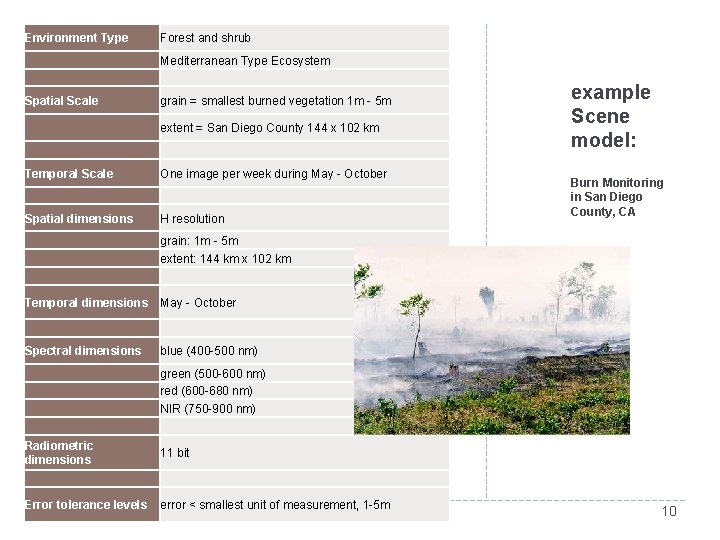
Environment Type Forest and shrub Mediterranean Type Ecosystem Spatial Scale grain = smallest burned vegetation 1 m - 5 m extent = San Diego County 144 x 102 km Temporal Scale One image per week during May - October Spatial dimensions H resolution example Scene model: Burn Monitoring in San Diego County, CA grain: 1 m - 5 m extent: 144 km x 102 km Temporal dimensions May - October Spectral dimensions blue (400 -500 nm) green (500 -600 nm) red (600 -680 nm) NIR (750 -900 nm) Radiometric dimensions 11 bit Error tolerance levels error < smallest unit of measurement, 1 -5 m 10
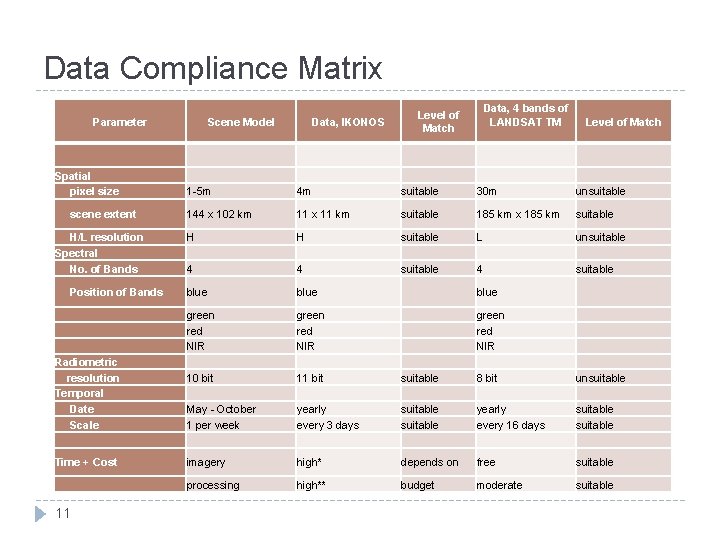
Data Compliance Matrix Parameter Spatial pixel size scene extent H/L resolution Spectral No. of Bands Position of Bands Radiometric resolution Temporal Date Scale Time + Cost 11 Scene Model Data, IKONOS Data, 4 bands of LANDSAT TM Level of Match 1 -5 m 4 m suitable 30 m unsuitable 144 x 102 km 11 x 11 km suitable 185 km x 185 km suitable H H suitable L unsuitable 4 4 suitable blue green red NIR 10 bit 11 bit suitable 8 bit unsuitable May - October 1 per week yearly every 3 days suitable yearly every 16 days suitable imagery high* depends on free suitable processing high** budget moderate suitable
Want to learn more? Module 2: How to download Landsat Data Module 3: Processing Level 1 Landsat Data � Atmospheric Correction Module 4: Analysis with the Land Change Modeler 12 Related Modules
Thank you! Please submit feedback http: //gis. harvard. edu/form/workshop-evaluation-form 13