
Advanced Programming Languages in the Enterprise Datacenter Chet
- Slides: 38
Advanced Programming Languages in the Enterprise Datacenter Chet Murthy IBM Research
Two big ideas Advanced Programming Language technology is a secret weapon in enterprise computing Farm where the fertilizer is thickest: Enterprise Systems
Plan of Talk Enterprise software The problem and opportunity for PL research Applying ML and partial evaluation in enterprise software: a case study Summary and Future work
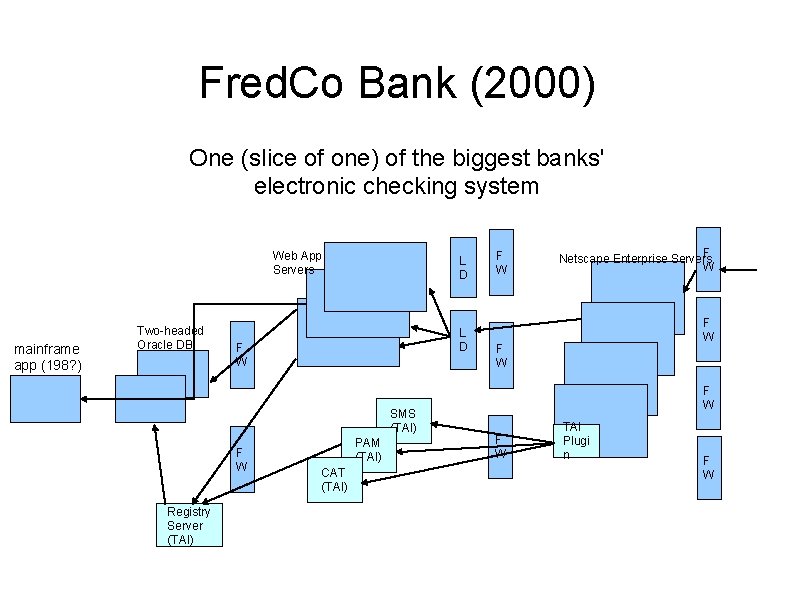
Enterprise software systems Run our world Comprise millions of lines of application code Written by many thousands of programmers Run on sometimes thousands of machines Cost many millions of dollars Names have been changed to protect paying customers
Fred. Co Bank (2000) One (slice of one) of the biggest banks' electronic checking system Web App Servers mainframe app (198? ) Two-headed Oracle DB L D F W SMS (TAI) F W Registry Server (TAI) PAM (TAI) CAT (TAI) F W F Netscape Enterprise Servers W F W F W TAI Plugi n F W
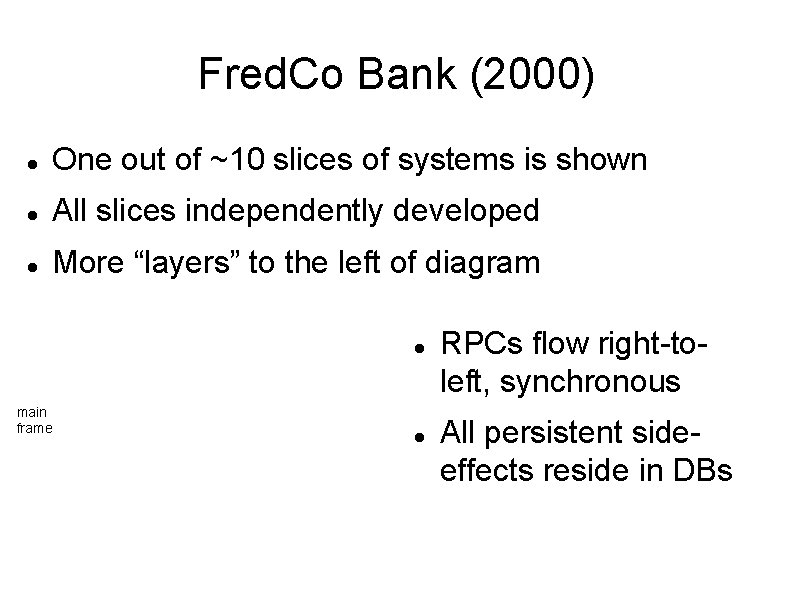
Fred. Co Bank (2000) One out of ~10 slices of systems is shown All slices independently developed More “layers” to the left of diagram main frame RPCs flow right-toleft, synchronous All persistent sideeffects reside in DBs
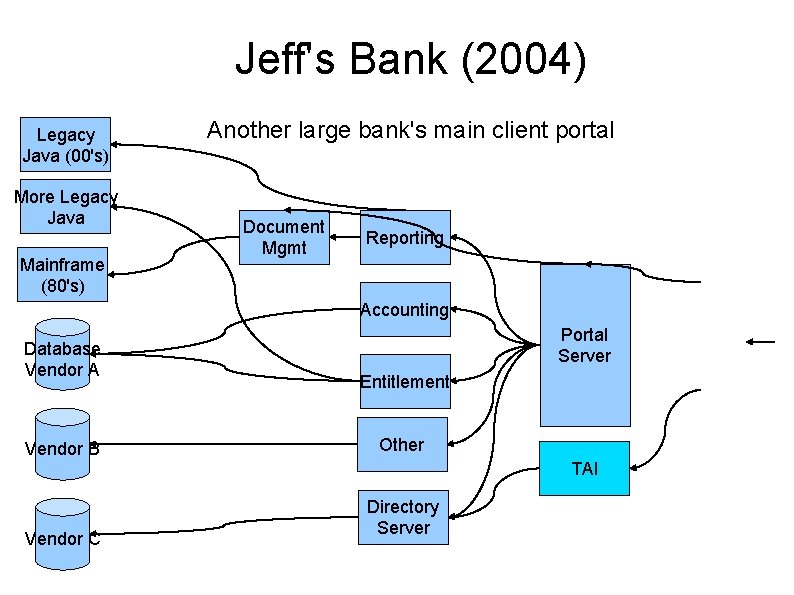
Jeff's Bank (2004) Legacy Java (00's) More Legacy Java Mainframe (80's) Another large bank's main client portal Document Mgmt Reporting Accounting Database Vendor A Vendor B Vendor C Portal Server Entitlement Other TAI Directory Server
Jeff's Bank (2004) Layers of systems grow by accretion over time (decades) Only communication is RPC
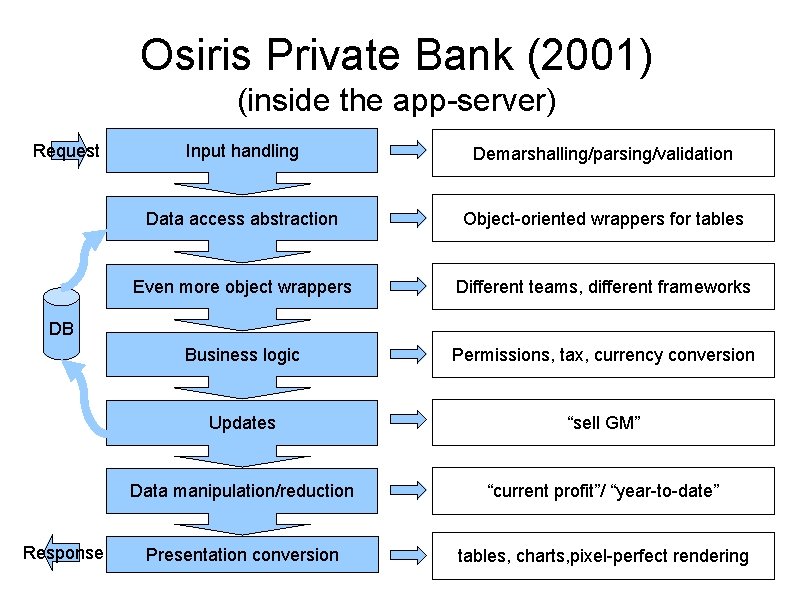
Osiris Private Bank (2001) (inside the app-server) Request Input handling Demarshalling/parsing/validation Data access abstraction Object-oriented wrappers for tables Even more object wrappers Different teams, different frameworks Business logic Permissions, tax, currency conversion Updates “sell GM” Data manipulation/reduction “current profit”/ “year-to-date” Presentation conversion tables, charts, pixel-perfect rendering DB Response
Plan of Talk Enterprise software The problem and opportunity for PL research Applying ML and partial evaluation in enterprise software: a case study Summary and Future work
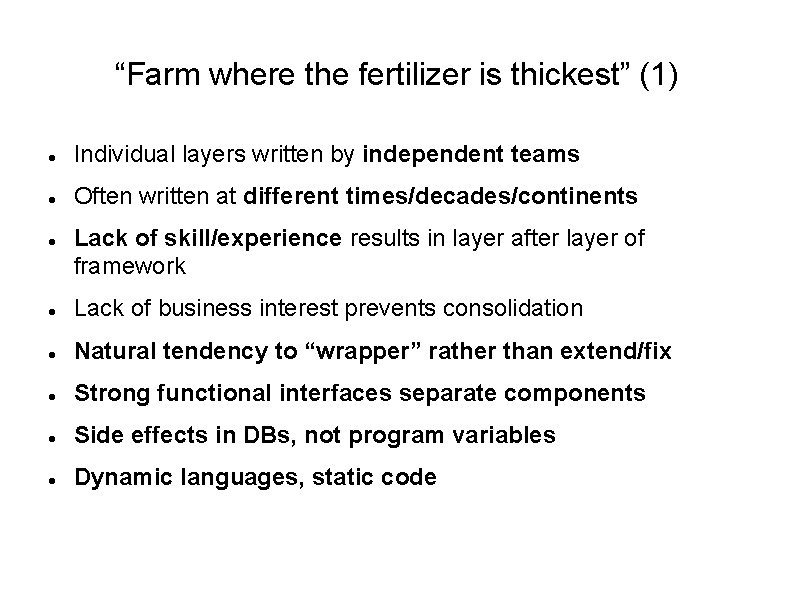
“Farm where the fertilizer is thickest” (1) Individual layers written by independent teams Often written at different times/decades/continents Lack of skill/experience results in layer after layer of framework Lack of business interest prevents consolidation Natural tendency to “wrapper” rather than extend/fix Strong functional interfaces separate components Side effects in DBs, not program variables Dynamic languages, static code
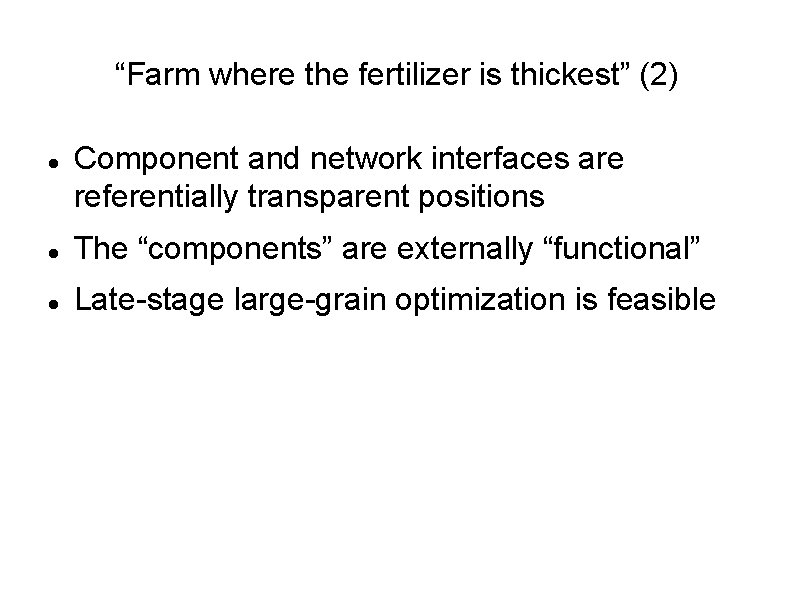
“Farm where the fertilizer is thickest” (2) Component and network interfaces are referentially transparent positions The “components” are externally “functional” Late-stage large-grain optimization is feasible
This should look familiar
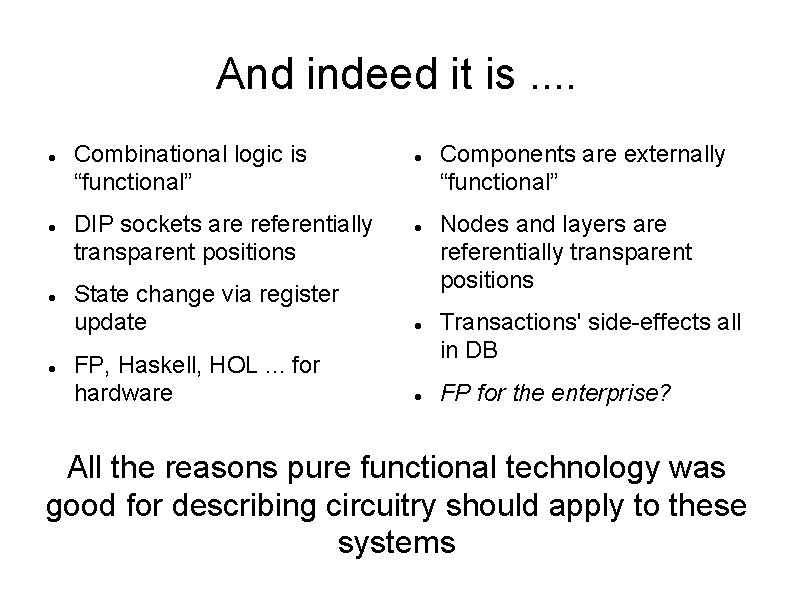
And indeed it is. . Combinational logic is “functional” DIP sockets are referentially transparent positions State change via register update FP, Haskell, HOL. . . for hardware Components are externally “functional” Nodes and layers are referentially transparent positions Transactions' side-effects all in DB FP for the enterprise? All the reasons pure functional technology was good for describing circuitry should apply to these systems
Plan of Talk Enterprise software The problem and opportunity for PL research Applying ML and partial evaluation in enterprise software: a case study Summary and Future work
An experimental demonstration Putting FP to work Find candidate “component” of an application Replace component with a pure functional implementation Show this replacement is more efficient Go further, replace more, make it even faster, even simpler Subsystem is XSL Replace with ML
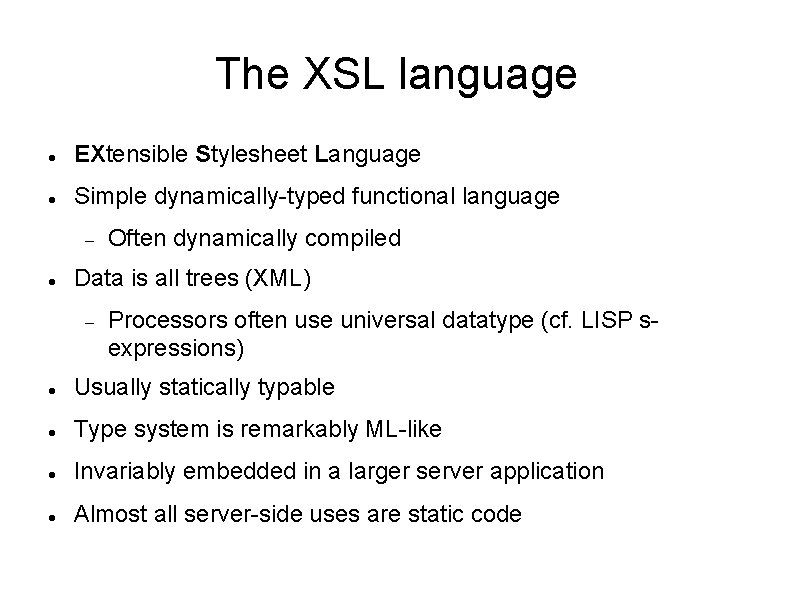
The XSL language EXtensible Stylesheet Language Simple dynamically-typed functional language Often dynamically compiled Data is all trees (XML) Processors often use universal datatype (cf. LISP sexpressions) Usually statically typable Type system is remarkably ML-like Invariably embedded in a larger server application Almost all server-side uses are static code
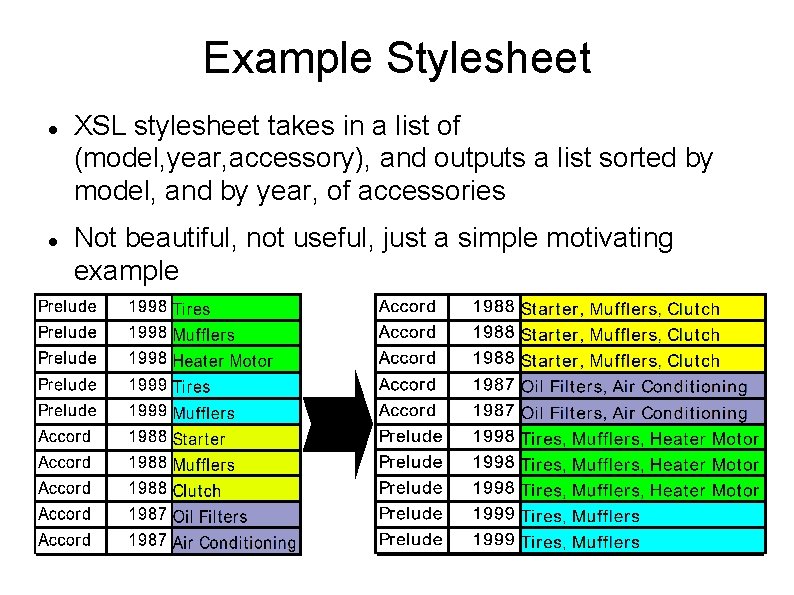
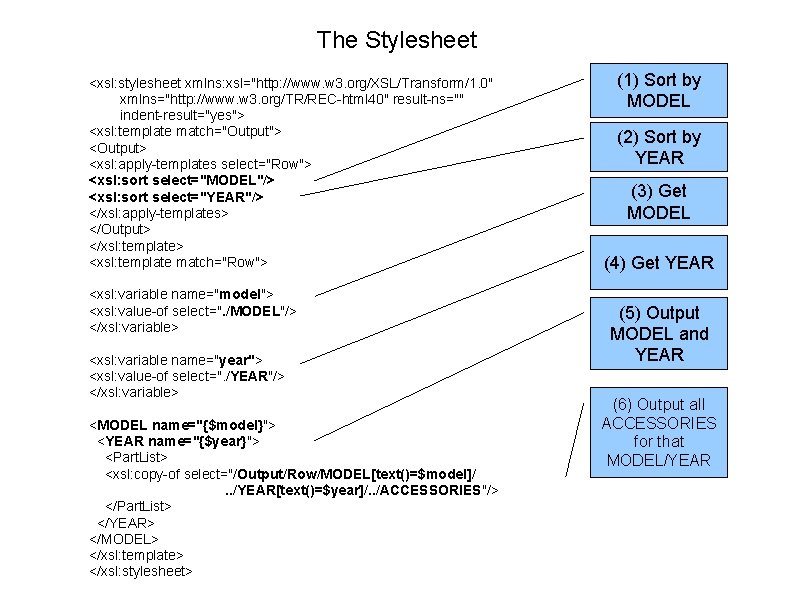
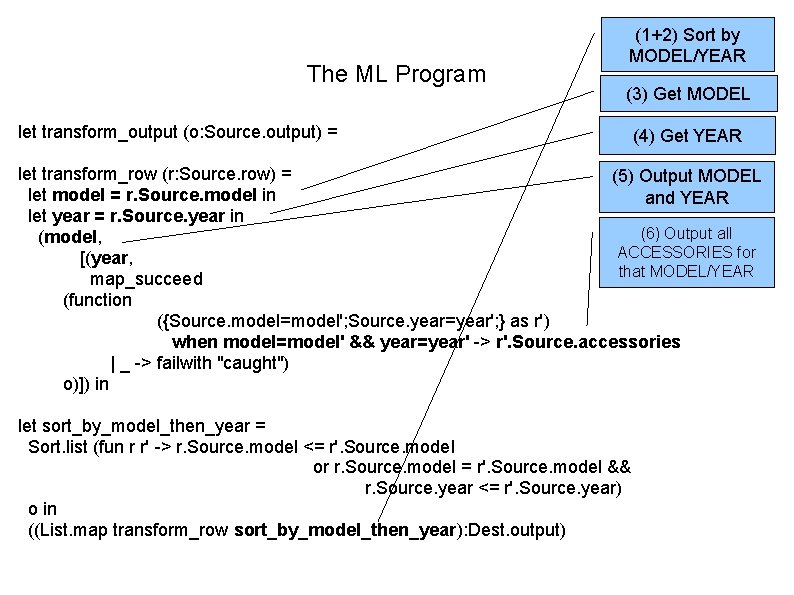
Example Stylesheet XSL stylesheet takes in a list of (model, year, accessory), and outputs a list sorted by model, and by year, of accessories Not beautiful, not useful, just a simple motivating example
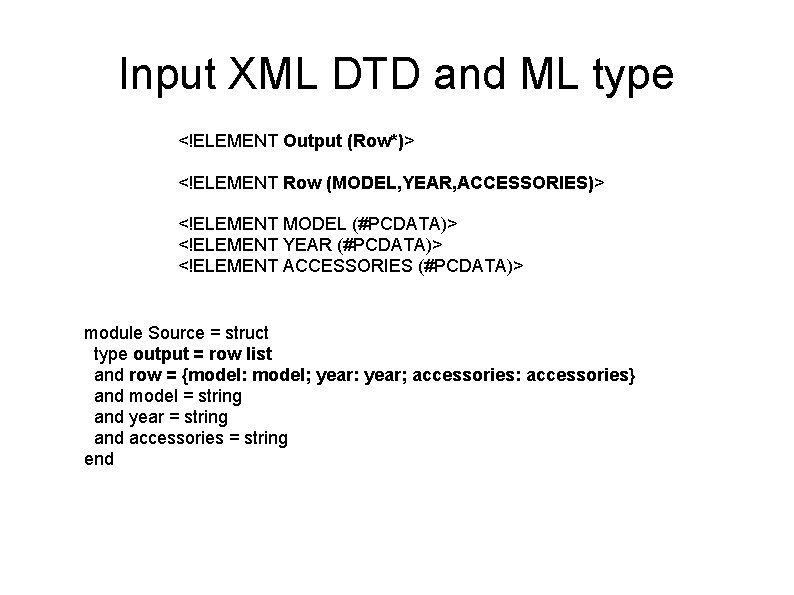
Input XML DTD and ML type <!ELEMENT Output (Row*)> <!ELEMENT Row (MODEL, YEAR, ACCESSORIES)> <!ELEMENT MODEL (#PCDATA)> <!ELEMENT YEAR (#PCDATA)> <!ELEMENT ACCESSORIES (#PCDATA)> module Source = struct type output = row list and row = {model: model; year: year; accessories: accessories} and model = string and year = string and accessories = string end
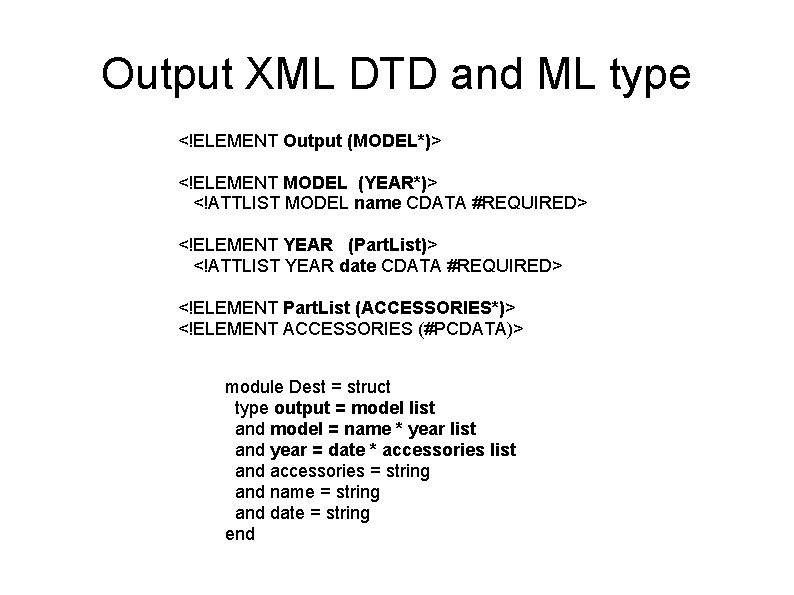
Output XML DTD and ML type <!ELEMENT Output (MODEL*)> <!ELEMENT MODEL (YEAR*)> <!ATTLIST MODEL name CDATA #REQUIRED> <!ELEMENT YEAR (Part. List)> <!ATTLIST YEAR date CDATA #REQUIRED> <!ELEMENT Part. List (ACCESSORIES*)> <!ELEMENT ACCESSORIES (#PCDATA)> module Dest = struct type output = model list and model = name * year list and year = date * accessories list and accessories = string and name = string and date = string end
The Stylesheet <xsl: stylesheet xmlns: xsl="http: //www. w 3. org/XSL/Transform/1. 0" xmlns="http: //www. w 3. org/TR/REC-html 40" result-ns="" indent-result="yes"> <xsl: template match="Output"> <Output> <xsl: apply-templates select="Row"> <xsl: sort select="MODEL"/> <xsl: sort select="YEAR"/> </xsl: apply-templates> </Output> </xsl: template> <xsl: template match="Row"> <xsl: variable name="model"> <xsl: value-of select=". /MODEL"/> </xsl: variable> <xsl: variable name="year"> <xsl: value-of select=". /YEAR"/> </xsl: variable> <MODEL name="{$model}"> <YEAR name="{$year}"> <Part. List> <xsl: copy-of select="/Output/Row/MODEL[text()=$model]/. . /YEAR[text()=$year]/. . /ACCESSORIES"/> </Part. List> </YEAR> </MODEL> </xsl: template> </xsl: stylesheet> (1) Sort by MODEL (2) Sort by YEAR (3) Get MODEL (4) Get YEAR (5) Output MODEL and YEAR (6) Output all ACCESSORIES for that MODEL/YEAR
The ML Program (1+2) Sort by MODEL/YEAR (3) Get MODEL let transform_output (o: Source. output) = (4) Get YEAR let transform_row (r: Source. row) = (5) Output MODEL let model = r. Source. model in and YEAR let year = r. Source. year in (6) Output all (model, ACCESSORIES for [(year, that MODEL/YEAR map_succeed (function ({Source. model=model'; Source. year=year'; } as r') when model=model' && year=year' -> r'. Source. accessories | _ -> failwith "caught") o)]) in let sort_by_model_then_year = Sort. list (fun r r' -> r. Source. model <= r'. Source. model or r. Source. model = r'. Source. model && r. Source. year <= r'. Source. year) o in ((List. map transform_row sort_by_model_then_year): Dest. output)
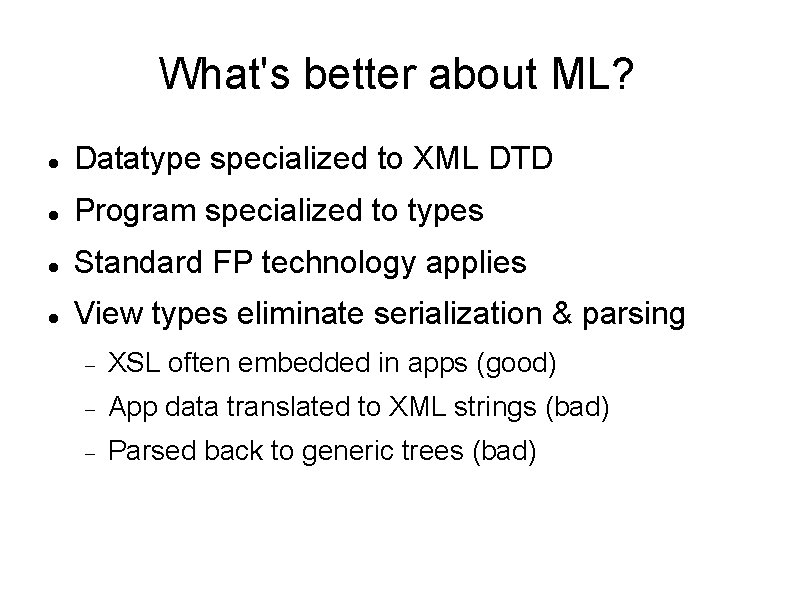
What's better about ML? Datatype specialized to XML DTD Program specialized to types Standard FP technology applies View types eliminate serialization & parsing XSL often embedded in apps (good) App data translated to XML strings (bad) Parsed back to generic trees (bad)
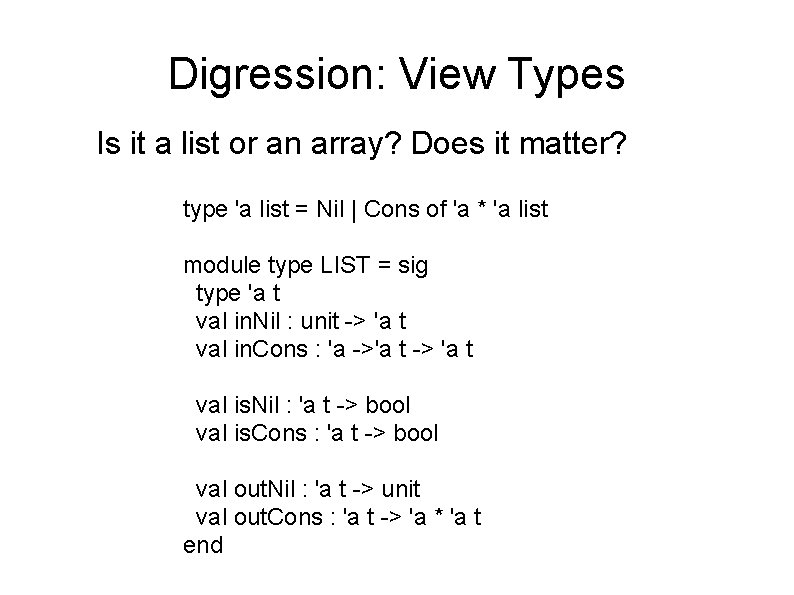
Digression: View Types Is it a list or an array? Does it matter? type 'a list = Nil | Cons of 'a * 'a list module type LIST = sig type 'a t val in. Nil : unit -> 'a t val in. Cons : 'a ->'a t -> 'a t val is. Nil : 'a t -> bool val is. Cons : 'a t -> bool val out. Nil : 'a t -> unit val out. Cons : 'a t -> 'a * 'a t end
A Commercial Realization (Joint work with Xylem Team) Xylem (what is it) A real application in a real customer What we did & how it went Where it's going
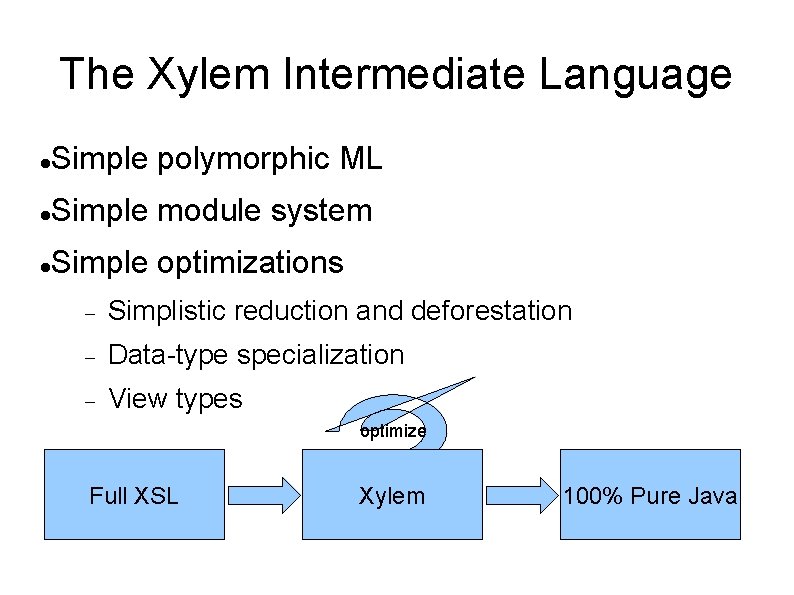
The Xylem Intermediate Language Simple polymorphic ML Simple module system Simple optimizations Simplistic reduction and deforestation Data-type specialization View types optimize Full XSL Xylem 100% Pure Java
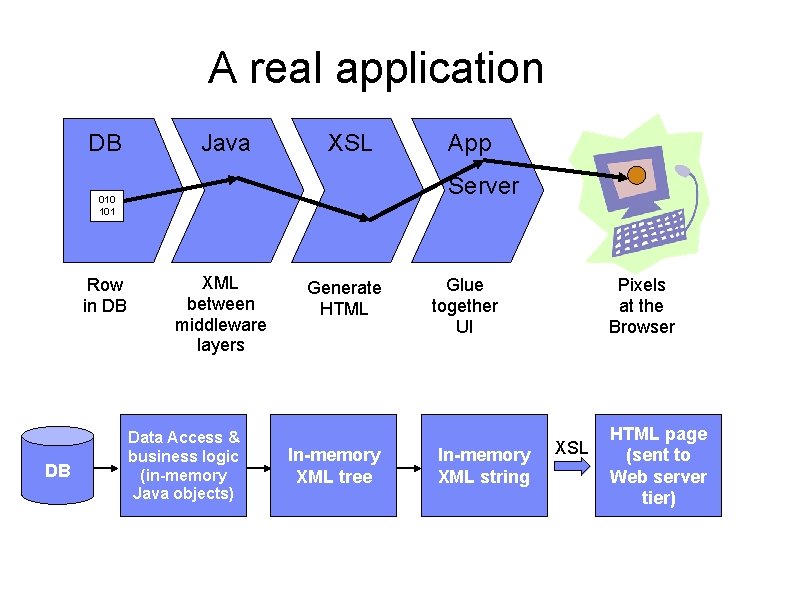
A real application DB Java XSL Server 010 101 Row in DB DB App XML between middleware layers Data Access & business logic (in-memory Java objects) Generate HTML In-memory XML tree Glue together UI In-memory XML string Pixels at the Browser XSL HTML page (sent to Web server tier)
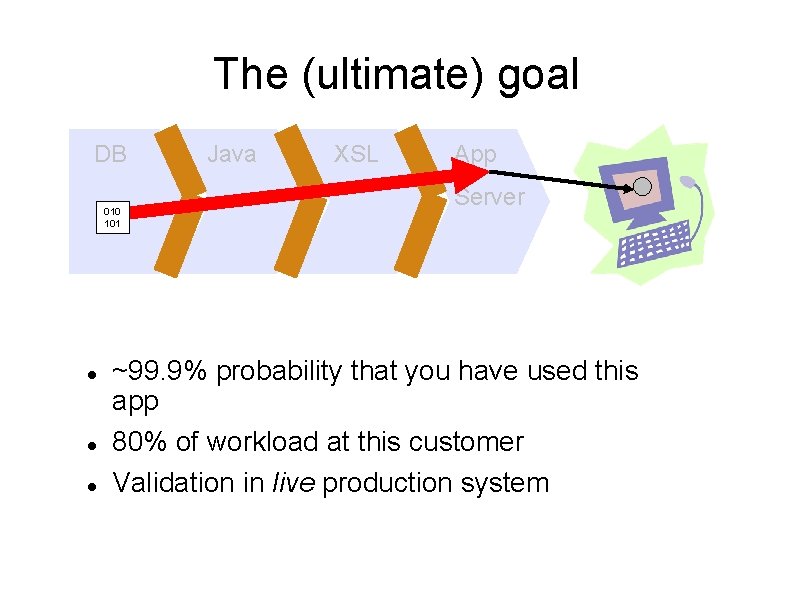
The (ultimate) goal DB 010 101 Java XSL App Server ~99. 9% probability that you have used this app 80% of workload at this customer Validation in live production system
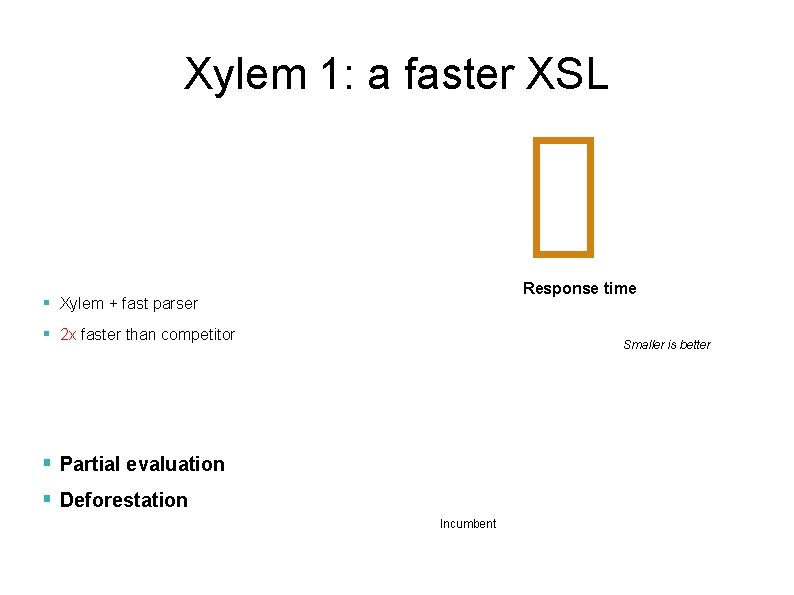
Xylem 1: a faster XSL Response time Xylem + fast parser 2 x faster than competitor Smaller is better Partial evaluation Deforestation Incumbent
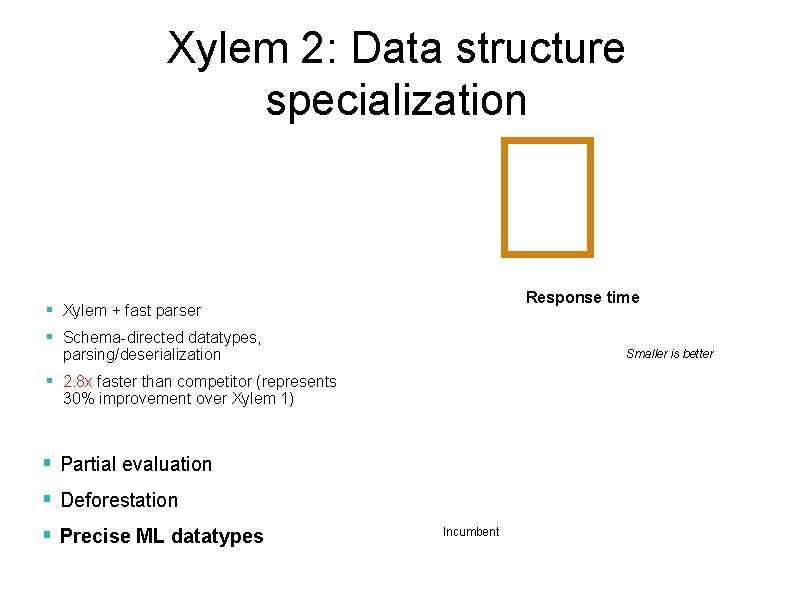
Xylem 2: Data structure specialization Response time Xylem + fast parser Schema-directed datatypes, parsing/deserialization Smaller is better 2. 8 x faster than competitor (represents 30% improvement over Xylem 1) Partial evaluation Deforestation Precise ML datatypes Incumbent
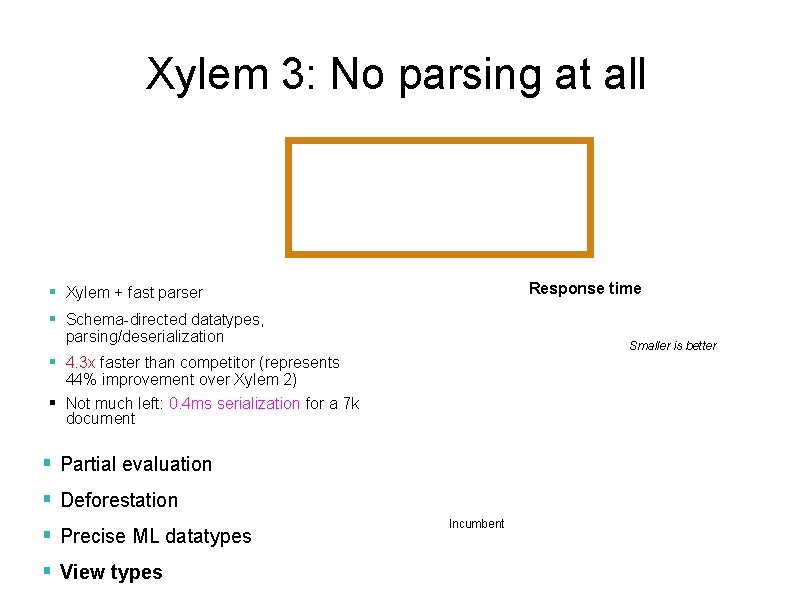
Xylem 3: No parsing at all Response time Xylem + fast parser Schema-directed datatypes, parsing/deserialization Smaller is better 4. 3 x faster than competitor (represents 44% improvement over Xylem 2) Not much left: 0. 4 ms serialization for a 7 k document Partial evaluation Deforestation Precise ML datatypes View types Incumbent
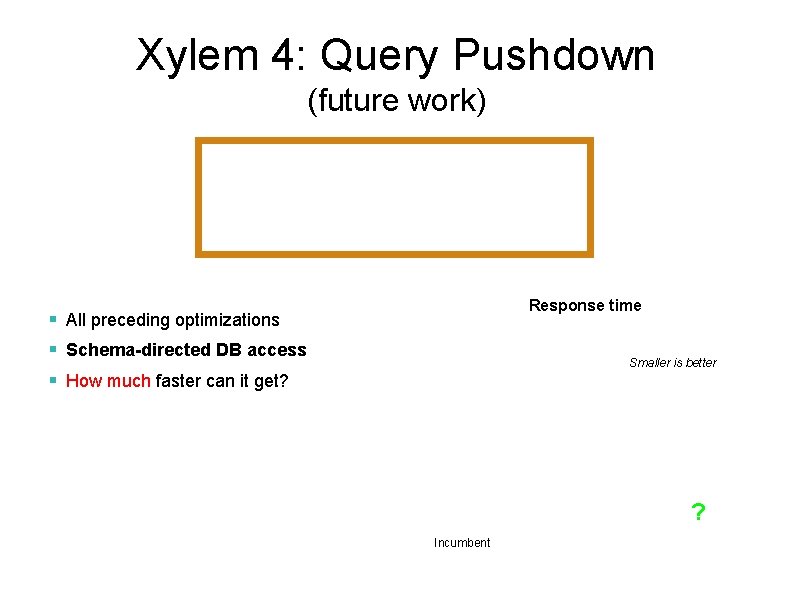
Xylem 4: Query Pushdown (future work) Response time All preceding optimizations Schema-directed DB access How much faster can it get? Smaller is better ? Incumbent
What is of note? Same runtime, same app-server, same JVM Neil Jones: find nontrivial invariants that classical compilers cannot discover Immense opportunity: simpler programs, greater performance Business software: unique opportunity FP technology is the secret weapon Partial evaluation Deforestation Type specialization View types
Outcome of Experiment Faster Cheaper Simpler More “robust” In production today 40% decrease in CPU utilization for first production app Come for the speed Stay for the simplicity
Xylem's Future Query pushdown, update Apply technology to other parts of e-business stack Presentation (portals) RPC (XML-RPC, SOAP) marshallers Workflow (BPEL) Messaging (Java Messaging Service, pub/sub)
Plan of Talk Enterprise software The problem and opportunity for PL research Applying ML and partial evaluation in enterprise software: a case study Summary and Future work
Two big ideas Advanced Programming Language technology is a secret weapon in enterprise computing Farm where the fertilizer is thickest: Enterprise Systems
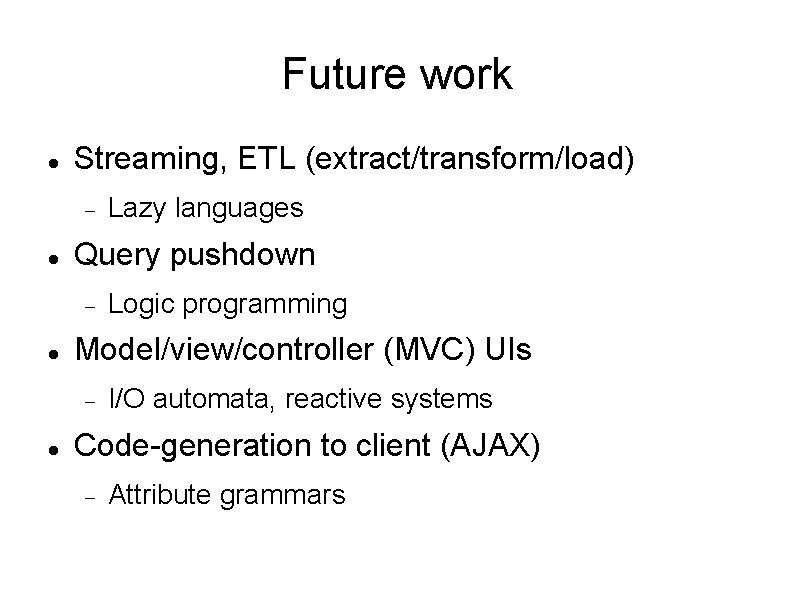
Future work Streaming, ETL (extract/transform/load) Query pushdown Logic programming Model/view/controller (MVC) UIs Lazy languages I/O automata, reactive systems Code-generation to client (AJAX) Attribute grammars