
Advanced Programming Behnam Hatami Fall 2017 Agenda Polymorphism
Advanced Programming Behnam Hatami Fall 2017
Agenda • Polymorphism • Final Methods
Polymorphism
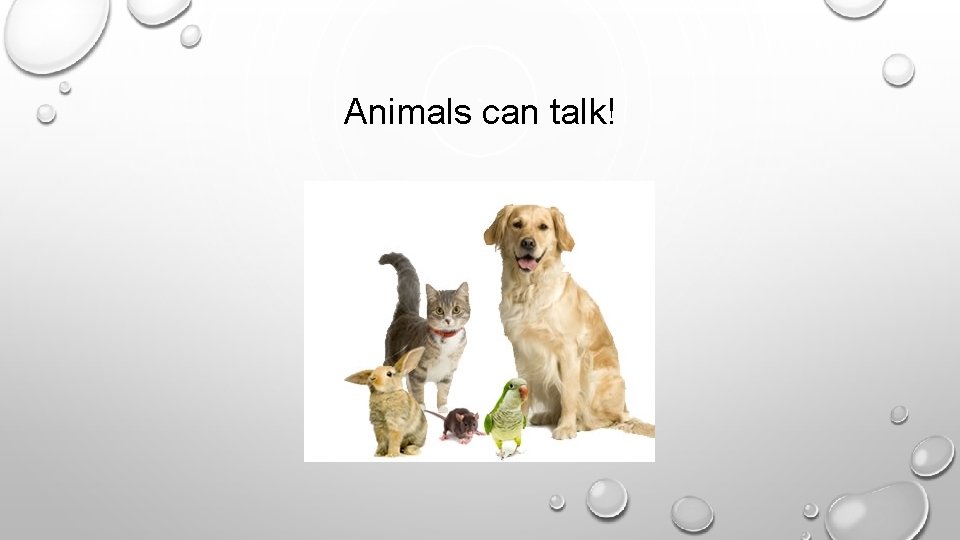
Animals can talk!
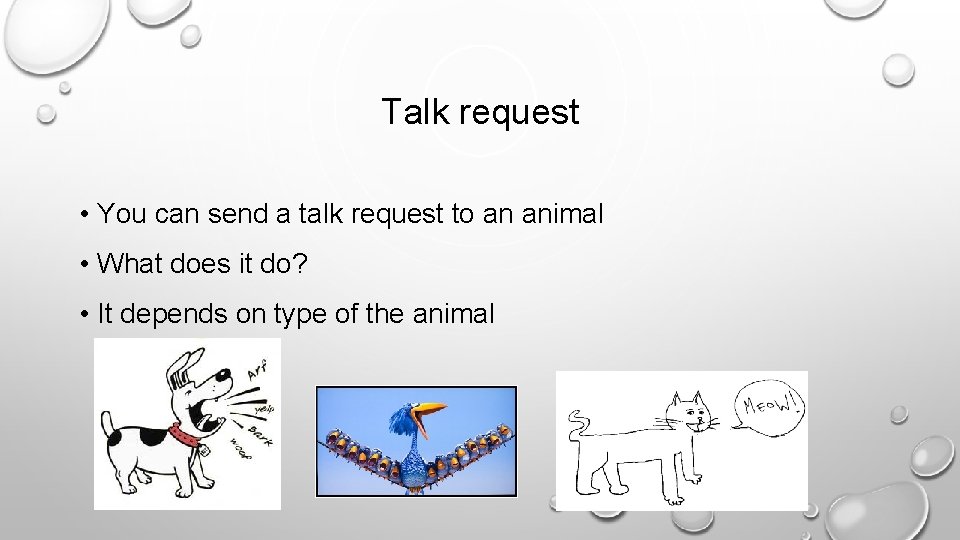
Talk request • You can send a talk request to an animal • What does it do? • It depends on type of the animal
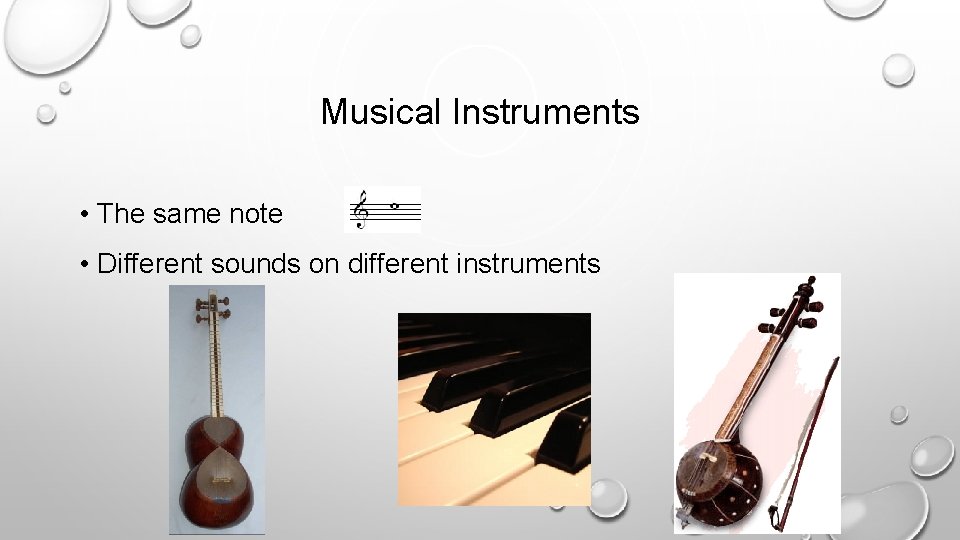
Musical Instruments • The same note • Different sounds on different instruments
Polymorphic Behavior • Common interface • The same request • Different behaviors • Depending on the type of object
Polymorphism • The same interface • animal. talk() • instrument. play(int note) • But different implementation in different classes
Polymorphism • Suppose Child is a subclass of Parent class. • Remember : A Child’s object is also a Parent’s object • is-a relationship • So these lines are valid: • Child c = new Child(); • Parent p = new Parent(); • p = c; • But this line is invalid: • c = p;
Up. Casting • Upcasting • Shape s = new Rectangle(); • Circle c = new Circle(); • Shape s = c; • Upcasting is always valid
Down. Casting • Downcasting • Shape s = … • Circle c = s; • Circle c = (Circle) s; • Needs type cast • May cause errors
What About Method Calls? • Shape s = new Rectangle(); • s. draw(); • double d = s. get. Area(); • Circle c = new Circle(); • Shape s = c; • s. draw(); • double d = s. get. Area();
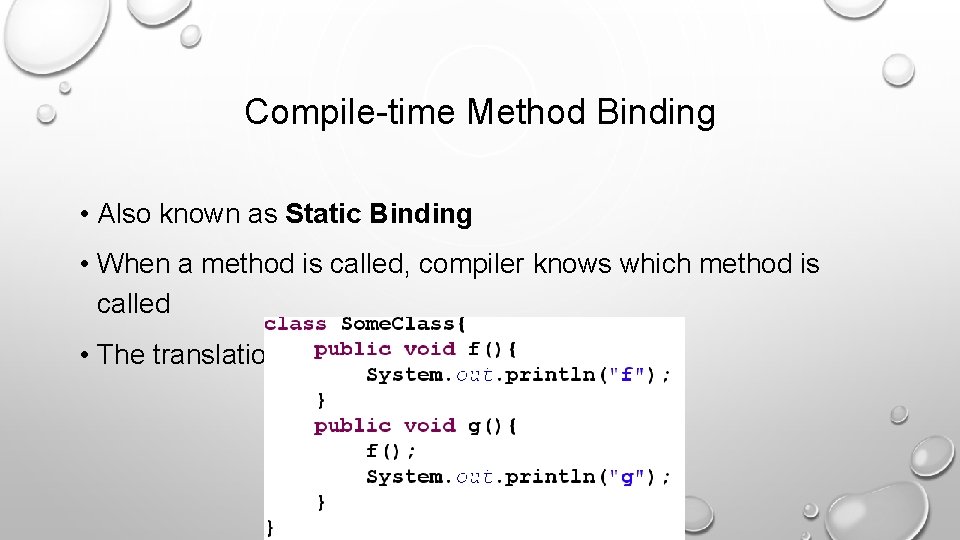
Compile-time Method Binding • Also known as Static Binding • When a method is called, compiler knows which method is called • The translation is done in compile-time
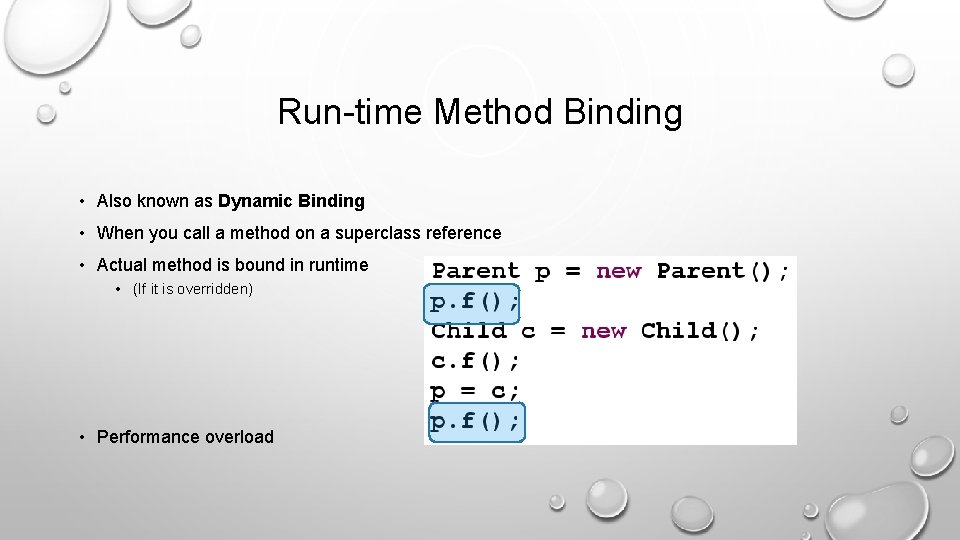
Run-time Method Binding • Also known as Dynamic Binding • When you call a method on a superclass reference • Actual method is bound in runtime • (If it is overridden) • Performance overload
Virtual Methods • In some languages (like C++) you can specify the binding mechanism for methods • If a method is declared as virtual, dynamic binding is used for that method
Applications of Polymorphism • Polymorphic behavior • Suppose you have so many objects in a GUI application • All of them have draw() operation • You simply call draw() on every object • It knows how to draw itself • Classes : Drawable(superclass), Player, Referee, Ball, …
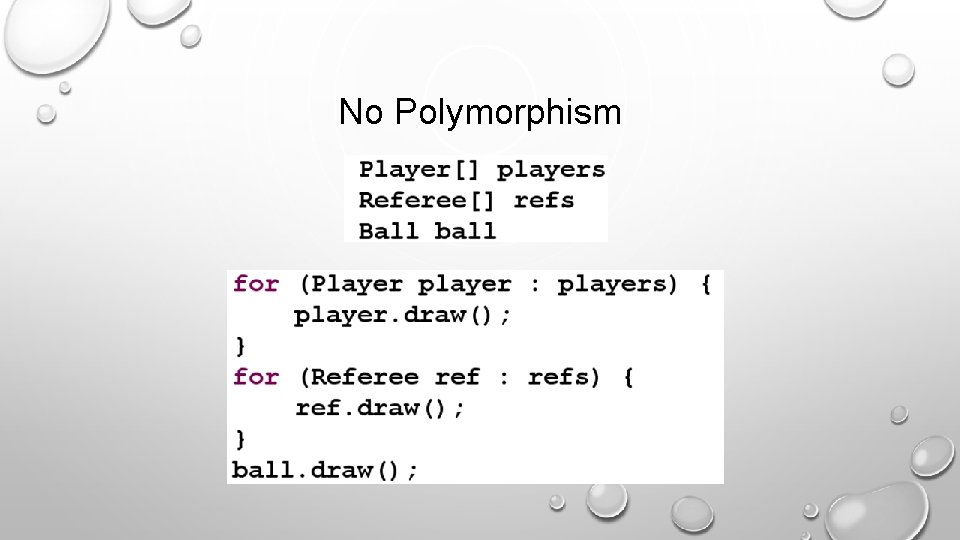
No Polymorphism
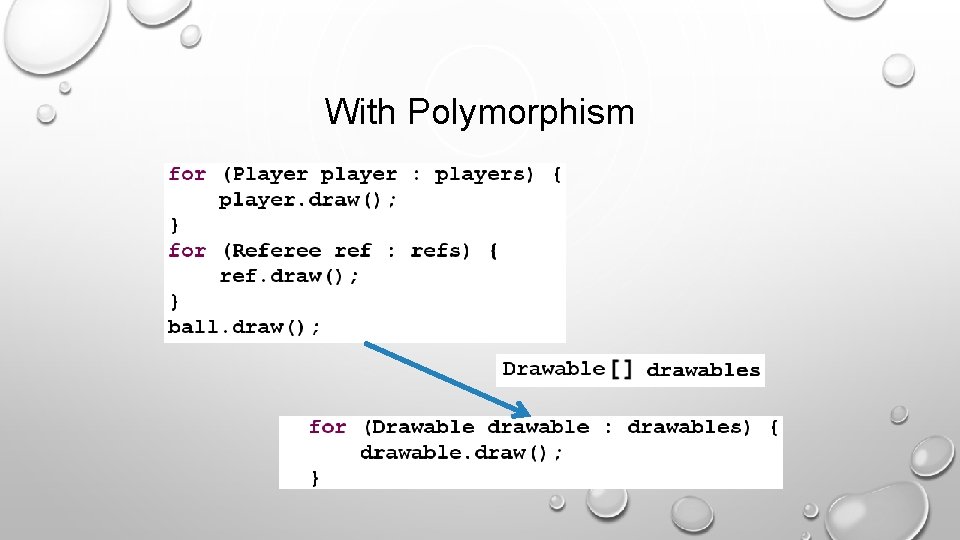
With Polymorphism
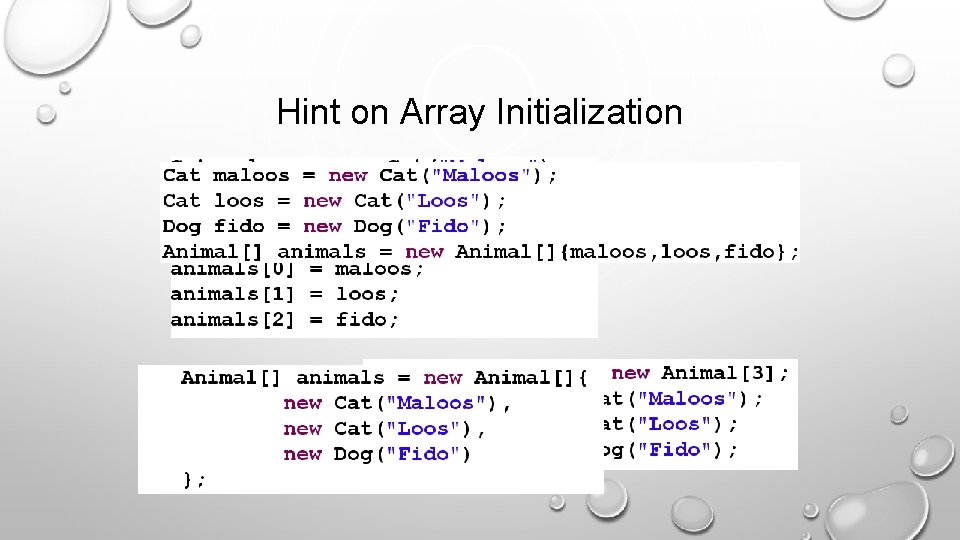
Hint on Array Initialization
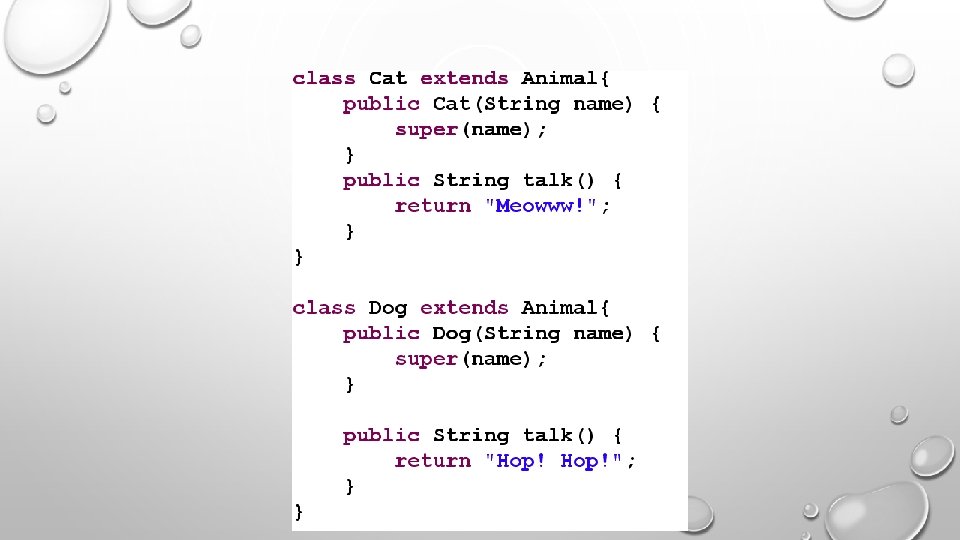
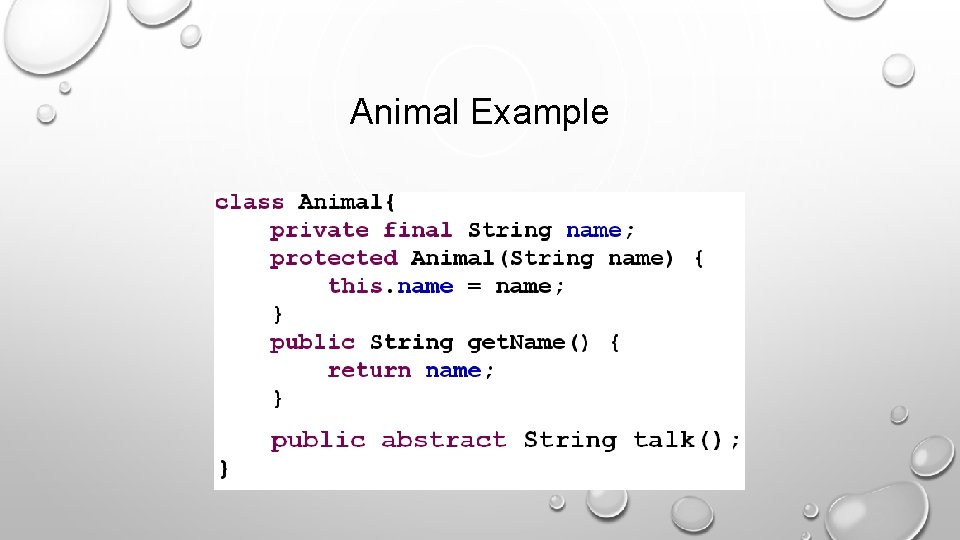
Animal Example
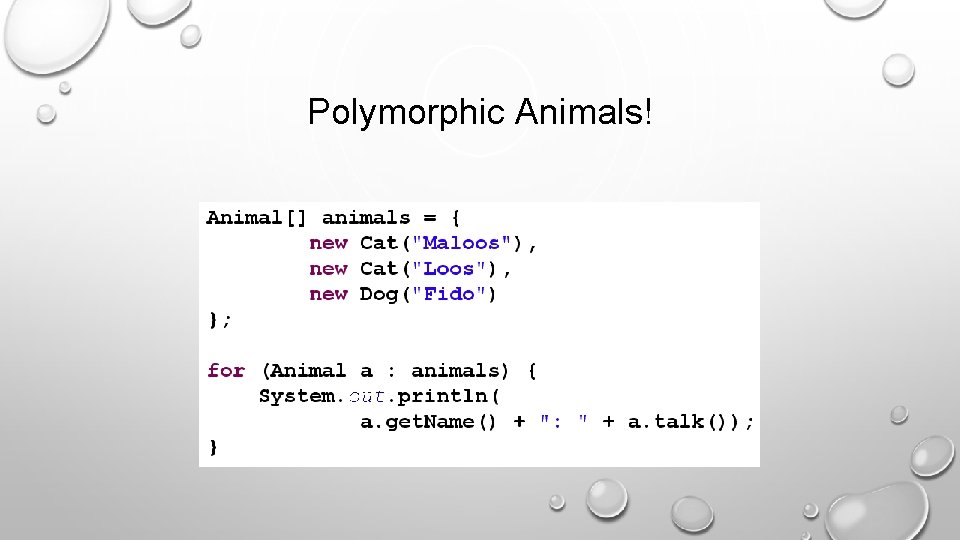
Polymorphic Animals!
More on Polymorphism • Later!
Final
Final Methods • You can not override final methods • final keyword • Static method binding for final methods • Private methods are implicitly final • Static methods are statically bound • Invoked reference is not important • No polymorphism for static variables
Final Variables • You can define variables as final • The value of final variable will remain constant • You can not change the value of final variables • You should immediately assign a value to final variables • • Final parameter Final local variable Final property Final static variable

Final Variables
Final Classes • You can not inherit from final classes • No class can extend final classes
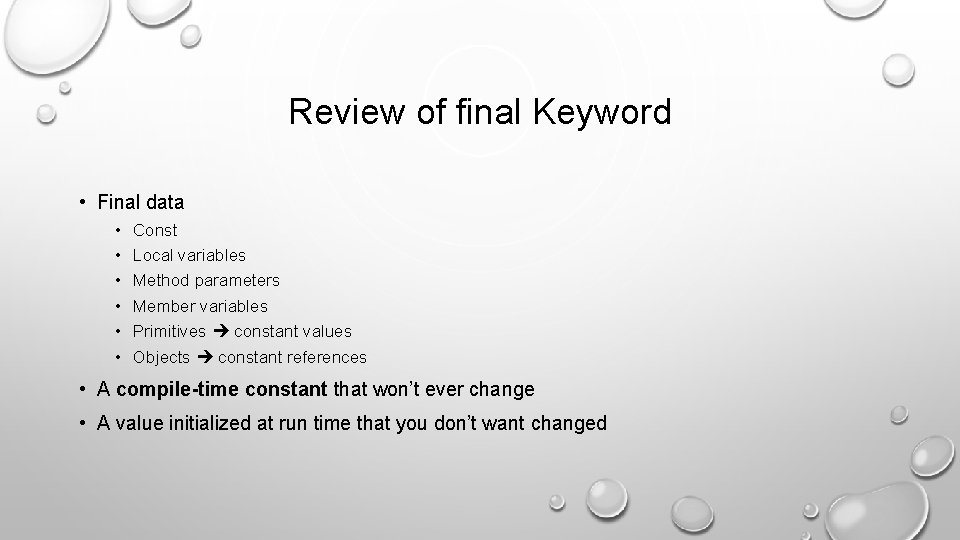
Review of final Keyword • Final data • • • Const Local variables Method parameters Member variables Primitives constant values Objects constant references • A compile-time constant that won’t ever change • A value initialized at run time that you don’t want changed
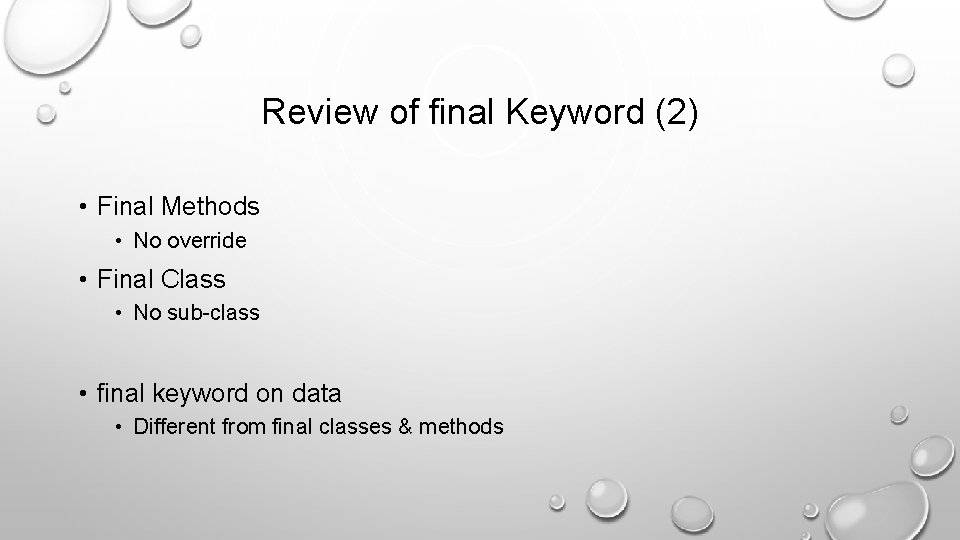
Review of final Keyword (2) • Final Methods • No override • Final Class • No sub-class • final keyword on data • Different from final classes & methods
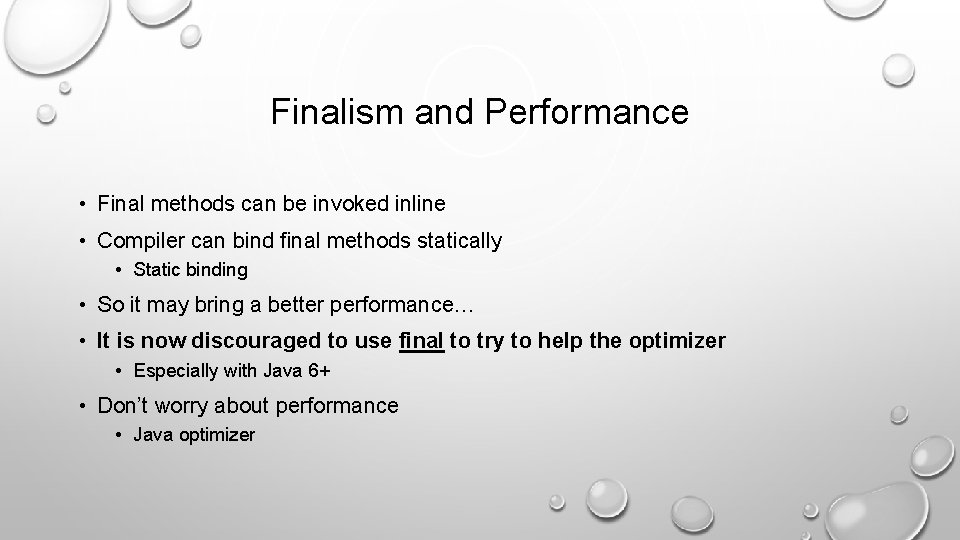
Finalism and Performance • Final methods can be invoked inline • Compiler can bind final methods statically • Static binding • So it may bring a better performance… • It is now discouraged to use final to try to help the optimizer • Especially with Java 6+ • Don’t worry about performance • Java optimizer
More on Polymorphism
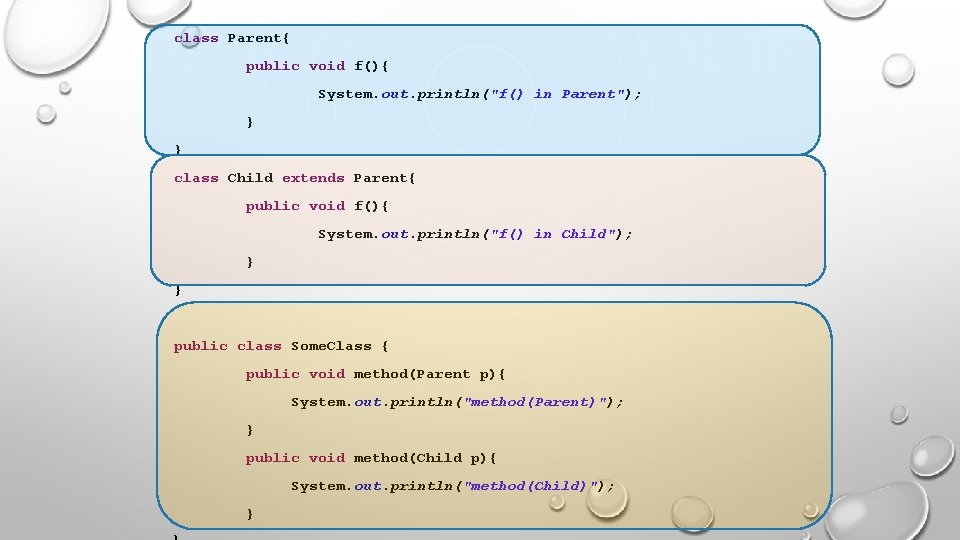
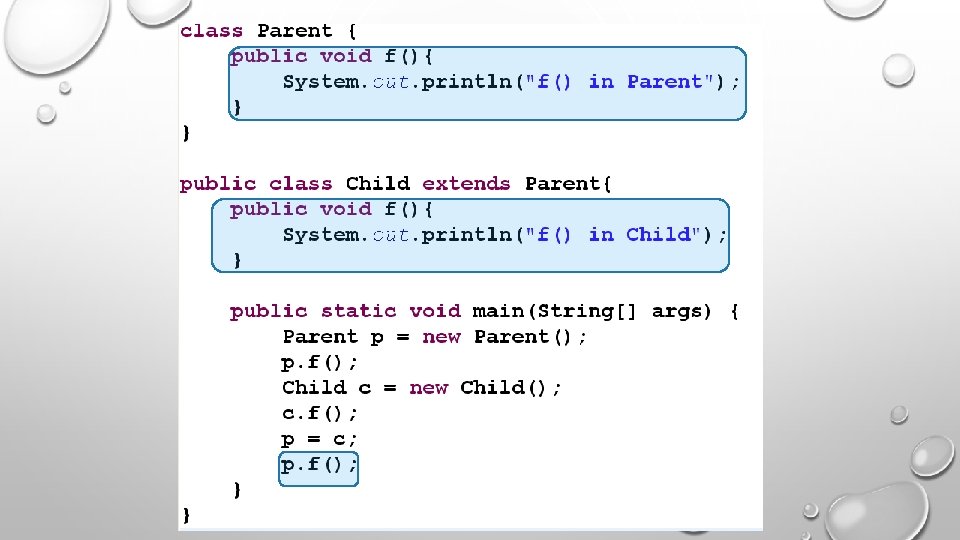
class Parent{ public void f(){ System. out. println("f() in Parent"); } } class Child extends Parent{ public void f(){ System. out. println("f() in Child"); } } public class Some. Class { public void method(Parent p){ System. out. println("method(Parent)"); } public void method(Child p){ System. out. println("method(Child)"); }
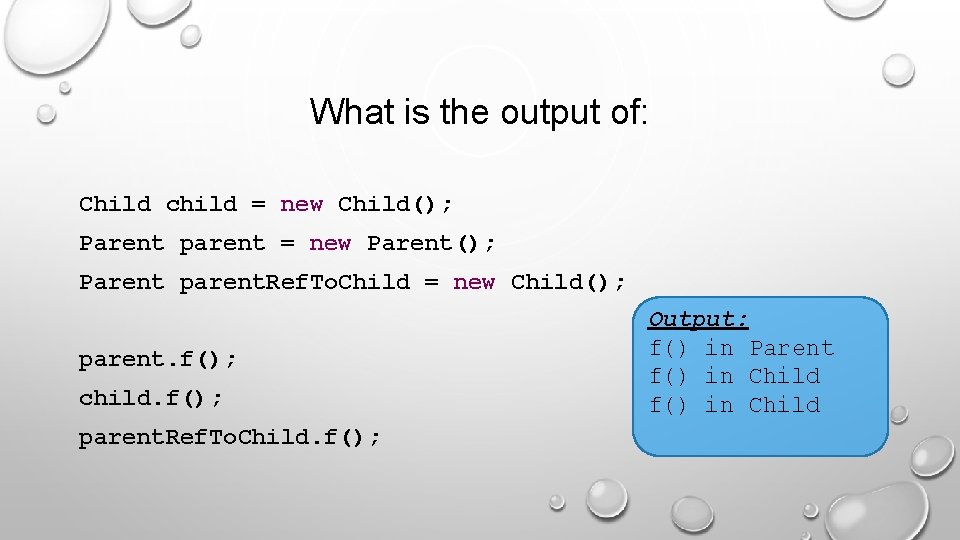
What is the output of: Child child = new Child(); Parent parent = new Parent(); Parent parent. Ref. To. Child = new Child(); parent. f(); child. f(); parent. Ref. To. Child. f(); Output: f() in Parent f() in Child
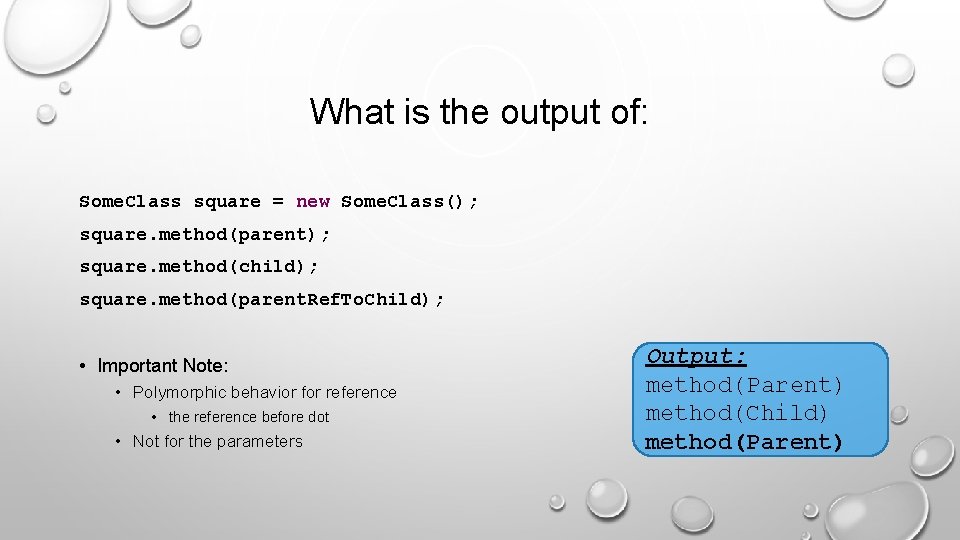
What is the output of: Some. Class square = new Some. Class(); square. method(parent); square. method(child); square. method(parent. Ref. To. Child); • Important Note: • Polymorphic behavior for reference • the reference before dot • Not for the parameters Output: method(Parent) method(Child) method(Parent)
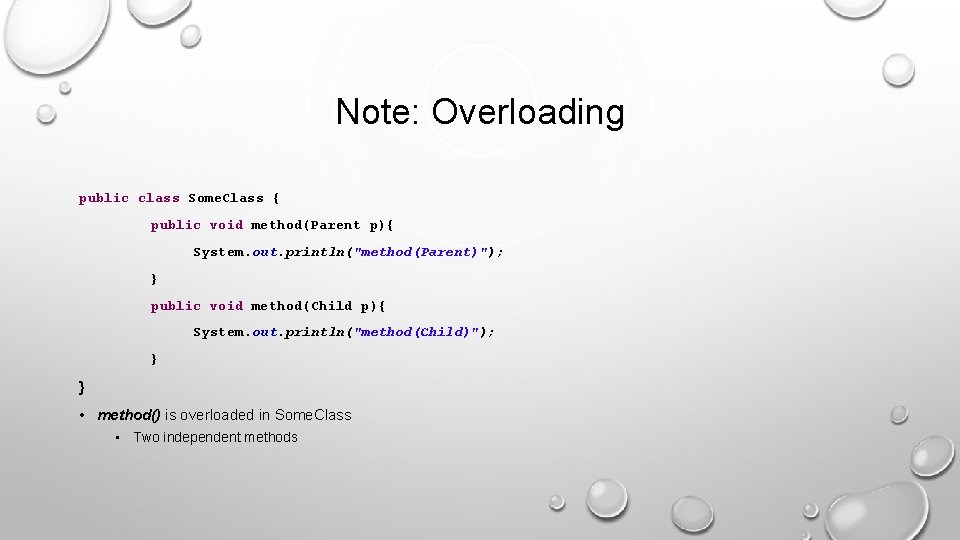
Note: Overloading public class Some. Class { public void method(Parent p){ System. out. println("method(Parent)"); } public void method(Child p){ System. out. println("method(Child)"); } } • method() is overloaded in Some. Class • Two independent methods
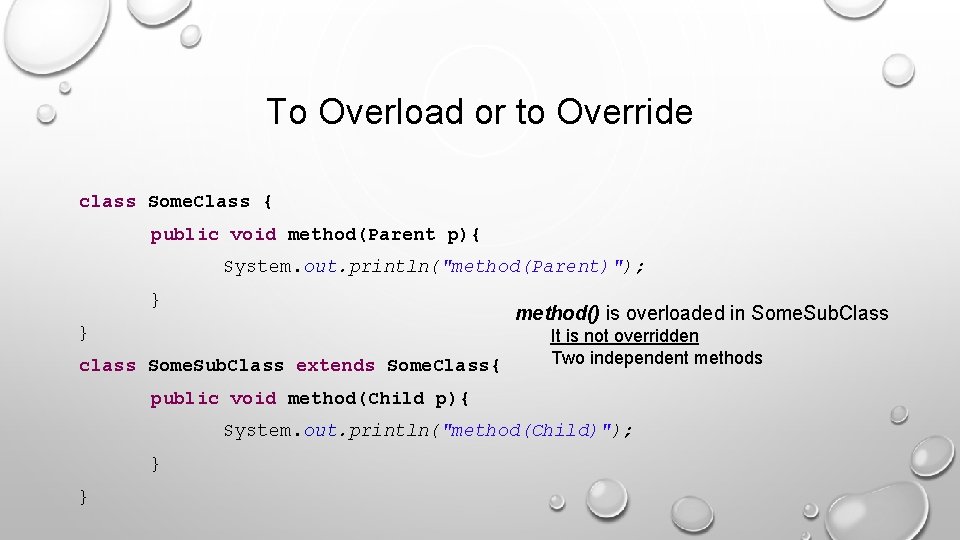
To Overload or to Override class Some. Class { public void method(Parent p){ System. out. println("method(Parent)"); } method() is overloaded in Some. Sub. Class } class Some. Sub. Class extends Some. Class{ It is not overridden Two independent methods public void method(Child p){ System. out. println("method(Child)"); } }
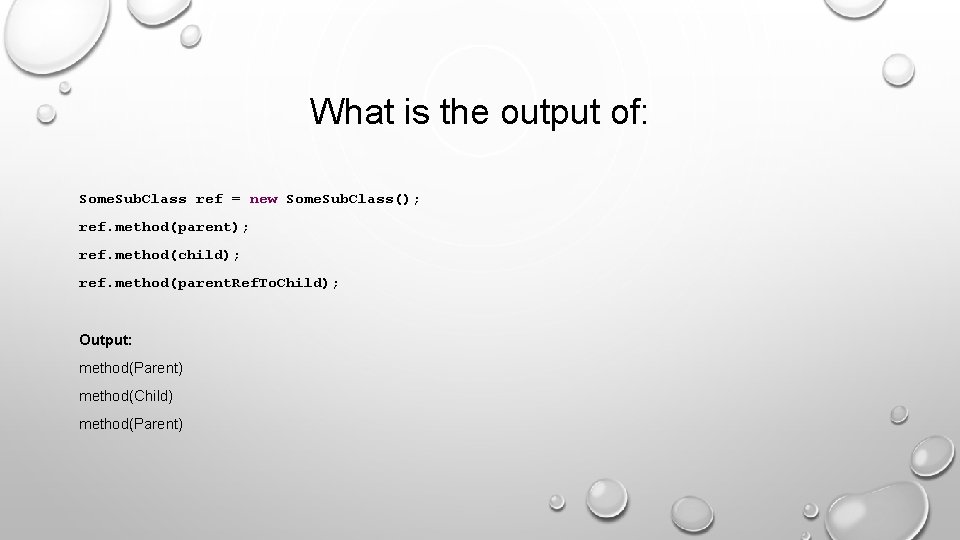
What is the output of: Some. Sub. Class ref = new Some. Sub. Class(); ref. method(parent); ref. method(child); ref. method(parent. Ref. To. Child); Output: method(Parent) method(Child) method(Parent)
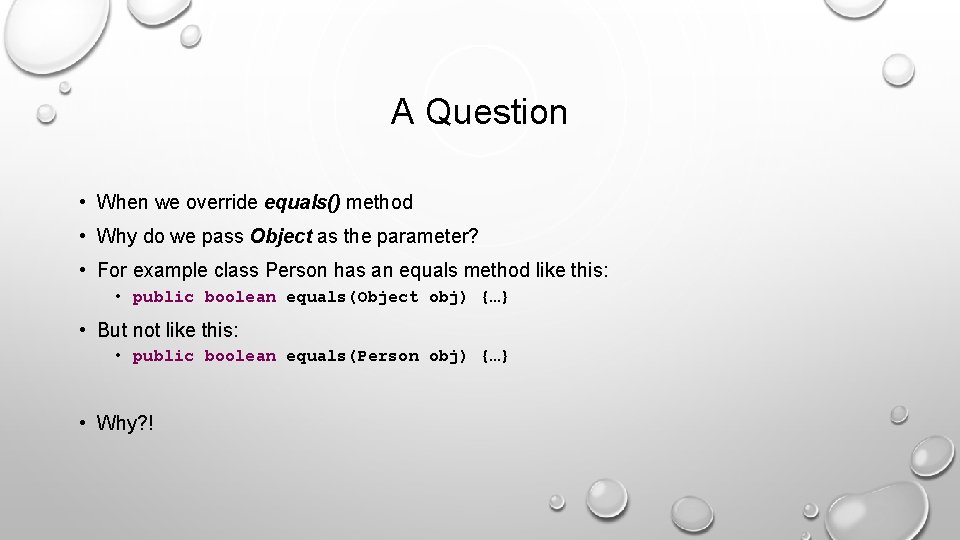
A Question • When we override equals() method • Why do we pass Object as the parameter? • For example class Person has an equals method like this: • public boolean equals(Object obj) {…} • But not like this: • public boolean equals(Person obj) {…} • Why? !
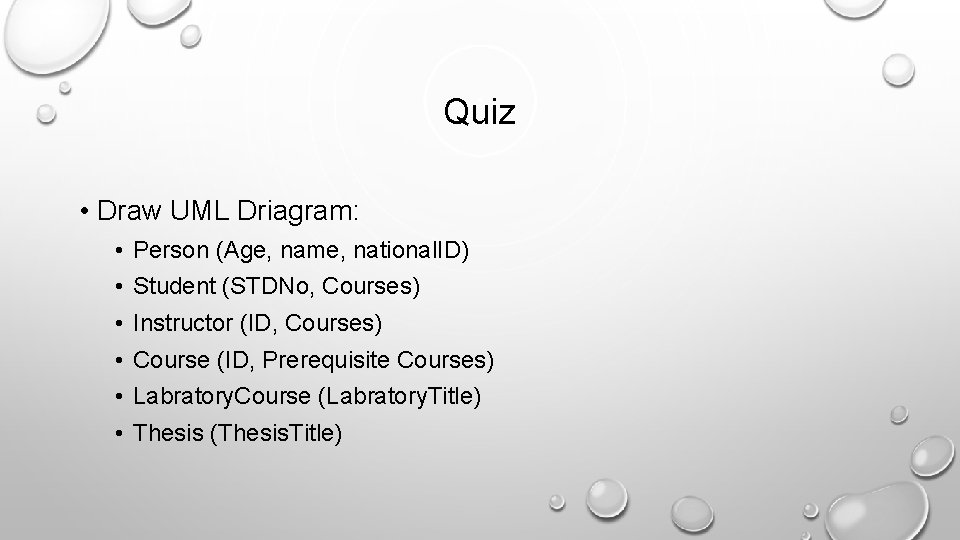
Quiz • Draw UML Driagram: • • • Person (Age, name, national. ID) Student (STDNo, Courses) Instructor (ID, Courses) Course (ID, Prerequisite Courses) Labratory. Course (Labratory. Title) Thesis (Thesis. Title)
References • Java How to Program (9 th Edition) • Deitel & Deitel • Thinking in Java (Fourth Edition) • Bruce Eckel • Java cup
Any Question
- Slides: 43