
Advanced Profiling of Unemployed in Public Employment Services
Advanced Profiling of Unemployed in Public Employment Services A Critical Review of OECD Experiences and Applications for Western Balkans Vienna, March 4, 2014 Artan Loxha Social Protection Unit Europe and Central Asia Region
Outline 1. Profiling in the context of activation 1. Best practice profiling methods in OECD 1. Statistical profiling and applications 1. Relevance for Western Balkans
Outline 1. Profiling in the context of activation 1. Best practice profiling methods in OECD 1. Statistical profiling and applications 1. Relevance for Western Balkans
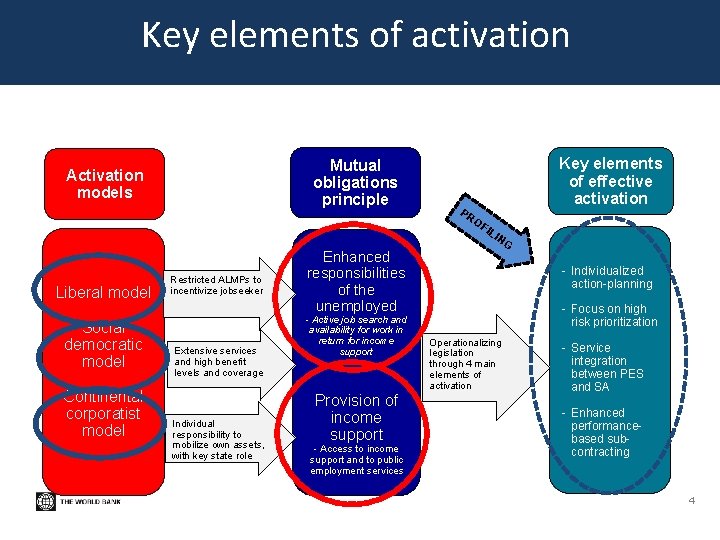
Key elements of activation Mutual obligations principle Activation models Key elements of effective activation PR OF I LI Liberal model Social democratic model Continental corporatist model Restricted ALMPs to incentivize jobseeker Extensive services and high benefit levels and coverage Individual responsibility to mobilize own assets, with key state role NG Enhanced responsibilities of the unemployed - Active job search and availability for work in return for income support Provision of income support - Access to income support and to public employment services - Individualized action-planning - Focus on high risk prioritization Operationalizing legislation through 4 main elements of activation - Service integration between PES and SA - Enhanced performancebased subcontracting 4
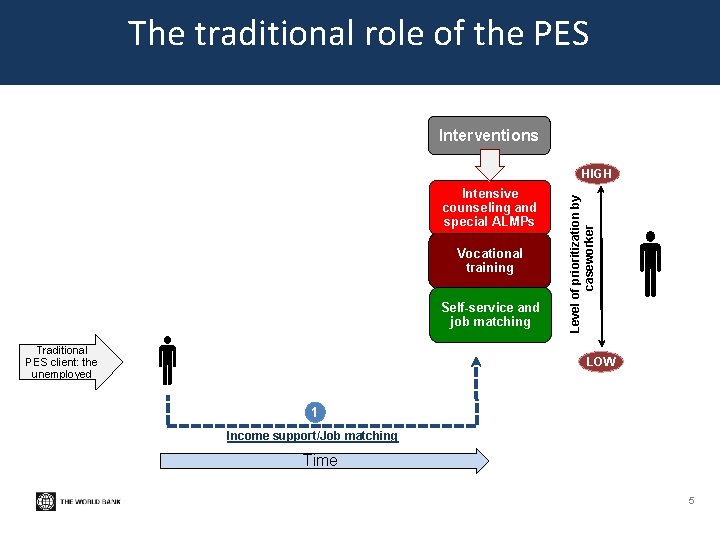
The traditional role of the PES Interventions Intensive counseling and special ALMPs Vocational training Self-service and job matching Traditional PES client: the unemployed Level of prioritization by caseworker HIGH LOW 1 Income support/Job matching Time 5
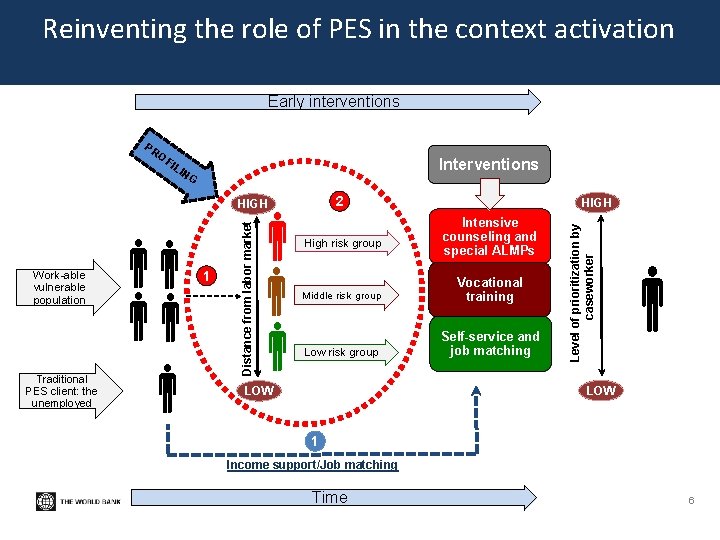
Reinventing the role of PES in the context activation Early interventions FI Interventions LI NG 2 HIGH Traditional PES client: the unemployed 1 Distance from labor market Work-able vulnerable population High risk group HIGH Intensive counseling and special ALMPs Middle risk group Vocational training Low risk group Self-service and job matching Level of prioritization by caseworker PR O LOW 1 Income support/Job matching Time 6
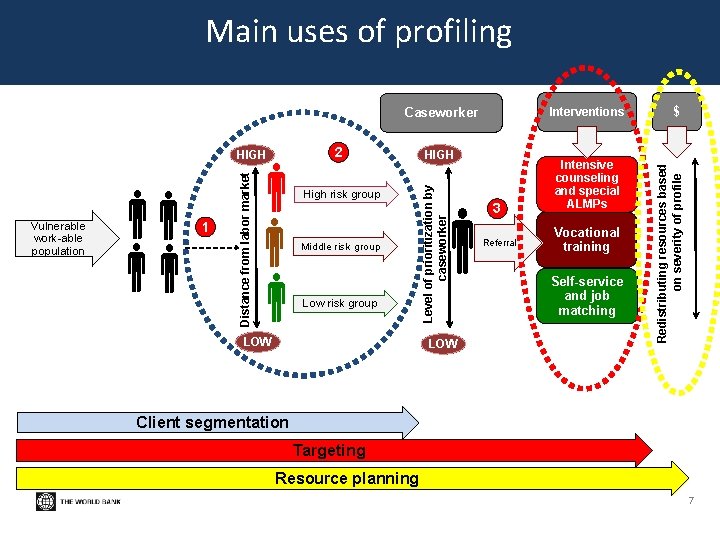
Main uses of profiling 1 Distance from labor market Vulnerable work-able population 2 High risk group Middle risk group Low risk group LOW HIGH Level of prioritization by caseworker HIGH 3 LOW Referral Intensive counseling and special ALMPs Vocational training Self-service and job matching $ Redistributing resources based on severity of profile Interventions Caseworker Client segmentation Targeting Resource planning 7
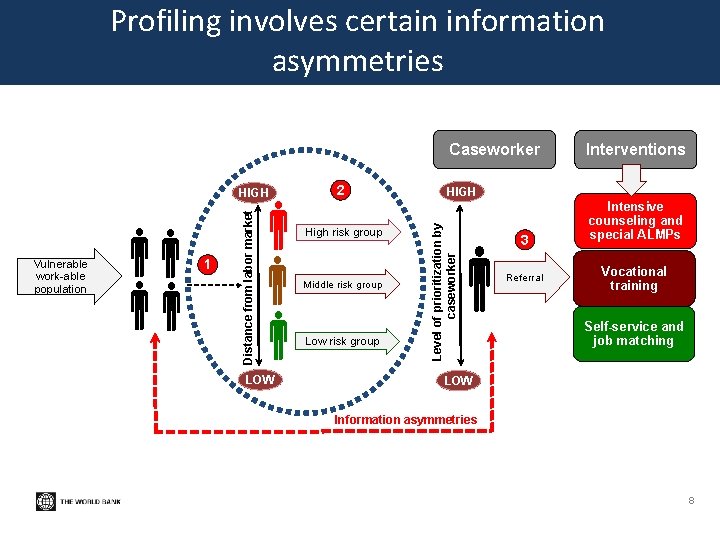
Profiling involves certain information asymmetries Caseworker 1 Distance from labor market Vulnerable work-able population LOW 2 High risk group Middle risk group Low risk group HIGH Level of prioritization by caseworker HIGH Interventions 3 Referral Intensive counseling and special ALMPs Vocational training Self-service and job matching LOW Information asymmetries 8
Outline 1. Profiling in the context of activation 1. Best practice profiling methods in OECD 1. Statistical profiling and applications 1. Relevance for Western Balkans
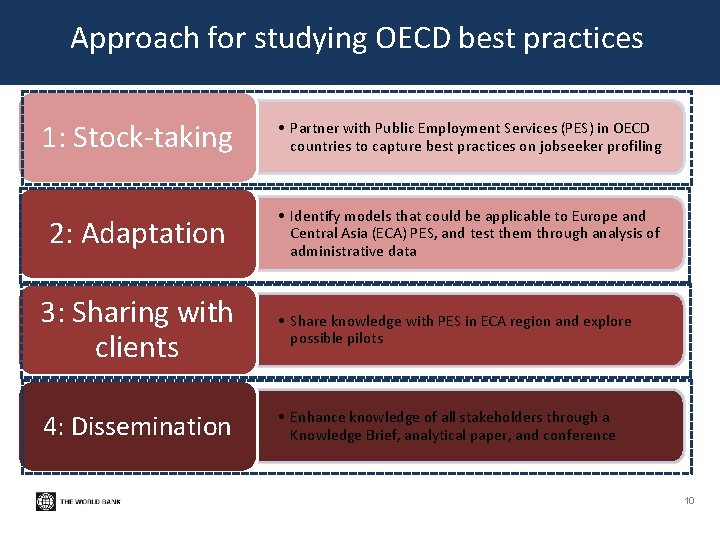
Approach for studying OECD best practices 1: Stock-taking • Partner with Public Employment Services (PES) in OECD countries to capture best practices on jobseeker profiling 2: Adaptation • Identify models that could be applicable to Europe and Central Asia (ECA) PES, and test them through analysis of administrative data 3: Sharing with clients • Share knowledge with PES in ECA region and explore possible pilots 4: Dissemination • Enhance knowledge of all stakeholders through a Knowledge Brief, analytical paper, and conference 10
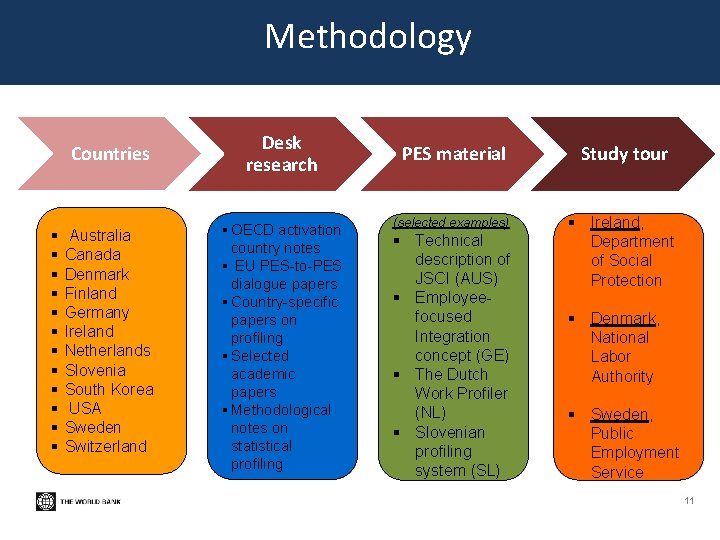
Methodology § § § Countries Desk research Australia Canada Denmark Finland Germany Ireland Netherlands Slovenia South Korea USA Sweden Switzerland § OECD activation country notes § EU PES-to-PES dialogue papers § Country-specific papers on profiling § Selected academic papers § Methodological notes on statistical profiling PES material Study tour (selected examples) § Ireland, Department of Social Protection § Technical description of JSCI (AUS) § Employeefocused Integration concept (GE) § The Dutch Work Profiler (NL) § Slovenian profiling system (SL) § Denmark, National Labor Authority § Sweden, Public Employment Service 11
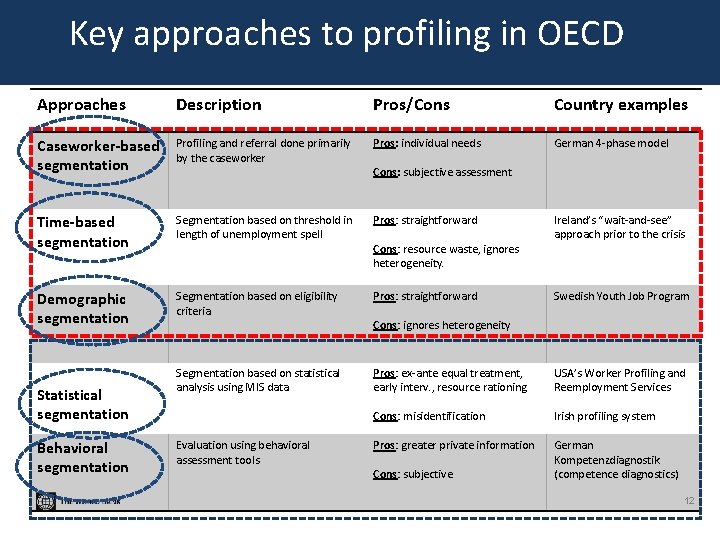
Key approaches to profiling in OECD Approaches Description Pros/Cons Country examples Caseworker-based segmentation Profiling and referral done primarily by the caseworker Pros: individual needs German 4 -phase model Time-based segmentation Segmentation based on threshold in length of unemployment spell Pros: straightforward Demographic segmentation Segmentation based on eligibility criteria Pros: straightforward Segmentation based on statistical analysis using MIS data Pros: ex-ante equal treatment, early interv. , resource rationing USA’s Worker Profiling and Reemployment Services Cons: misidentification Irish profiling system Pros: greater private information German Kompetenzdiagnostik (competence diagnostics) Statistical segmentation Behavioral segmentation Evaluation using behavioral assessment tools Cons: subjective assessment Cons: resource waste, ignores heterogeneity. Ireland’s “wait-and-see” approach prior to the crisis Swedish Youth Job Program Cons: ignores heterogeneity Cons: subjective 12
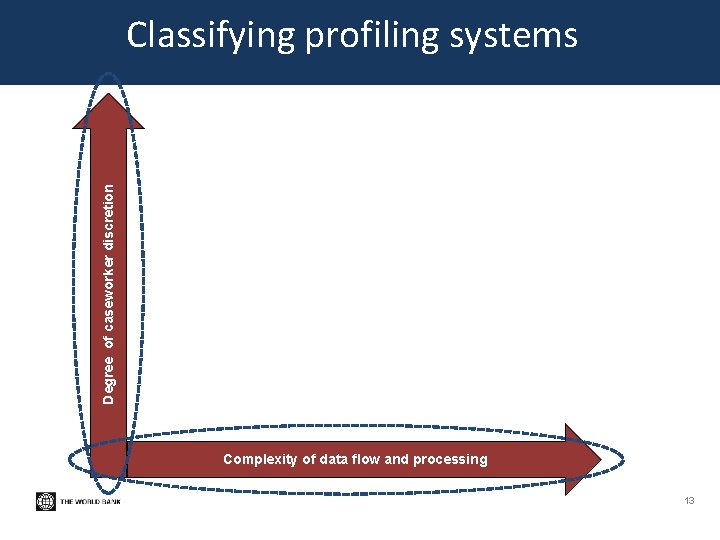
Degree of caseworker discretion Classifying profiling systems Complexity of data flow and processing 13
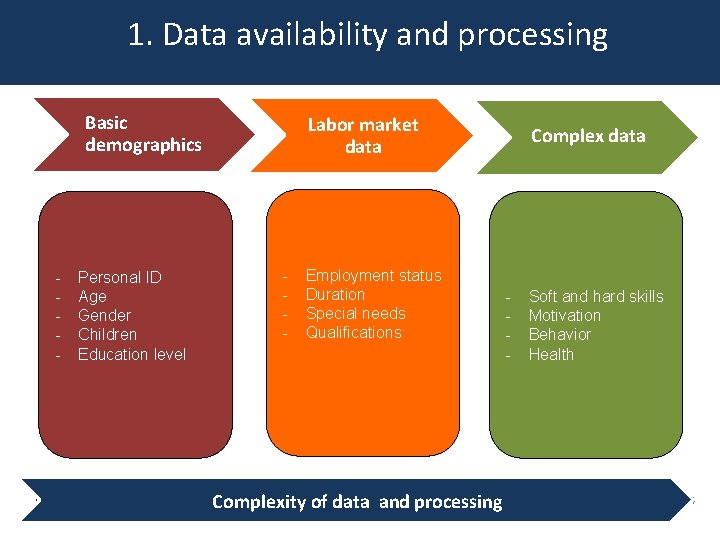
1. Data availability and processing Basic demographics - Personal ID Age Gender Children Education level Labor market data - Employment status Duration Special needs Qualifications Complexity of data and processing Complex data - Soft and hard skills Motivation Behavior Health 14
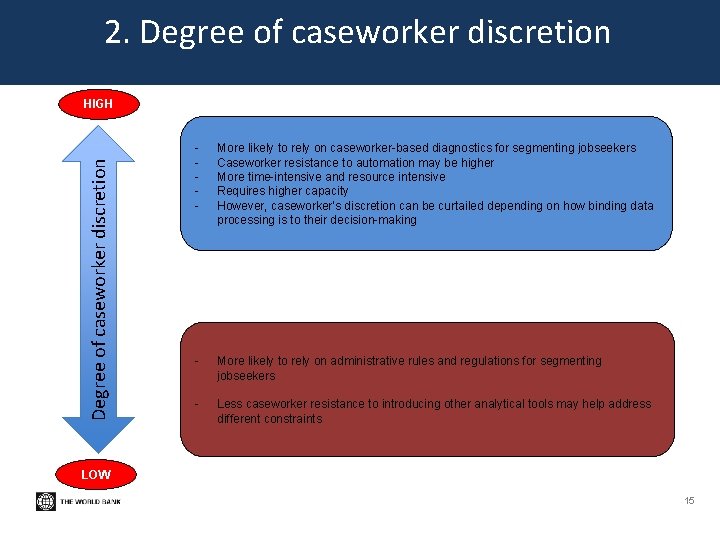
2. Degree of caseworker discretion HIGH - More likely to rely on caseworker-based diagnostics for segmenting jobseekers Caseworker resistance to automation may be higher More time-intensive and resource intensive Requires higher capacity However, caseworker’s discretion can be curtailed depending on how binding data processing is to their decision-making - More likely to rely on administrative rules and regulations for segmenting jobseekers - Less caseworker resistance to introducing other analytical tools may help address different constraints LOW 15
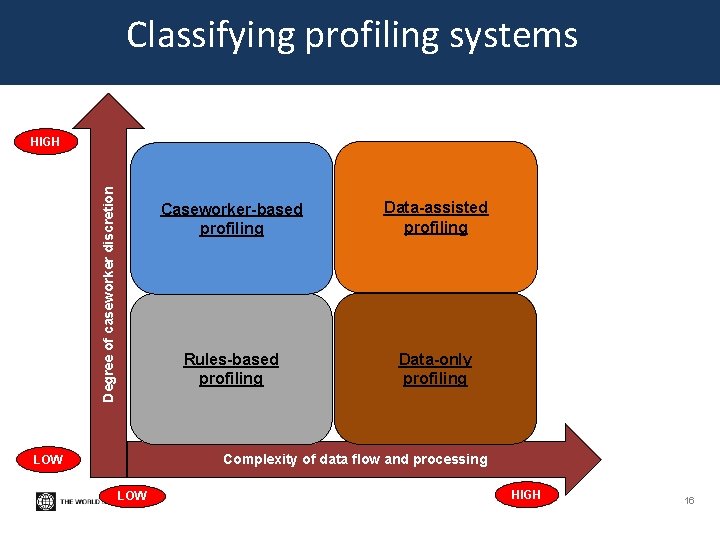
Classifying profiling systems Degree of caseworker discretion HIGH Caseworker-based profiling Data-assisted profiling Rules-based profiling Data-only profiling Complexity of data flow and processing LOW HIGH 16
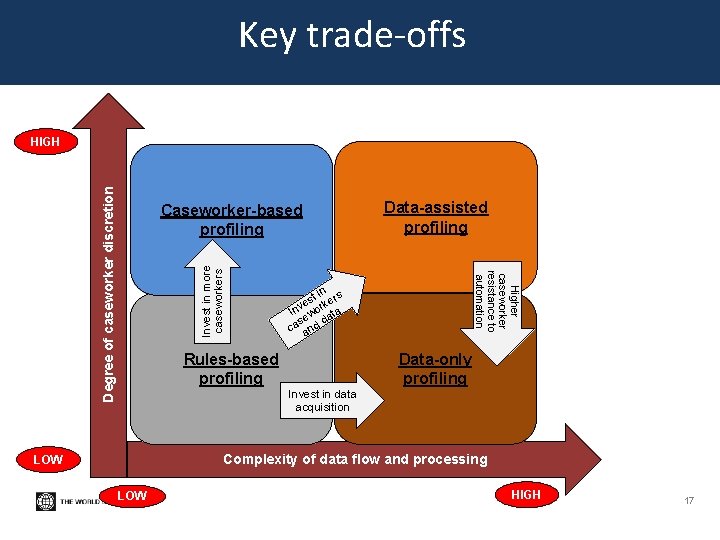
Key trade-offs Invest in more caseworkers Caseworker-based profiling Rules-based profiling Data-assisted profiling Higher caseworker resistance to automation Degree of caseworker discretion HIGH in st kers e Inv wor ata se d ca and Data-only profiling Invest in data acquisition Complexity of data flow and processing LOW HIGH 17
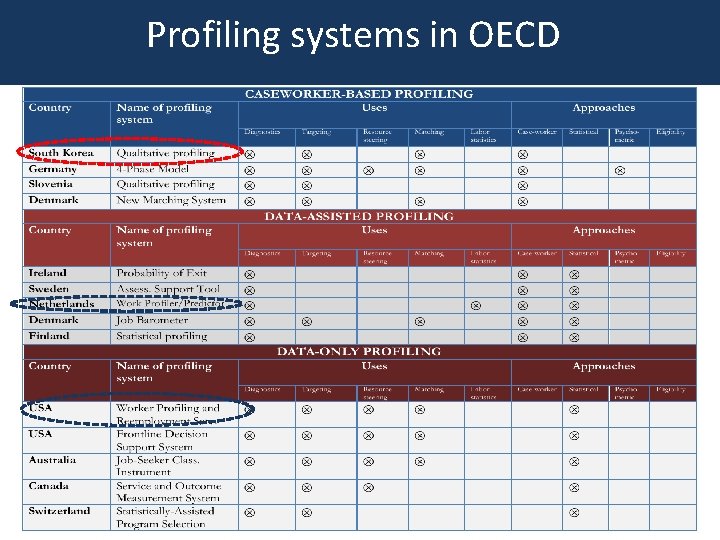
Profiling systems in OECD 18
Outline 1. Profiling in the context of activation 1. Best practice profiling methods in OECD 1. Statistical profiling and applications 1. Relevance for Western Balkans
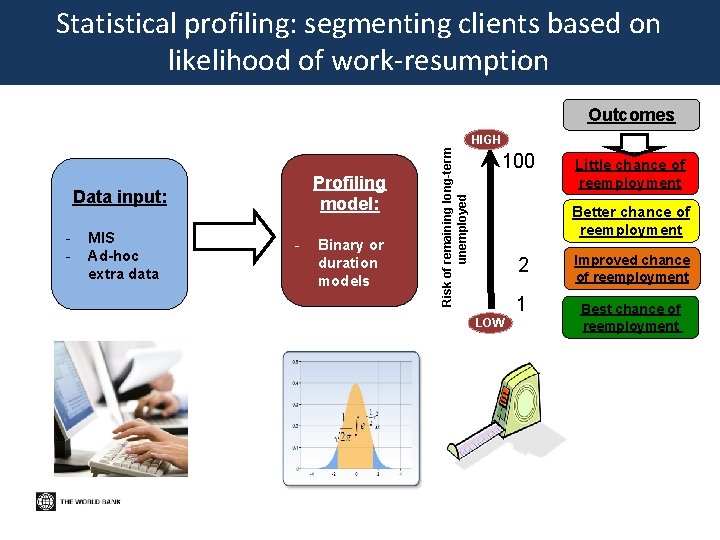
Statistical profiling: segmenting clients based on likelihood of work-resumption Outcomes Profiling model: Data input: - MIS Ad-hoc extra data - Binary or duration models Risk of remaining long-term unemployed HIGH 100 Little chance of reemployment Better chance of reemployment 2 1 LOW Improved chance of reemployment Best chance of reemployment
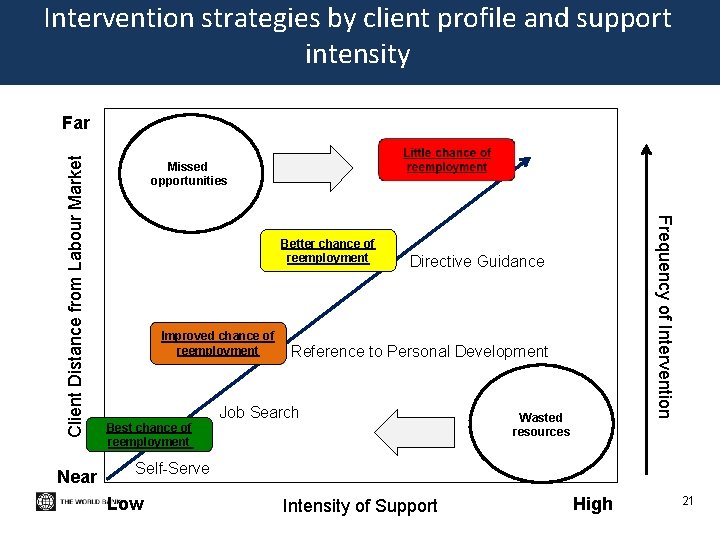
Intervention strategies by client profile and support intensity Near Missed opportunities Better chance of reemployment Improved chance of reemployment Frequency of Intervention Client Distance from Labour Market Far Directive Guidance Reference to Personal Development Job Search Best chance of reemployment Wasted resources Self-Serve Low Intensity of Support High 21
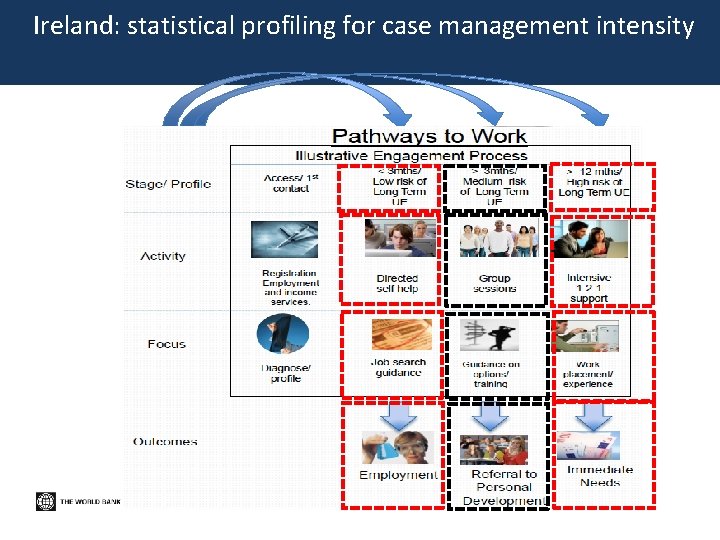
Ireland: statistical profiling for case management intensity
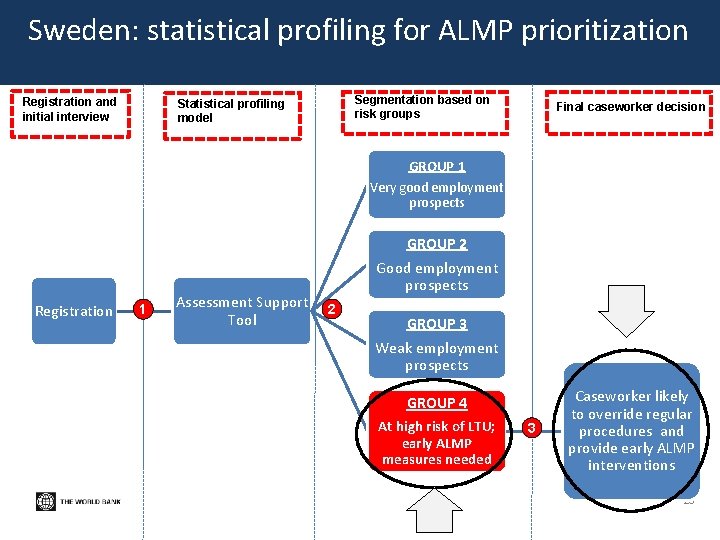
Sweden: statistical profiling for ALMP prioritization Registration and initial interview Segmentation based on risk groups Statistical profiling model Final caseworker decision GROUP 1 Very good employment prospects Registration 1 Assessment Support Tool GROUP 2 Good employment prospects 2 GROUP 3 Weak employment prospects GROUP 4 At high risk of LTU; early ALMP measures needed 3 Caseworker likely to override regular procedures and provide early ALMP interventions 23
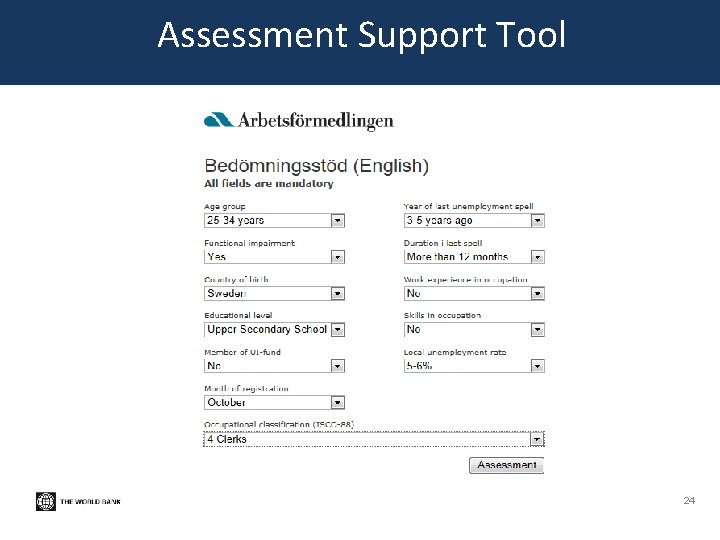
Assessment Support Tool 24
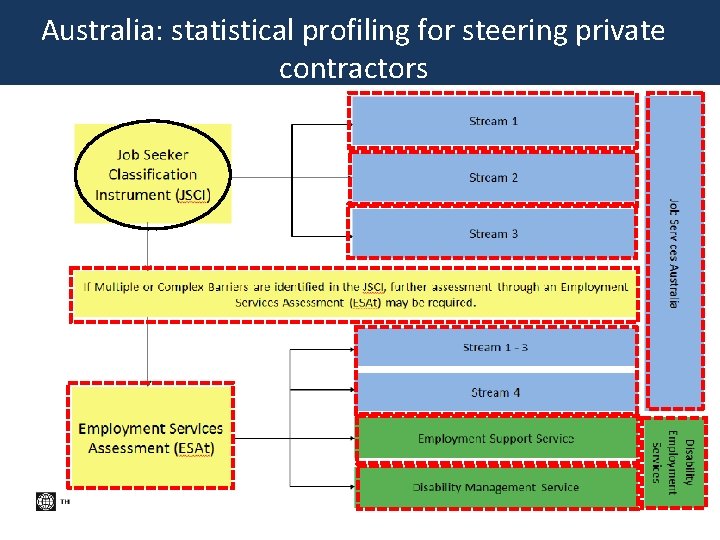
Australia: statistical profiling for steering private contractors 25
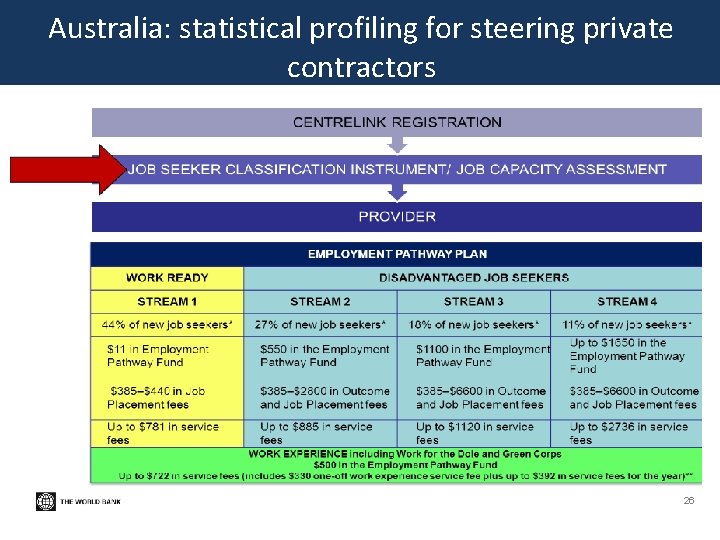
Australia: statistical profiling for steering private contractors 26
Outline 1. Profiling in the context of activation 1. Best practice profiling methods in OECD 1. Statistical profiling and applications 1. Relevance for Western Balkans
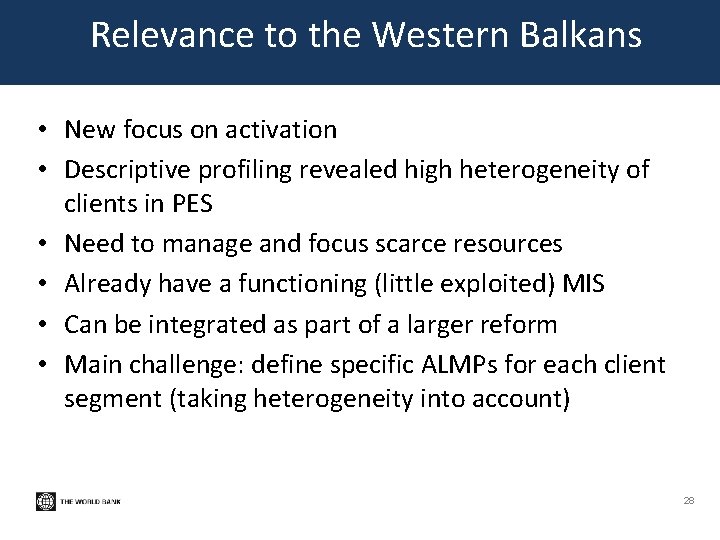
Relevance to the Western Balkans • New focus on activation • Descriptive profiling revealed high heterogeneity of clients in PES • Need to manage and focus scarce resources • Already have a functioning (little exploited) MIS • Can be integrated as part of a larger reform • Main challenge: define specific ALMPs for each client segment (taking heterogeneity into account) 28
Key implementation lessons • Data availability and nature of unemployment determine accuracy and feasibilty of profiling tool • Apply to critical spot in process management where profiling adds value, not just “another tool” • Pilot a lot on the ground, prepare clear guidelines to manage implications of tool on day to day case management • Reduce/manage perceptions of “de professionalization” of case workers, find where it adds value to their work 29
Contacts Artan Loxha Labor Market Consultant, World Bank aloxha@worldbank. org Matteo Morgandi Economist, World Bank mmorgandi@worldbank. org 30
- Slides: 30