
Advanced Power Generation Systems P M V Subbarao

Advanced Power Generation Systems P M V Subbarao Professor Mechanical Engineering Department Clues to Reduce Wastage & Conserve Resources …. .
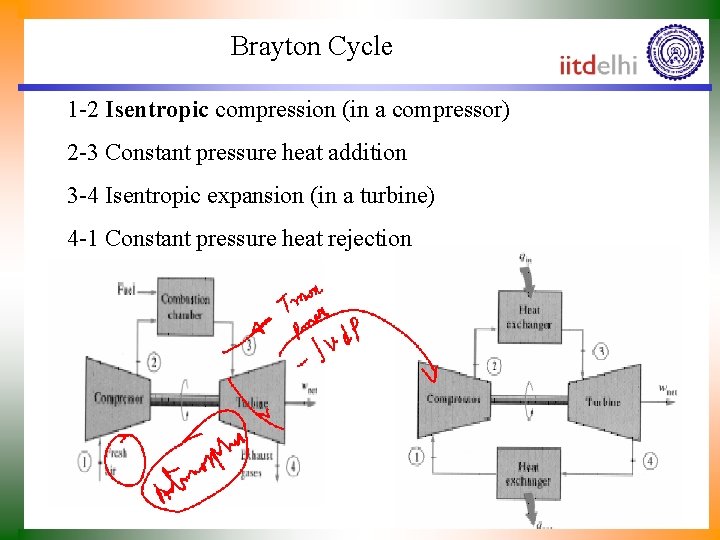
Brayton Cycle 1 -2 Isentropic compression (in a compressor) 2 -3 Constant pressure heat addition 3 -4 Isentropic expansion (in a turbine) 4 -1 Constant pressure heat rejection
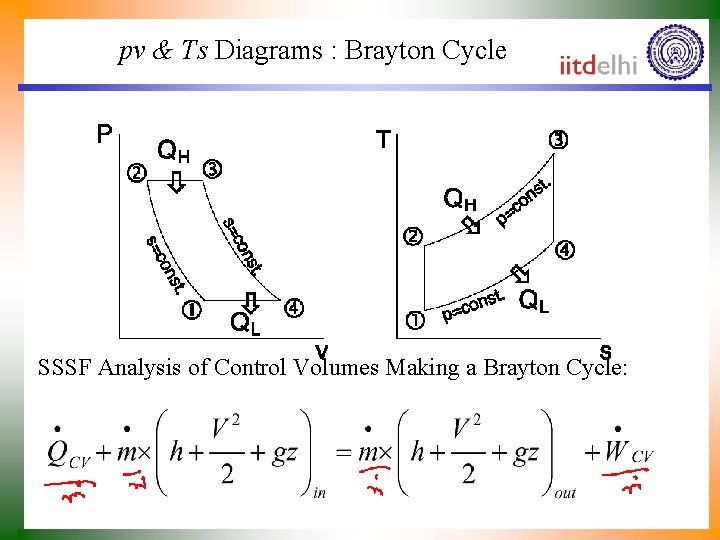
pv & Ts Diagrams : Brayton Cycle SSSF Analysis of Control Volumes Making a Brayton Cycle:
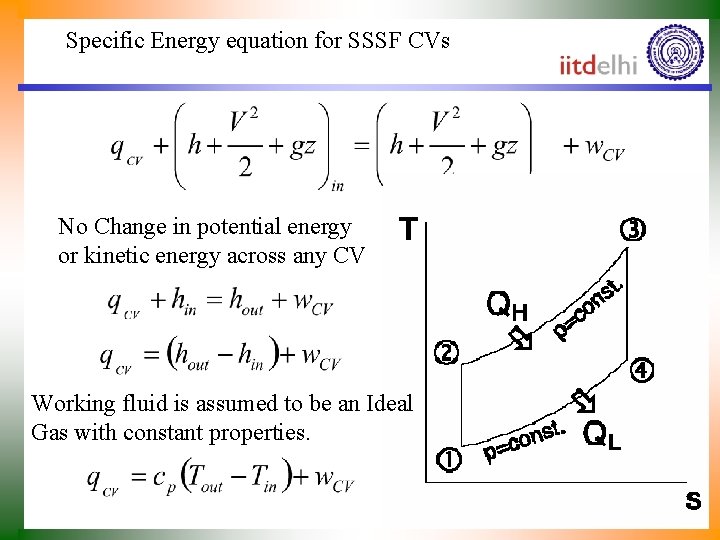
Specific Energy equation for SSSF CVs No Change in potential energy or kinetic energy across any CV Working fluid is assumed to be an Ideal Gas with constant properties.
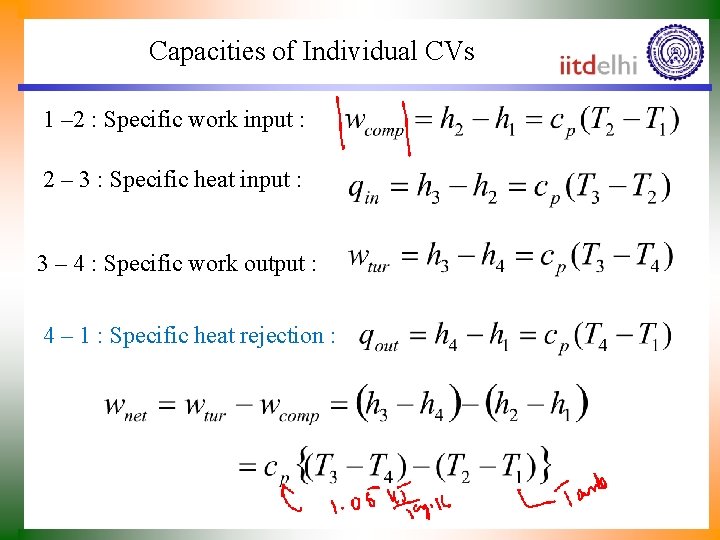
Capacities of Individual CVs 1 – 2 : Specific work input : 2 – 3 : Specific heat input : 3 – 4 : Specific work output : 4 – 1 : Specific heat rejection :
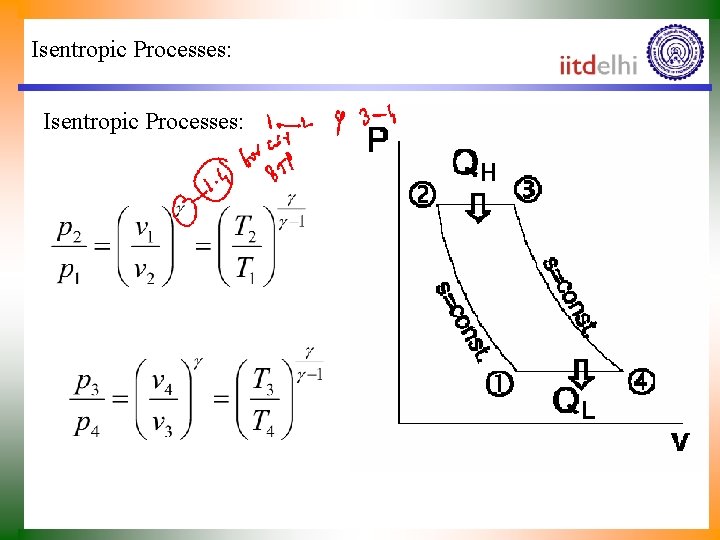
Isentropic Processes:
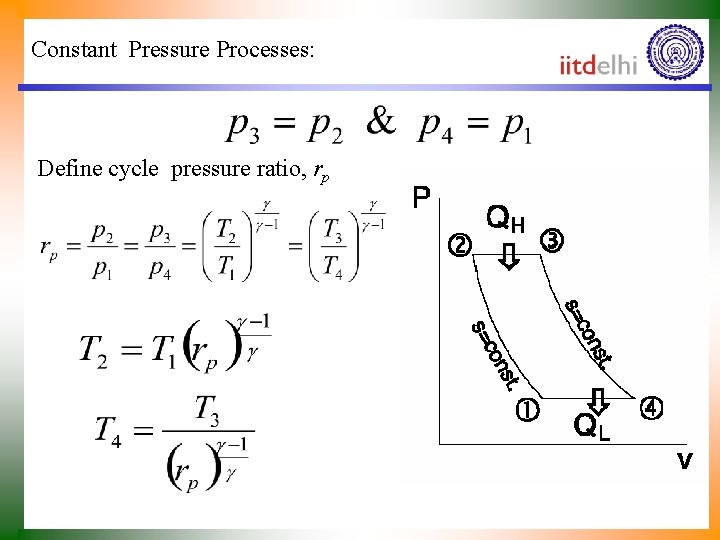
Constant Pressure Processes: Define cycle pressure ratio, rp
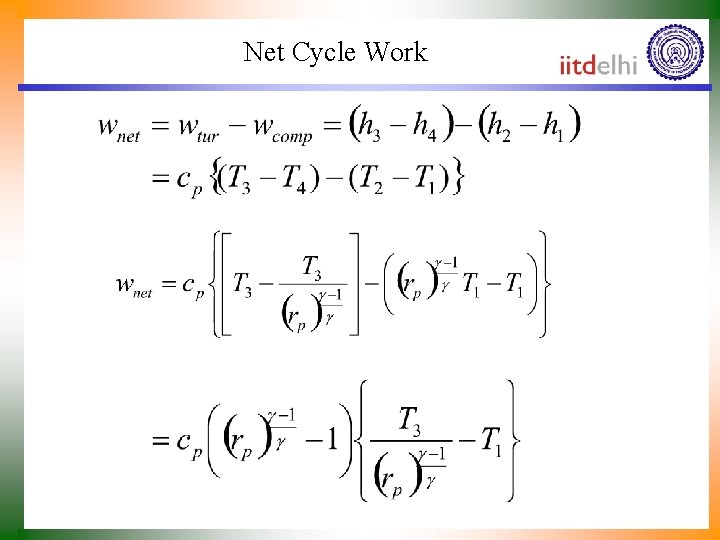
Net Cycle Work
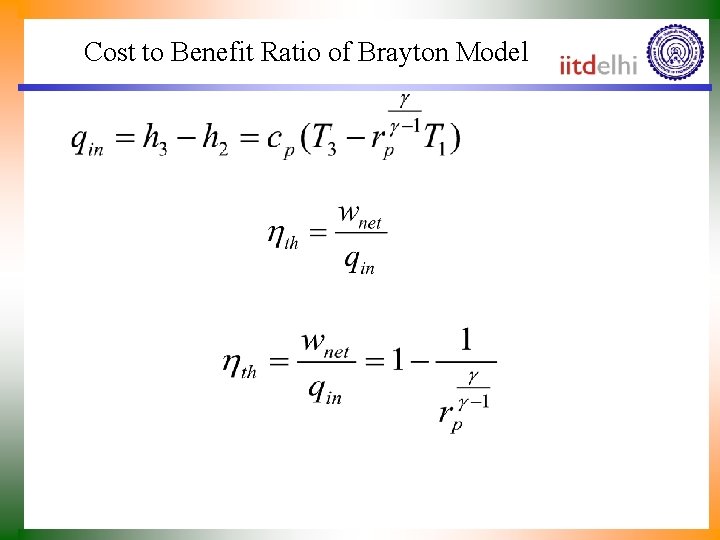
Cost to Benefit Ratio of Brayton Model
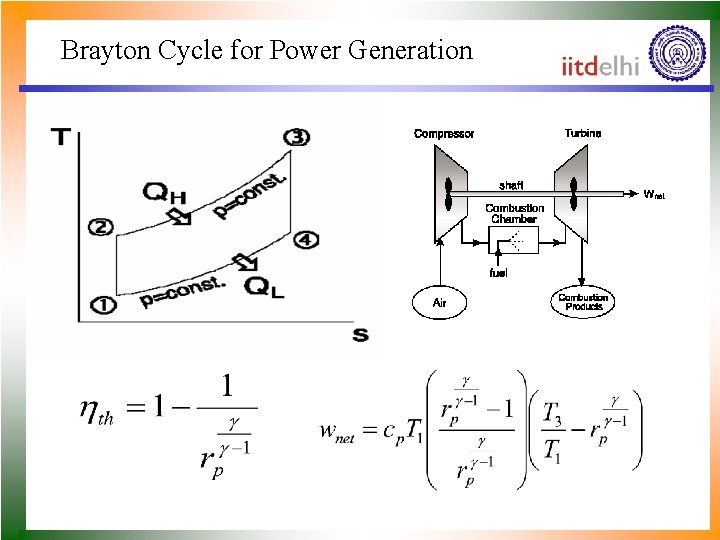
Brayton Cycle for Power Generation
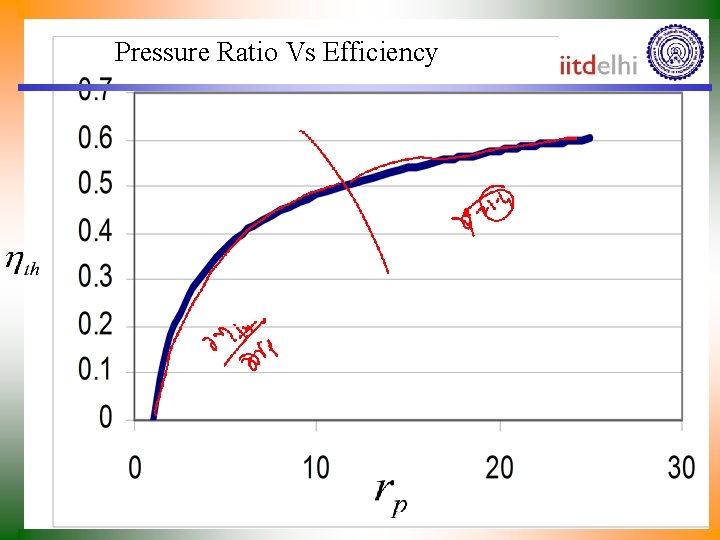
Pressure Ratio Vs Efficiency
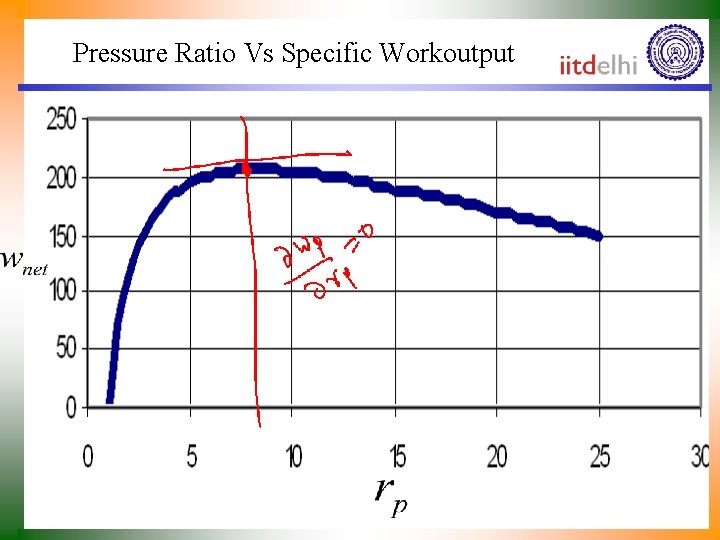
Pressure Ratio Vs Specific Workoutput
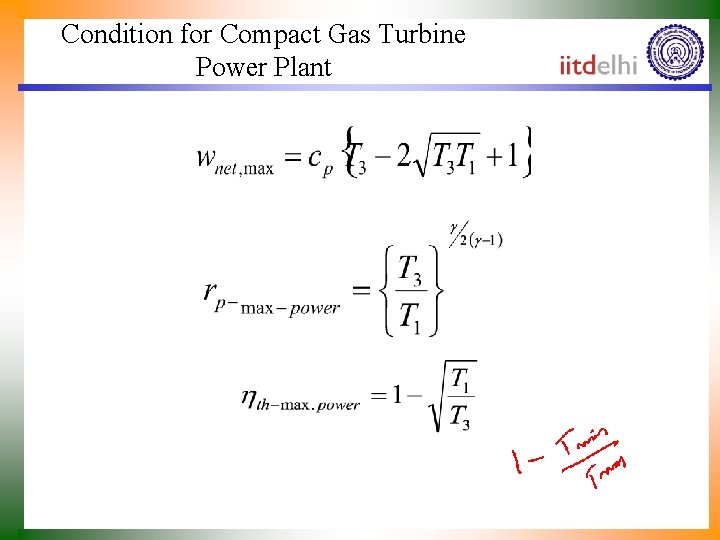
Condition for Compact Gas Turbine Power Plant
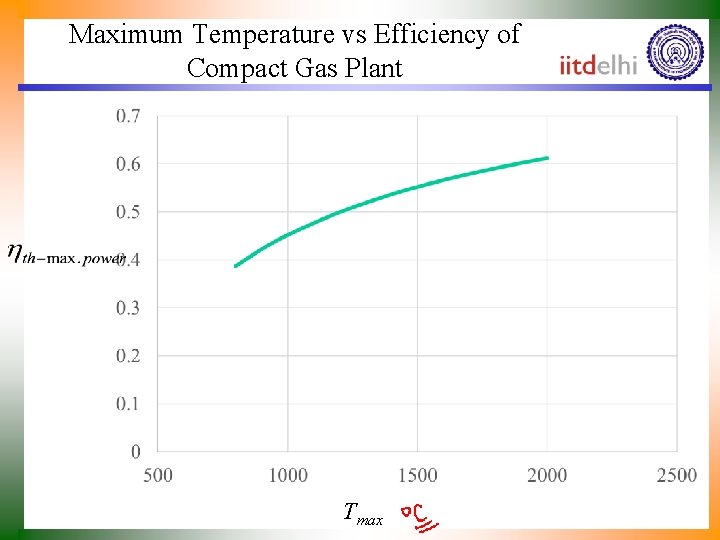
Maximum Temperature vs Efficiency of Compact Gas Plant Tmax
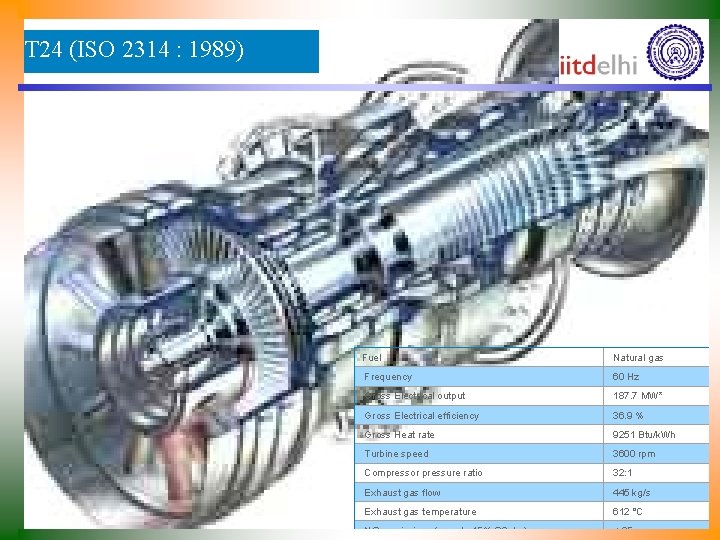
GT 24 (ISO 2314 : 1989) Fuel Natural gas Frequency 60 Hz Gross Electrical output 187. 7 MW* Gross Electrical efficiency 36. 9 % Gross Heat rate 9251 Btu/k. Wh Turbine speed 3600 rpm Compressor pressure ratio 32: 1 Exhaust gas flow 445 kg/s Exhaust gas temperature 612 °C NOx emissions (corr. to 15% O 2, dry) < 25 vppm
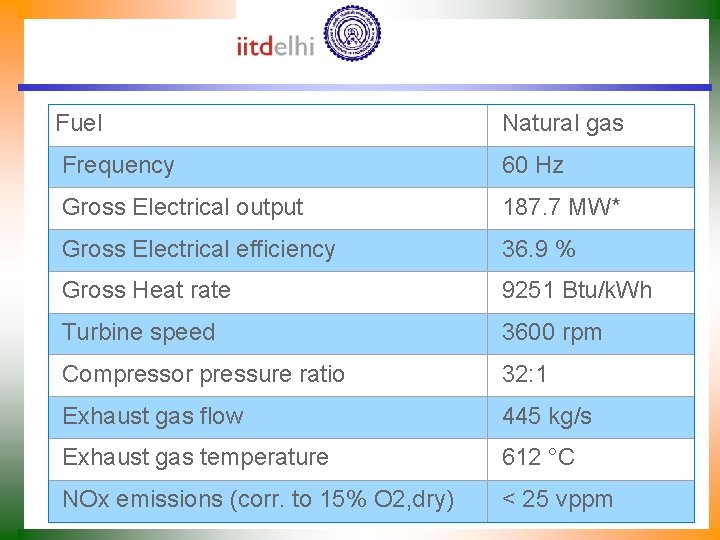
Fuel Natural gas Frequency 60 Hz Gross Electrical output 187. 7 MW* Gross Electrical efficiency 36. 9 % Gross Heat rate 9251 Btu/k. Wh Turbine speed 3600 rpm Compressor pressure ratio 32: 1 Exhaust gas flow 445 kg/s Exhaust gas temperature 612 °C NOx emissions (corr. to 15% O 2, dry) < 25 vppm
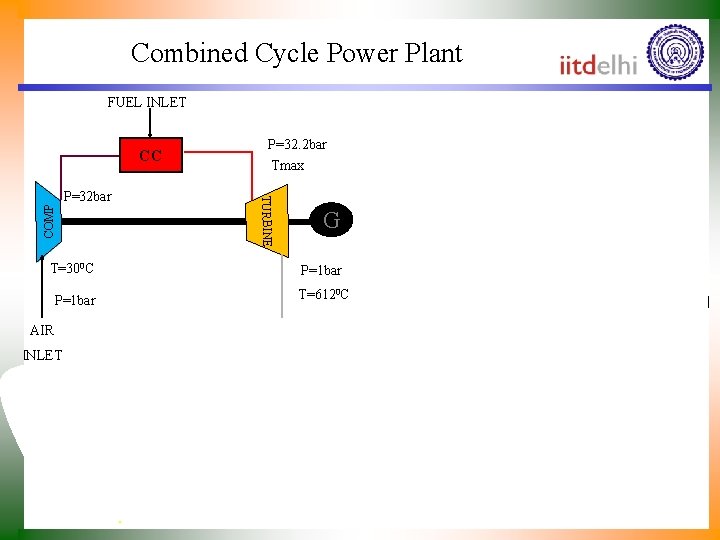
Combined Cycle Power Plant FUEL INLET P=32. 2 bar Tmax CC COMP TURBINE P=32 bar G T=1000 C T=300 C P=1 bar T=6120 C SH EVA STACK ECO AIR T=5000 C INLET P=170 bar TURBINE G HRSG T=500 C PUMP T=600 C Condenser T=500 C
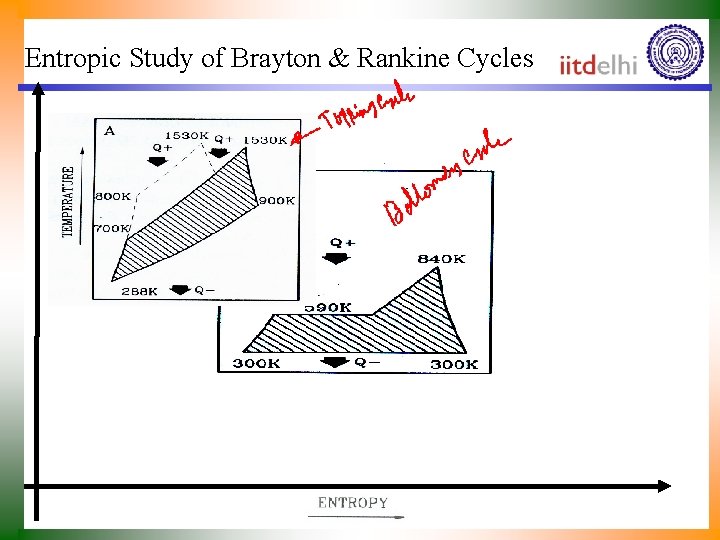
Entropic Study of Brayton & Rankine Cycles
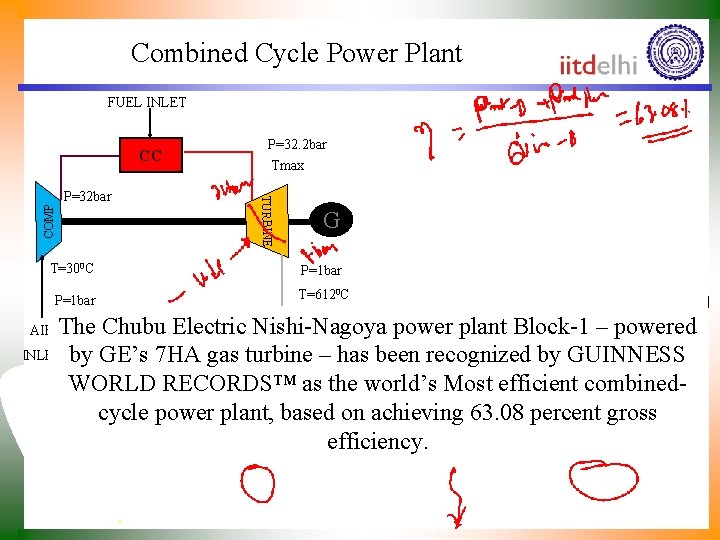
Combined Cycle Power Plant FUEL INLET P=32. 2 bar Tmax CC COMP TURBINE P=32 bar G T=1000 C T=300 C P=1 bar T=6120 C SH EVA ECO STACK The Chubu Electric Nishi-Nagoya power plant Block-1 – powered T=500 INLET by GE’s 7 HA gas turbine – Chas been recognized HRSG by GUINNESS WORLD RECORDS™P=170 bar as the world’s Most efficient combined. T=50 Cgross G cycle power plant, based on achieving 63. 08 percent efficiency. PUMP AIR TURBINE 0 0 T=600 C Condenser T=500 C
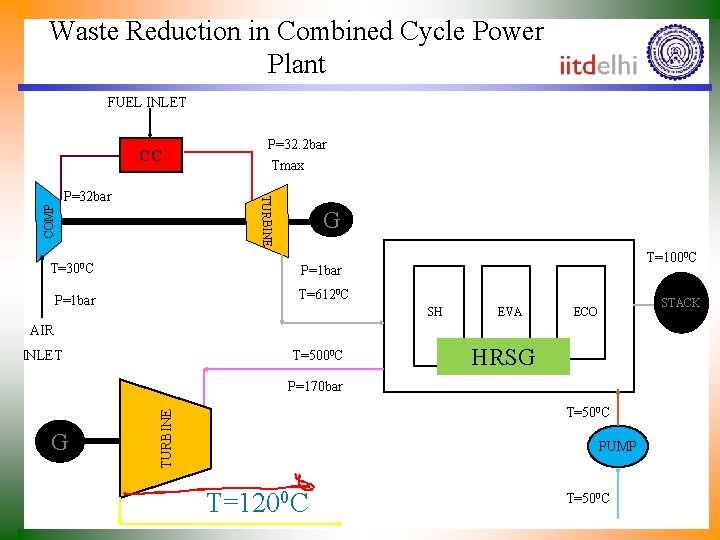
Waste Reduction in Combined Cycle Power Plant FUEL INLET CC COMP TURBINE P=32 bar P=32. 2 bar Tmax G T=300 C P=1 bar T=6120 C T=1000 C SH EVA STACK ECO AIR INLET T=5000 C HRSG P=170 bar TURBINE G T=500 C PUMP T=1200 C T=500 C
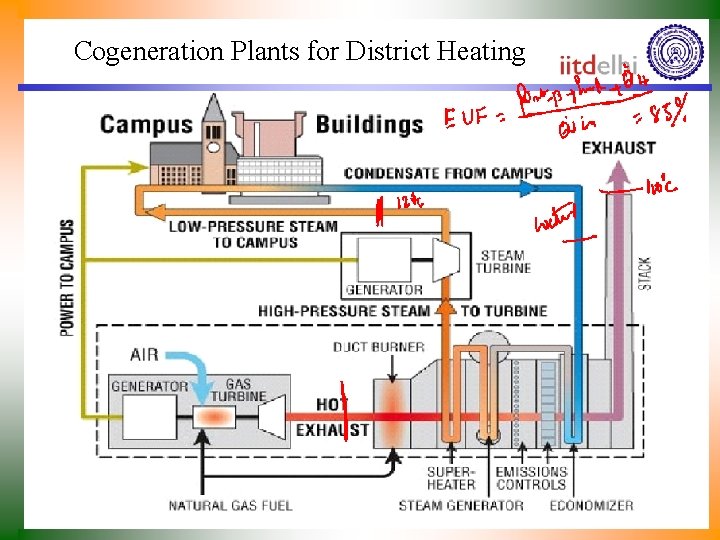
Cogeneration Plants for District Heating
Unconventional Thermodynamic Systems • • Why working substances are fluids only? How to used solid as a working substance. Can we avoid mechanical work…. Develop A Thermodynamic system with solid working substance. • Execute direct conversion of Solar power to Electric Power.
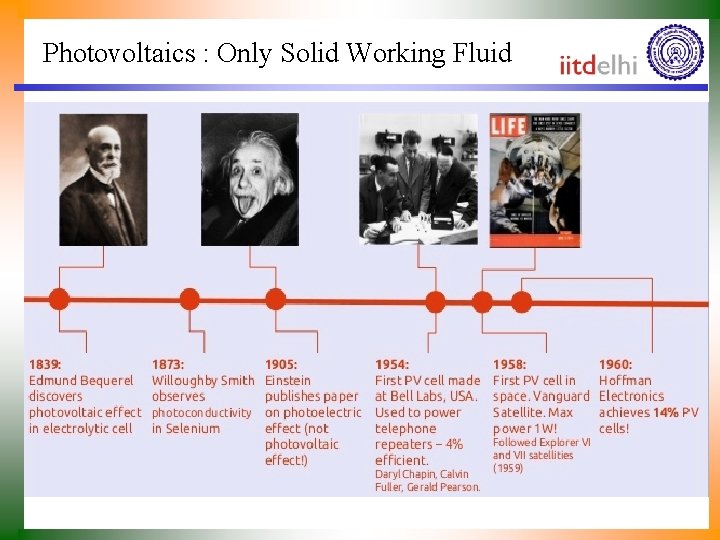
Photovoltaics : Only Solid Working Fluid
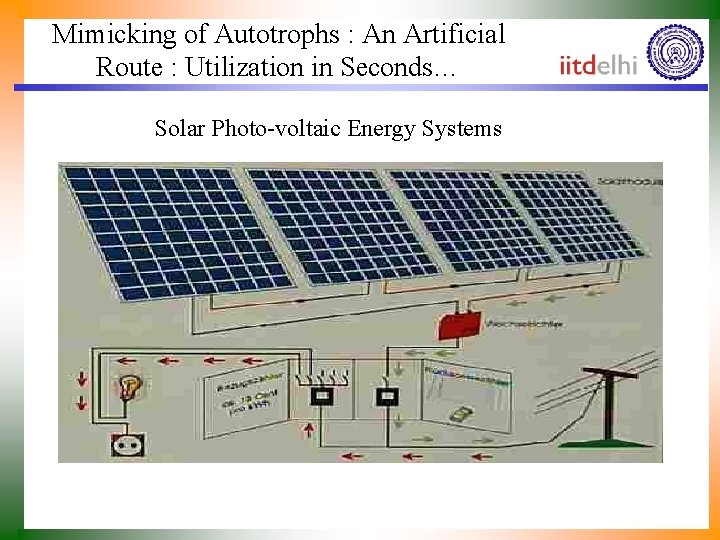
Mimicking of Autotrophs : An Artificial Route : Utilization in Seconds… Solar Photo-voltaic Energy Systems
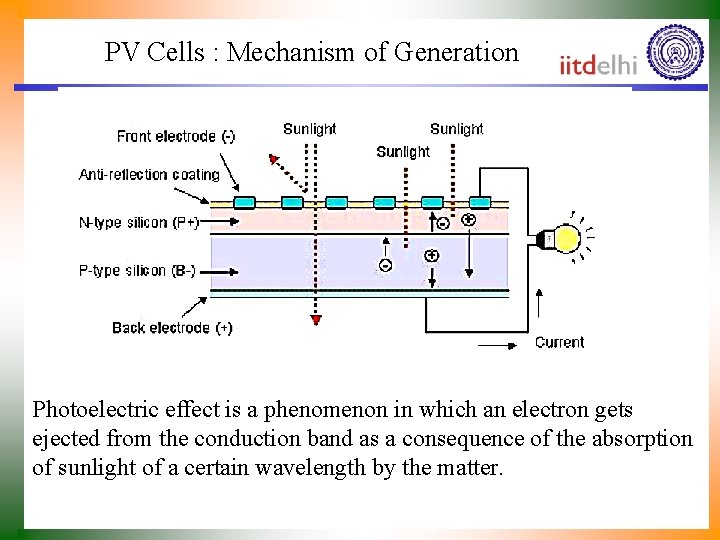
PV Cells : Mechanism of Generation Photoelectric effect is a phenomenon in which an electron gets ejected from the conduction band as a consequence of the absorption of sunlight of a certain wavelength by the matter.
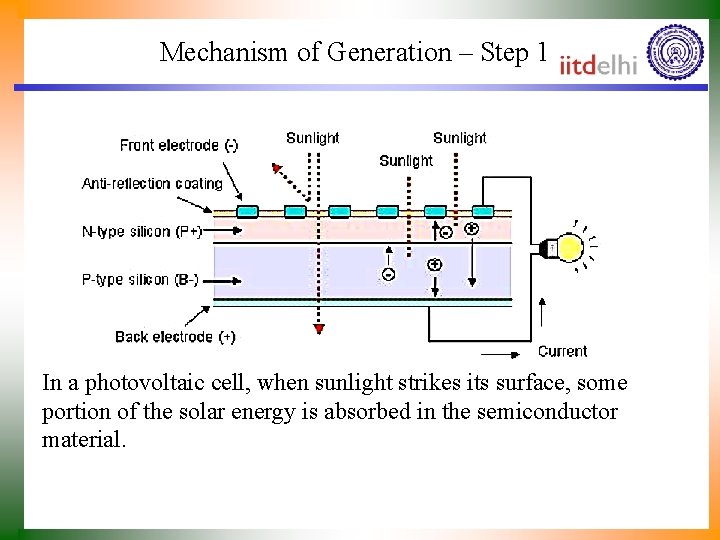
Mechanism of Generation – Step 1 In a photovoltaic cell, when sunlight strikes its surface, some portion of the solar energy is absorbed in the semiconductor material.
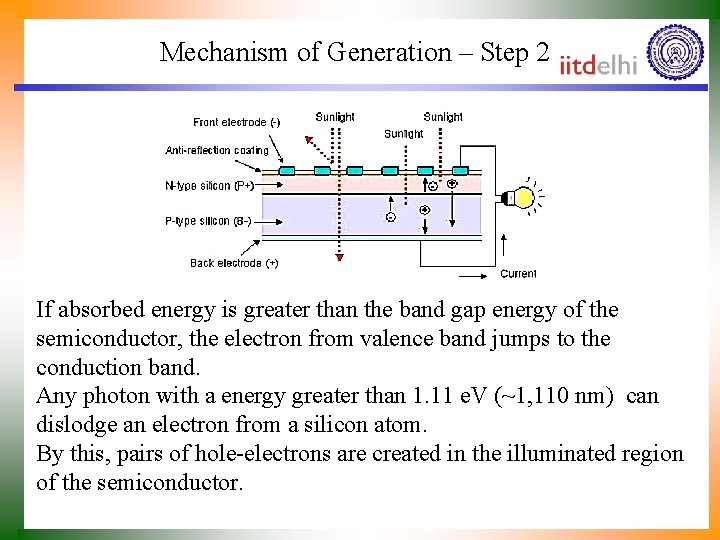
Mechanism of Generation – Step 2 If absorbed energy is greater than the band gap energy of the semiconductor, the electron from valence band jumps to the conduction band. Any photon with a energy greater than 1. 11 e. V (~1, 110 nm) can dislodge an electron from a silicon atom. By this, pairs of hole-electrons are created in the illuminated region of the semiconductor.
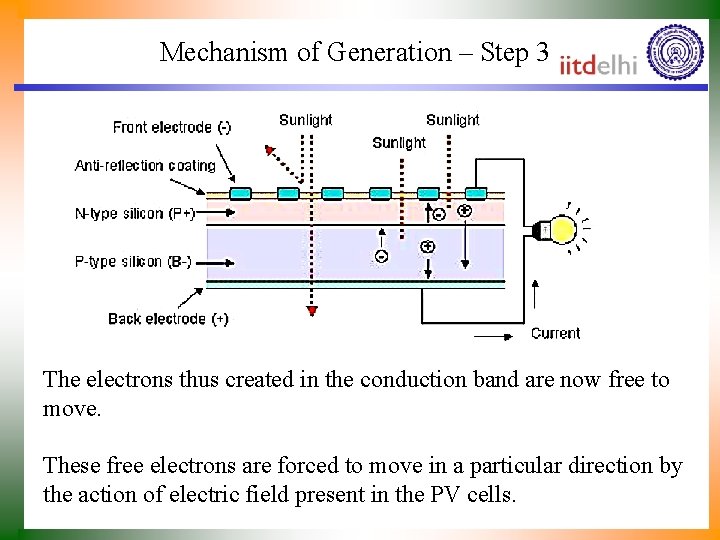
Mechanism of Generation – Step 3 The electrons thus created in the conduction band are now free to move. These free electrons are forced to move in a particular direction by the action of electric field present in the PV cells.
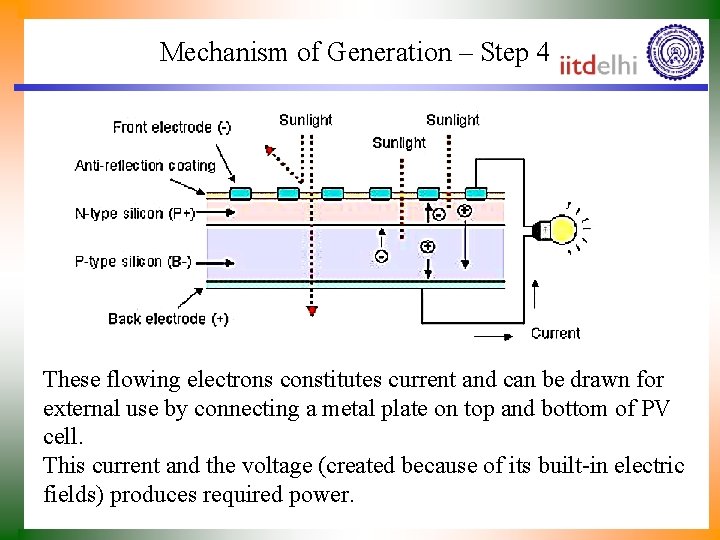
Mechanism of Generation – Step 4 These flowing electrons constitutes current and can be drawn for external use by connecting a metal plate on top and bottom of PV cell. This current and the voltage (created because of its built-in electric fields) produces required power.
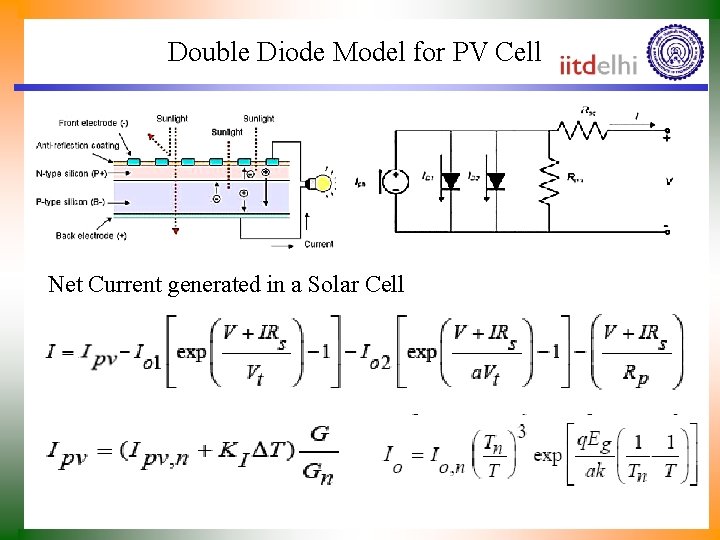
Double Diode Model for PV Cell Net Current generated in a Solar Cell
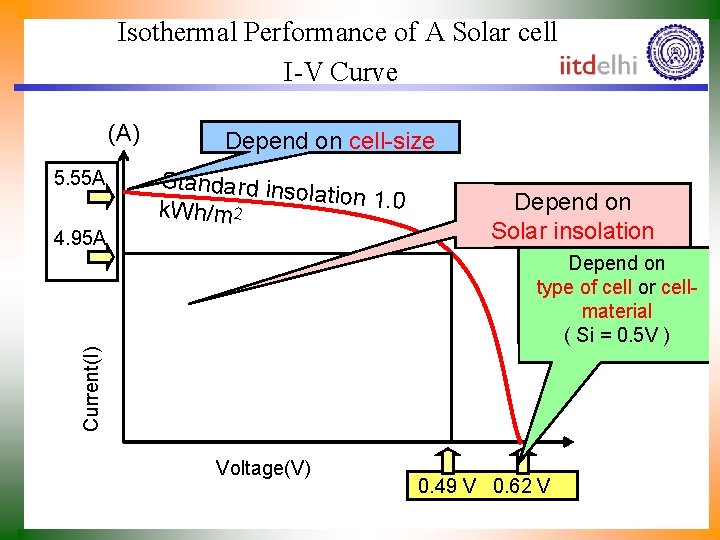
Isothermal Performance of A Solar cell I-V Curve (A) 5. 55 A Standard inso lation 1. 0 k. Wh/m 2 Depend on Solar insolation Depend on type of cell or cellmaterial ( Si = 0. 5 V ) Current(I) 4. 95 A Depend on cell-size Voltage(V) 0. 49 V 0. 62 V
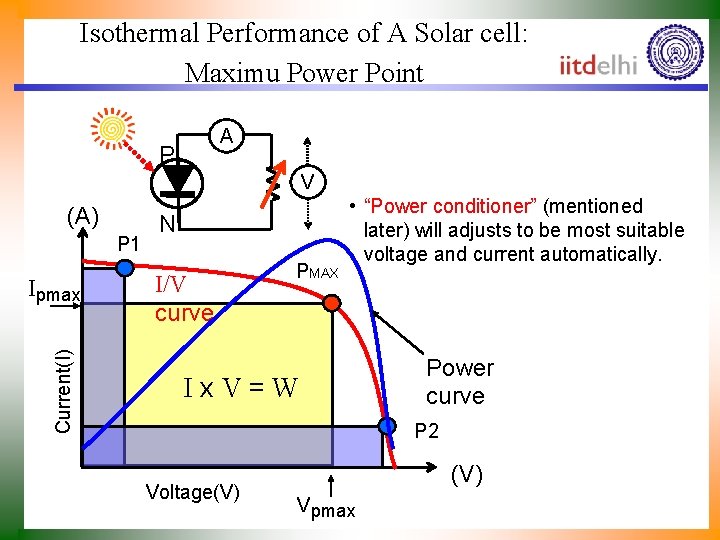
Isothermal Performance of A Solar cell: Maximu Power Point A P V (A) P 1 Current(I) Ipmax N I/V curve PMAX • “Power conditioner” (mentioned later) will adjusts to be most suitable voltage and current automatically. Ix. V=W Power curve P 2 Voltage(V) Vpmax
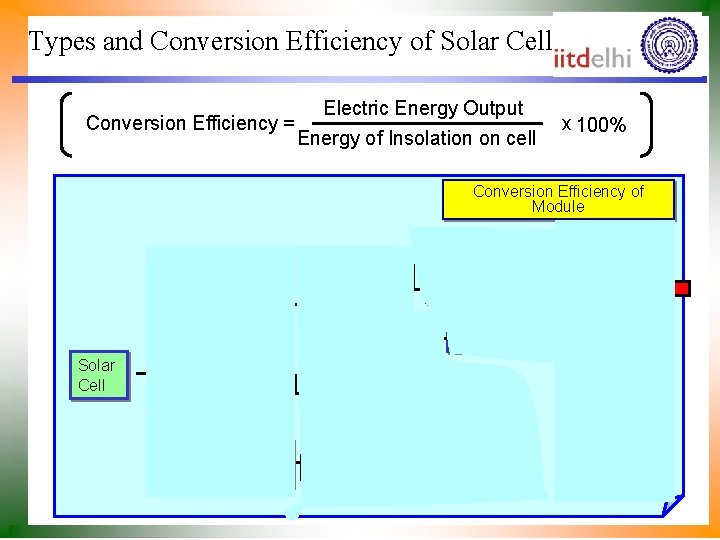
Types and Conversion Efficiency of Solar Cell Electric Energy Output Conversion Efficiency = Energy of Insolation on cell x 100% Conversion Efficiency of Module Crystalline Silicon Semiconductor Non-crystalline Solar Cell Compound Semiconductor Organic Semiconductor Single crystal 10 - 17% Poly crystalline 10 - 13% Amorphous 7 - 10% Gallium Arsenide (Ga. As) 18 - 30% Dye-sensitized Type 7 - 8% Organic Thin Layer Type 2 - 3%
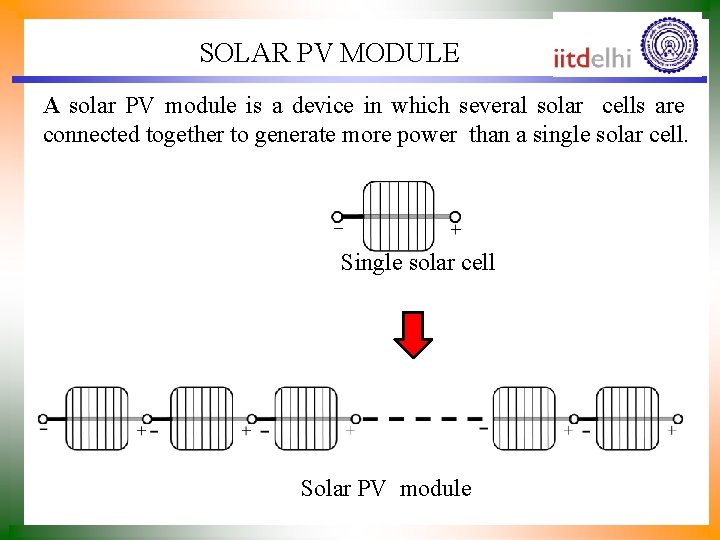
SOLAR PV MODULE A solar PV module is a device in which several solar cells are connected together to generate more power than a single solar cell. Single solar cell Solar PV module
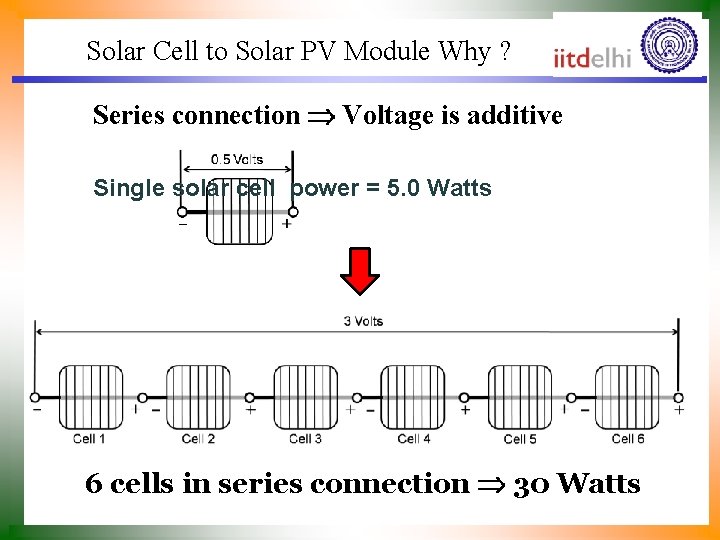
Solar Cell to Solar PV Module Why ? Series connection Voltage is additive Single solar cell power = 5. 0 Watts 6 cells in series connection 30 Watts
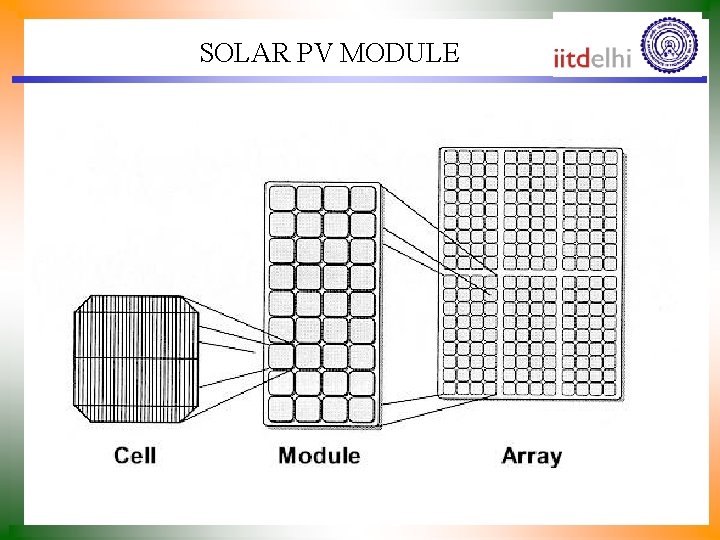
SOLAR PV MODULE
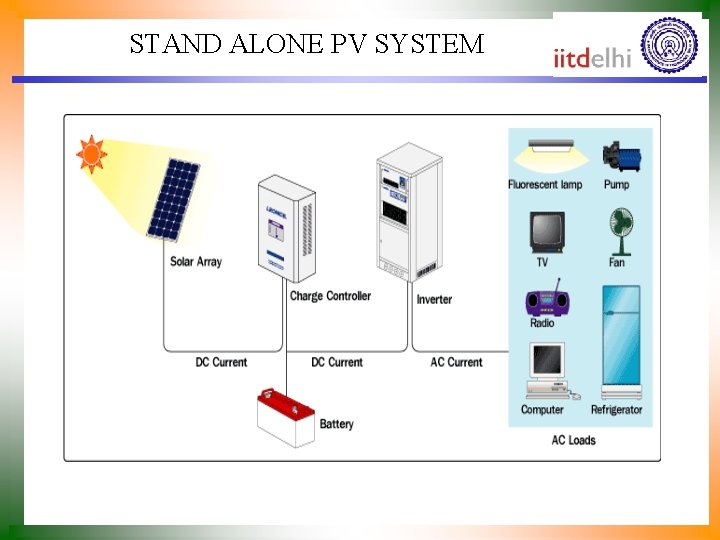
STAND ALONE PV SYSTEM
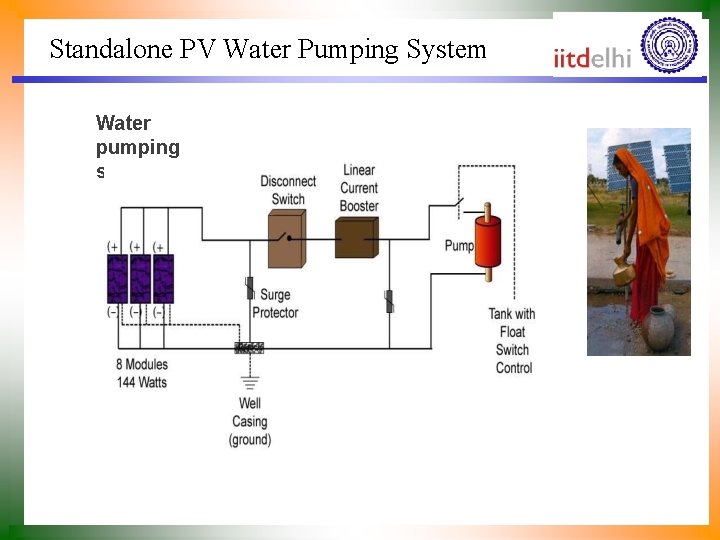
Standalone PV Water Pumping System Water pumping system
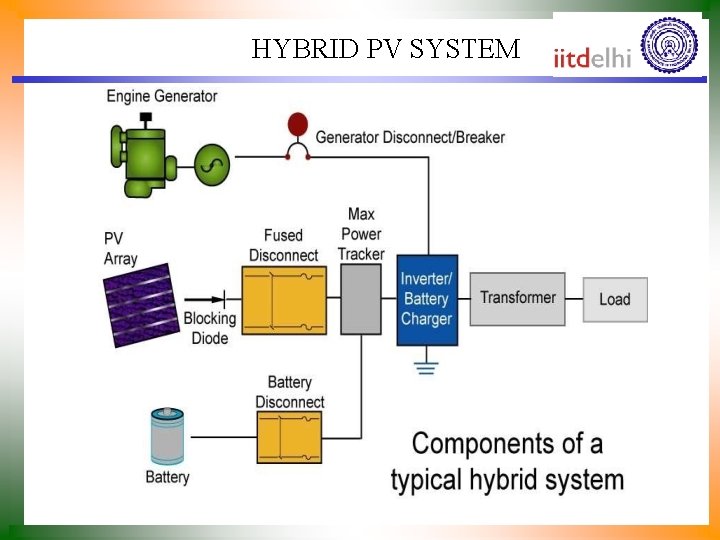
HYBRID PV SYSTEM
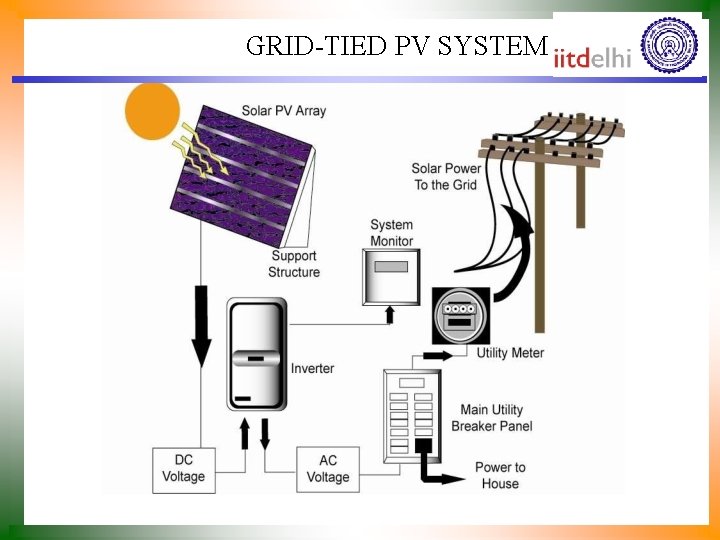
GRID-TIED PV SYSTEM
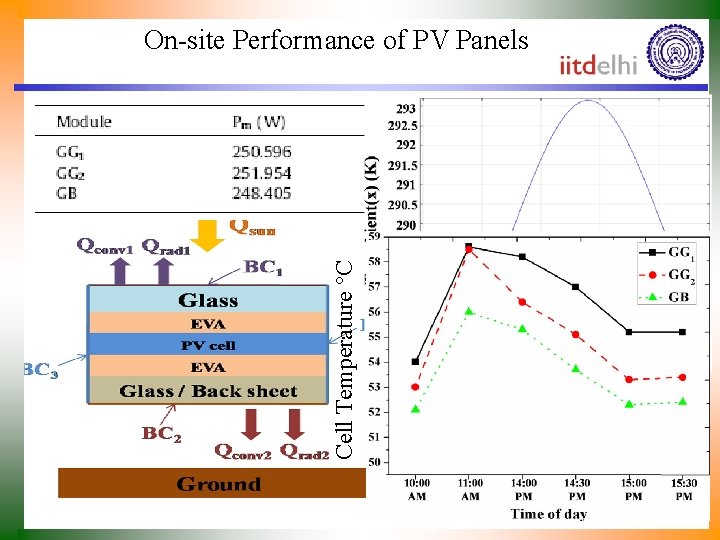
Cell Temperature C On-site Performance of PV Panels
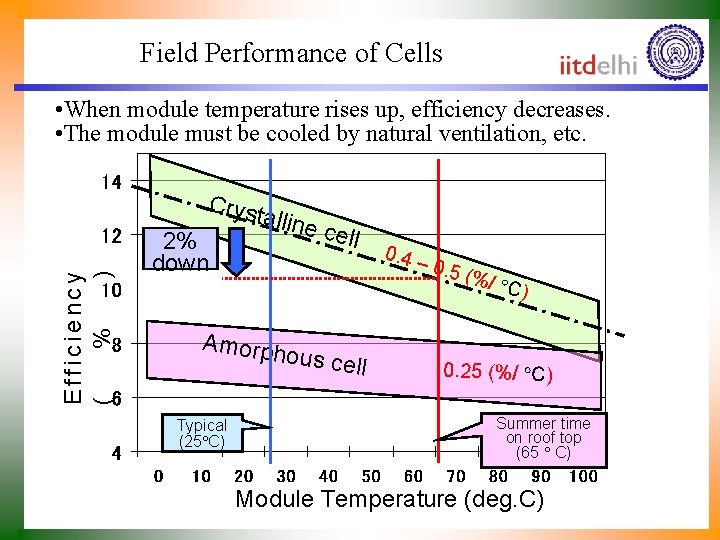
Field Performance of Cells • When module temperature rises up, efficiency decreases. • The module must be cooled by natural ventilation, etc. Efficiency ( % ) Cryst 2% down alline Amorph cell ous cell Typical (25 C) 0. 4 – 0. 5 ( %/ C) 0. 25 (%/ C) Summer time on roof top (65 C) Module Temperature (deg. C)
- Slides: 42