
Advanced Placement Biology Mr Jim Sullivan Boston University



Advanced Placement Biology Mr. Jim Sullivan Boston University

Boston University Project STAMP • STAMP – Sciecne, Technology, And Math Partnerships

Undergraduate- Boston College Study of Painted Turtles
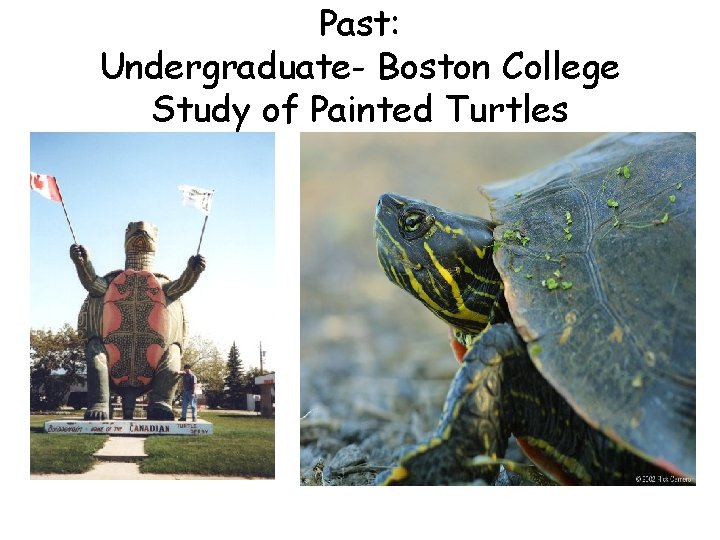
Past: Undergraduate- Boston College Study of Painted Turtles
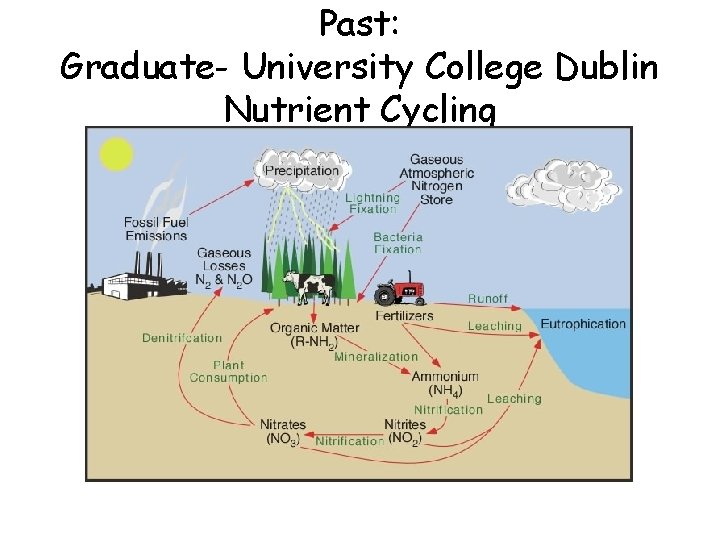
Past: Graduate- University College Dublin Nutrient Cycling
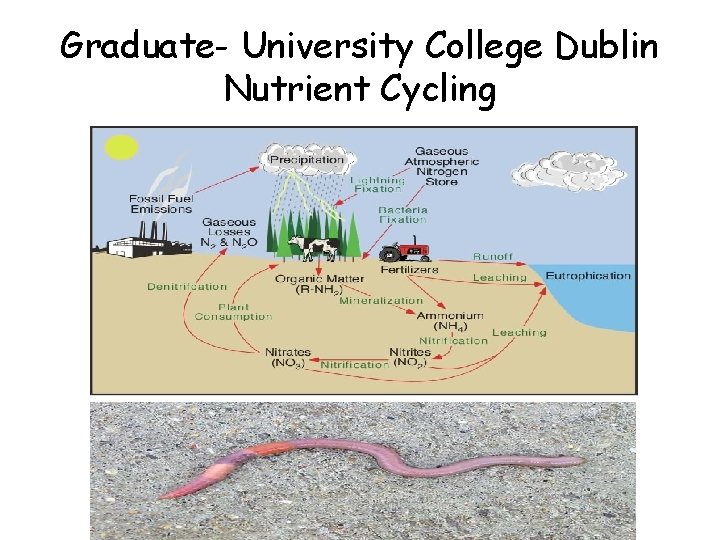
Graduate- University College Dublin Nutrient Cycling
Past: ‘Radio’-pharmaceuticals • Using ‘radioactive’ chemicals to create therapeutic medicines • Designed to fight cancer

Present: • Boston University – Ecology – Molecular Biology – Environmental Chemistry • You! – Working with you guys. – Exploring and understanding biology from the molecular to the organismal level Nematostella vectensis
Time for the flashlight! • Before going into Genetics, we need to review basic chemistry
Time for the flashlight! • Before going into Genetics, we need to review basic chemistry • Why is Chemistry important for understanding biology?
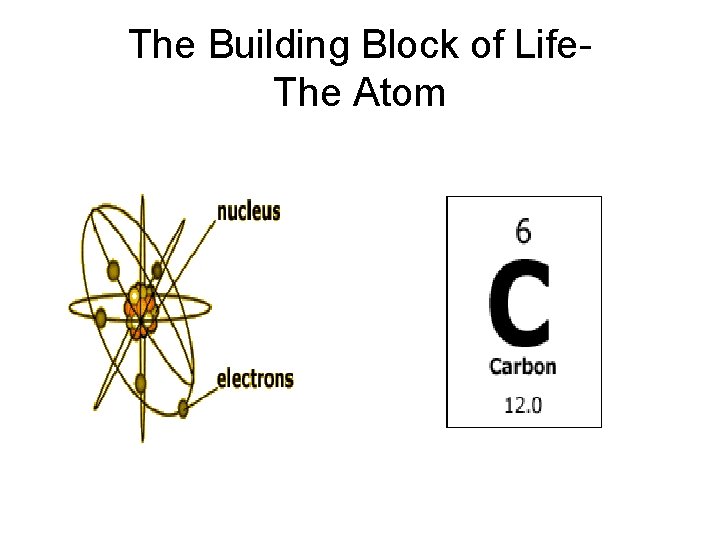
The Building Block of Life. The Atom
What are atoms comprised of?
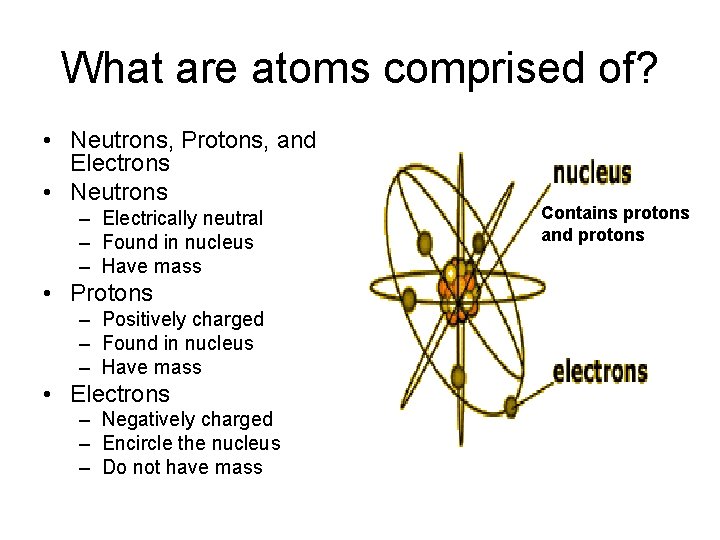
What are atoms comprised of? • Neutrons, Protons, and Electrons • Neutrons – Electrically neutral – Found in nucleus – Have mass • Protons – Positively charged – Found in nucleus – Have mass • Electrons – Negatively charged – Encircle the nucleus – Do not have mass Contains protons and protons
Define Mass
Define Mass • Mass is an important unit of measurement which will come up often throughout the year. • Mass is a measure of ‘matter. ’ • It is a function of both the density and the size of the object in question. • Are mass and weight identical?
How do we describe atoms? • We define different atoms based upon the number of each of their three components. • What are three parts of an atom again?
How do we describe atoms? • We define different atoms based upon the number of each of their three components. – Neutrons, Protons, and Electrons • Each atom has a unique number of protons. • Atoms are (usually) electrically neutral, so the number of electrons equals the number of protons. • The atomic mass describes the sum of protons and neutrons
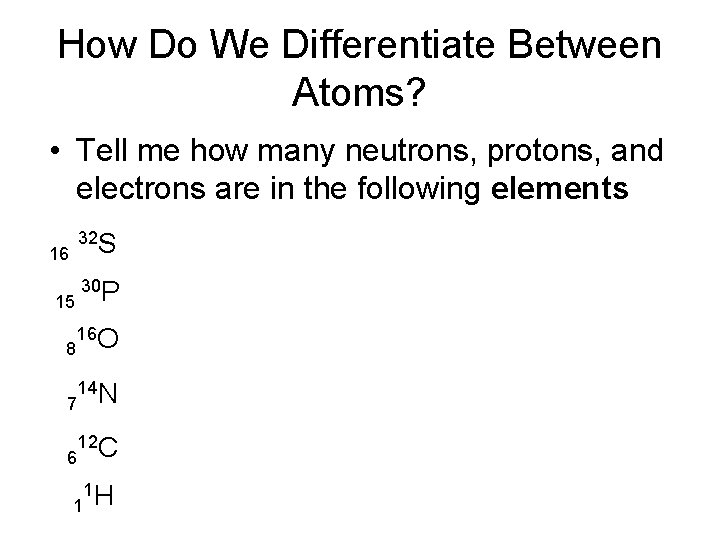
How Do We Differentiate Between Atoms? • Tell me how many neutrons, protons, and electrons are in the following elements 32 S 16 15 30 P 8 16 O 7 14 N 6 12 C 1 1 H
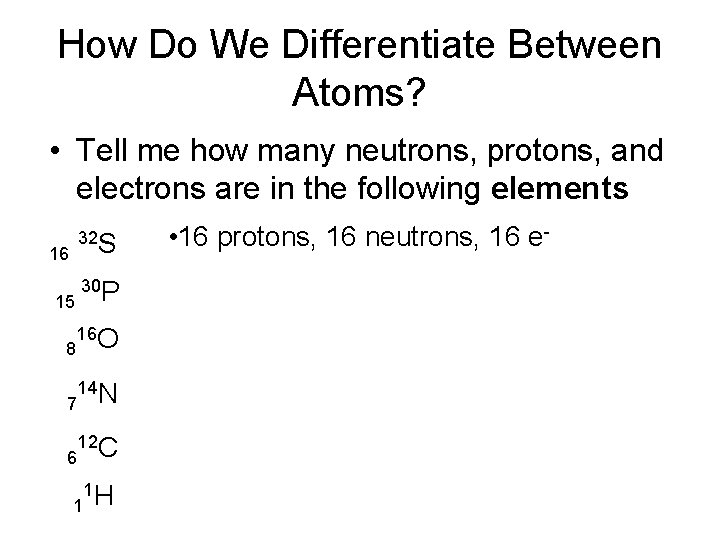
How Do We Differentiate Between Atoms? • Tell me how many neutrons, protons, and electrons are in the following elements 32 S 16 15 30 P 8 16 O 7 14 N 6 12 C 1 1 H • 16 protons, 16 neutrons, 16 e-
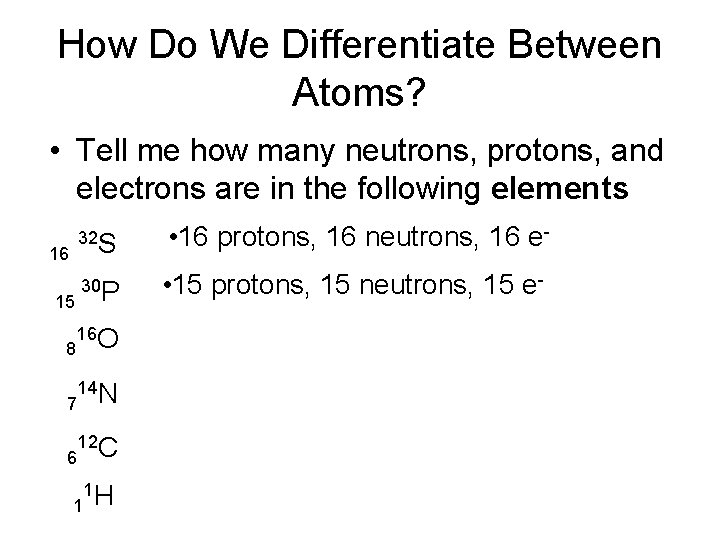
How Do We Differentiate Between Atoms? • Tell me how many neutrons, protons, and electrons are in the following elements 32 S 16 15 30 P 8 16 O 7 14 N 6 12 C 1 1 H • 16 protons, 16 neutrons, 16 e • 15 protons, 15 neutrons, 15 e-
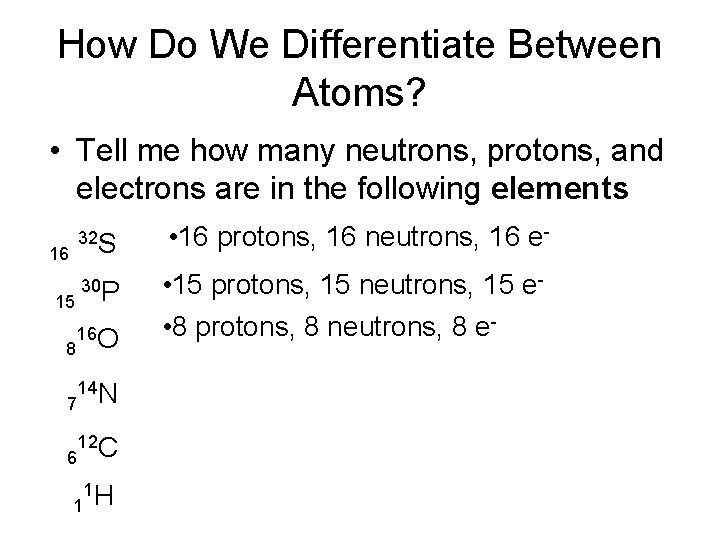
How Do We Differentiate Between Atoms? • Tell me how many neutrons, protons, and electrons are in the following elements 32 S 16 15 30 P 8 16 O 7 14 N 6 12 C 1 1 H • 16 protons, 16 neutrons, 16 e • 15 protons, 15 neutrons, 15 e • 8 protons, 8 neutrons, 8 e-
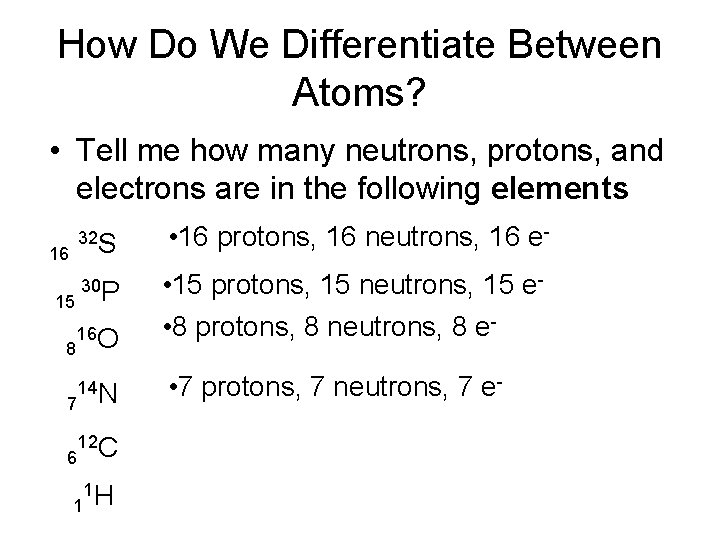
How Do We Differentiate Between Atoms? • Tell me how many neutrons, protons, and electrons are in the following elements 32 S 16 15 30 P 8 16 O 7 14 N 6 12 C 1 1 H • 16 protons, 16 neutrons, 16 e • 15 protons, 15 neutrons, 15 e • 8 protons, 8 neutrons, 8 e • 7 protons, 7 neutrons, 7 e-
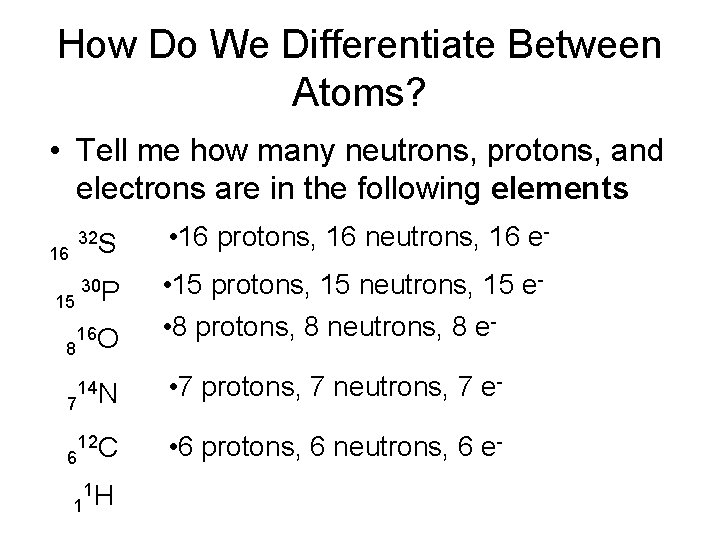
How Do We Differentiate Between Atoms? • Tell me how many neutrons, protons, and electrons are in the following elements 32 S 16 15 30 P 8 16 O • 16 protons, 16 neutrons, 16 e • 15 protons, 15 neutrons, 15 e • 8 protons, 8 neutrons, 8 e- 7 14 N • 7 protons, 7 neutrons, 7 e- 6 12 C • 6 protons, 6 neutrons, 6 e- 1 1 H
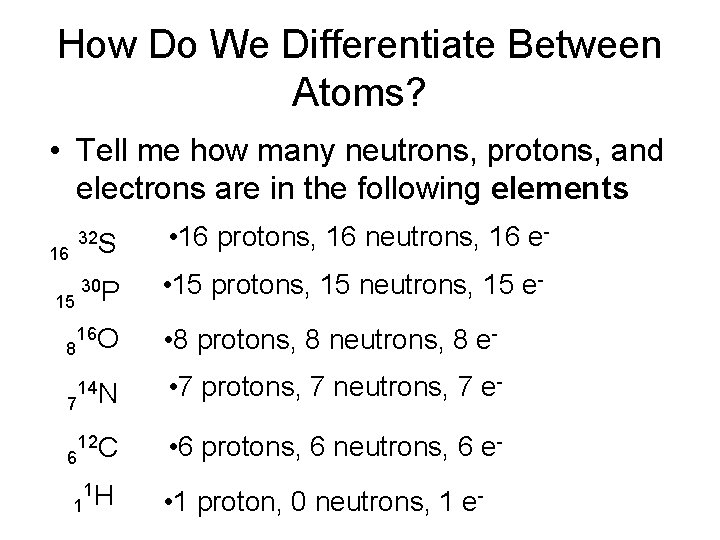
How Do We Differentiate Between Atoms? • Tell me how many neutrons, protons, and electrons are in the following elements 32 S 16 • 16 protons, 16 neutrons, 16 e- 15 30 P • 15 protons, 15 neutrons, 15 e- 8 16 O • 8 protons, 8 neutrons, 8 e- 7 14 N • 7 protons, 7 neutrons, 7 e- 6 12 C • 6 protons, 6 neutrons, 6 e- 1 1 H • 1 proton, 0 neutrons, 1 e-

How Do We Differentiate Between Atoms? • Tell me how many neutrons, protons, and electrons are in the following elements 32 S Sulfur 12 C Carbon 1 H Hydrogen • These 6 elements, which 30 P Phosphorous you can remember as 15 ‘SPONCH’ make up 16 O Oxygen 8 97. 6% of your body, by 14 N mass Nitrogen 7 16 6 1
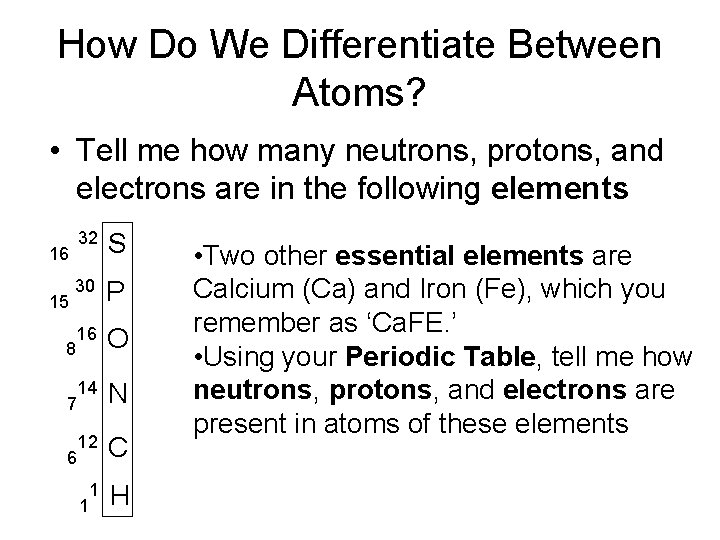
How Do We Differentiate Between Atoms? • Tell me how many neutrons, protons, and electrons are in the following elements 32 S 30 P 16 O 14 N 12 C 1 H 16 15 8 7 6 1 • Two other essential elements are Calcium (Ca) and Iron (Fe), which you remember as ‘Ca. FE. ’ • Using your Periodic Table, tell me how neutrons, protons, and electrons are present in atoms of these elements
Bonds • What is a bond?
Bonds • What is a bond? – A bond between atoms is the result of interactions bringing atoms closer together • Name different types of bonds
Types of Bonds • There are four types of bonds that will be important to us throughout the year: – Ionic Bonds – Covalent Bonds – Hydrogen Bonds – van der Waals Interactions • For now, you should understand Ionic and Covalent bonds, we’ll cover the others later
Ionic and Covalent Bonds • These bonds are interactions between atoms in which each of the atoms involved attempts to fill its valence shell with eight electrons • In ionic bonds, there is taking and giving of electrons • In covalent bonds, there is a sharing of electrons
Ionic Bonds- The Bully • Look for the ‘electronegativity (δ)’ section of your periodic table. • This number indicates how strongly electrons are drawn to the nucleus of that particular atom; the higher the number, the greater the affinity • If the difference of electronegativities (δ) of atoms which share a bond is ≥ 1. 5, then the bond is ionic • The more electronegative atom involved ‘takes’ the electrons from the less electronegative
Covalent Bonds- Friendly Atoms • If the difference between electronegativities (δ) of atoms sharing a bond is < 1. 5, then the atoms in the bond are sharing the electrons – These are Covalent Bonds
Just to confuse you… • There are two types of covalent bonds – Non-polar – Polar
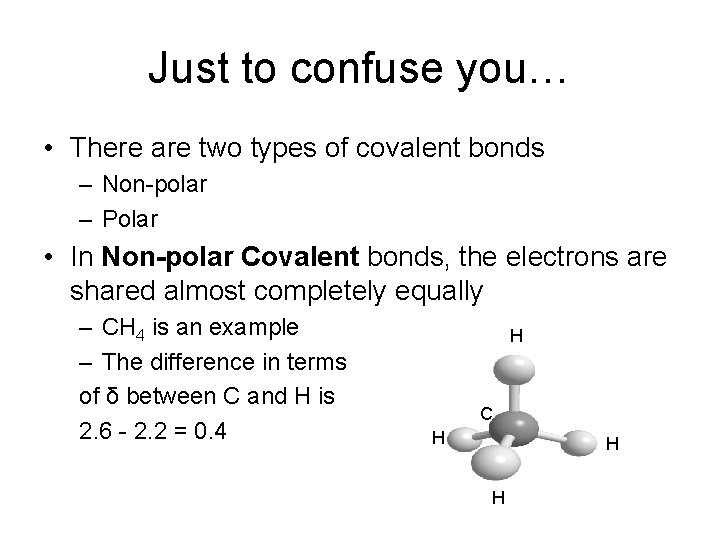
Just to confuse you… • There are two types of covalent bonds – Non-polar – Polar • In Non-polar Covalent bonds, the electrons are shared almost completely equally – CH 4 is an example – The difference in terms of δ between C and H is 2. 6 - 2. 2 = 0. 4 H C H H H
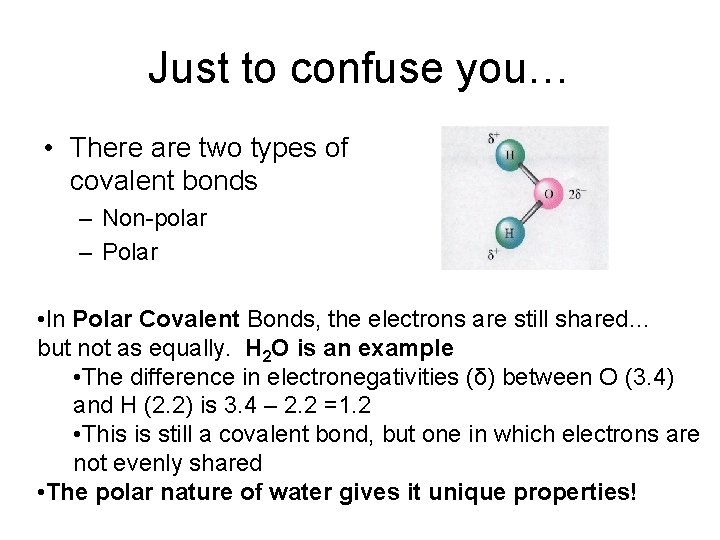
Just to confuse you… • There are two types of covalent bonds – Non-polar – Polar • In Polar Covalent Bonds, the electrons are still shared… but not as equally. H 2 O is an example • The difference in electronegativities (δ) between O (3. 4) and H (2. 2) is 3. 4 – 2. 2 =1. 2 • This is still a covalent bond, but one in which electrons are not evenly shared • The polar nature of water gives it unique properties!
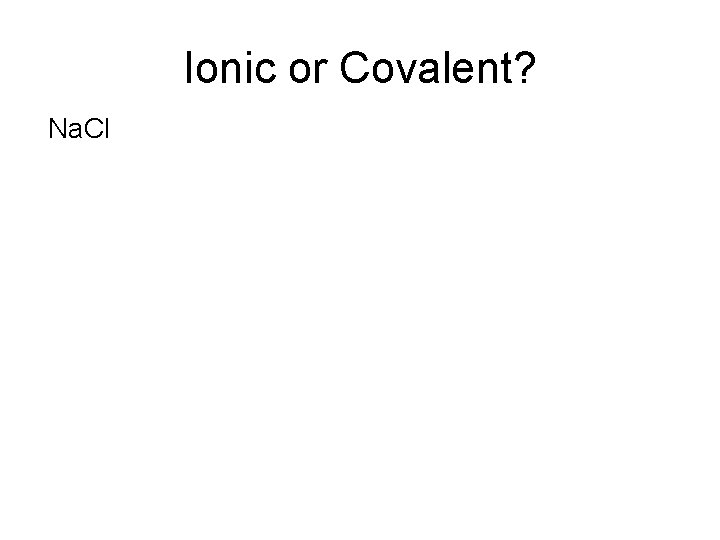
Ionic or Covalent? Na. Cl
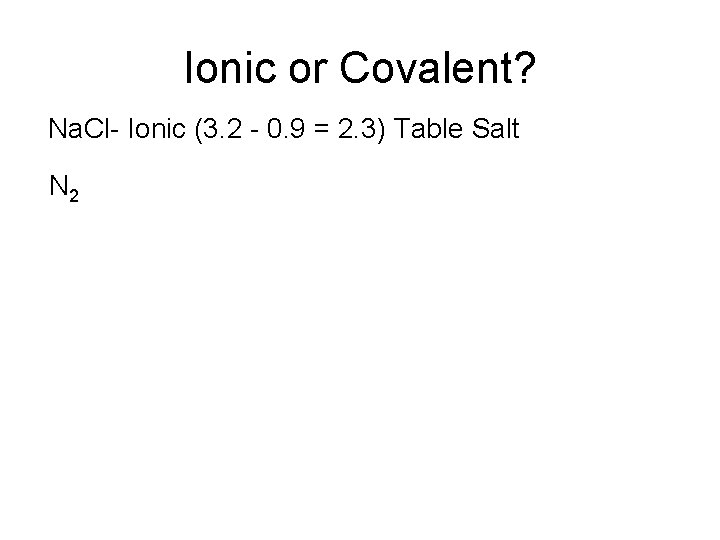
Ionic or Covalent? Na. Cl- Ionic (3. 2 - 0. 9 = 2. 3) Table Salt N 2
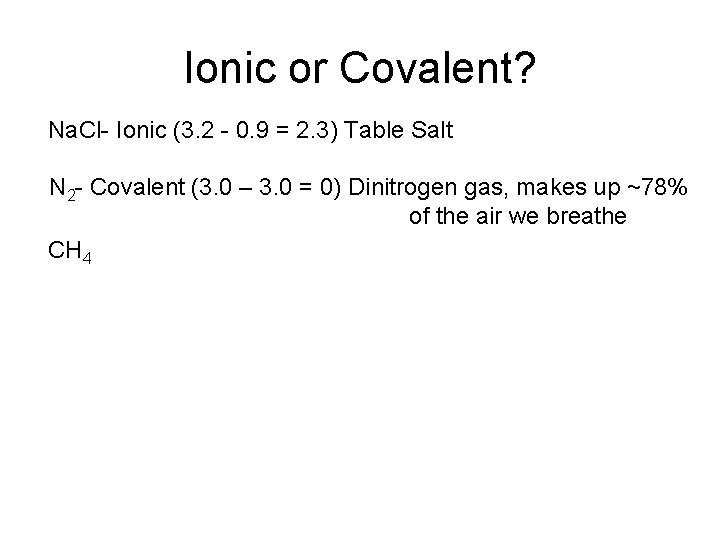
Ionic or Covalent? Na. Cl- Ionic (3. 2 - 0. 9 = 2. 3) Table Salt N 2 - Covalent (3. 0 – 3. 0 = 0) Dinitrogen gas, makes up ~78% of the air we breathe CH 4
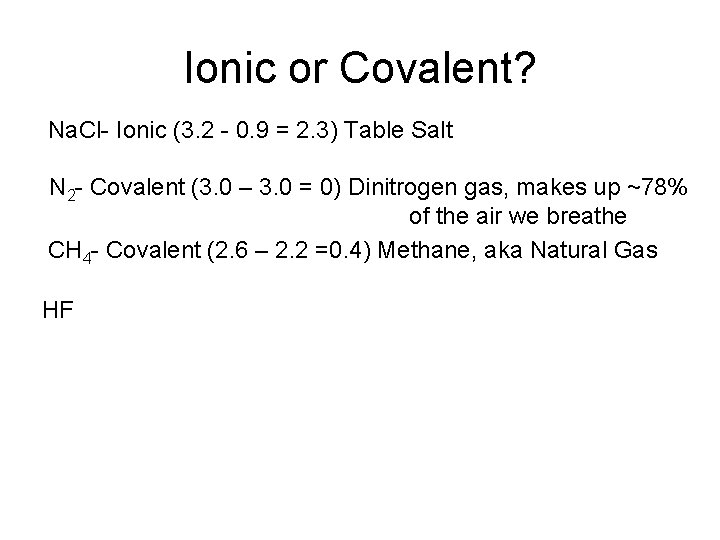
Ionic or Covalent? Na. Cl- Ionic (3. 2 - 0. 9 = 2. 3) Table Salt N 2 - Covalent (3. 0 – 3. 0 = 0) Dinitrogen gas, makes up ~78% of the air we breathe CH 4 - Covalent (2. 6 – 2. 2 =0. 4) Methane, aka Natural Gas HF
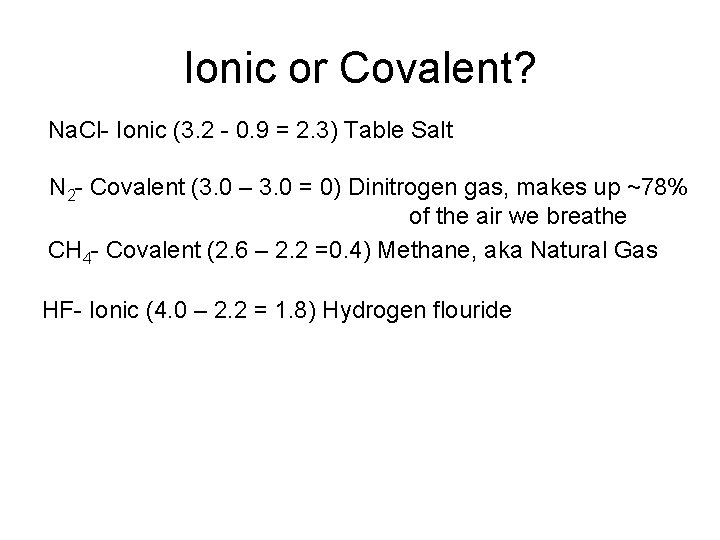
Ionic or Covalent? Na. Cl- Ionic (3. 2 - 0. 9 = 2. 3) Table Salt N 2 - Covalent (3. 0 – 3. 0 = 0) Dinitrogen gas, makes up ~78% of the air we breathe CH 4 - Covalent (2. 6 – 2. 2 =0. 4) Methane, aka Natural Gas HF- Ionic (4. 0 – 2. 2 = 1. 8) Hydrogen flouride
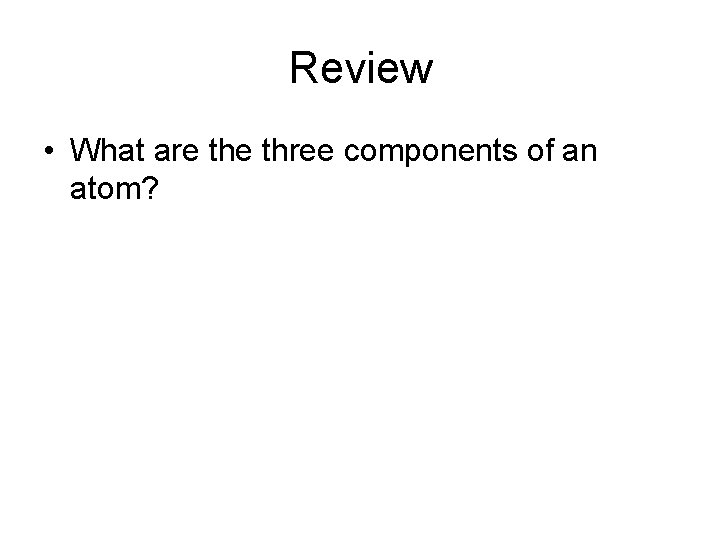
Review • What are three components of an atom?
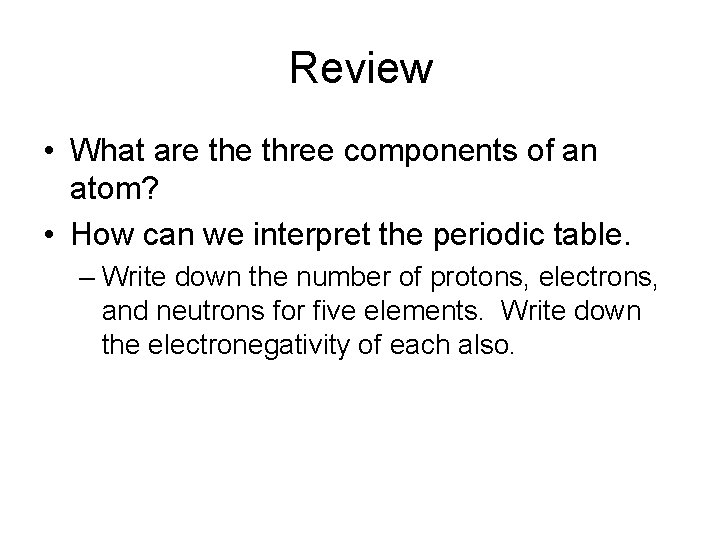
Review • What are three components of an atom? • How can we interpret the periodic table. – Write down the number of protons, electrons, and neutrons for five elements. Write down the electronegativity of each also.
Review • What are three components of an atom? • How can we interpret the periodic table. – Write down the number of protons, electrons, and neutrons for five elements. Write down the electronegativity of each also. • What is a bond? – Name four types of bonds
Review • What are three components of an atom? • How can we interpret the periodic table. – Write down the number of protons, electrons, and neutrons for five elements. Write down the electronegativity of each also. • What is a bond? – Name four types of bonds • What is the difference between an ionic and a covalent bond?
Review • What are three components of an atom? • How can we interpret the periodic table. – Write down the number of protons, electrons, and neutrons for five elements. Write down the electronegativity of each also. • What is a bond? – Name four types of bonds • What is the difference between an ionic and a covalent bond? • What are the two types of covalent bonds?
Back to the Future! • Next class we will cover Chapter 3. – This will be a discussion of the unique properties of water, thanks to the polar covalent bonds H 2 O forms. • We will also introduce some of the concepts from Chapter 5 • After that, we will begin our discussion of Unit 3: Genetics
Homework for next Teusday • • Review the handouts from this class Read Chapter 3. Read pages 52 -54. Skim Chapter 5. Look at all of the figures and read the figure legends. Don’t worry about the details.
- Slides: 52