
Advanced Physiology part 1 Neuronal system By A

ﻓیﺰیﻮﻟﻮژی ﺗکﻤیﻠی Advanced Physiology (part 1, Neuronal system) By: A. Riasi (Ph. D in Animal Nutrition & Physiology)
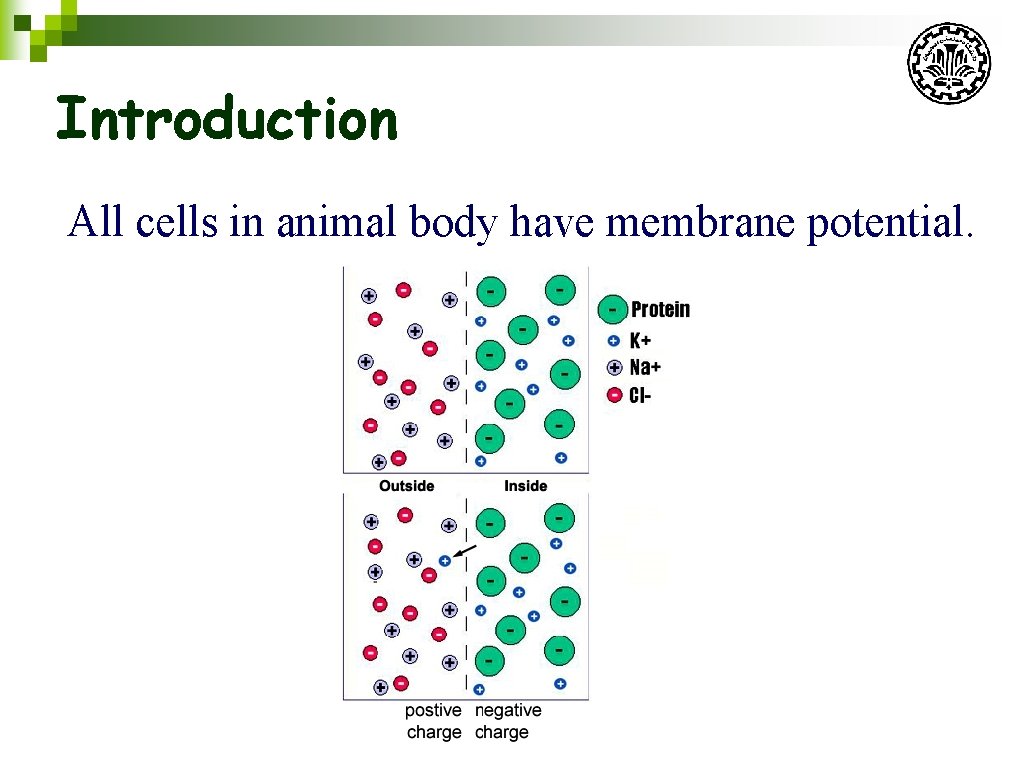
Introduction All cells in animal body have membrane potential.
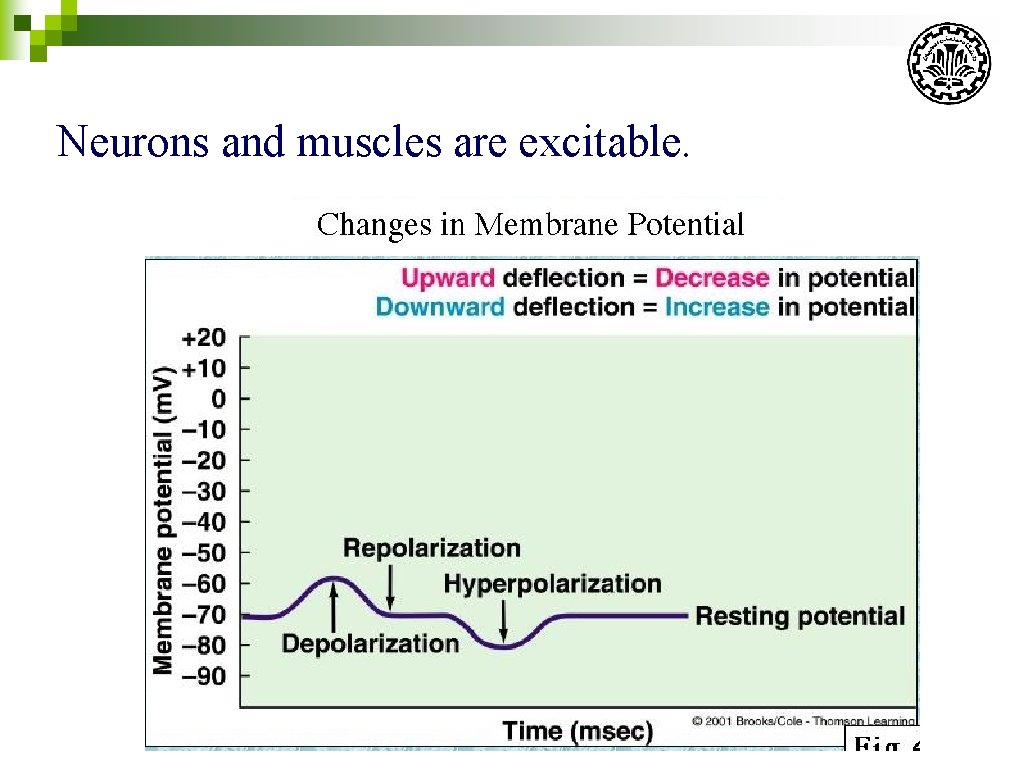
Neurons and muscles are excitable.
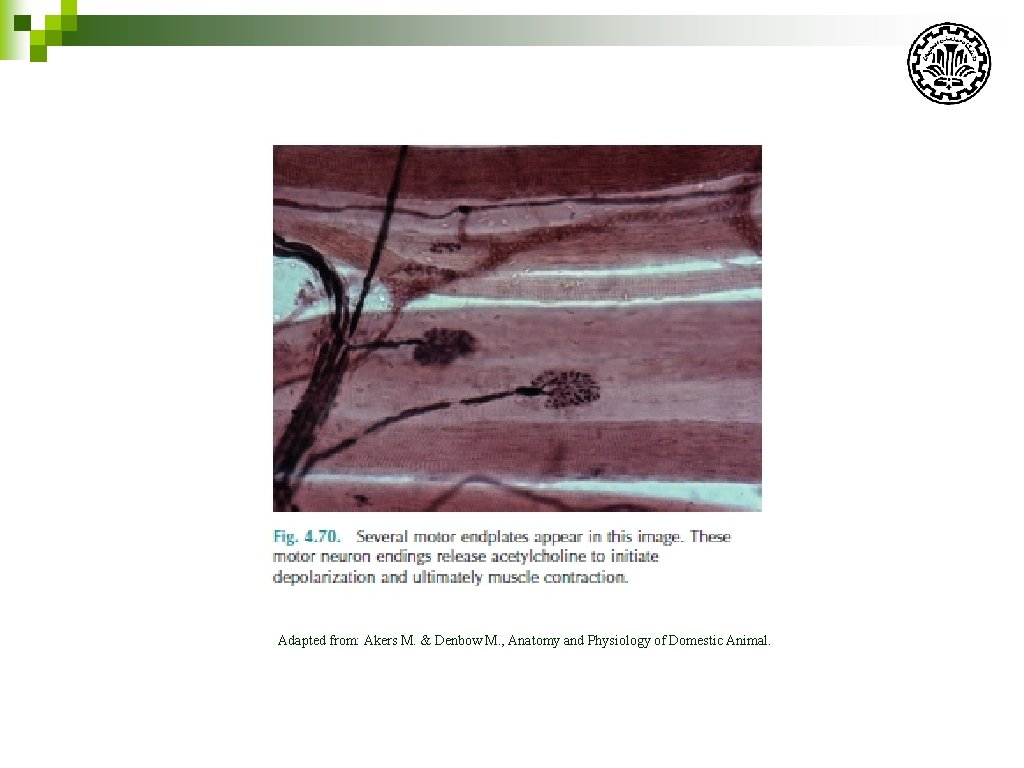
Adapted from: Akers M. & Denbow M. , Anatomy and Physiology of Domestic Animal.
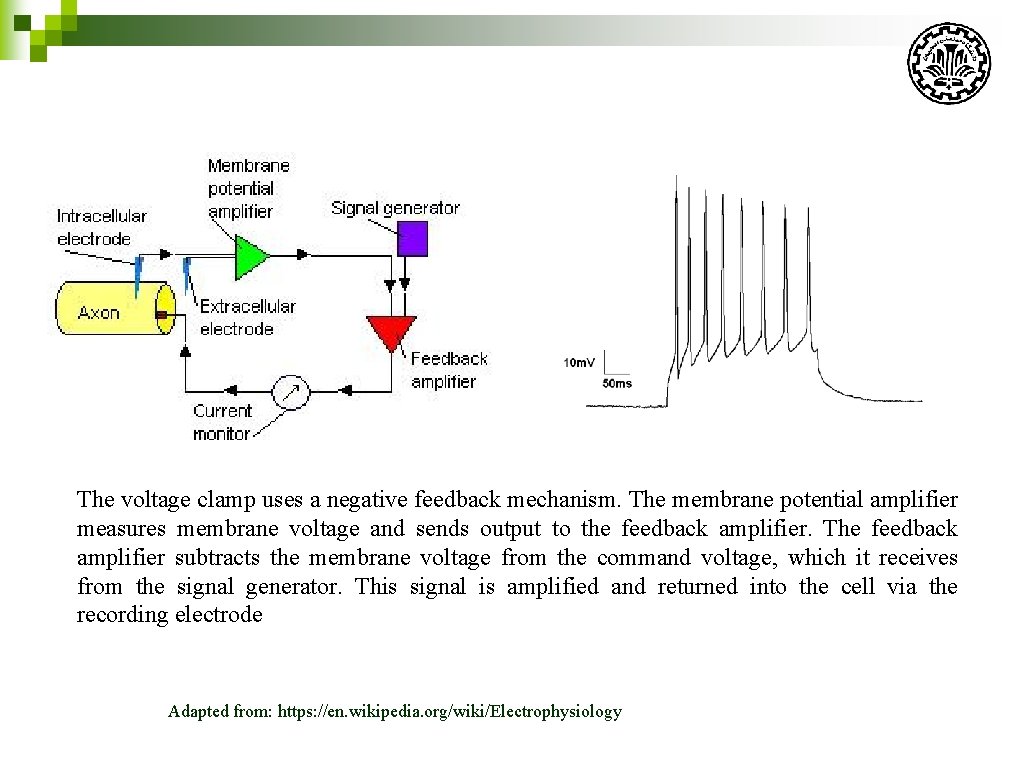
The voltage clamp uses a negative feedback mechanism. The membrane potential amplifier measures membrane voltage and sends output to the feedback amplifier. The feedback amplifier subtracts the membrane voltage from the command voltage, which it receives from the signal generator. This signal is amplified and returned into the cell via the recording electrode Adapted from: https: //en. wikipedia. org/wiki/Electrophysiology
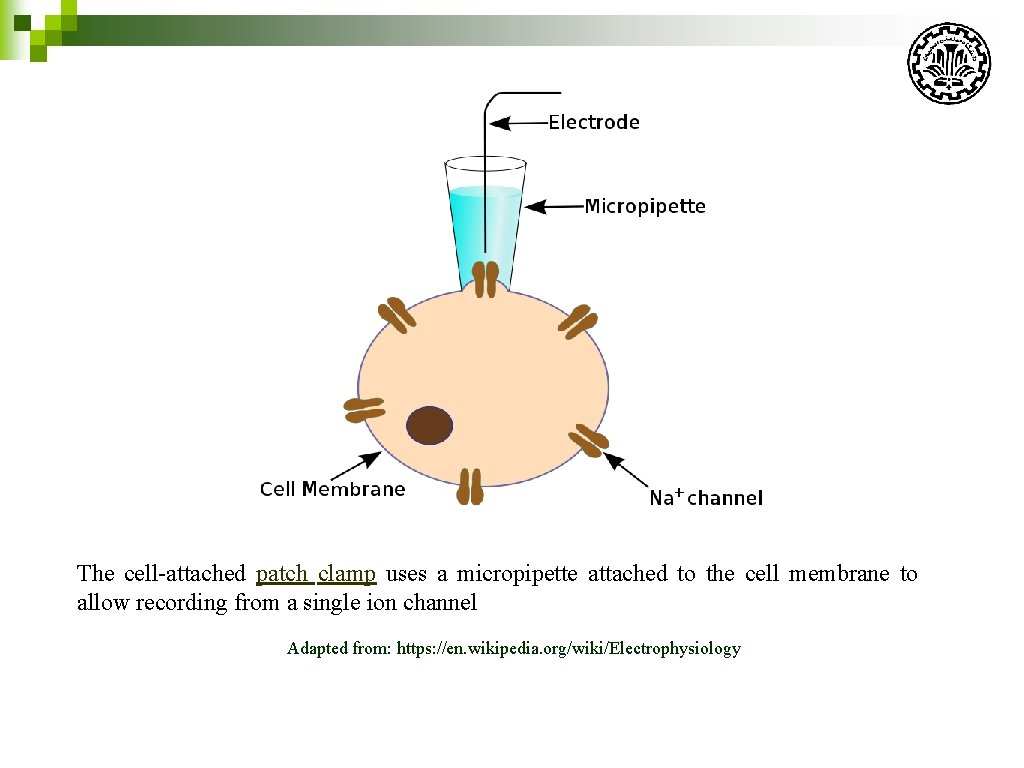
The cell-attached patch clamp uses a micropipette attached to the cell membrane to allow recording from a single ion channel Adapted from: https: //en. wikipedia. org/wiki/Electrophysiology
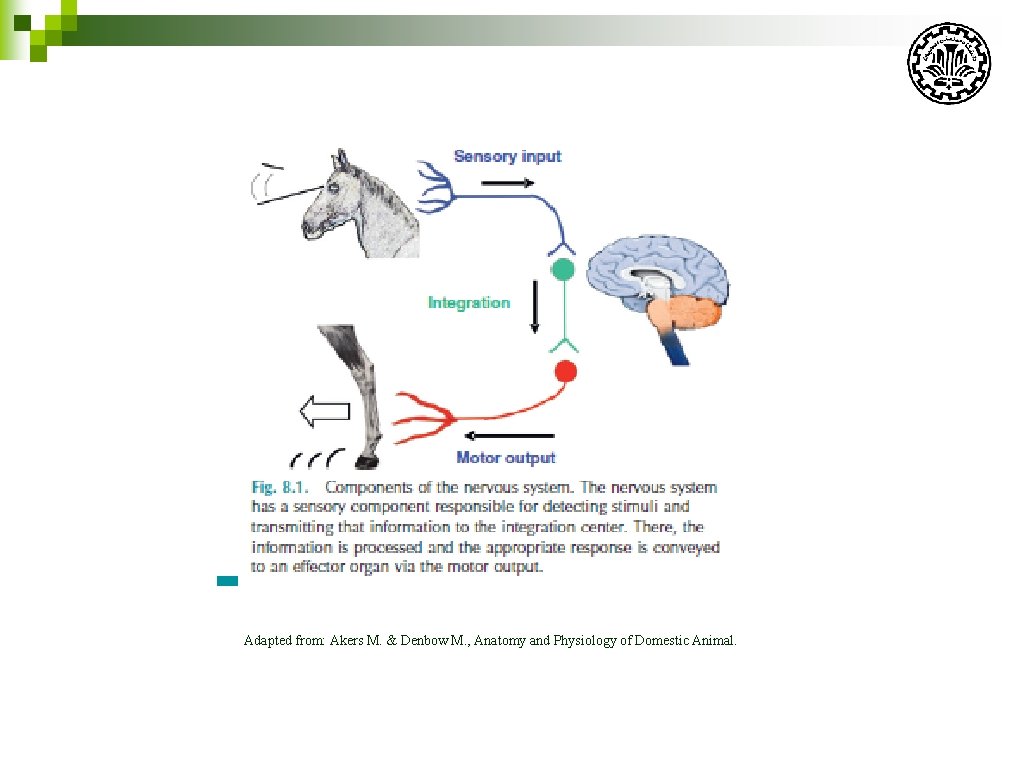
Adapted from: Akers M. & Denbow M. , Anatomy and Physiology of Domestic Animal.
The water-soluble ion have to penetrate the plasma membrane using the specific channels. Leak channels (non-gated channels) Gated channels Voltage-gated channels Chemically gated channels (ligand channels) Mechanically channels
Two basic forms of electrical signals Graded potential Action potential
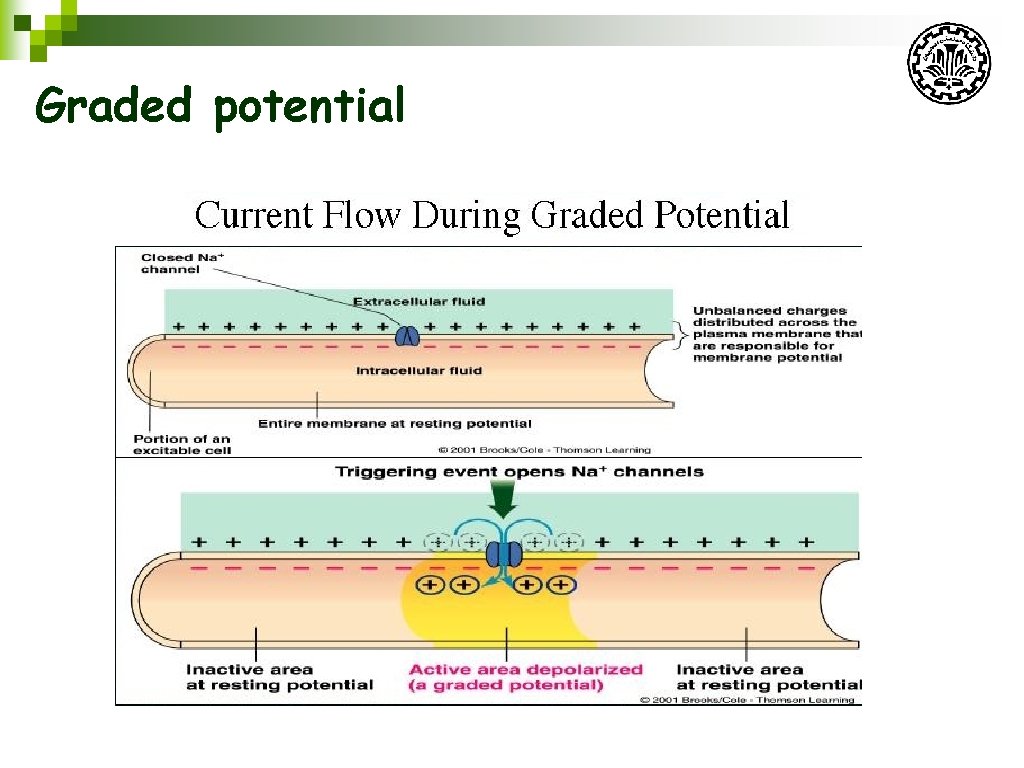
Graded potential
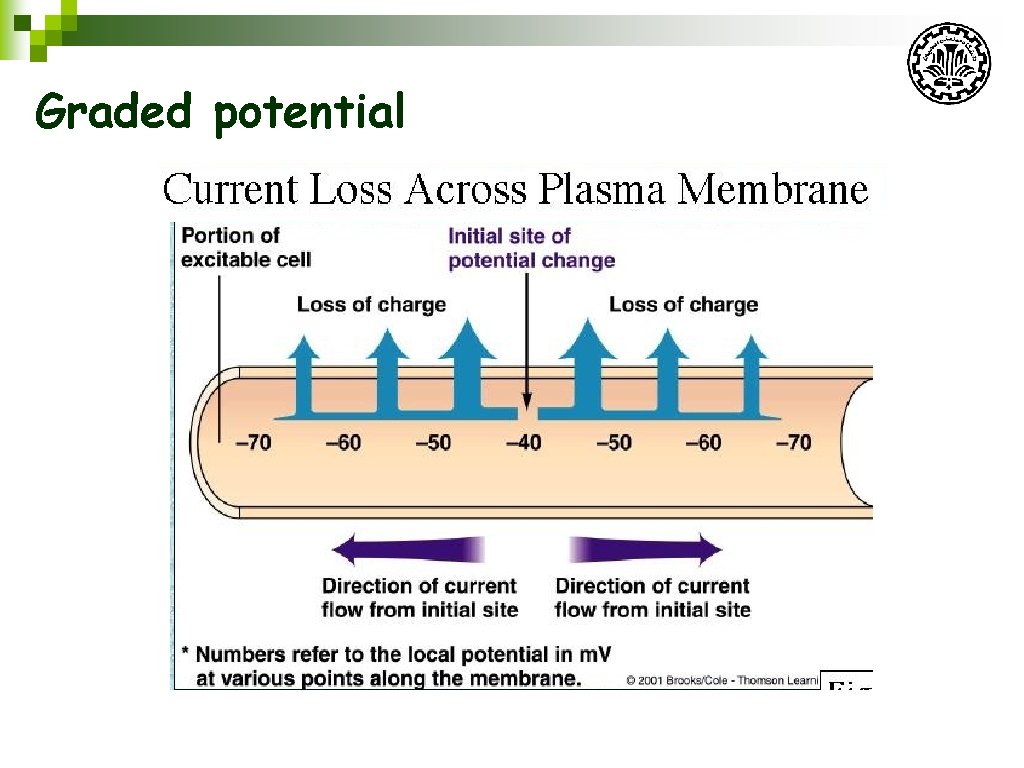
Graded potential
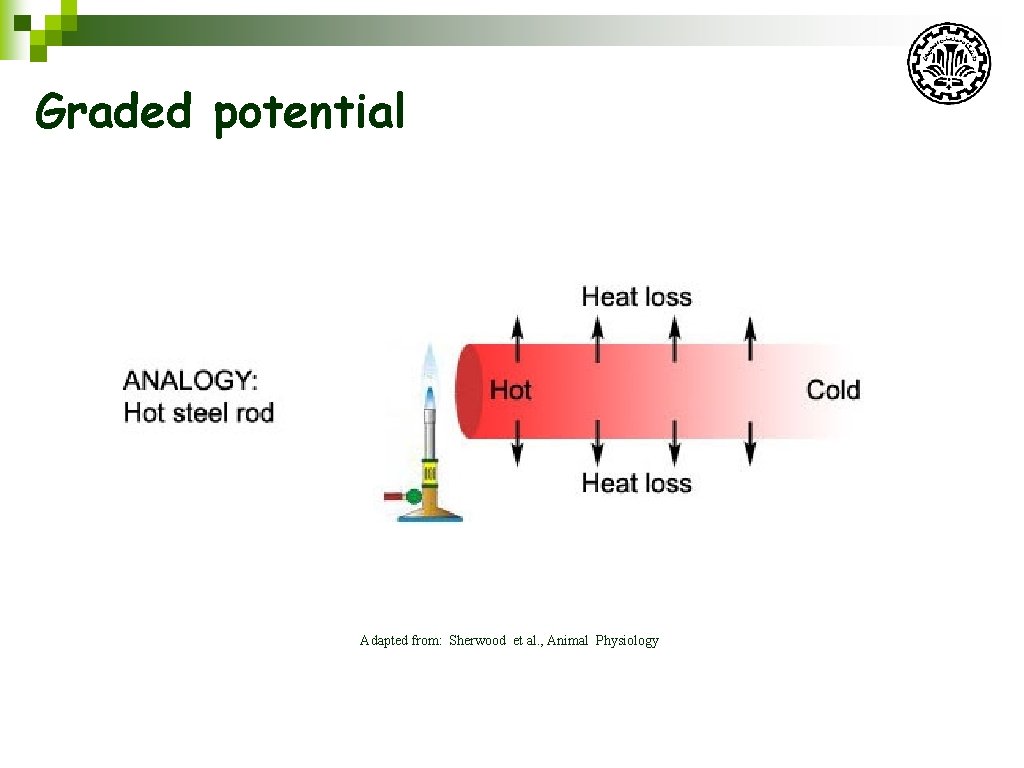
Graded potential Adapted from: Sherwood et al. , Animal Physiology
Graded potential The graded potentials are critically important to neurnal functions: Postsynaptic potentials Receptor potentials End-plate potentials Pacemaker potentials Slow-wave potential
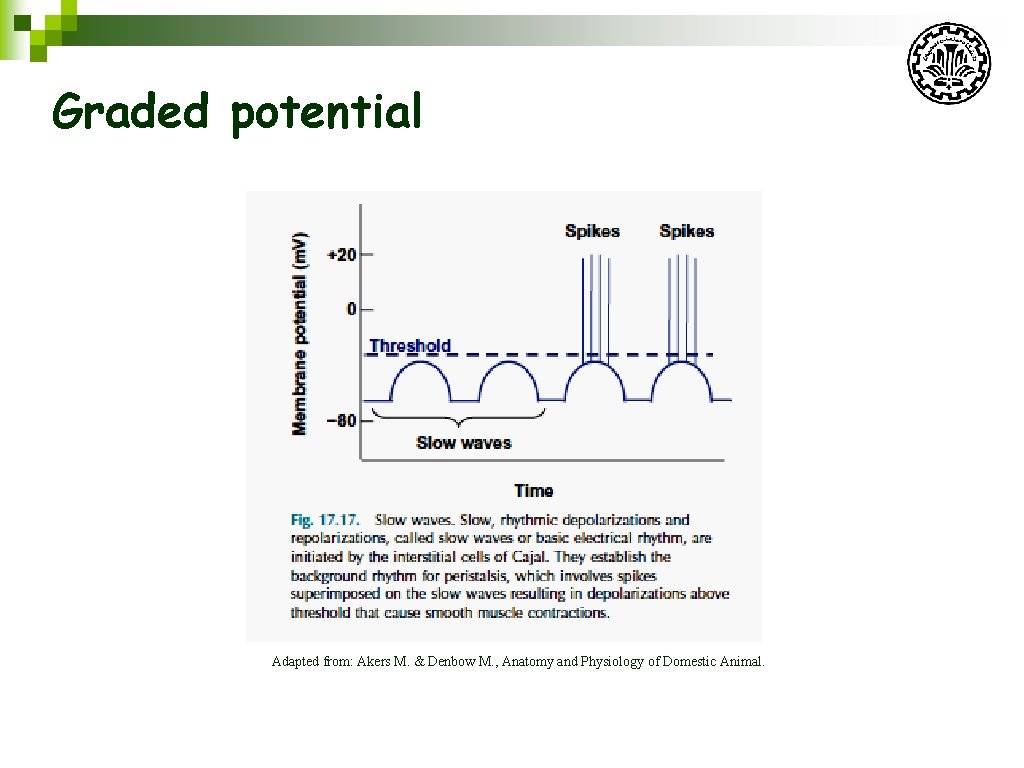
Graded potential Adapted from: Akers M. & Denbow M. , Anatomy and Physiology of Domestic Animal.
Action potential
Action potential
Action potential
Action potential
Action potential
Action potential
- Slides: 21