
Advanced Ovarian Cancer Introduction Ms K 46 F

- Slides: 24
Advanced Ovarian Cancer
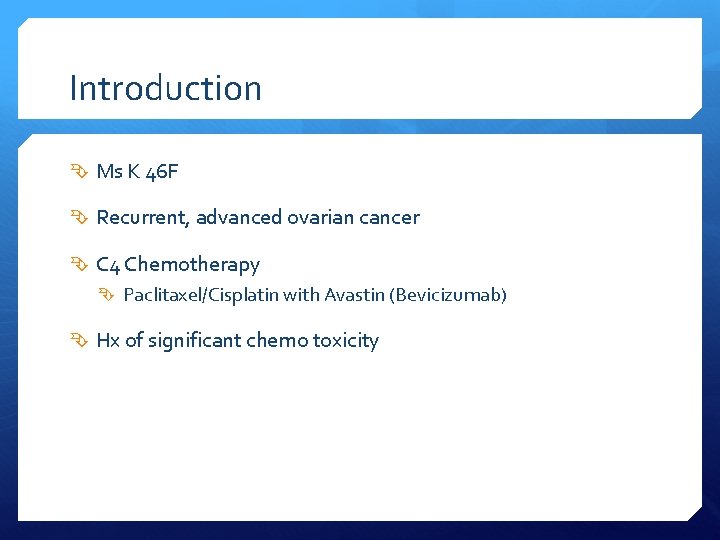
Introduction Ms K 46 F Recurrent, advanced ovarian cancer C 4 Chemotherapy Paclitaxel/Cisplatin with Avastin (Bevicizumab) Hx of significant chemo toxicity
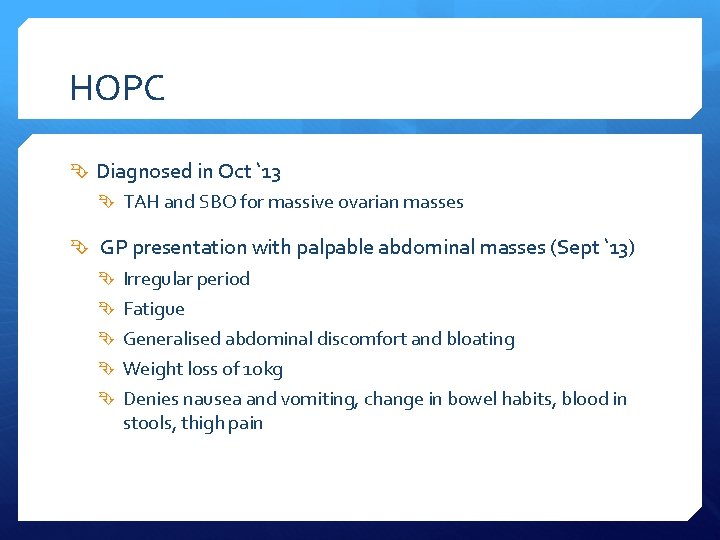
HOPC Diagnosed in Oct ‘ 13 TAH and SBO for massive ovarian masses GP presentation with palpable abdominal masses (Sept ‘ 13) Irregular period Fatigue Generalised abdominal discomfort and bloating Weight loss of 10 kg Denies nausea and vomiting, change in bowel habits, blood in stools, thigh pain
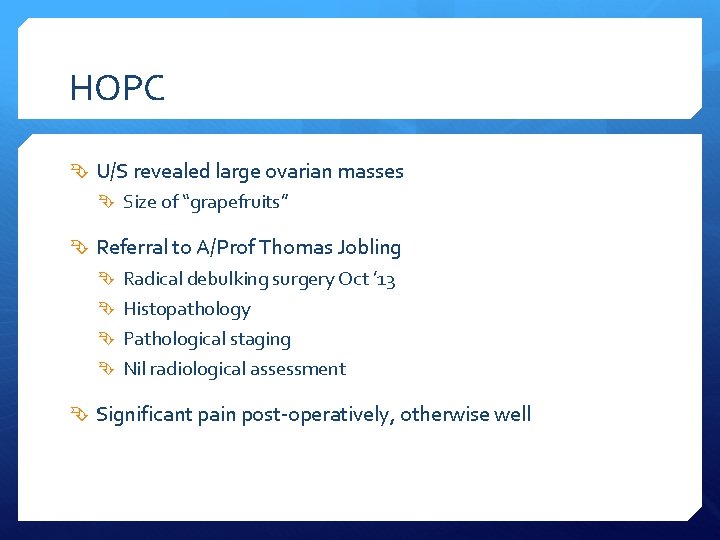
HOPC U/S revealed large ovarian masses Size of “grapefruits” Referral to A/Prof Thomas Jobling Radical debulking surgery Oct ’ 13 Histopathology Pathological staging Nil radiological assessment Significant pain post-operatively, otherwise well
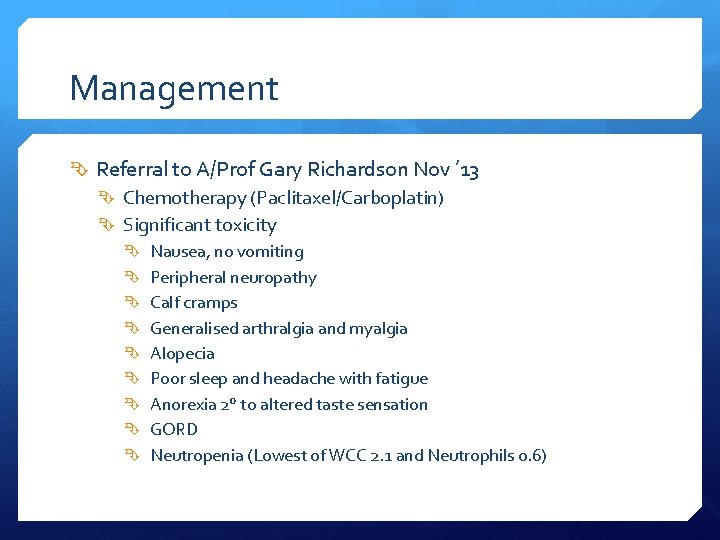
Management Referral to A/Prof Gary Richardson Nov ’ 13 Chemotherapy (Paclitaxel/Carboplatin) Significant toxicity Nausea, no vomiting Peripheral neuropathy Calf cramps Generalised arthralgia and myalgia Alopecia Poor sleep and headache with fatigue Anorexia 2° to altered taste sensation GORD Neutropenia (Lowest of WCC 2. 1 and Neutrophils 0. 6)
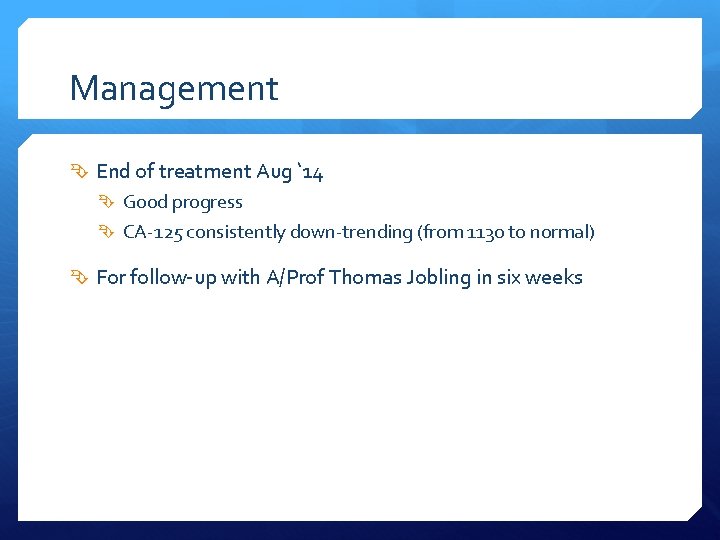
Management End of treatment Aug ‘ 14 Good progress CA-125 consistently down-trending (from 1130 to normal) For follow-up with A/Prof Thomas Jobling in six weeks
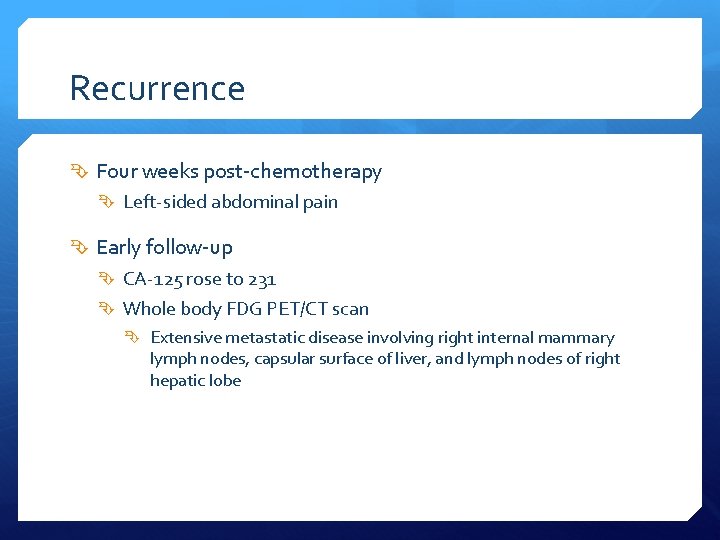
Recurrence Four weeks post-chemotherapy Left-sided abdominal pain Early follow-up CA-125 rose to 231 Whole body FDG PET/CT scan Extensive metastatic disease involving right internal mammary lymph nodes, capsular surface of liver, and lymph nodes of right hepatic lobe
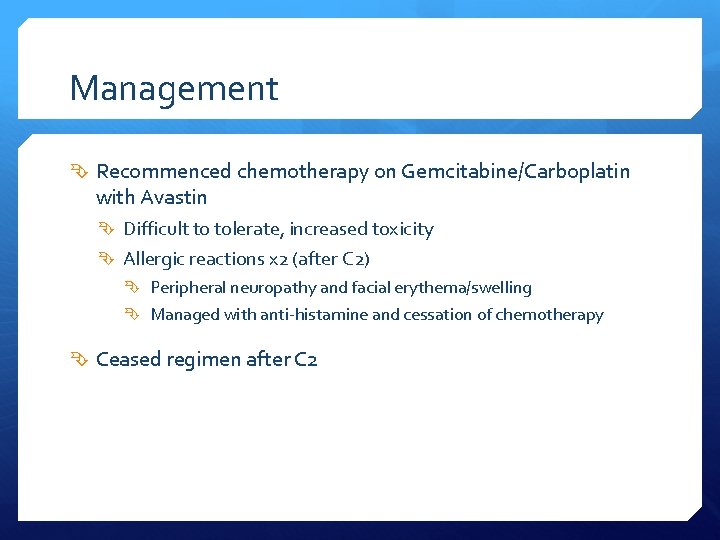
Management Recommenced chemotherapy on Gemcitabine/Carboplatin with Avastin Difficult to tolerate, increased toxicity Allergic reactions x 2 (after C 2) Peripheral neuropathy and facial erythema/swelling Managed with anti-histamine and cessation of chemotherapy Ceased regimen after C 2
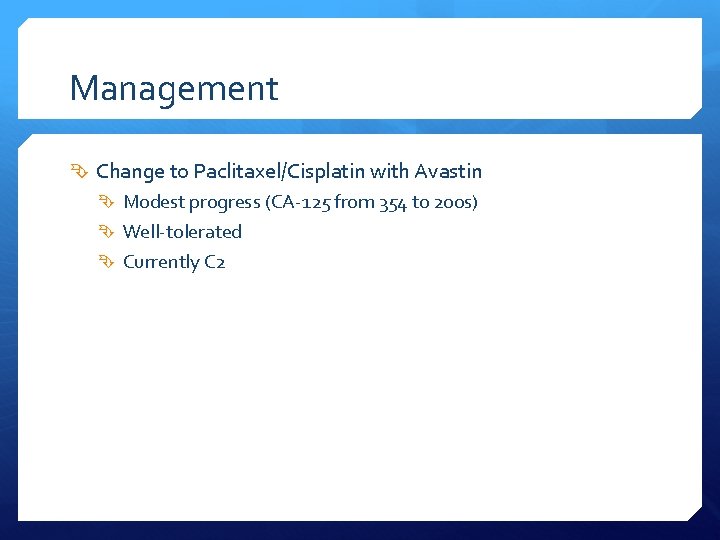
Management Change to Paclitaxel/Cisplatin with Avastin Modest progress (CA-125 from 354 to 200 s) Well-tolerated Currently C 2
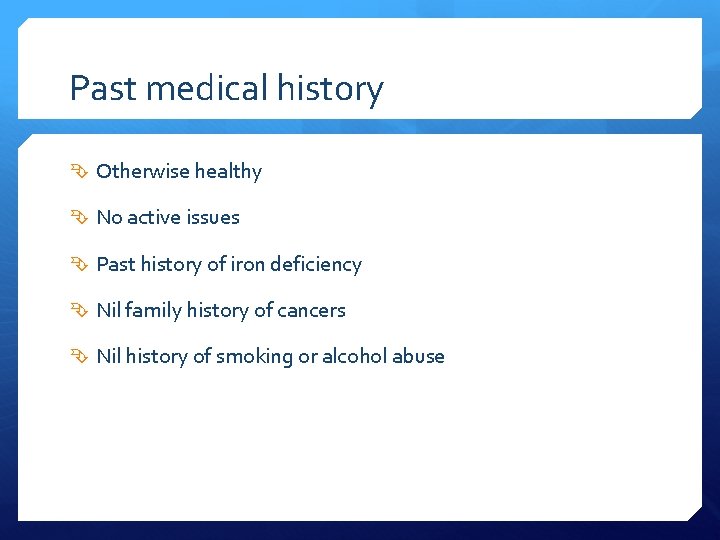
Past medical history Otherwise healthy No active issues Past history of iron deficiency Nil family history of cancers Nil history of smoking or alcohol abuse
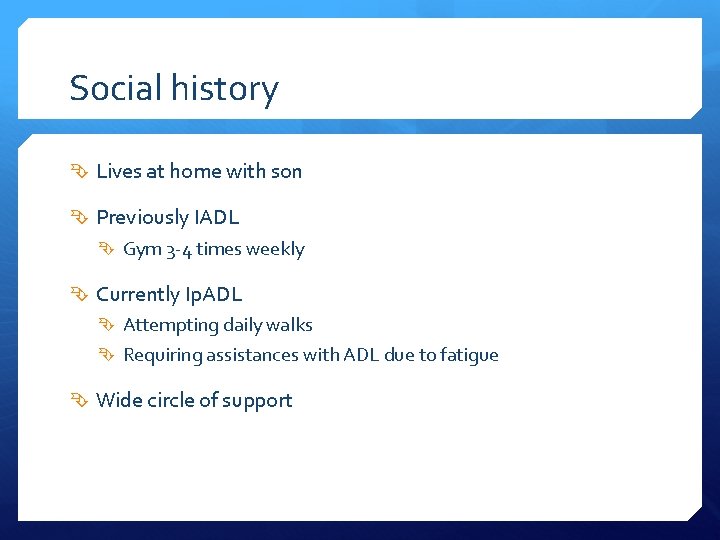
Social history Lives at home with son Previously IADL Gym 3 -4 times weekly Currently Ip. ADL Attempting daily walks Requiring assistances with ADL due to fatigue Wide circle of support
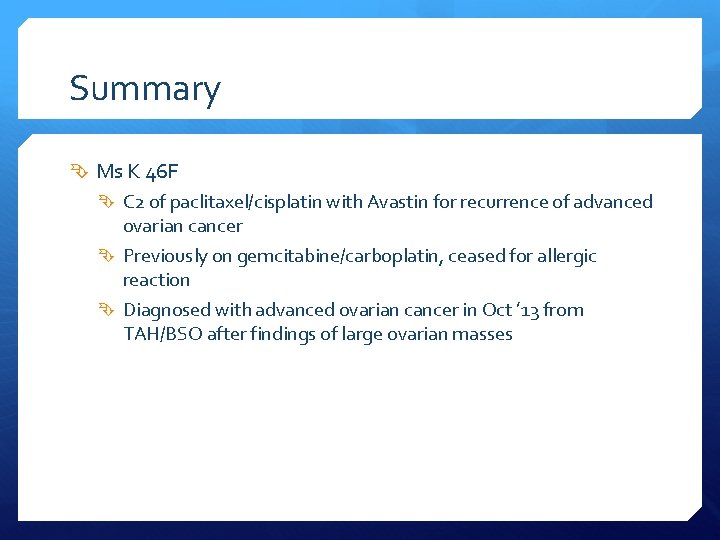
Summary Ms K 46 F C 2 of paclitaxel/cisplatin with Avastin for recurrence of advanced ovarian cancer Previously on gemcitabine/carboplatin, ceased for allergic reaction Diagnosed with advanced ovarian cancer in Oct ’ 13 from TAH/BSO after findings of large ovarian masses
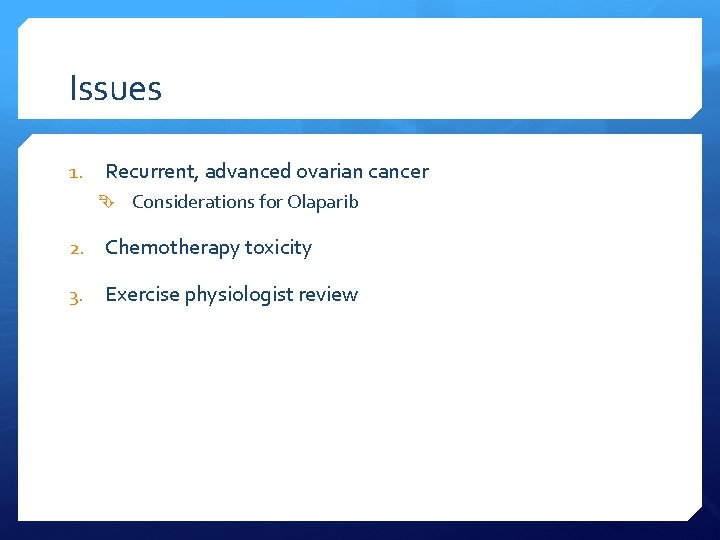
Issues 1. Recurrent, advanced ovarian cancer Considerations for Olaparib 2. Chemotherapy toxicity 3. Exercise physiologist review
Olaparib and Ovarian Cancer
Introduction Monotherapy in patients with deleterious germ-line BRCA- mutated, advanced ovarian cancer Treated with three or more prior lines of chemotherapy
Mechanisms of action Poly ADP-ribose polymerase (PARP) inhibitor PARP involved in normal cellular homeostasis (DNA transcription, cell cycle regulation and DNA repair) Inhibit growth of select tumour cell lines, and decreased tumour growth Increased cytotoxicity and anti-tumour activity in cell lines and tumour models with BRCA mutations
Dosing 400 mg BD PO Dose reduction to 200 mg BD then 100 mg BD in those experiencing adverse events
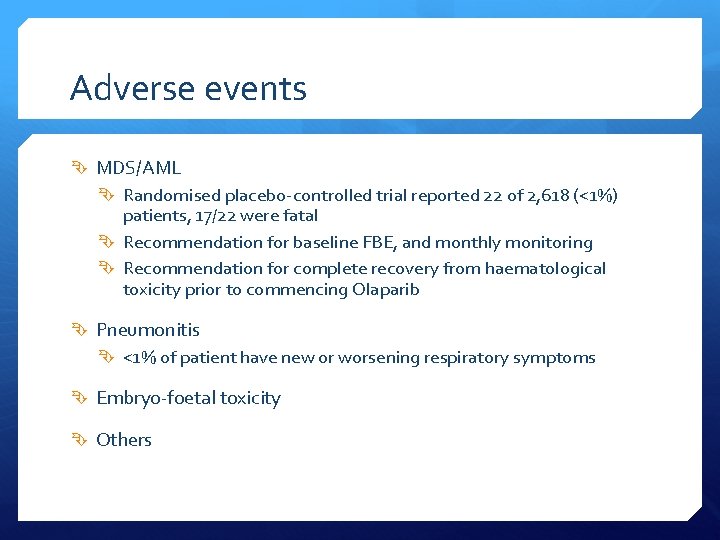
Adverse events MDS/AML Randomised placebo-controlled trial reported 22 of 2, 618 (<1%) patients, 17/22 were fatal Recommendation for baseline FBE, and monthly monitoring Recommendation for complete recovery from haematological toxicity prior to commencing Olaparib Pneumonitis <1% of patient have new or worsening respiratory symptoms Embryo-foetal toxicity Others
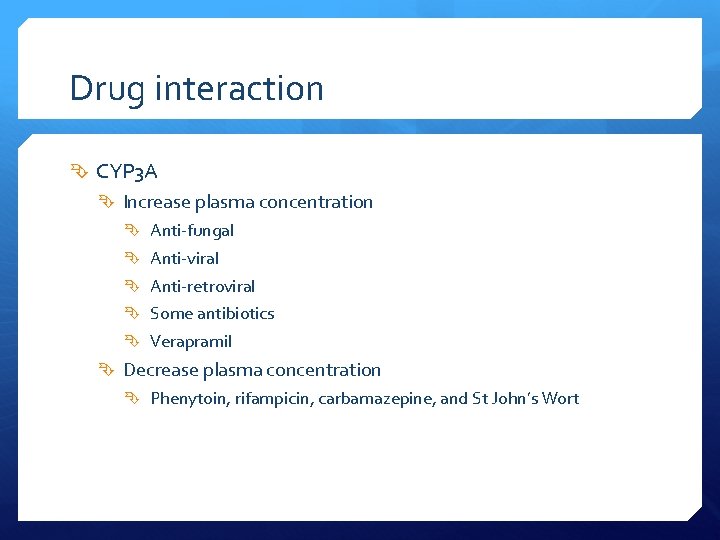
Drug interaction CYP 3 A Increase plasma concentration Anti-fungal Anti-viral Anti-retroviral Some antibiotics Verapramil Decrease plasma concentration Phenytoin, rifampicin, carbamazepine, and St John’s Wort
Avastin and Ovarian Cancer
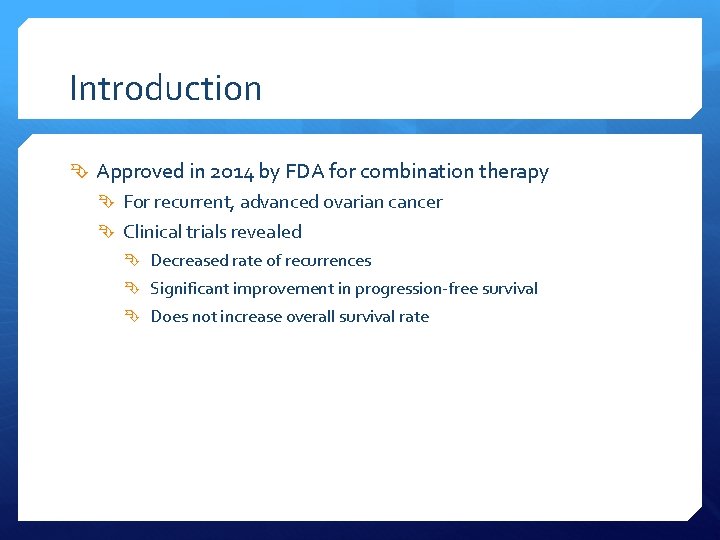
Introduction Approved in 2014 by FDA for combination therapy For recurrent, advanced ovarian cancer Clinical trials revealed Decreased rate of recurrences Significant improvement in progression-free survival Does not increase overall survival rate
Mechanism of action Monoclonal antibody Anti-angiogenic agent Binds vascular endothelial growth factors Inhibits tumour progression via Slowing or inhibiting tumour growth by restricting neo- angiogenesis Increasing chemotherapeutic efficacy by stabilising tumour blood vessels
Adverse events Infusion reaction Impaired wound healing Increased risk of bleeding and thromboembolic events Increased risk of CCF Hypertension Proteinura Rarely, gastric perforation and formation of fistula or abscess Rarely, reversible posterior leukoencephalopathy syndrome
Drug interactions Anthracycline Combined risk of CCF Carboplatin and paclitaxel Reduced half-life Any drugs that interfere with clotting