
Advanced Operating Systems Zeinab Zali Isfahan University of
Advanced Operating Systems Zeinab Zali Isfahan University of Technology
zali. iut. ac. ir zali@cc. iut. ac. ir A time for you in my office: Sunday 11 -12: 30 Tuesday 11 -12: 30 RESEARCH INTERESTS Future Internet and network architectures Operating Systems, Distributed Systems Cloud Computing Infrastructures and Big Data processing Natural Language Processing, Machine Translation

Course Resources Distributed systems: concepts and design, George Coulouris, Jean Dollimore, Tim Kindberg and Gordon Blair, Fifth Edition, published by Addison Wesley, May 2011 Modern Operating Systems: Design and implementations, Andrew S. Tanenbaum (Author), Herbert th Bos, 4 edition, 2014 Distributed Systems, Maarten van Steen, Andrew S. Tanenbaum, 3 th edition, 2017 papers
Evaluation Midterm 35% Final 35% Excercises, project and seminar 30%
Prerequisites Network Operating System Programming
Topics Introduction System Model Inter Process Communication Remote Invocation Group Communication Clock Distributed Mutual Exclusion Transactions, Distributed Transactions File Systems Distributed File Systems
Why Take this course?
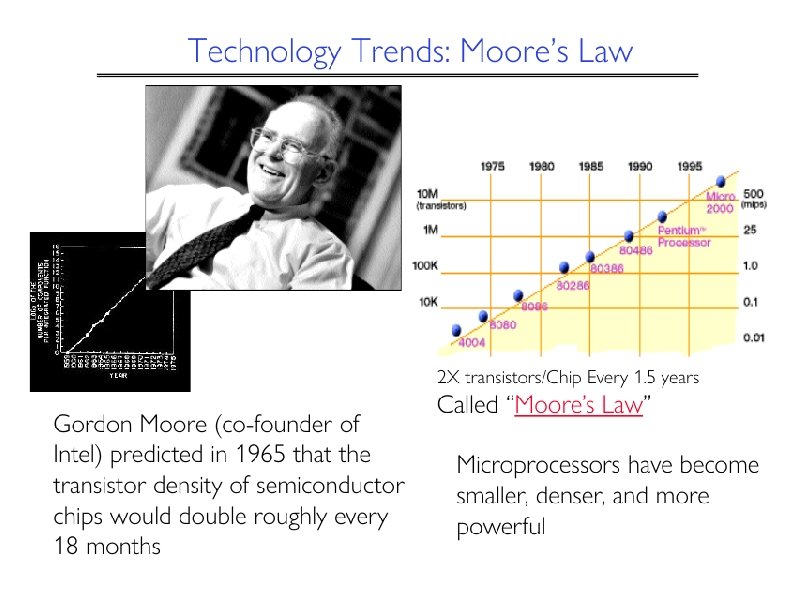
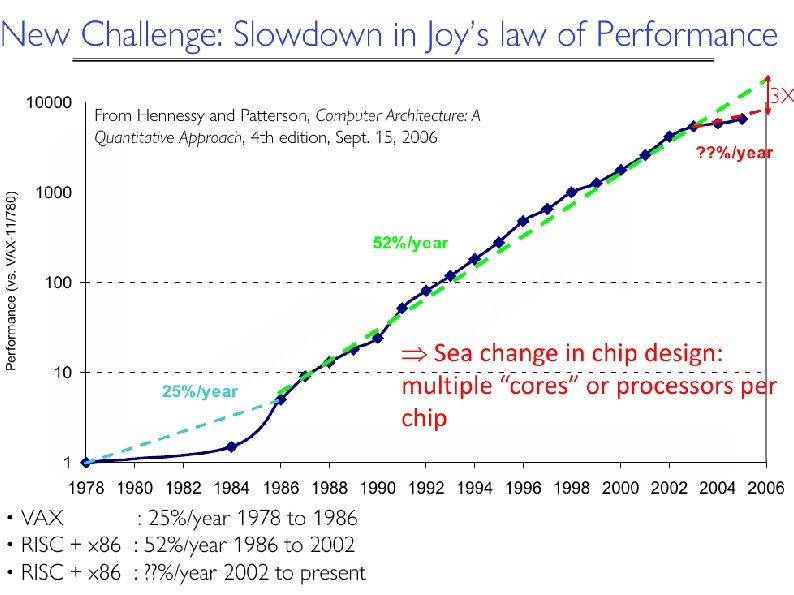
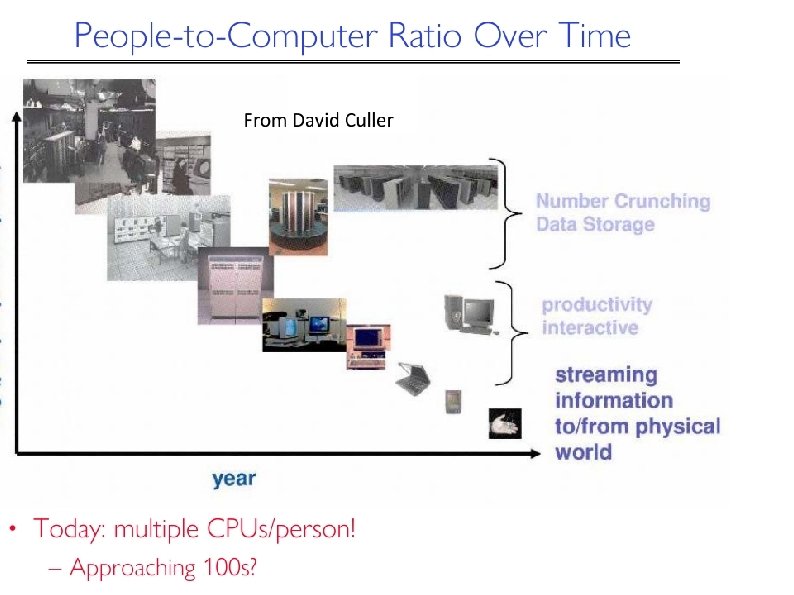
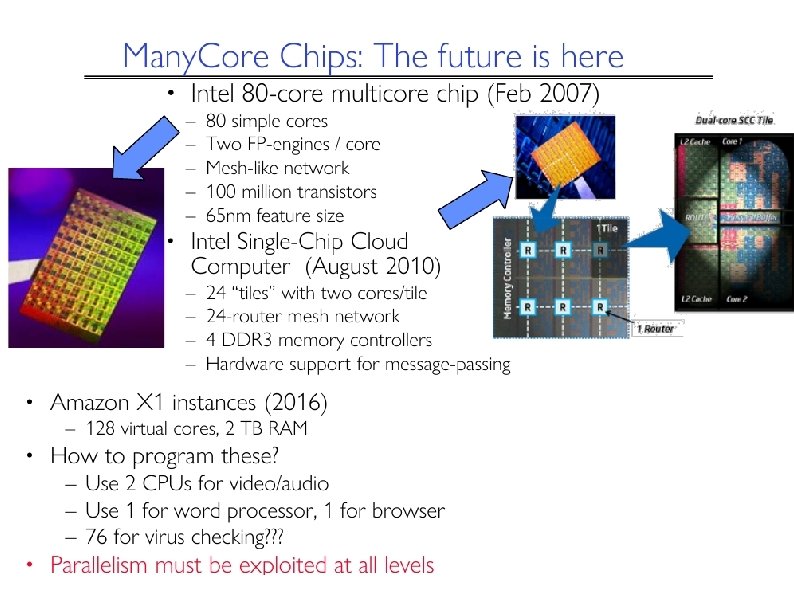
Why take this course? Huge amounts of computing are now distributed. . . A few years ago, Intel threw its hands up in the air: couldn’t increase GHz much more without CPU temperatures reaching solar levels But we can still stuff more transistors (Moore’s Law) Result: Multi-core and GPUs. Result 2: Your computer has become a parallel/distributed system. In a decade, it may have 128 cores.
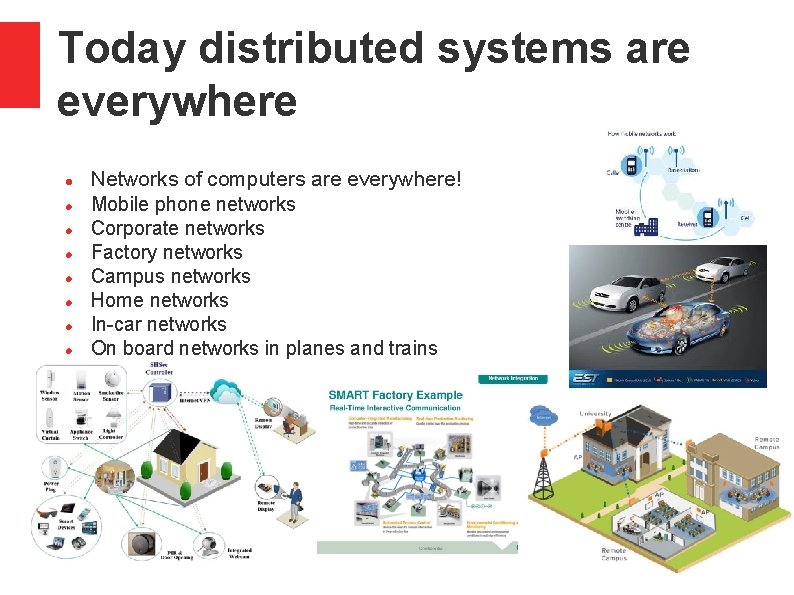
Today distributed systems are everywhere Networks of computers are everywhere! Mobile phone networks Corporate networks Factory networks Campus networks Home networks In-car networks On board networks in planes and trains
Our goals in this course To address the issues to be resolved in the design of distributed systems and describing successful approaches in the form of abstract models, algorithms and detailed case studies of widely used systems.
Definition A system in which hardware or software components located at networked computers communicate and coordinate their actions only by passing messages. [Coulouris] “A distributed system is a collection of independent computers that appear to the users of the system as a single computer. ” [Tanenbaum] The prime motivation for constructing and using distributed systems from a desire to share resources: Hardware or software
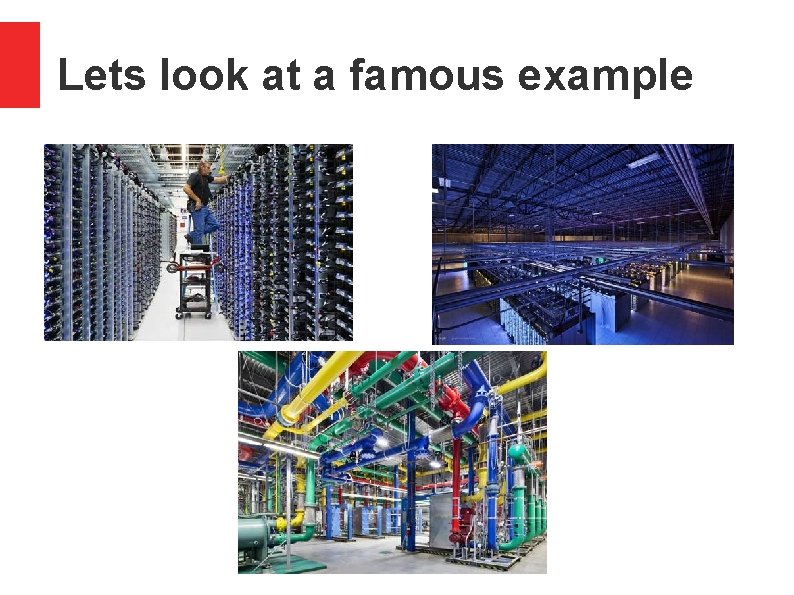
Lets look at a famous example
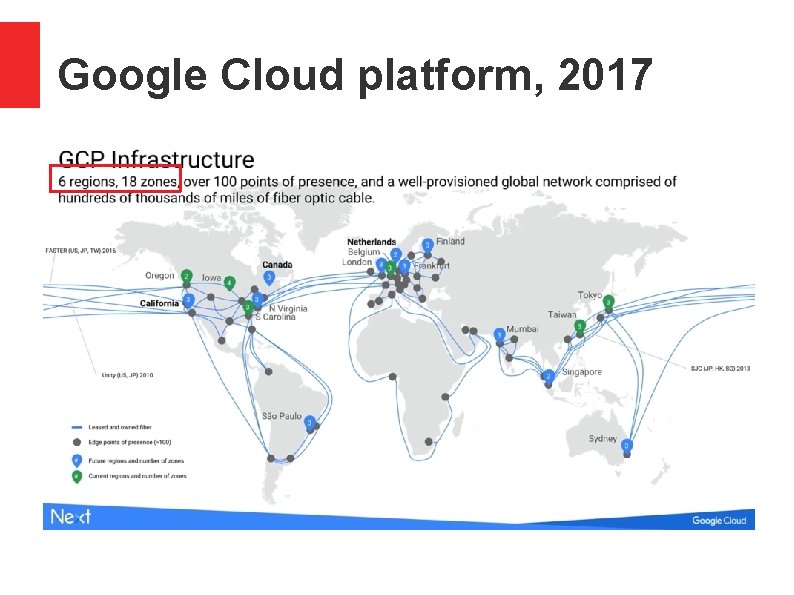
Google Cloud platform, 2017
Google Cloud platform, 2019 As of 2019, Google Cloud Platform is available in 20 regions and 61 zones Each region is an independent geographic area that consists of zones. A zone is a deployment area for Google Cloud Platform resources within a region.
Google Distributed System(DS) Services? Web Search High performance computation (Hadoop) Google Docs Storage (Google Drive) Streaming and Video (Youtube) Maps
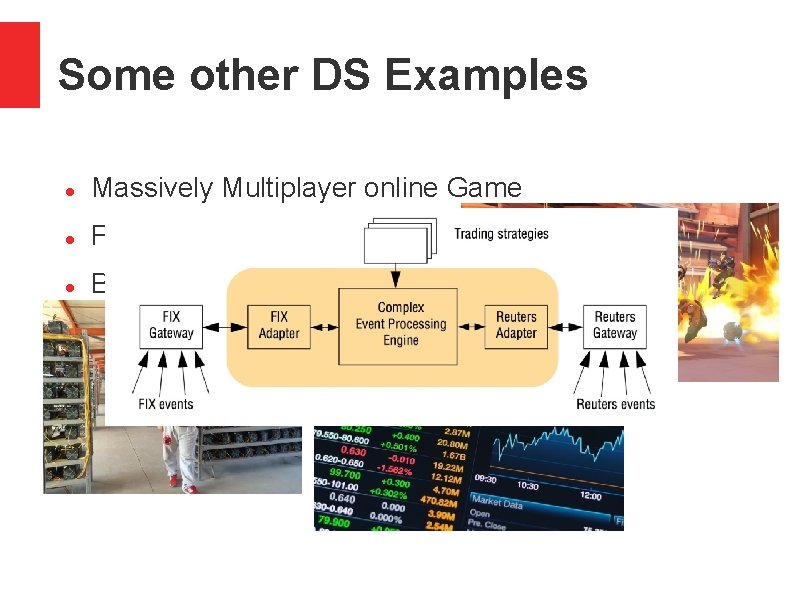
Some other DS Examples Massively Multiplayer online Game Financial trading Bitcoin
DS Characteristics (I) Concurrency: concurrent program execution on different nodes is the norm in DS Accessing and modifying the shared resources are problematic No global clock Some algorithms are based on clock synchronization To know the global time (not local time) of an event in a computer
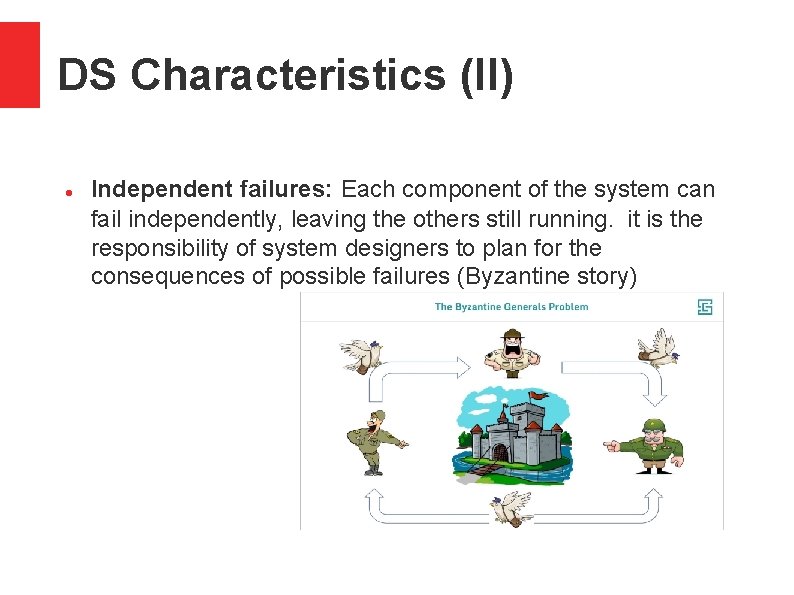
DS Characteristics (II) Independent failures: Each component of the system can fail independently, leaving the others still running. it is the responsibility of system designers to plan for the consequences of possible failures (Byzantine story)
DS vs Networks A computer network is an interconnected collection of autonomous computers able to exchange information Network entities are visible and they are explicitly addressed (IP address). A distributed system consists of multiple autonomous computers in a computer network which is appeared to the user transparently The operating system automatically allocates jobs to processors, moves files among various computers without explicit user intervention.
Today trends related to DSs Pervasive networking Mobile and ubiquitous computing the performance of computing tasks while the user is on the move utilize resources that are conveniently nearby as they move around(location-aware or context-aware computing) Distributed multimedia systems Internal networks and Internet Io. T, Smart homes, Smart Cities Required: Suitable throughput or realtime streaming (Ex: Video conferencing) Distributed computing as a utility Storage and processing units outsides of our PCs Software services
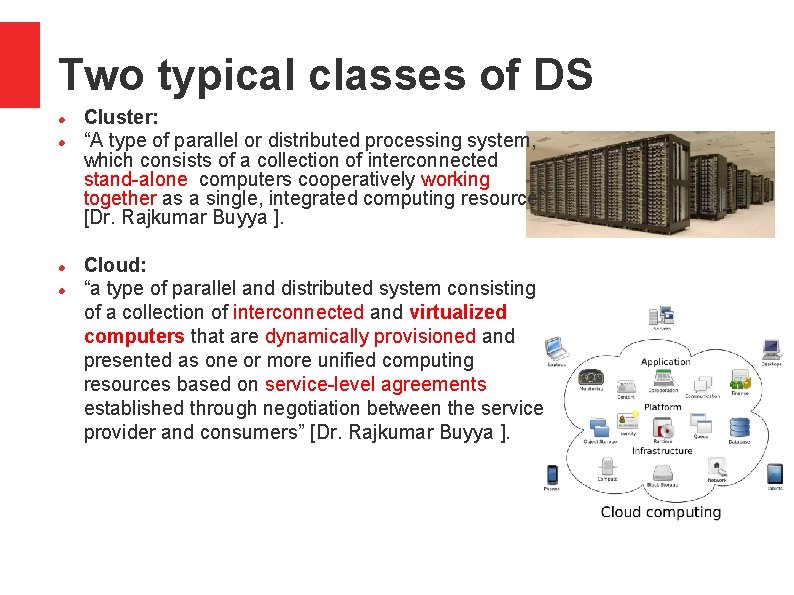
Two typical classes of DS Cluster: “A type of parallel or distributed processing system, which consists of a collection of interconnected stand-alone computers cooperatively working together as a single, integrated computing resource” [Dr. Rajkumar Buyya ]. Cloud: “a type of parallel and distributed system consisting of a collection of interconnected and virtualized computers that are dynamically provisioned and presented as one or more unified computing resources based on service-level agreements established through negotiation between the service provider and consumers” [Dr. Rajkumar Buyya ].
Challenge (I): Heterogeneity Differences in: Networks (protocols) computer hardware (byte ordering of integer) operating systems (different APIs) programming languages implementations by different developers Solutions: Middlewares: a software layer that provides a programming abstraction as well as masking the heterogeneity of the underlying networks, hardware, operating systems and programming language (Ex. CORBA) mobile codes (java applet, virtual machine approach, javascript)
Challeng (II): openness The degree to which new resource-sharing services can be added and be made available for use by a variety of client programs. To publish their key interfaces To publish their documents trough RFC
Challeng (III): security Confidentiality: protection against disclosure to unauthorized individuals Integrity: protection against alteration or corruption Availability: protection against interference with the means to access the resources Two typical security challenge: Denial of service attacks Security of mobile code
Challeng (IV): scalability A system is described as scalable if it will remain effective when there is a significant increase in the number of resources and the number of users. Controlling the cost of physical resources Controlling the performance loss Preventing software resources running out(lack of IPv 4 addresses) Avoiding performance bottlenecks
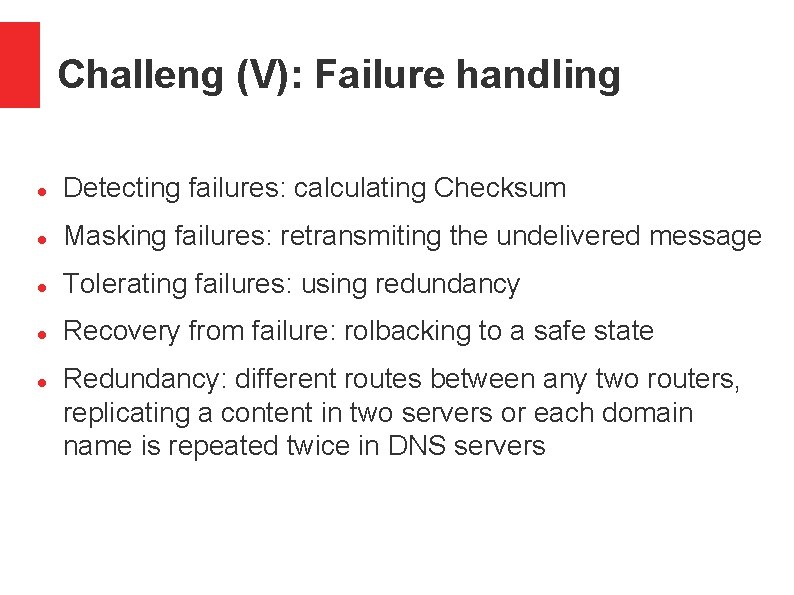
Challeng (V): Failure handling Detecting failures: calculating Checksum Masking failures: retransmiting the undelivered message Tolerating failures: using redundancy Recovery from failure: rolbacking to a safe state Redundancy: different routes between any two routers, replicating a content in two servers or each domain name is repeated twice in DNS servers
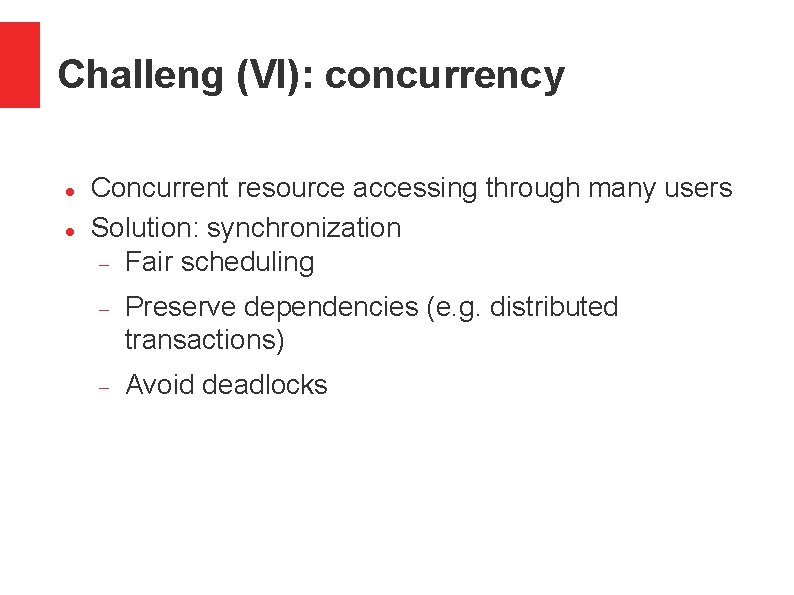
Challeng (VI): concurrency Concurrent resource accessing through many users Solution: synchronization Fair scheduling Preserve dependencies (e. g. distributed transactions) Avoid deadlocks
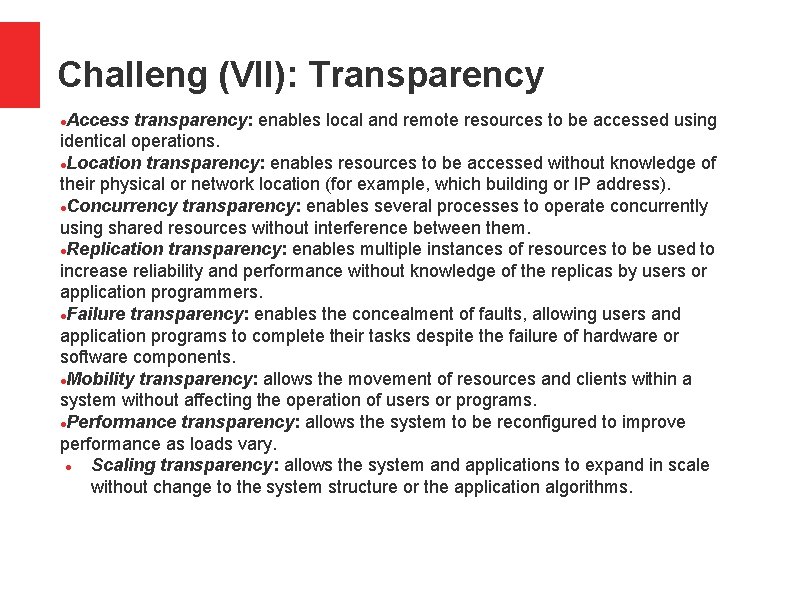
Challeng (VII): Transparency Access transparency: enables local and remote resources to be accessed using identical operations. Location transparency: enables resources to be accessed without knowledge of their physical or network location (for example, which building or IP address). Concurrency transparency: enables several processes to operate concurrently using shared resources without interference between them. Replication transparency: enables multiple instances of resources to be used to increase reliability and performance without knowledge of the replicas by users or application programmers. Failure transparency: enables the concealment of faults, allowing users and application programs to complete their tasks despite the failure of hardware or software components. Mobility transparency: allows the movement of resources and clients within a system without affecting the operation of users or programs. Performance transparency: allows the system to be reconfigured to improve performance as loads vary. Scaling transparency: allows the system and applications to expand in scale without change to the system structure or the application algorithms.
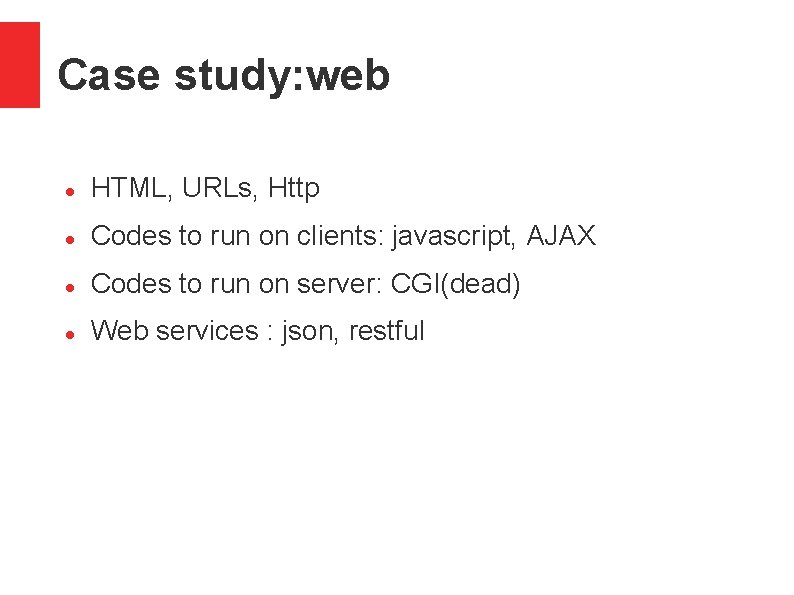
Case study: web HTML, URLs, Http Codes to run on clients: javascript, AJAX Codes to run on server: CGI(dead) Web services : json, restful
- Slides: 33