
Advanced Na PTAN Issues Why are Na PTAN

- Slides: 48
Advanced Na. PTAN Issues
Why are Na. PTAN & NPTG Important for EBSR? n n n Information from Na. PTAN & NPTG is vital for the identification of stops in EBSR & TXC It is important to make sure that both are accurate before EBSR is introduced Locations, names, correct links to localities etc. are all important to downstream systems Na. PTAN data is being used in ways and by systems that were never envisaged when they were originally created It is important to get consistency
Na. PTANs & Locality Data n n Both Na. PTAN & Locality data underpin travel information and EBSR systems EBSR is based on Na. PTANs t t t n n Route is defined using Na. PTANs Data needs to be accurate and consistent Na. PTANs & Localities often needs clarification during the process of conversion from paper to EBSR Links between Na. PTANs and Localities are important for correct positioning of stops, stop names, accurate trip planning (esp. by car) etc. ITO and Na. PTAN Viewer tools have been developed to help manage this data
ITO & Na. PTAN Viewer n n Both systems are available to those needing to use and manage Na. PTAN data ITO system t Mapping and Analysis tool t Maps Na. PTANs, Localities etc. t Provides a series of warnings where data appears to be inconsistent n Na. PTAN Viewer t Mapping system t Displays details of Na. PTANs, Localities etc.
AN EXAMPLE OF AN ITO REGIONAL SUMMARY
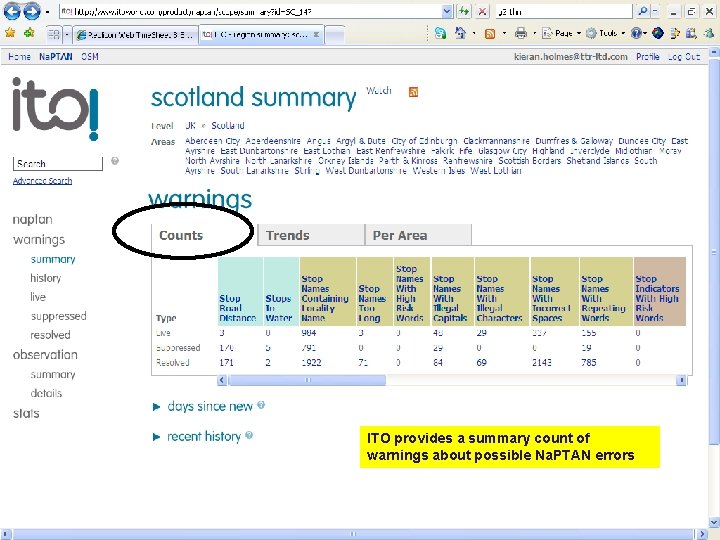
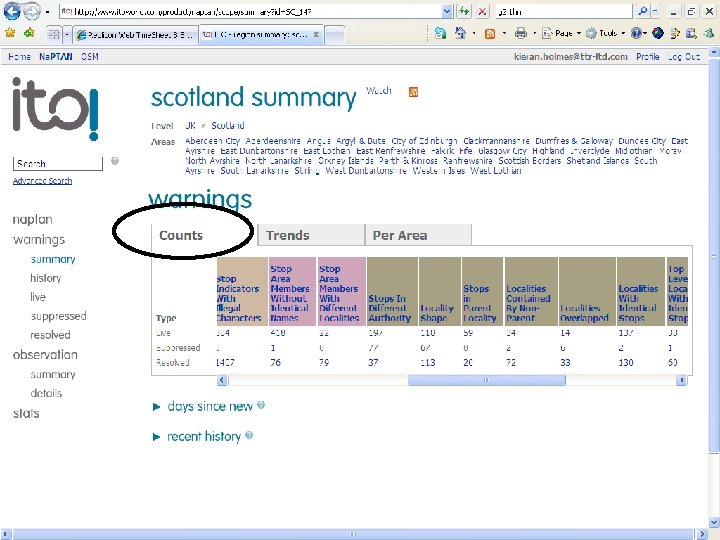
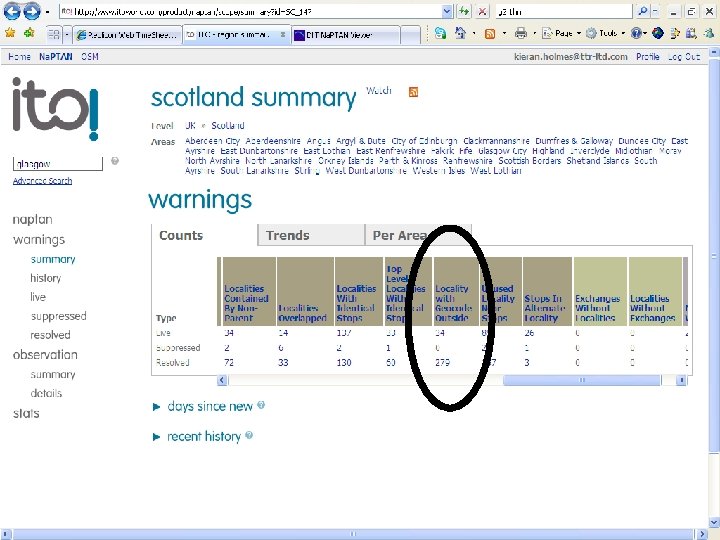
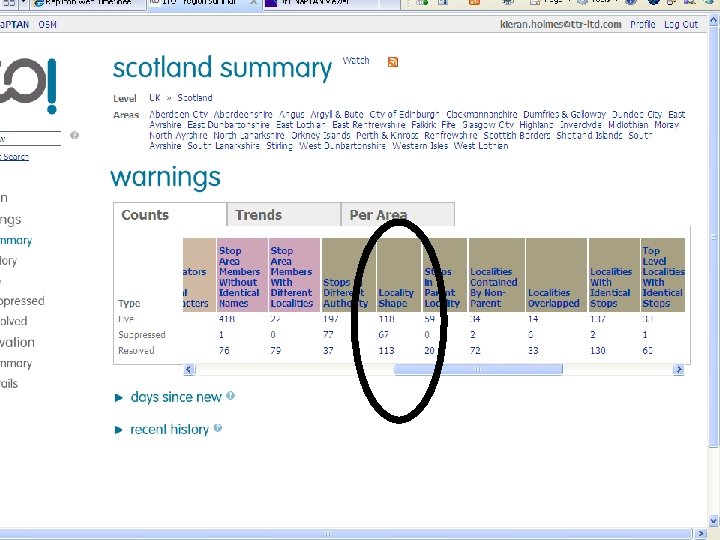
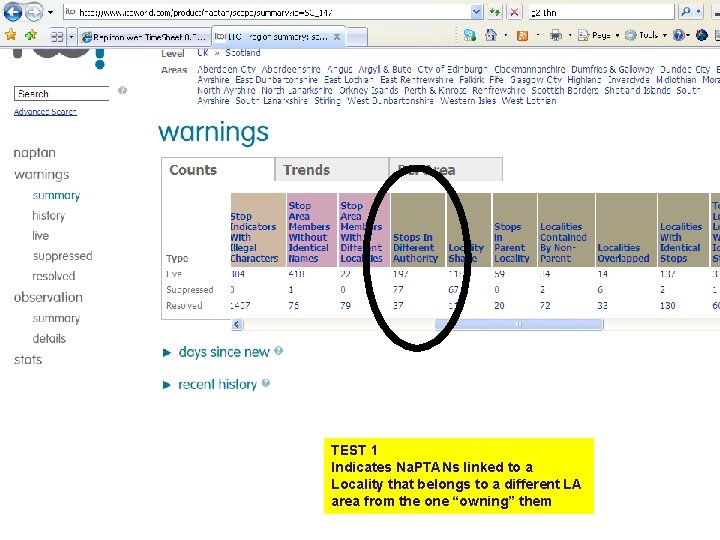
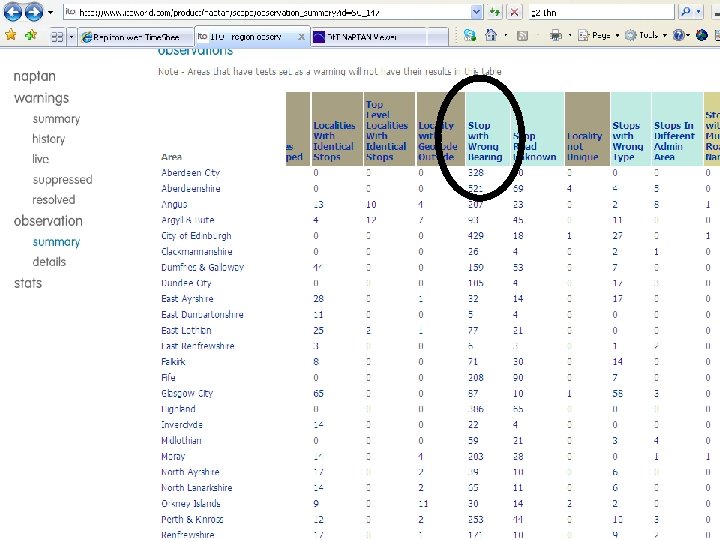
ITO provides a summary count of warnings about possible Na. PTAN errors
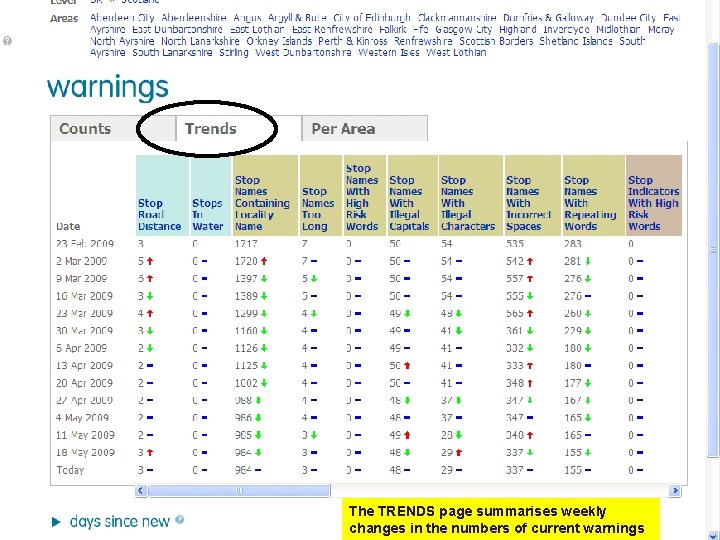
The TRENDS page summarises weekly changes in the numbers of current warnings
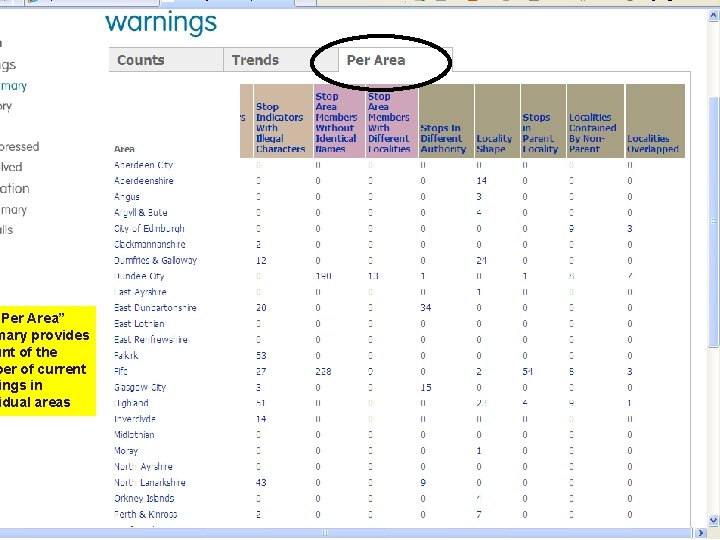
“Per Area” mary provides unt of the ber of current ings in idual areas
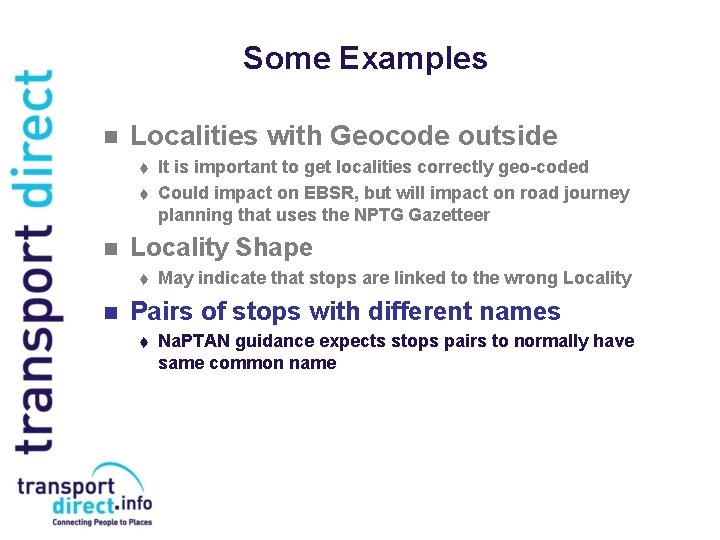
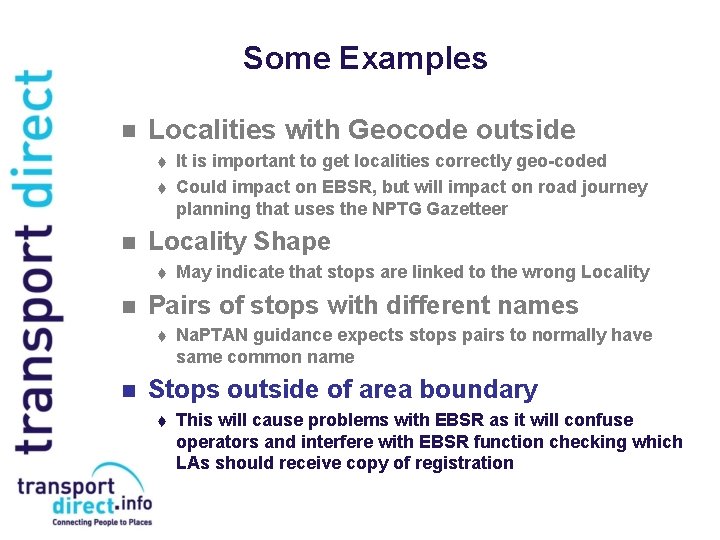
Some Examples n Localities with Geocode outside t t It is important to get localities correctly geo-coded Could impact on EBSR, but will impact on road journey planning that uses the NPTG Gazetteer
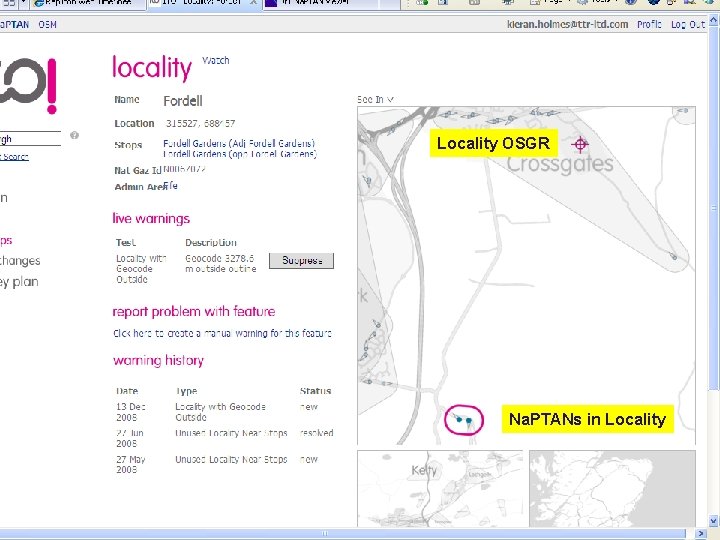
Locality OSGR Na. PTANs in Locality
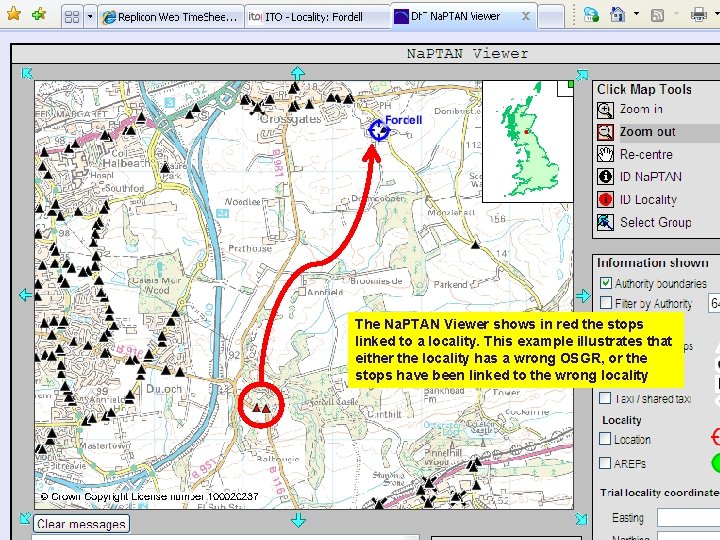
The Na. PTAN Viewer shows in red the stops linked to a locality. This example illustrates that either the locality has a wrong OSGR, or the stops have been linked to the wrong locality
Some Examples n Localities with Geocode outside t t n It is important to get localities correctly geo-coded Could impact on EBSR, but will impact on road journey planning that uses the NPTG Gazetteer Locality Shape t May indicate that stops are linked to the wrong Locality
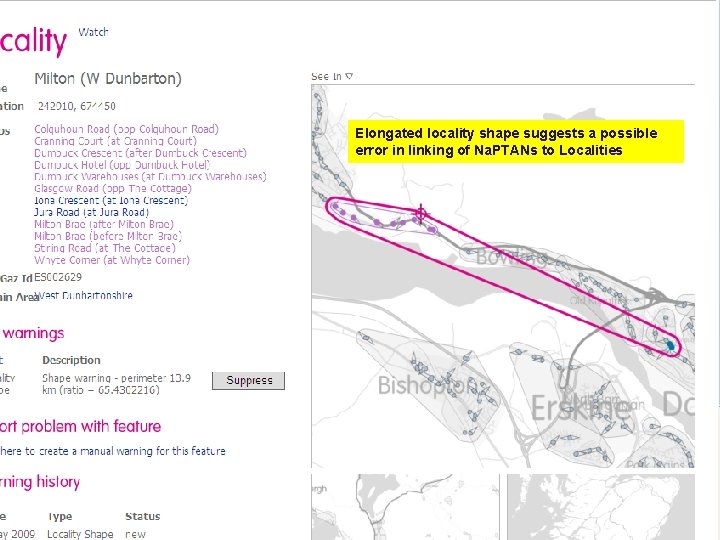
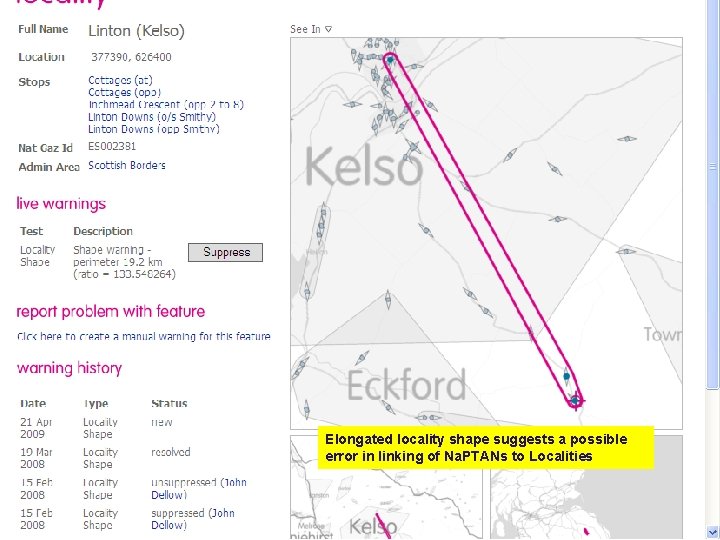
Elongated locality shape suggests a possible error in linking of Na. PTANs to Localities
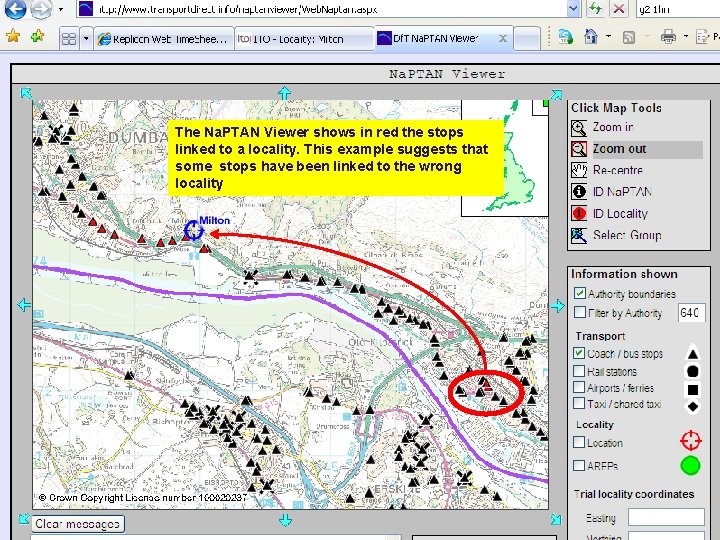
The Na. PTAN Viewer shows in red the stops linked to a locality. This example suggests that some stops have been linked to the wrong locality
Elongated locality shape suggests a possible error in linking of Na. PTANs to Localities
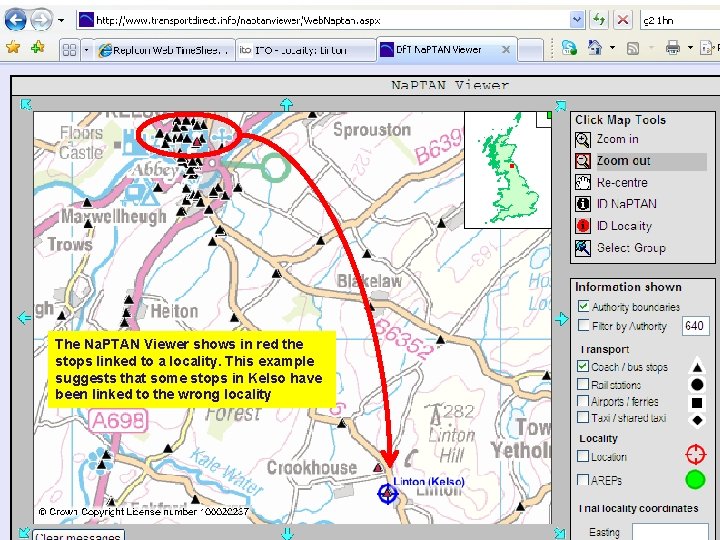
The Na. PTAN Viewer shows in red the stops linked to a locality. This example suggests that some stops in Kelso have been linked to the wrong locality
Some Examples n Localities with Geocode outside t t n Locality Shape t n It is important to get localities correctly geo-coded Could impact on EBSR, but will impact on road journey planning that uses the NPTG Gazetteer May indicate that stops are linked to the wrong Locality Pairs of stops with different names t Na. PTAN guidance expects stops pairs to normally have same common name
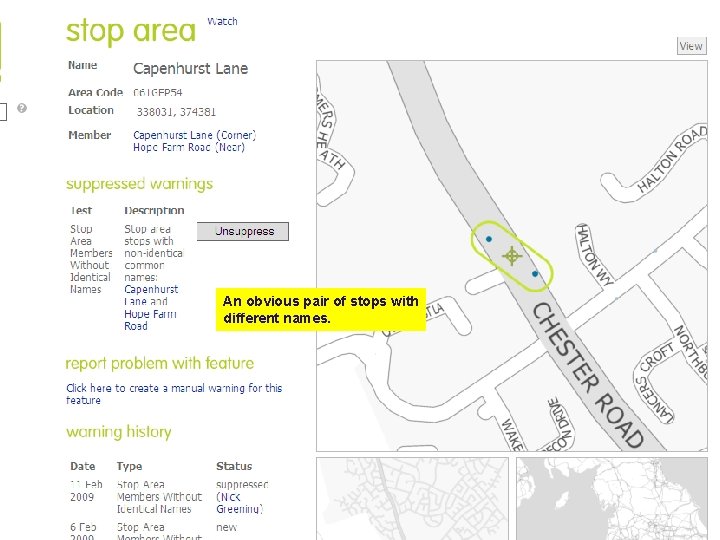
An obvious pair of stops with different names.
Some Examples n Localities with Geocode outside t t n Locality Shape t n May indicate that stops are linked to the wrong Locality Pairs of stops with different names t n It is important to get localities correctly geo-coded Could impact on EBSR, but will impact on road journey planning that uses the NPTG Gazetteer Na. PTAN guidance expects stops pairs to normally have same common name Stops outside of area boundary t This will cause problems with EBSR as it will confuse operators and interfere with EBSR function checking which LAs should receive copy of registration
TEST 1 Indicates Na. PTANs linked to a Locality that belongs to a different LA area from the one “owning” them
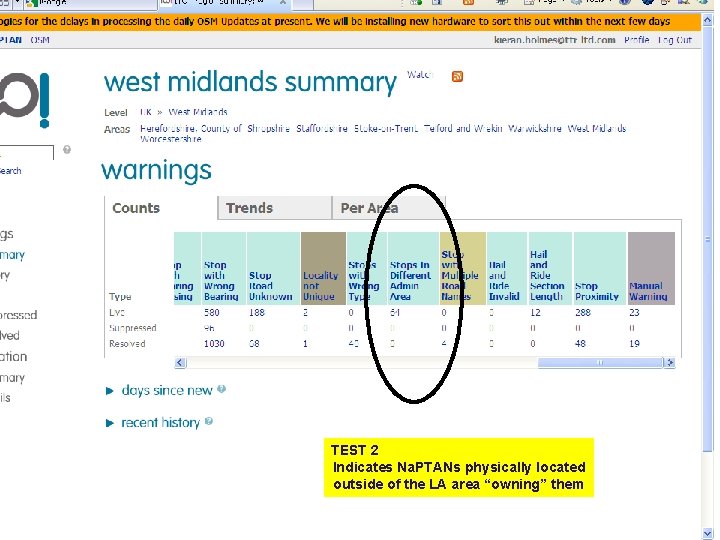
TEST 2 Indicates Na. PTANs physically located outside of the LA area “owning” them
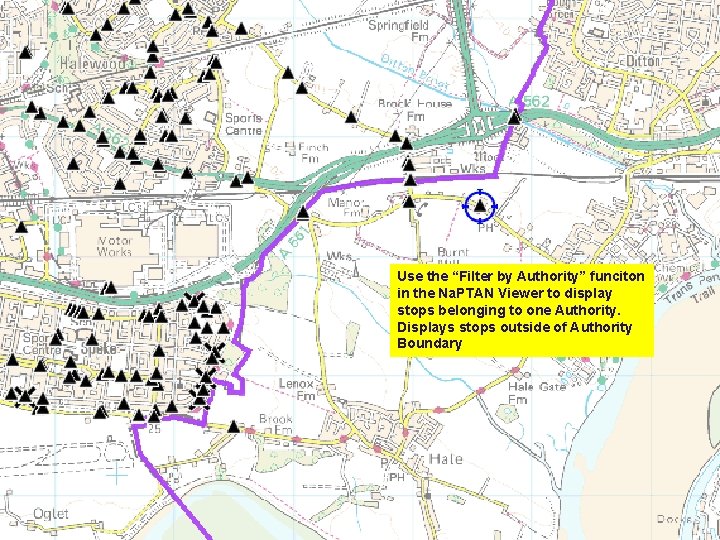
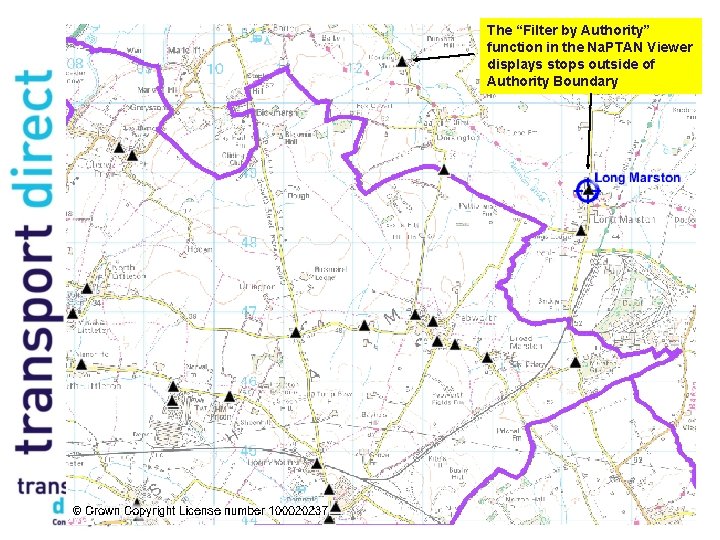
Use the “Filter by Authority” funciton in the Na. PTAN Viewer to display stops belonging to one Authority. Displays stops outside of Authority Boundary
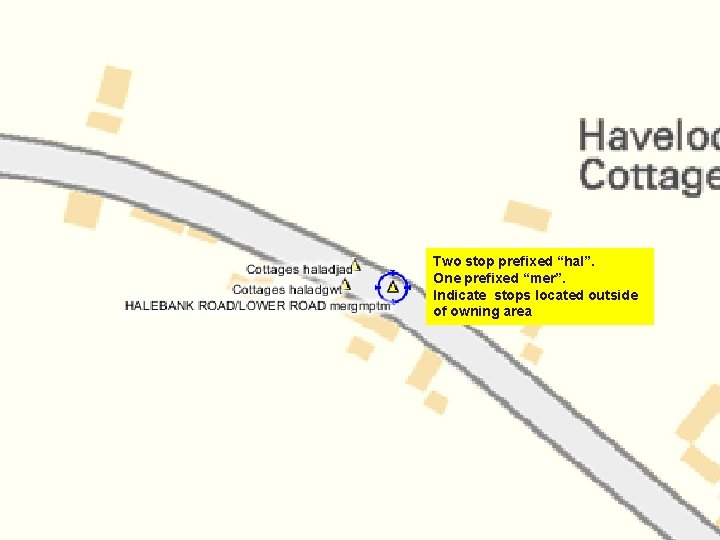
Two stop prefixed “hal”. One prefixed “mer”. Indicate stops located outside of owning area
The “Filter by Authority” function in the Na. PTAN Viewer displays stops outside of Authority Boundary
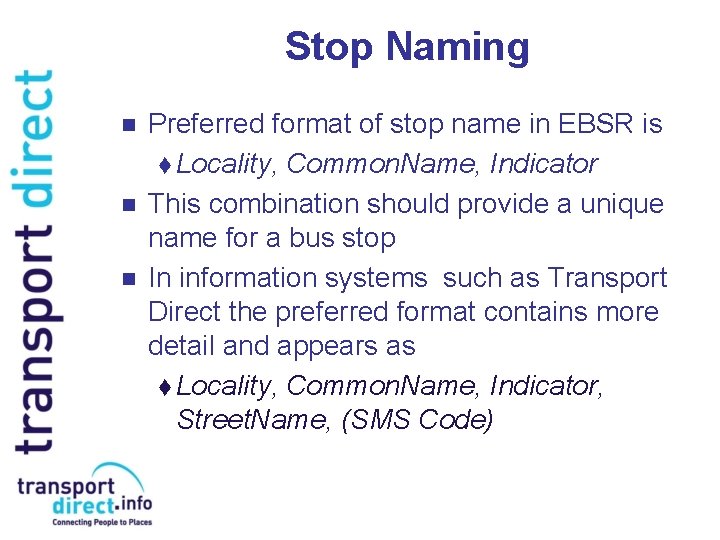
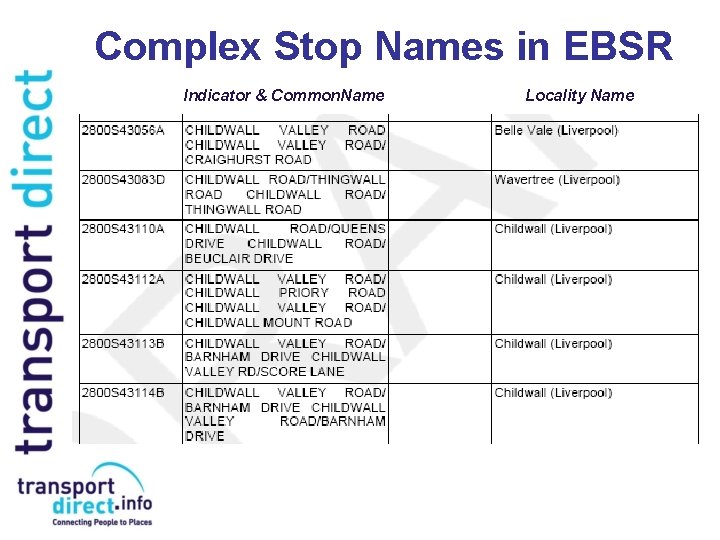
Stop Naming n n n Preferred format of stop name in EBSR is t Locality, Common. Name, Indicator This combination should provide a unique name for a bus stop In information systems such as Transport Direct the preferred format contains more detail and appears as t Locality, Common. Name, Indicator, Street. Name, (SMS Code)
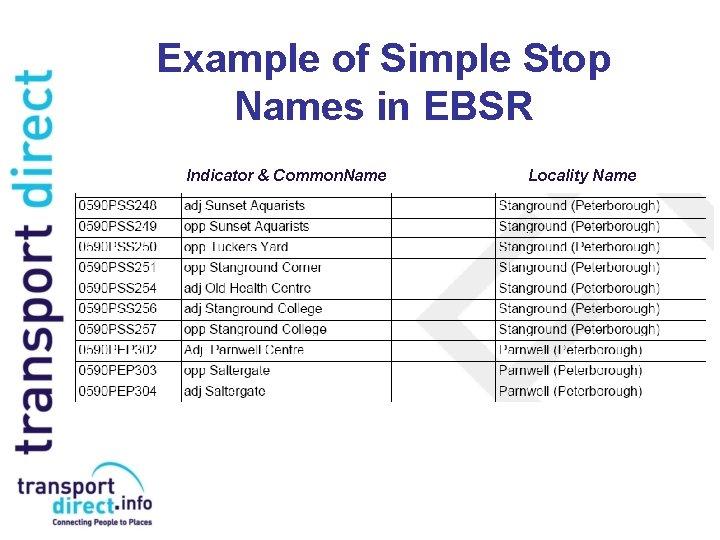
Example of Simple Stop Names in EBSR Indicator & Common. Name Locality Name
Complex Stop Names in EBSR Indicator & Common. Name Locality Name
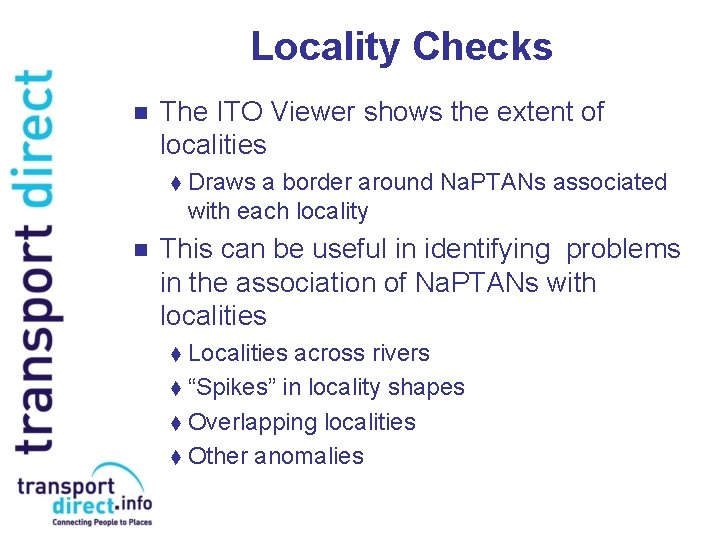
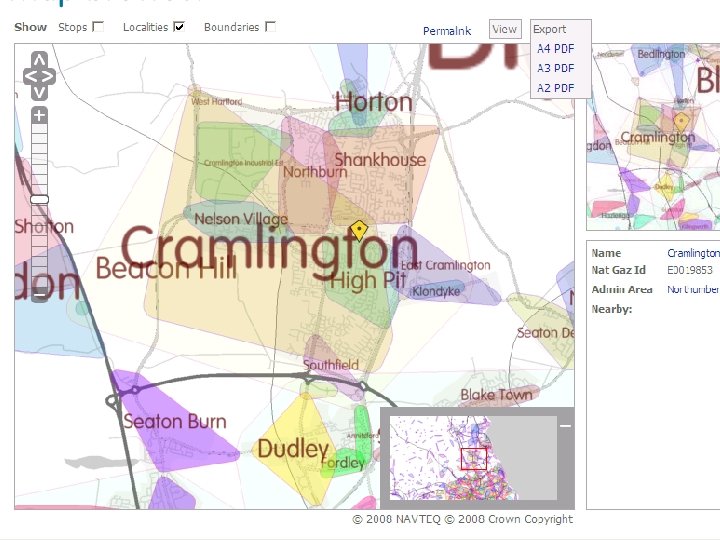
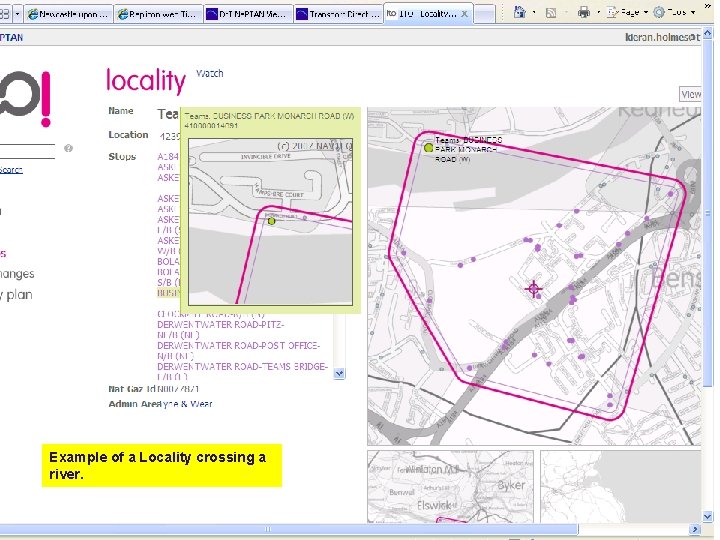
Locality Checks n The ITO Viewer shows the extent of localities t Draws a border around Na. PTANs associated with each locality n This can be useful in identifying problems in the association of Na. PTANs with localities t Localities across rivers t “Spikes” in locality shapes t Overlapping localities t Other anomalies
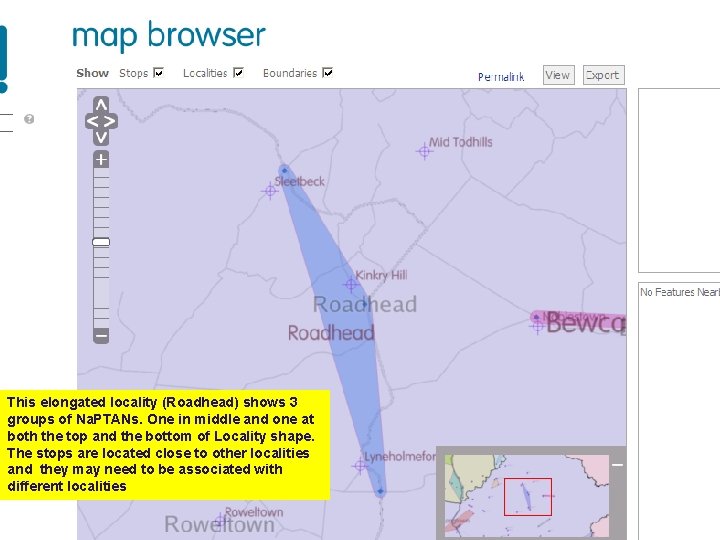
This elongated locality (Roadhead) shows 3 groups of Na. PTANs. One in middle and one at both the top and the bottom of Locality shape. The stops are located close to other localities and they may need to be associated with different localities
Example of a Locality crossing a river.
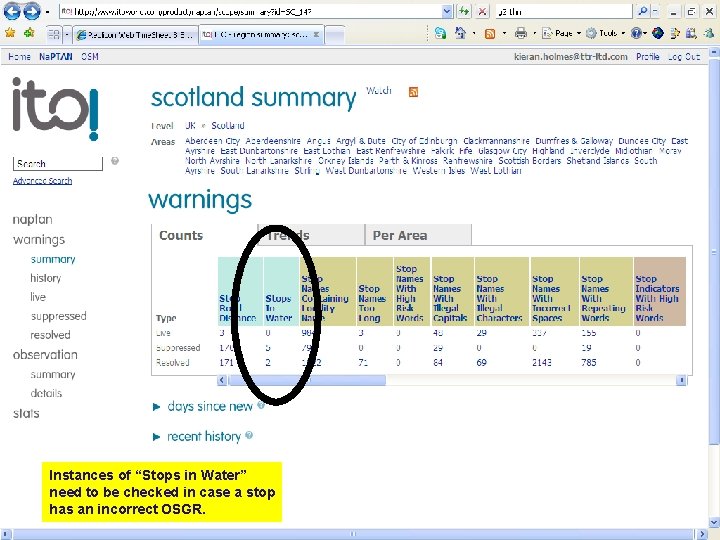
Instances of “Stops in Water” need to be checked in case a stop has an incorrect OSGR.
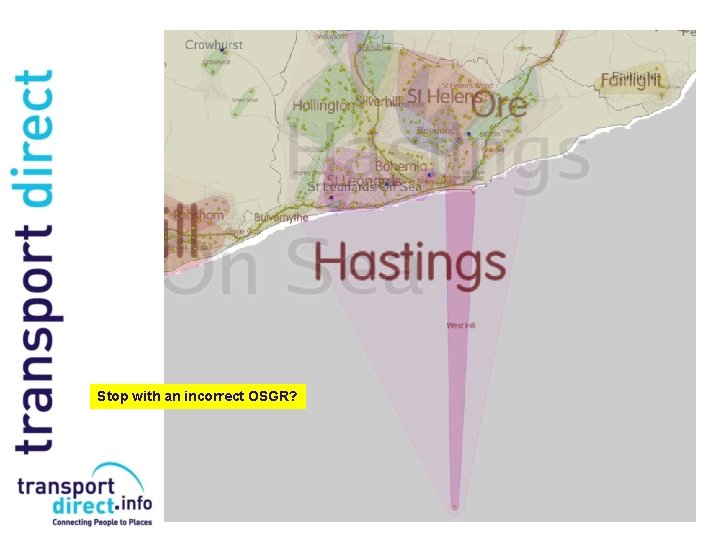
Stop with an incorrect OSGR?
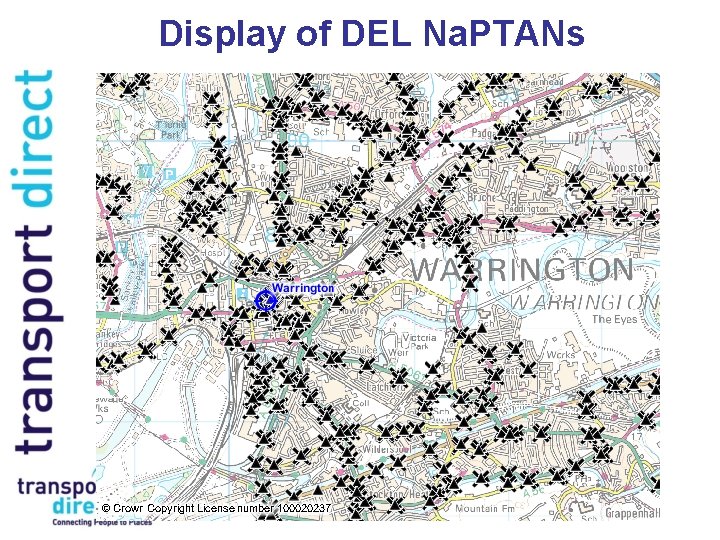
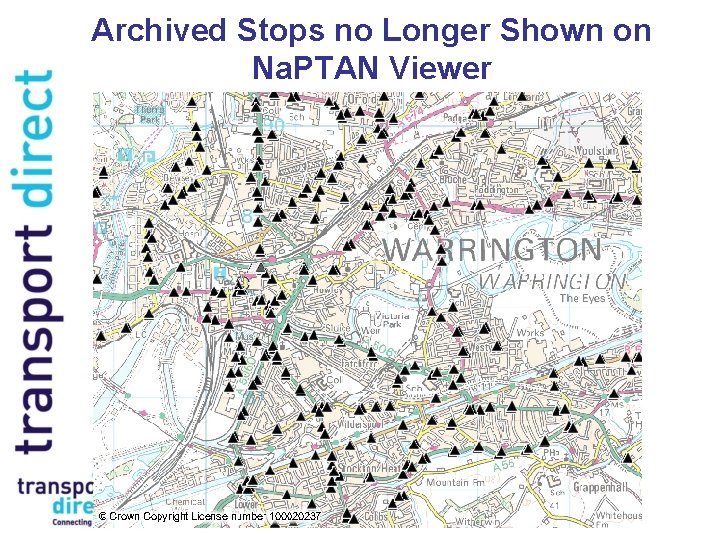
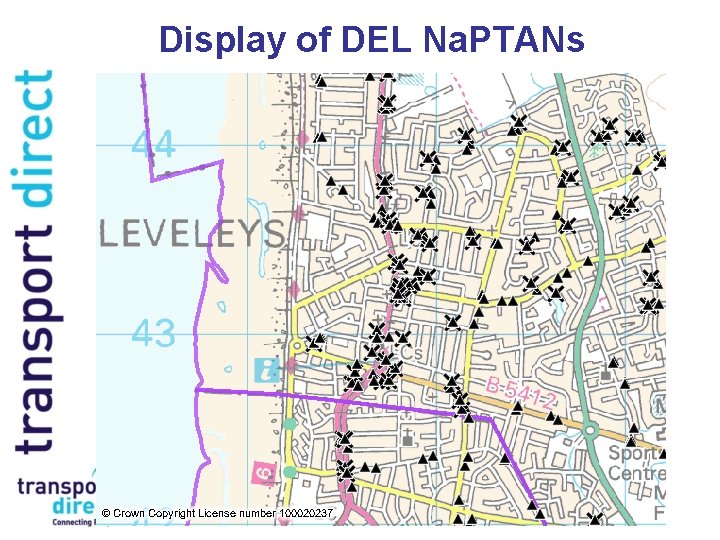
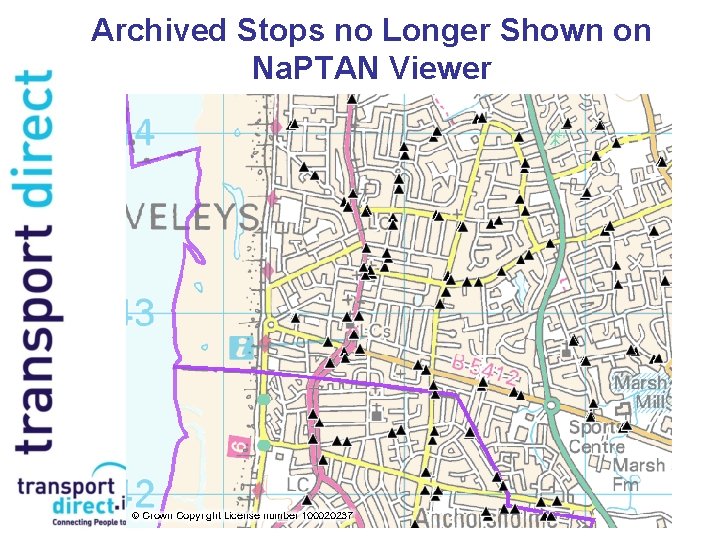
Archiving Na. PTANs n This new facility allows Na. PTANs that have been in DEL state for more than 3 years to be archived from the system t t t The data is retained in the system but is not included in downloads Removes “clutter” from Na. PTAN Avoids risk of errors with EBSR Simplifies viewing on Na. PTAN Viewer If they are causing real problems, Na. PTANs that do not meet the 3 year rule can be archived on application to TD
Display of DEL Na. PTANs
Archived Stops no Longer Shown on Na. PTAN Viewer
Display of DEL Na. PTANs
Archived Stops no Longer Shown on Na. PTAN Viewer
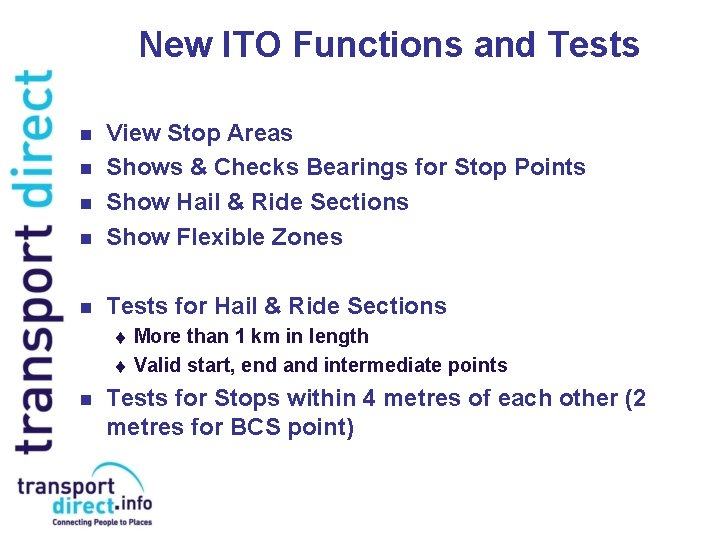
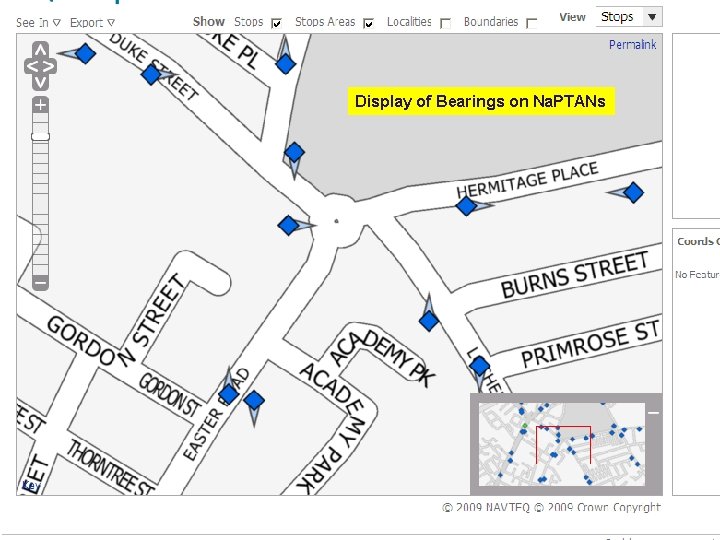
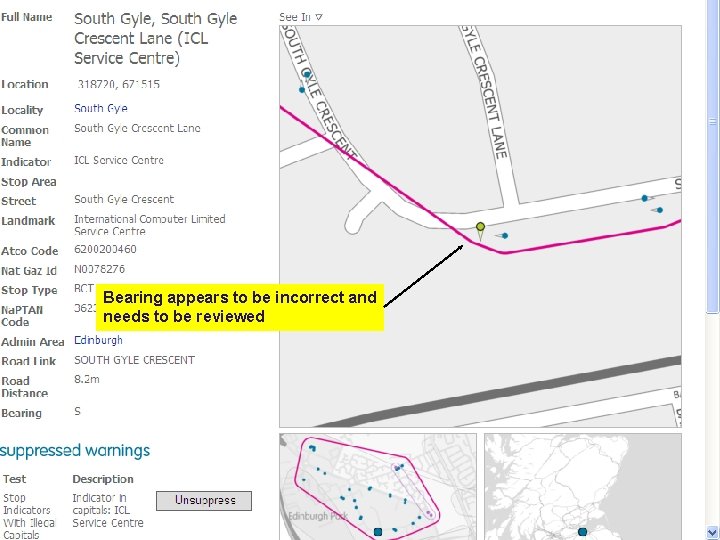
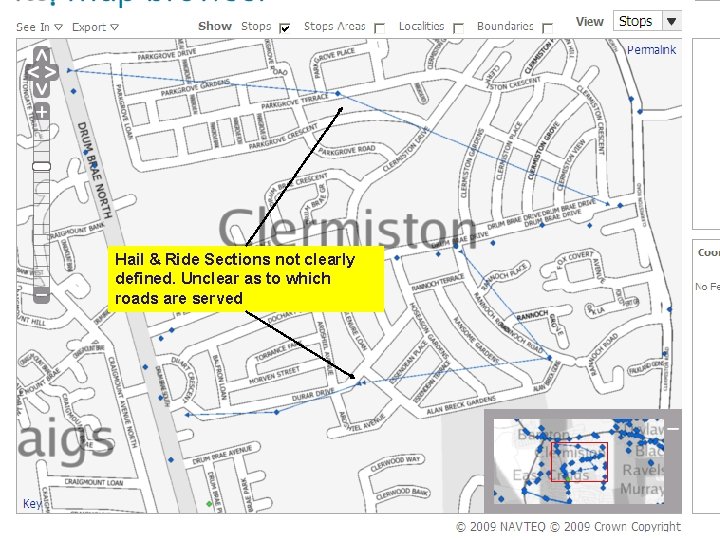
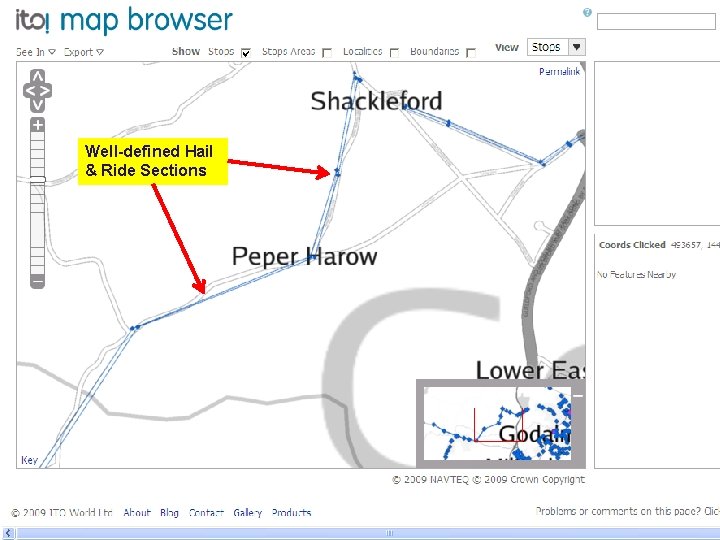
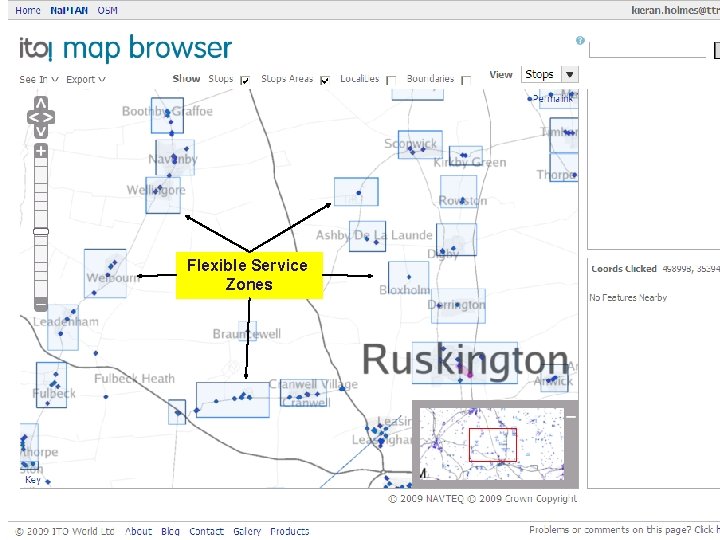
New ITO Functions and Tests n View Stop Areas Shows & Checks Bearings for Stop Points Show Hail & Ride Sections Show Flexible Zones n Tests for Hail & Ride Sections n n n t t n More than 1 km in length Valid start, end and intermediate points Tests for Stops within 4 metres of each other (2 metres for BCS point)
Display of Bearings on Na. PTANs
Bearing appears to be incorrect and needs to be reviewed
Hail & Ride Sections not clearly defined. Unclear as to which roads are served
Well-defined Hail & Ride Sections
Flexible Service Zones