
Advanced Methods Webinars Integrating Mixed Methods in Health
Advanced Methods Webinars: Integrating Mixed Methods in Health Services and Delivery System Research Presenters: Benjamin Crabtree, Ph. D Michael K. Magill, MD Debra L. Scammon, Ph. D Andrada Tomoaia-Cotisel, MHA, Ph. D(c) Moderator: Michael I. Harrison, Ph. D Sponsored by AHRQ’s Delivery System Initiative in partnership with the AHRQ PCMH program December 3, 2013
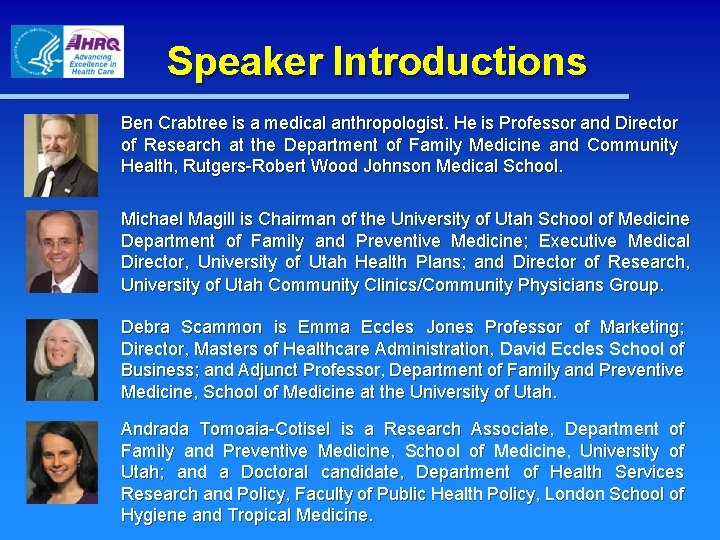
Speaker Introductions Ben Crabtree is a medical anthropologist. He is Professor and Director of Research at the Department of Family Medicine and Community Health, Rutgers-Robert Wood Johnson Medical School. Michael Magill is Chairman of the University of Utah School of Medicine Department of Family and Preventive Medicine; Executive Medical Director, University of Utah Health Plans; and Director of Research, University of Utah Community Clinics/Community Physicians Group. Debra Scammon is Emma Eccles Jones Professor of Marketing; Director, Masters of Healthcare Administration, David Eccles School of Business; and Adjunct Professor, Department of Family and Preventive Medicine, School of Medicine at the University of Utah. Andrada Tomoaia-Cotisel is a Research Associate, Department of Family and Preventive Medicine, School of Medicine, University of Utah; and a Doctoral candidate, Department of Health Services Research and Policy, Faculty of Public Health Policy, London School of Hygiene and Tropical Medicine.
Integrating Mixed Methods in Health Services and Research Benjamin F. Crabtree, Ph. D (Rutgers Robert Wood Johnson Medical School) William L. Miller, MD, MA (Lehigh Valley Health Network) Advanced Methods Webinar December 3, 2013 Rutgers, The State University of New Jersey

Mixed Methods in Health Sciences Attributes of Mixed Methods Research • Rigorous collection and analysis of both qualitative and quantitative data • Qualitative and quantitative data are mixed (integrate or link) by combining them sequentially or by embedding • Can be incorporated in a single study or in multiple phases of a program of research • Designs are framed within a broader framework or theoretical lens • Data are combined or integrated into specific mixed methods research designs that direct the study See: Creswell J, Plano-Clark V. Designing and Conducting Mixed Methods Research, 2 nd Edition. Sage Pubs, 2011.
Mixed Methods in Health Sciences FYI: Qualitative Data Collection Include: • Interviews (e. g. key informant, depth, focus group) • Observations (e. g. unstructured, participant) • Recordings (e. g. video and audio) • Existing documents (e. g. memos, reports, charts, etc. )

Mixed Methods in Health Sciences Lots of Mixed Methods Resources – Journal Articles • • • Curry, L. A. , H. M. Krumholz, A. O’Cathain, V. L. Plano Clark, E. Cherlin, and E. H. Bradley. 2013. “Mixed Methods in Biomedical and Health Services Research. ” Circulation 6 (1): 119– 23. Palinkas, L. A. , S. M. Horwitz, P. Chamberlain, M. S. Hurlburt, and J. Landsverk. 2011. “Mixed-Methods Designs in Mental Health Services Research: A Review. ” Psychiatric Services 62 (3): 255– 63. Zhang, W. , and S. Watanabe-Galloway. 2013. “Using Mixed Methods Effectively in Prevention Science: Designs, Procedures, and Examples. ” Prevention Science: The Official Journal of the Society for Prevention Research [Epub ahead of print].
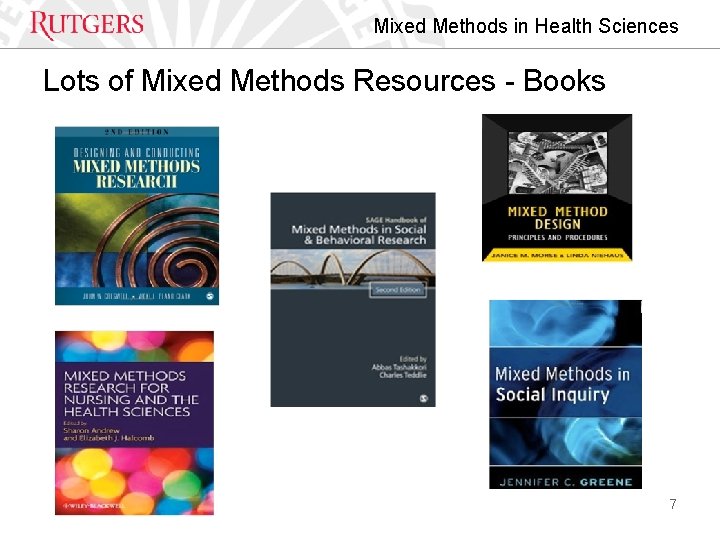
Mixed Methods in Health Sciences Lots of Mixed Methods Resources - Books 7
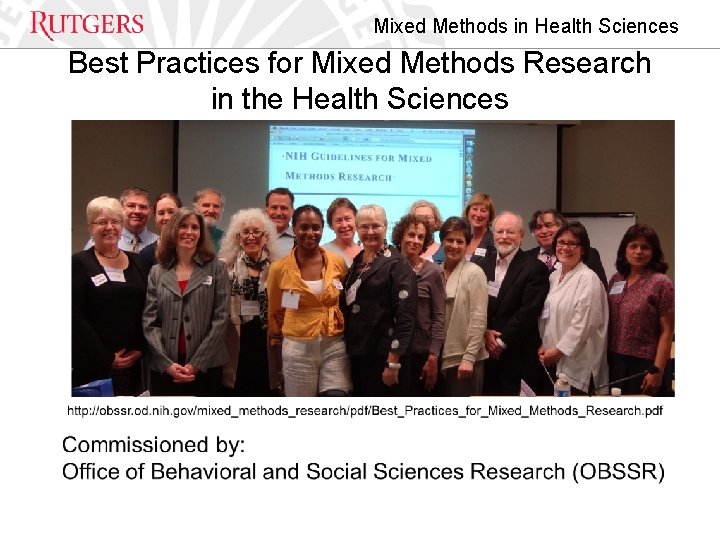
Mixed Methods in Health Sciences Best Practices for Mixed Methods Research in the Health Sciences
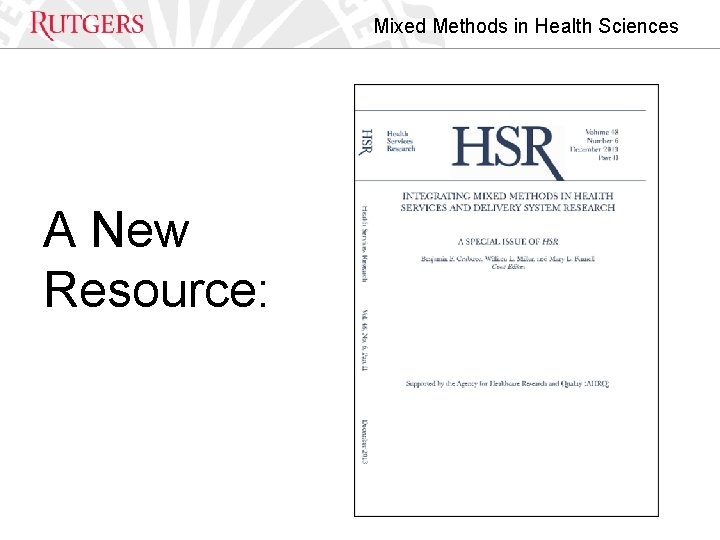
Mixed Methods in Health Sciences A New Resource:
Mixed Methods in Health Sciences Health Services Research Theme Issue Vol. 48, No. 6, Part II December 2013 • • Miller WL, Crabtree BF, Harrison MI, Fennell ML. Integrating Mixed Methods in Health Services and Delivery Systems Research (Editorial) Fetters MD, Curry LA, Creswell JW. Achieving Integration in Mixed Methods Designs – Principles and Practices. Bowers B, Cohen LW, Elliot AE, et al. Creating and Supporting a Mixed Methods Health Services Research Team. Scammon DL, Tomoaia-Cotisel A, Day, RL, et al. Connecting the Dots and Merging Meaning: Using Mixed Methods to Study Primary Care Delivery Transformation. • • • Zickmund SL, Yang S. Mulvey EP, et al. Predicting Cancer Mortality: Developing a New Cancer Care Variable Using Mixed Methods and the Quasi-Statistical Approach. Hamilton AB, Cohen AN, Glover DL, et al. Implementation of Evidence-Based Employment Services in Specialty Mental Health. Gilmer TP, Katz ML, Stefancic A, Palinkas LA. Variation in the Implementation of California’s Full Service Partnerships for Persons with Serious Mental Illness.

Mixed Methods in Health Sciences • Three Basic Designs − Sequential Exploratory − Sequential Expanatory − Convergent 11

Mixed Methods in Health Sciences Sequential Exploratory Mixed Methods Design
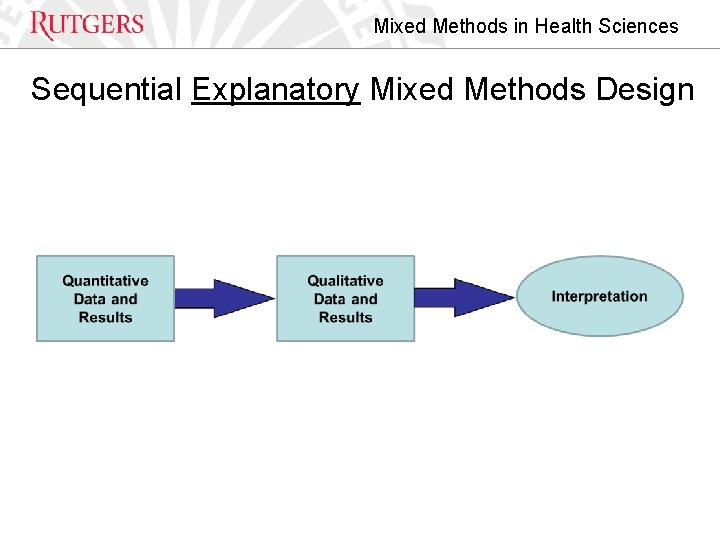
Mixed Methods in Health Sciences Sequential Explanatory Mixed Methods Design
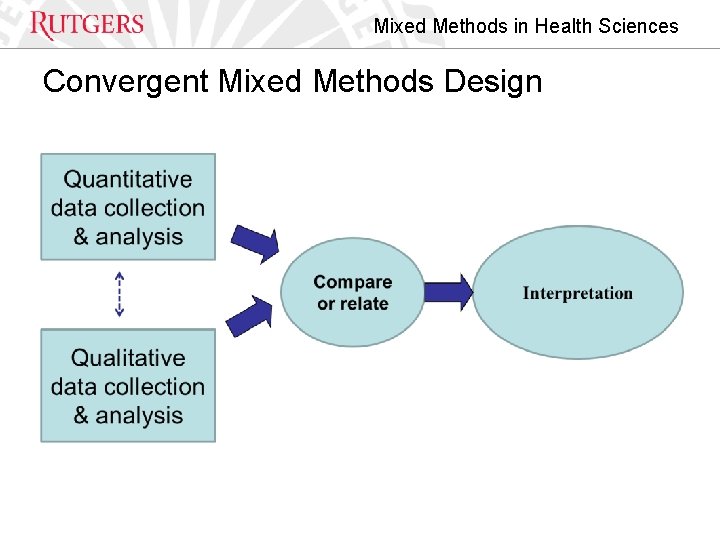
Mixed Methods in Health Sciences Convergent Mixed Methods Design
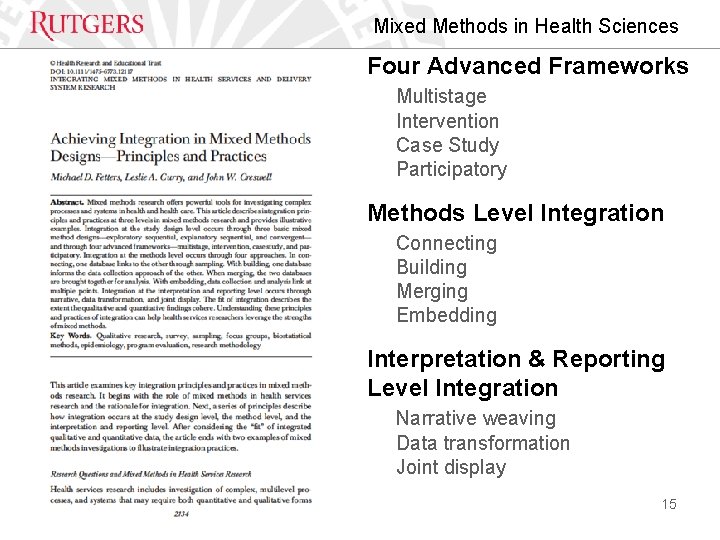
Mixed Methods in Health Sciences Four Advanced Frameworks Multistage Intervention Case Study Participatory Methods Level Integration Connecting Building Merging Embedding Interpretation & Reporting Level Integration Narrative weaving Data transformation Joint display 15
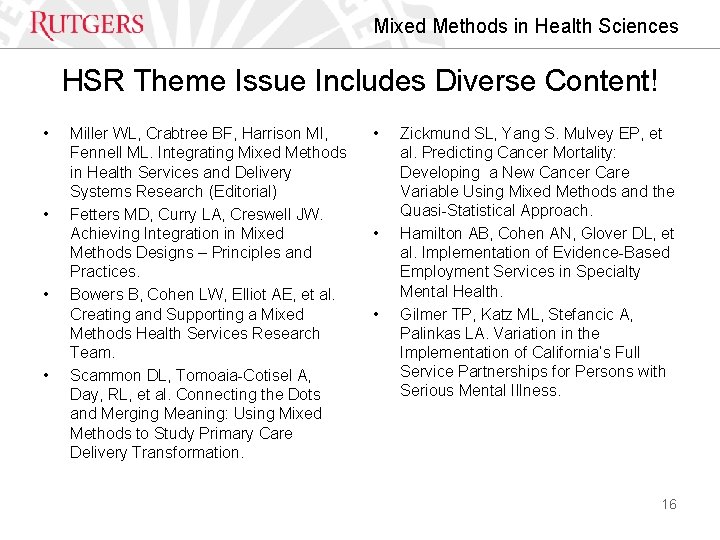
Mixed Methods in Health Sciences HSR Theme Issue Includes Diverse Content! • • Miller WL, Crabtree BF, Harrison MI, Fennell ML. Integrating Mixed Methods in Health Services and Delivery Systems Research (Editorial) Fetters MD, Curry LA, Creswell JW. Achieving Integration in Mixed Methods Designs – Principles and Practices. Bowers B, Cohen LW, Elliot AE, et al. Creating and Supporting a Mixed Methods Health Services Research Team. Scammon DL, Tomoaia-Cotisel A, Day, RL, et al. Connecting the Dots and Merging Meaning: Using Mixed Methods to Study Primary Care Delivery Transformation. • • • Zickmund SL, Yang S. Mulvey EP, et al. Predicting Cancer Mortality: Developing a New Cancer Care Variable Using Mixed Methods and the Quasi-Statistical Approach. Hamilton AB, Cohen AN, Glover DL, et al. Implementation of Evidence-Based Employment Services in Specialty Mental Health. Gilmer TP, Katz ML, Stefancic A, Palinkas LA. Variation in the Implementation of California’s Full Service Partnerships for Persons with Serious Mental Illness. 16
Mixed Methods in Health Sciences • • Crabtree & Miller Lessons from 20 Years of Mixed Methods Research Remember the research questions! Mixed methods research is best done in collaborative teams Collaborative teams take time and relationship building (see Bowers, et al. and Scammon, et al. in HSR Theme Issue) Think of both individual projects, but also a program of research with multiple projects Reporting stories to accompany numbers provides an effective means for engaging readers and policy makers Too often, quantitative approaches are misapplied to phenomena requiring qualitative or mixed methods Ensure the strengths and weaknesses of each selected method complement each other Continually evaluate methodology throughout the study 17
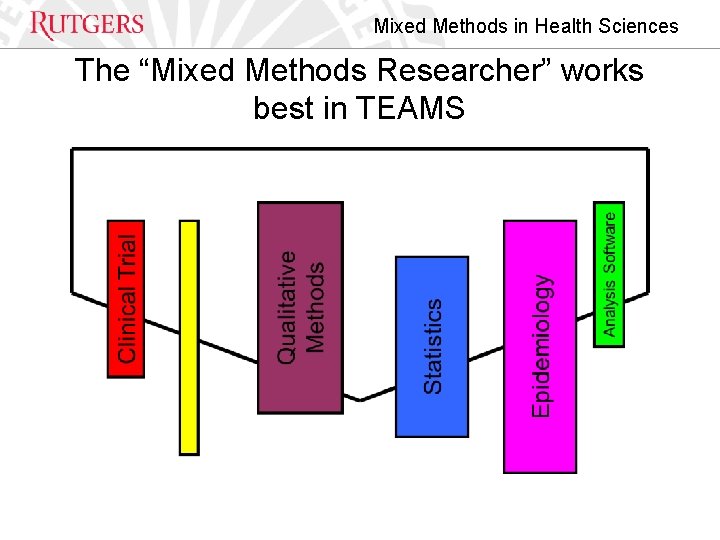
Mixed Methods in Health Sciences The “Mixed Methods Researcher” works best in TEAMS
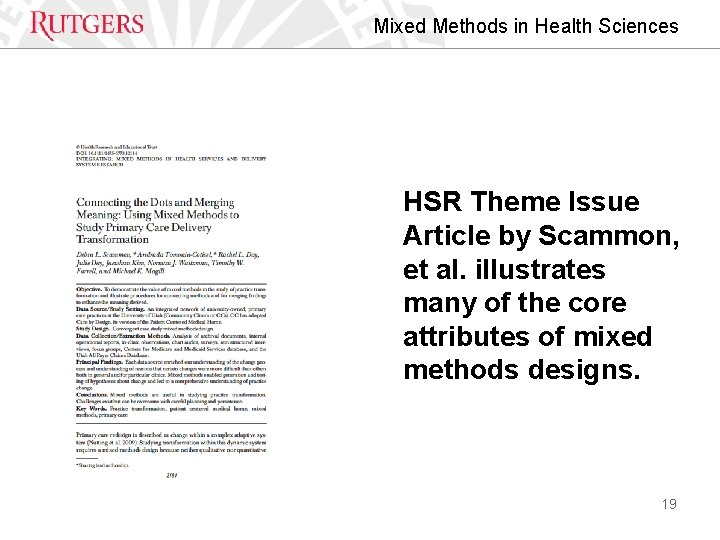
Mixed Methods in Health Sciences HSR Theme Issue Article by Scammon, et al. illustrates many of the core attributes of mixed methods designs. 19
Connecting the Dots and Merging Meaning: Using Mixed Methods to Study Primary Care Delivery Transformation Advanced Methods Webinar December 3, 2013 Debra L. Scammon, Ph. D. Andrada Tomoaia-Cotisel, M. P. H. , M. H. A. , Ph. D. Candidate Michael K. Magill, M. D. Health Services Research Vol. 48, No 6, Part II, December 2013

Acknowledgements This project was supported by grants R 18 HS 019136 and R 18 HS 020106 from the Agency for Health Care Research and Quality (AHRQ). The content of this presentation is solely the responsibility of the authors and does not necessarily represent the official views of the AHRQ.
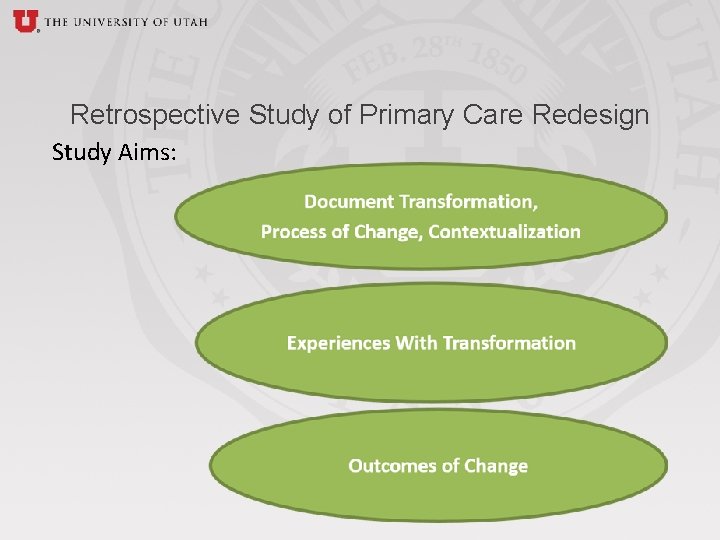
Retrospective Study of Primary Care Redesign Study Aims:
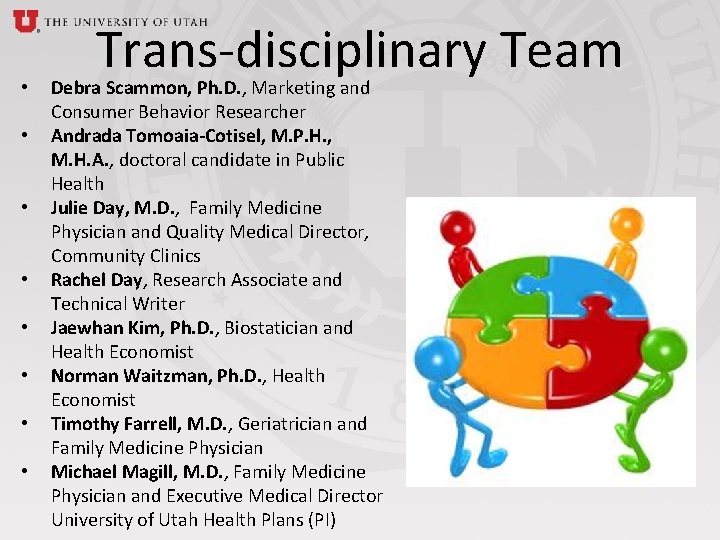
• • Trans-disciplinary Team Debra Scammon, Ph. D. , Marketing and Consumer Behavior Researcher Andrada Tomoaia-Cotisel, M. P. H. , M. H. A. , doctoral candidate in Public Health Julie Day, M. D. , Family Medicine Physician and Quality Medical Director, Community Clinics Rachel Day, Research Associate and Technical Writer Jaewhan Kim, Ph. D. , Biostatician and Health Economist Norman Waitzman, Ph. D. , Health Economist Timothy Farrell, M. D. , Geriatrician and Family Medicine Physician Michael Magill, M. D. , Family Medicine Physician and Executive Medical Director University of Utah Health Plans (PI)
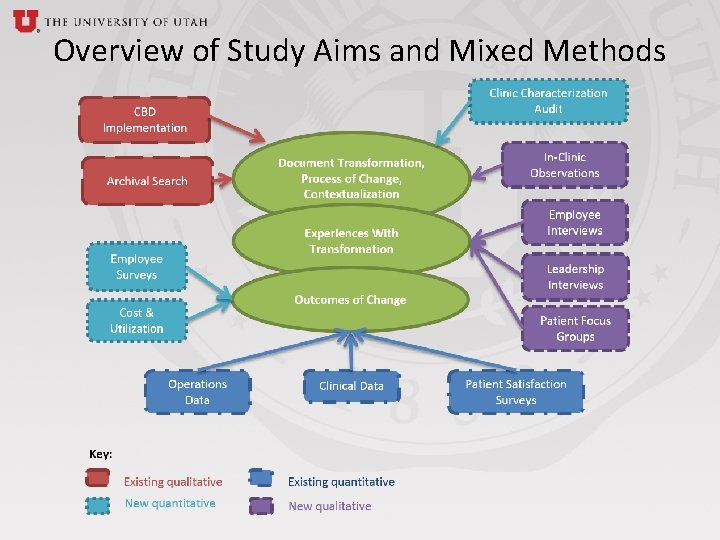
Overview of Study Aims and Mixed Methods
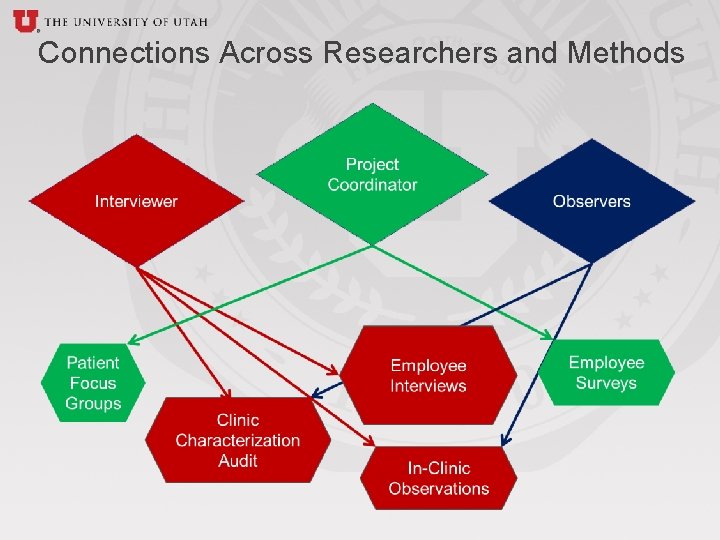
Connections Across Researchers and Methods
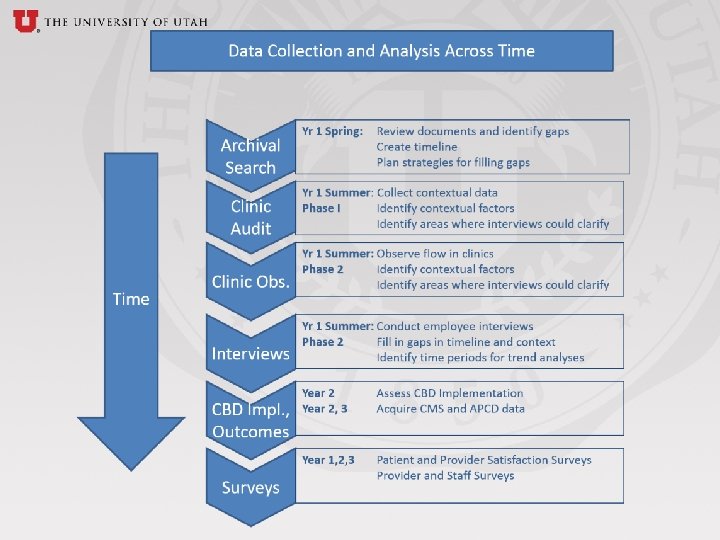
Data Collection and Analysis Across Time
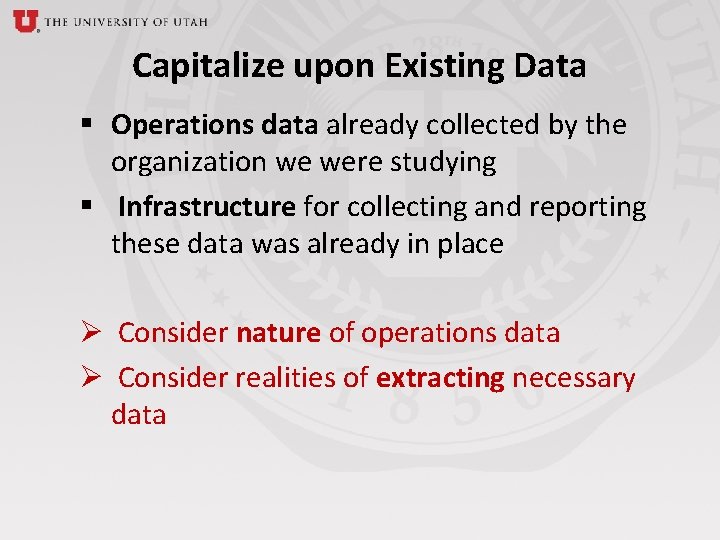
Capitalize upon Existing Data § Operations data already collected by the organization we were studying § Infrastructure for collecting and reporting these data was already in place Ø Consider nature of operations data Ø Consider realities of extracting necessary data
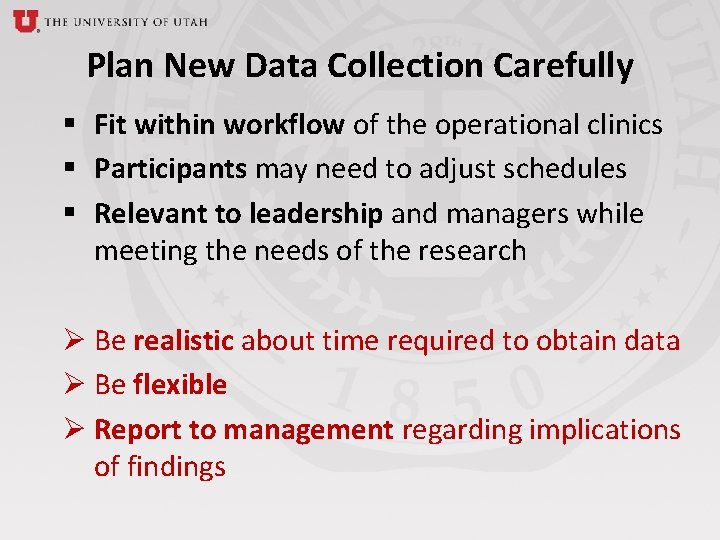
Plan New Data Collection Carefully § Fit within workflow of the operational clinics § Participants may need to adjust schedules § Relevant to leadership and managers while meeting the needs of the research Ø Be realistic about time required to obtain data Ø Be flexible Ø Report to management regarding implications of findings

Merging Data to Make Meaning An example…
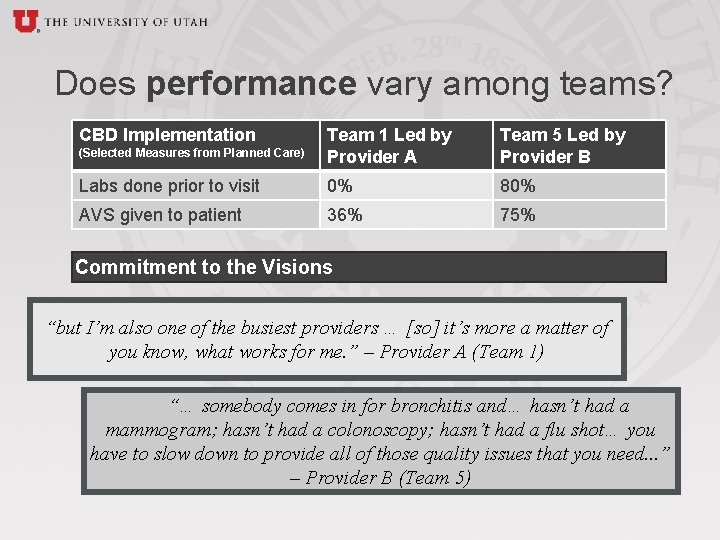
Does performance vary among teams? CBD Implementation Team 1 Led by Provider A Team 5 Led by Provider B Labs done prior to visit 0% 80% AVS given to patient 36% 75% (Selected Measures from Planned Care) Commitment to the Visions “but I’m also one of the busiest providers … [so] it’s more a matter of you know, what works for me. ” – Provider A (Team 1) “… somebody comes in for bronchitis and… hasn’t had a mammogram; hasn’t had a colonoscopy; hasn’t had a flu shot… you have to slow down to provide all of those quality issues that you need. . . ” – Provider B (Team 5)
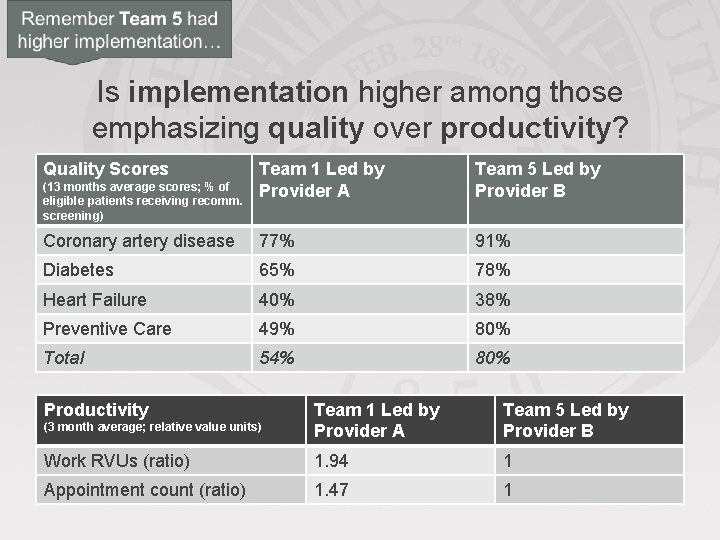
Is implementation higher among those emphasizing quality over productivity? Quality Scores Team 1 Led by Provider A Team 5 Led by Provider B Coronary artery disease 77% 91% Diabetes 65% 78% Heart Failure 40% 38% Preventive Care 49% 80% Total 54% 80% (13 months average scores; % of eligible patients receiving recomm. screening) Productivity Team 1 Led by Provider A Team 5 Led by Provider B Work RVUs (ratio) 1. 94 1 Appointment count (ratio) 1. 47 1 (3 month average; relative value units)
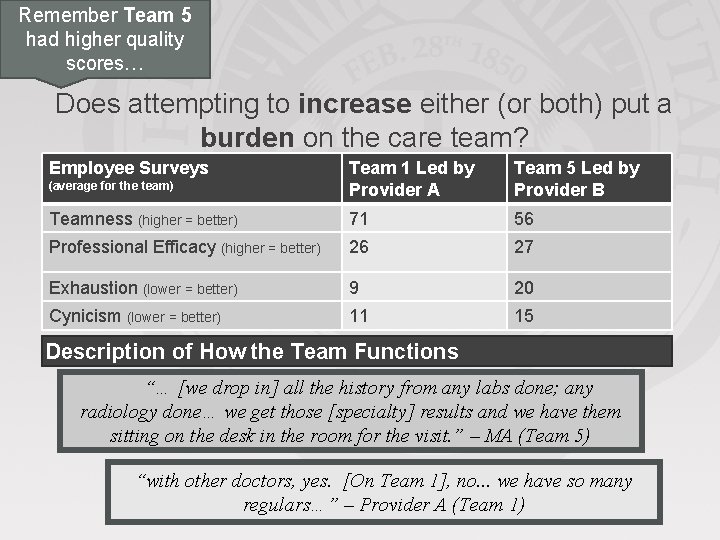
Remember Team 5 had higher quality scores… Does attempting to increase either (or both) put a burden on the care team? Employee Surveys Team 1 Led by Provider A Team 5 Led by Provider B Teamness (higher = better) 71 56 Professional Efficacy (higher = better) 26 27 Exhaustion (lower = better) 9 20 Cynicism (lower = better) 11 15 (average for the team) Description of How the Team Functions “… [we drop in] all the history from any labs done; any radiology done… we get those [specialty] results and we have them sitting on the desk in the room for the visit. ” – MA (Team 5) “with other doctors, yes. [On Team 1], no. . . we have so many regulars…” – Provider A (Team 1)
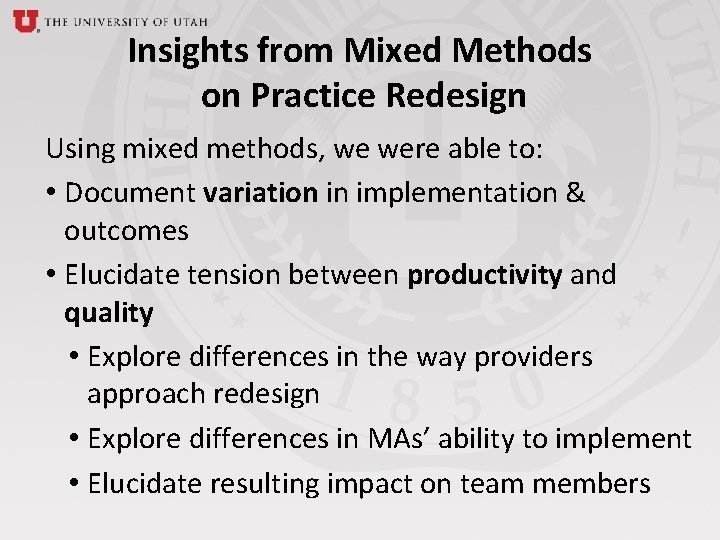
Insights from Mixed Methods on Practice Redesign Using mixed methods, we were able to: • Document variation in implementation & outcomes • Elucidate tension between productivity and quality • Explore differences in the way providers approach redesign • Explore differences in MAs’ ability to implement • Elucidate resulting impact on team members
Value of Mixed Methods Research • Each data source enriched our understanding of the change process • Mixed methods revealed a more complete understanding of the transformation process
Value of Mixed Methods Research • Facilitated more effective engagement between research team and CC leadership • Provided evidence base to support on-going practice redesign • Challenges exist but can be overcome with careful planning and persistence
Conclusions • Gained a more nuanced perspective on implementation – appreciate multiple perspectives; – revealed different aspects of change process and outcomes; – extracted richer meaning than that available from any single source
Conclusions • Enhanced access to and interpretation of data – inclusion of multidisciplinary research team with members from inside and outside the organization
Conclusions Facilitated exploration of interactions between components of a complex redesign effort highlighted tensions created through interdependencies

Questions?

Thank you for attending! Papers from the HSR special issue are available at: http: //onlinelibrary. wiley. com/journal/10. 1111/(ISSN)14756773/earlyview For more information about the AHRQ PCMH Research Methods briefs, please visit: http: //pcmh. ahrq. gov/page/evidence-and-evaluation Other Webinars in the AHRQ Advanced Methods Series are available at: http: //www. ahrq. gov/professionals/system/advancedmethods/index. html
- Slides: 40