
ADVANCED MANUFACTURING PROCESSES FOR TISSUE ENGINEERING Alberto Rainer
ADVANCED MANUFACTURING PROCESSES FOR TISSUE ENGINEERING Alberto Rainer, Ph. D Unit of Tissue Engineering & Chemistry for Engineering a. rainer@unicampus. it
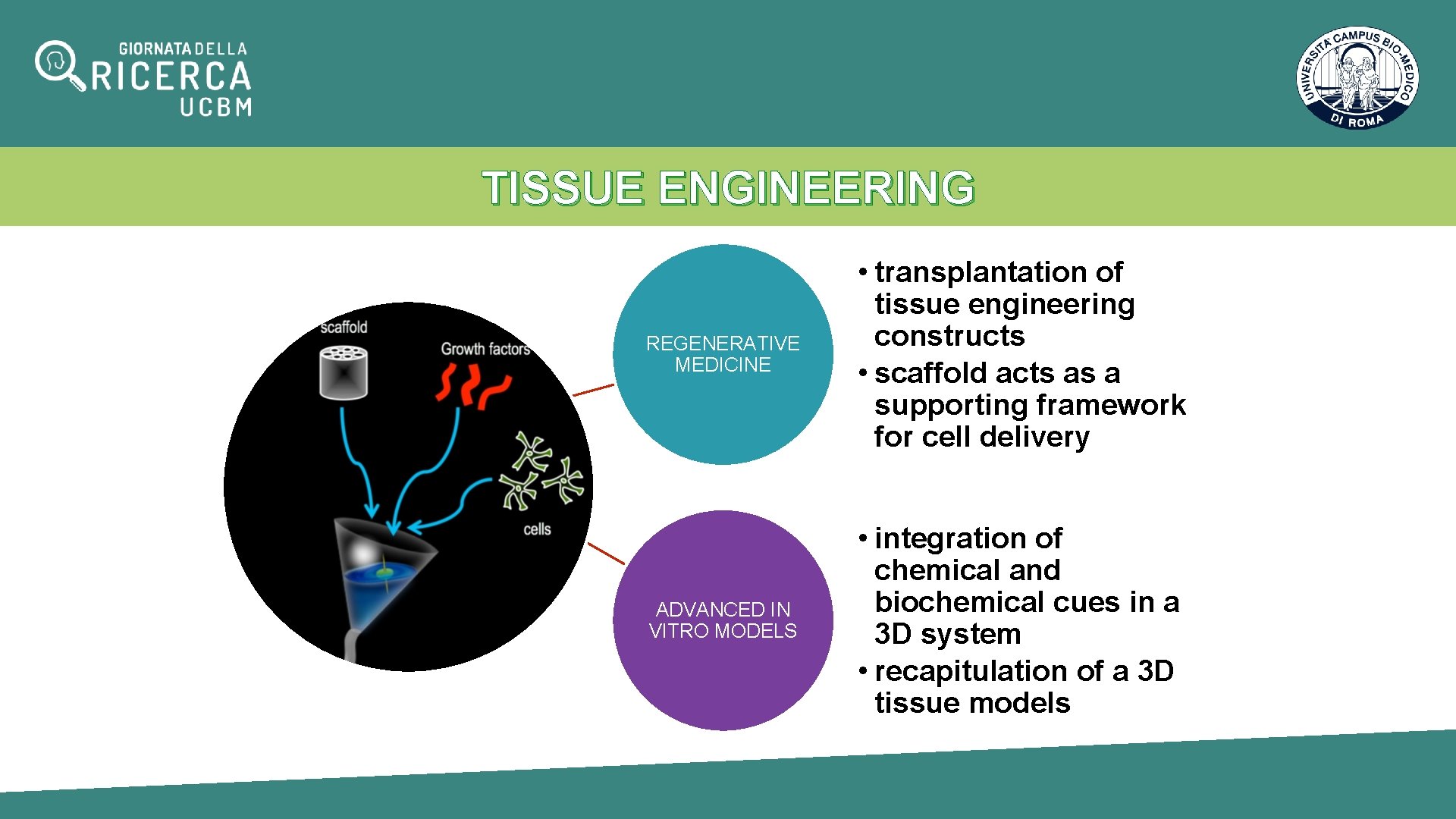
TISSUE ENGINEERING REGENERATIVE MEDICINE • transplantation of tissue engineering constructs • scaffold acts as a supporting framework for cell delivery ADVANCED IN VITRO MODELS • integration of chemical and biochemical cues in a 3 D system • recapitulation of a 3 D tissue models
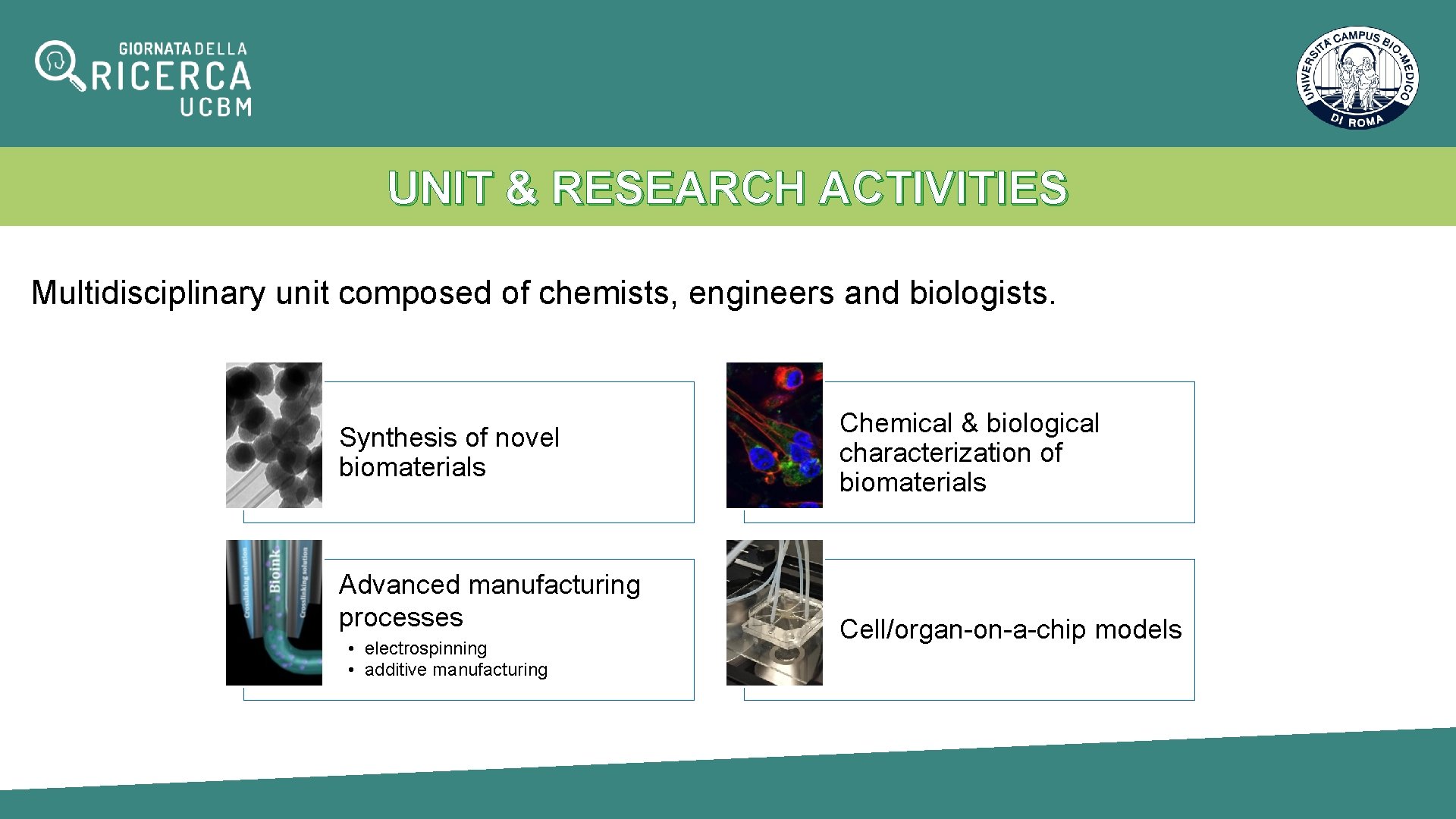
UNIT & RESEARCH ACTIVITIES Multidisciplinary unit composed of chemists, engineers and biologists. Synthesis of novel biomaterials Advanced manufacturing processes • electrospinning • additive manufacturing Chemical & biological characterization of biomaterials Cell/organ-on-a-chip models

ELECTROSPINNING
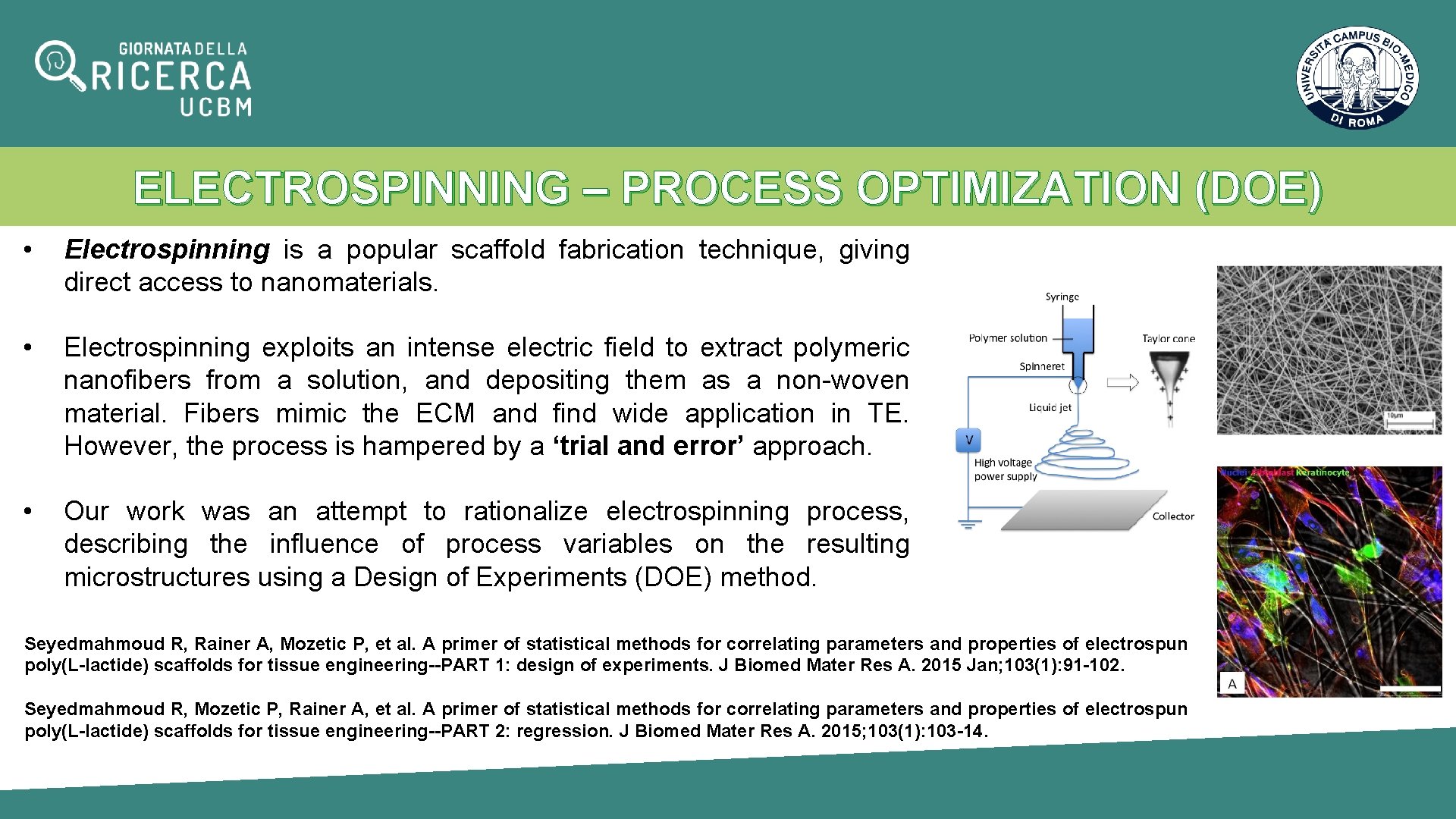
ELECTROSPINNING – PROCESS OPTIMIZATION (DOE) • Electrospinning is a popular scaffold fabrication technique, giving direct access to nanomaterials. • Electrospinning exploits an intense electric field to extract polymeric nanofibers from a solution, and depositing them as a non-woven material. Fibers mimic the ECM and find wide application in TE. However, the process is hampered by a ‘trial and error’ approach. • Our work was an attempt to rationalize electrospinning process, describing the influence of process variables on the resulting microstructures using a Design of Experiments (DOE) method. Seyedmahmoud R, Rainer A, Mozetic P, et al. A primer of statistical methods for correlating parameters and properties of electrospun poly(L-lactide) scaffolds for tissue engineering--PART 1: design of experiments. J Biomed Mater Res A. 2015 Jan; 103(1): 91 -102. Seyedmahmoud R, Mozetic P, Rainer A, et al. A primer of statistical methods for correlating parameters and properties of electrospun poly(L-lactide) scaffolds for tissue engineering--PART 2: regression. J Biomed Mater Res A. 2015; 103(1): 103 -14.
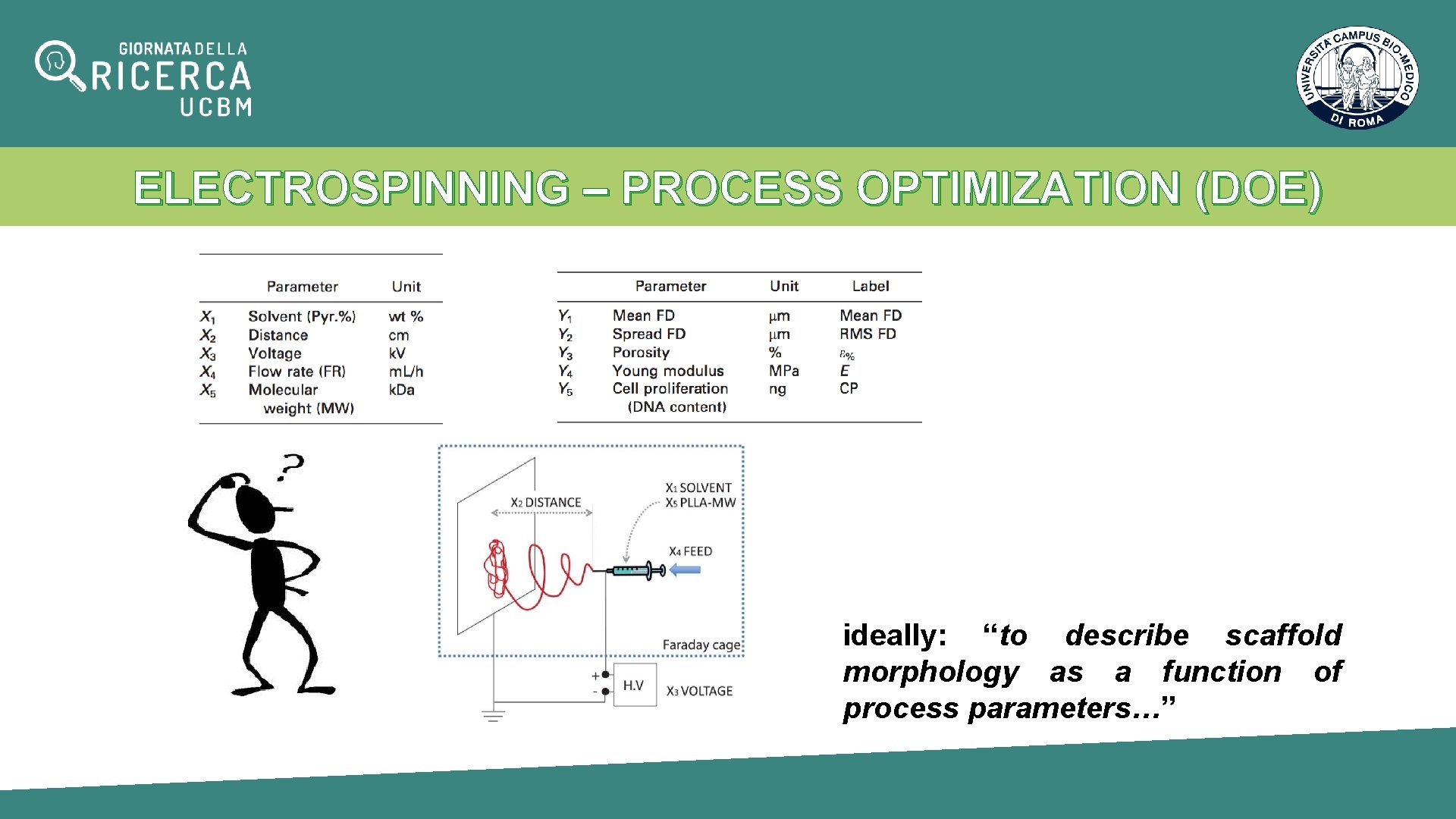
ELECTROSPINNING – PROCESS OPTIMIZATION (DOE) ideally: “to describe scaffold morphology as a function of process parameters…”
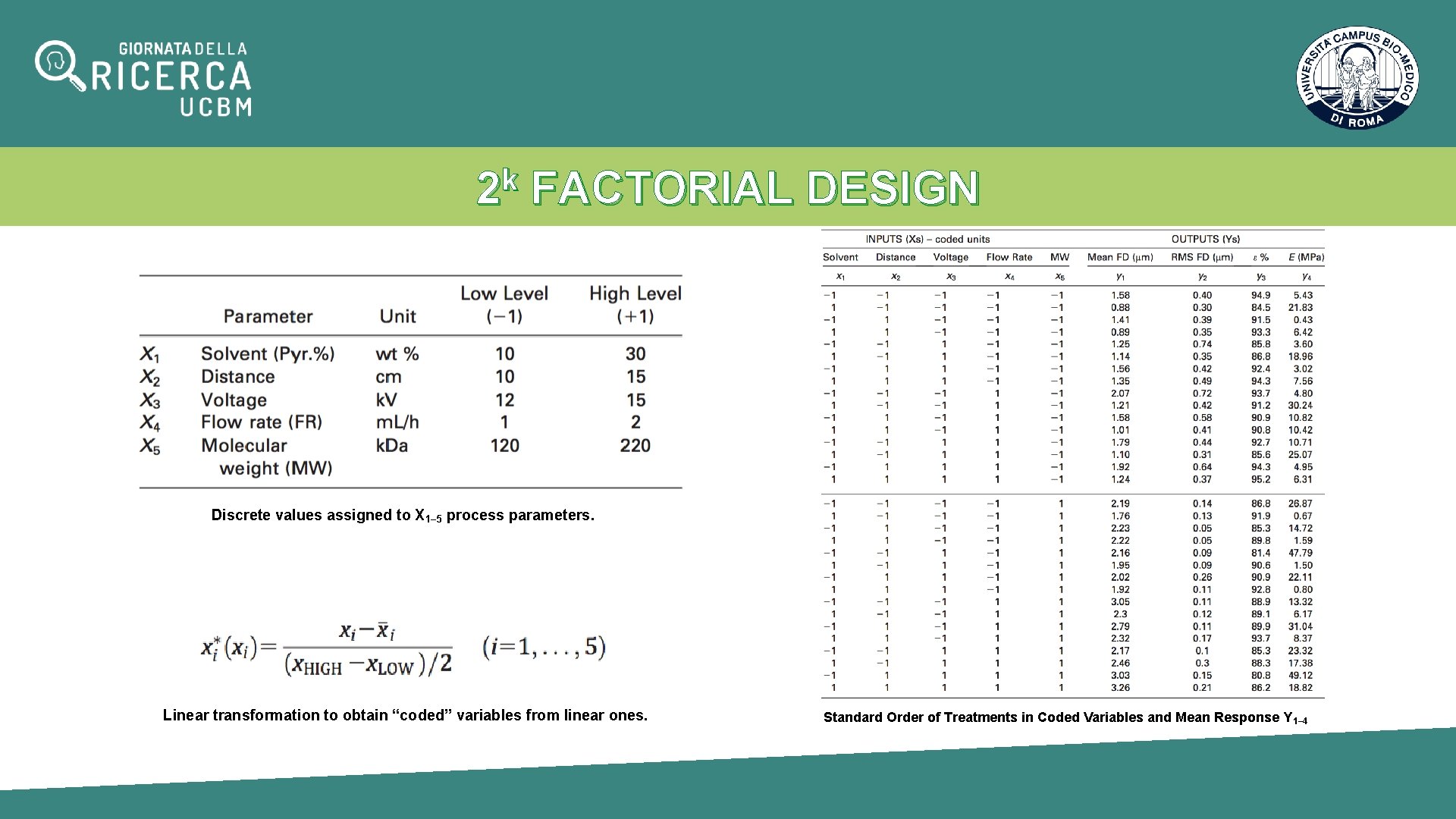
k 2 FACTORIAL DESIGN Discrete values assigned to X 1– 5 process parameters. Linear transformation to obtain “coded” variables from linear ones. Standard Order of Treatments in Coded Variables and Mean Response Y 1– 4
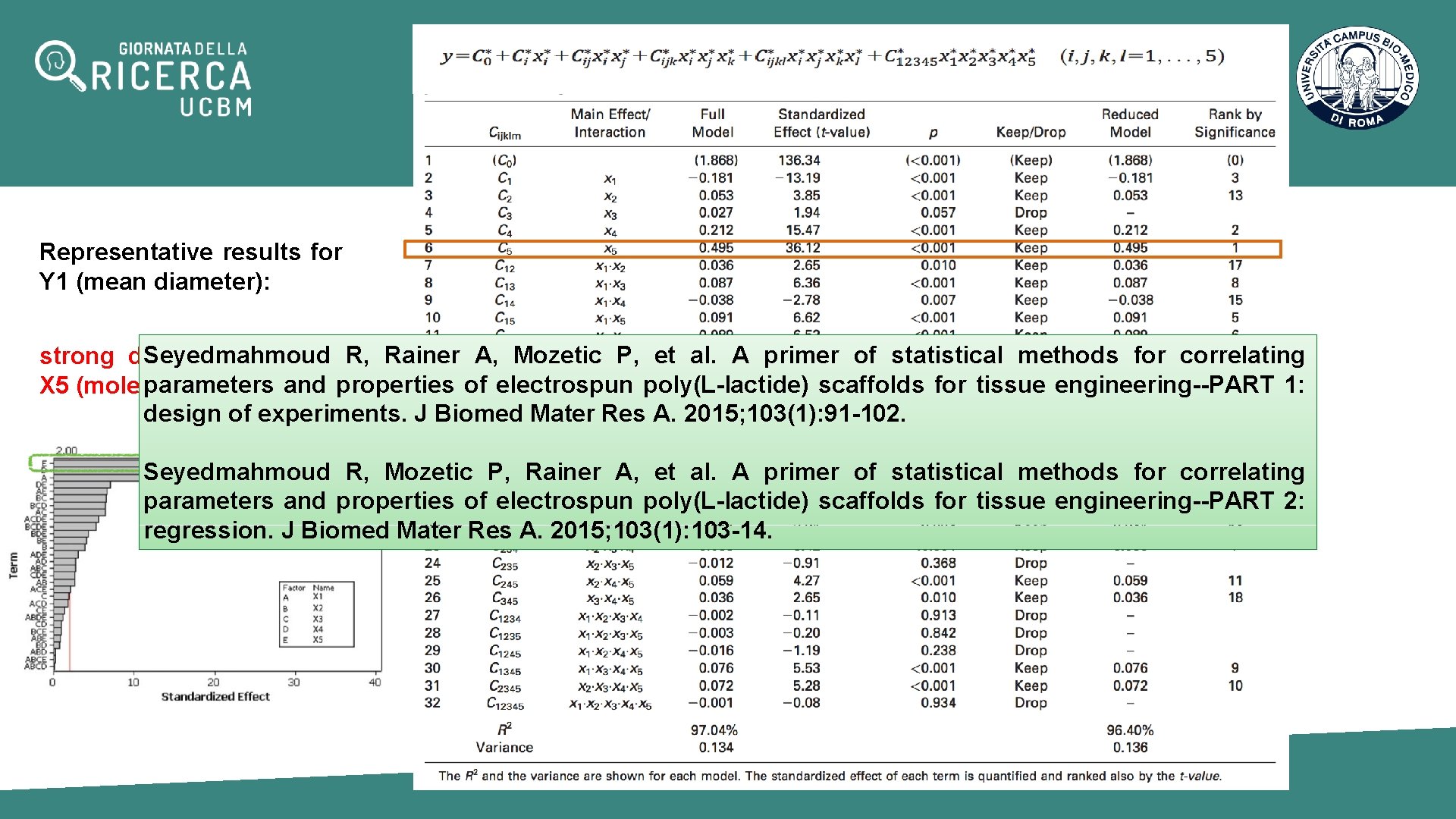
Representative results for Y 1 (mean diameter): Seyedmahmoud strong dependence upon R, Rainer A, Mozetic P, et al. A primer of statistical methods for correlating parameters X 5 (molecular weight)and properties of electrospun poly(L-lactide) scaffolds for tissue engineering--PART 1: design of experiments. J Biomed Mater Res A. 2015; 103(1): 91 -102. Seyedmahmoud R, Mozetic P, Rainer A, et al. A primer of statistical methods for correlating parameters and properties of electrospun poly(L-lactide) scaffolds for tissue engineering--PART 2: regression. J Biomed Mater Res A. 2015; 103(1): 103 -14.

ADDITIVE MANUFACTURING
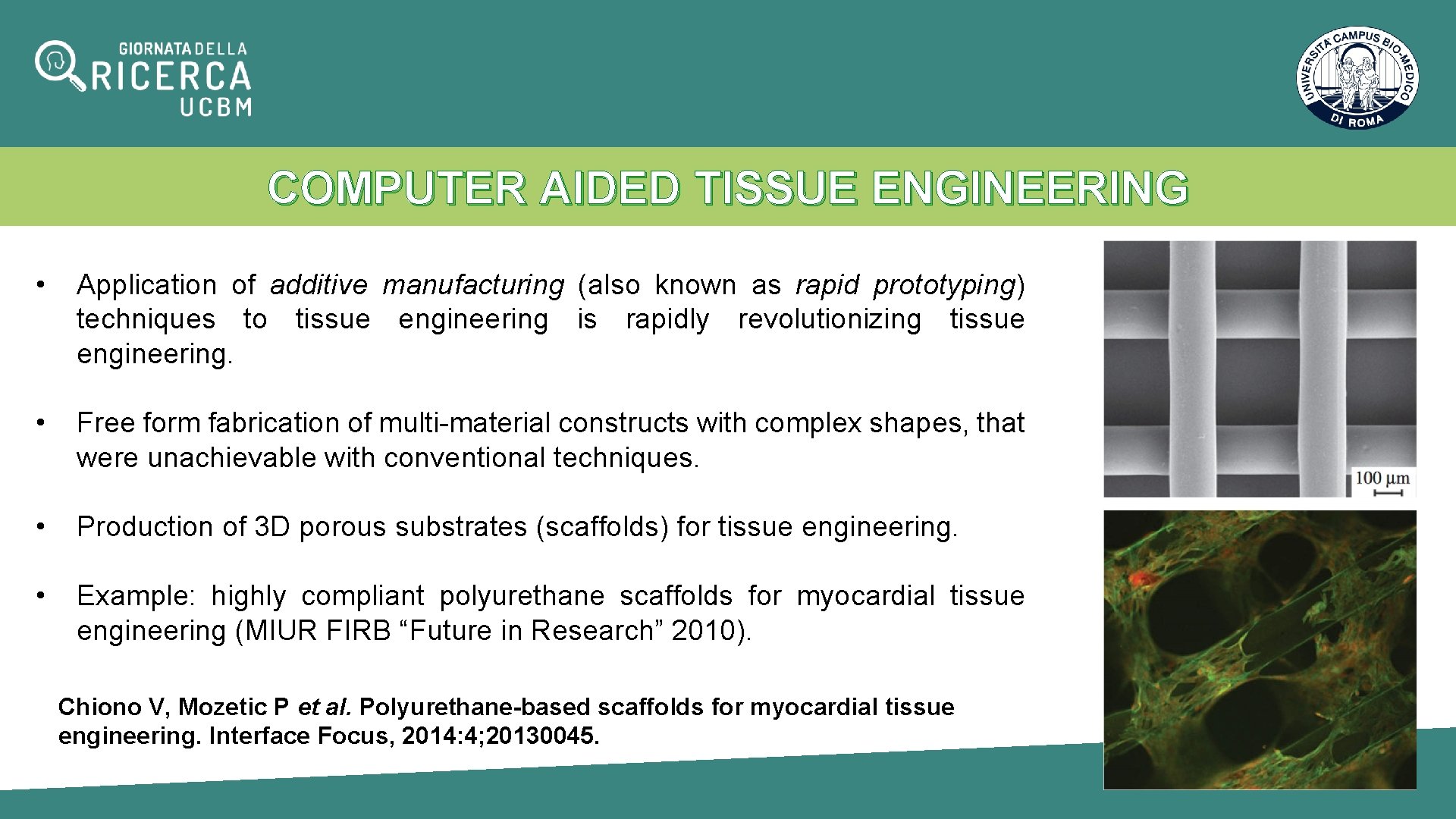
COMPUTER AIDED TISSUE ENGINEERING • Application of additive manufacturing (also known as rapid prototyping) techniques to tissue engineering is rapidly revolutionizing tissue engineering. • Free form fabrication of multi-material constructs with complex shapes, that were unachievable with conventional techniques. • Production of 3 D porous substrates (scaffolds) for tissue engineering. • Example: highly compliant polyurethane scaffolds for myocardial tissue engineering (MIUR FIRB “Future in Research” 2010). Chiono V, Mozetic P et al. Polyurethane-based scaffolds for myocardial tissue engineering. Interface Focus, 2014: 4; 20130045.
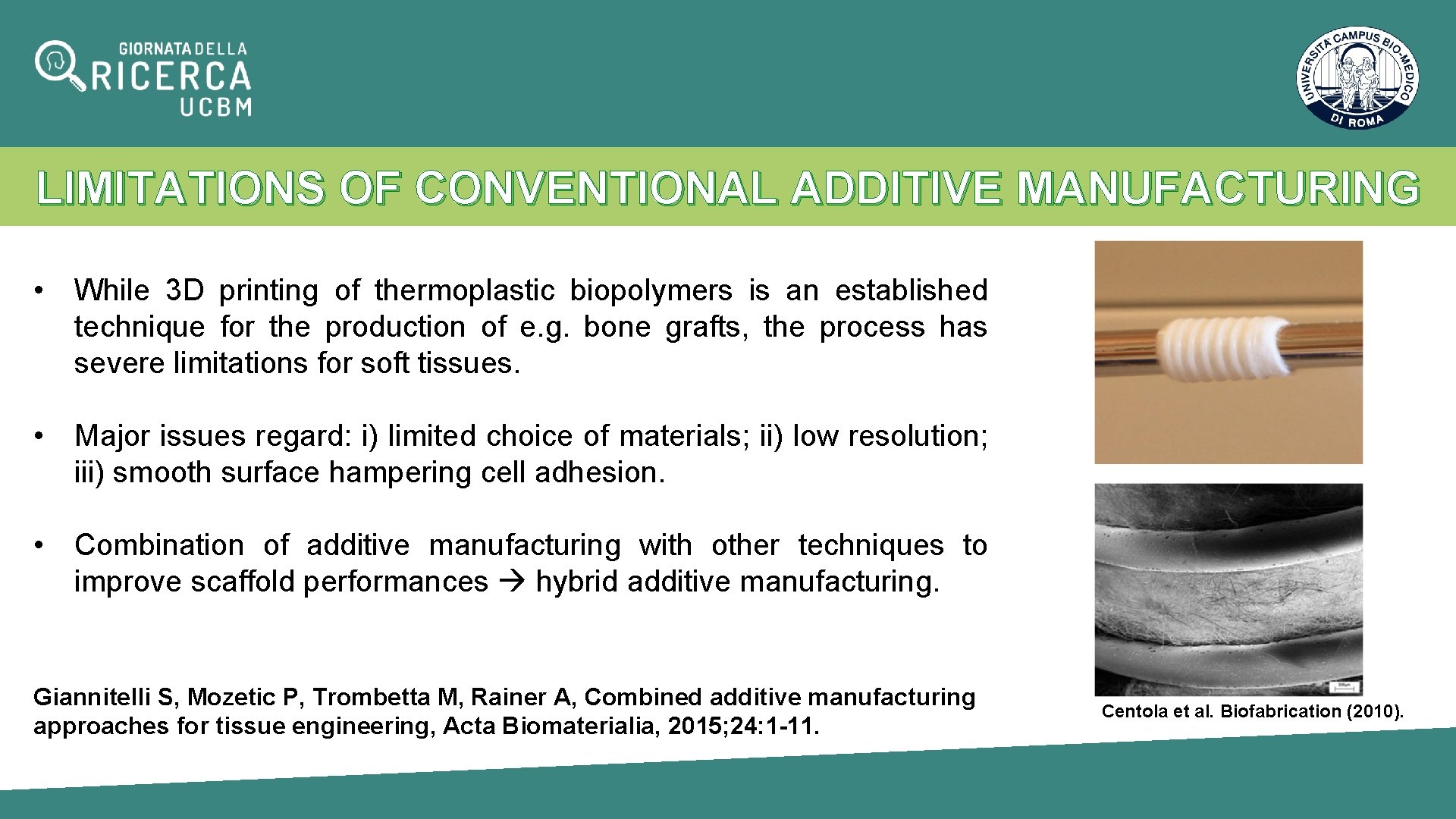
LIMITATIONS OF CONVENTIONAL ADDITIVE MANUFACTURING • While 3 D printing of thermoplastic biopolymers is an established technique for the production of e. g. bone grafts, the process has severe limitations for soft tissues. • Major issues regard: i) limited choice of materials; ii) low resolution; iii) smooth surface hampering cell adhesion. • Combination of additive manufacturing with other techniques to improve scaffold performances hybrid additive manufacturing. Giannitelli S, Mozetic P, Trombetta M, Rainer A, Combined additive manufacturing approaches for tissue engineering, Acta Biomaterialia, 2015; 24: 1 -11. Centola et al. Biofabrication (2010).
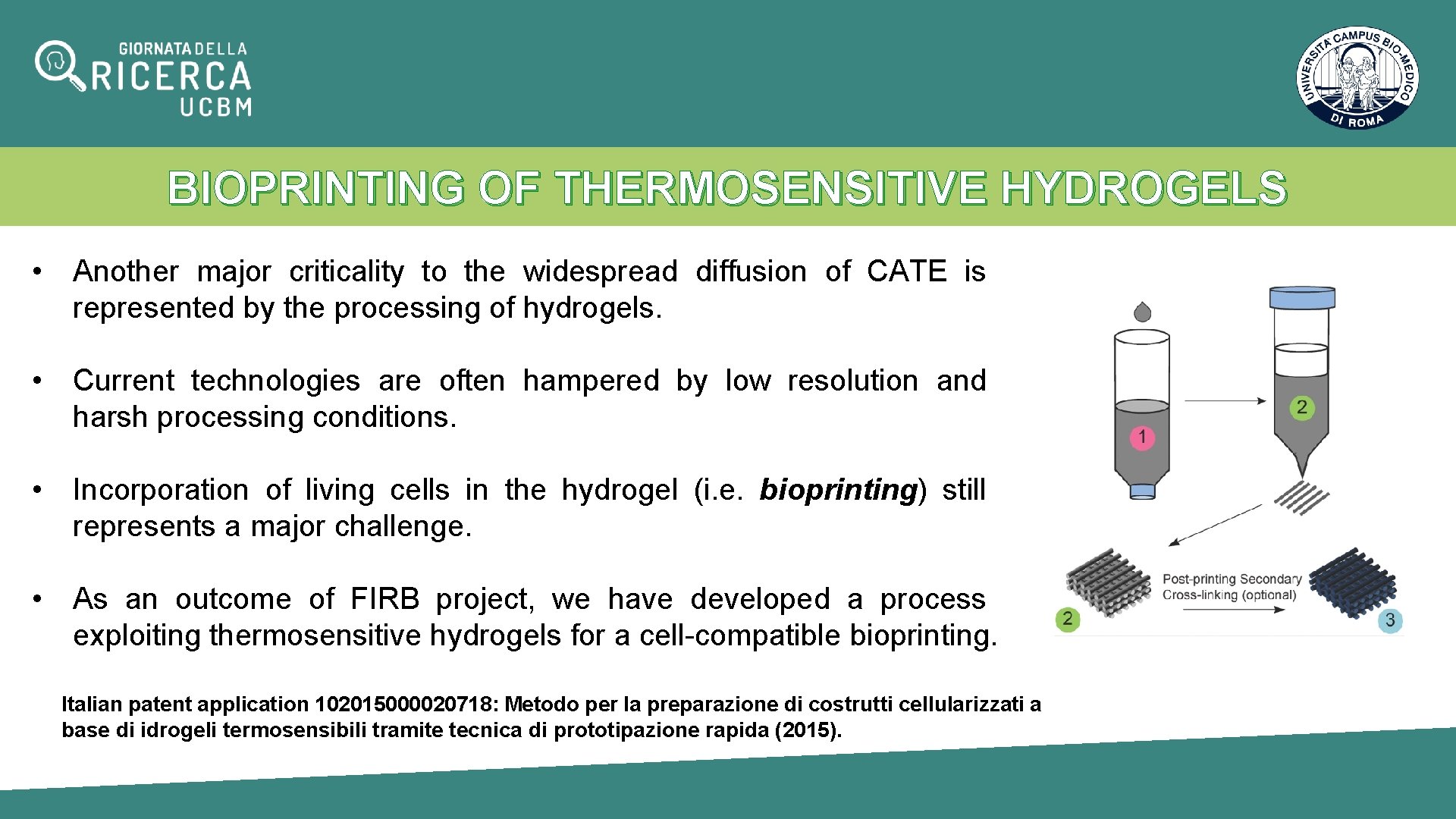
BIOPRINTING OF THERMOSENSITIVE HYDROGELS • Another major criticality to the widespread diffusion of CATE is represented by the processing of hydrogels. • Current technologies are often hampered by low resolution and harsh processing conditions. • Incorporation of living cells in the hydrogel (i. e. bioprinting) still represents a major challenge. • As an outcome of FIRB project, we have developed a process exploiting thermosensitive hydrogels for a cell-compatible bioprinting. Italian patent application 102015000020718: Metodo per la preparazione di costrutti cellularizzati a base di idrogeli termosensibili tramite tecnica di prototipazione rapida (2015).
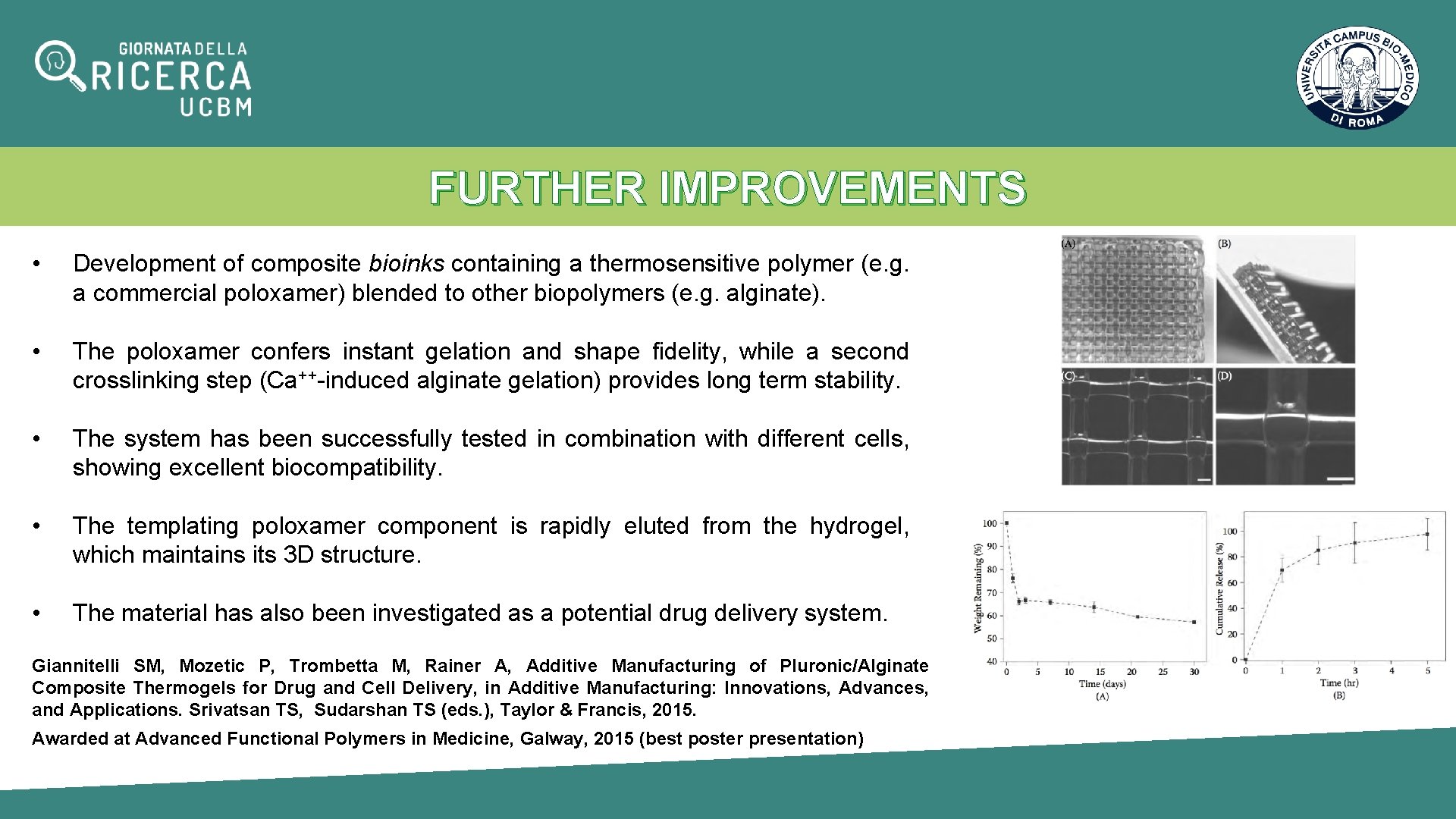
FURTHER IMPROVEMENTS • Development of composite bioinks containing a thermosensitive polymer (e. g. a commercial poloxamer) blended to other biopolymers (e. g. alginate). • The poloxamer confers instant gelation and shape fidelity, while a second crosslinking step (Ca++-induced alginate gelation) provides long term stability. • The system has been successfully tested in combination with different cells, showing excellent biocompatibility. • The templating poloxamer component is rapidly eluted from the hydrogel, which maintains its 3 D structure. • The material has also been investigated as a potential drug delivery system. Giannitelli SM, Mozetic P, Trombetta M, Rainer A, Additive Manufacturing of Pluronic/Alginate Composite Thermogels for Drug and Cell Delivery, in Additive Manufacturing: Innovations, Advances, and Applications. Srivatsan TS, Sudarshan TS (eds. ), Taylor & Francis, 2015. Awarded at Advanced Functional Polymers in Medicine, Galway, 2015 (best poster presentation)
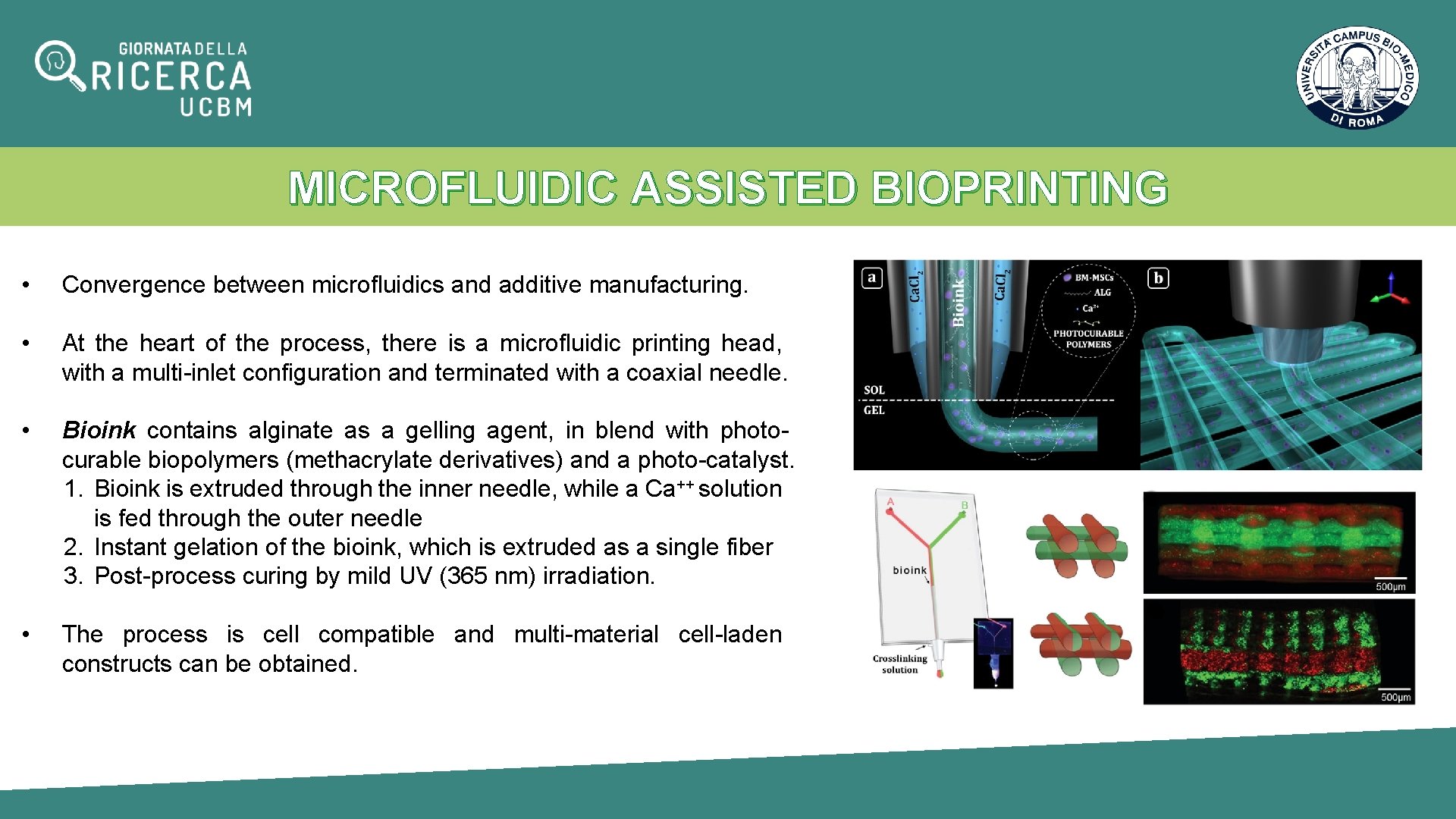
MICROFLUIDIC ASSISTED BIOPRINTING • Convergence between microfluidics and additive manufacturing. • At the heart of the process, there is a microfluidic printing head, with a multi-inlet configuration and terminated with a coaxial needle. • Bioink contains alginate as a gelling agent, in blend with photocurable biopolymers (methacrylate derivatives) and a photo-catalyst. 1. Bioink is extruded through the inner needle, while a Ca++ solution is fed through the outer needle 2. Instant gelation of the bioink, which is extruded as a single fiber 3. Post-process curing by mild UV (365 nm) irradiation. • The process is cell compatible and multi-material cell-laden constructs can be obtained.
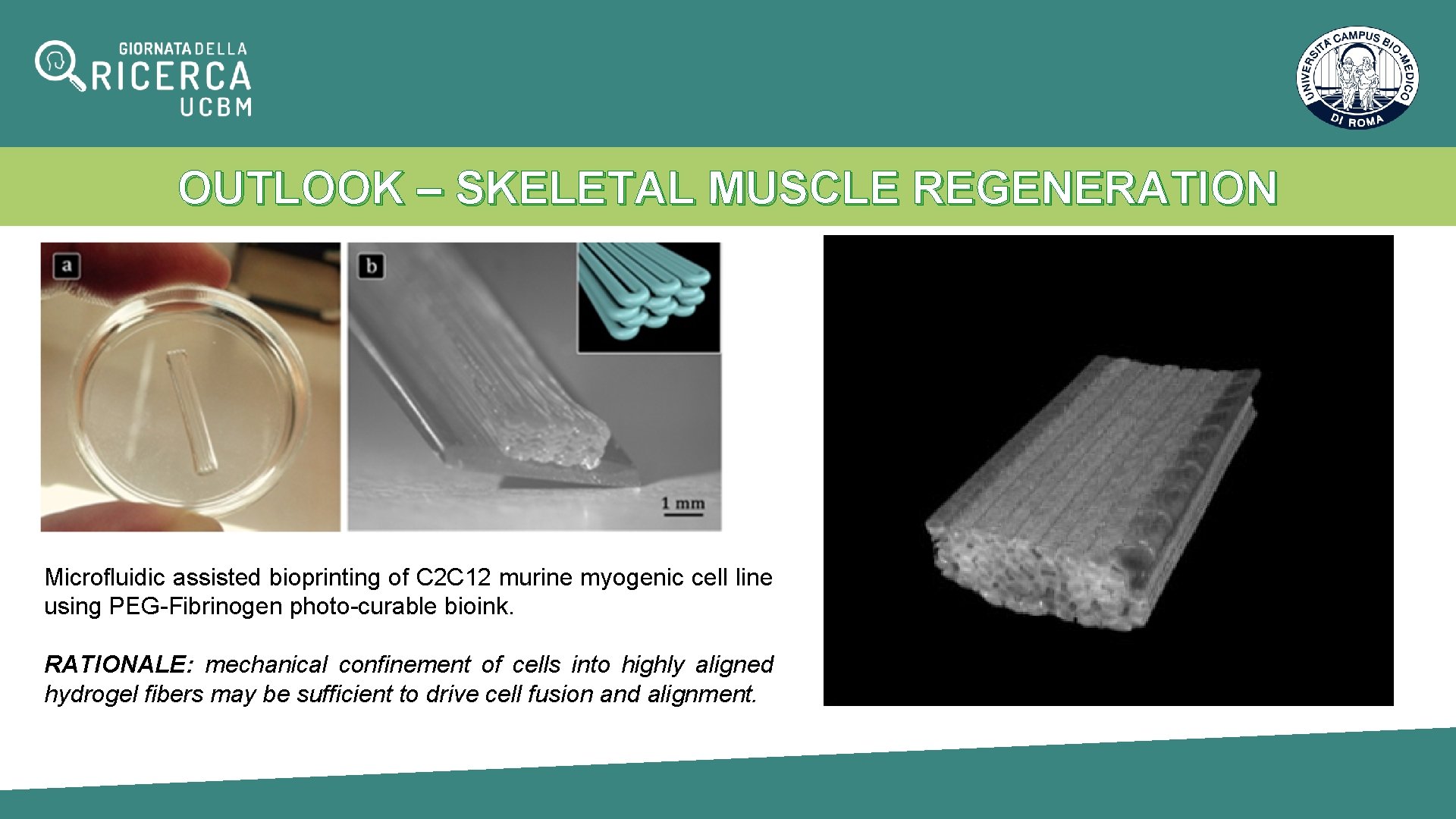
OUTLOOK – SKELETAL MUSCLE REGENERATION Microfluidic assisted bioprinting of C 2 C 12 murine myogenic cell line using PEG-Fibrinogen photo-curable bioink. RATIONALE: mechanical confinement of cells into highly aligned hydrogel fibers may be sufficient to drive cell fusion and alignment.
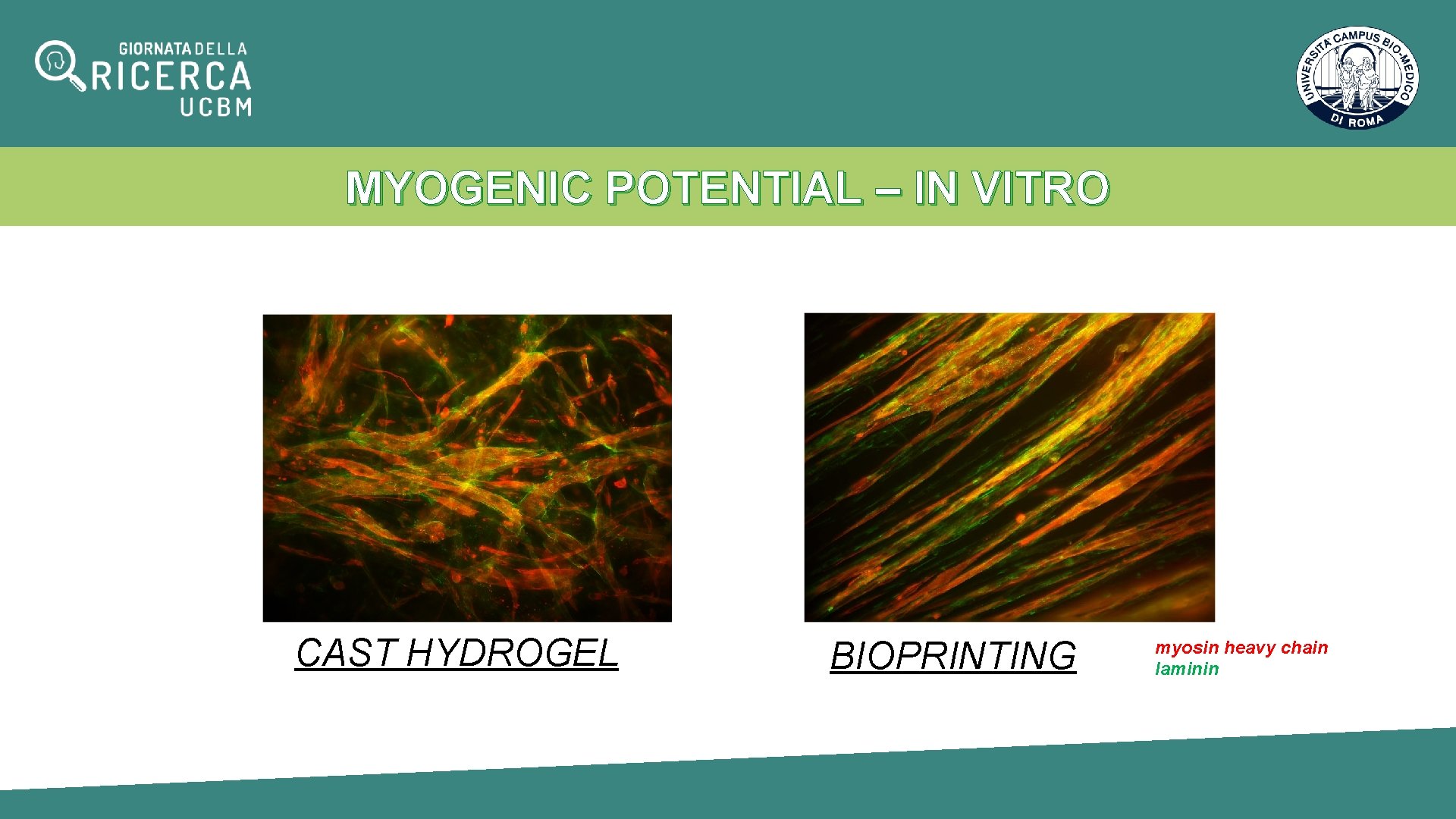
MYOGENIC POTENTIAL – IN VITRO CAST HYDROGEL BIOPRINTING myosin heavy chain laminin
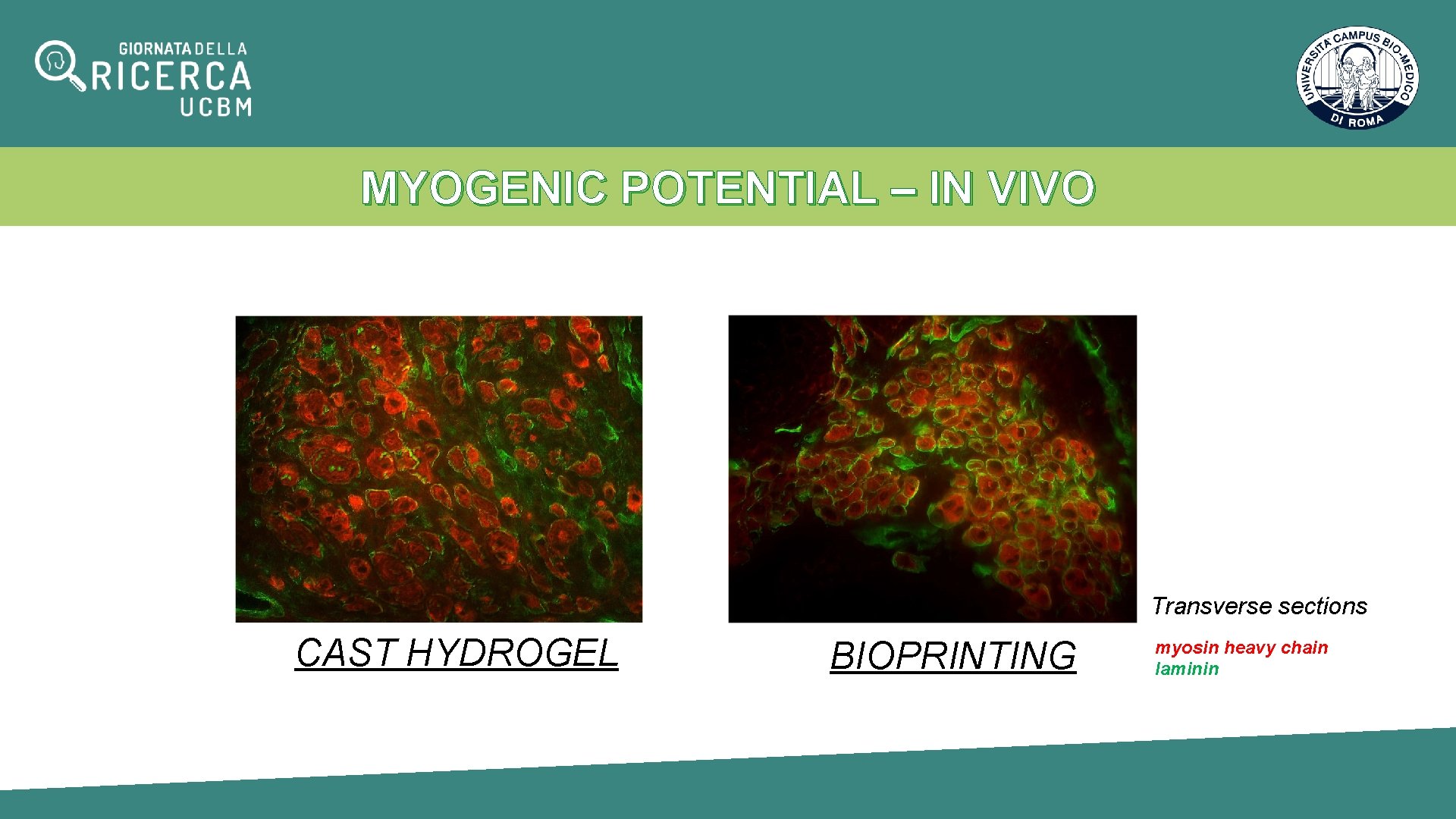
MYOGENIC POTENTIAL – IN VIVO Transverse sections CAST HYDROGEL BIOPRINTING myosin heavy chain laminin
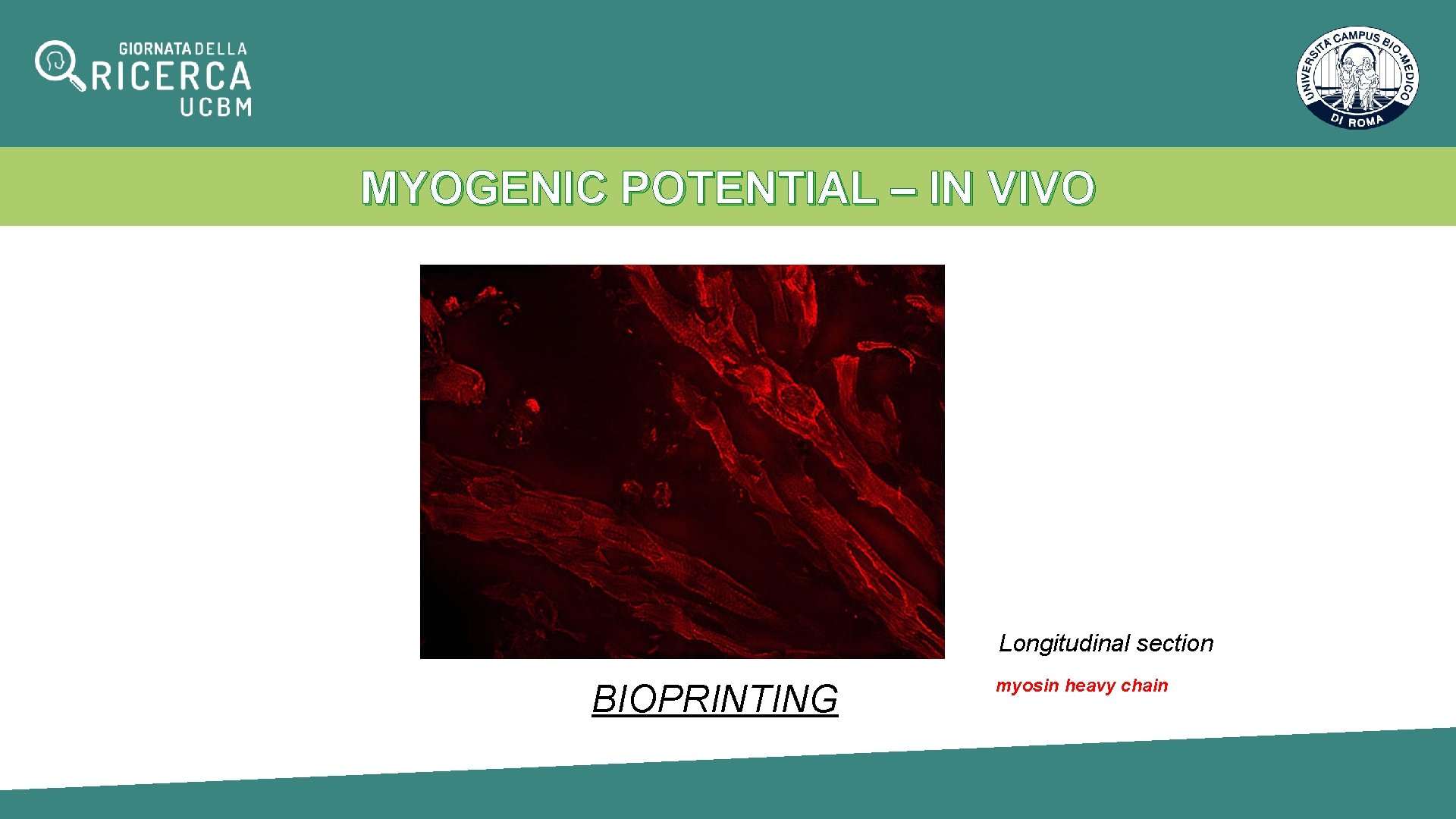
MYOGENIC POTENTIAL – IN VIVO Longitudinal section BIOPRINTING myosin heavy chain
TAKE-HOME MESSAGE Technological advances introduced by improved manufacturing techniques may play a role in the diffusion of tissue engineering approaches for regenerative medicine.
ACKNOWLEDGEMENTS Tissue Engineering Unit @ UCBM Marcella TROMBETTA Francesco BASOLI Marco COSTANTINI Sara M. GIANNITELLI Pamela MOZETIC Manuele GORI Franca ABBRUZZESE Claudia CICIONE Maria Chiara SIMONELLI Units @ UCBM Translational Oncology Biochemistry & Molecular Biology Nonlinear Physics & Mathematical Modeling Gastroenterology Unit Microscopic & Ultrastructural Anatomy Medical Laboratory Cardiac Surgery COLLABORATIONS Univ. Tor Vergata (Sivia Licoccia, Cesare Gargioli, Stefano Cannata) IFN-CNR (Luca Businaro, Annamaria Gerardino, Francesca R. Bertani, Adele De Ninno) Politecnico di Torino (Valeria Chiono, Gianluca Ciardelli) ENEA Casaccia (Antonio Rinaldi) Univ. Bari (Antonio Scilimati, Maria Grazia Perrone) Sapienza Univ. Roma (Mariella Dentini, Andrea Barbetta) FNUSA-ICRC, Brno (Giancarlo Forte, Vladimír Vinarský) Warsaw Univ. Technology (Jakub Jaroszewicz) FAU Erlangen-Nürnberg (Aldo R. Boccaccini) FUNDING MIUR PRIN 2010/11; PRIN 2012 MIUR FIRB Futuro in Ricerca 2010 RICERCA FINALIZZATA RF 2011/12 AIRC MFAG 2015 UCBM - bando interno
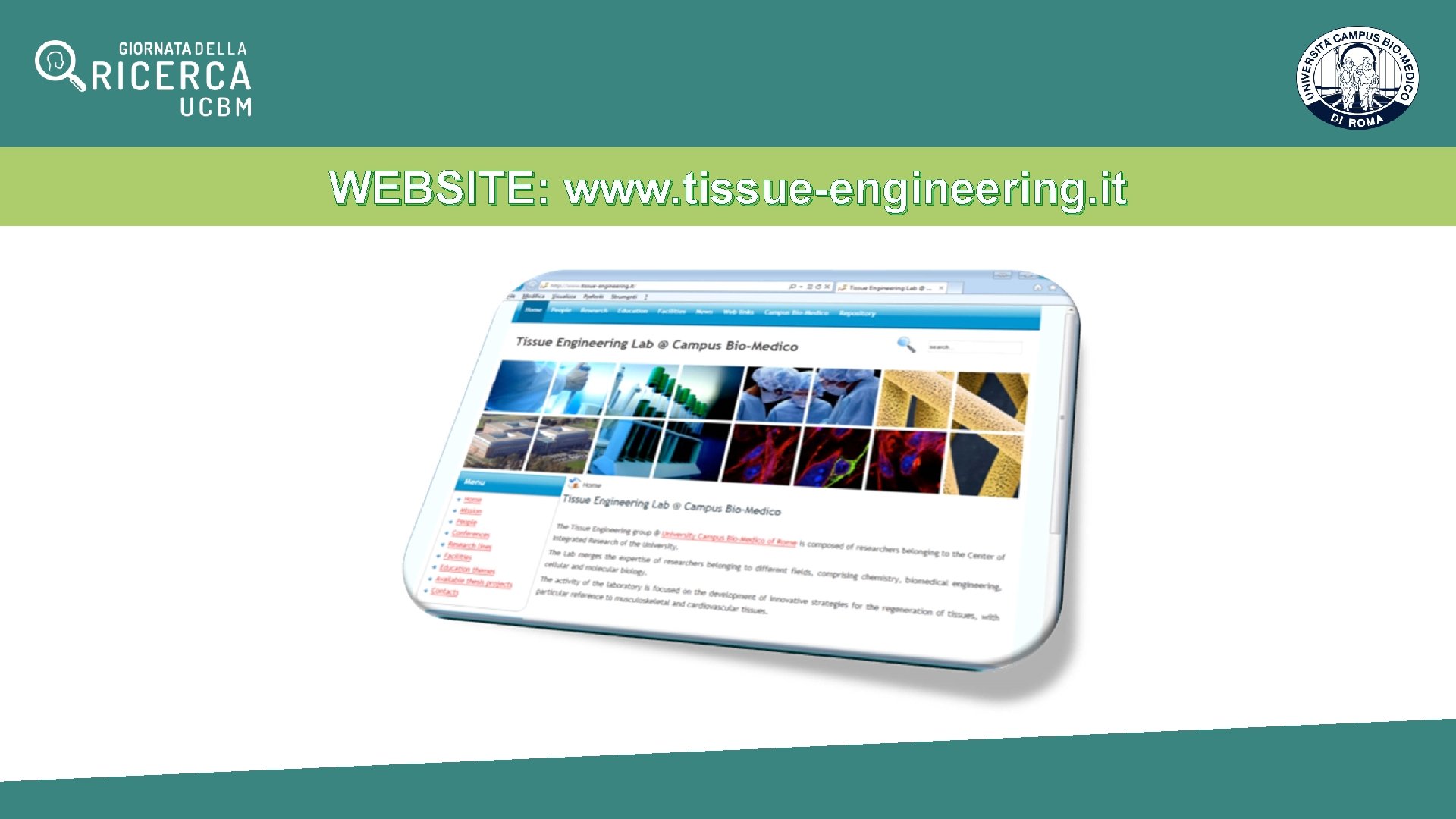
WEBSITE: www. tissue-engineering. it
- Slides: 21