
Advanced Lipid testing for the Assessment of Cardiac
![Atherogenic Cholesterol and Lipoproteins Non. HDL-C = [Total-C] minus [HDL-C] F Can be accurately](https://slidetodoc.com/presentation_image_h/d6d86fb5042c9c99d1d93430b6be9e1d/image-3.jpg "Atherogenic Cholesterol and Lipoproteins Non. HDL-C = [Total-C] minus [HDL-C] F Can be accurately")
![Treatment Considerations Combination therapy (statin + other agent[s]) may be necessary to achieve both](https://slidetodoc.com/presentation_image_h/d6d86fb5042c9c99d1d93430b6be9e1d/image-17.jpg "Treatment Considerations Combination therapy (statin + other agent[s]) may be necessary to achieve both")

- Slides: 18
Advanced Lipid testing for the Assessment of Cardiac Risk Tara Dall, MD Advanced Lipidology Delafield, Wisconsin Diplomate, American Board of Clinical Lipidology
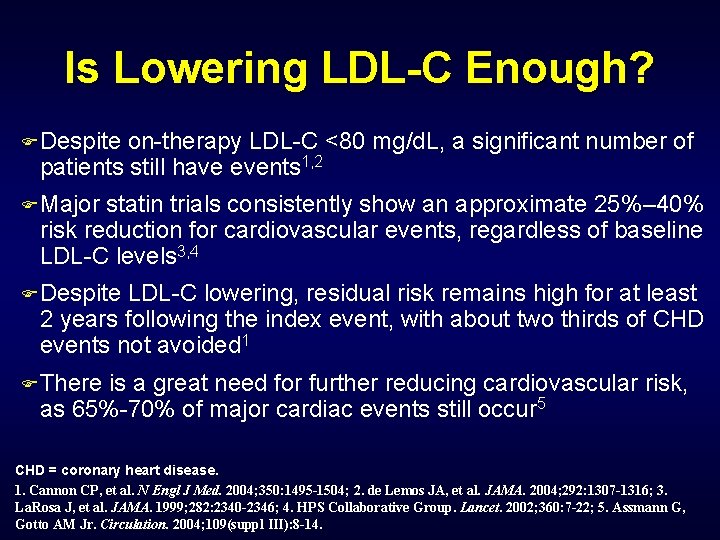
Is Lowering LDL-C Enough? FDespite on-therapy LDL-C <80 mg/d. L, a significant number of patients still have events 1, 2 FMajor statin trials consistently show an approximate 25%– 40% risk reduction for cardiovascular events, regardless of baseline LDL-C levels 3, 4 FDespite LDL-C lowering, residual risk remains high for at least 2 years following the index event, with about two thirds of CHD events not avoided 1 FThere is a great need for further reducing cardiovascular risk, as 65%-70% of major cardiac events still occur 5 CHD = coronary heart disease. 1. Cannon CP, et al. N Engl J Med. 2004; 350: 1495 -1504; 2. de Lemos JA, et al. JAMA. 2004; 292: 1307 -1316; 3. La. Rosa J, et al. JAMA. 1999; 282: 2340 -2346; 4. HPS Collaborative Group. Lancet. 2002; 360: 7 -22; 5. Assmann G, Gotto AM Jr. Circulation. 2004; 109(suppl III): 8 -14.
Atherogenic Cholesterol and Lipoproteins Non. HDL-C = [Total-C] minus [HDL-C] F Can be accurately measured in nonfasting state F Apo B concentration represents total number of lipoprotein particles in LDL + IDL + VLDL F This may be called “non-HDL” cholesterol or “atherogenic cholesterol” F All apo B-containing lipoproteins may truly possess similar atherogenic potential? F Grundy, et al, Circulation. 1997; 95: 1 -4
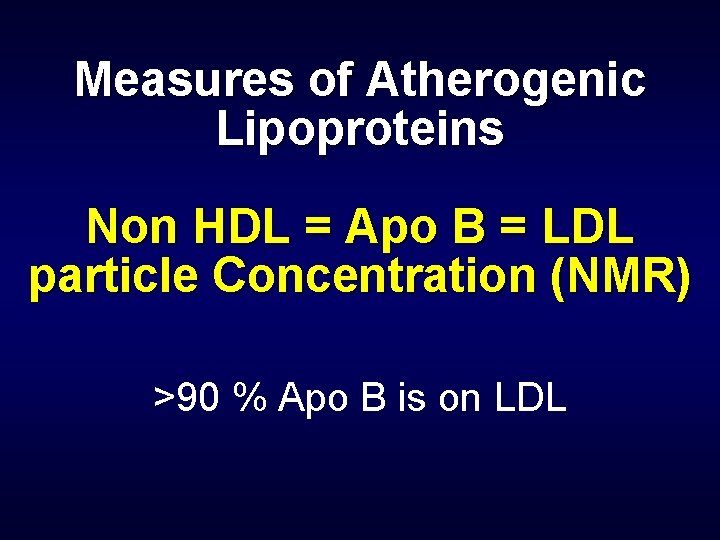
Measures of Atherogenic Lipoproteins Non HDL = Apo B = LDL particle Concentration (NMR) >90 % Apo B is on LDL
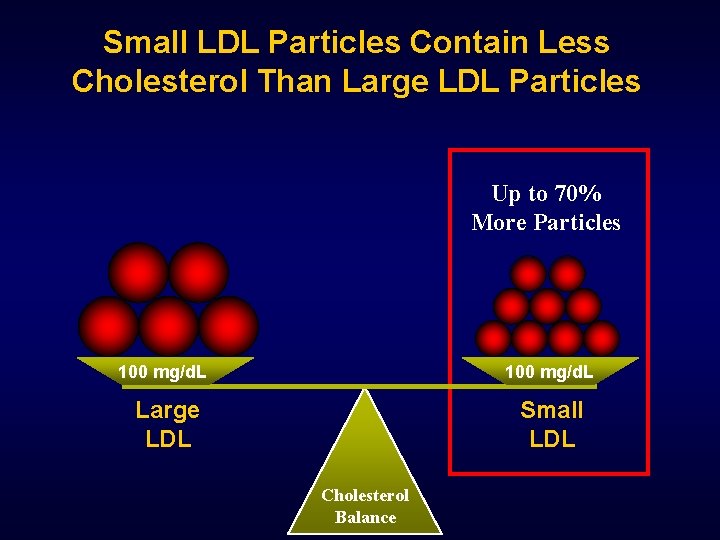
Small LDL Particles Contain Less Cholesterol Than Large LDL Particles Up to 70% More Particles 100 mg/d. L Large LDL Small LDL Cholesterol Balance
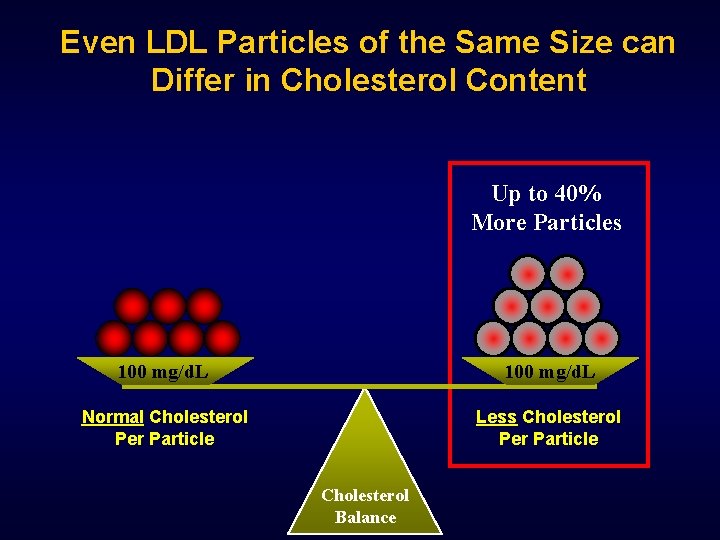
Even LDL Particles of the Same Size can Differ in Cholesterol Content Up to 40% More Particles 100 mg/d. L Normal Cholesterol Per Particle Less Cholesterol Per Particle Cholesterol Balance
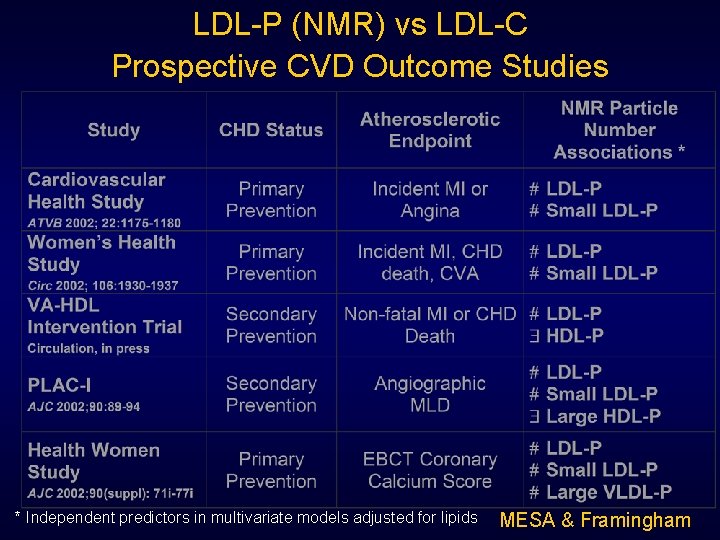
LDL-P (NMR) vs LDL-C Prospective CVD Outcome Studies * Independent predictors in multivariate models adjusted for lipids MESA & Framingham
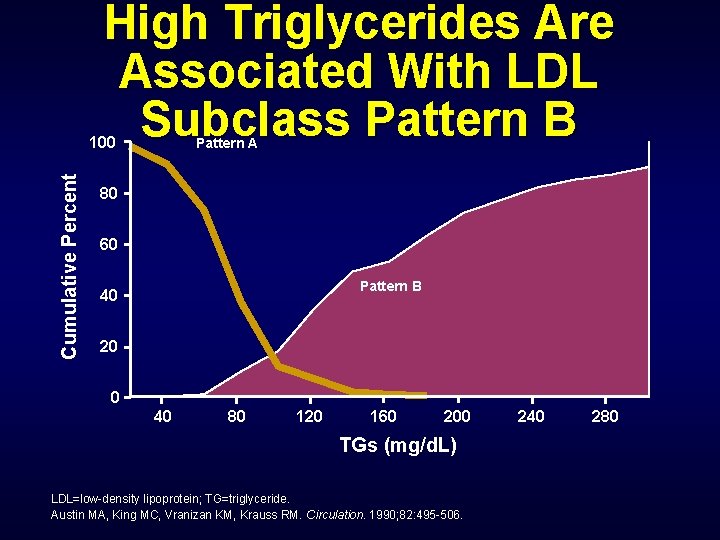
High Triglycerides Are Associated With LDL Subclass Pattern B Cumulative Percent 100 Pattern A 80 60 Pattern B 40 20 0 40 80 120 160 200 TGs (mg/d. L) LDL=low-density lipoprotein; TG=triglyceride. Austin MA, King MC, Vranizan KM, Krauss RM. Circulation. 1990; 82: 495 -506. 240 280
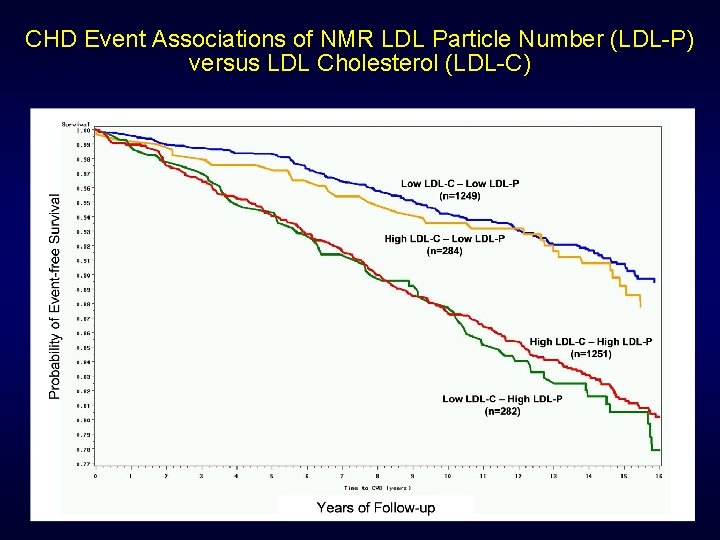
CHD Event Associations of NMR LDL Particle Number (LDL-P) versus LDL Cholesterol (LDL-C)
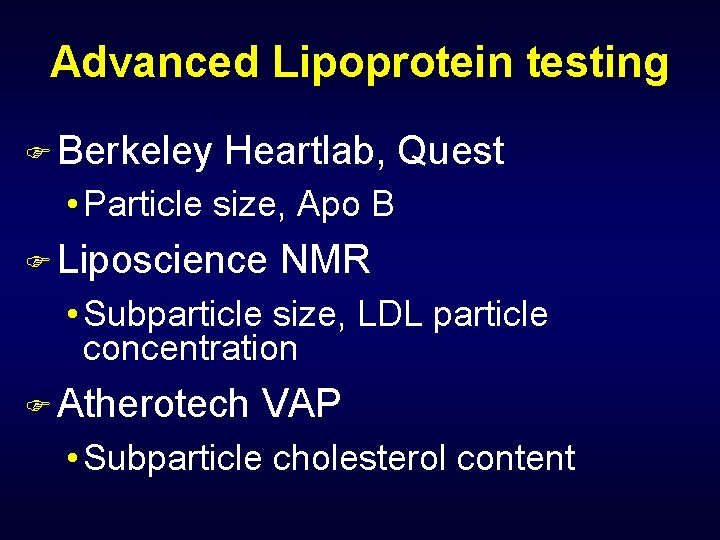
Advanced Lipoprotein testing F Berkeley Heartlab, Quest • Particle size, Apo B F Liposcience NMR • Subparticle size, LDL particle concentration F Atherotech VAP • Subparticle cholesterol content
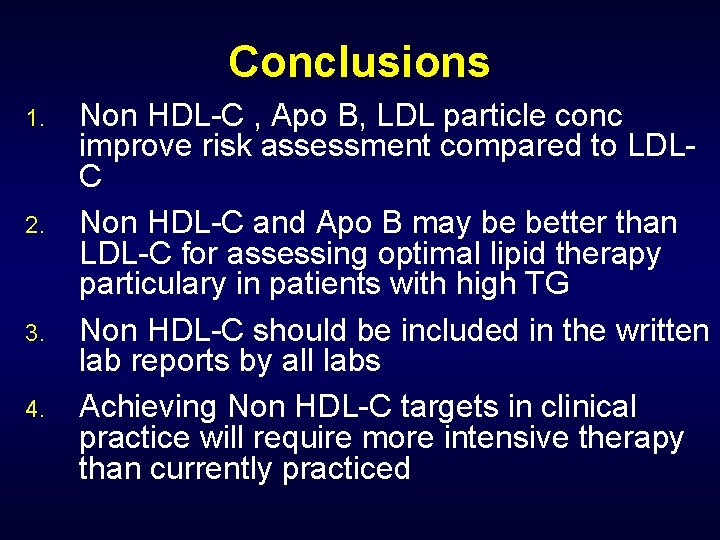
Conclusions 1. 2. 3. 4. Non HDL-C , Apo B, LDL particle conc improve risk assessment compared to LDLC Non HDL-C and Apo B may be better than LDL-C for assessing optimal lipid therapy particulary in patients with high TG Non HDL-C should be included in the written lab reports by all labs Achieving Non HDL-C targets in clinical practice will require more intensive therapy than currently practiced
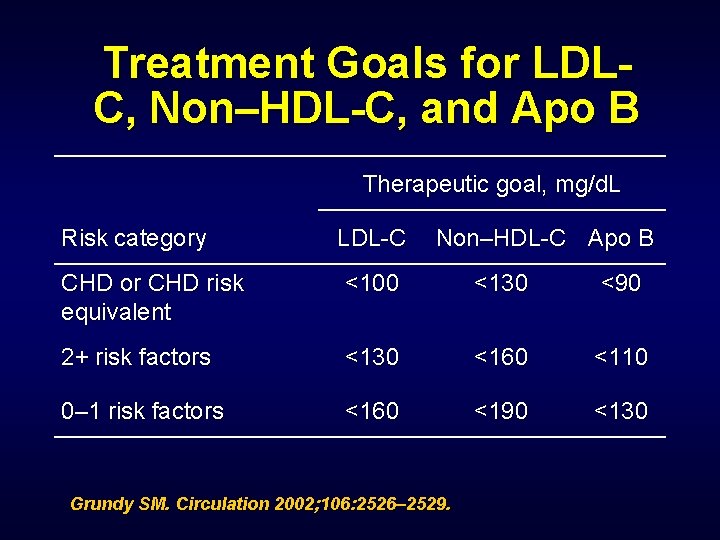
Treatment Goals for LDLC, Non–HDL-C, and Apo B Therapeutic goal, mg/d. L Risk category LDL-C Non–HDL-C Apo B CHD or CHD risk equivalent <100 <130 <90 2+ risk factors <130 <160 <110 0– 1 risk factors <160 <190 <130 Grundy SM. Circulation 2002; 106: 2526– 2529.
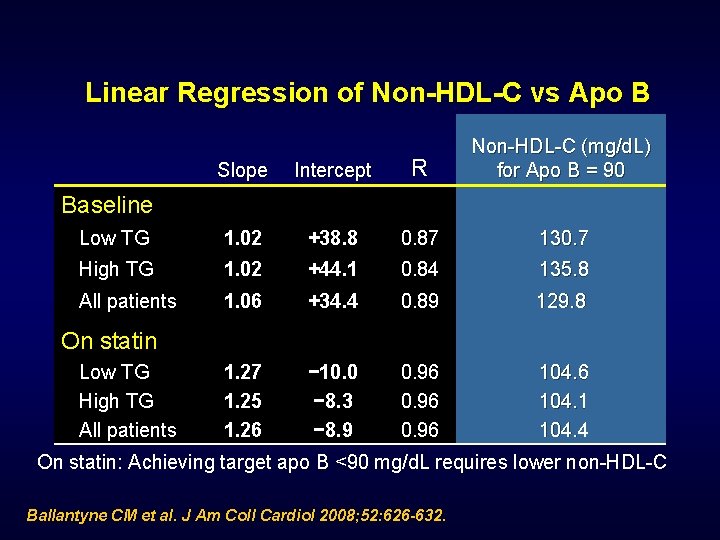
Linear Regression of Non-HDL-C vs Apo B Slope Intercept R Non-HDL-C (mg/d. L) for Apo B = 90 Low TG 1. 02 +38. 8 0. 87 130. 7 High TG 1. 02 +44. 1 0. 84 135. 8 All patients 1. 06 +34. 4 0. 89 129. 8 1. 27 1. 25 1. 26 − 10. 0 − 8. 3 − 8. 9 0. 96 104. 1 104. 4 Baseline On statin Low TG High TG All patients On statin: Achieving target apo B <90 mg/d. L requires lower non-HDL-C Ballantyne CM et al. J Am Coll Cardiol 2008; 52: 626 -632.
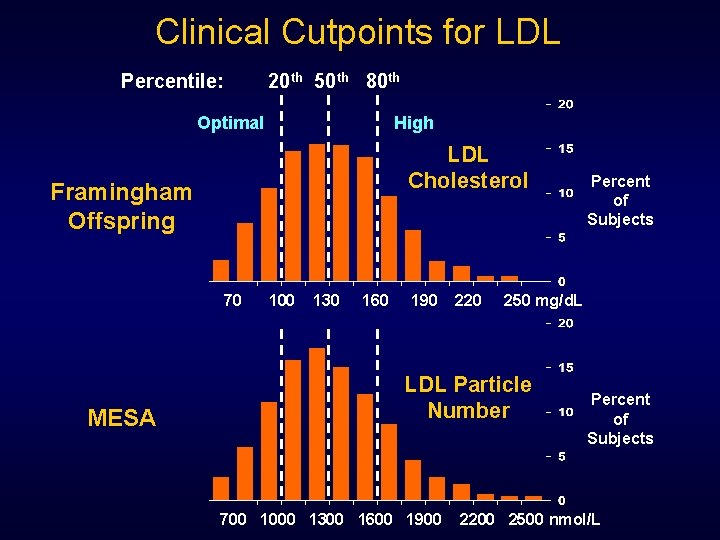
Clinical Cutpoints for LDL Percentile: 20 th 50 th 80 th Optimal High LDL Cholesterol Framingham Offspring 70 MESA 100 130 160 190 220 250 mg/d. L LDL Particle Number 700 1000 1300 1600 1900 Percent of Subjects 2200 2500 nmol/L
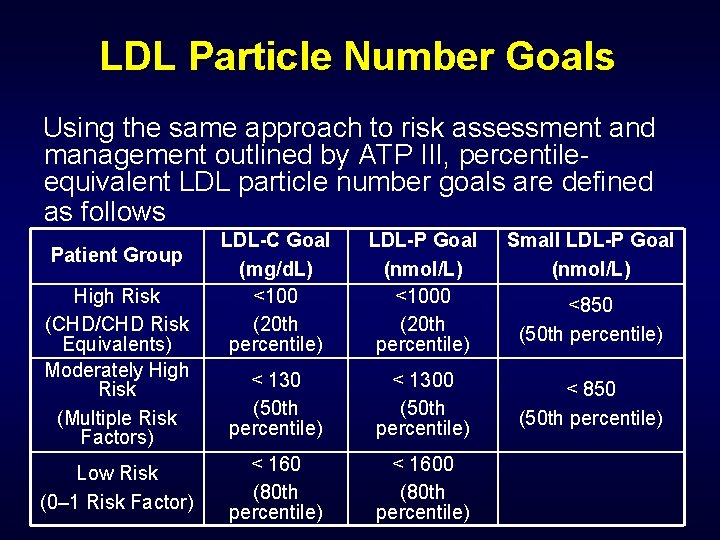
LDL Particle Number Goals Using the same approach to risk assessment and management outlined by ATP III, percentileequivalent LDL particle number goals are defined as follows: Patient Group High Risk (CHD/CHD Risk Equivalents) Moderately High Risk (Multiple Risk Factors) Low Risk (0– 1 Risk Factor) LDL-C Goal (mg/d. L) <100 (20 th percentile) LDL-P Goal (nmol/L) <1000 (20 th percentile) Small LDL-P Goal (nmol/L) < 130 (50 th percentile) < 1300 (50 th percentile) < 850 (50 th percentile) < 160 (80 th percentile) < 1600 (80 th percentile) <850 (50 th percentile)
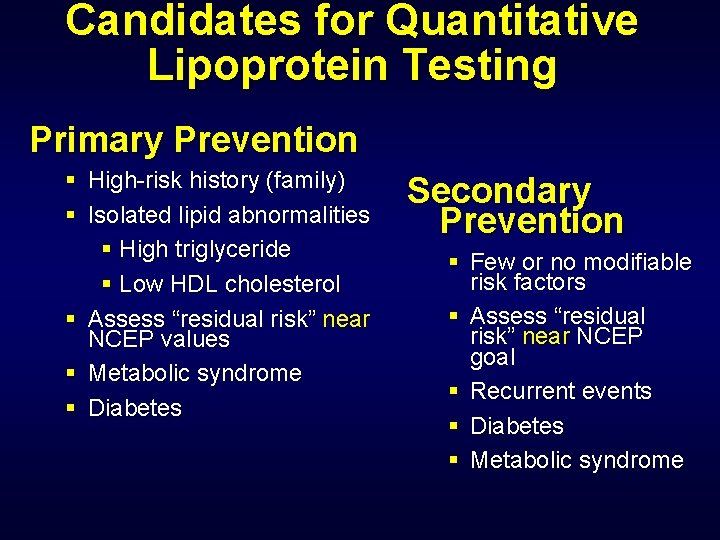
Candidates for Quantitative Lipoprotein Testing Primary Prevention § High-risk history (family) § Isolated lipid abnormalities § High triglyceride § Low HDL cholesterol § Assess “residual risk” near NCEP values § Metabolic syndrome § Diabetes Secondary Prevention § Few or no modifiable risk factors § Assess “residual risk” near NCEP goal § Recurrent events § Diabetes § Metabolic syndrome
Treatment Considerations Combination therapy (statin + other agent[s]) may be necessary to achieve both goals. Combination agents which increase LDL size (niacin or fibrates) generally lower LDL-P more than LDL-C.