
Advanced Integral Learning What is our pedagogical modelcycle
- Slides: 25
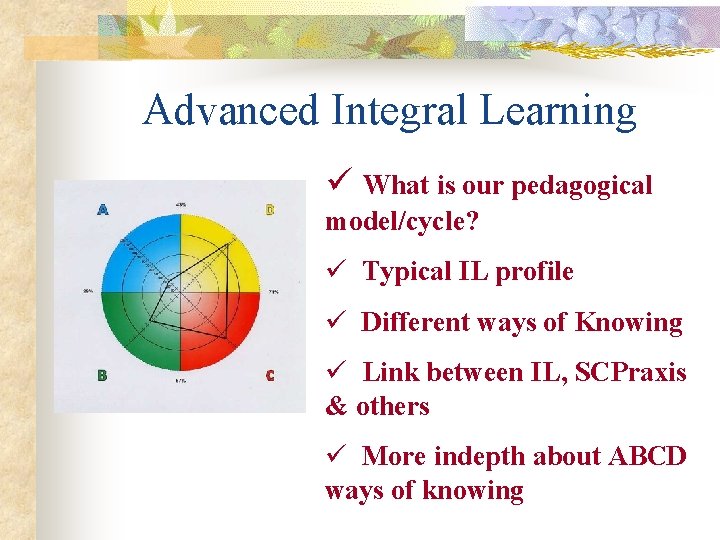
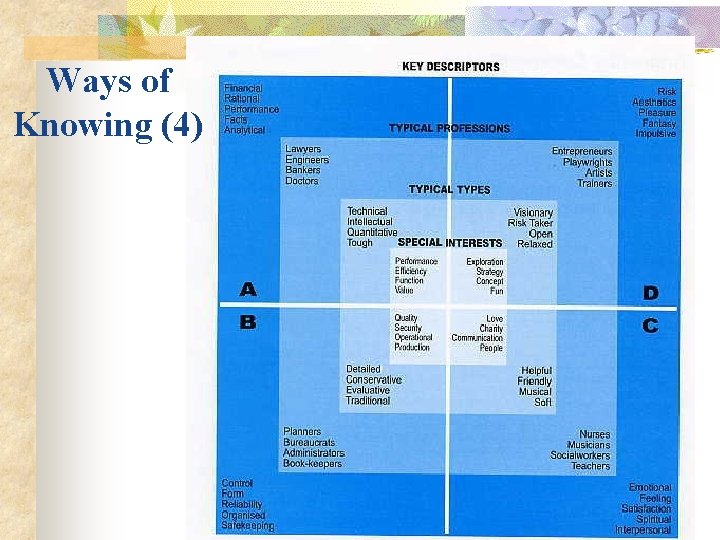
Advanced Integral Learning ü What is our pedagogical model/cycle? ü Typical IL profile ü Different ways of Knowing ü Link between IL, SCPraxis & others ü More indepth about ABCD ways of knowing
Different pedagogical models n n n n Yoram Harpaz = ‘fertile questions’ Quality Teaching Framework Shared Christian Praxis BOS cycle of TLAR Timperley, ‘How People Learn’ PEEL UNESCO Integral Learning is ONE such model
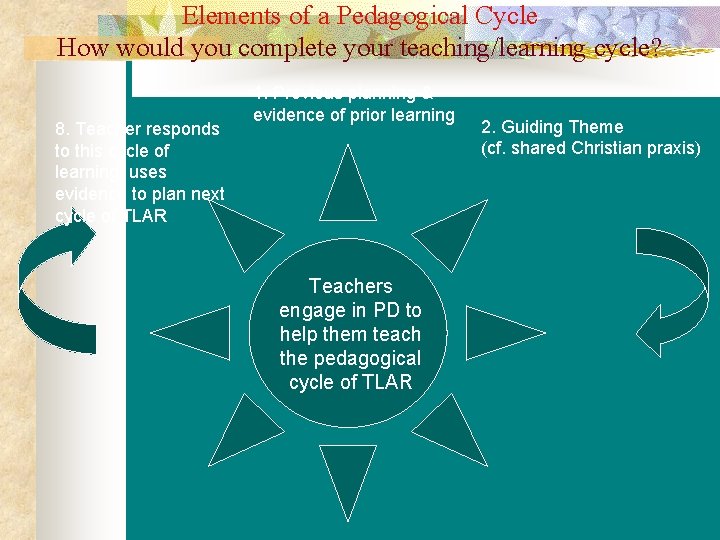
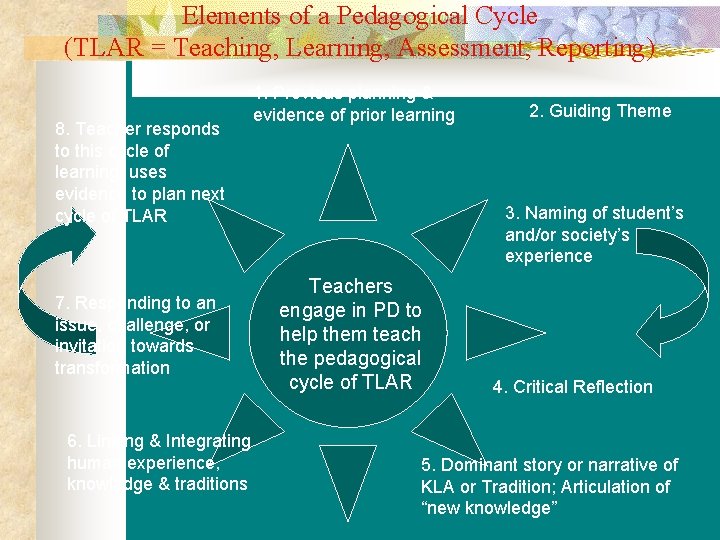
Elements of a Pedagogical Cycle How would you complete your teaching/learning cycle? 8. Teacher responds to this cycle of learning; uses evidence to plan next cycle of TLAR 1. Previous planning & evidence of prior learning Teachers engage in PD to help them teach the pedagogical cycle of TLAR 2. Guiding Theme (cf. shared Christian praxis)
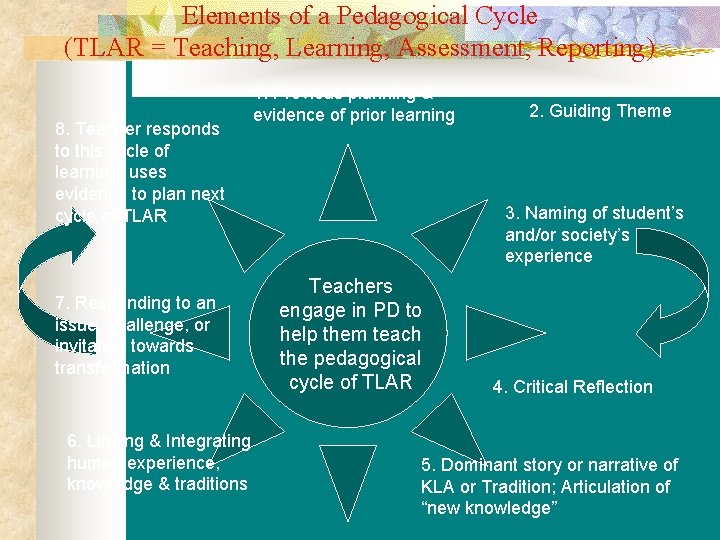
Elements of a Pedagogical Cycle (TLAR = Teaching, Learning, Assessment, Reporting) 8. Teacher responds to this cycle of learning; uses evidence to plan next cycle of TLAR 7. Responding to an issue, challenge, or invitation towards transformation 6. Linking & Integrating human experience, knowledge & traditions 1. Previous planning & evidence of prior learning 2. Guiding Theme 3. Naming of student’s and/or society’s experience Teachers engage in PD to help them teach the pedagogical cycle of TLAR 4. Critical Reflection 5. Dominant story or narrative of KLA or Tradition; Articulation of “new knowledge”
Integral Learning n n What is Integral Learning? Choosing your IL profile Questions & issues that it raises Applications for the classroom
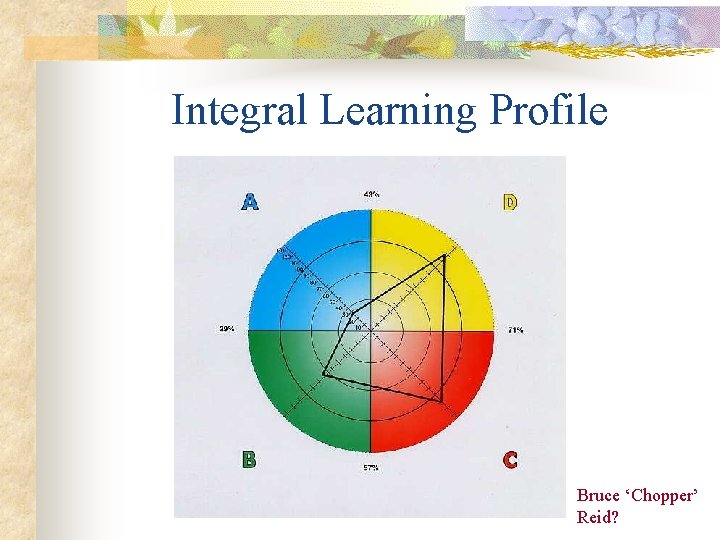
Integral Learning Profile Bruce ‘Chopper’ Reid?
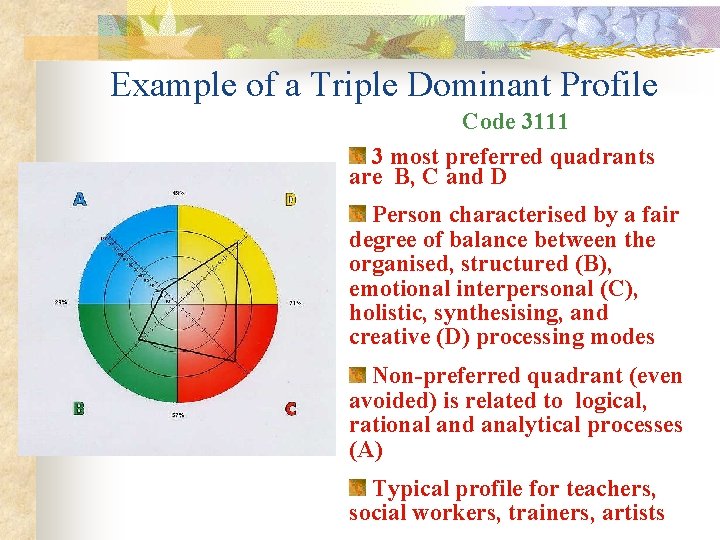
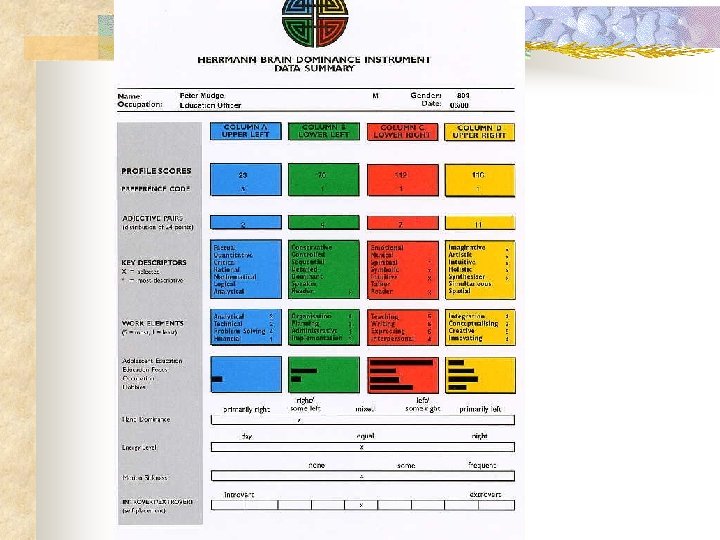
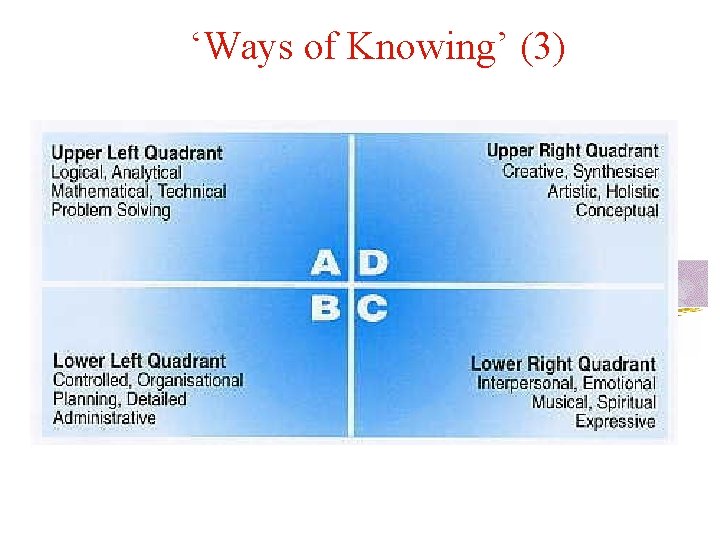
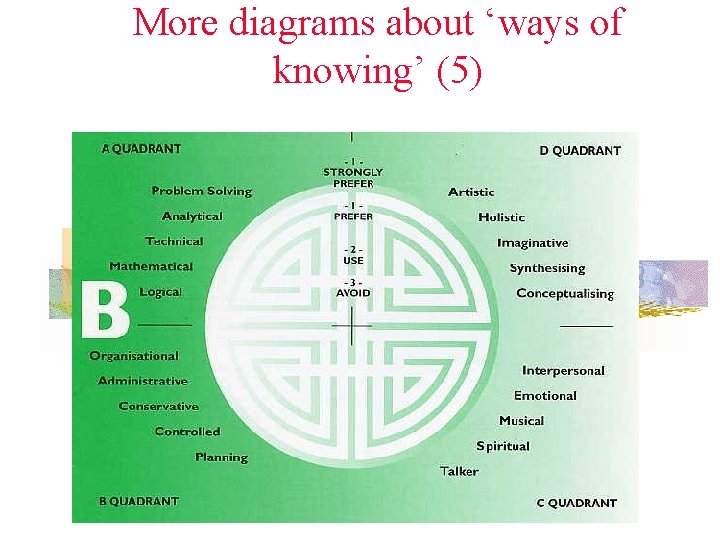
Example of a Triple Dominant Profile Code 3111 3 most preferred quadrants are B, C and D Person characterised by a fair degree of balance between the organised, structured (B), emotional interpersonal (C), holistic, synthesising, and creative (D) processing modes Non-preferred quadrant (even avoided) is related to logical, rational and analytical processes (A) Typical profile for teachers, social workers, trainers, artists
The emerging learning culture lifelong learners learning to learner directed learning customised and personal learning collaborative and cooperative learning contextualised learning transformative learning ‘just in time’ learning (Ellyard, Lepani, Atkin)
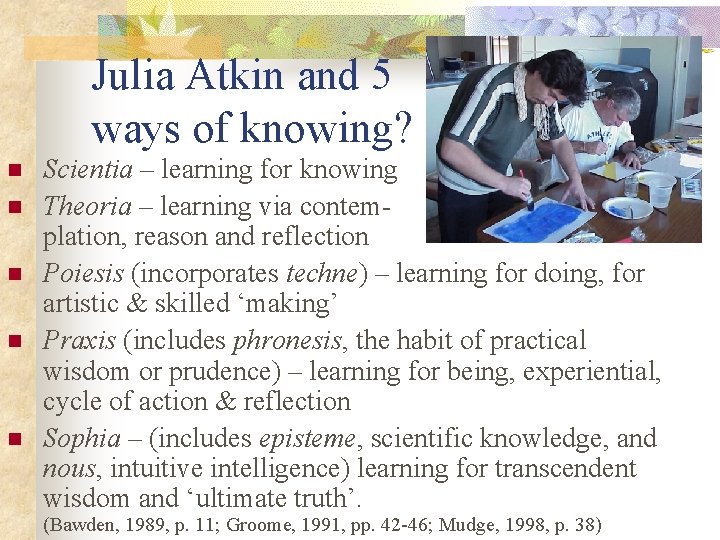
Julia Atkin and 5 ways of knowing? n n n Scientia – learning for knowing Theoria – learning via contemplation, reason and reflection Poiesis (incorporates techne) – learning for doing, for artistic & skilled ‘making’ Praxis (includes phronesis, the habit of practical wisdom or prudence) – learning for being, experiential, cycle of action & reflection Sophia – (includes episteme, scientific knowledge, and nous, intuitive intelligence) learning for transcendent wisdom and ‘ultimate truth’. (Bawden, 1989, p. 11; Groome, 1991, pp. 42 -46; Mudge, 1998, p. 38)
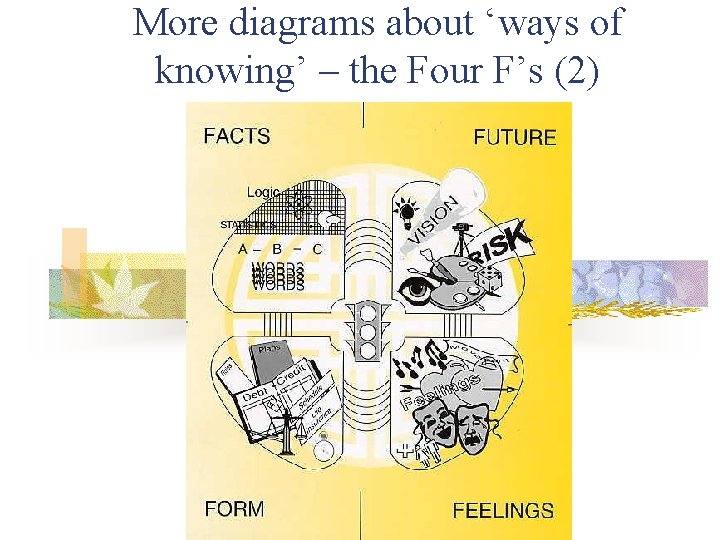
More diagrams about ‘ways of knowing’ – the Four F’s (2)
‘Ways of Knowing’ (3)
Ways of Knowing (4)
More diagrams about ‘ways of knowing’ (5)
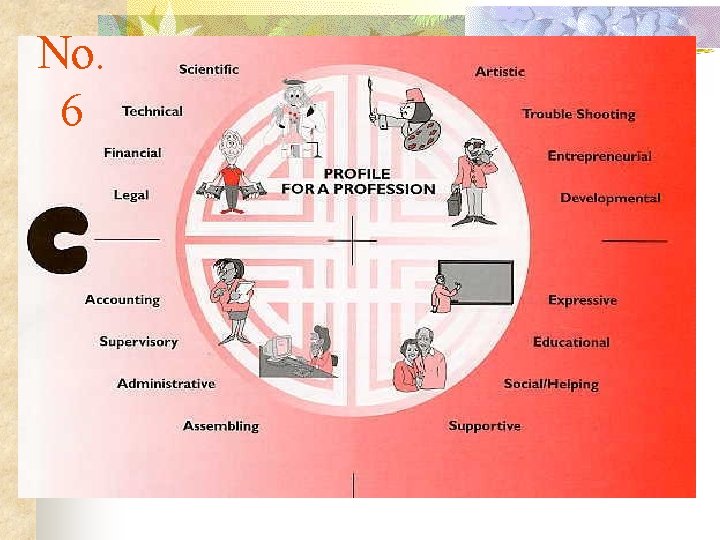
No. 6
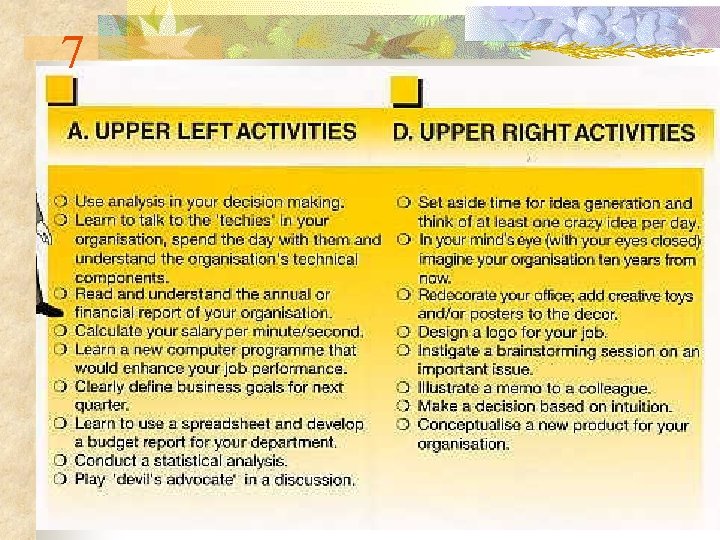
7
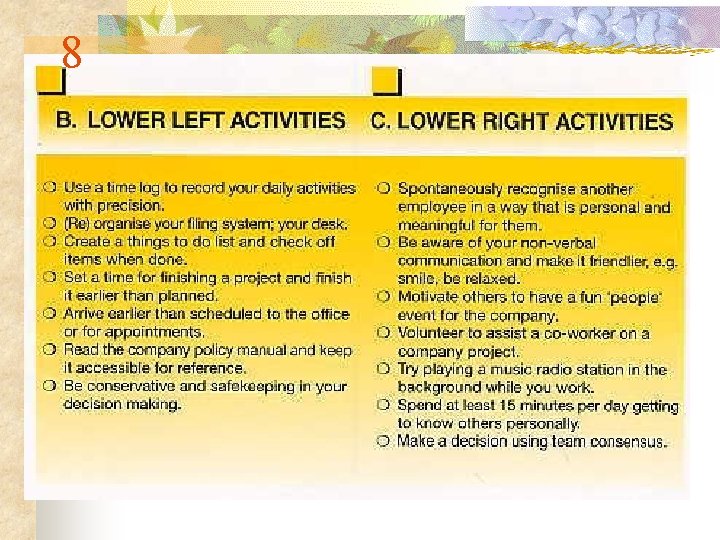
8
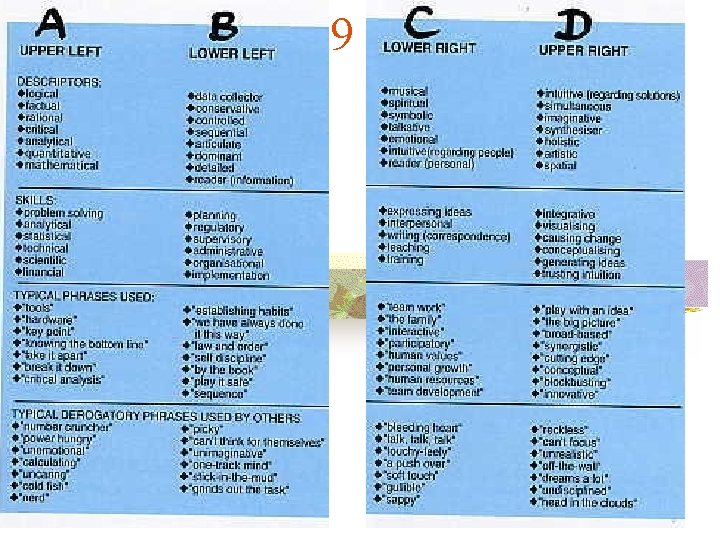
9
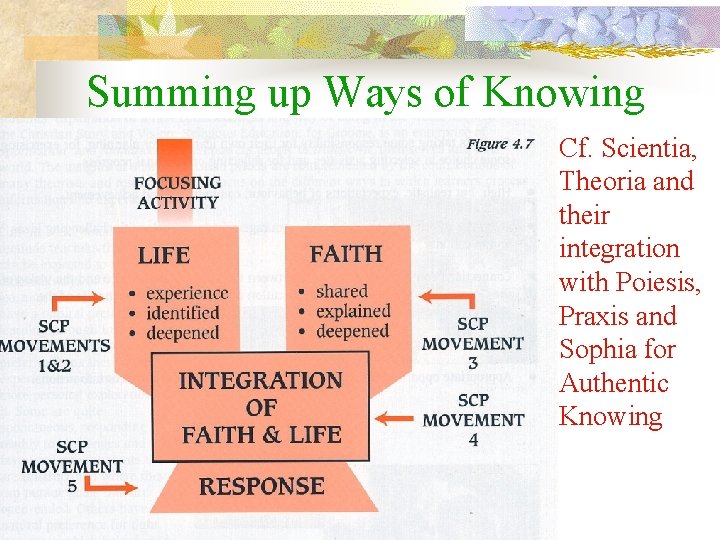
Summing up Ways of Knowing Cf. Scientia, Theoria and their integration with Poiesis, Praxis and Sophia for Authentic Knowing
Elements of a Pedagogical Cycle (TLAR = Teaching, Learning, Assessment, Reporting) 8. Teacher responds to this cycle of learning; uses evidence to plan next cycle of TLAR 7. Responding to an issue, challenge, or invitation towards transformation 6. Linking & Integrating human experience, knowledge & traditions 1. Previous planning & evidence of prior learning 2. Guiding Theme 3. Naming of student’s and/or society’s experience Teachers engage in PD to help them teach the pedagogical cycle of TLAR 4. Critical Reflection 5. Dominant story or narrative of KLA or Tradition; Articulation of “new knowledge”
Thank You
The End
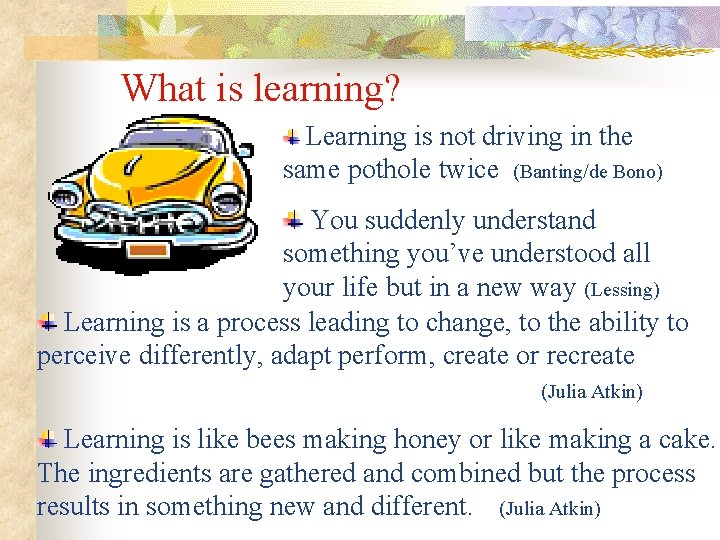
What is learning? Learning is not driving in the same pothole twice (Banting/de Bono) You suddenly understand something you’ve understood all your life but in a new way (Lessing) Learning is a process leading to change, to the ability to perceive differently, adapt perform, create or recreate (Julia Atkin) Learning is like bees making honey or like making a cake. The ingredients are gathered and combined but the process results in something new and different. (Julia Atkin)
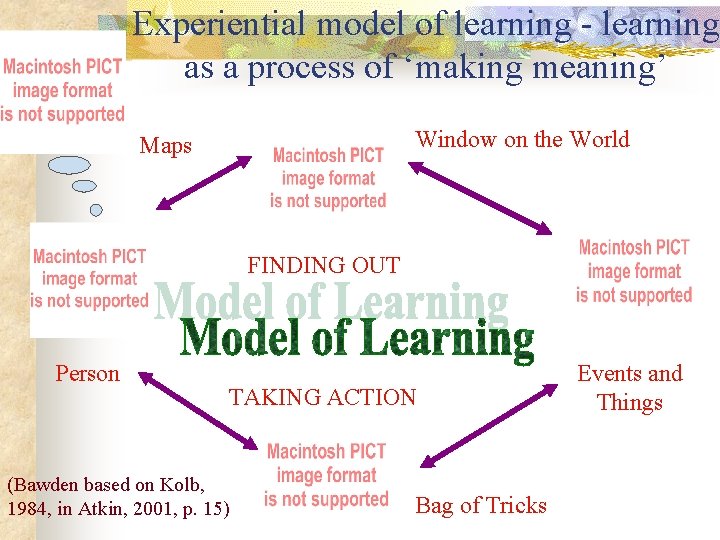
Experiential model of learning - learning as a process of ‘making meaning’ Window on the World Maps FINDING OUT Person TAKING ACTION (Bawden based on Kolb, 1984, in Atkin, 2001, p. 15) Bag of Tricks Events and Things
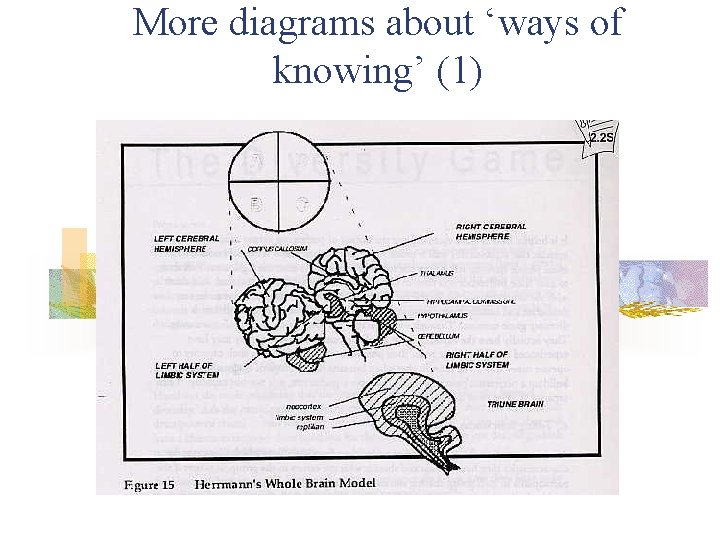
More diagrams about ‘ways of knowing’ (1)