
Advanced Geometry Section 2 7 Transitive and Substitution
Advanced Geometry Section 2. 7 Transitive and Substitution Properties Learner Objective: Students will apply the transitive property of angles nd segments, the substitution property, and the Vertical Angle heorem.
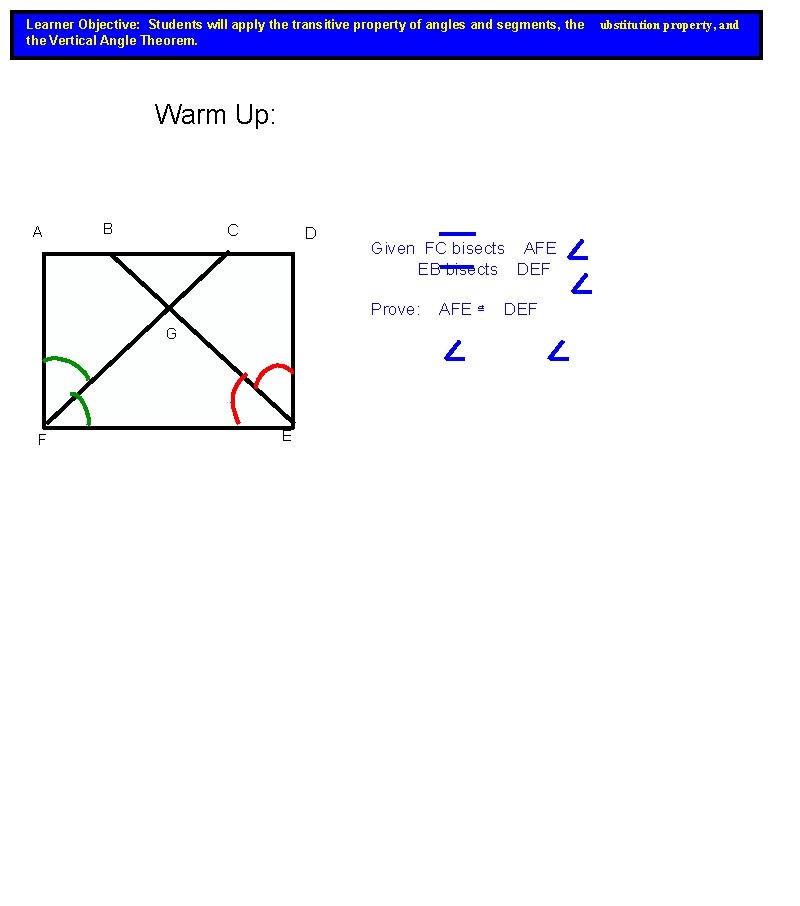
Learner Objective: Students will apply the transitive property of angles and segments, the Vertical Angle Theorem. Warm Up: A B C D Given FC bisects AFE EB bisects DEF Prove: G F E AFE ≅ DEF ubstitution property, and
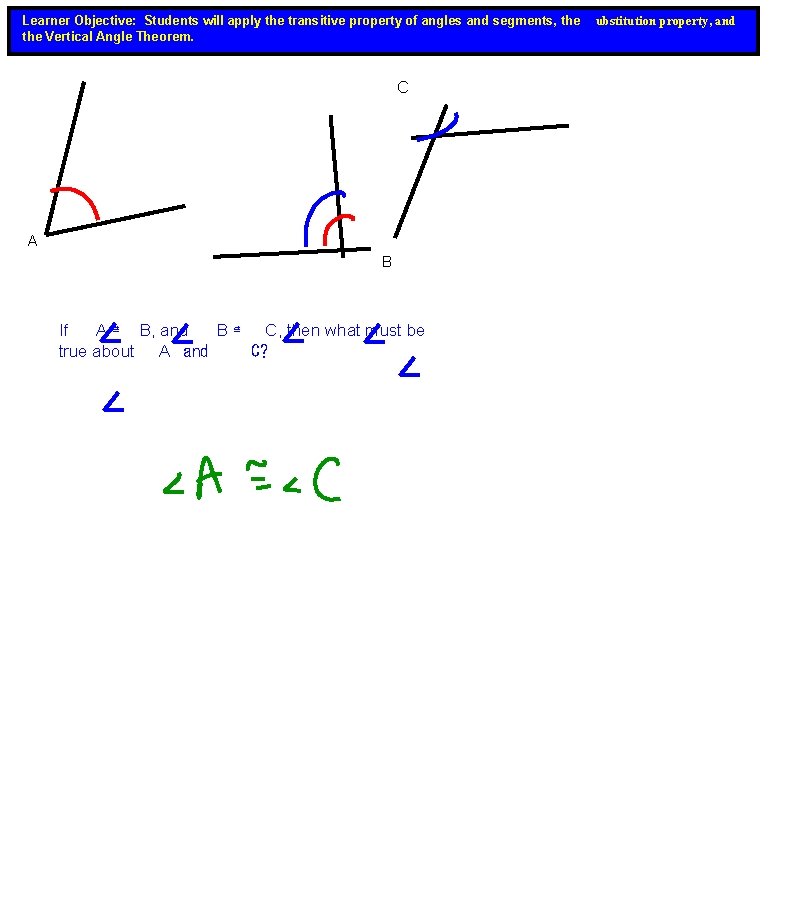
Learner Objective: Students will apply the transitive property of angles and segments, the Vertical Angle Theorem. C A B If A ≅ B, and B ≅ C, then what must be true about A and C? ubstitution property, and
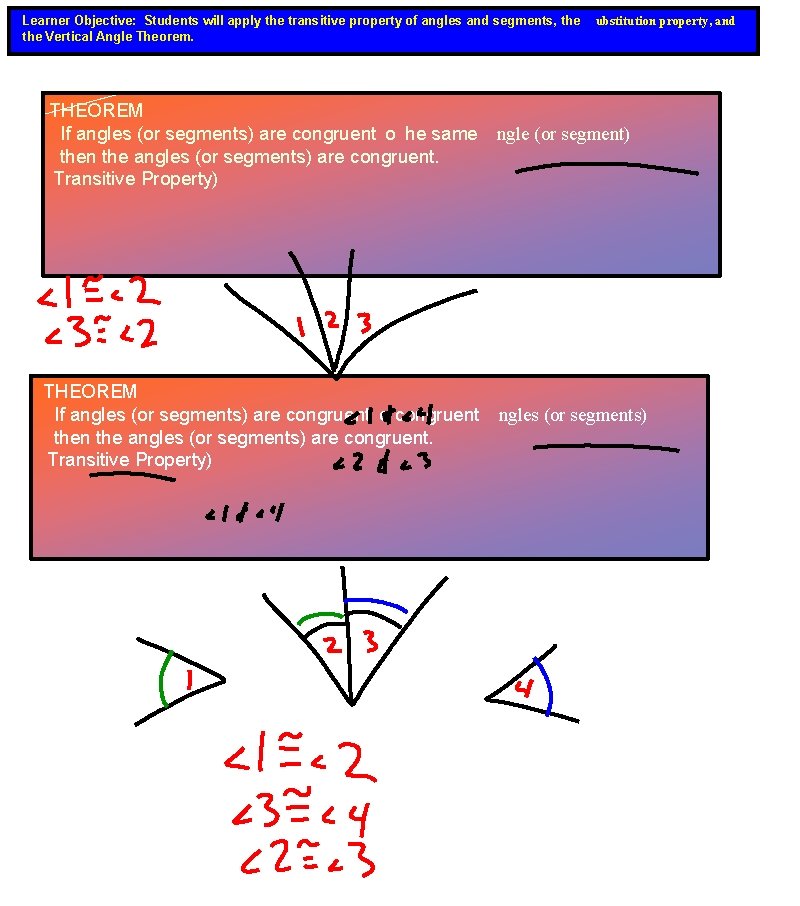
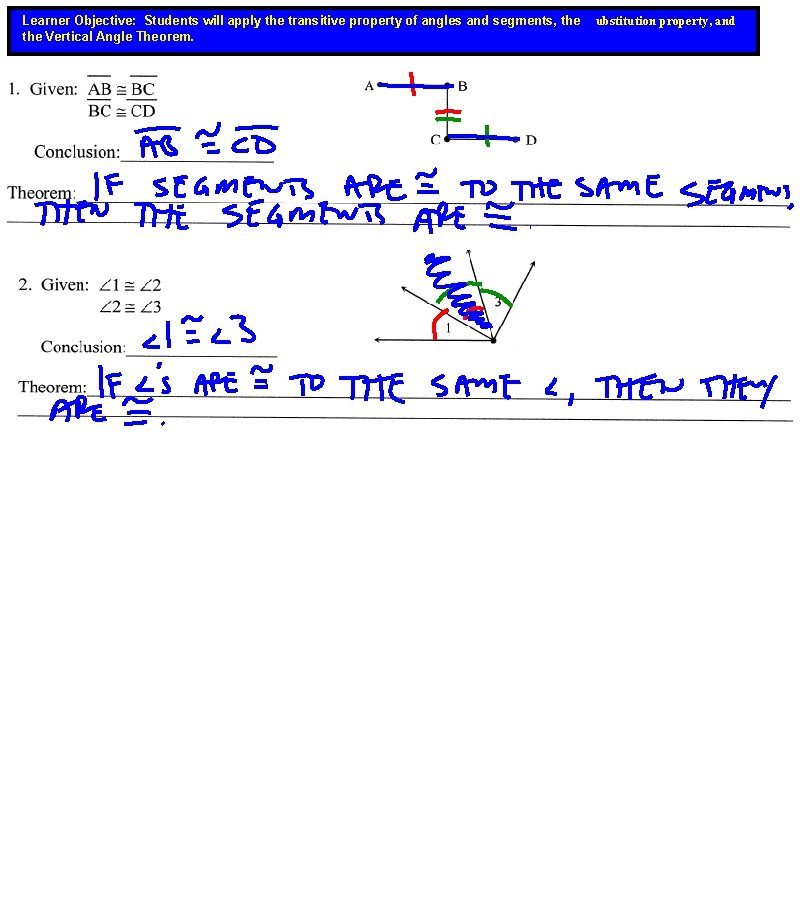
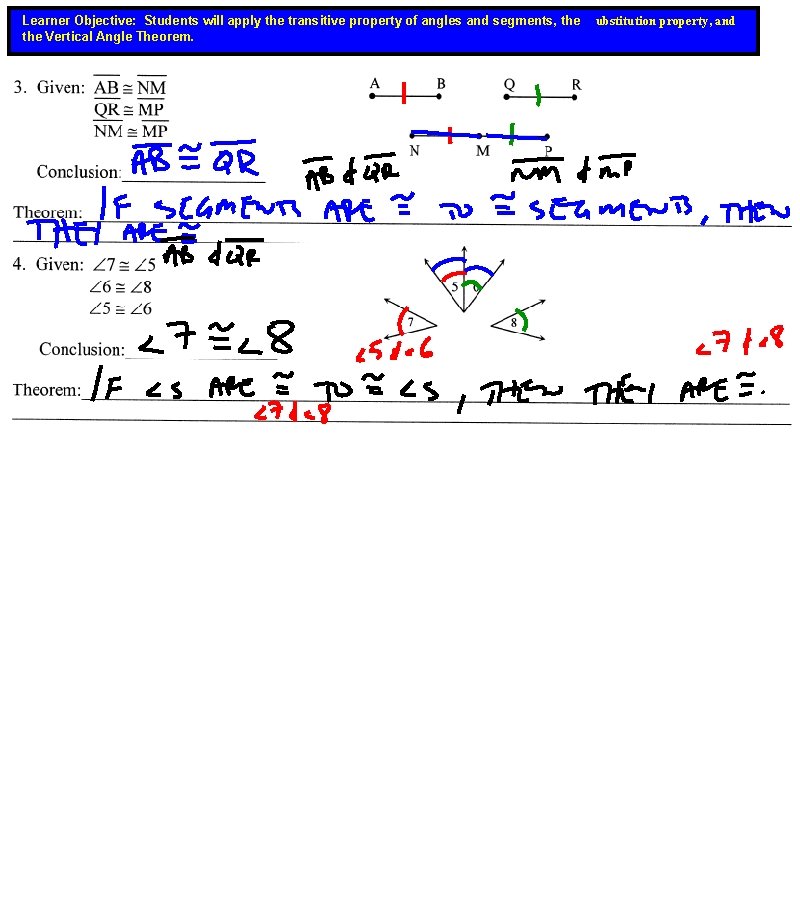
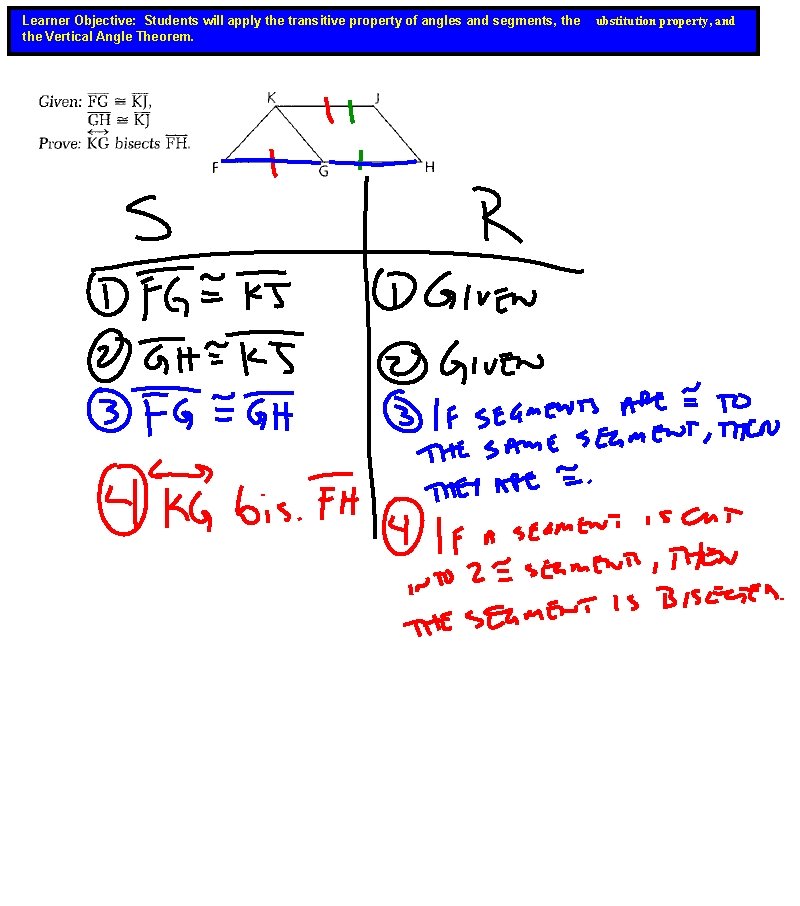
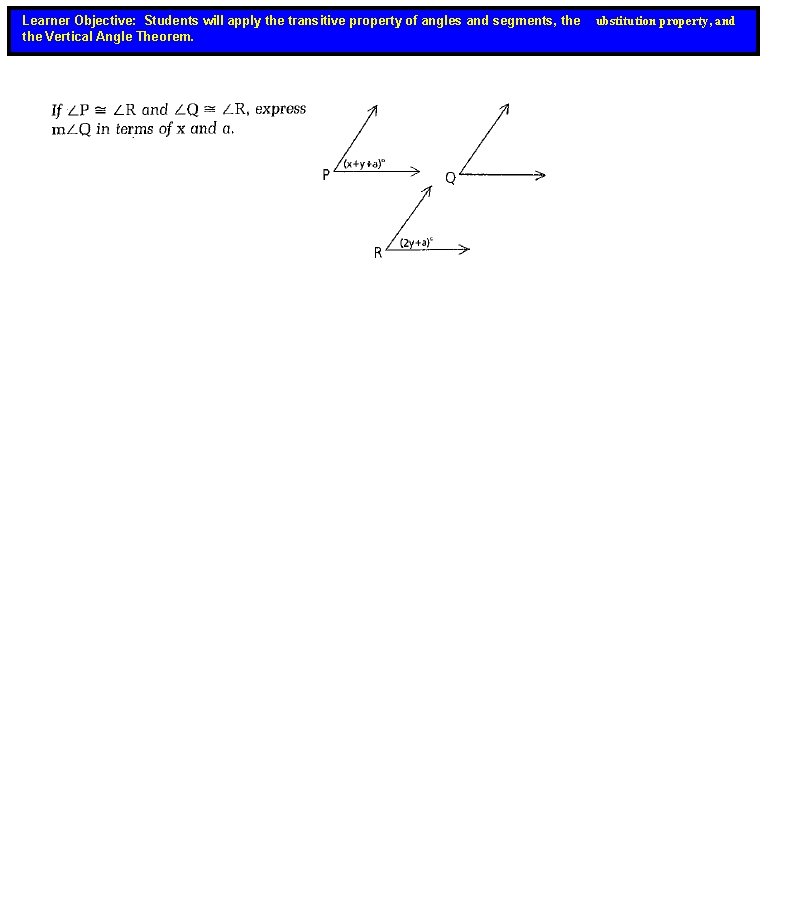
Learner Objective: Students will apply the transitive property of angles and segments, the Vertical Angle Theorem. ubstitution property, and THEOREM If angles (or segments) are congruent o he same ngle (or segment) then the angles (or segments) are congruent. Transitive Property) THEOREM If angles (or segments) are congruent o congruent ngles (or segments) then the angles (or segments) are congruent. Transitive Property)
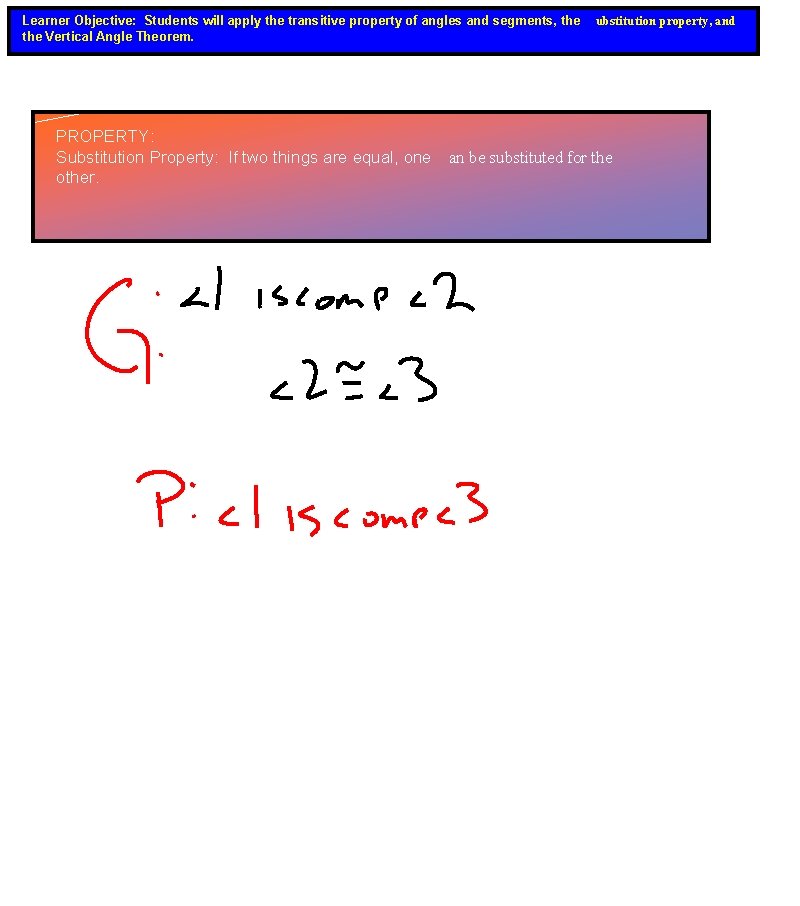
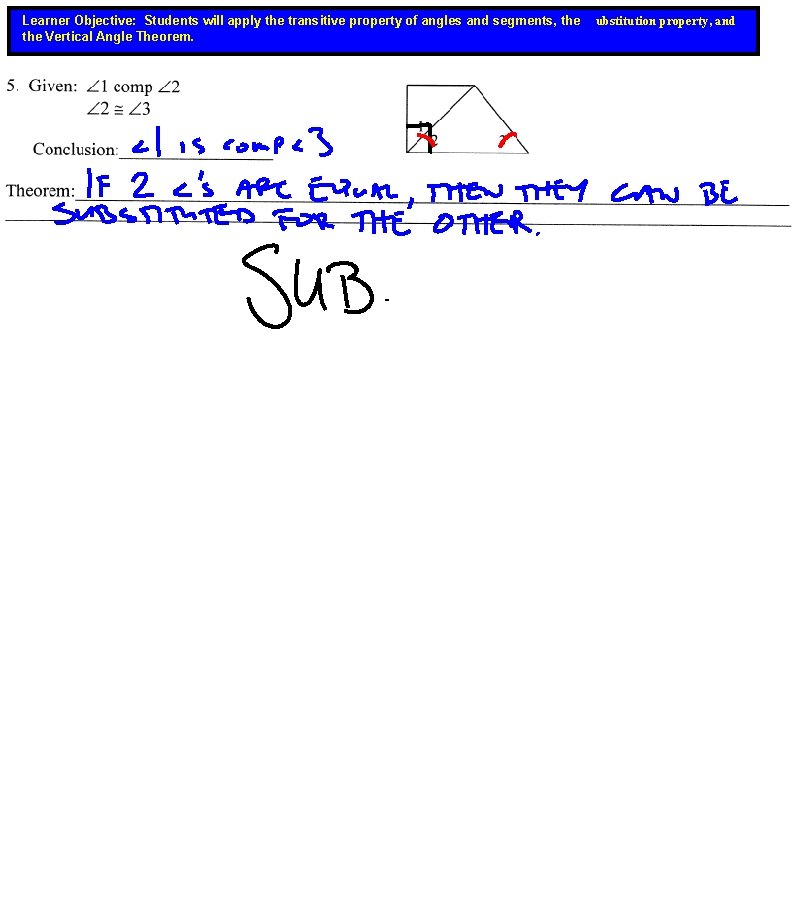
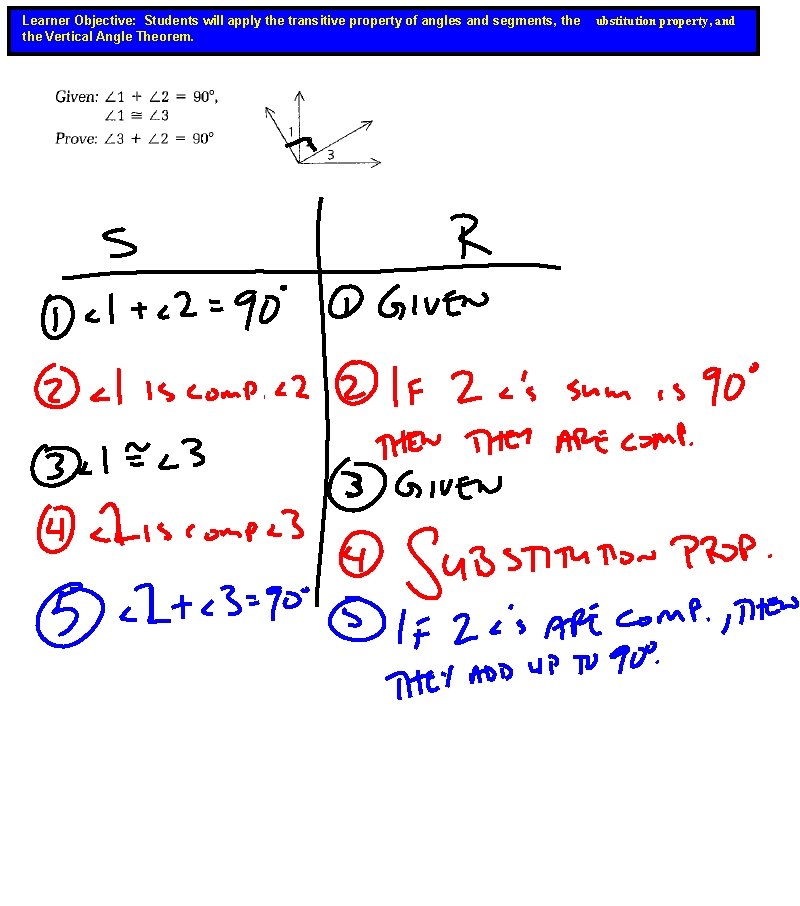
Learner Objective: Students will apply the transitive property of angles and segments, the Vertical Angle Theorem. ubstitution property, and PROPERTY: Substitution Property: If two things are equal, one an be substituted for the other.
Learner Objective: Students will apply the transitive property of angles and segments, the Vertical Angle Theorem. ubstitution property, and
Learner Objective: Students will apply the transitive property of angles and segments, the Vertical Angle Theorem. ubstitution property, and
Learner Objective: Students will apply the transitive property of angles and segments, the Vertical Angle Theorem. ubstitution property, and
Learner Objective: Students will apply the transitive property of angles and segments, the Vertical Angle Theorem. ubstitution property, and
Learner Objective: Students will apply the transitive property of angles and segments, the Vertical Angle Theorem. ubstitution property, and
Learner Objective: Students will apply the transitive property of angles and segments, the Vertical Angle Theorem. ubstitution property, and
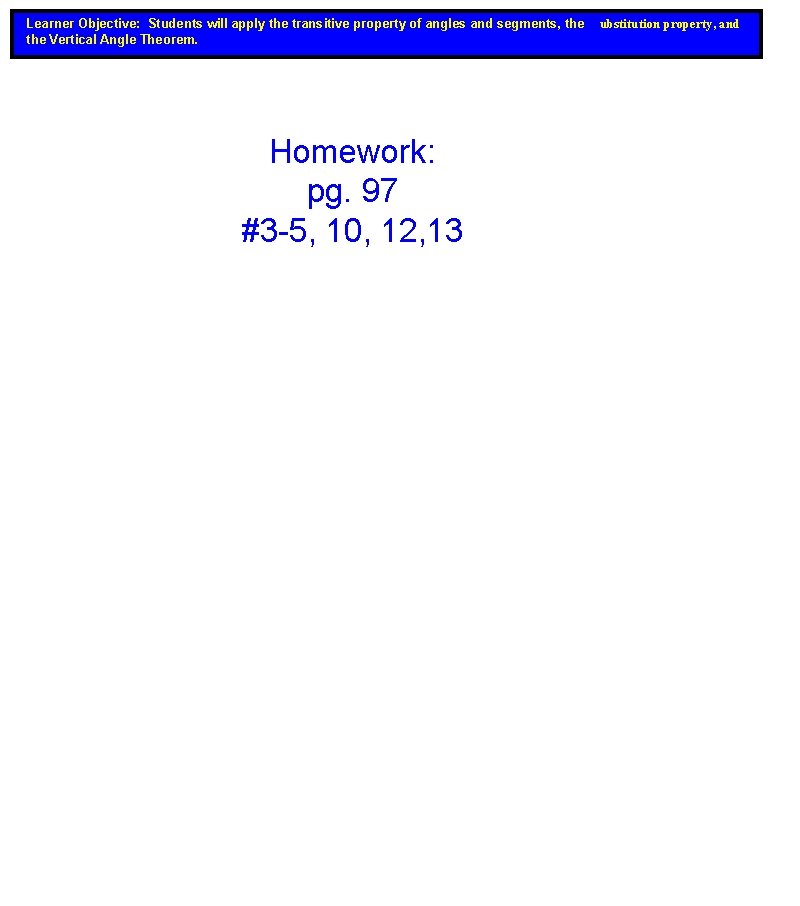
Learner Objective: Students will apply the transitive property of angles and segments, the Vertical Angle Theorem. Homework: pg. 97 #3 -5, 10, 12, 13 ubstitution property, and
Advanced Geometry Section 2. 8 Vertical Angles Learner Objective: Students will apply the transitive property of angles nd segments, the substitution property, and the Vertical Angle heorem.
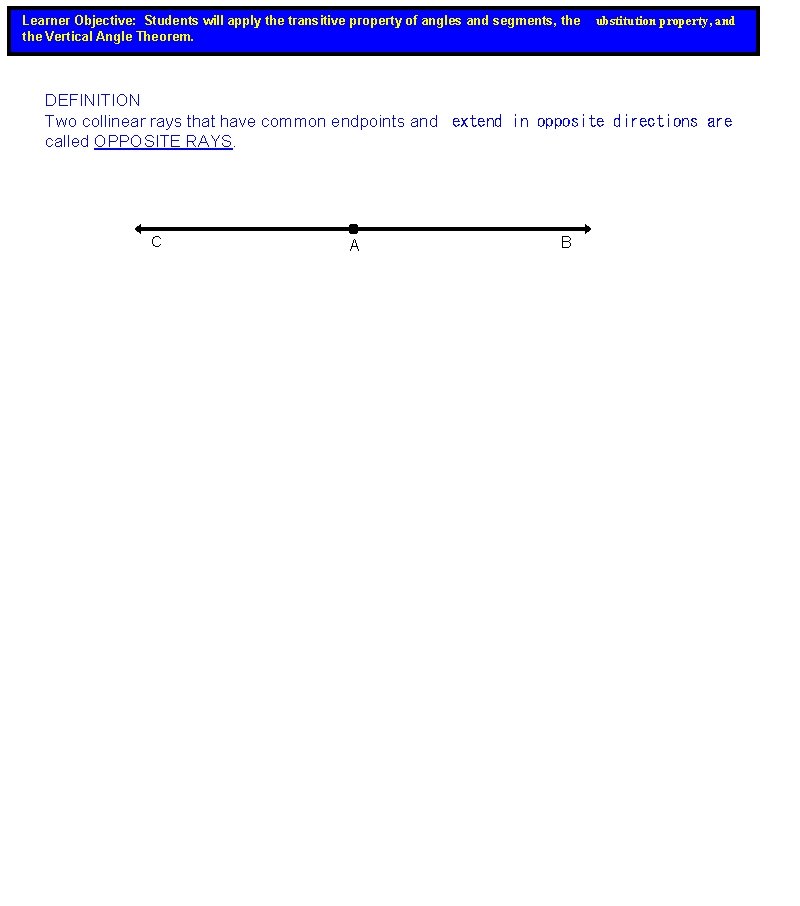
Learner Objective: Students will apply the transitive property of angles and segments, the Vertical Angle Theorem. ubstitution property, and DEFINITION Two collinear rays that have common endpoints and extend in opposite directions are called OPPOSITE RAYS. C A B
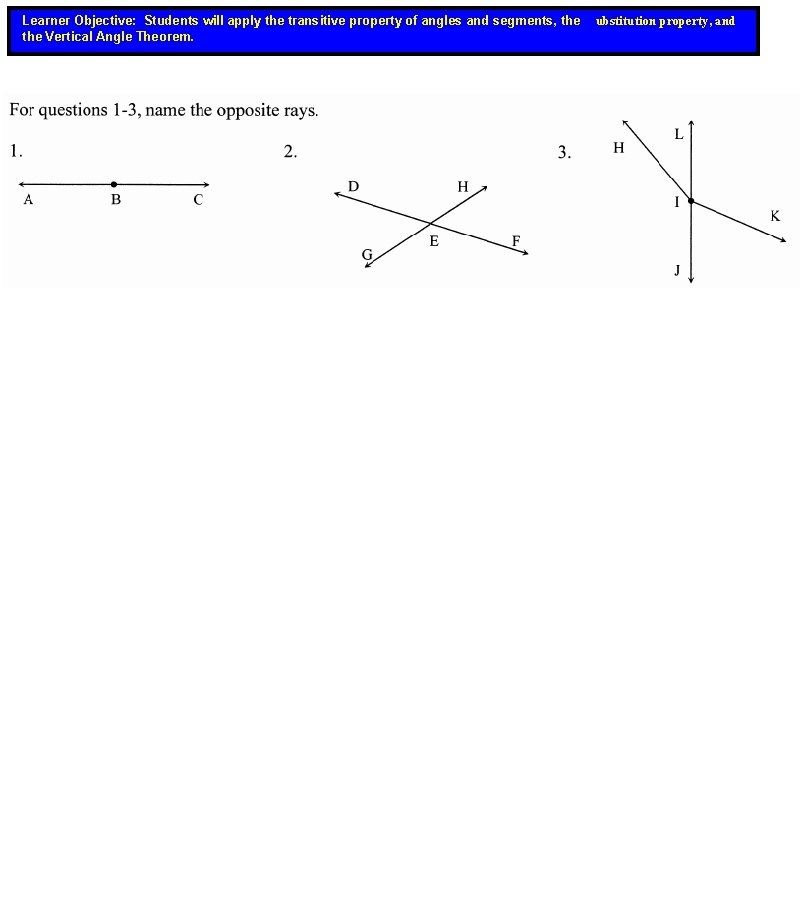
Learner Objective: Students will apply the transitive property of angles and segments, the Vertical Angle Theorem. ubstitution property, and
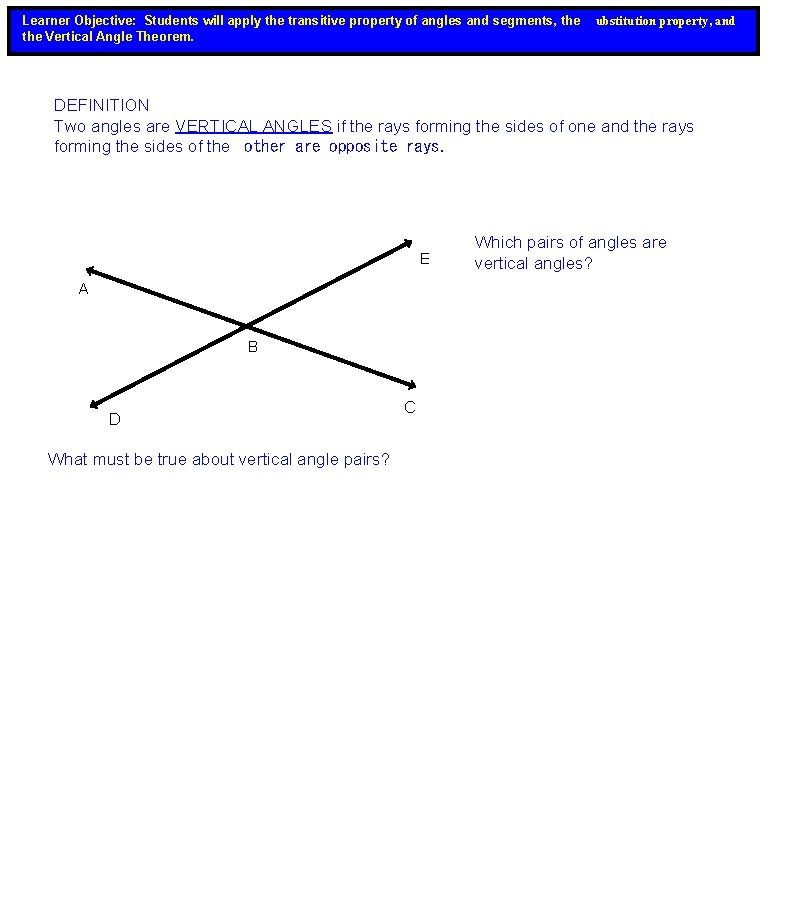
Learner Objective: Students will apply the transitive property of angles and segments, the Vertical Angle Theorem. ubstitution property, and DEFINITION Two angles are VERTICAL ANGLES if the rays forming the sides of one and the rays forming the sides of the other are opposite rays. E A B D What must be true about vertical angle pairs? C Which pairs of angles are vertical angles?
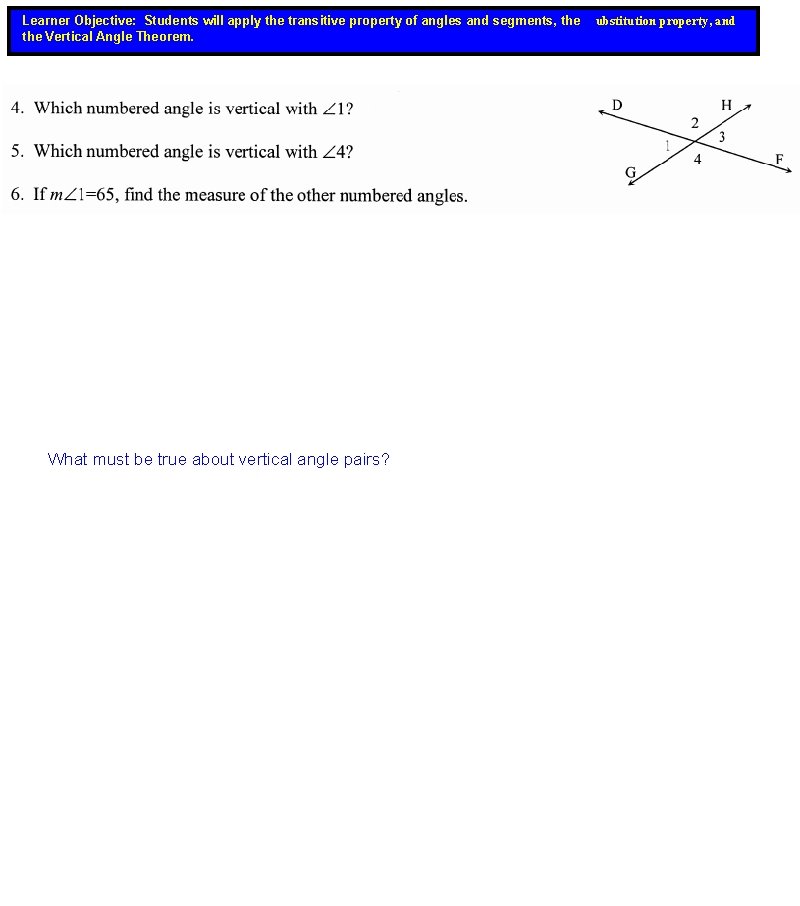
Learner Objective: Students will apply the transitive property of angles and segments, the Vertical Angle Theorem. What must be true about vertical angle pairs? ubstitution property, and
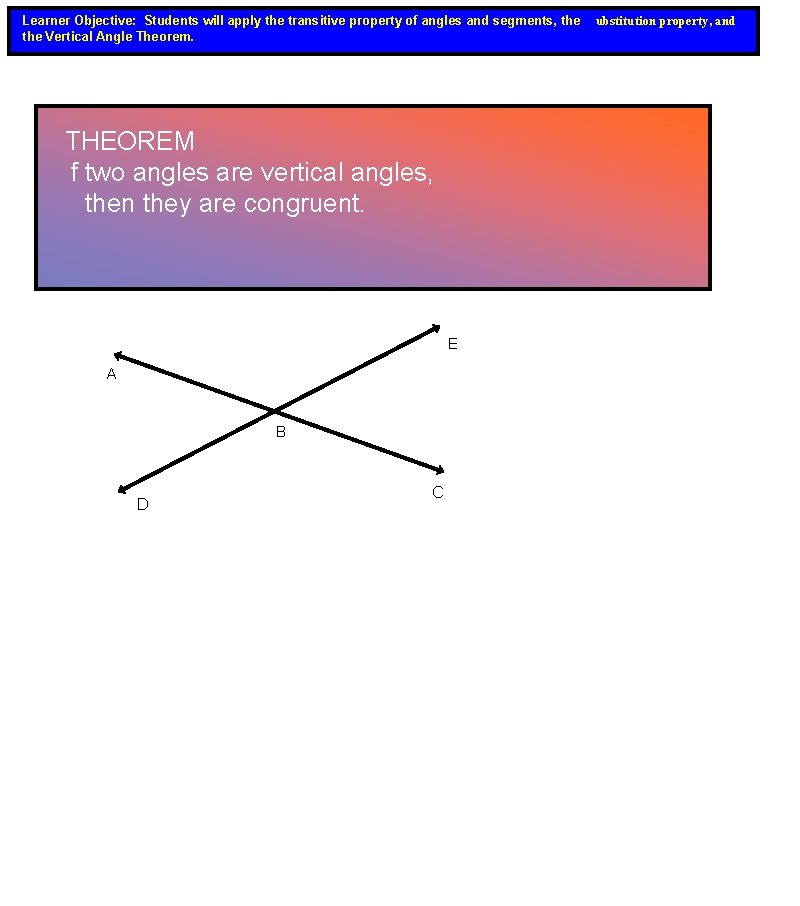
Learner Objective: Students will apply the transitive property of angles and segments, the Vertical Angle Theorem. THEOREM f two angles are vertical angles, then they are congruent. E A B D C ubstitution property, and
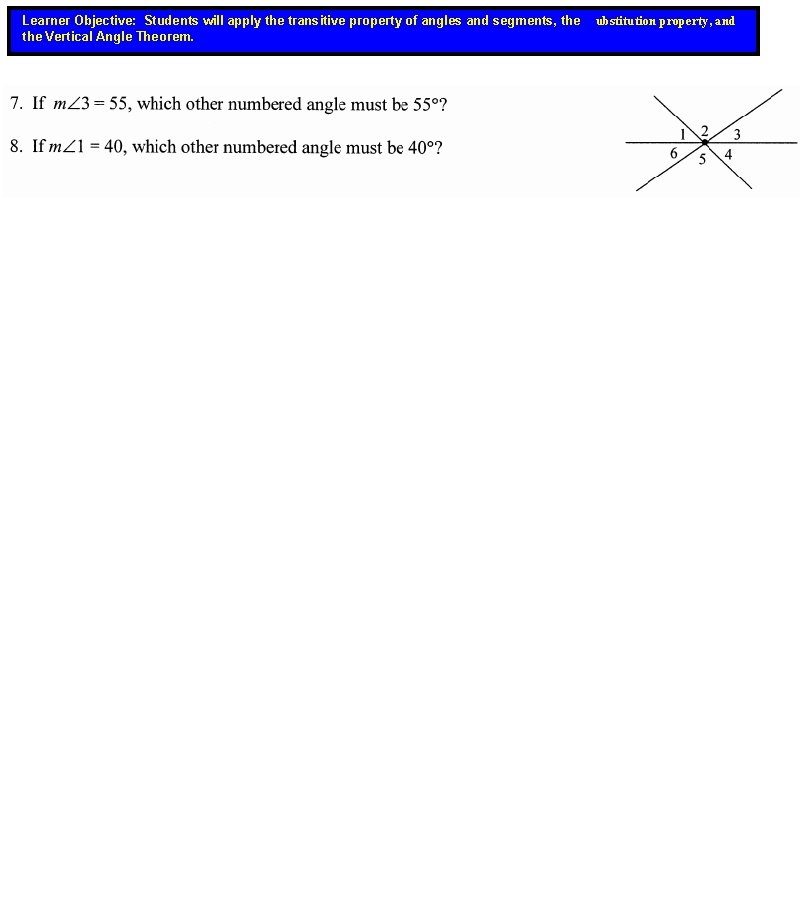
Learner Objective: Students will apply the transitive property of angles and segments, the Vertical Angle Theorem. ubstitution property, and
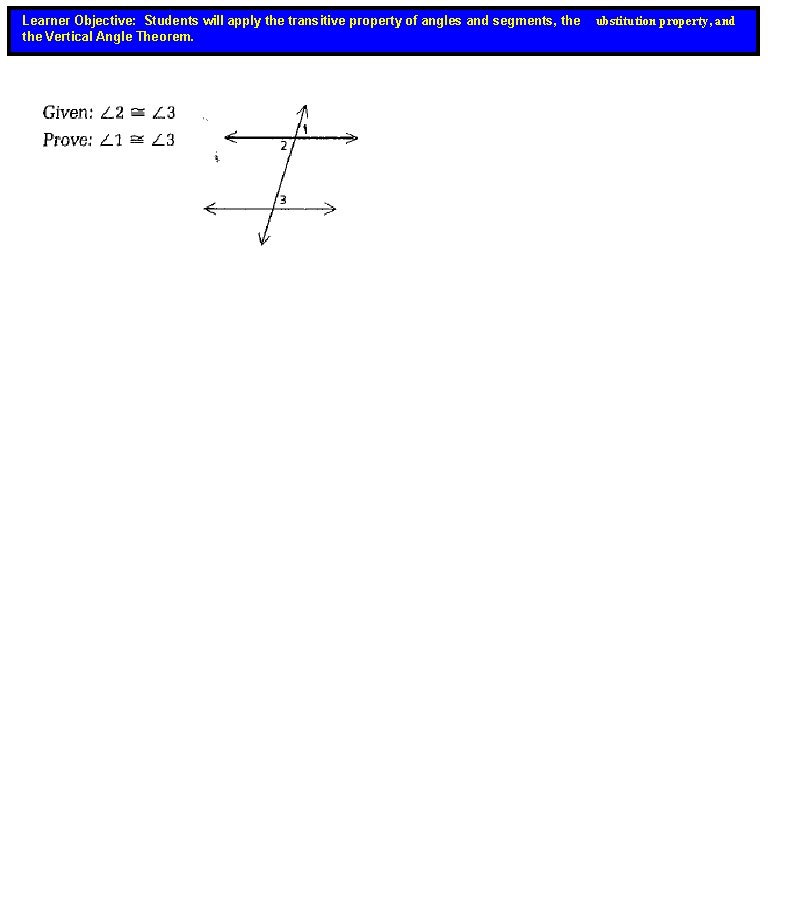
Learner Objective: Students will apply the transitive property of angles and segments, the Vertical Angle Theorem. ubstitution property, and
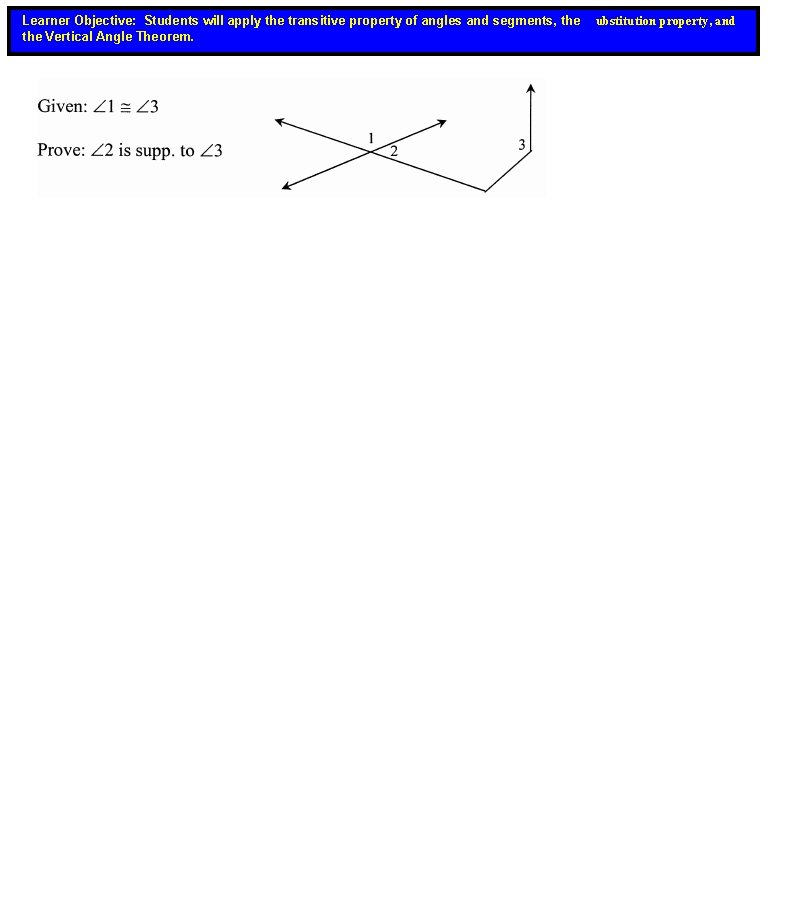
Learner Objective: Students will apply the transitive property of angles and segments, the Vertical Angle Theorem. ubstitution property, and
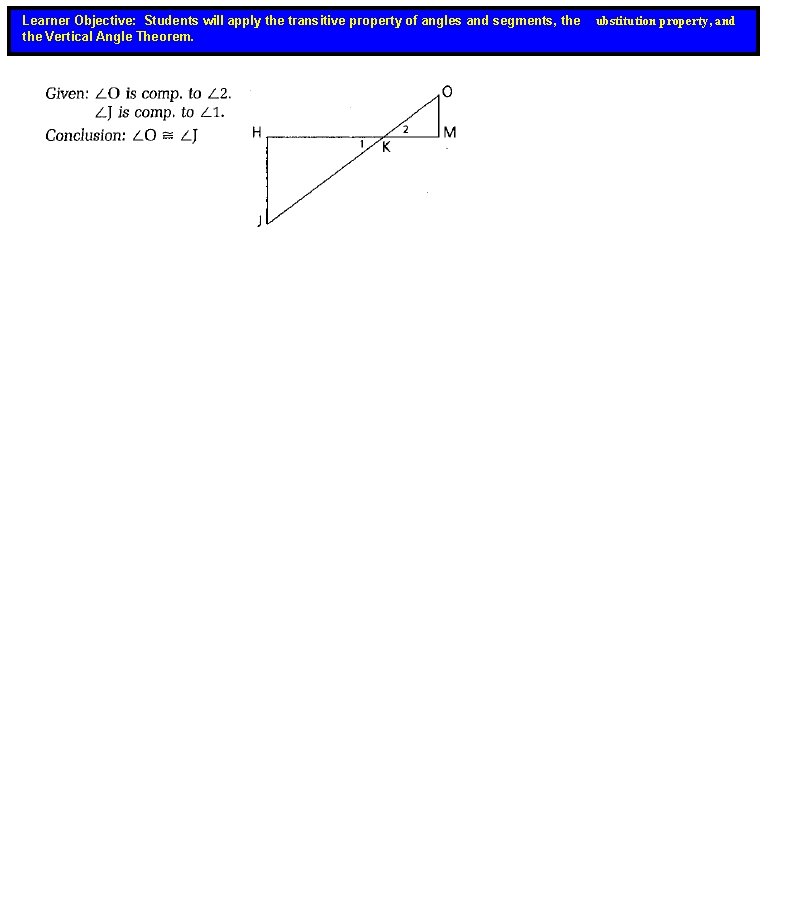
Learner Objective: Students will apply the transitive property of angles and segments, the Vertical Angle Theorem. ubstitution property, and
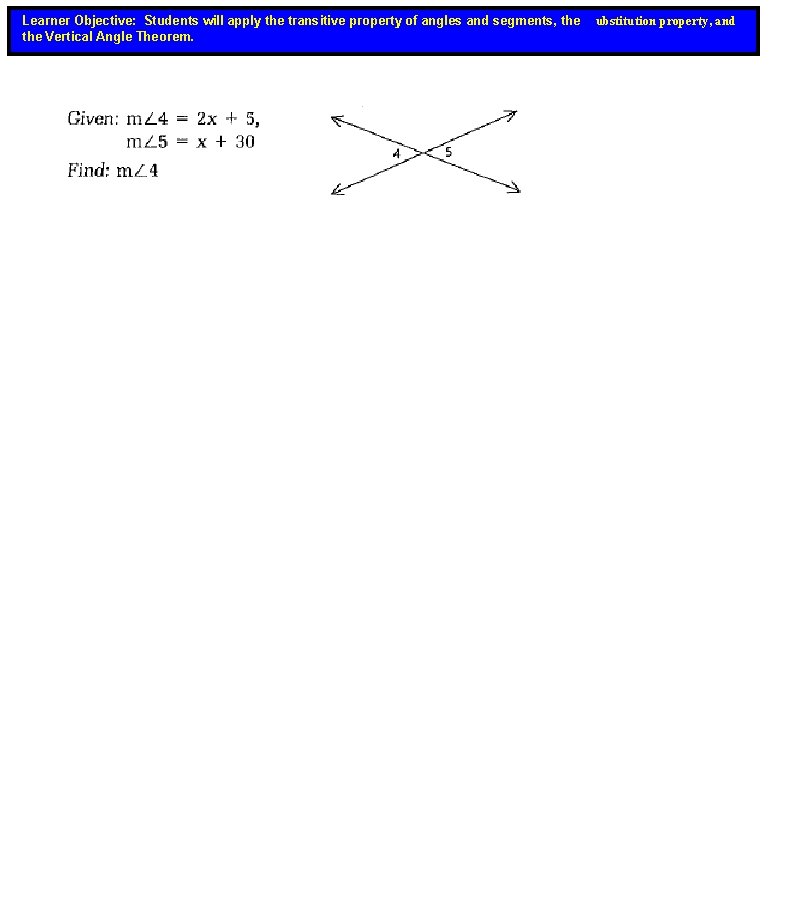
Learner Objective: Students will apply the transitive property of angles and segments, the Vertical Angle Theorem. ubstitution property, and
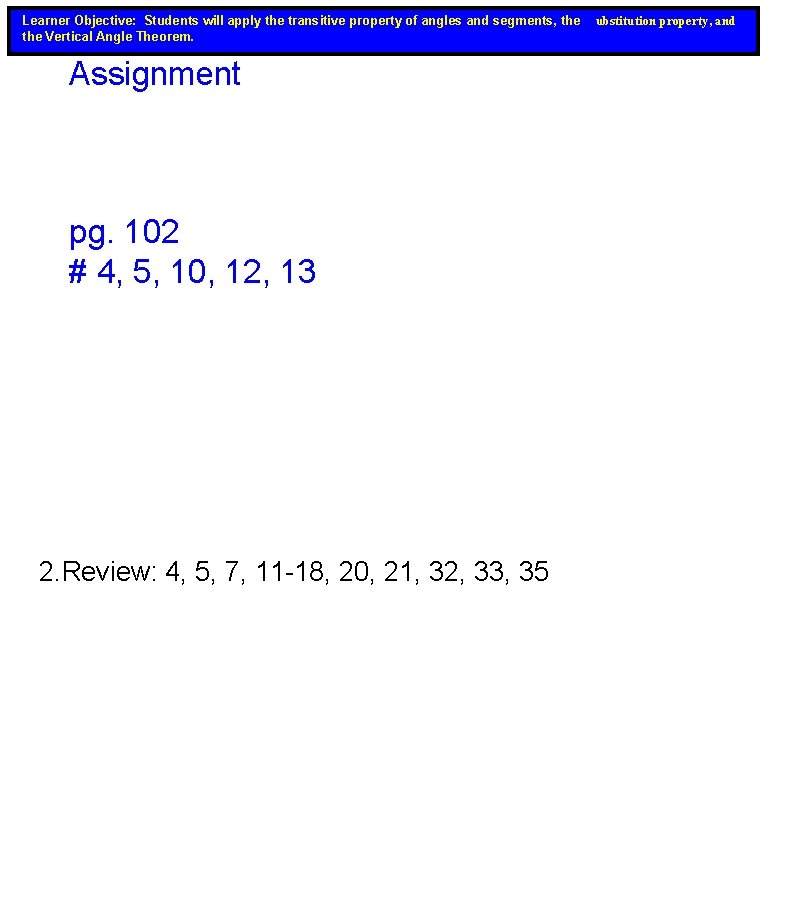
Learner Objective: Students will apply the transitive property of angles and segments, the Vertical Angle Theorem. Assignment pg. 102 # 4, 5, 10, 12, 13 2. Review: 4, 5, 7, 11 -18, 20, 21, 32, 33, 35 ubstitution property, and
Learner Objective: Students will apply the transitive property of angles and segments, the Vertical Angle Theorem. ubstitution property, and
Learner Objective: Students will apply the transitive property of angles and segments, the Vertical Angle Theorem. ubstitution property, and
Learner Objective: Students will apply the transitive property of angles and segments, the Vertical Angle Theorem. ubstitution property, and
Learner Objective: Students will apply the transitive property of angles and segments, the Vertical Angle Theorem. ubstitution property, and
Learner Objective: Students will apply the transitive property of angles and segments, the Vertical Angle Theorem. ubstitution property, and
Learner Objective: Students will apply the transitive property of angles and segments, the Vertical Angle Theorem. ubstitution property, and
- Slides: 30