
Advanced English III The Rhetorical Process Rhetoric Using






- Slides: 14
Advanced English III The Rhetorical Process
Rhetoric: Using language effectively to: • persuade • inform • educate • entertain Rhetorical Situation: The circumstances in which you communicate
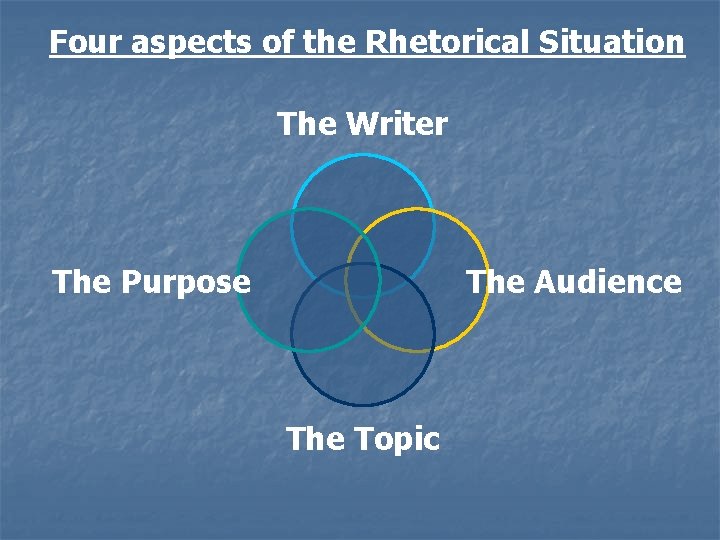
Four aspects of the Rhetorical Situation The Writer The Purpose The Audience The Topic
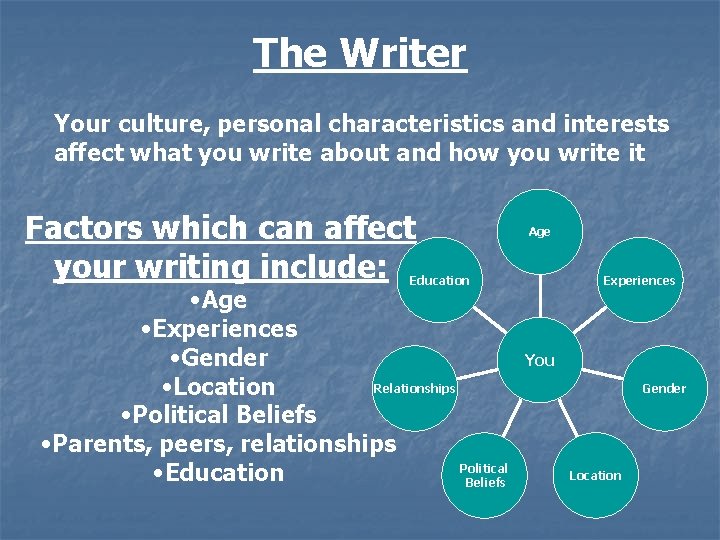
The Writer Your culture, personal characteristics and interests affect what you write about and how you write it Factors which can affect your writing include: Age Education • Age • Experiences • Gender Relationships • Location • Political Beliefs • Parents, peers, relationships Political • Education Beliefs Experiences You Gender Location
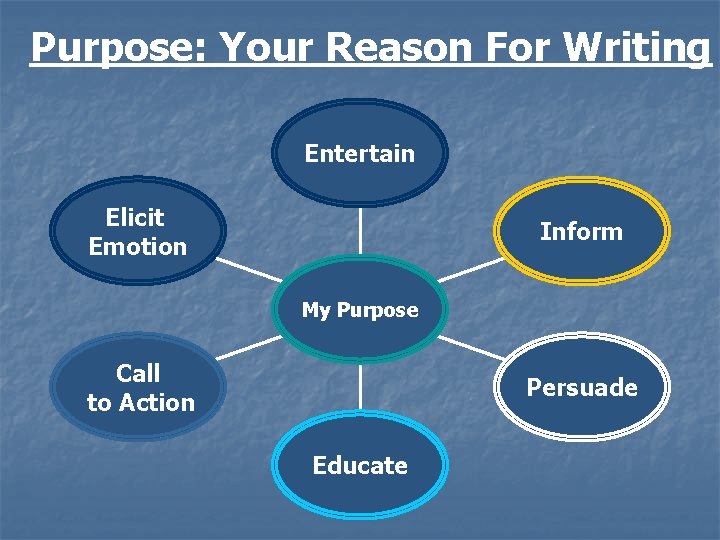
Purpose: Your Reason For Writing Entertain Elicit Emotion Inform My Purpose Call to Action Persuade Educate
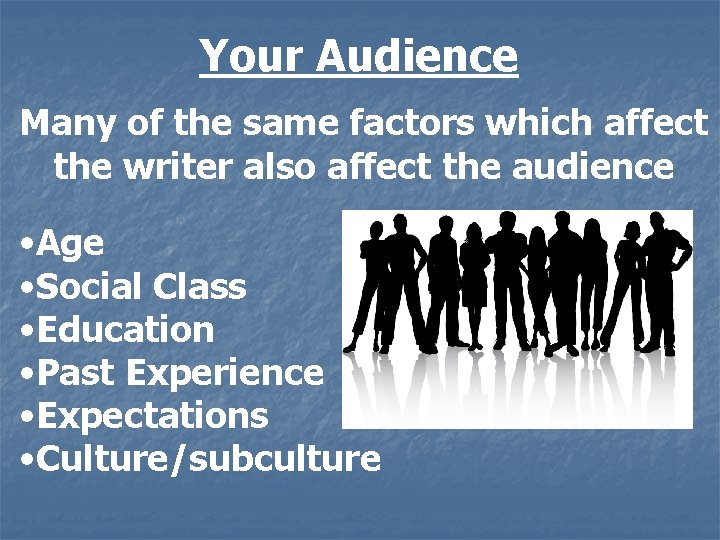
Your Audience Many of the same factors which affect the writer also affect the audience • Age • Social Class • Education • Past Experience • Expectations • Culture/subculture
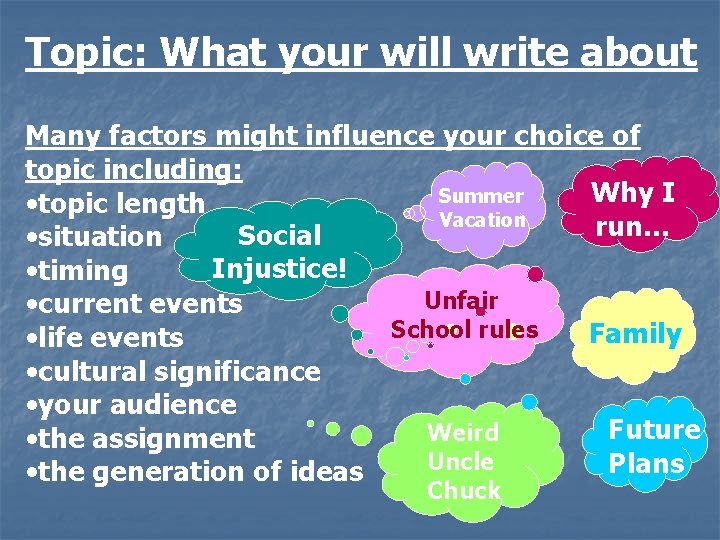
Topic: What your will write about Many factors might influence your choice of topic including: Why I Summer • topic length Vacation run… Social • situation Injustice! • timing Unfair • current events School rules Family • life events • cultural significance • your audience Future Weird • the assignment Uncle Plans • the generation of ideas Chuck
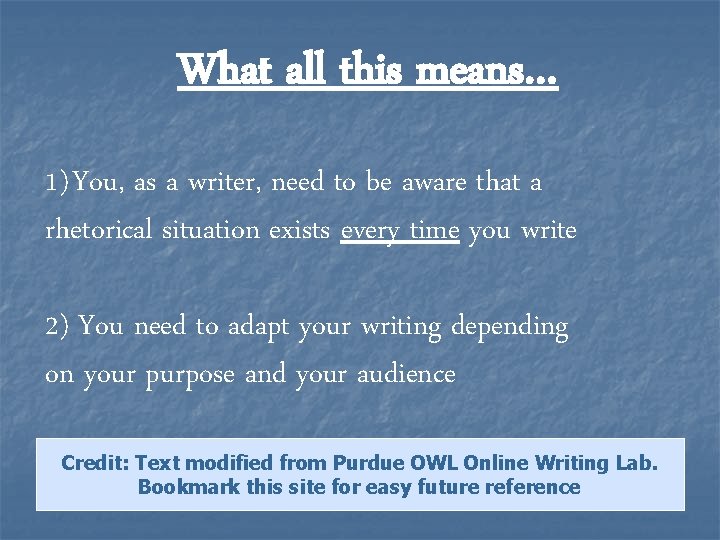
What all this means… 1) You, as a writer, need to be aware that a rhetorical situation exists every time you write 2) You need to adapt your writing depending on your purpose and your audience Credit: Text modified from Purdue OWL Online Writing Lab. Bookmark this site for easy future reference