
Advanced Engineering Mathematics FirstOrder Differential Equations InitialValue Problem
Advanced Engineering Mathematics First-Order Differential Equations
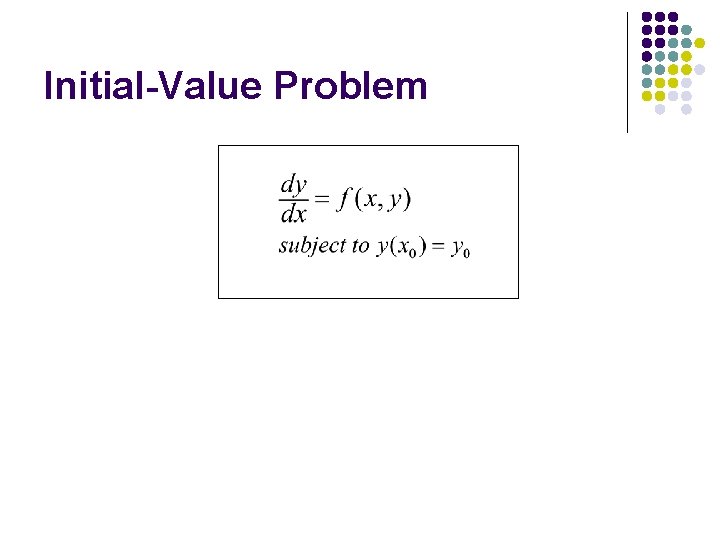
Initial-Value Problem
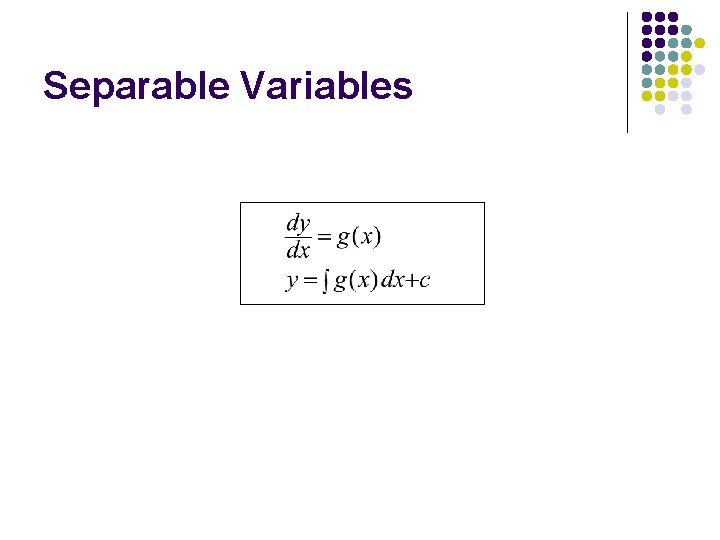
Separable Variables

Separable Variables
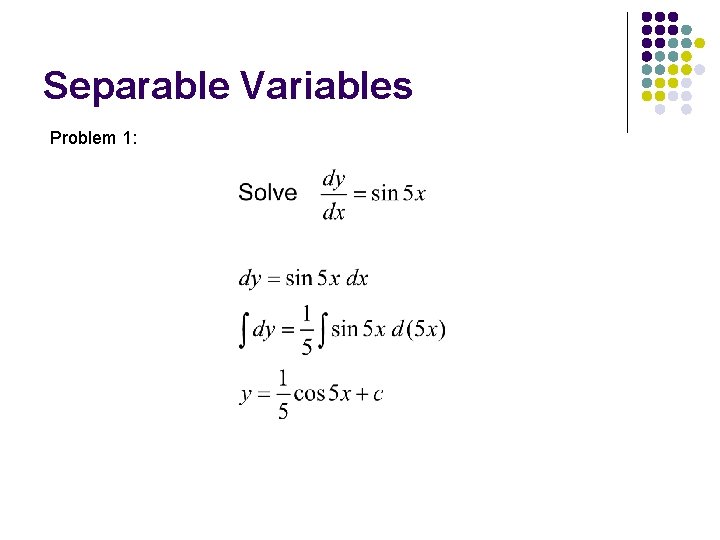
Separable Variables Problem 1:
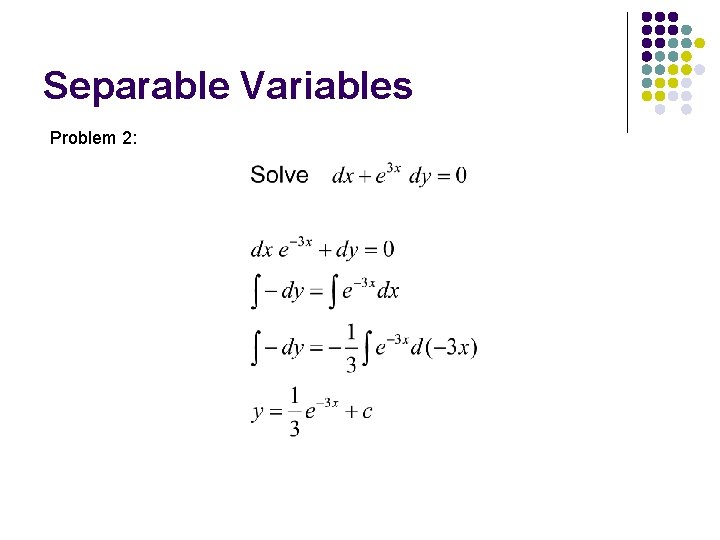
Separable Variables Problem 2:
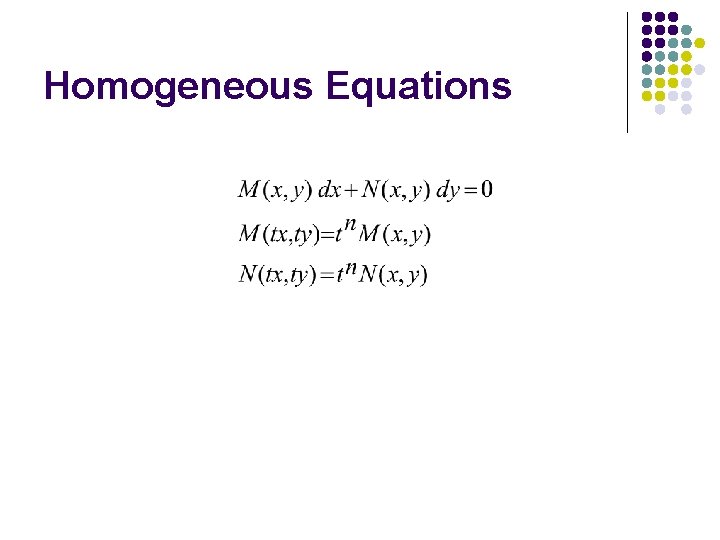
Homogeneous Equations
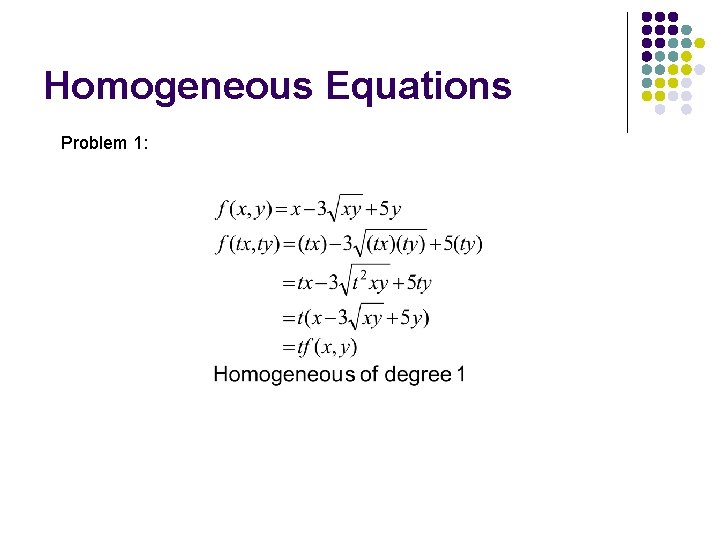
Homogeneous Equations Problem 1:
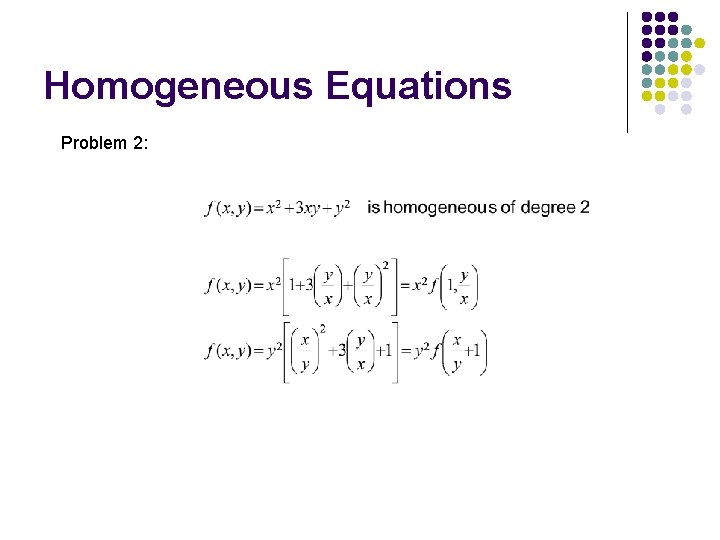
Homogeneous Equations Problem 2:
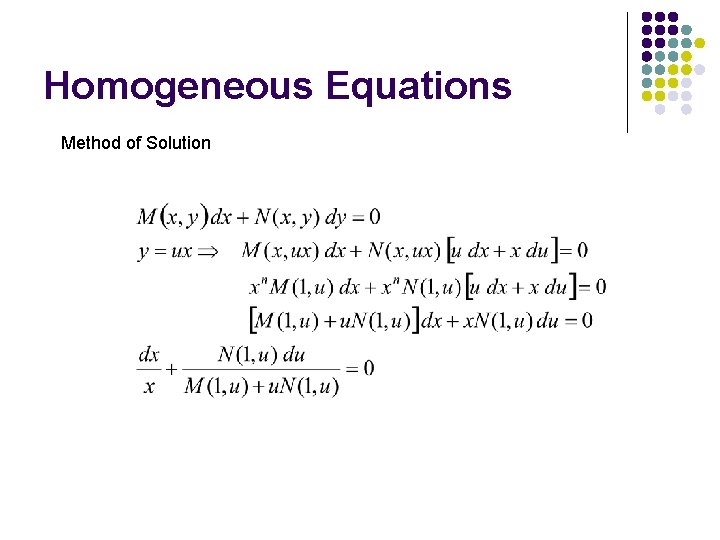
Homogeneous Equations Method of Solution
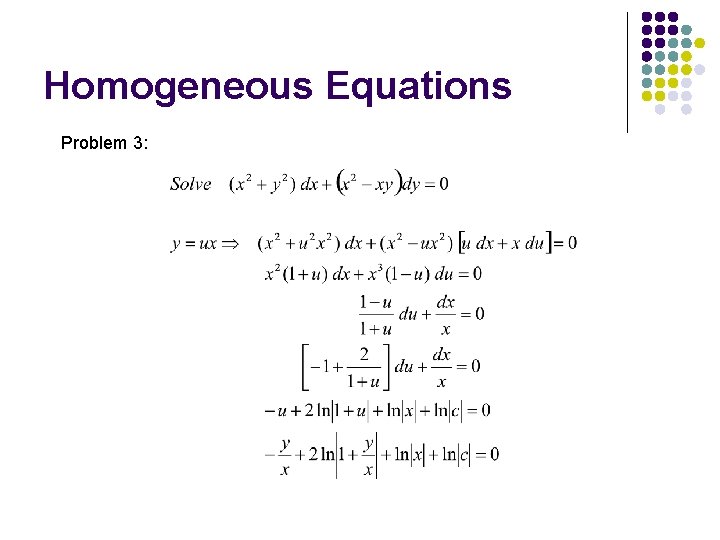
Homogeneous Equations Problem 3:
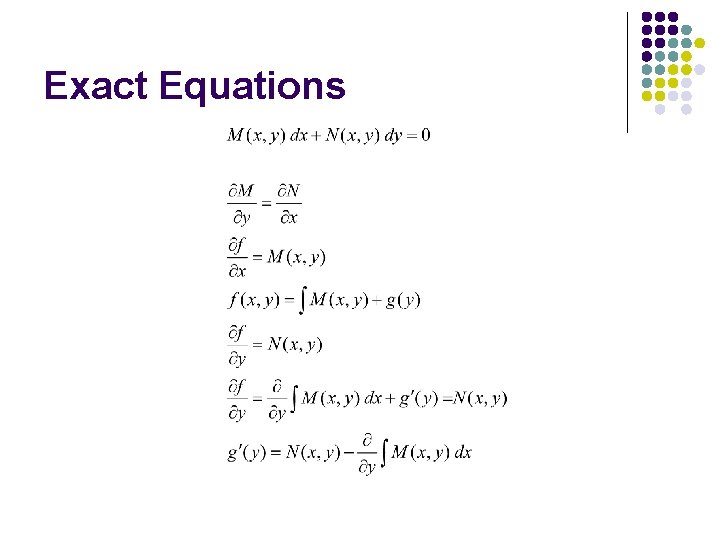
Exact Equations
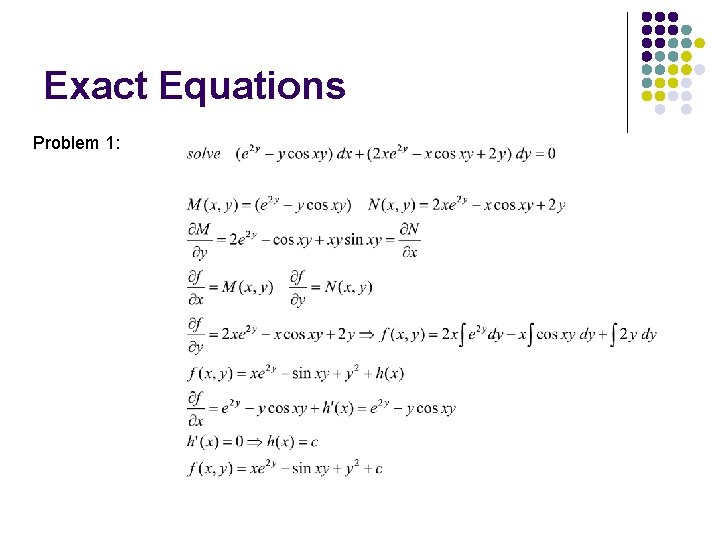
Exact Equations Problem 1:
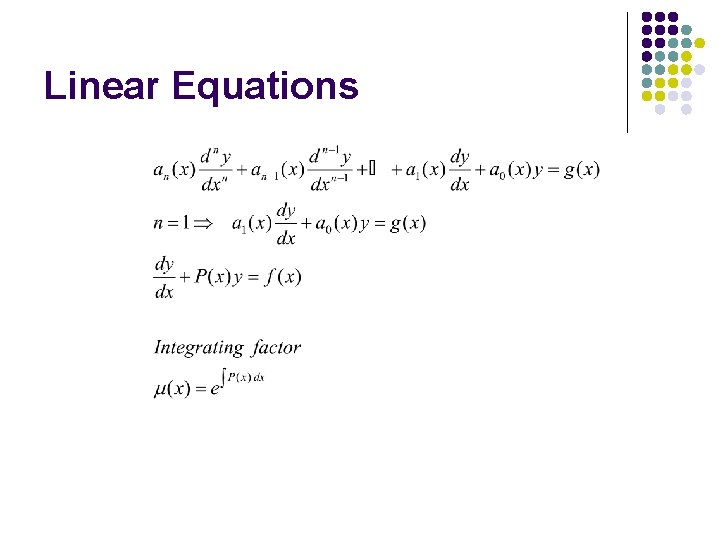
Linear Equations
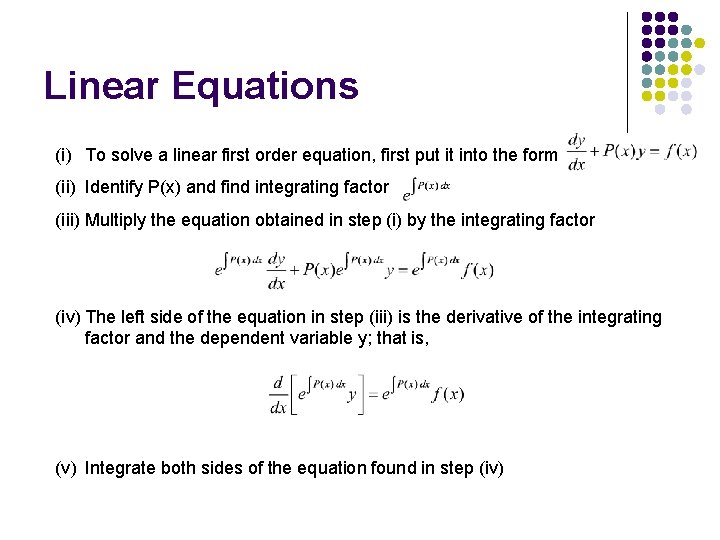
Linear Equations (i) To solve a linear first order equation, first put it into the form (ii) Identify P(x) and find integrating factor (iii) Multiply the equation obtained in step (i) by the integrating factor (iv) The left side of the equation in step (iii) is the derivative of the integrating factor and the dependent variable y; that is, (v) Integrate both sides of the equation found in step (iv)
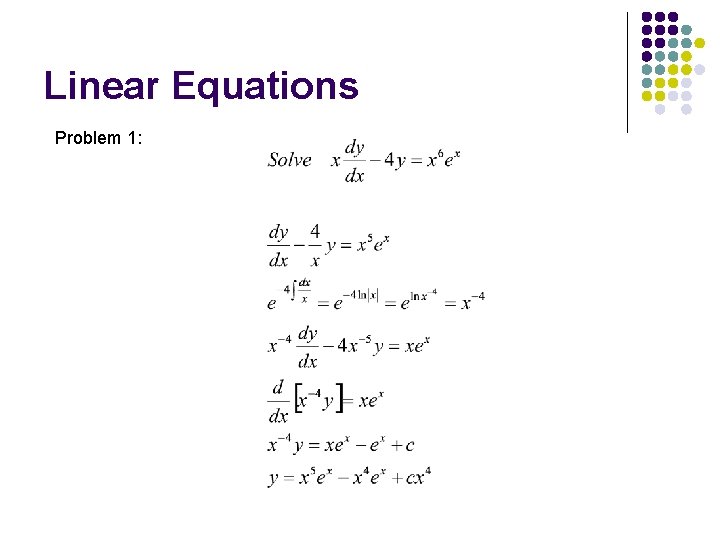
Linear Equations Problem 1:
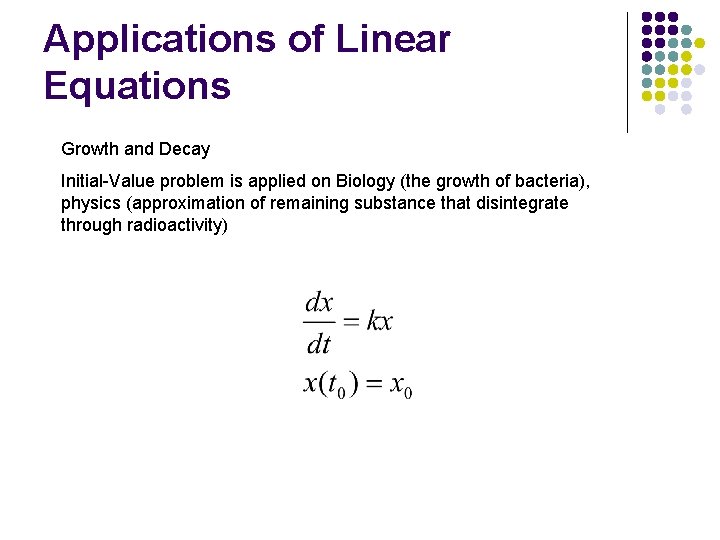
Applications of Linear Equations Growth and Decay Initial-Value problem is applied on Biology (the growth of bacteria), physics (approximation of remaining substance that disintegrate through radioactivity)
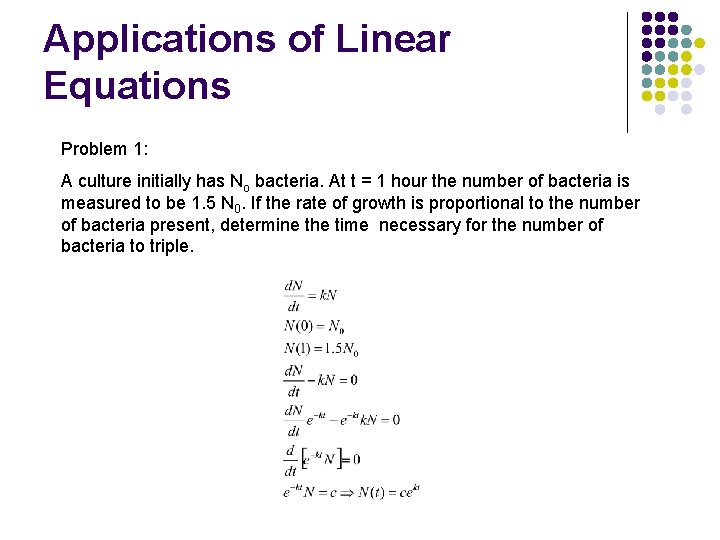
Applications of Linear Equations Problem 1: A culture initially has No bacteria. At t = 1 hour the number of bacteria is measured to be 1. 5 N 0. If the rate of growth is proportional to the number of bacteria present, determine the time necessary for the number of bacteria to triple.
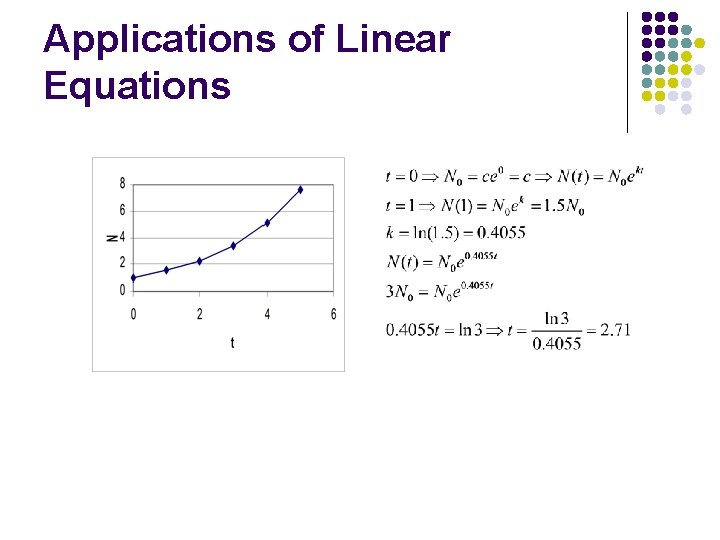
Applications of Linear Equations
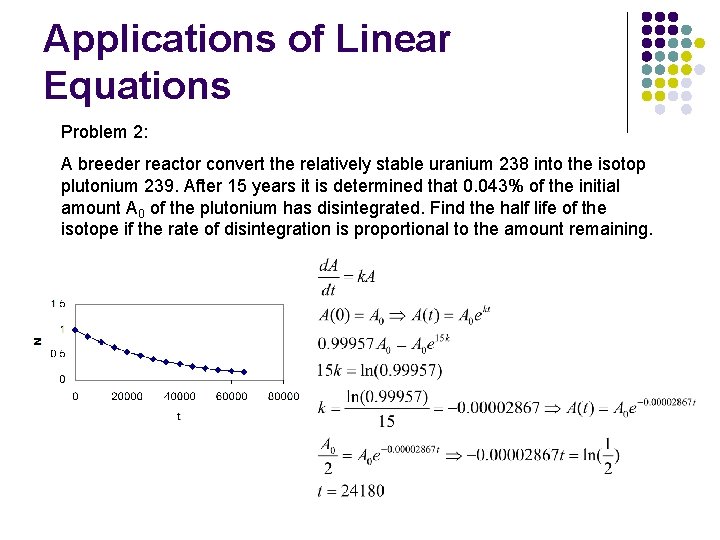
Applications of Linear Equations Problem 2: A breeder reactor convert the relatively stable uranium 238 into the isotop plutonium 239. After 15 years it is determined that 0. 043% of the initial amount A 0 of the plutonium has disintegrated. Find the half life of the isotope if the rate of disintegration is proportional to the amount remaining.
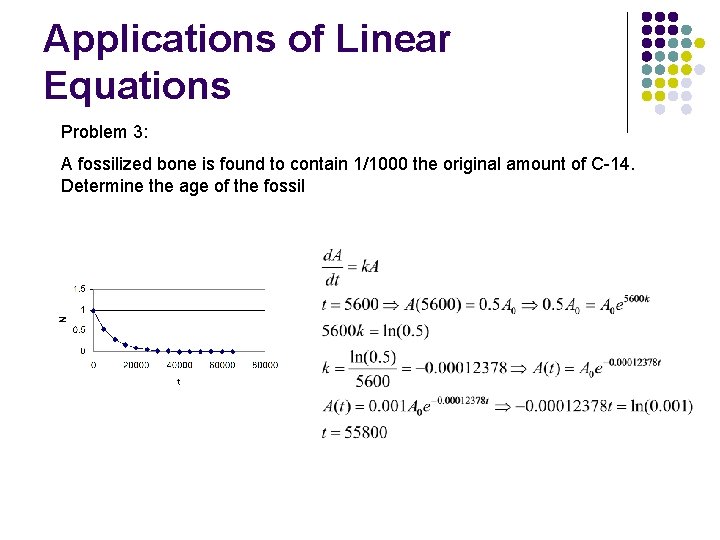
Applications of Linear Equations Problem 3: A fossilized bone is found to contain 1/1000 the original amount of C-14. Determine the age of the fossil
Advanced Engineering Mathematics Transformation La Place
- Slides: 22