
Advanced Engine Performance Diagnosis Seventh Edition Chapter 01

- Slides: 24
Advanced Engine Performance Diagnosis Seventh Edition Chapter 01 The Diagnostic Process Copyright © 2020 Pearson Education, Inc. All Rights Reserved
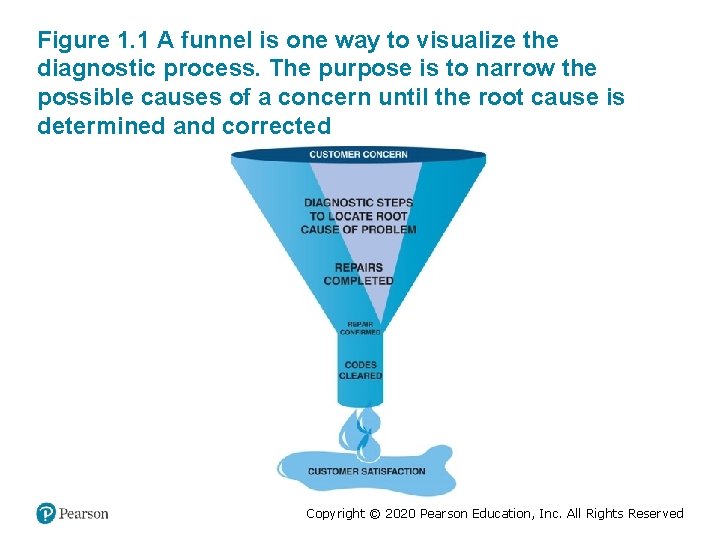
Figure 1. 1 A funnel is one way to visualize the diagnostic process. The purpose is to narrow the possible causes of a concern until the root cause is determined and corrected Copyright © 2020 Pearson Education, Inc. All Rights Reserved
Animation: 8 -Step Diagnostic Procedure ((Animation will automatically start in a few seconds)he animation will automatically start in a few seconds) Copyright © 2020 Pearson Education, Inc. All Rights Reserved
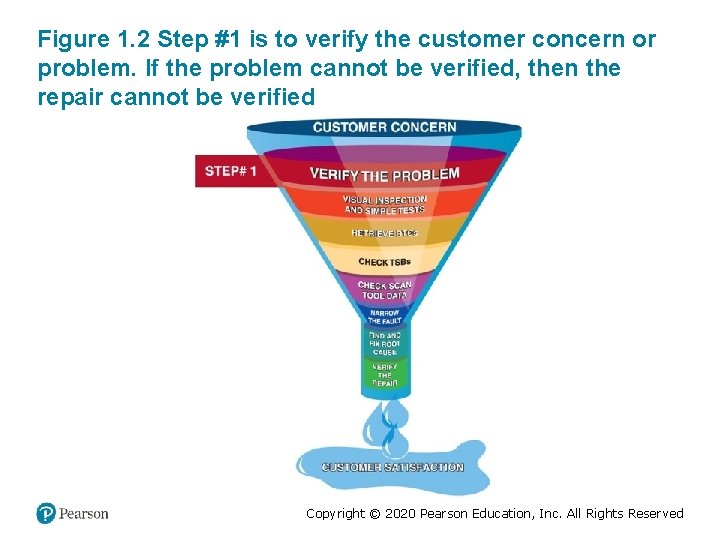
Figure 1. 2 Step #1 is to verify the customer concern or problem. If the problem cannot be verified, then the repair cannot be verified Copyright © 2020 Pearson Education, Inc. All Rights Reserved
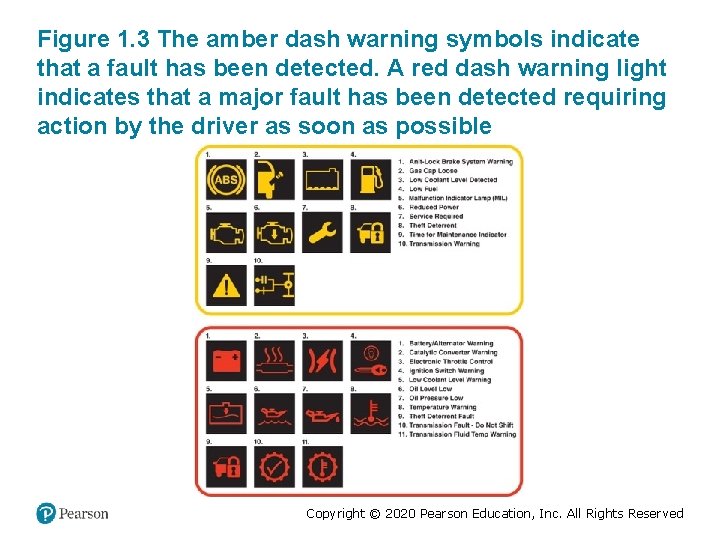
Figure 1. 3 The amber dash warning symbols indicate that a fault has been detected. A red dash warning light indicates that a major fault has been detected requiring action by the driver as soon as possible Copyright © 2020 Pearson Education, Inc. All Rights Reserved
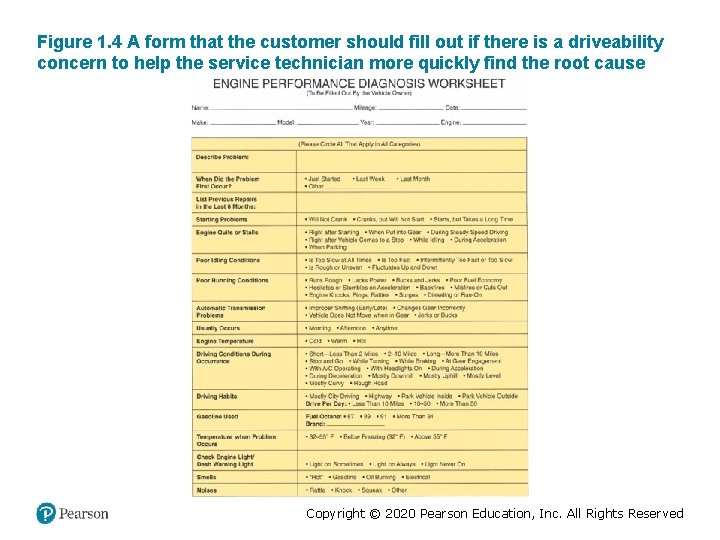
Figure 1. 4 A form that the customer should fill out if there is a driveability concern to help the service technician more quickly find the root cause Copyright © 2020 Pearson Education, Inc. All Rights Reserved
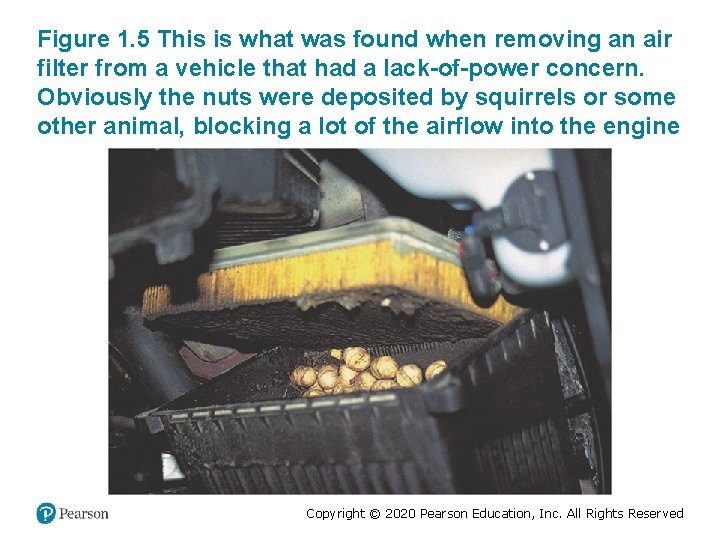
Figure 1. 5 This is what was found when removing an air filter from a vehicle that had a lack-of-power concern. Obviously the nuts were deposited by squirrels or some other animal, blocking a lot of the airflow into the engine Copyright © 2020 Pearson Education, Inc. All Rights Reserved
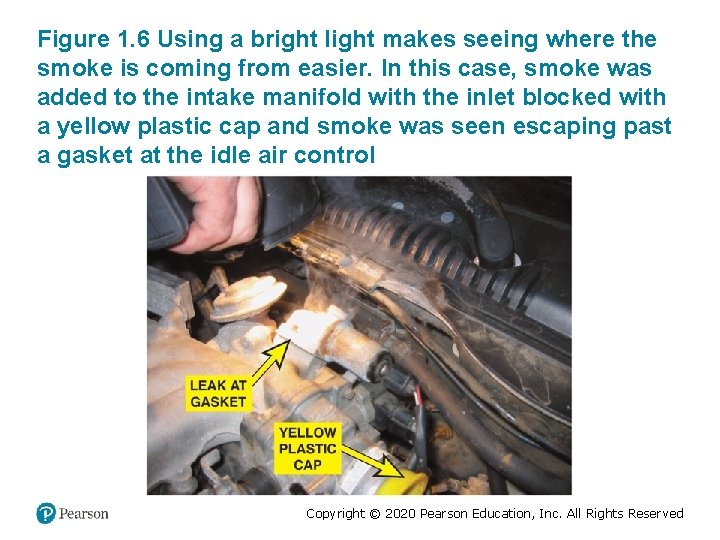
Figure 1. 6 Using a bright light makes seeing where the smoke is coming from easier. In this case, smoke was added to the intake manifold with the inlet blocked with a yellow plastic cap and smoke was seen escaping past a gasket at the idle air control Copyright © 2020 Pearson Education, Inc. All Rights Reserved
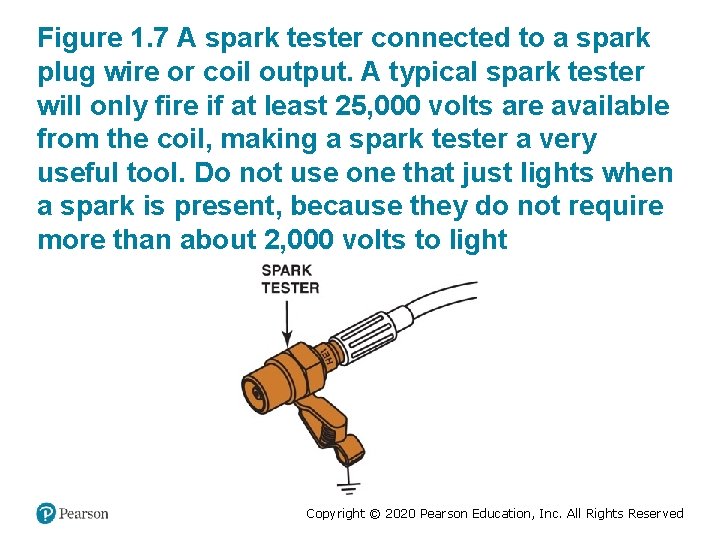
Figure 1. 7 A spark tester connected to a spark plug wire or coil output. A typical spark tester will only fire if at least 25, 000 volts are available from the coil, making a spark tester a very useful tool. Do not use one that just lights when a spark is present, because they do not require more than about 2, 000 volts to light Copyright © 2020 Pearson Education, Inc. All Rights Reserved
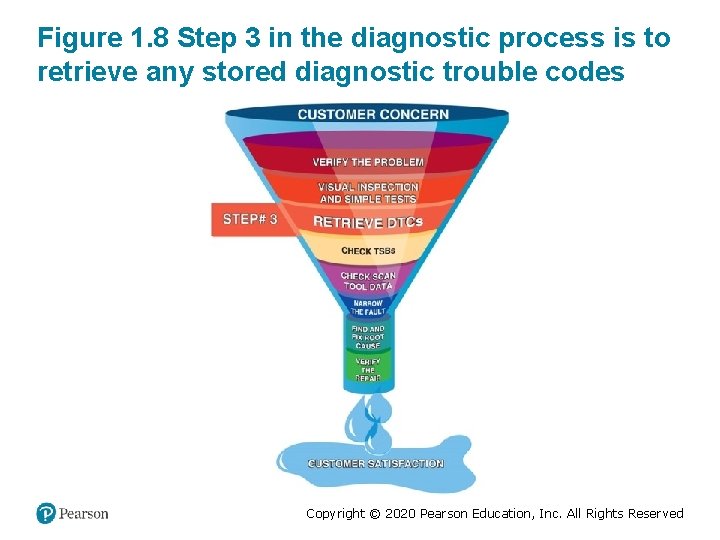
Figure 1. 8 Step 3 in the diagnostic process is to retrieve any stored diagnostic trouble codes Copyright © 2020 Pearson Education, Inc. All Rights Reserved
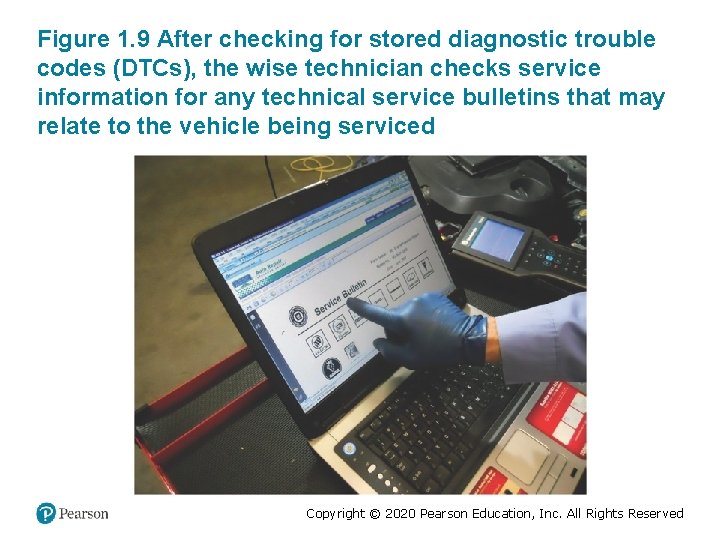
Figure 1. 9 After checking for stored diagnostic trouble codes (DTCs), the wise technician checks service information for any technical service bulletins that may relate to the vehicle being serviced Copyright © 2020 Pearson Education, Inc. All Rights Reserved
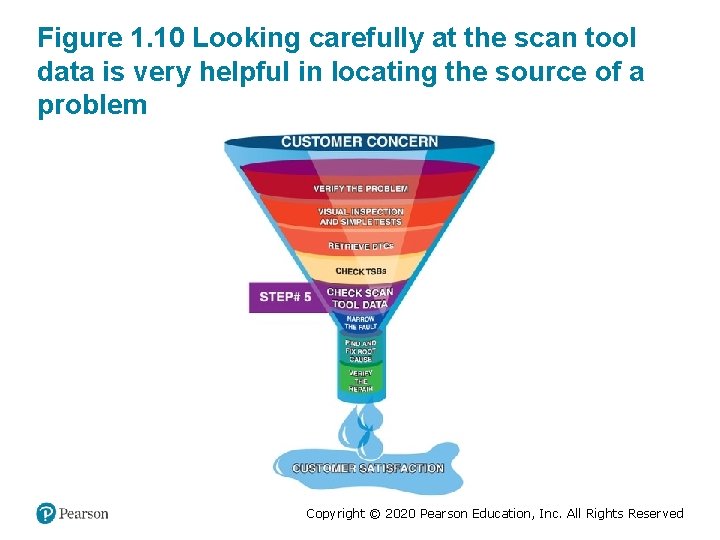
Figure 1. 10 Looking carefully at the scan tool data is very helpful in locating the source of a problem Copyright © 2020 Pearson Education, Inc. All Rights Reserved
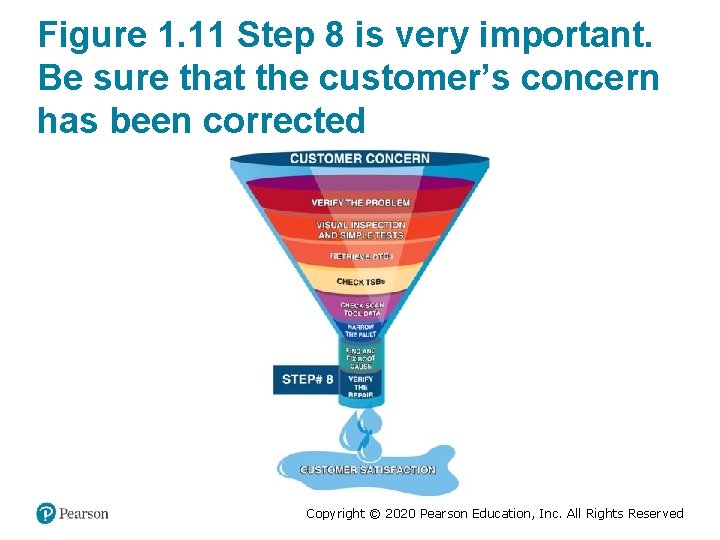
Figure 1. 11 Step 8 is very important. Be sure that the customer’s concern has been corrected Copyright © 2020 Pearson Education, Inc. All Rights Reserved
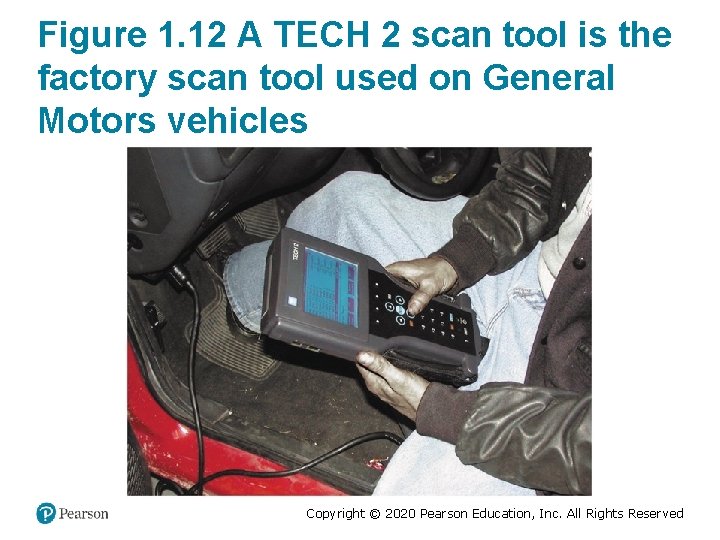
Figure 1. 12 A TECH 2 scan tool is the factory scan tool used on General Motors vehicles Copyright © 2020 Pearson Education, Inc. All Rights Reserved
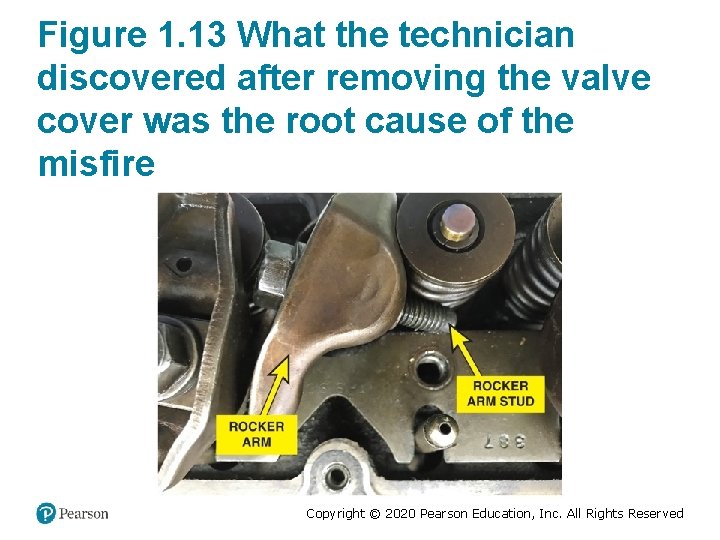
Figure 1. 13 What the technician discovered after removing the valve cover was the root cause of the misfire Copyright © 2020 Pearson Education, Inc. All Rights Reserved
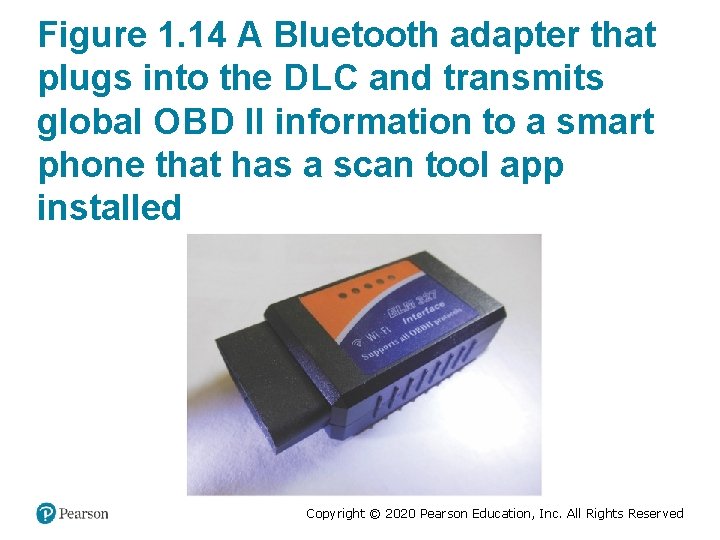
Figure 1. 14 A Bluetooth adapter that plugs into the DLC and transmits global OBD II information to a smart phone that has a scan tool app installed Copyright © 2020 Pearson Education, Inc. All Rights Reserved
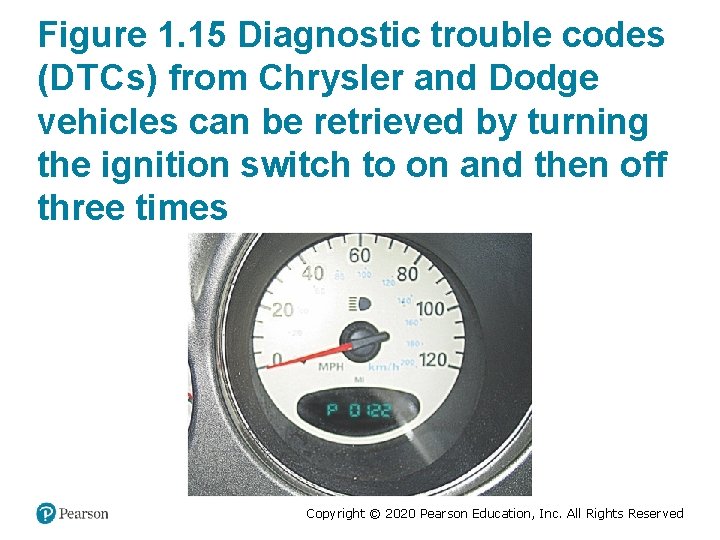
Figure 1. 15 Diagnostic trouble codes (DTC s) from Chrysler and Dodge vehicles can be retrieved by turning the ignition switch to on and then off three times Copyright © 2020 Pearson Education, Inc. All Rights Reserved
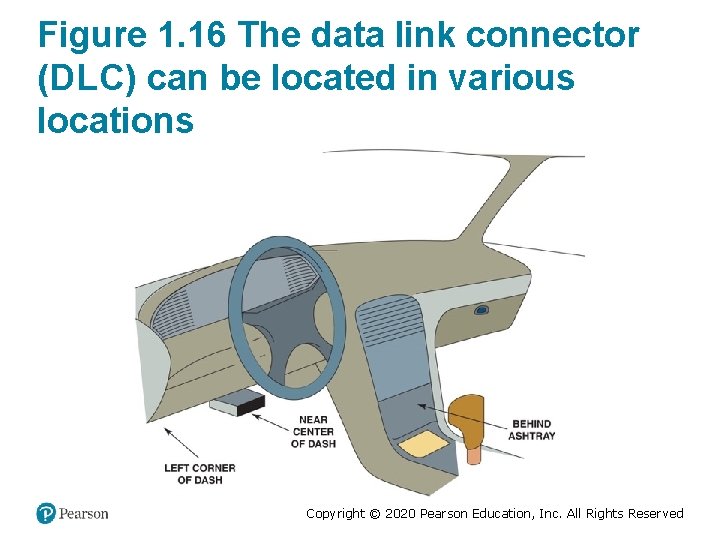
Figure 1. 16 The data link connector (DLC) can be located in various locations Copyright © 2020 Pearson Education, Inc. All Rights Reserved
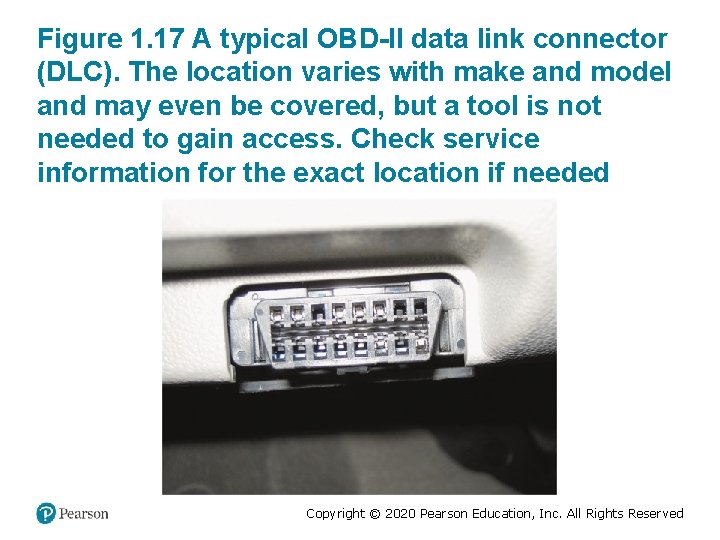
Figure 1. 17 A typical OBD-II data link connector (DLC). The location varies with make and model and may even be covered, but a tool is not needed to gain access. Check service information for the exact location if needed Copyright © 2020 Pearson Education, Inc. All Rights Reserved
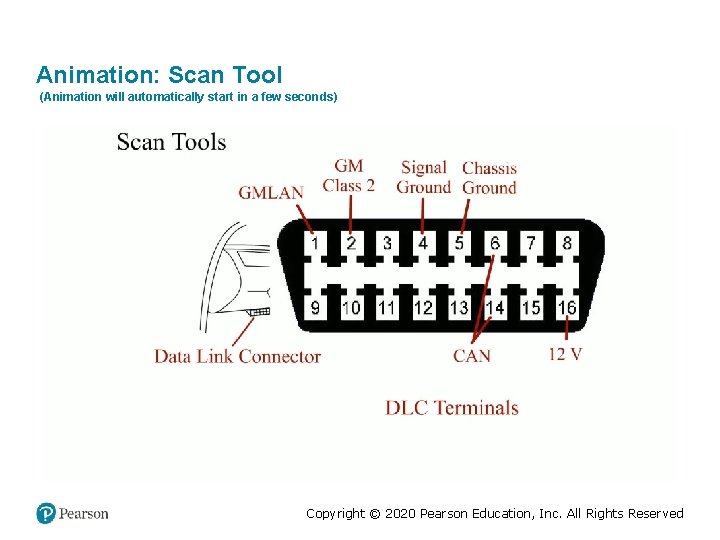
Animation: Scan Tool ((Animation will automatically start in a few seconds)he animation will automatically start in a few seconds) Copyright © 2020 Pearson Education, Inc. All Rights Reserved
Video Links (Internet Access Required) • 13 diagnostic steps (time 3: 05) • 13 diagnostic steps Step 1 (time 1: 55) • 13 diagnostic steps Step 2 (time 2: 05) • 13 diagnostic steps Step 3 (time 2: 03) • 13 diagnostic steps Step 4 (time 2: 24) • 13 diagnostic steps Step 5 (time 2: 50) • 13 diagnostic steps Step 6 (time 3: 00) • 13 diagnostic steps Step 7 (time 2: 46) • 13 diagnostic steps Step 8 (time 2: 54) • 13 diagnostic steps Step 9 (time 4: 03) • 13 diagnostic steps Step 10 (time 3: 59) Copyright © 2020 Pearson Education, Inc. All Rights Reserved
Video Links (Internet Access Required) • 13 diagnostic steps Step 11 (time 2: 15) • 13 diagnostic steps Step 12 (time 3: 08) • 13 diagnostic steps Step 13 (time 2: 14) • Drivability diagnosis (time 12: 05) • Flash a PCM (time 1: 56) • Fuel trim (time 7: 31) • OBD II PIDS (time 0: 51) • Scanning CAN protocol (time 2: 04) • OBD II scanner modes (time 2: 42) • K Line OBD protocol (time 2: 01) • ECM diagnosis (time 2: 22) Copyright © 2020 Pearson Education, Inc. All Rights Reserved
Video Links (Internet Access Required) • ECM power input (time 1: 30) • ECM ground circuits (time 1: 30) • No start diagnostics (time 5: 34) • Fuel system diagnostic tips (time 9: 36) • Ford electronic returnless fuel system diagnosis part 1 (time 22: 35) • Ford electronic returnless fuel system diagnosis part 2 (time 47: 18) Copyright © 2020 Pearson Education, Inc. All Rights Reserved
Copyright © 2020 Pearson Education, Inc. All Rights Reserved