
ADVANCED ENGINE PERFORMANCE DIAGNOSIS CHAPTER 20 WideBand Oxygen
ADVANCED ENGINE PERFORMANCE DIAGNOSIS CHAPTER 20 Wide-Band Oxygen Sensors Advanced Engine Performance Diagnosis, 6 e James D. Halderman Copyright © 2016 by Pearson Education, Inc. All Rights Reserved
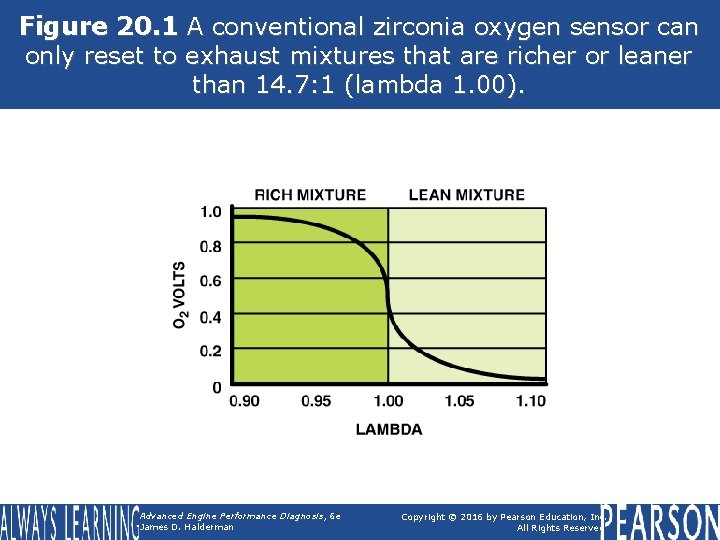
Figure 20. 1 A conventional zirconia oxygen sensor can only reset to exhaust mixtures that are richer or leaner than 14. 7: 1 (lambda 1. 00). Advanced Engine Performance Diagnosis, 6 e James D. Halderman Copyright © 2016 by Pearson Education, Inc. All Rights Reserved
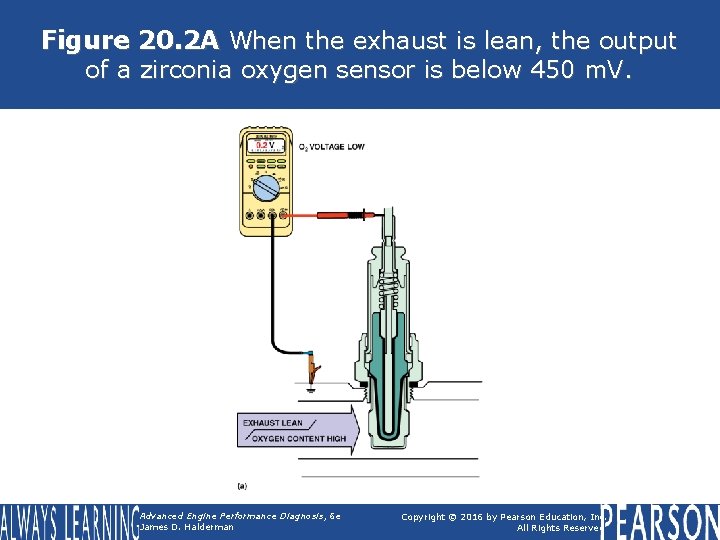
Figure 20. 2 A When the exhaust is lean, the output of a zirconia oxygen sensor is below 450 m. V. Advanced Engine Performance Diagnosis, 6 e James D. Halderman Copyright © 2016 by Pearson Education, Inc. All Rights Reserved
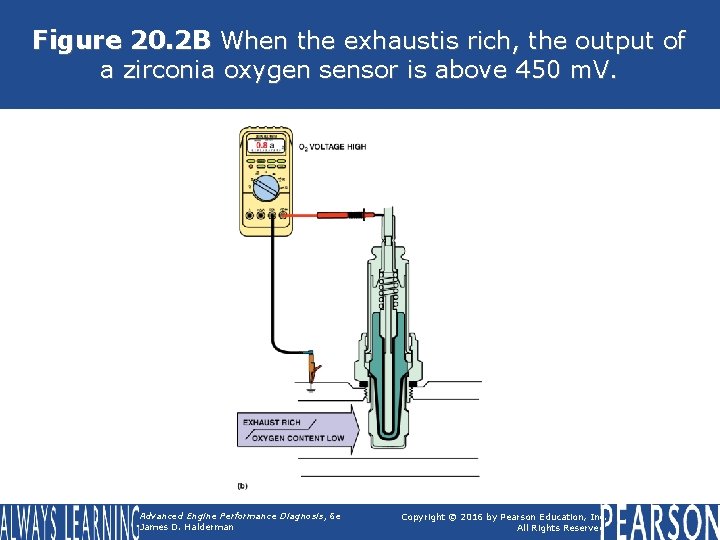
Figure 20. 2 B When the exhaustis rich, the output of a zirconia oxygen sensor is above 450 m. V. Advanced Engine Performance Diagnosis, 6 e James D. Halderman Copyright © 2016 by Pearson Education, Inc. All Rights Reserved
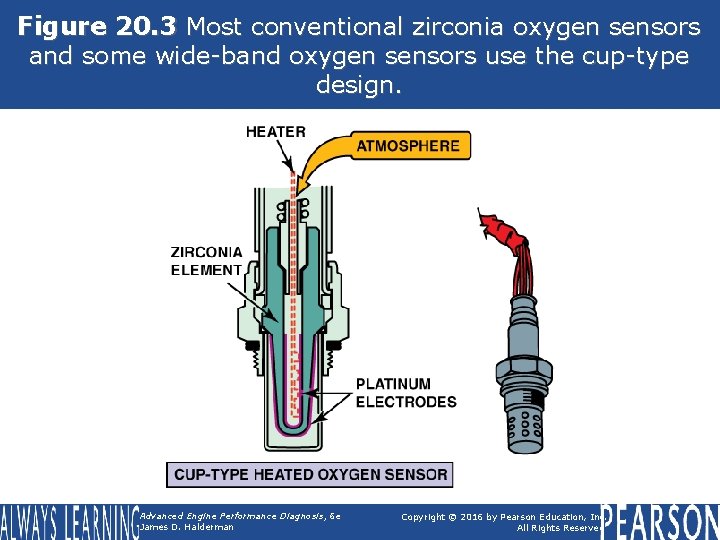
Figure 20. 3 Most conventional zirconia oxygen sensors and some wide-band oxygen sensors use the cup-type design. Advanced Engine Performance Diagnosis, 6 e James D. Halderman Copyright © 2016 by Pearson Education, Inc. All Rights Reserved

Figure 20. 4 A typical heated zirconia oxygen sensor, showing the sensor signal circuit that uses the outer (exhaust) electrode as negative and the ambient air side electrode as the positive. Advanced Engine Performance Diagnosis, 6 e James D. Halderman Copyright © 2016 by Pearson Education, Inc. All Rights Reserved

Figure 20. 5 A planar design zirconia oxygen sensor places all of the elements together, which allows the sensor to reach operating temperature quickly. Advanced Engine Performance Diagnosis, 6 e James D. Halderman Copyright © 2016 by Pearson Education, Inc. All Rights Reserved

Figure 20. 6 The reference electrodes are shared by the Nernst cell and the pump cell. Advanced Engine Performance Diagnosis, 6 e James D. Halderman Copyright © 2016 by Pearson Education, Inc. All Rights Reserved
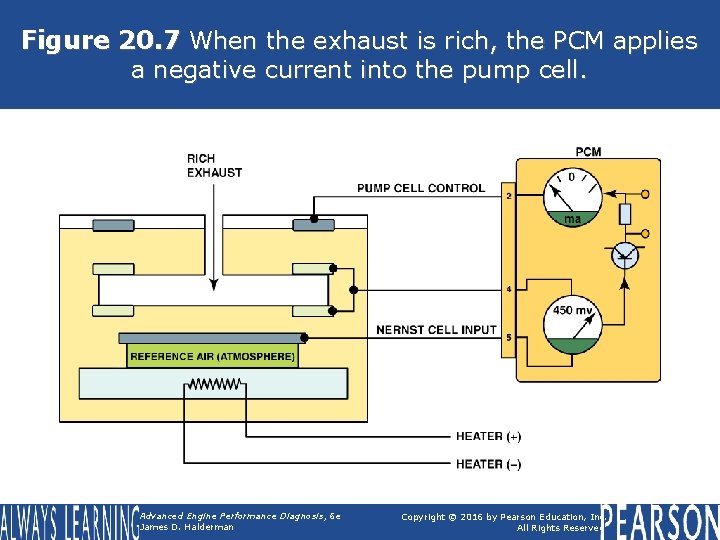
Figure 20. 7 When the exhaust is rich, the PCM applies a negative current into the pump cell. Advanced Engine Performance Diagnosis, 6 e James D. Halderman Copyright © 2016 by Pearson Education, Inc. All Rights Reserved
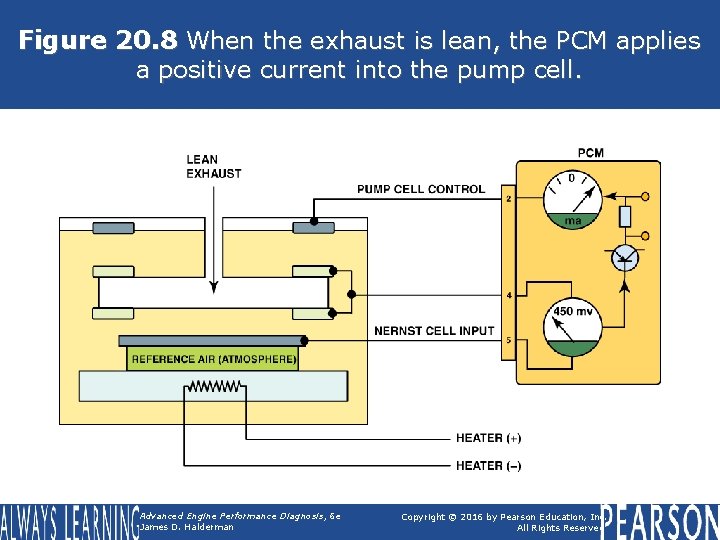
Figure 20. 8 When the exhaust is lean, the PCM applies a positive current into the pump cell. Advanced Engine Performance Diagnosis, 6 e James D. Halderman Copyright © 2016 by Pearson Education, Inc. All Rights Reserved
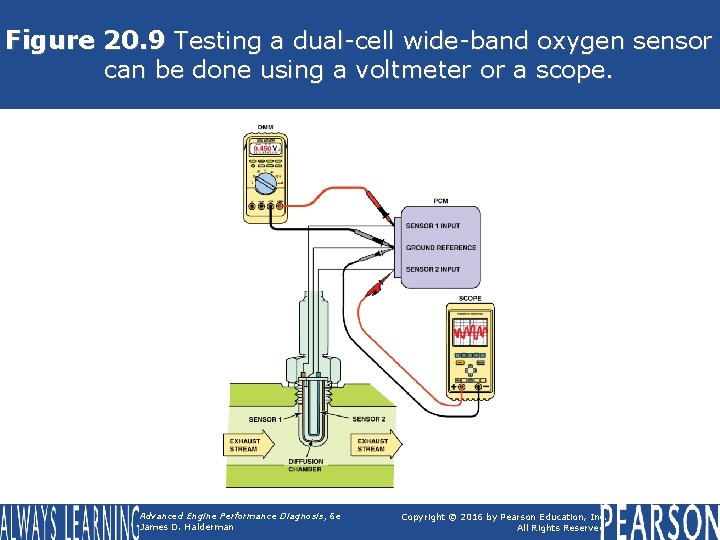
Figure 20. 9 Testing a dual-cell wide-band oxygen sensor can be done using a voltmeter or a scope. Advanced Engine Performance Diagnosis, 6 e James D. Halderman Copyright © 2016 by Pearson Education, Inc. All Rights Reserved
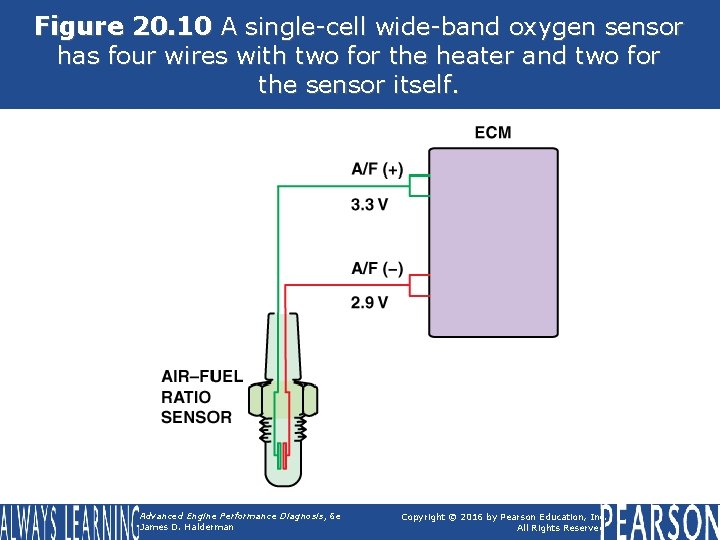
Figure 20. 10 A single-cell wide-band oxygen sensor has four wires with two for the heater and two for the sensor itself. Advanced Engine Performance Diagnosis, 6 e James D. Halderman Copyright © 2016 by Pearson Education, Inc. All Rights Reserved
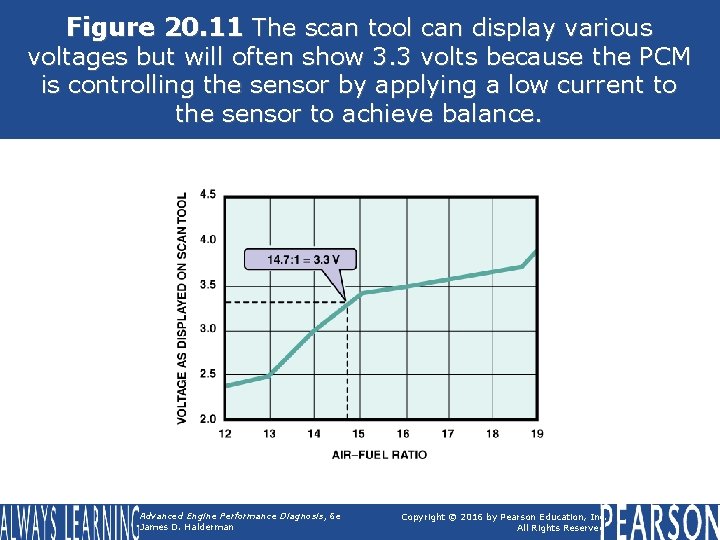
Figure 20. 11 The scan tool can display various voltages but will often show 3. 3 volts because the PCM is controlling the sensor by applying a low current to the sensor to achieve balance. Advanced Engine Performance Diagnosis, 6 e James D. Halderman Copyright © 2016 by Pearson Education, Inc. All Rights Reserved
- Slides: 13