
Advanced Degrees in Diagnostic Medical Sonography Michael J



- Slides: 49
Advanced Degrees in Diagnostic Medical Sonography Michael J. Hartman, MS, RDMS, RVT, RT(R)
Diagnostic Medical Sonography/ Cardiovascular Technology • General • Cardiac • Vascular
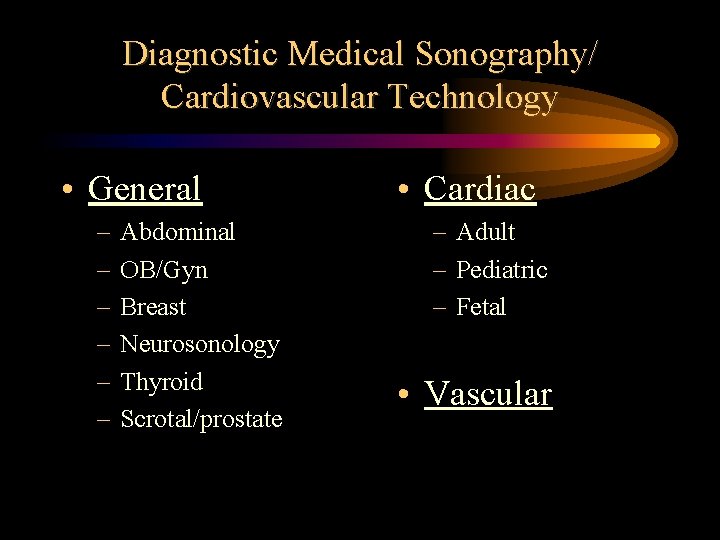
Diagnostic Medical Sonography/ Cardiovascular Technology • General – – – Abdominal OB/Gyn Breast Neurosonology Thyroid Scrotal/prostate • Cardiac – Adult – Pediatric – Fetal • Vascular
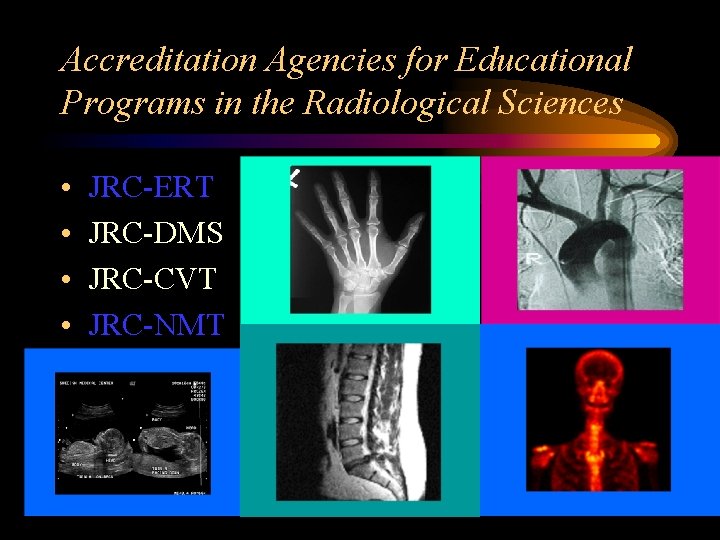
Accreditation Agencies for Educational Programs in the Radiological Sciences • • JRC-ERT JRC-DMS JRC-CVT JRC-NMT
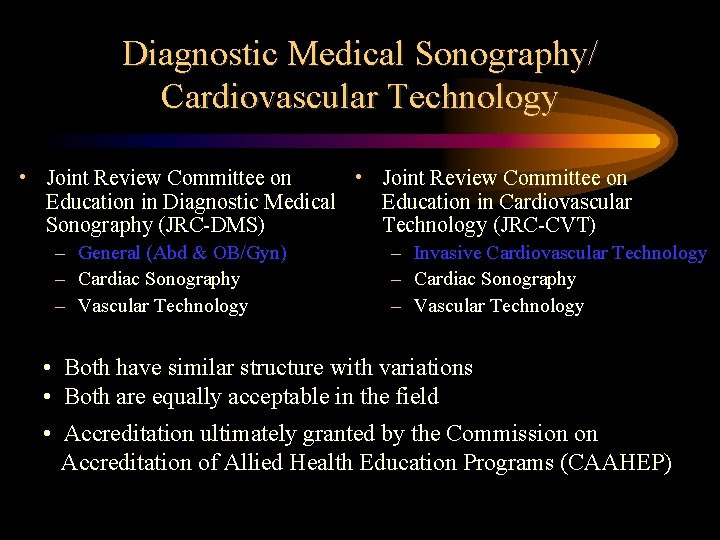
Diagnostic Medical Sonography/ Cardiovascular Technology • Joint Review Committee on Education in Diagnostic Medical Education in Cardiovascular Sonography (JRC-DMS) Technology (JRC-CVT) – General (Abd & OB/Gyn) – Cardiac Sonography – Vascular Technology – Invasive Cardiovascular Technology – Cardiac Sonography – Vascular Technology • Both have similar structure with variations • Both are equally acceptable in the field • Accreditation ultimately granted by the Commission on Accreditation of Allied Health Education Programs (CAAHEP)
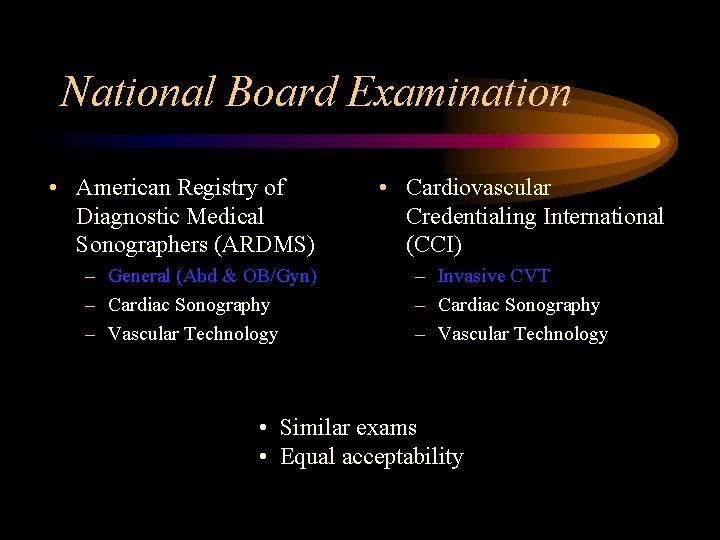
National Board Examination • American Registry of Diagnostic Medical Sonographers (ARDMS) – General (Abd & OB/Gyn) – Cardiac Sonography – Vascular Technology • Cardiovascular Credentialing International (CCI) – Invasive CVT – Cardiac Sonography – Vascular Technology • Similar exams • Equal acceptability
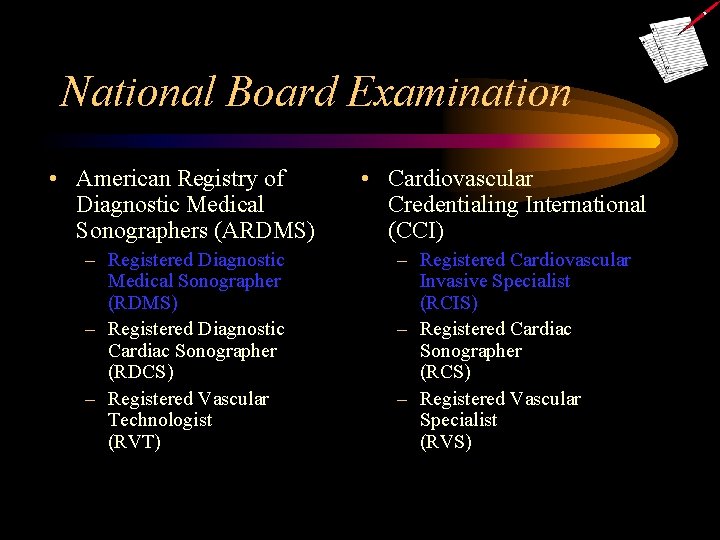
National Board Examination • American Registry of Diagnostic Medical Sonographers (ARDMS) – Registered Diagnostic Medical Sonographer (RDMS) – Registered Diagnostic Cardiac Sonographer (RDCS) – Registered Vascular Technologist (RVT) • Cardiovascular Credentialing International (CCI) – Registered Cardiovascular Invasive Specialist (RCIS) – Registered Cardiac Sonographer (RCS) – Registered Vascular Specialist (RVS)
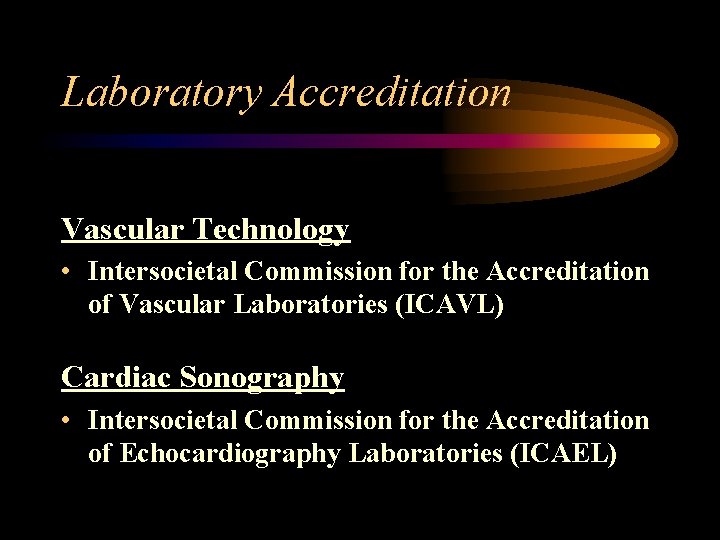
Laboratory Accreditation Vascular Technology • Intersocietal Commission for the Accreditation of Vascular Laboratories (ICAVL) Cardiac Sonography • Intersocietal Commission for the Accreditation of Echocardiography Laboratories (ICAEL)
Professional Societies • Society of Diagnostic Medical Sonography (SDMS) – www. sdms. org • Society for Vascular Ultrasound (SVU) – www. svunet. org • American Society of Echocardiography (ASE) – www. asecho. org • American Institute of Ultrasound in Medicine (AIUM) – www. aium. org • American Society of Radiologic Technology (ASRT) – www. asrt. org
SDMS Membership Categories • Diagnostic Medical Sonography Student • Ultrasound Technician • Diagnostic Medical Sonographer – RDMS General – RDCS/RCS Cardiac – RVT/RVS Vascular • Advanced Practice Sonographer (APS) • Fellow (the Society's highest honor-no more dues!)
Advanced Practice Sonographer (APS) • • • * Membership category, NOT a credential ARDMS-registered in each specialty area of APS Five (5) years of clinical experience in that area(s) Minimum of Bachelor's degree (In 2010, DMS BS degree) An article published in a peer-reviewed journal Fifteen (15) hours of specialty specific Continuing Medical Education (CME) credit per triennium (for each specialty)
Ultrasound Practitioner (UP) Proposed as: • a mid-level healthcare professional who performs ultrasound procedures in primary or specialty care settings with an increased scope of practice • a new credential in the field • MS Degree educational program Strong appeal for outpatient clinics and specialized private practice physicians - Cardiologists - Vascular Surgeons - Obstetricians
Ultrasound Practitioner (UP) • In 1996, the SDMS commissioned a task force to investigate the feasibility for this healthcare provider, distinguished by advanced – Education – Experience – Scope of practice • Officially proposed via a comprehensive article in the JDMS (July/August 1999) • Included a proposal for a national board certification examination
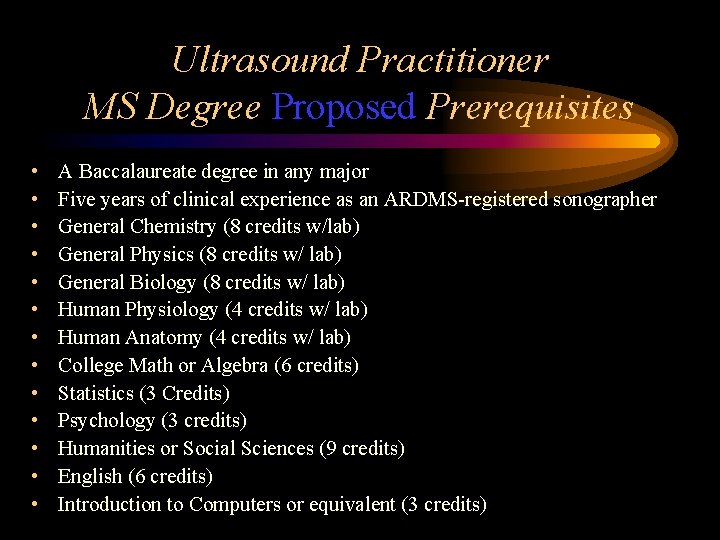
Ultrasound Practitioner MS Degree Proposed Prerequisites • • • • A Baccalaureate degree in any major Five years of clinical experience as an ARDMS-registered sonographer General Chemistry (8 credits w/lab) General Physics (8 credits w/ lab) General Biology (8 credits w/ lab) Human Physiology (4 credits w/ lab) Human Anatomy (4 credits w/ lab) College Math or Algebra (6 credits) Statistics (3 Credits) Psychology (3 credits) Humanities or Social Sciences (9 credits) English (6 credits) Introduction to Computers or equivalent (3 credits)
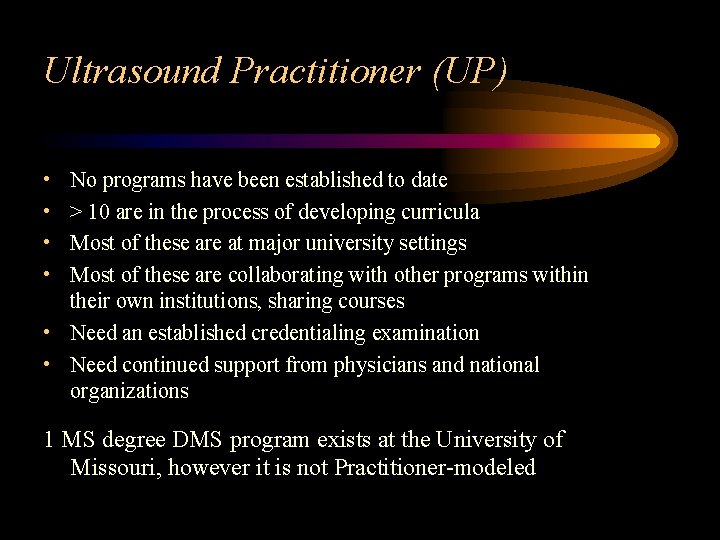
Ultrasound Practitioner (UP) • • No programs have been established to date > 10 are in the process of developing curricula Most of these are at major university settings Most of these are collaborating with other programs within their own institutions, sharing courses • Need an established credentialing examination • Need continued support from physicians and national organizations 1 MS degree DMS program exists at the University of Missouri, however it is not Practitioner-modeled
SDMS Leadership Conference • National Conference • April 20 -23, 2006 • Dallas, TX
Diagnostic Medical Sonography Advanced Practice Concensus Conference • National Conference • SDMS-sponsored via the Advanced Practice Committee • July 21 -23, 2006 • Washington, DC • > 25 national organizations represented
2006 SDMS Annual Conference • • National Conference Advanced Practice Update October 12 -15, 2006 Denver, CO
Diagnostic Medical Sonography National Statistics
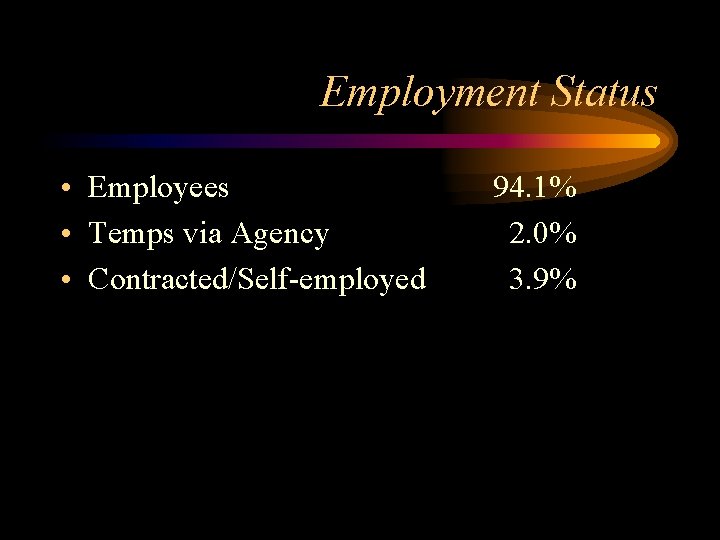
Employment Status • Employees • Temps via Agency • Contracted/Self-employed 94. 1% 2. 0% 3. 9%
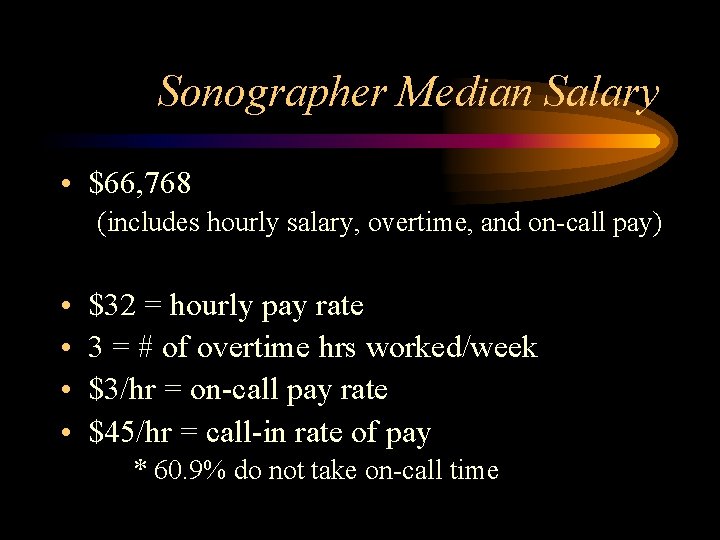
Sonographer Median Salary • $66, 768 (includes hourly salary, overtime, and on-call pay) • • $32 = hourly pay rate 3 = # of overtime hrs worked/week $3/hr = on-call pay rate $45/hr = call-in rate of pay * 60. 9% do not take on-call time
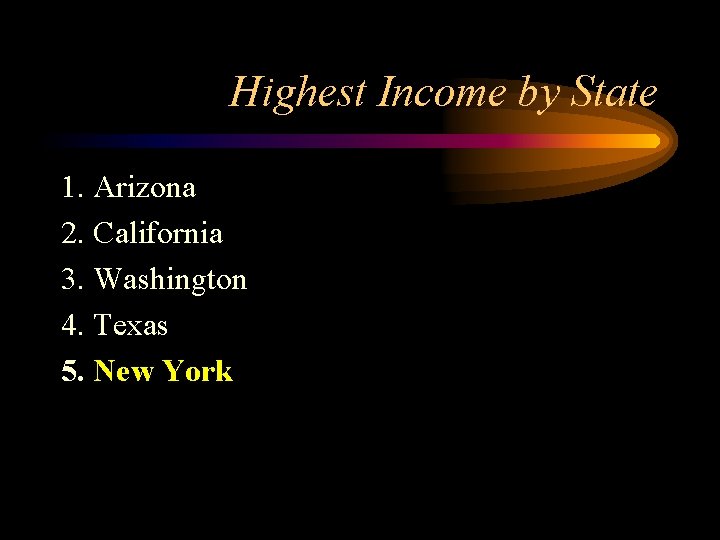
Highest Income by State 1. Arizona 2. California 3. Washington 4. Texas 5. New York
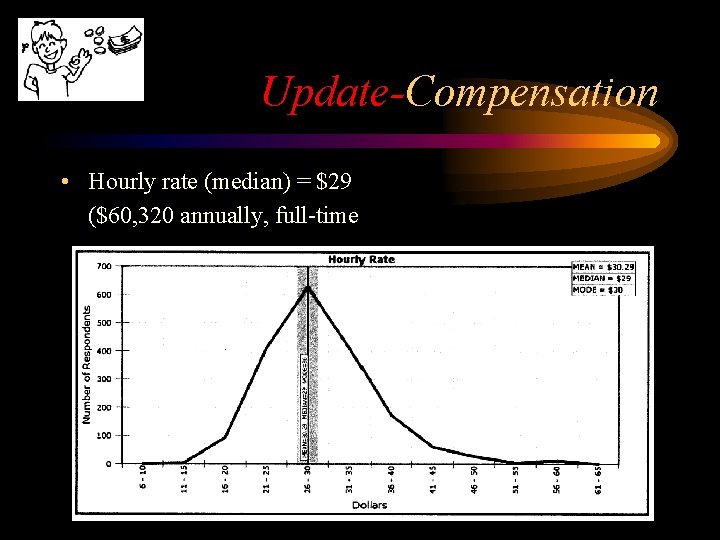
Update-Compensation • Hourly rate (median) = $29 ($60, 320 annually, full-time
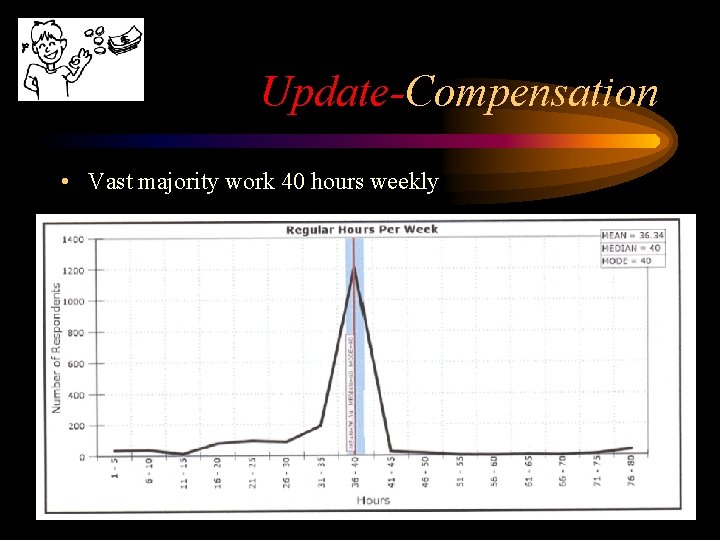
Update-Compensation • Vast majority work 40 hours weekly
Update-Compensation • 44% on-call • Call-in rate of $42/hr (median) • Rarely get called in
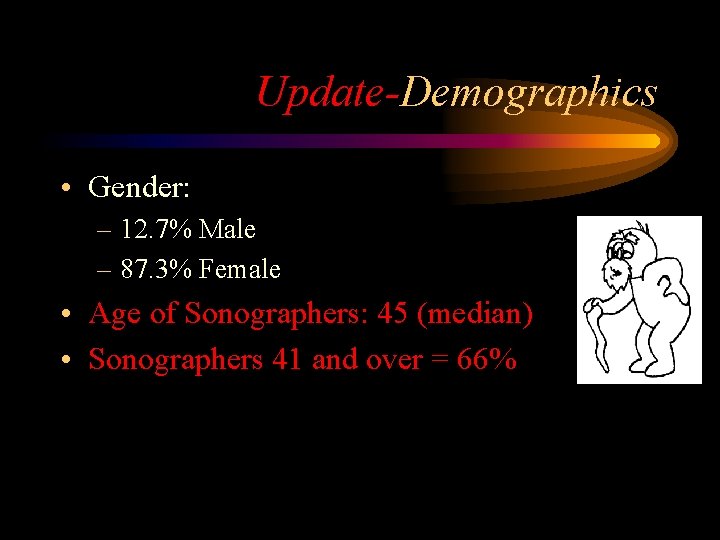
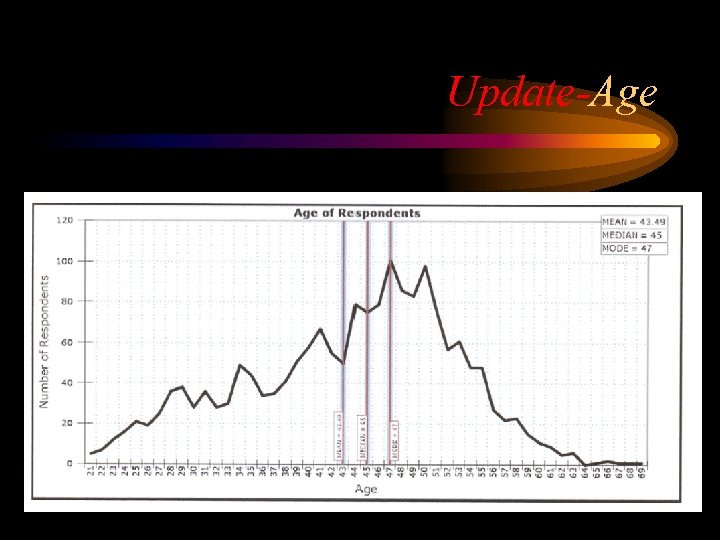
Update-Demographics • Gender: – 12. 7% Male – 87. 3% Female • Age of Sonographers: 45 (median) • Sonographers 41 and over = 66%
Update-Age
Aging Workforce/Future Shortages • 38. 5% = working in the profession for over 20 years
Update-Educational Program Opportunities • Opportunities predicted for the future of the profession in conjunction with: – expanding market – aging population – # of sonographers reaching retirement age – lack of a career ladder – musculoskeletal injury
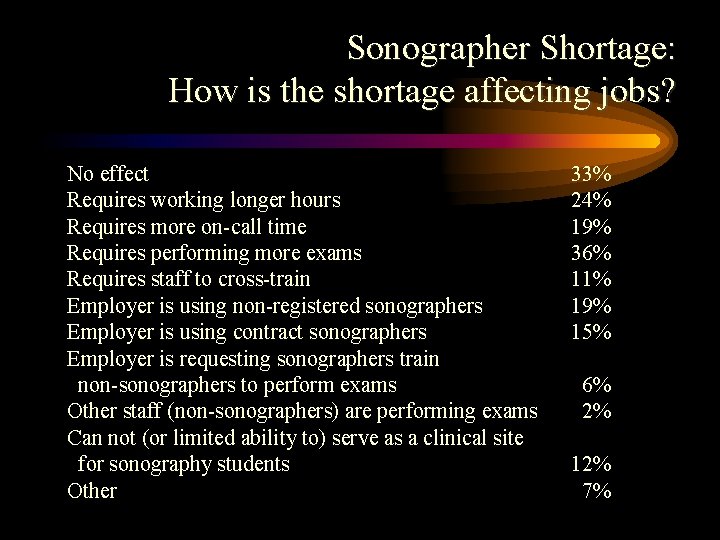
Sonographer Shortage: How is the shortage affecting jobs? No effect Requires working longer hours Requires more on-call time Requires performing more exams Requires staff to cross-train Employer is using non-registered sonographers Employer is using contract sonographers Employer is requesting sonographers train non-sonographers to perform exams Other staff (non-sonographers) are performing exams Can not (or limited ability to) serve as a clinical site for sonography students Other 33% 24% 19% 36% 11% 19% 15% 6% 2% 12% 7%
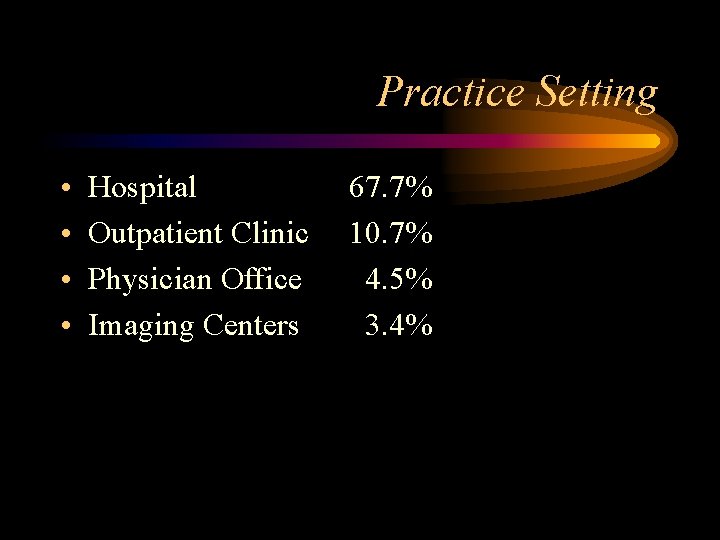
Practice Setting • • Hospital Outpatient Clinic Physician Office Imaging Centers 67. 7% 10. 7% 4. 5% 3. 4%
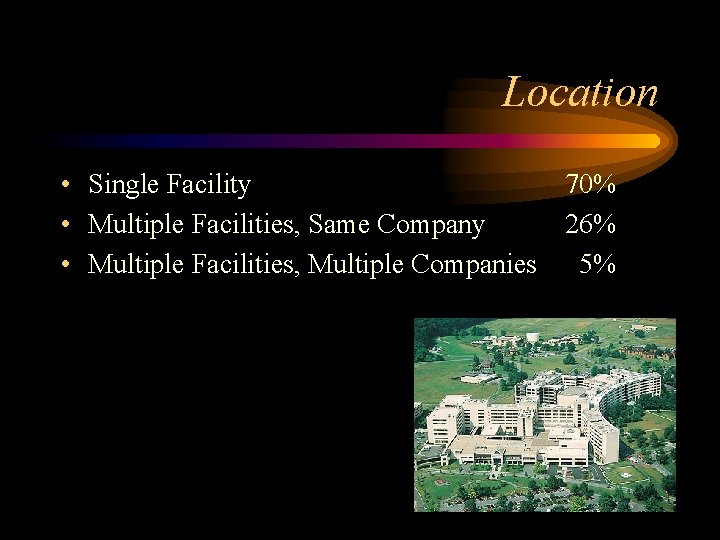
Location • Single Facility 70% • Multiple Facilities, Same Company 26% • Multiple Facilities, Multiple Companies 5%
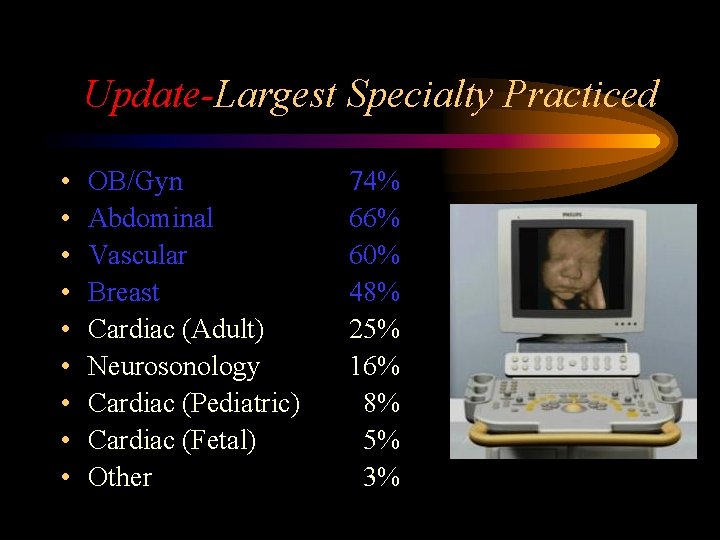
Update-Largest Specialty Practiced • • • OB/Gyn Abdominal Vascular Breast Cardiac (Adult) Neurosonology Cardiac (Pediatric) Cardiac (Fetal) Other 74% 66% 60% 48% 25% 16% 8% 5% 3%
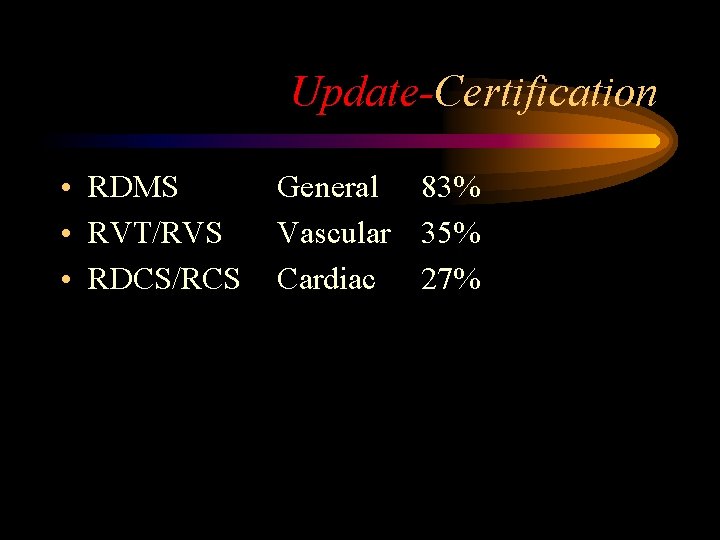
Update-Certification • RDMS • RVT/RVS • RDCS/RCS General 83% Vascular 35% Cardiac 27%
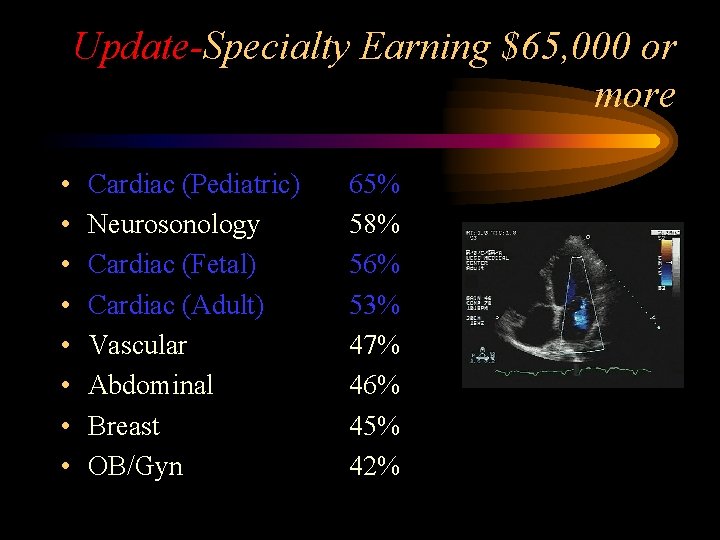
Update-Specialty Earning $65, 000 or more • • Cardiac (Pediatric) Neurosonology Cardiac (Fetal) Cardiac (Adult) Vascular Abdominal Breast OB/Gyn 65% 58% 56% 53% 47% 46% 45% 42%
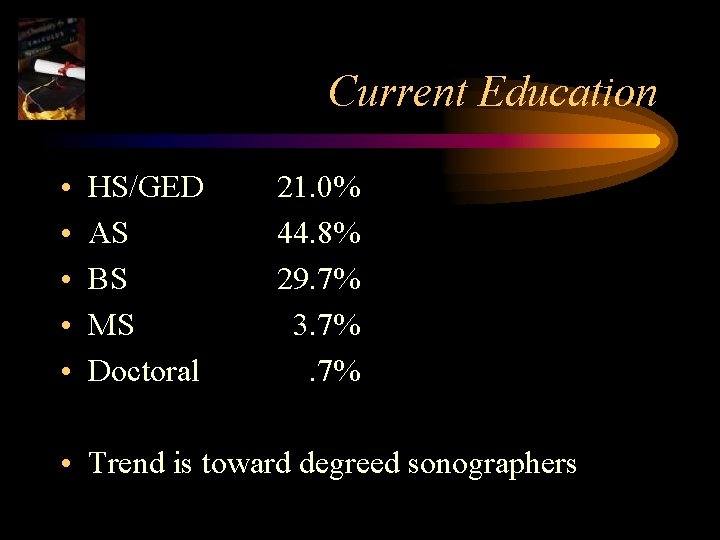
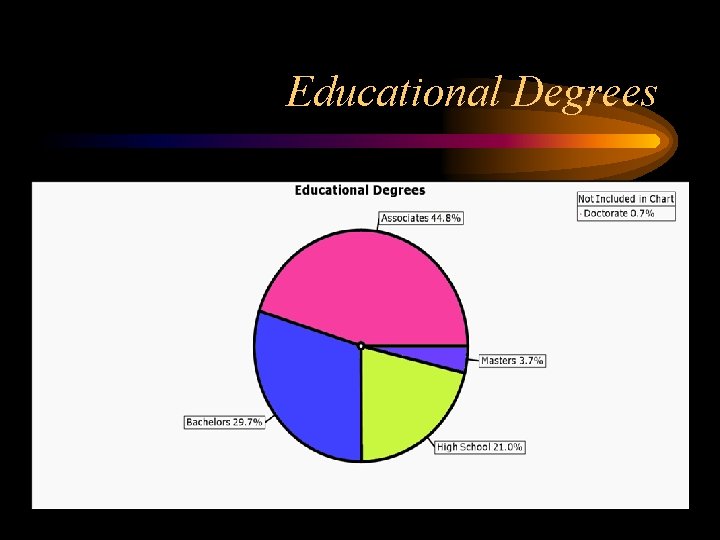
Current Education • • • HS/GED AS BS MS Doctoral 21. 0% 44. 8% 29. 7% 3. 7% • Trend is toward degreed sonographers
Educational Degrees
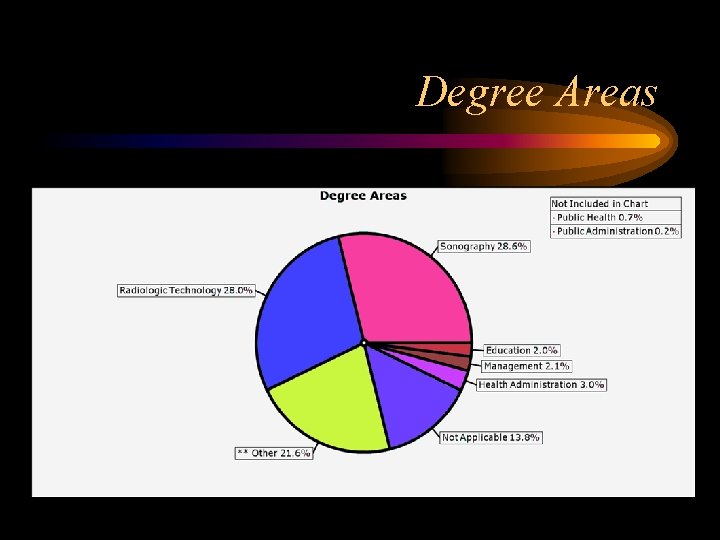
Degree Areas
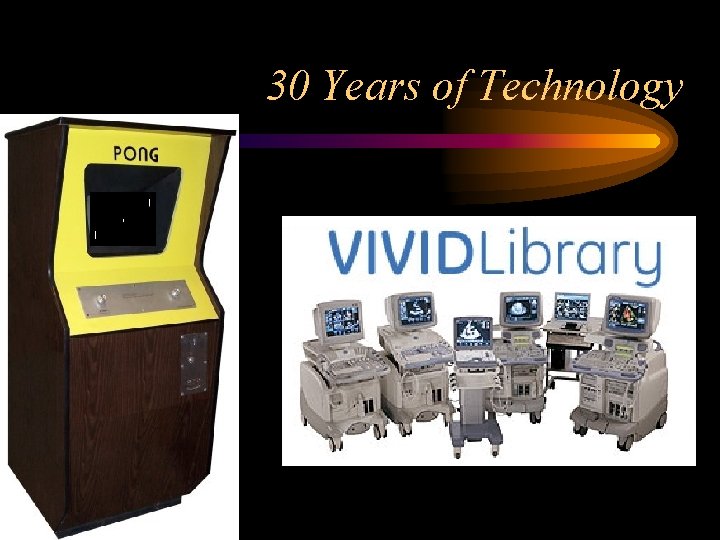
30 Years of Technology
Update-Initial Sonography Education • CAAHEP Accredited Programs • On-the-Job-Training 33% 47% • for many sonographers over 30, OJT was the only educational option available to them • # of CAAHEP programs has tripled in past 10 years • If students are going to spend $ on an education today, they expect and need a degree
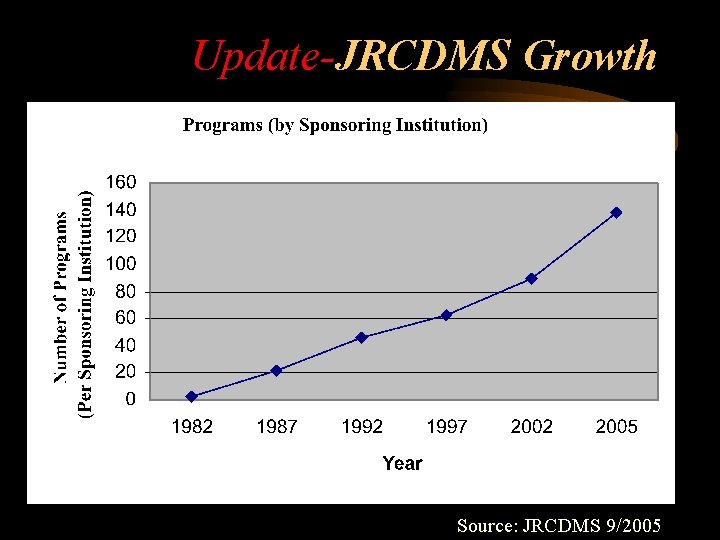
Update-JRCDMS Growth • • In 1982, reviewed 1 st program for accreditation By 1992, 42 programs By 2002, 90 programs Currently reviews programs in >138 sponsoring institutions, which breaks down to >250 programs by concentration. (JRCCVT has 30 additional institutions. ) • Trend in the field is to move to CAAHEPaccredited, advanced degree programs
Update-JRCDMS Growth Source: JRCDMS 9/2005
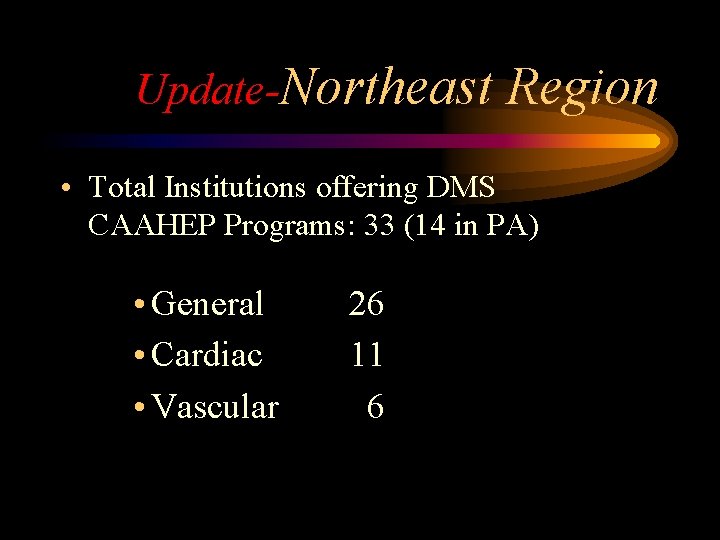
Diagnostic Medical Sonography Northeast Region Statistics • • • Connecticut Maine Massachusetts New Hampshire New Jersey New York Pennsylvania Rhode Island Vermont
Update-Northeast Region • Total Institutions offering DMS CAAHEP Programs: 33 (14 in PA) • General • Cardiac • Vascular 26 11 6
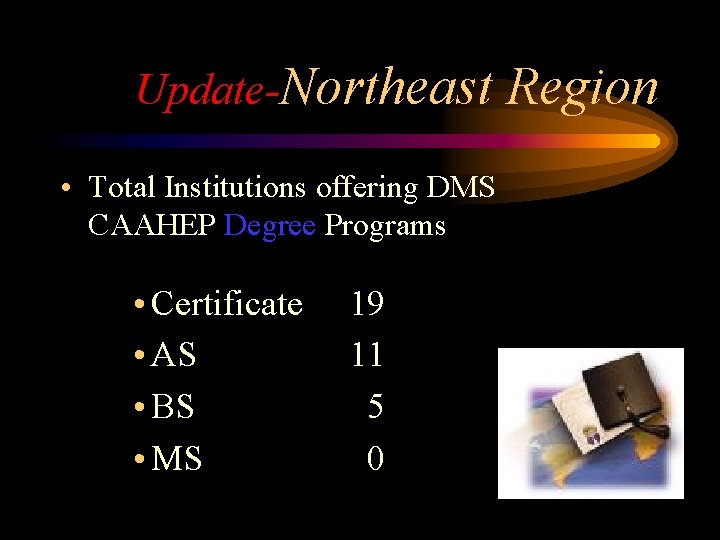
Update-Northeast • Total Institutions offering DMS CAAHEP Degree Programs • Certificate • AS • BS • MS 19 11 5 0 Region
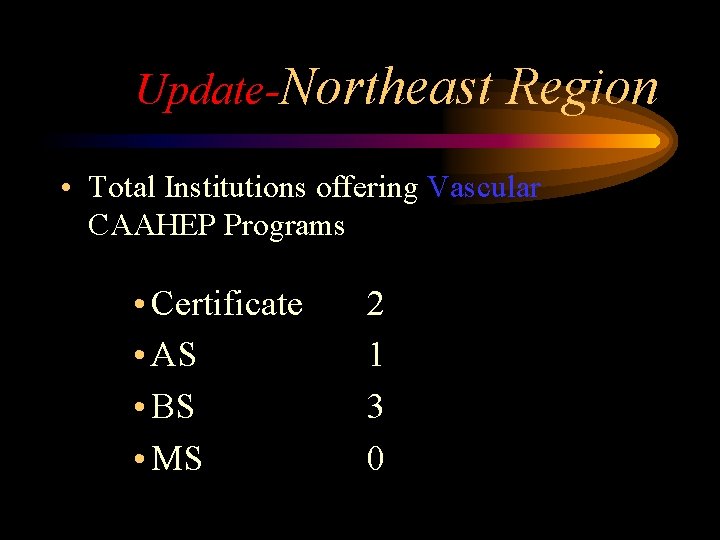
Update-Northeast Region • Total Institutions offering Vascular CAAHEP Programs • Certificate • AS • BS • MS 2 1 3 0
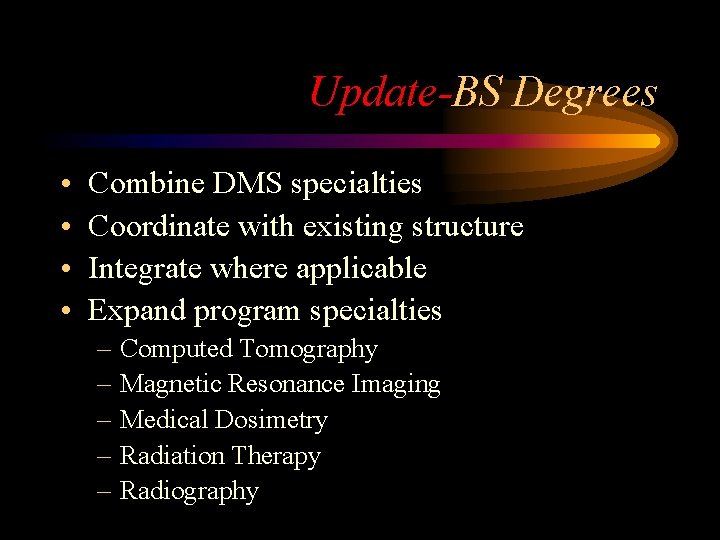
Update-BS Degrees • • Combine DMS specialties Coordinate with existing structure Integrate where applicable Expand program specialties – – – Computed Tomography Magnetic Resonance Imaging Medical Dosimetry Radiation Therapy Radiography
Update-MS Degrees • Use curriculum as proposed by the SDMS Advanced Practice Committee as a guide • Collaborate with existing programs • Maximize resources
Sources • ARDMS Website – www. ardms. org • CCI Website – www. cci-online. org • CAAHEP Website – www. caahep. org • JRCCVT Website – www. jrccvt. org • JRCDMS Website – www. jrcdms. org • SDMS Sonographer Salary and Benefits Survey © 2005 • SDMS Website – www. sdms. org