
Advanced Chapter 1 PipetoSoil Potential Surveys and Analysis







- Slides: 74
Advanced Chapter 1 Pipe‐to‐Soil Potential Surveys and Analysis Thomas B. Williams, Jr. New England CP, Inc. tom@newenglandcpinc. com
Acknowledgement • Much of this Power. Point was created by Kevin Garrity who taught this class for many years.
Introduction • The pipe-to-soil potential measurement is the most important measurement we make. • We are going to discuss how pipe-to-soil potential data can be used to identify and evaluate corrosion problems. • We are going to discuss how pipe-to-soil potential data can be used to determine the effectiveness of a cathodic protection system. • We are going to review the criteria for cathodic protection.
Topics to be Covered • Review of Corrosion Mechanisms • Review of Pipe-to-Soil Measurement Techniques • Review of Survey Techniques • Interpretation of Survey Data for Protected and Unprotected Pipelines • Review of CP Criteria
Corrosion Mechanisms • Corrosion is electrochemical in nature. • There are two different mechanisms that cause corrosion: electrolytic corrosion and galvanic/natural corrosion.
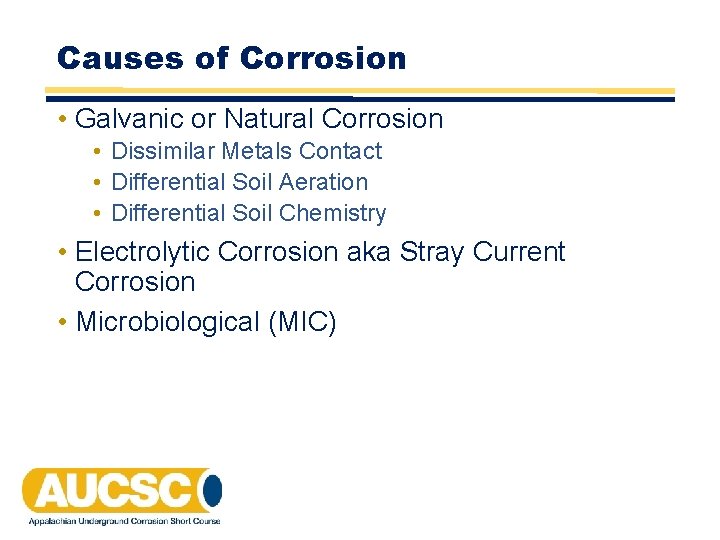
Causes of Corrosion • Galvanic or Natural Corrosion • Dissimilar Metals Contact • Differential Soil Aeration • Differential Soil Chemistry • Electrolytic Corrosion aka Stray Current Corrosion • Microbiological (MIC)
Corrosion Cells • Anode Material • Cathode Material • Electrolyte Shared by Anode and Cathode • Metallic or Electron Path between Anode and Cathode
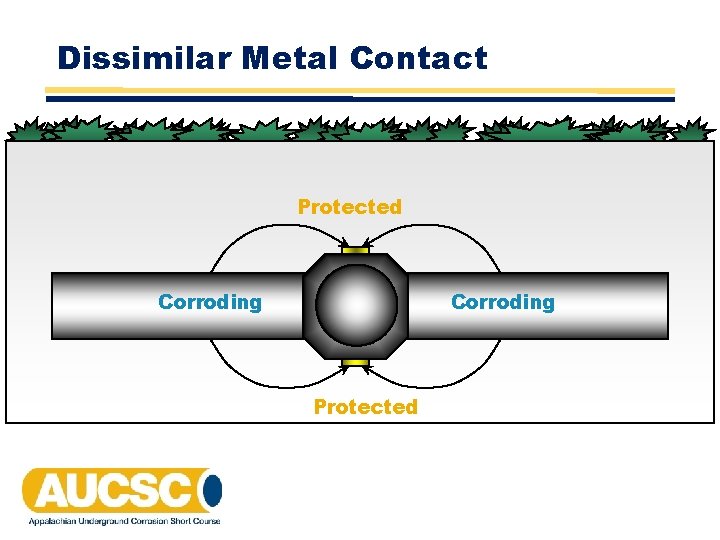
Dissimilar Metal Contact Protected Corroding Protected
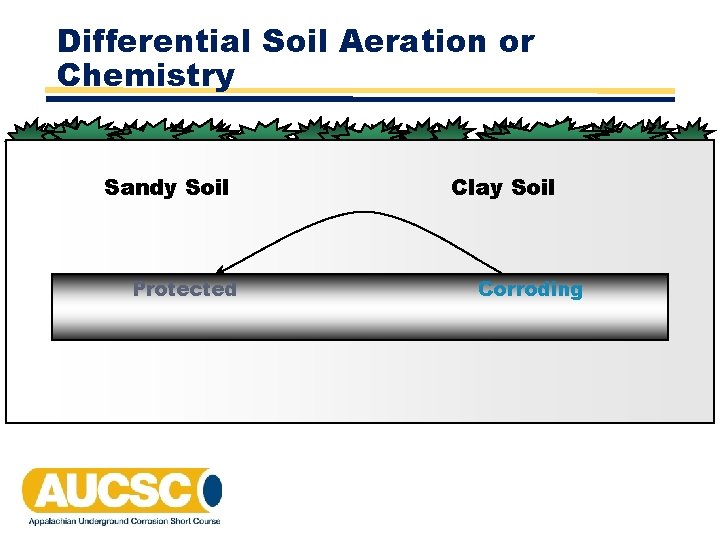
Differential Soil Aeration or Chemistry Sandy Soil Protected Clay Soil Corroding
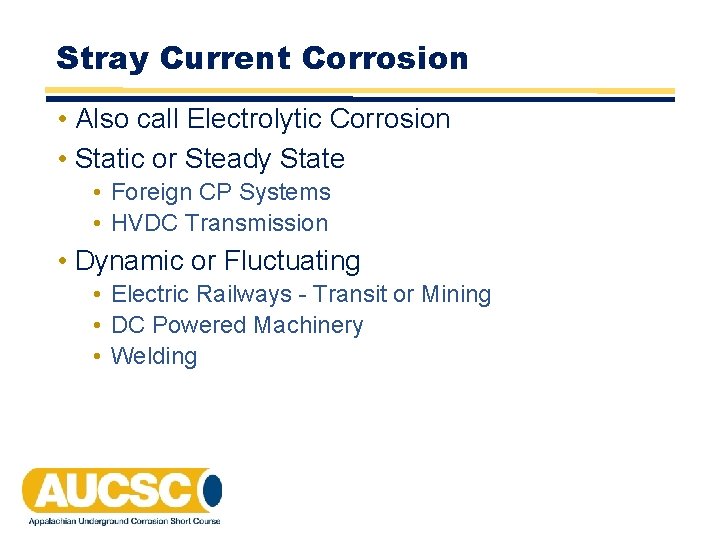
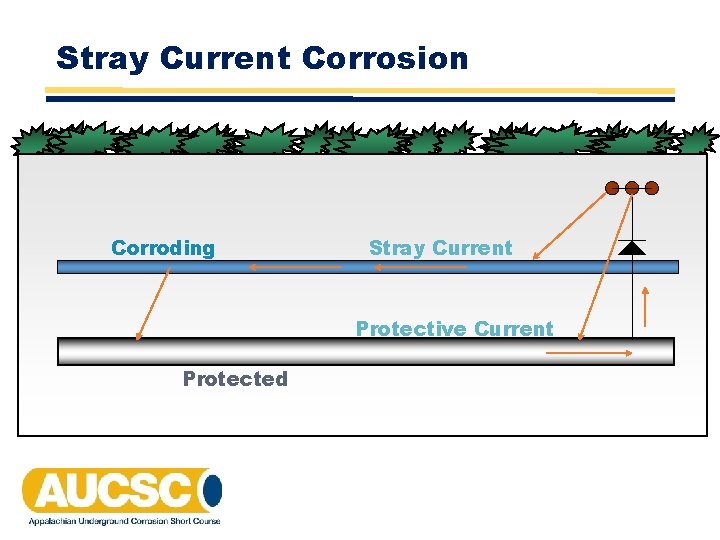
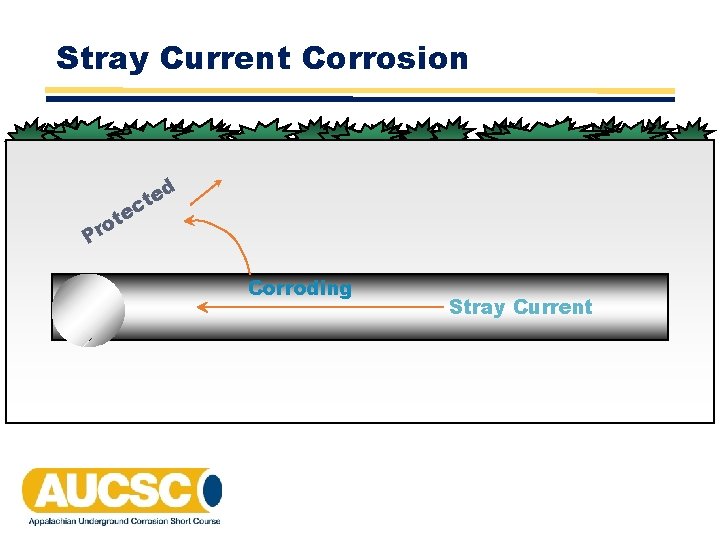
Stray Current Corrosion • Also call Electrolytic Corrosion • Static or Steady State • Foreign CP Systems • HVDC Transmission • Dynamic or Fluctuating • Electric Railways - Transit or Mining • DC Powered Machinery • Welding
Stray Current Corrosion Corroding Stray Current Protective Current Protected
Stray Current Corrosion d te o Pr e ct Corroding Stray Current
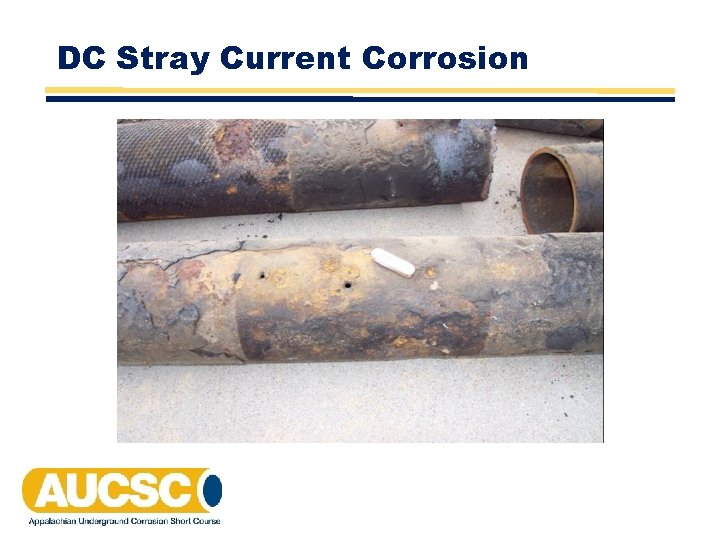
DC Stray Current Corrosion
Other Corrosion Mechanisms • AC Corrosion – To be covered in Period 3 • MIC – to be covered in Period 12 and Chapter 7 of the text
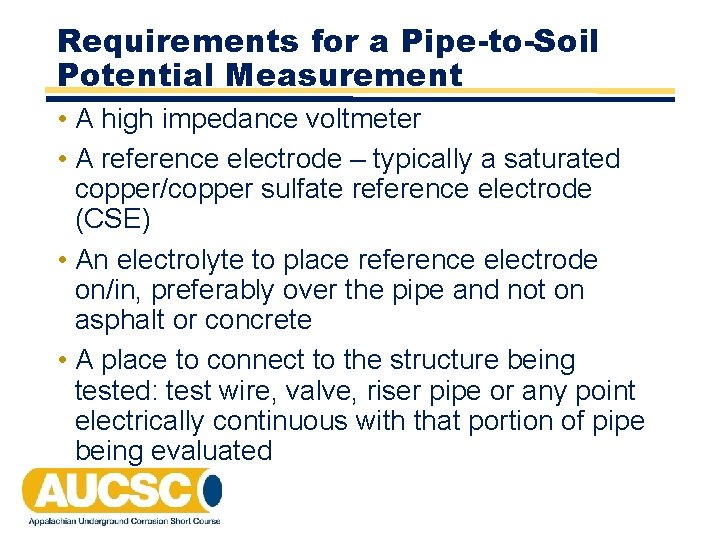
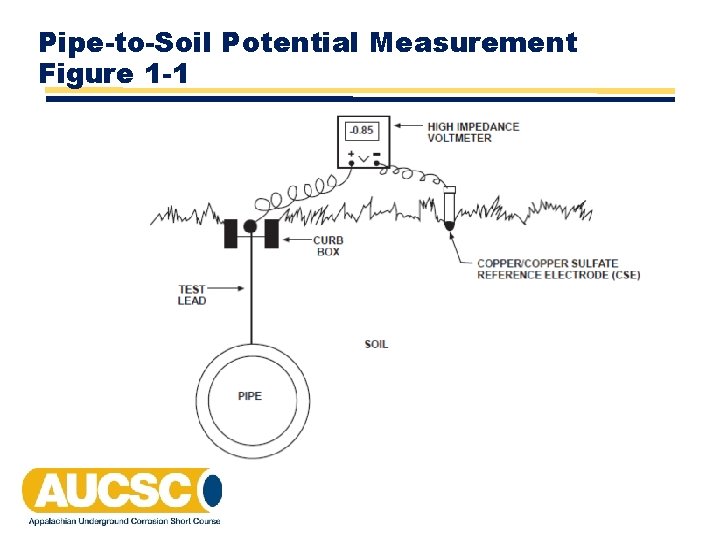
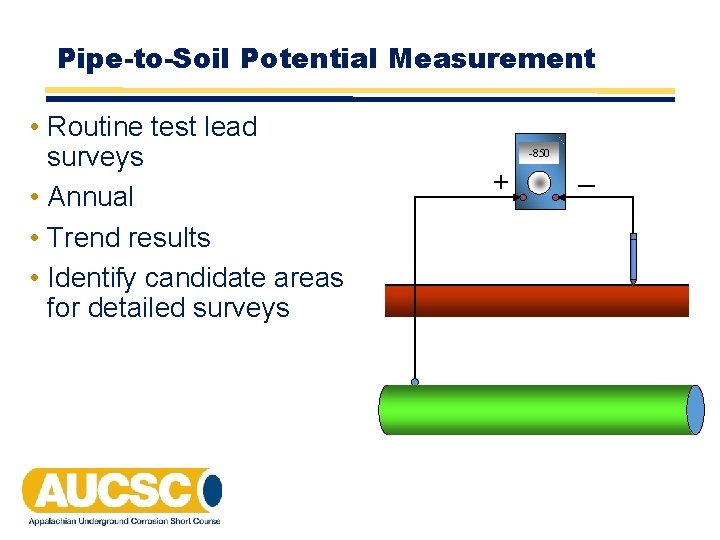
Requirements for a Pipe-to-Soil Potential Measurement • A high impedance voltmeter • A reference electrode – typically a saturated copper/copper sulfate reference electrode (CSE) • An electrolyte to place reference electrode on/in, preferably over the pipe and not on asphalt or concrete • A place to connect to the structure being tested: test wire, valve, riser pipe or any point electrically continuous with that portion of pipe being evaluated
Pipe-to-Soil Potential Measurement Figure 1 -1
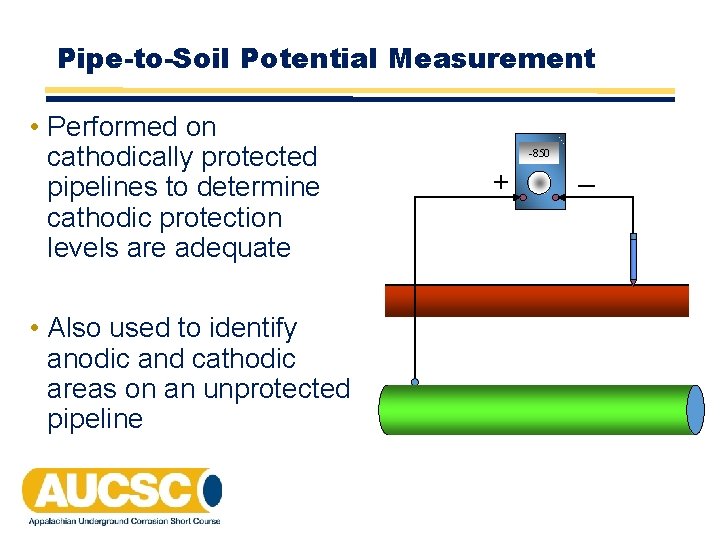
Pipe-to-Soil Potential Measurement • Performed on cathodically protected pipelines to determine cathodic protection levels are adequate • Also used to identify anodic and cathodic areas on an unprotected pipeline -850 + _
Pipe-to-Soil Potential Measurement • Routine test lead surveys • Annual • Trend results • Identify candidate areas for detailed surveys -850 + _
Pipe-to-Soil Potential Surveys to Evaluate Cathodically Protected Pipelines
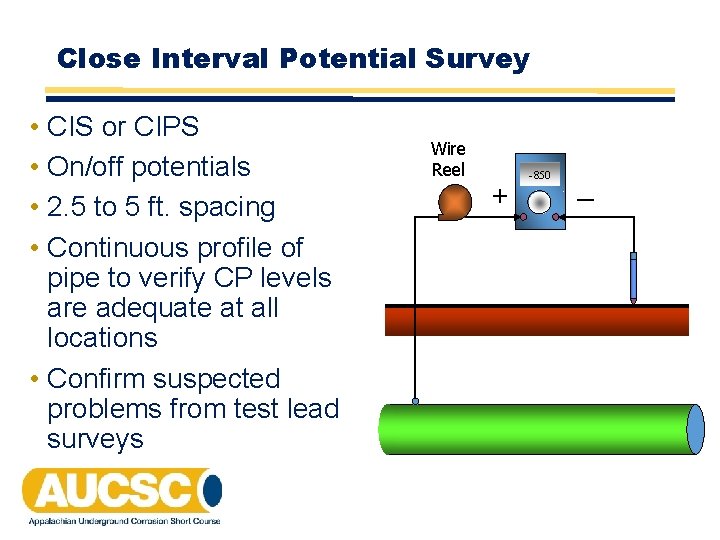
Close Interval Potential Survey • CIS or CIPS • On/off potentials • 2. 5 to 5 ft. spacing • Continuous profile of pipe to verify CP levels are adequate at all locations • Confirm suspected problems from test lead surveys Wire Reel + -850 _
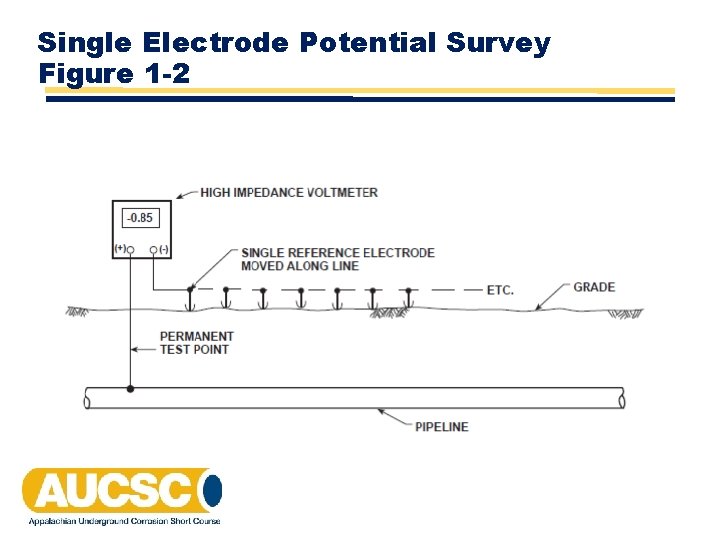
Single Electrode Potential Survey Figure 1 -2
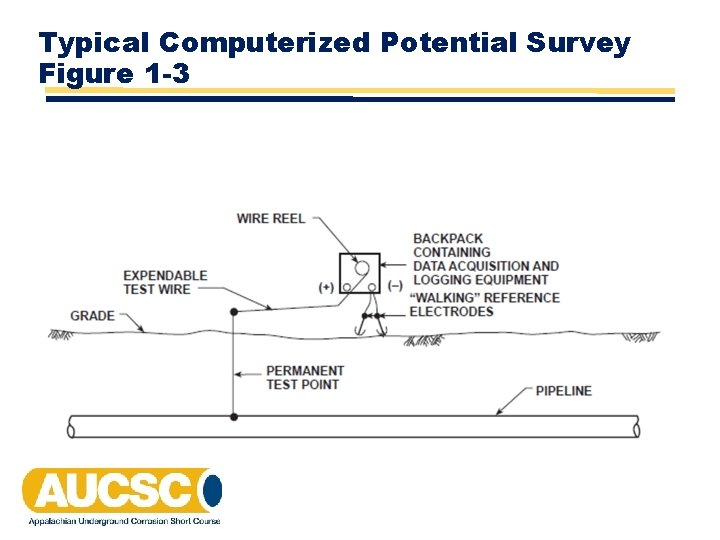
Typical Computerized Potential Survey Figure 1 -3
Typical Computerized Potential Survey
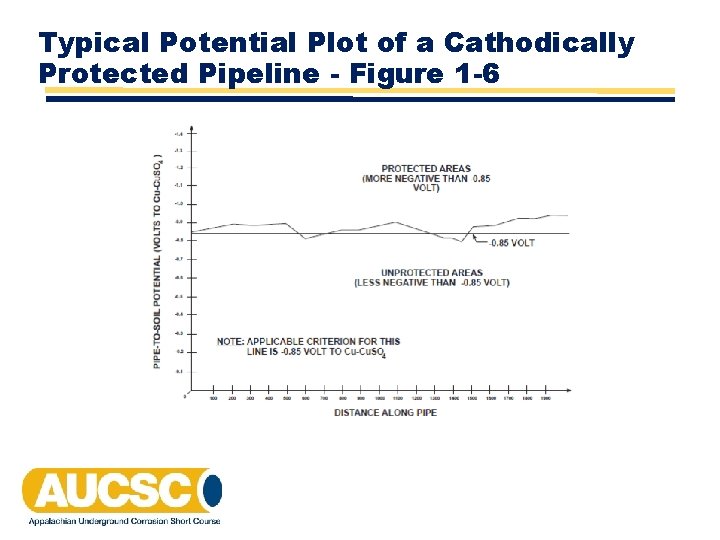
Typical Potential Plot of a Cathodically Protected Pipeline - Figure 1 -6
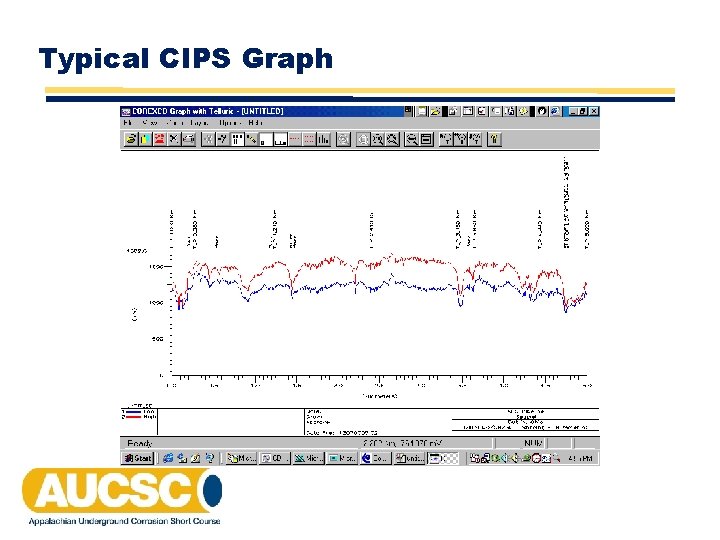
Typical CIPS Graph
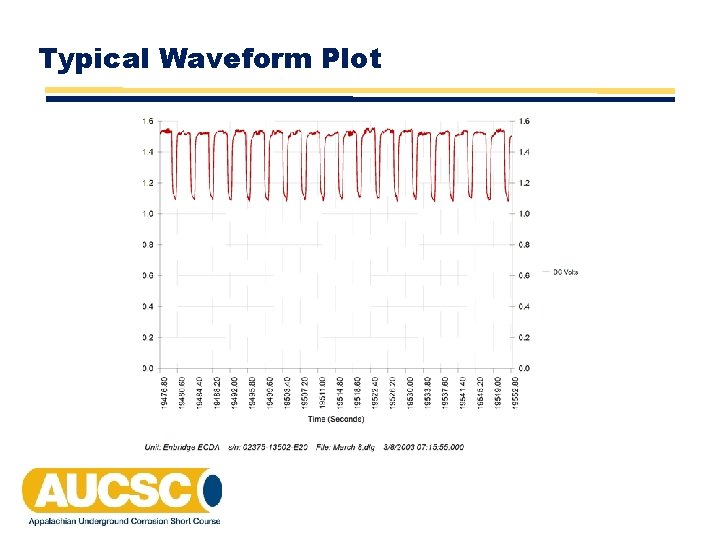
Typical Waveform Plot
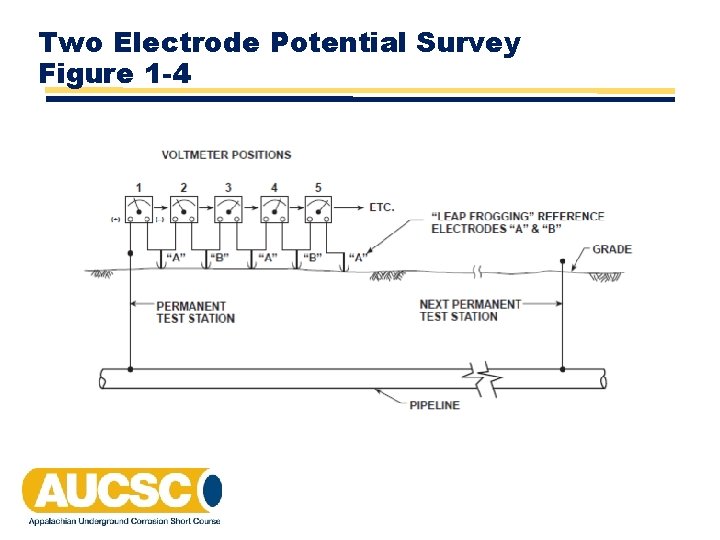
Two Electrode Potential Survey Figure 1 -4
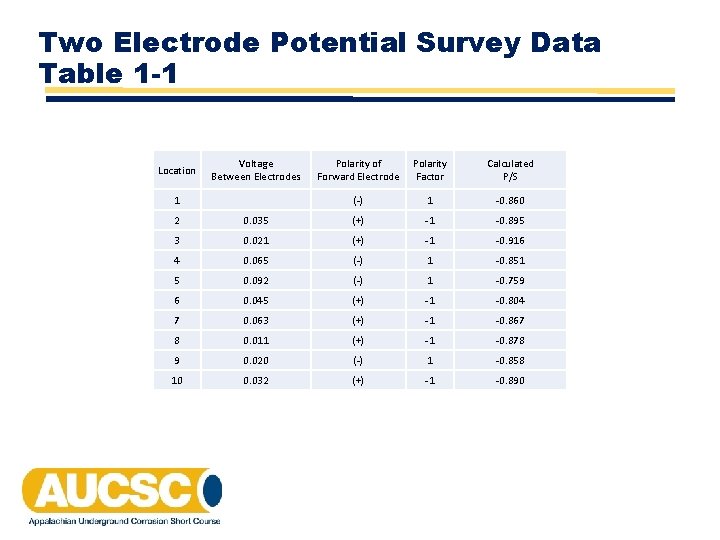
Two Electrode Potential Survey Data Table 1 -1 Location Voltage Between Electrodes 1 Polarity of Forward Electrode Polarity Factor Calculated P/S (‐) 1 ‐ 0. 860 2 0. 035 (+) ‐ 1 ‐ 0. 895 3 0. 021 (+) ‐ 1 ‐ 0. 916 4 0. 065 (‐) 1 ‐ 0. 851 5 0. 092 (‐) 1 ‐ 0. 759 6 0. 045 (+) ‐ 1 ‐ 0. 804 7 0. 063 (+) ‐ 1 ‐ 0. 867 8 0. 011 (+) ‐ 1 ‐ 0. 878 9 0. 020 (‐) 1 ‐ 0. 858 10 0. 032 (+) ‐ 1 ‐ 0. 890
Pipe-to-Soil Potential Surveys to Evaluate Non-Cathodically Protected Pipelines
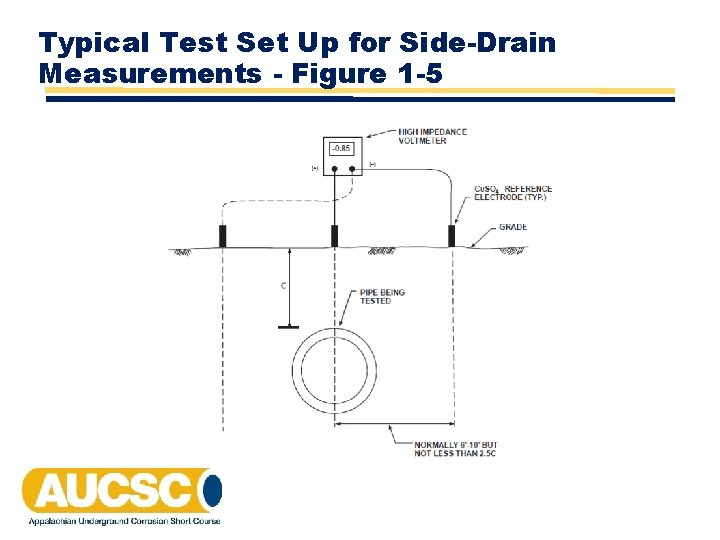
Side-Drain Measurements • Conducted using 2 CSEs and a high impedance voltmeter • One electrode is placed directly over the pipe, the other electrode is placed in contact with the soil at a 90° angle to the pipe at a distance approximately 2. 5 times the pipe depth • If the electrode over the pipe is connected to the positive terminal of the voltmeter, a positive reading indicates current discharge – an anodic area
Side-Drain Measurements • If the electrode over the pipe is connected to the positive terminal of the voltmeter, a negative reading indicates current pick-up – a cathodic area • Side‐drain measurements should be taken typically at no more than 5‐foot intervals • Tests must be made on both sides of the pipe • Side-drain measurement should identify long line corrosion cells • Side-drain measurement may not identify localized corrosion cells
Typical Test Set Up for Side-Drain Measurements - Figure 1 -5
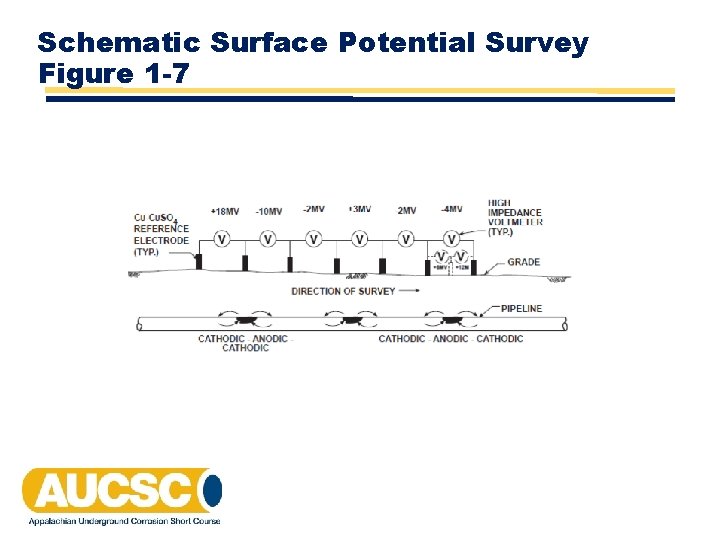
Schematic Surface Potential Survey Figure 1 -7
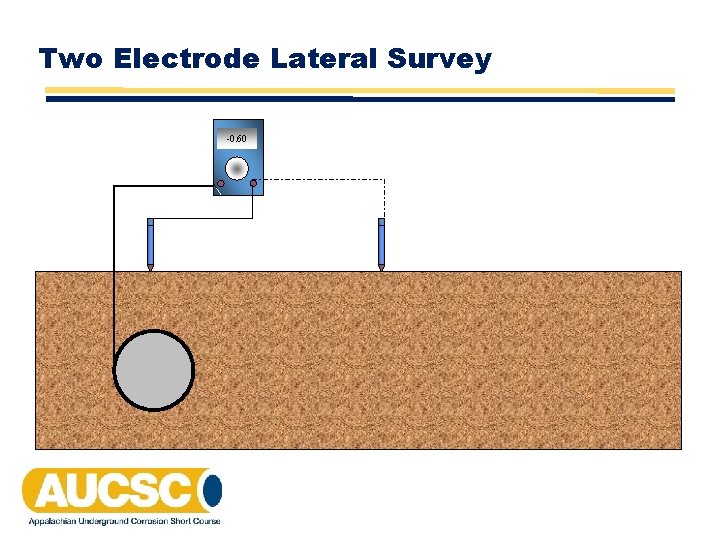
Two Electrode Lateral Survey -0. 60
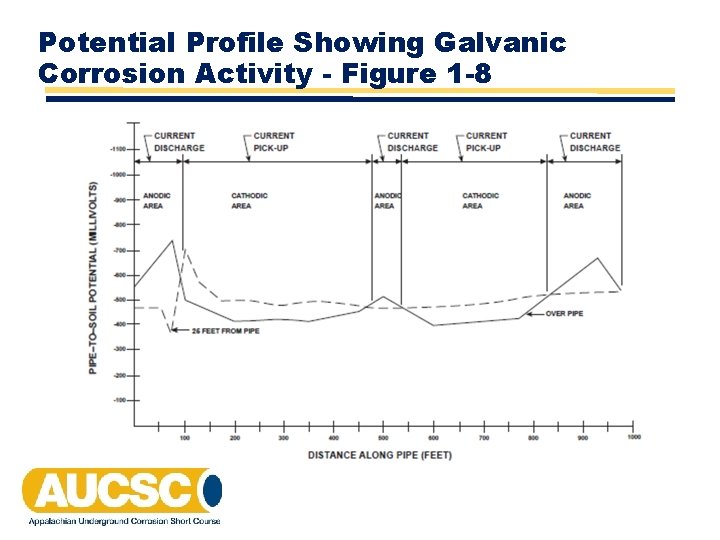
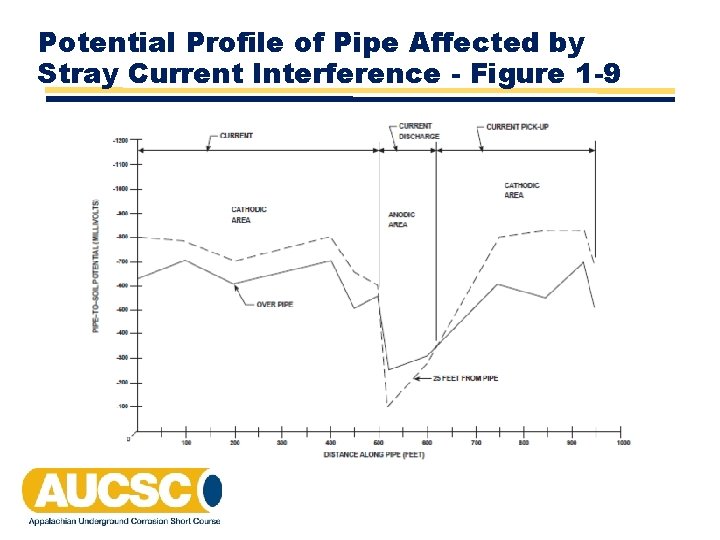
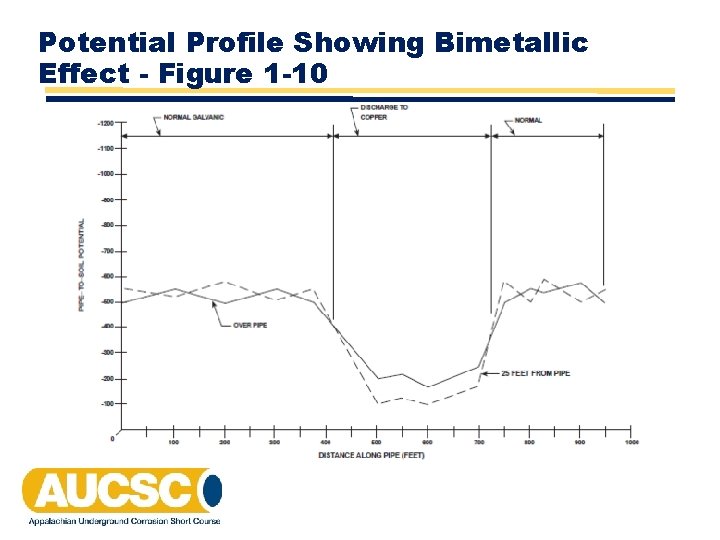
Corrosion Activity vs Potential on a Non-Cathodically Protected Pipeline • Anodic areas always exist where the over the line potential is more negative than the lateral potential. • When anodic area coincides with areas of high negative potentials, the activity is straightforward galvanic corrosion. The more negative the more anodic. • When anodic areas coincide with areas of low negative potentials, the corrosion activity is either stray current or bimetallic. The more positive the potential, the more anodic the area.
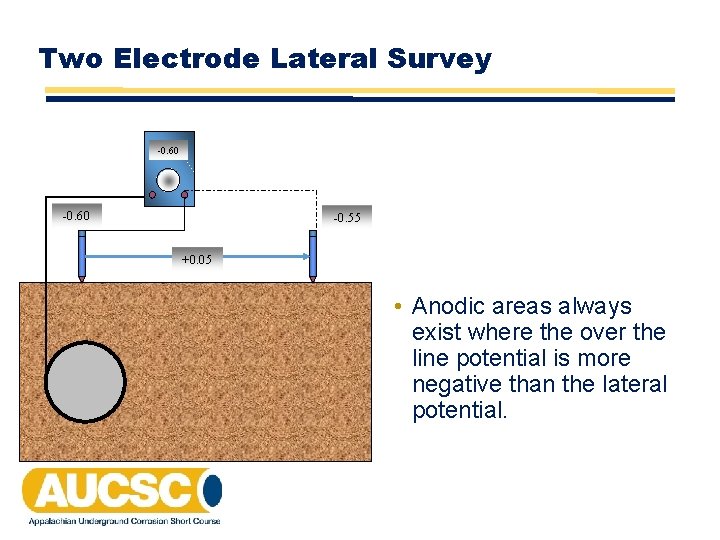
Two Electrode Lateral Survey -0. 60 -0. 55 +0. 05 • Anodic areas always exist where the over the line potential is more negative than the lateral potential.
Potential Profile Showing Galvanic Corrosion Activity - Figure 1 -8
Potential Profile of Pipe Affected by Stray Current Interference - Figure 1 -9
Potential Profile Showing Bimetallic Effect - Figure 1 -10
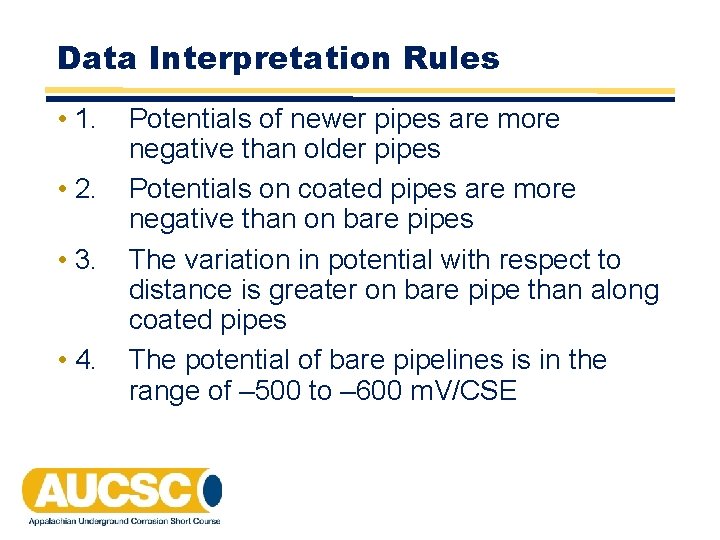
Data Interpretation Rules • 1. • 2. • 3. • 4. Potentials of newer pipes are more negative than older pipes Potentials on coated pipes are more negative than on bare pipes The variation in potential with respect to distance is greater on bare pipe than along coated pipes The potential of bare pipelines is in the range of – 500 to – 600 m. V/CSE
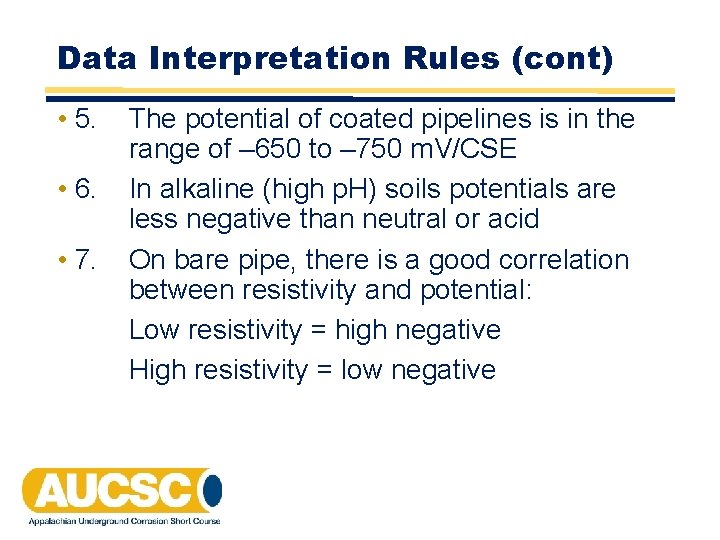
Data Interpretation Rules (cont) • 5. • 6. • 7. The potential of coated pipelines is in the range of – 650 to – 750 m. V/CSE In alkaline (high p. H) soils potentials are less negative than neutral or acid On bare pipe, there is a good correlation between resistivity and potential: Low resistivity = high negative High resistivity = low negative
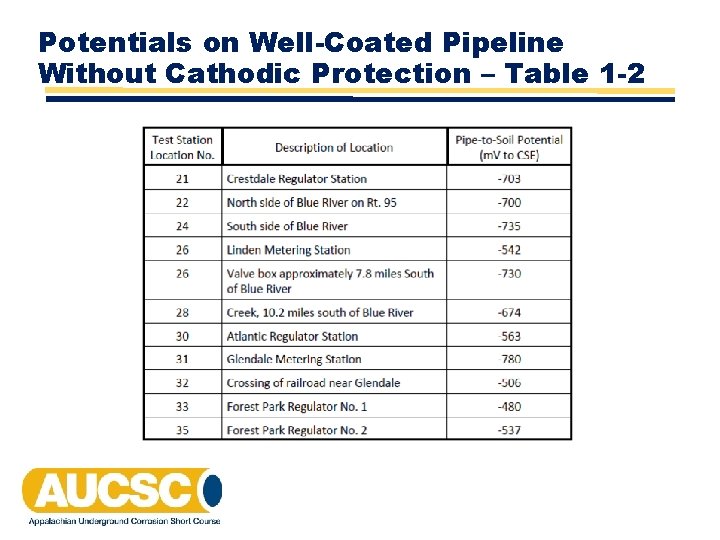
Potentials on Well-Coated Pipeline Without Cathodic Protection – Table 1 -2
Criteria for Cathodic Protection
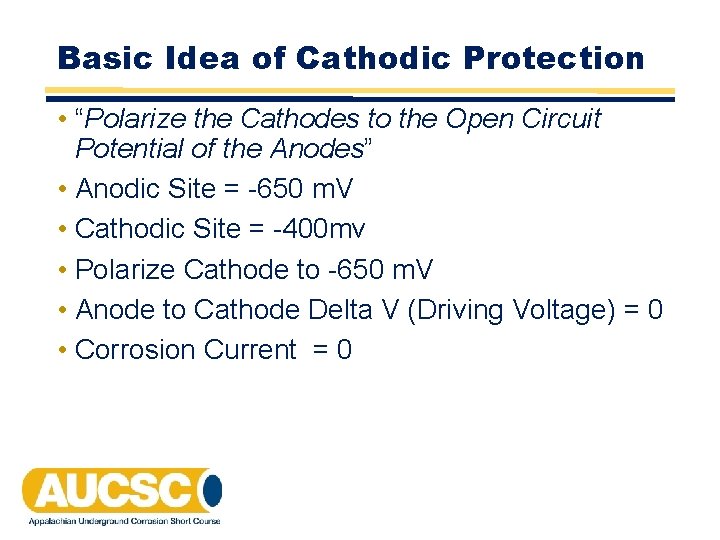
Basic Idea of Cathodic Protection • “Polarize the Cathodes to the Open Circuit Potential of the Anodes” • Anodic Site = -650 m. V • Cathodic Site = -400 mv • Polarize Cathode to -650 m. V • Anode to Cathode Delta V (Driving Voltage) = 0 • Corrosion Current = 0
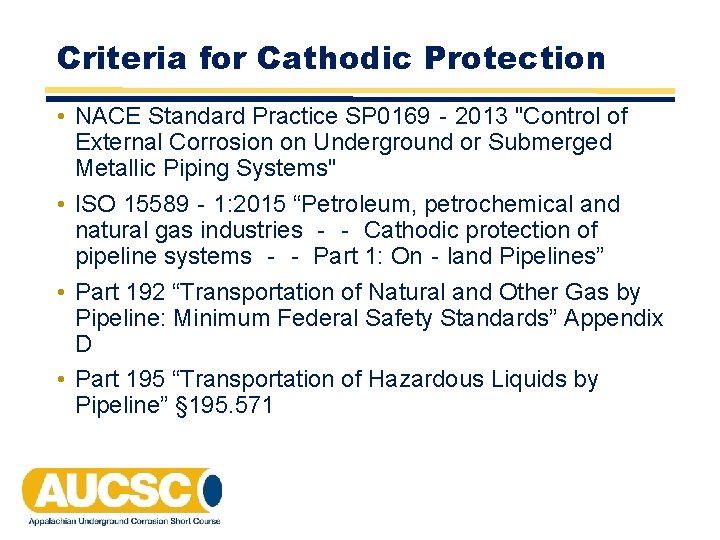
Criteria for Cathodic Protection • NACE Standard Practice SP 0169‐ 2013 "Control of External Corrosion on Underground or Submerged Metallic Piping Systems" • ISO 15589‐ 1: 2015 “Petroleum, petrochemical and natural gas industries ‐‐ Cathodic protection of pipeline systems ‐‐ Part 1: On‐land Pipelines” • Part 192 “Transportation of Natural and Other Gas by Pipeline: Minimum Federal Safety Standards” Appendix D • Part 195 “Transportation of Hazardous Liquids by Pipeline” § 195. 571
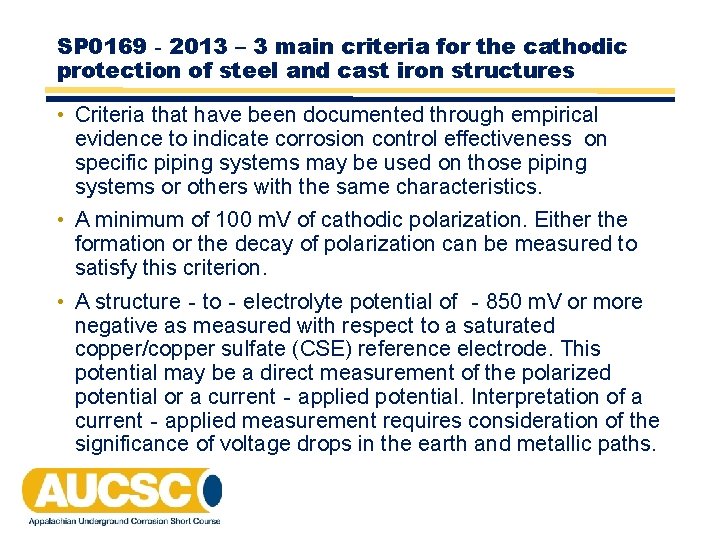
SP 0169‐ 2013 – 3 main criteria for the cathodic protection of steel and cast iron structures • Criteria that have been documented through empirical evidence to indicate corrosion control effectiveness on specific piping systems may be used on those piping systems or others with the same characteristics. • A minimum of 100 m. V of cathodic polarization. Either the formation or the decay of polarization can be measured to satisfy this criterion. • A structure‐to‐electrolyte potential of ‐ 850 m. V or more negative as measured with respect to a saturated copper/copper sulfate (CSE) reference electrode. This potential may be a direct measurement of the polarized potential or a current‐applied potential. Interpretation of a current‐applied measurement requires consideration of the significance of voltage drops in the earth and metallic paths.
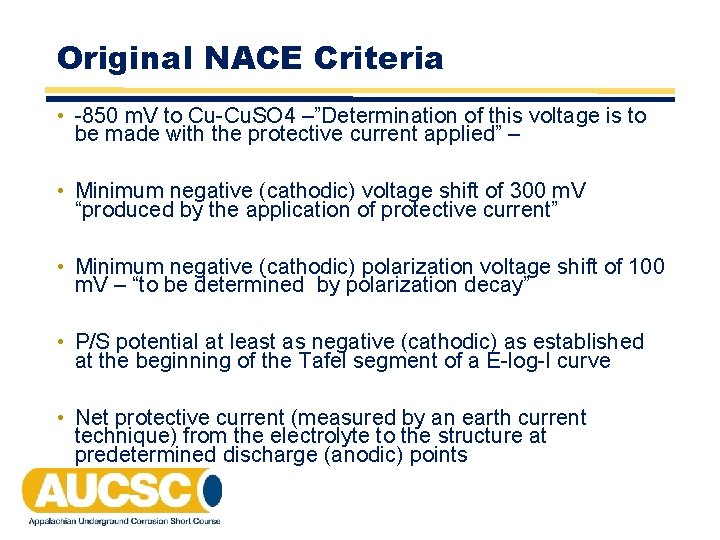
Original NACE Criteria • -850 m. V to Cu-Cu. SO 4 –”Determination of this voltage is to be made with the protective current applied” – • Minimum negative (cathodic) voltage shift of 300 m. V “produced by the application of protective current” • Minimum negative (cathodic) polarization voltage shift of 100 m. V – “to be determined by polarization decay” • P/S potential at least as negative (cathodic) as established at the beginning of the Tafel segment of a E-log-I curve • Net protective current (measured by an earth current technique) from the electrolyte to the structure at predetermined discharge (anodic) points
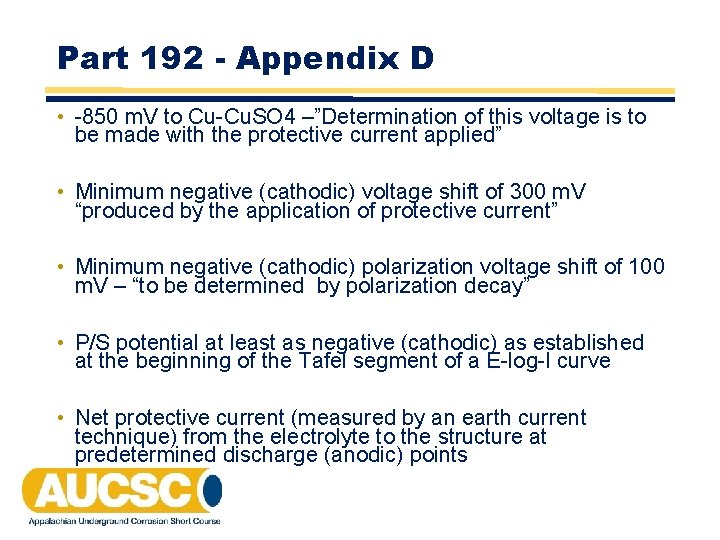
Part 192 - Appendix D • -850 m. V to Cu-Cu. SO 4 –”Determination of this voltage is to be made with the protective current applied” • Minimum negative (cathodic) voltage shift of 300 m. V “produced by the application of protective current” • Minimum negative (cathodic) polarization voltage shift of 100 m. V – “to be determined by polarization decay” • P/S potential at least as negative (cathodic) as established at the beginning of the Tafel segment of a E-log-I curve • Net protective current (measured by an earth current technique) from the electrolyte to the structure at predetermined discharge (anodic) points
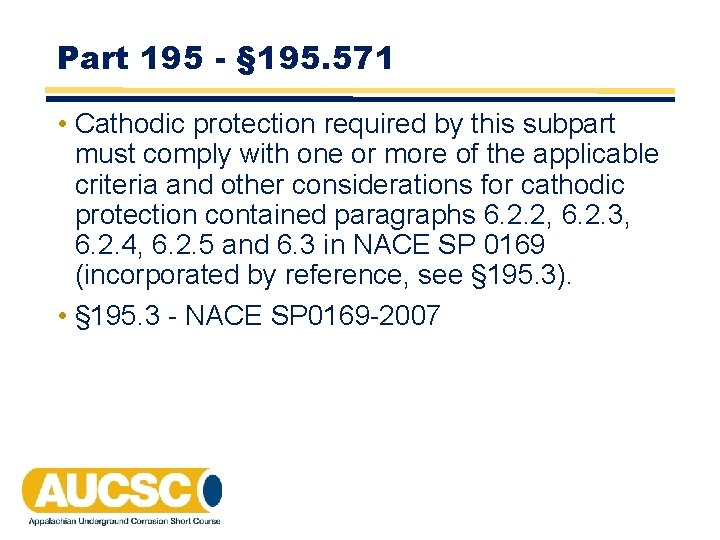
Part 195 - § 195. 571 • Cathodic protection required by this subpart must comply with one or more of the applicable criteria and other considerations for cathodic protection contained paragraphs 6. 2. 2, 6. 2. 3, 6. 2. 4, 6. 2. 5 and 6. 3 in NACE SP 0169 (incorporated by reference, see § 195. 3). • § 195. 3 - NACE SP 0169 -2007
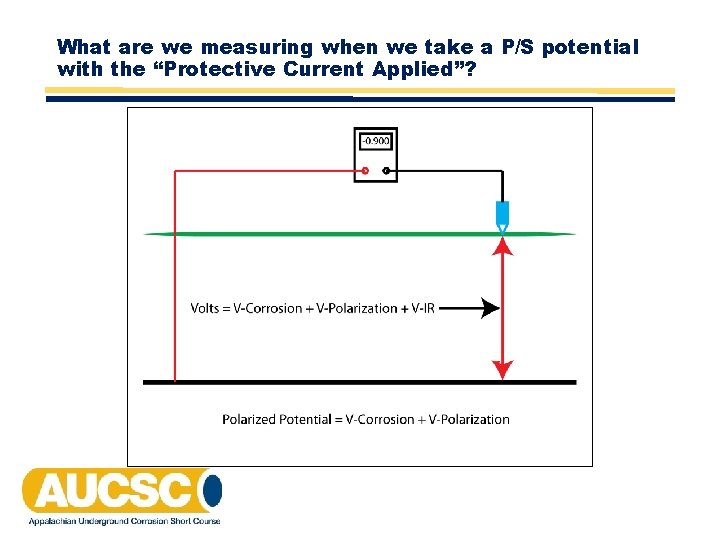
What are we measuring when we take a P/S potential with the “Protective Current Applied”?
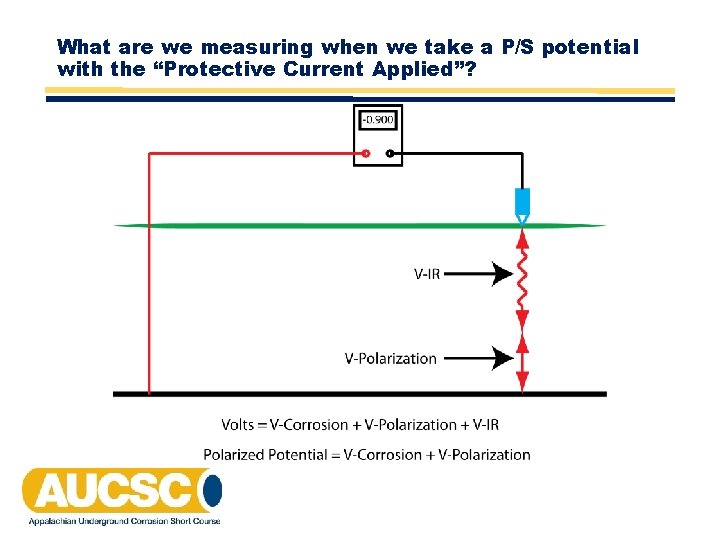
What are we measuring when we take a P/S potential with the “Protective Current Applied”?
Structure‐to‐Electrolyte Potential of ‐ 850 m. V or More Negative • A structure‐to‐electrolyte potential of ‐ 850 m. V or more negative as measured with respect to a saturated copper/copper sulfate (CSE) reference electrode. This potential may be a direct measurement of the polarized potential or a current‐applied potential. Interpretation of a current‐applied measurement requires consideration of the significance of voltage drops in the earth and metallic paths.
Structure‐to‐Electrolyte Potential of ‐ 850 m. V or More Negative • This section can be looked at as 2 separate criteria: "a direct measurement of the polarized potential" or "a current‐applied potential” with “consideration of the significance of voltage drops in the earth and metallic paths. "
Current‐Applied Measurement of ‐ 850 m. V or More Negative • A current‐applied measurement of ‐ 850 m. V has historically been the most widely used criterion for determining if an acceptable degree of cathodic protection has been achieved. • Some sources indicate that this criterion was developed from the fact that the most negative native potential found for coated steel was ‐ 800 m. V. Therefore, the assumption was made that if sufficient current is applied to change the potential of the entire structure to a value more negative than the open circuit potential, then the effects of corrosion will be mitigated. A potential of ‐ 850 m. V to CSE was therefore adopted. • As stated in the criterion "Interpretation of a current‐applied measurement requires consideration of the significance of voltage drops in the earth and metallic paths".
SP 0169‐ 2013 lists several methods for consideration of voltage drops including: • Measuring or calculating the voltage drop(s) • Reviewing the historical performance of the cathodic protection system • Determining whethere is physical evidence of corrosion • Evaluating the physical and electrical characteristics of the pipe and its environment • Evaluation of indirect inspection data, such as above‐grade electrical surveys, in‐line inspections and direct assessment • The use of coupons
Voltage Drops • Voltage drops in the earth can be reduced by placing the reference electrode as close to the pipe surface as possible. It should be noted that this means "electrically" close, not just "physically" close. A reference electrode placed physically close to a well‐coated pipeline is not electrically close to it and voltage drops are not reduced. • Voltage drops are more prevalent near an anode bed or in areas where dynamic stray currents are present. • Unusually high resistivity soil will also cause high voltage drops. • Where dynamic stray currents are present, voltages should be recorded in order to obtain values over a 24‐hour period. It may be possible to obtain stable potentials once the DC transit system stops operating in the early morning. • The ‐ 850 m. V current‐applied criterion is the one which is almost always used in areas with significant dynamic stray current activity.
Limitations of the ‐ 850 m. V Current‐Applied Potential • The primary limitation of using a current‐applied potential is that the voltage drop component in the potential measurement has to be considered.
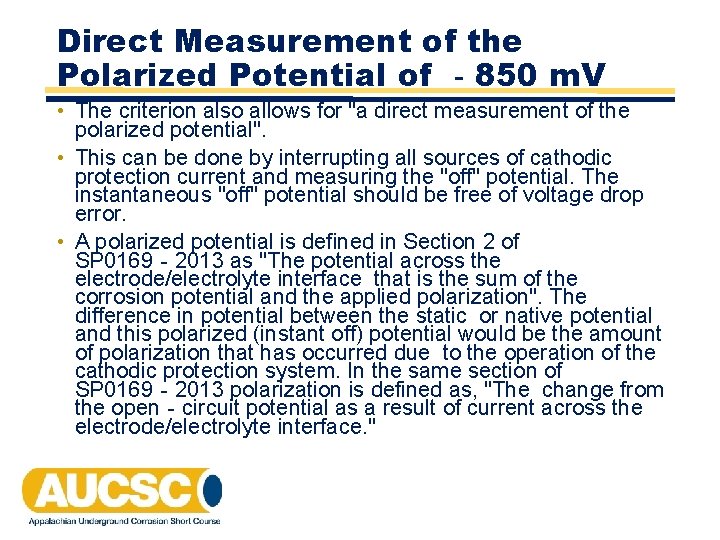
Direct Measurement of the Polarized Potential of ‐ 850 m. V • The criterion also allows for "a direct measurement of the polarized potential". • This can be done by interrupting all sources of cathodic protection current and measuring the "off" potential. The instantaneous "off" potential should be free of voltage drop error. • A polarized potential is defined in Section 2 of SP 0169‐ 2013 as "The potential across the electrode/electrolyte interface that is the sum of the corrosion potential and the applied polarization". The difference in potential between the static or native potential and this polarized (instant off) potential would be the amount of polarization that has occurred due to the operation of the cathodic protection system. In the same section of SP 0169‐ 2013 polarization is defined as, "The change from the open‐circuit potential as a result of current across the electrode/electrolyte interface. "
Limitations of a Direct Measurement of the Polarized Potential • The primary limitation of a direct measurement of the polarized potential is that it may be impractical to interrupt all sources of cathodic protection current. This is especially true of systems protected by multiple galvanic anodes. • Polarized potentials well in excess of ‐ 850 m. V should be avoided for coated structures in order to minimize the possibility of cathodic disbondment of the coating. SP 0169‐ 2013 also warns that, "Polarized potentials that result in excessive generation of atomic hydrogen should be avoided on all metals susceptible to hydrogen embrittlement. "
100 m. V of Cathodic Polarization • A minimum of 100 m. V of cathodic polarization. Either the formation or the decay of polarization can be measured to satisfy this criterion.
Polarization Decay
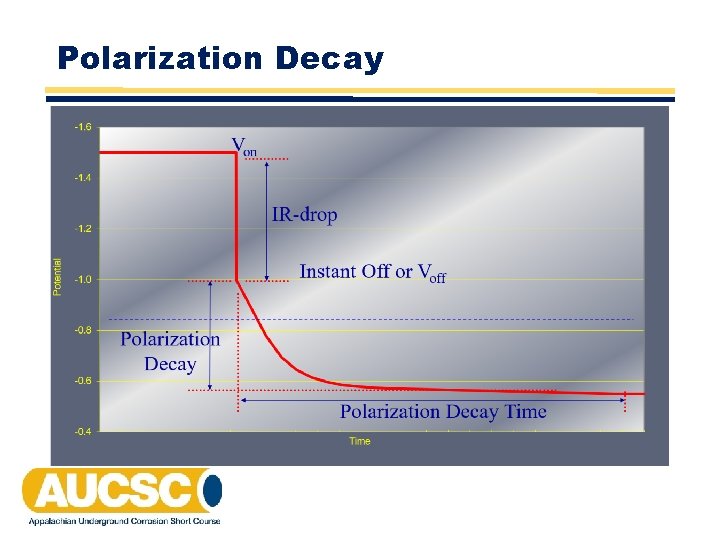
100 m. V of Cathodic Polarization • The 100 m. V polarization criterion, like the ‐ 850 m. V polarized potential, is based on the development of polarization. This causes the structure to exhibit a more negative potential than in its native state. • Measurement of the polarization shift can be determined by either measuring its formation or decay. Determination of the amount of polarization is normally made during the polarization decay (positive shift) period subsequent to de‐energizing the cathodic system • One drawback of this method is that the time required for full depolarization could take from hours to days for a coated structure to several weeks for a bare structure. This could make this method very time consuming and might also leave the structure unprotected for an extended period of time.
Applications of the 100 m. V Polarization Criterion • In many cases, the cost of the power required to achieve the 100 m. V polarization criterion may be less than that required to obtain either a current‐applied potential of ‐ 850 m. V or a polarized potential of ‐ 850 m. V. • The polarized potential corresponding to 100 m. V of polarization may be less negative than ‐ 850 m. V. • This criterion takes into account only the polarization film on the pipe surface and is independent of any voltage (IR) drops in the soil or at the structure electrolyte interface. • This criterion should not be used in areas subject to stray currents because any outside interference would tend to break down the polarization at the point of discharge. The results obtained under these conditions could be misleading. Corrosion personnel must determine the effectiveness of this criterion in areas of stray current activity • Can be used on metals other than steel
Limitations of the 100 m. V Polarization Criterion • Interrupting all DC current sources is not always possible. • Stray current potential variations can make this criterion difficult to measure. • If dissimilar metals are coupled in the system, protection may not be complete on the anodic metal. • Another limitation is related to the time required for the pipe to depolarize. In some cases, adequate time may not be available to monitor the polarization decay of the pipe to the point where the criterion could have been met.
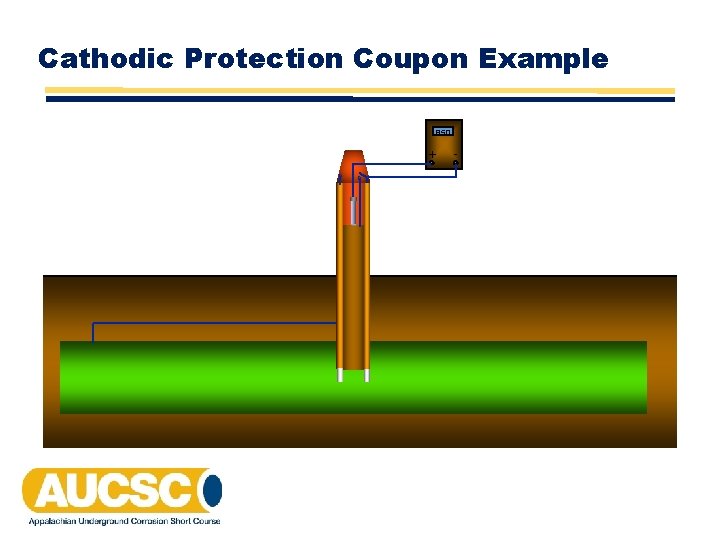
Cathodic Protection Coupons • A cathodic protection coupon is metal sample that is intended to represent a structure at a coating holiday. • The coupon has a lead wire attached to it which is normally bonded to the structure through a test station so that it receives cathodic protection current just as the structure does at a coating holiday. • Cathodic protection coupons are used to help determine the level of cathodic protection of a buried or submerged metallic structure.
Tests That Can Be Made With Cathodic Protection Coupons • Measuring the coupon‐to‐soil potential with the coupon connected to the structure • Measuring the coupon‐to‐soil potential after disconnecting the coupon from the structure (coupon instant‐disconnect potential) • Measuring the current flow between the coupon and the structure. • The coupon‐to‐soil potential is typically measured with the reference electrode in close proximity to the coupon. This is accomplished by the use of a permanently installed reference electrode near the coupon or by placing a portable reference electrode in a soil‐access tube.
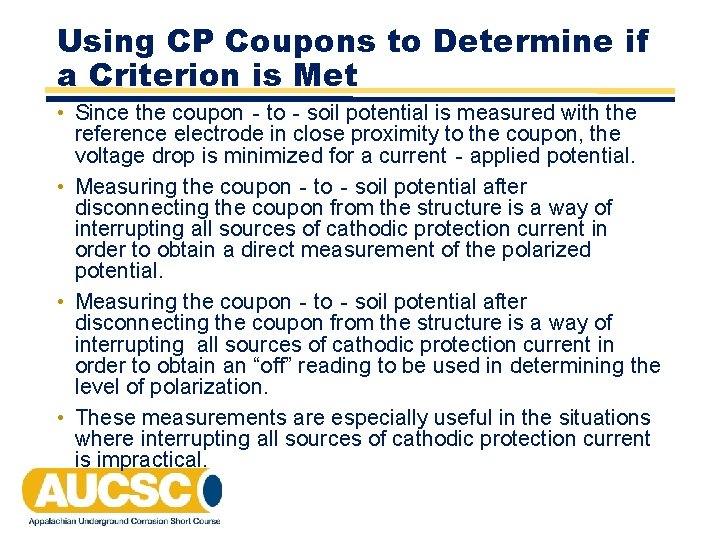
Using CP Coupons to Determine if a Criterion is Met • Since the coupon‐to‐soil potential is measured with the reference electrode in close proximity to the coupon, the voltage drop is minimized for a current‐applied potential. • Measuring the coupon‐to‐soil potential after disconnecting the coupon from the structure is a way of interrupting all sources of cathodic protection current in order to obtain a direct measurement of the polarized potential. • Measuring the coupon‐to‐soil potential after disconnecting the coupon from the structure is a way of interrupting all sources of cathodic protection current in order to obtain an “off” reading to be used in determining the level of polarization. • These measurements are especially useful in the situations where interrupting all sources of cathodic protection current is impractical.
Cathodic Protection Coupon Example 850 + o o o -
Other Criteria • Criteria that have been documented through empirical evidence to indicate corrosion control effectiveness on specific piping systems may be used on those piping systems or others with the same characteristics.
Other Criteria • This section allows a practitioner to continue using criteria that have been applied successfully in the past but are no longer specifically listed in SP 0169. • Some examples of criteria that have been used in the past are: Net Protective Current E‐log‐I Method 300 m. V Potential Shift
Net Protective Current Criterion • Not listed in NACE SP 0169 -2013. It had been listed in SP 0169‐ 2007 under a special conditions section for bare or ineffectively coated pipelines. • Still listed in Part 192 Appendix D. • Some pipeline companies use the side drain method for application of this criterion on the basis that if the polarity of the voltage readings on each side of the structure indicates current flow towards the structure, then the structure is receiving protective current. If the electrode located over the pipe is positive with respect to the other two electrodes, then current is discharging from the pipe to the electrolyte and corrosion is taking place.
E‐log‐I Method • • Not listed in NACE SP 0169 -2013 Still listed in Part 192 Appendix D Not often used due to its complexity Because this test rather elaborate, its use is generally limited to structures where conventional means of determining current requirements would be difficult. For example, pipeline river crossings, well casings, piping networks in a concentrated area, and in industrial parks. • For information on how to perform an E‐log‐I test refer to SP 0186‐ 2007 "Application of Cathodic Protection for External Surfaces of Steel Well Casings".
300 m. V Potential Shift Criterion • Not listed in NACE SP 0169 -2013. • Still listed in Part 192 Appendix D • This criterion is based on changing the potential of the structure in the negative direction by 300 m. V
The Test It’s an open book test. Everything on the test is in the text. It may not be verbatim from the text but it’s in the text. Always look at the question to make sure you know what they are asking. You will need a calculator but it doesn’t need to logarithms. You cannot use your cell phone. Some of the questions that ask you to calculate something may give you info that is not needed. You are strongly urged to attend the roundtable tonight. A panel will answer questions about the course or any other corrosion related subject and we will go over some of the test questions too.