
Advanced Bipolar Transistor Structures In this lecture you
Advanced Bipolar Transistor Structures
In this lecture, you will learn about • oxide-isolated bipolar transistors, • trench-isolated bipolar transistors. Read : 1. C. Y. Chang and S. M. Sze, “ULSI Technology”, Mc. Graw-Hill, (1996), pp. 497 -502. R. C. Jaeger, “Modular Series on Solid State Devices, Vol V : Introduction to Microelectronic Fabrication”, Prentice-Hall, (2002), pp. 253 -259.
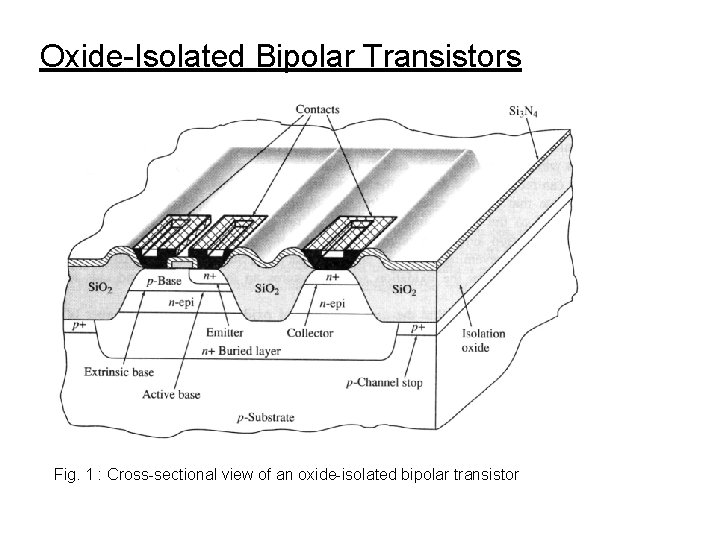
Oxide-Isolated Bipolar Transistors Fig. 1 : Cross-sectional view of an oxide-isolated bipolar transistor
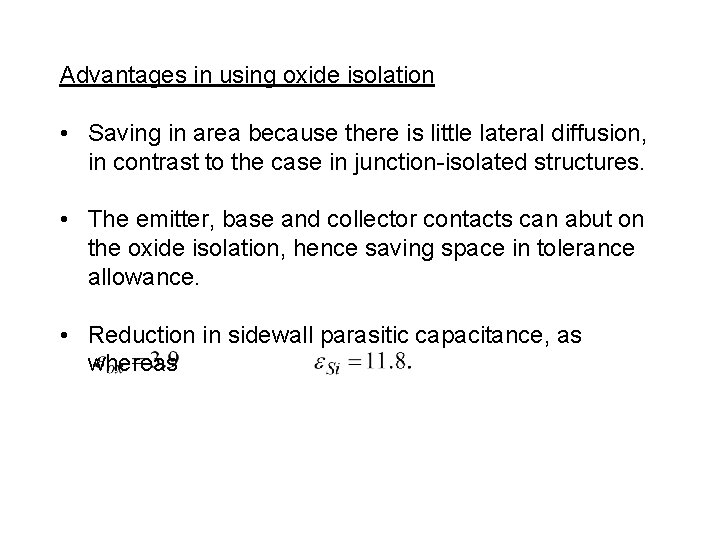
Advantages in using oxide isolation • Saving in area because there is little lateral diffusion, in contrast to the case in junction-isolated structures. • The emitter, base and collector contacts can abut on the oxide isolation, hence saving space in tolerance allowance. • Reduction in sidewall parasitic capacitance, as whereas
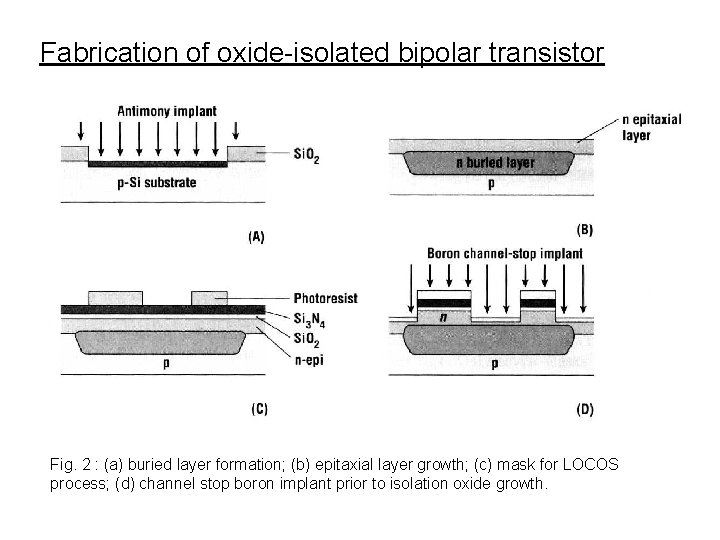
Fabrication of oxide-isolated bipolar transistor Fig. 2 : (a) buried layer formation; (b) epitaxial layer growth; (c) mask for LOCOS process; (d) channel stop boron implant prior to isolation oxide growth.
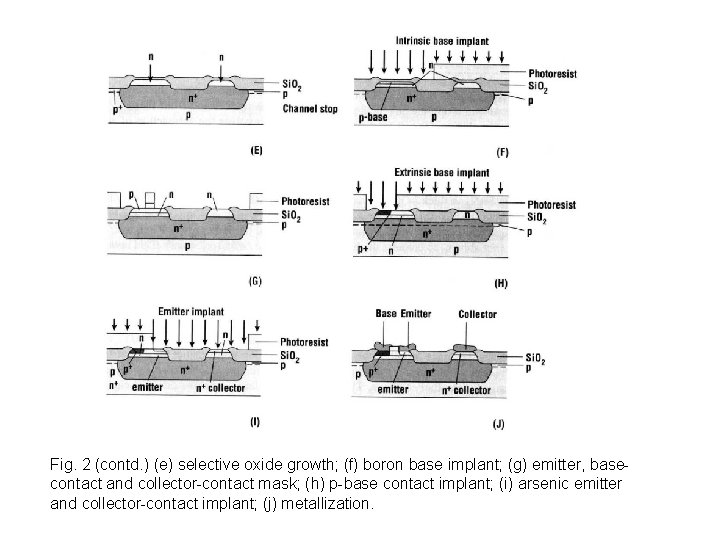
Fig. 2 (contd. ) (e) selective oxide growth; (f) boron base implant; (g) emitter, basecontact and collector-contact mask; (h) p-base contact implant; (i) arsenic emitter and collector-contact implant; (j) metallization.
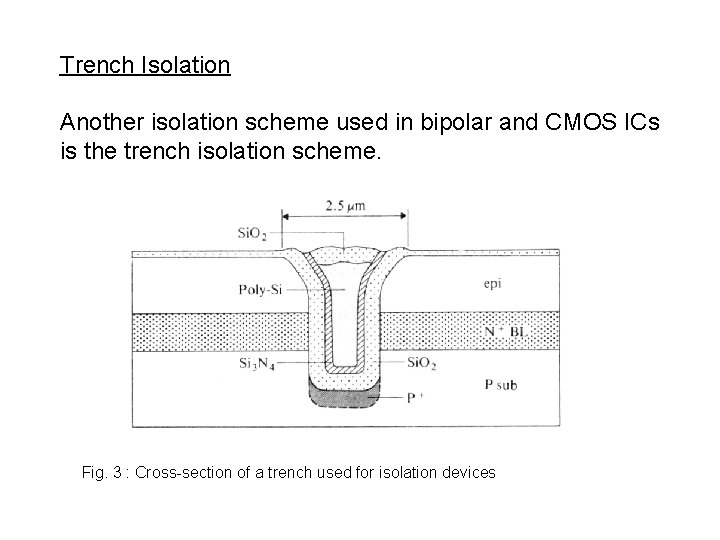
Trench Isolation Another isolation scheme used in bipolar and CMOS ICs is the trench isolation scheme. Fig. 3 : Cross-section of a trench used for isolation devices
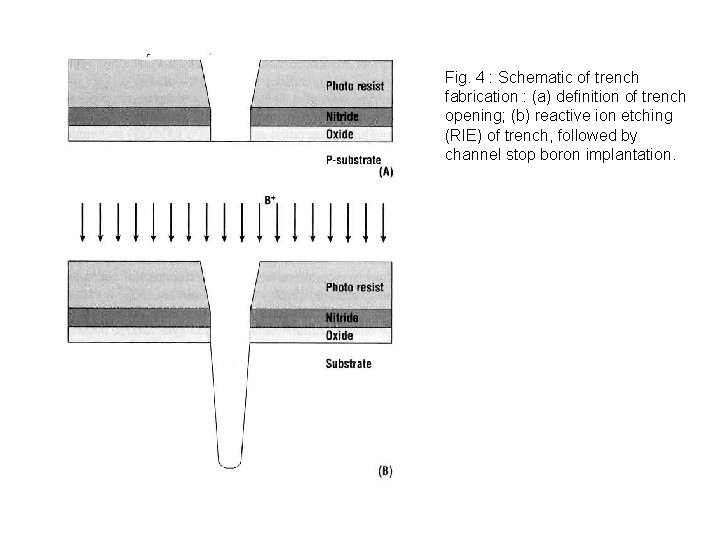
Fig. 4 : Schematic of trench fabrication : (a) definition of trench opening; (b) reactive ion etching (RIE) of trench, followed by channel stop boron implantation.
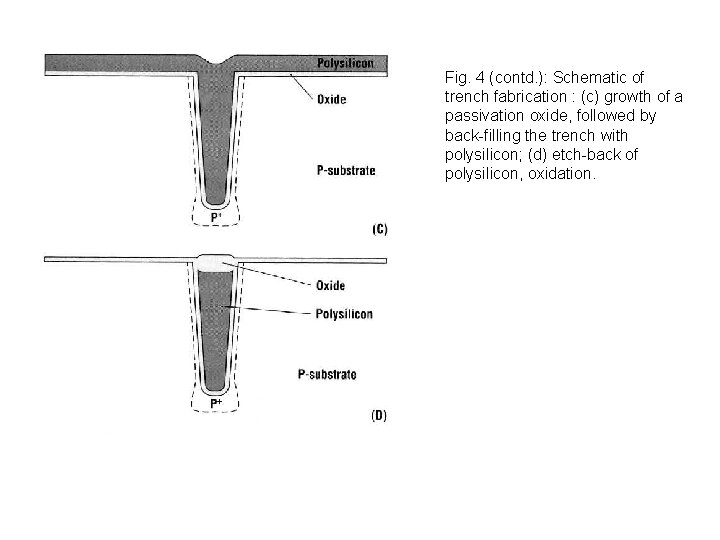
Fig. 4 (contd. ): Schematic of trench fabrication : (c) growth of a passivation oxide, followed by back-filling the trench with polysilicon; (d) etch-back of polysilicon, oxidation.
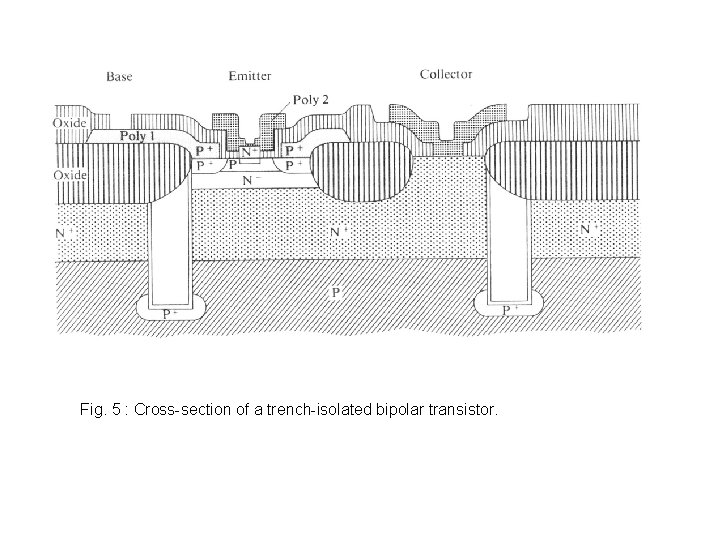
Fig. 5 : Cross-section of a trench-isolated bipolar transistor.
Question What are the disadvantages (if any) of oxide-isolated and trench-isolated bipolar transistors ?
- Slides: 11