
Advanced applications of the GLM Crossfrequency Coupling SPM
- Slides: 15
Advanced applications of the GLM: Cross-frequency Coupling SPM course for MEG & EEG 2016 Bernadette van Wijk Charité-University Medicine Berlin
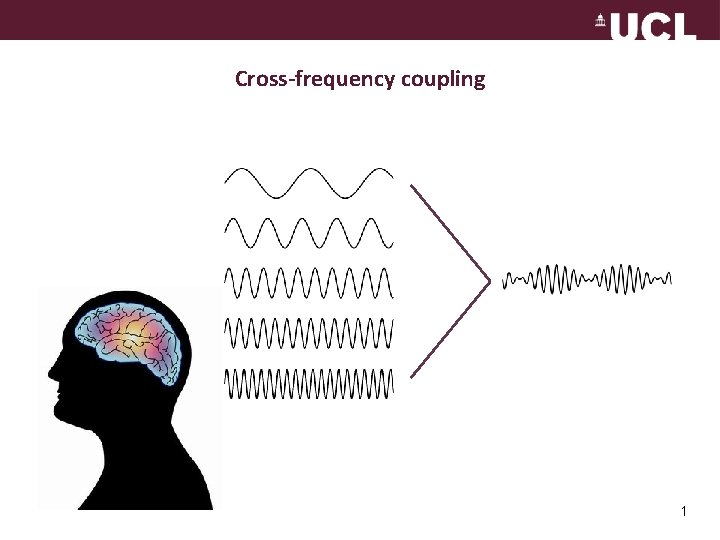
Cross-frequency coupling 1
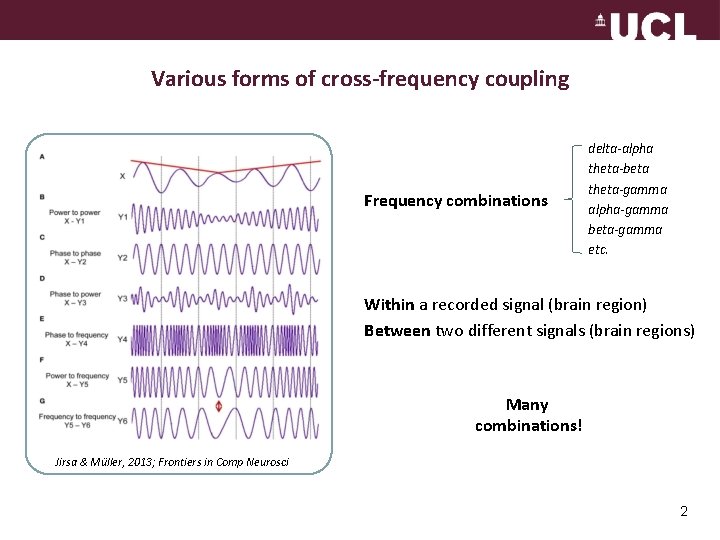
Various forms of cross-frequency coupling Frequency combinations delta-alpha theta-beta theta-gamma alpha-gamma beta-gamma etc. Within a recorded signal (brain region) Between two different signals (brain regions) Many combinations! Jirsa & Müller, 2013; Frontiers in Comp Neurosci 2
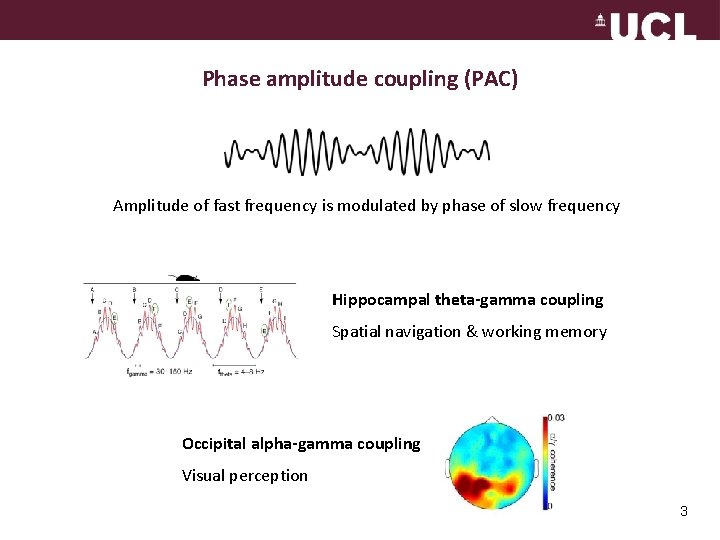
Phase amplitude coupling (PAC) Amplitude of fast frequency is modulated by phase of slow frequency Hippocampal theta-gamma coupling Spatial navigation & working memory Occipital alpha-gamma coupling Visual perception 3
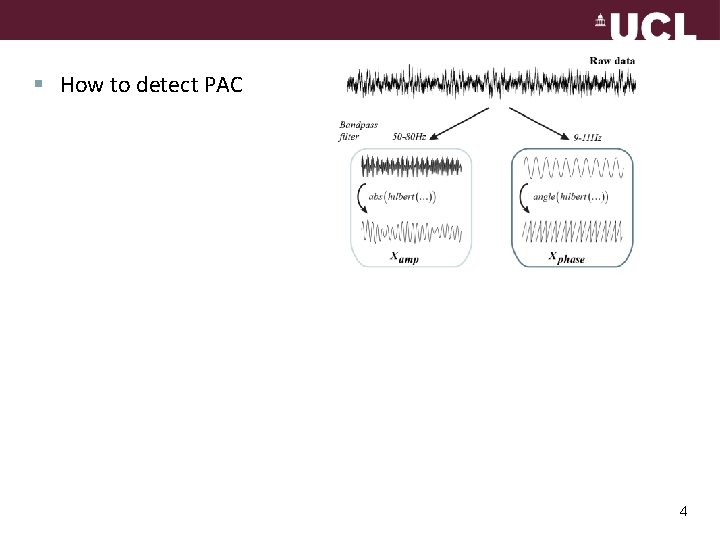
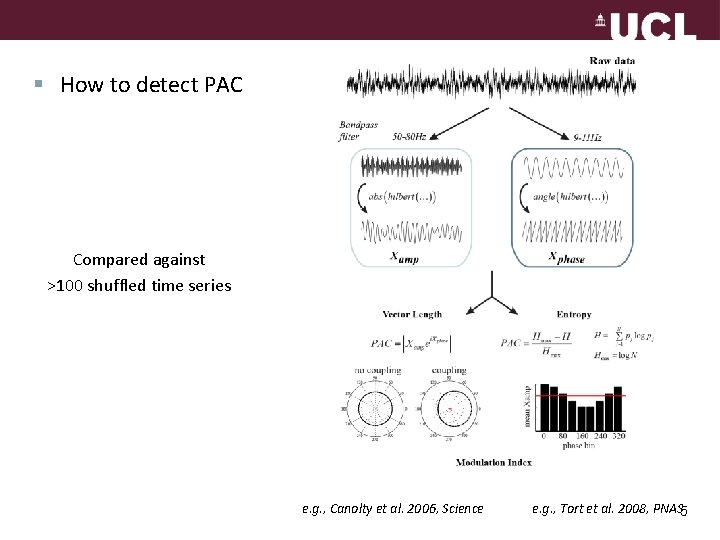
§ How to detect PAC e. g. , Canolty et al. 2006, Science e. g. , Tort et al. 2008, PNAS 4
§ How to detect PAC Compared against >100 shuffled time series e. g. , Canolty et al. 2006, Science e. g. , Tort et al. 2008, PNAS 5
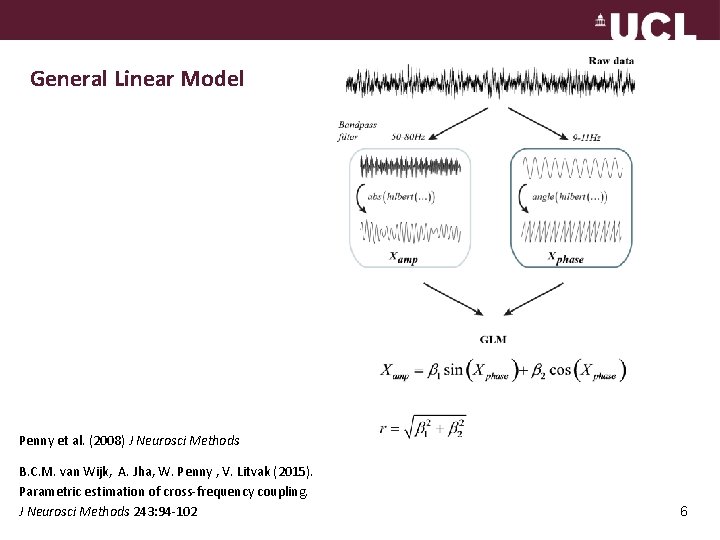
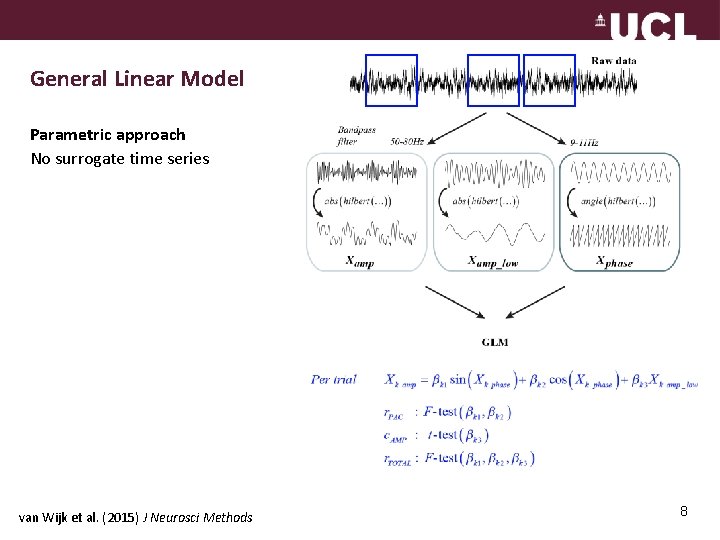
General Linear Model Penny et al. (2008) J Neurosci Methods B. C. M. van Wijk, A. Jha, W. Penny , V. Litvak (2015). Parametric estimation of cross-frequency coupling. J Neurosci Methods 243: 94 -102 6
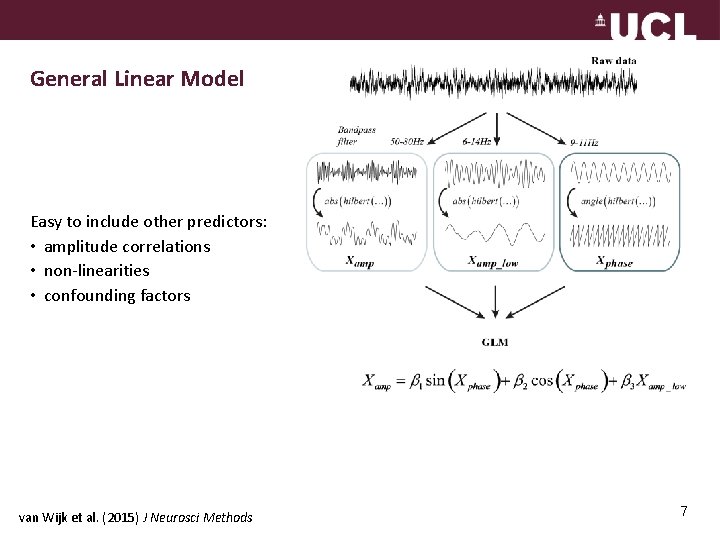
General Linear Model Easy to include other predictors: • amplitude correlations • non-linearities • confounding factors van Wijk et al. (2015) J Neurosci Methods 7
General Linear Model Parametric approach No surrogate time series van Wijk et al. (2015) J Neurosci Methods 8
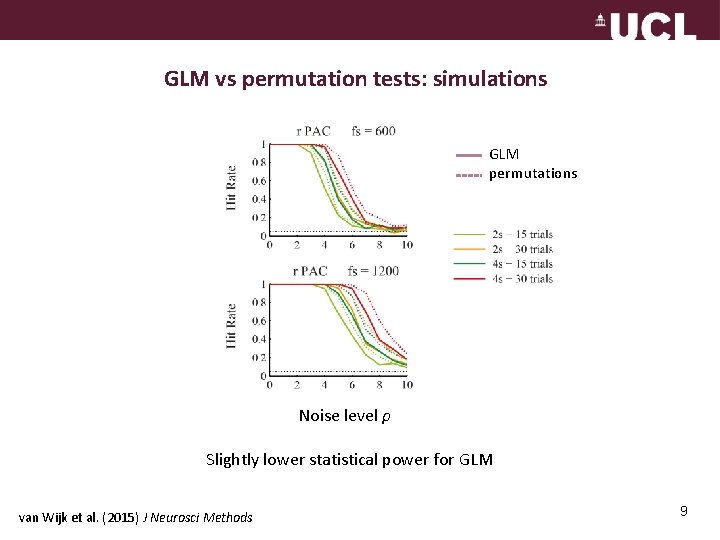
GLM vs permutation tests: simulations GLM permutations Noise level ρ Slightly lower statistical power for GLM van Wijk et al. (2015) J Neurosci Methods 9
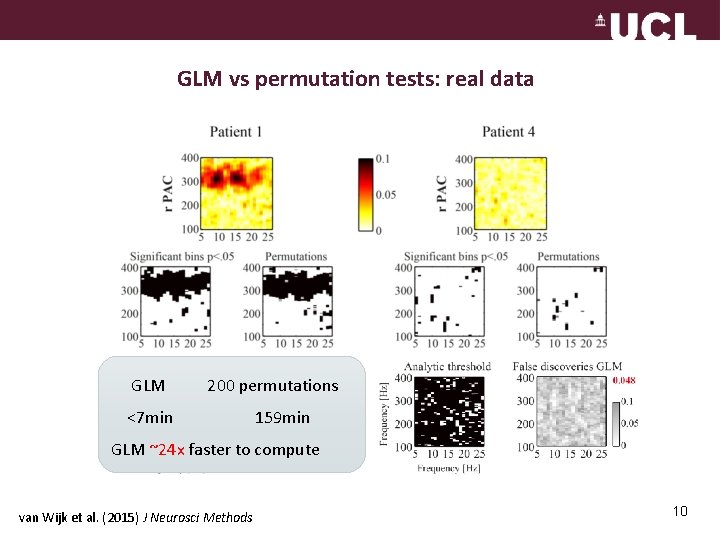
GLM vs permutation tests: real data GLM 200 permutations <7 min 159 min GLM ~24 x faster to compute van Wijk et al. (2015) J Neurosci Methods 10
11
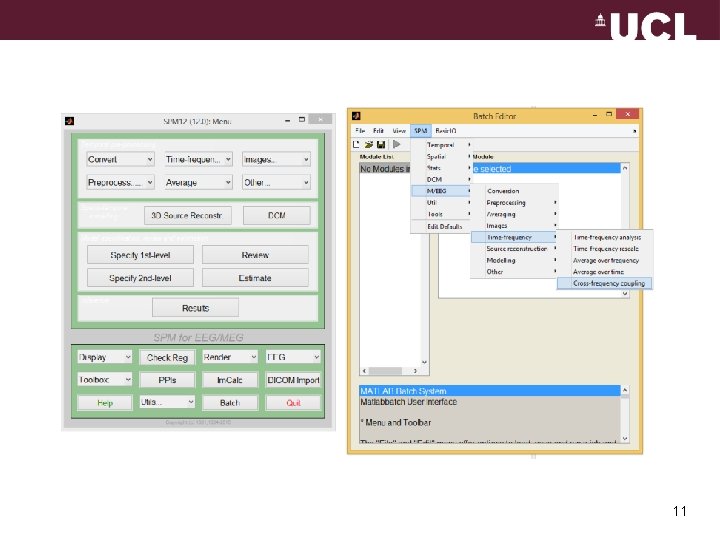
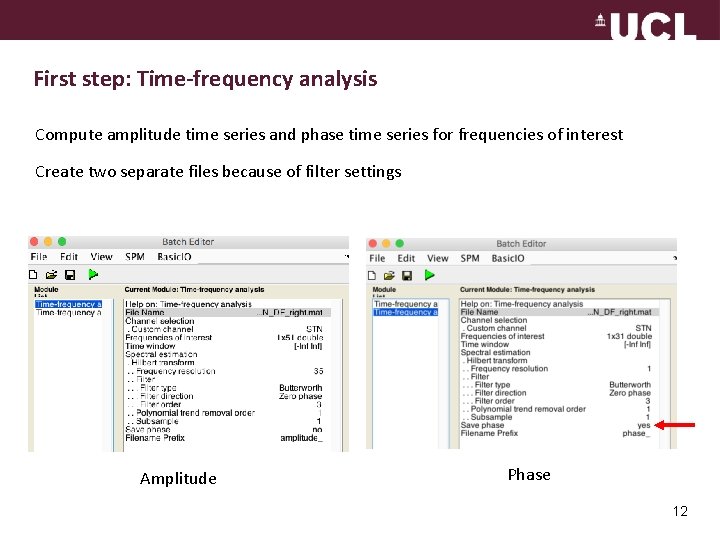
First step: Time-frequency analysis Compute amplitude time series and phase time series for frequencies of interest Create two separate files because of filter settings Amplitude Phase 12
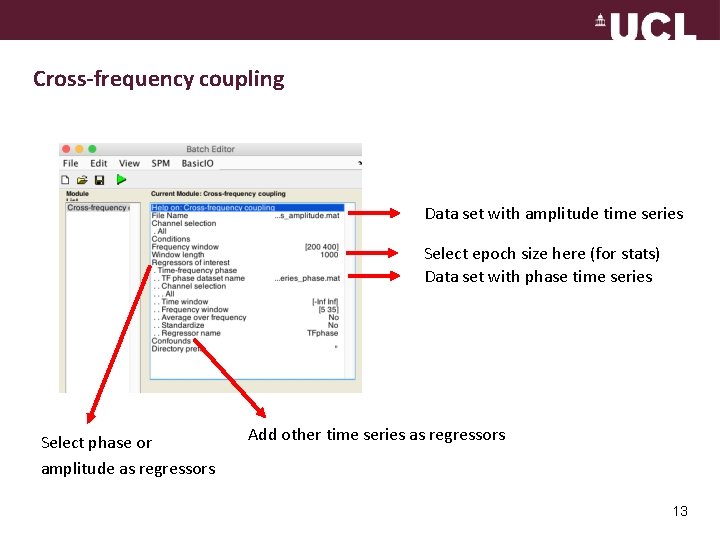
Cross-frequency coupling Data set with amplitude time series Select epoch size here (for stats) Data set with phase time series Select phase or amplitude as regressors Add other time series as regressors 13
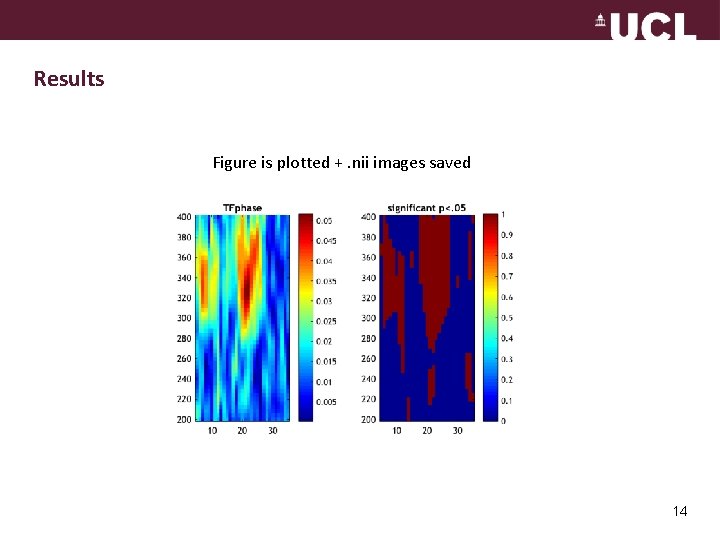
Results Figure is plotted +. nii images saved 14