
Advanced Anatomy Physiology Learning Plan 6 Correlation of
- Slides: 40
Advanced Anatomy & Physiology Learning Plan 6: Correlation of Fluid, Electrolyte, & Acid-Base Mr. Michael Aprill Lakeshore Technical College Ch. 26: Fluid, Electrolyte, & Acid Base (pp. 996 -1015) MARIEB 8 th Edition Revised: 6/17/11 Copyright © 2010 Pearson Education, Inc.
BODY FLUIDS—Body Water Content (p. 996) • Total body water is a function of age, body mass, sex, and body fat. • Infants: due to their low body fat and bone mass are about 73% water. • Men: about 60% water • Women: because women have relatively more body fat and less skeletal muscle than men, theirs is about 50%. • Old age: body water declines throughout life, ultimately comprising about 45% of total body mass. Copyright © 2010 Pearson Education, Inc.
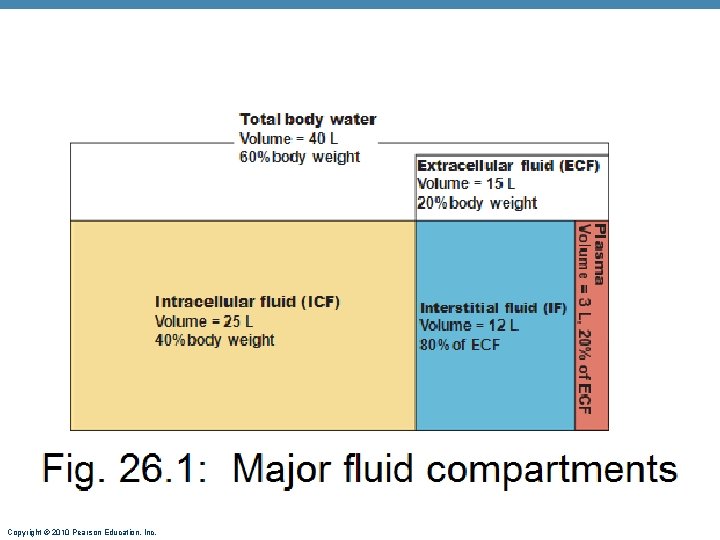
BODY FLUIDS—Fluid Compartments (p. 996; Fig. 26. 1) • There are two main fluid compartments of the body: • Intracellular compartment (ICF): contains slightly less than two-thirds by volume. • Extracellular compartment (ECF): The remaining third. • Two Subcompartments: • Blood plasma • Interstitial fluid (IF) Copyright © 2010 Pearson Education, Inc.
Copyright © 2010 Pearson Education, Inc.
BODY FLUIDS—Composition of Body Fluids (p. 996 -998) • Nonelectrolytes: • Include most organic molecules • Do not dissociate in water • Carry no net electrical charge • Electrolytes: • Dissociate in water to ions • Include: • Inorganic salts • Acids and bases • Some proteins Copyright © 2010 Pearson Education, Inc.
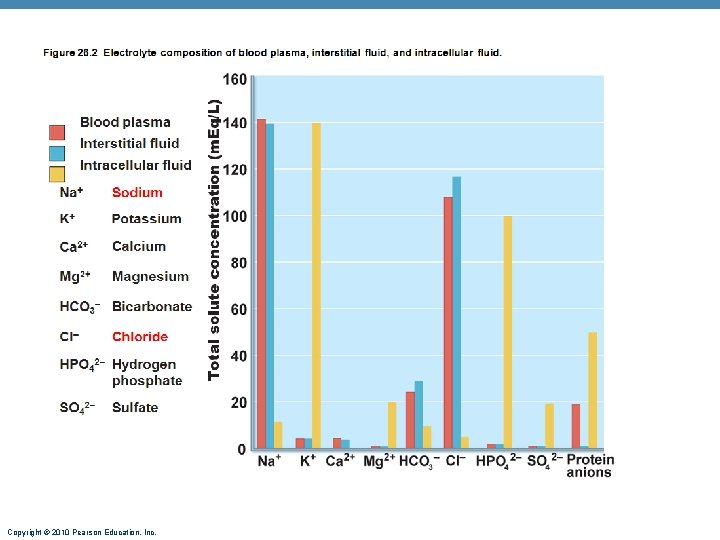
BODY FLUIDS—Composition of Body Fluids (p. 996 -998) • Electrolytes have greater osmotic power because they dissociate in water and contribute at least two particles to solution. (Example: Na. Cl will dissociate into Na+ and Cl-) • Extracellular fluid (ECF): • Major cation is sodium (Na+) • Major anion is chloride (Cl-) • Intracellular fluid (ICF): • Major cation is potassium (K+) • Major anion is phosphate (HPO 42 -) Copyright © 2010 Pearson Education, Inc.
Copyright © 2010 Pearson Education, Inc.
BODY FLUIDS—Composition of Body Fluids (p. 996 -998) • Electrolytes are the most abundant solutes in body fluids, but proteins and some nonelectrolytes account for 60– 97% of dissolved solutes since they are large molecules. • Examples of nonelectrolytes include: • Phospholipids • Cholesterol • Triglycerides • Glucose Copyright © 2010 Pearson Education, Inc.
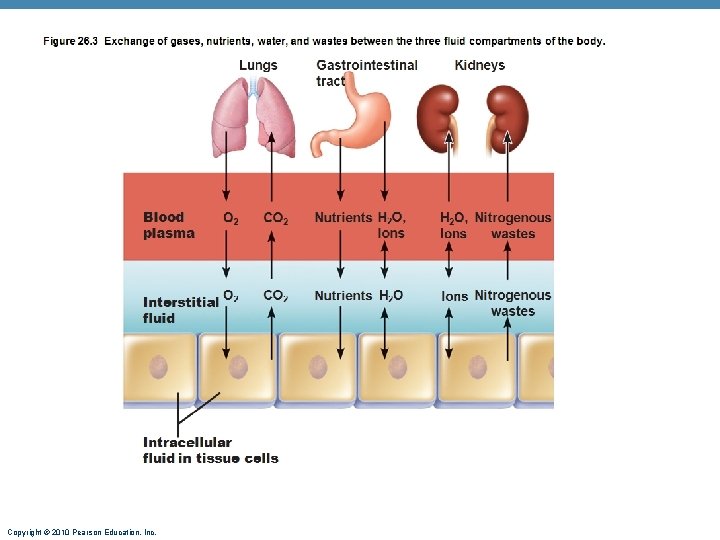
BODY FLUIDS—Fluid Movement Among Compartments (p. 998; Figs. 26. 2 -26. 3) • Anything that changes solute concentration in any compartment leads to net water flows. • Substances must pass through both the plasma and interstitial fluid in order to reach the intracellular fluid, and exchanges between these compartments occur almost continuously, leading to compensatory shifts from one compartment to another. • Nearly protein-free plasma is forced out of the blood by hydrostatic pressure, and almost completely reabsorbed due to colloid osmotic (oncotic) pressure of plasma proteins. Copyright © 2010 Pearson Education, Inc.
BODY FLUIDS—Fluid Movement Among Compartments (p. 998; Figs. 26. 2 -26. 3) • Movement of water between the interstitial fluid (IF) and intracellular fluid (ICF) involves substantial two-way osmotic flow that is equal in both directions. • Ion fluxes between the interstitial (IF) and intracellular (ICF) compartments are restricted; but movement of nutrients, respiratory gases, and wastes typically occur in one direction. Copyright © 2010 Pearson Education, Inc.
Copyright © 2010 Pearson Education, Inc.
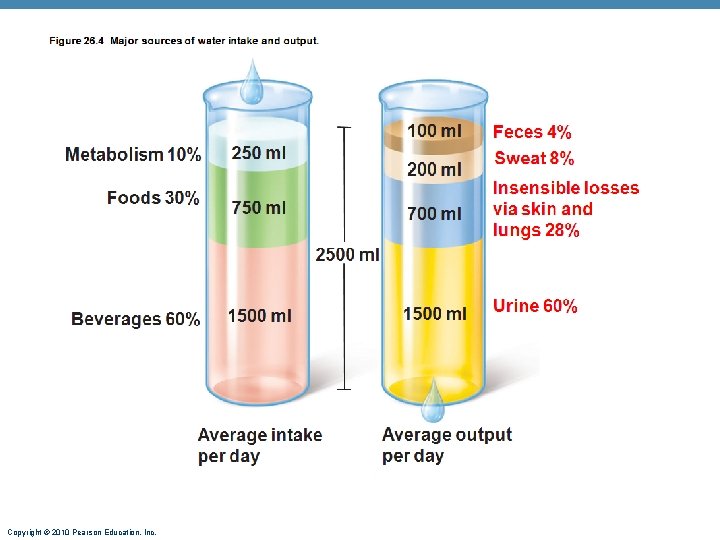
WATER BALANCE & ECF OSMOLALITY— Water Balance (pp. 998 -999) • For the body to remain properly hydrated, water intake must equal water output (pp. 998 – 999). • Most water enters the body through ingested liquids and food, but is also produced by cellular metabolism. • Water output is due to evaporative loss from lungs and skin (insensible water loss), sweating, defecation, and urination. *Insensible or obligatory water loses are unavoidable water losses Copyright © 2010 Pearson Education, Inc.
Copyright © 2010 Pearson Education, Inc.
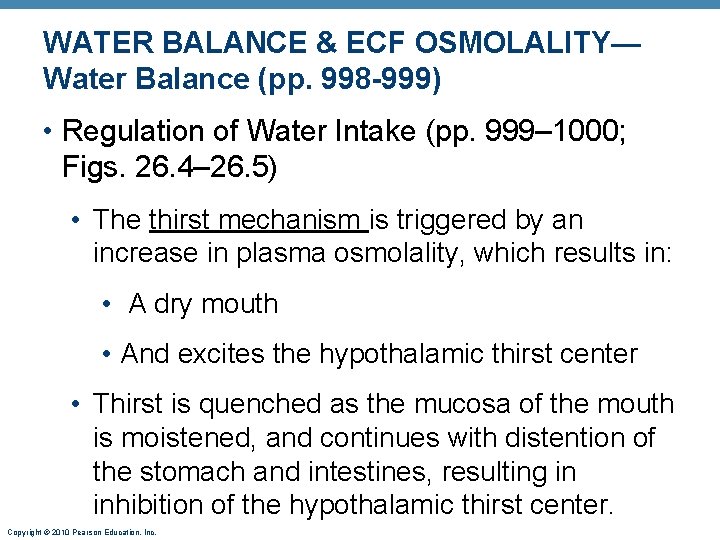
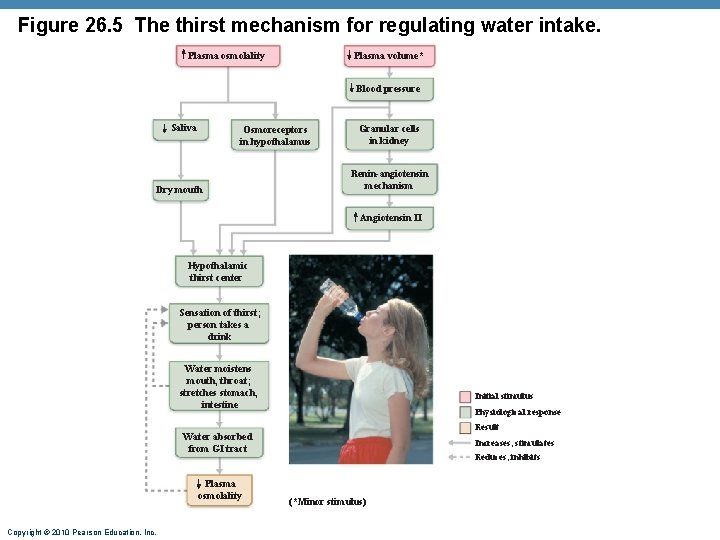
WATER BALANCE & ECF OSMOLALITY— Water Balance (pp. 998 -999) • Regulation of Water Intake (pp. 999– 1000; Figs. 26. 4– 26. 5) • The thirst mechanism is triggered by an increase in plasma osmolality, which results in: • A dry mouth • And excites the hypothalamic thirst center • Thirst is quenched as the mucosa of the mouth is moistened, and continues with distention of the stomach and intestines, resulting in inhibition of the hypothalamic thirst center. Copyright © 2010 Pearson Education, Inc.
WATER BALANCE & ECF OSMOLALITY— Regulation of Water Intake (pp. 999 -1000; Figs. 26. 4 -26. 5) • Drinking is necessary because there is obligatory water loss due to the insensible water losses. • Beyond obligatory water losses*, solute concentration and volume of urine depend on fluid intake. *unavoidable water loses (ie from breathing) Copyright © 2010 Pearson Education, Inc.
Figure 26. 5 The thirst mechanism for regulating water intake. Plasma osmolality Plasma volume* Blood pressure Saliva Osmoreceptors in hypothalamus Dry mouth Granular cells in kidney Renin-angiotensin mechanism Angiotensin II Hypothalamic thirst center Sensation of thirst; person takes a drink Water moistens mouth, throat; stretches stomach, intestine Initial stimulus Physiological response Result Water absorbed from GI tract Plasma osmolality Copyright © 2010 Pearson Education, Increases, stimulates Reduces, inhibits (*Minor stimulus)
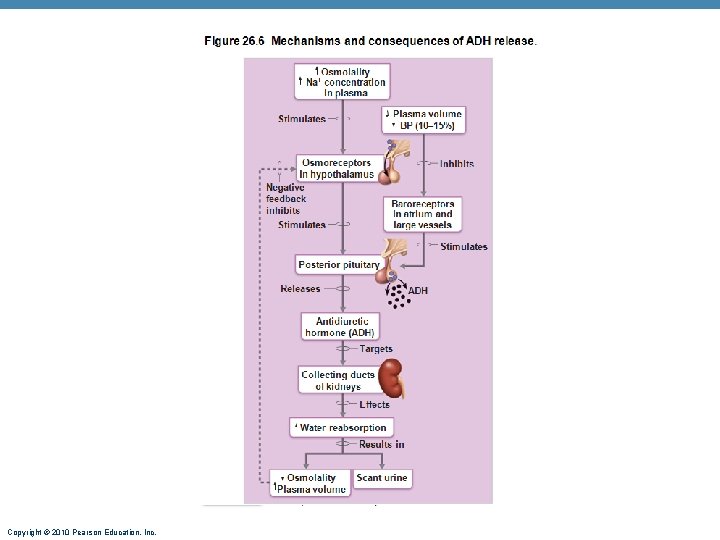
WATER BALANCE & ECF OSMOLALITY— Influence of ADH (pp 1000 -1001; Fig. 26. 6) • The amount of water reabsorbed in the renal collecting ducts is proportional to ADH release. • When ADH levels are low, most water in the collecting ducts is not reabsorbed, resulting in large quantities of dilute urine. • When ADH levels are high, filtered water is reabsorbed, resulting in a lower volume of concentrated urine. • ADH secretion is promoted or inhibited by the hypothalamus in response to: • changes in solute concentration of extracellular fluid • large changes in blood volume or pressure • Or vascular baroreceptors Copyright © 2010 Pearson Education, Inc.
Copyright © 2010 Pearson Education, Inc.
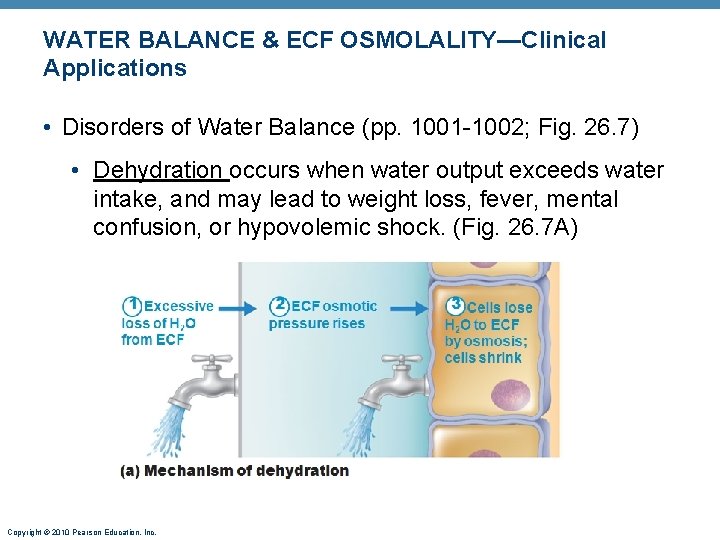
WATER BALANCE & ECF OSMOLALITY—Clinical Applications • Disorders of Water Balance (pp. 1001 -1002; Fig. 26. 7) • Dehydration occurs when water output exceeds water intake, and may lead to weight loss, fever, mental confusion, or hypovolemic shock. (Fig. 26. 7 A) Copyright © 2010 Pearson Education, Inc.
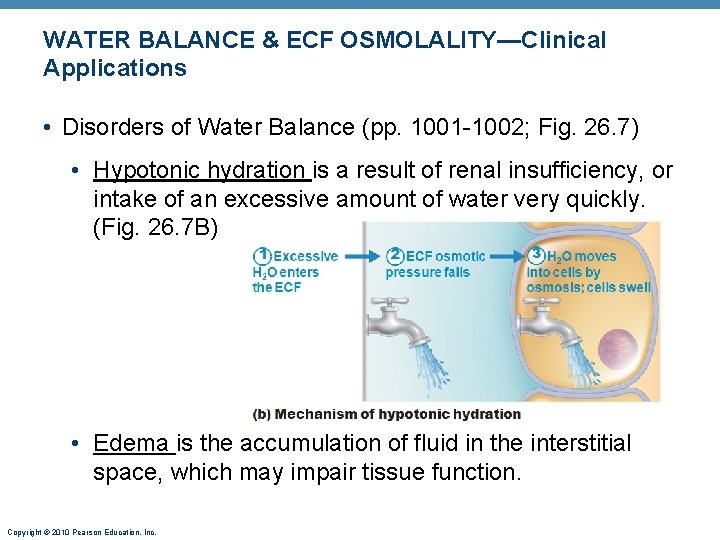
WATER BALANCE & ECF OSMOLALITY—Clinical Applications • Disorders of Water Balance (pp. 1001 -1002; Fig. 26. 7) • Hypotonic hydration is a result of renal insufficiency, or intake of an excessive amount of water very quickly. (Fig. 26. 7 B) • Edema is the accumulation of fluid in the interstitial space, which may impair tissue function. Copyright © 2010 Pearson Education, Inc.
ELECTROLYTE BALANCE—The Central Role of Sodium (Na+) in Fluid & Electrolyte Balance (pp. 10021004; Table 26. 1) • Sodium (Na+) is the most important cation in regulation of fluid and electrolyte balance in the body due to its abundance and osmotic pressure. • Because all body fluids are in chemical equilibrium, any change in sodium levels causes a compensatory shift in water, affecting: • plasma volume • blood pressure • intracellular & interstitial fluid volumes. Copyright © 2010 Pearson Education, Inc.
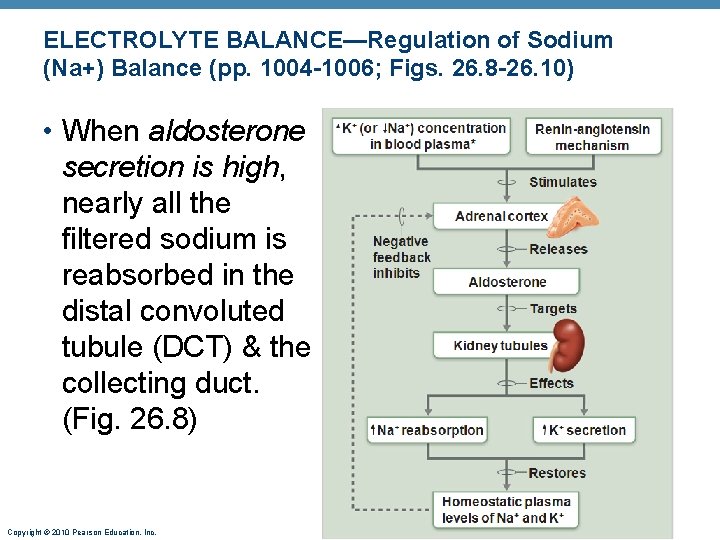
ELECTROLYTE BALANCE—Regulation of Sodium (Na+) Balance (pp. 1004 -1006; Figs. 26. 8 -26. 10) • When aldosterone secretion is high, nearly all the filtered sodium is reabsorbed in the distal convoluted tubule (DCT) & the collecting duct. (Fig. 26. 8) Copyright © 2010 Pearson Education, Inc.
ELECTROLYTE BALANCE—Regulation of Sodium (Na+) Balance (pp. 1004 -1006; Figs. 26. 8 -26. 10) • The most important trigger for the release of aldosterone is the renin-angiotensin mechanism, initiated in response to: • sympathetic stimulation • decrease in filtrate osmolality • Or decreased blood pressure. Copyright © 2010 Pearson Education, Inc.
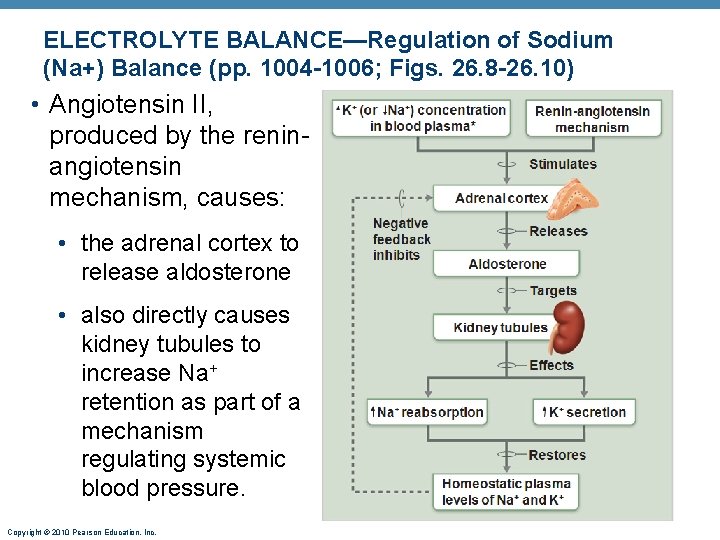
ELECTROLYTE BALANCE—Regulation of Sodium (Na+) Balance (pp. 1004 -1006; Figs. 26. 8 -26. 10) • Angiotensin II, produced by the reninangiotensin mechanism, causes: • the adrenal cortex to release aldosterone • also directly causes kidney tubules to increase Na+ retention as part of a mechanism regulating systemic blood pressure. Copyright © 2010 Pearson Education, Inc.
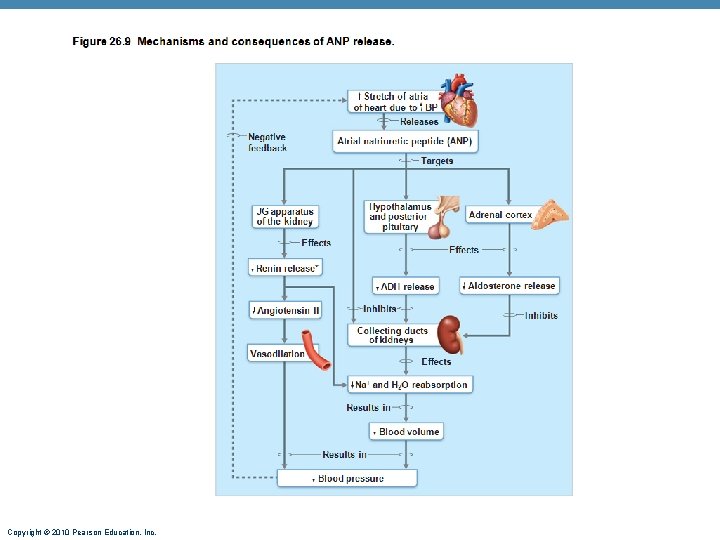
ELECTROLYTE BALANCE—Regulation of Sodium Balance (pp. 1004 -1006; Figs. 26. 8 -26. 10) • Cardiovascular baroreceptors monitor blood volume so that blood pressure remains stable. • Atrial natriuretic peptide (ANP) reduces blood pressure and blood volume by: (Fig. 26. 9) • Inhibiting release of ADH, renin, & aldosterone • And directly causing vasodilation • Estrogens are chemically similar to aldosterone, and enhance reabsorption of salt by the renal tubules. • Glucocorticoids enhance tubular reabsorption of sodium, but increase glomerular filtration. Copyright © 2010 Pearson Education, Inc.
Copyright © 2010 Pearson Education, Inc.
ELECTROLYTE BALANCE—Regulation of Potassium (K+) Balance (pp. 1006 -1007) • Potassium (K+) is critical to the maintenance of the membrane potential of neurons and muscle cells, and is a buffer that compensates for shifts of hydrogen ions in or out of the cell. • Potassium balance is chiefly regulated by renal mechanisms, which control the amount of potassium secreted into the filtrate. • Blood plasma levels of potassium are the factor regulating potassium secretion. • Aldosterone influences potassium secretion, because potassium secretion is simultaneously enhanced when sodium reabsorption increases. Copyright © 2010 Pearson Education, Inc.
ELECTROLYTE BALANCE—Regulation of Calcium & Phosphate Balance (p. 1008) • Calcium ion levels are closely regulated by parathyroid hormone and calcitonin; about 98% is reabsorbed. • Parathyroid hormone (PTH) is released when blood calcium levels decline, and targets the: • Bones • small intestine • kidneys. • Calcitonin is an antagonist to parathyroid hormone (PTH), and is released when blood calcium rises, targeting: • bone Copyright © 2010 Pearson Education, Inc.
ELECTROLYTE BALANCE—Regulation of Anions (p. 1008) • Chloride is the major anion reabsorbed with sodium, and helps maintain the osmotic pressure of the blood. Copyright © 2010 Pearson Education, Inc.
ACID-BASE BALANCE—Hydrogen Bonds (pp. 1008 -1009) • Because of the abundance of hydrogen bonds in the body’s functional proteins, they are strongly influenced by hydrogen ion concentration (pp. 1008– 1009). • When arterial blood p. H rises above 7. 45, the body is in alkalosis; when arterial p. H falls below 7. 35, the body is in physiological acidosis. • Most hydrogen ions originate as metabolic byproducts, although they can also enter the body via ingested foods. Copyright © 2010 Pearson Education, Inc.
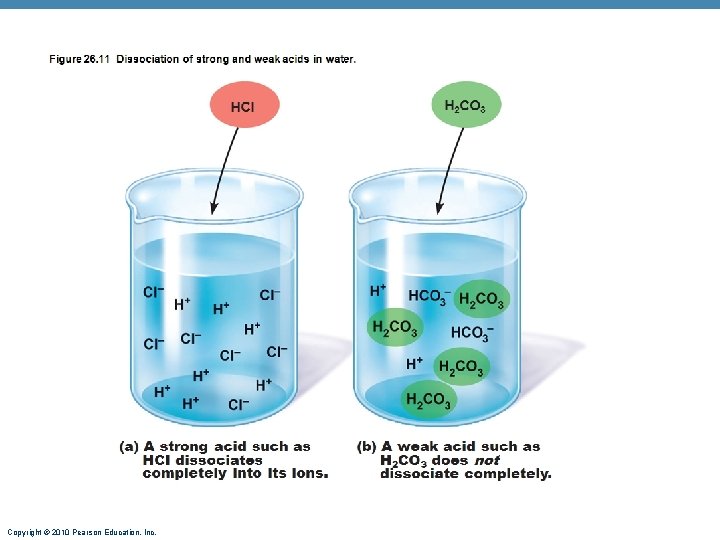
ACID-BASE BALANCE—Chemical Buffer Systems (pp. 1009 -1010; Fig. 26. 11) • A chemical buffer is a system of one or two molecules that acts to resist changes in p. H by binding H+ when the p. H drops, or releasing H+ when the p. H rises. Copyright © 2010 Pearson Education, Inc.
ACID-BASE BALANCE—Chemical Buffer Systems (pp. 1009 -1010; Fig. 26. 11) • The bicarbonate buffer system is the main buffer of the extracellular fluid, and consists of carbonic acid and its salt, sodium bicarbonate (Na. HCO 3). • When a strong acid is added to the solution, carbonic acid (H 2 CO 3) is mostly unchanged, but bicarbonate ions of the salt bind excess H+, forming more carbonic acid. • When a strong base is added to solution, the sodium bicarbonate remains relatively unaffected, but carbonic acid dissociates further, donating more H+ to bind the excess hydroxide (HO-). • Bicarbonate concentration of the extracellular fluid is closely regulated by the kidneys, and plasma bicarbonate concentrations are controlled by the respiratory system. Copyright © 2010 Pearson Education, Inc.
Copyright © 2010 Pearson Education, Inc.
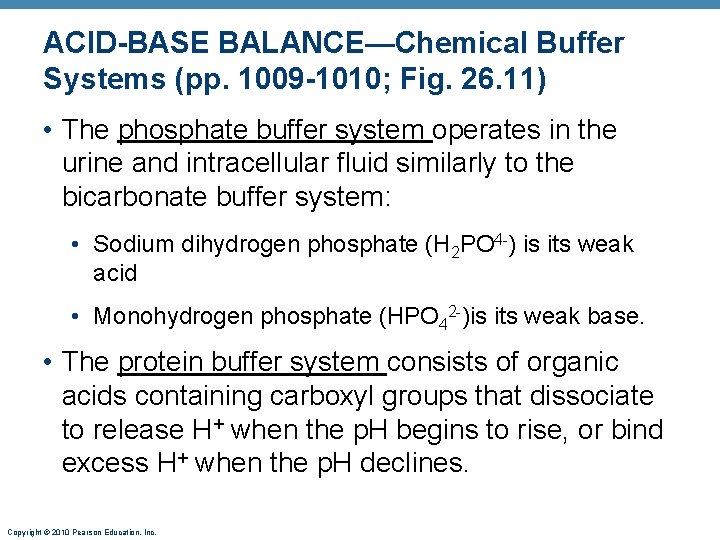
ACID-BASE BALANCE—Chemical Buffer Systems (pp. 1009 -1010; Fig. 26. 11) • The phosphate buffer system operates in the urine and intracellular fluid similarly to the bicarbonate buffer system: • Sodium dihydrogen phosphate (H 2 PO 4 -) is its weak acid • Monohydrogen phosphate (HPO 42 -)is its weak base. • The protein buffer system consists of organic acids containing carboxyl groups that dissociate to release H+ when the p. H begins to rise, or bind excess H+ when the p. H declines. Copyright © 2010 Pearson Education, Inc.
ACID-BASE BALANCE—Respiratory Regulation of H+ (pp. 1010 -1011) • Carbon dioxide (CO 2) from cellular metabolism enters erythrocytes and is converted to bicarbonate ions for transport in the plasma. • When hypercapnia* occurs, blood p. H drops, activating medullary respiratory centers, resulting in: • increased rate and depth of breathing • increased unloading of CO 2 in the lungs • When blood p. H rises, the respiratory center is depressed, allowing CO 2 to accumulate in the blood, lowering p. H. *High carbon dioxide levels in the blood Copyright © 2010 Pearson Education, Inc.
ACID-BASE BALANCE—Renal Mechanisms of Acid. Base Balance (pp. 1011 -1014; Figs. 26. 12 -26. 14) • Only the kidneys can rid the body of acids generated by cellular metabolism (ex. Uric and lactic acids), while also regulating blood levels of alkaline substances and renewing chemical buffer components. • Bicarbonate ions can be conserved from filtrate when depleted, and their reabsorption is dependent on H+ secretion. • Type A intercalated cells of the renal tubules can synthesize new bicarbonate ions while excreting more hydrogen ions. • Ammonium (NH 4+) ions are weak acids that are excreted and lost in urine, replenishing the alkaline reserve of the blood. • When the body is in alkalosis, type B intercalated cells excrete bicarbonate, and reclaim hydrogen ions. Copyright © 2010 Pearson Education, Inc.
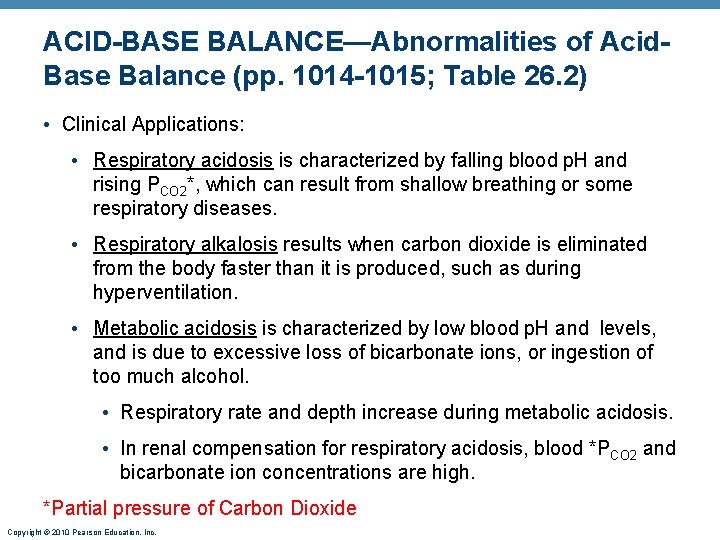
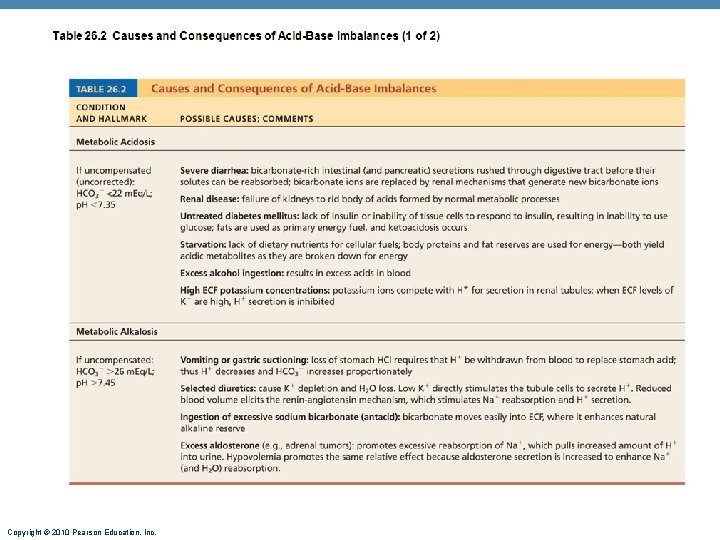
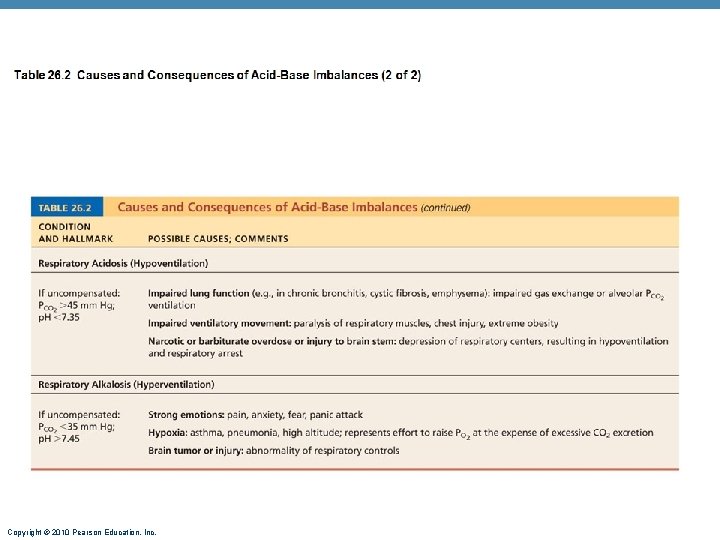
ACID-BASE BALANCE—Abnormalities of Acid. Base Balance (pp. 1014 -1015; Table 26. 2) • Clinical Applications: • Respiratory acidosis is characterized by falling blood p. H and rising PCO 2*, which can result from shallow breathing or some respiratory diseases. • Respiratory alkalosis results when carbon dioxide is eliminated from the body faster than it is produced, such as during hyperventilation. • Metabolic acidosis is characterized by low blood p. H and levels, and is due to excessive loss of bicarbonate ions, or ingestion of too much alcohol. • Respiratory rate and depth increase during metabolic acidosis. • In renal compensation for respiratory acidosis, blood *PCO 2 and bicarbonate ion concentrations are high. *Partial pressure of Carbon Dioxide Copyright © 2010 Pearson Education, Inc.
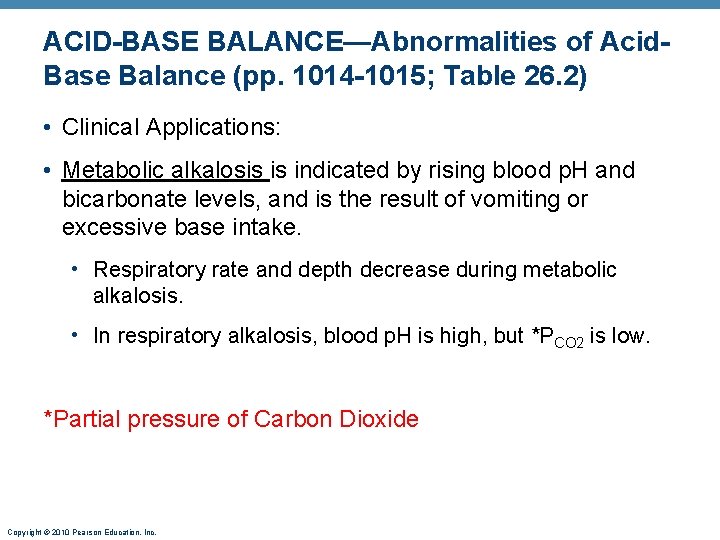
ACID-BASE BALANCE—Abnormalities of Acid. Base Balance (pp. 1014 -1015; Table 26. 2) • Clinical Applications: • Metabolic alkalosis is indicated by rising blood p. H and bicarbonate levels, and is the result of vomiting or excessive base intake. • Respiratory rate and depth decrease during metabolic alkalosis. • In respiratory alkalosis, blood p. H is high, but *PCO 2 is low. *Partial pressure of Carbon Dioxide Copyright © 2010 Pearson Education, Inc.
Copyright © 2010 Pearson Education, Inc.
Copyright © 2010 Pearson Education, Inc.