
Advanced Anatomy Physiology Learning Plan 12 The Processes
- Slides: 14
Advanced Anatomy & Physiology Learning Plan 12: The Processes of Digestion, Absorption, and Assimilation Mr. Michael Aprill Lakeshore Technical College Ch. 23: The Processes of Digestion, Absorption, & Assimilation (pp. 895 -901) MARIEB 8 th Edition Revised: 6/29/11 Copyright © 2010 Pearson Education, Inc.
PART 3: PHYSIOLOGY OF CHEMICAL DIGESTION & ABSORPTION—Intro (pp. 895 -897; Figs. 23. 32 -23. 34 • Chemical digestion is a catabolic process in which large food molecules are broken down to chemical building blocks (monomers), which are small enough to be absorbed by the GI tract lining. • Chemical digestion is accomplished by enzymes, secreted by intrinsic and accessory glands of the alimentary canal, used in hydrolysis reactions. Copyright © 2010 Pearson Education, Inc.
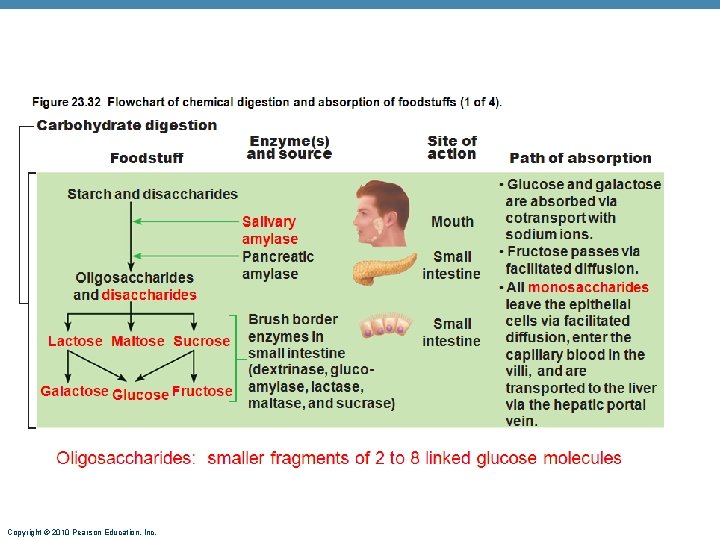
PART 3: PHYSIOLOGY OF CHEMICAL DIGESTION & ABSORPTION—Carbohydrates (pp. 895 -897; Figs. 23. 32 -23. 34 • Carbohydrates • Monosaccharides are simple sugars that are absorbed immediately (glucose, galactose, and fructose). • Disaccharides are composed of two monosaccharides bonded together (maltose, lactose, and sucrose). • The digestible polysaccharide found in the diet is starch; other polysaccharides, such as cellulose, are not able to be broken down by humans. • Chemical digestion of carbohydrates begins in the mouth, where salivary amylase breaks large polysaccharides into smaller fragments. Copyright © 2010 Pearson Education, Inc.
Copyright © 2010 Pearson Education, Inc.
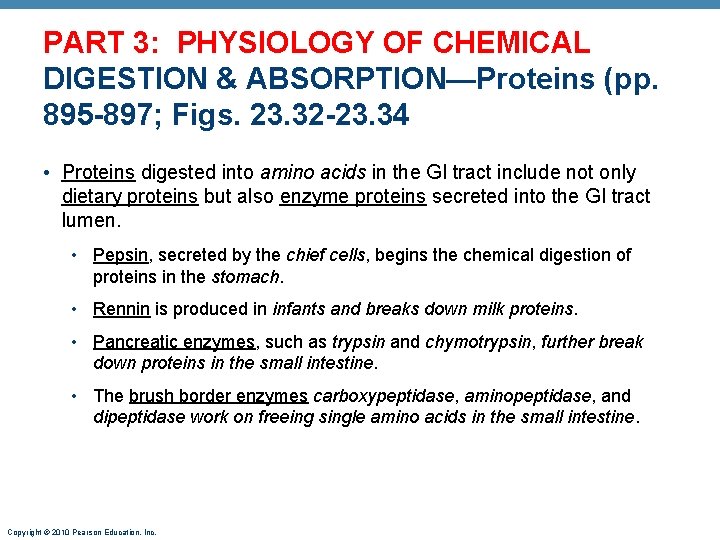
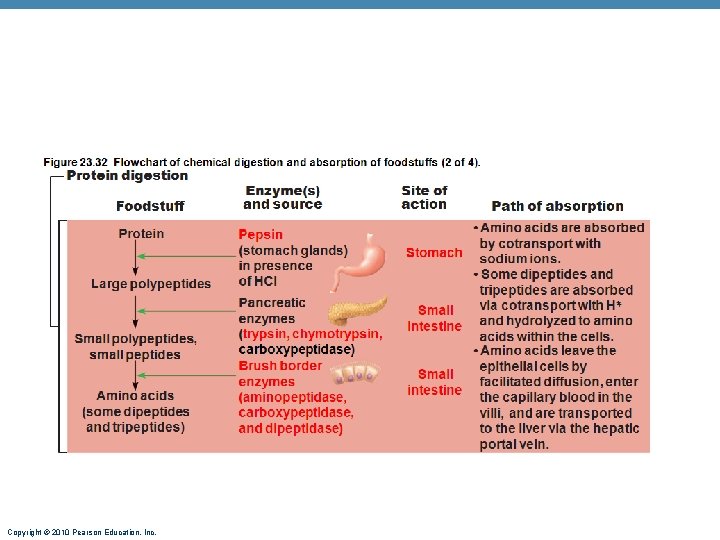
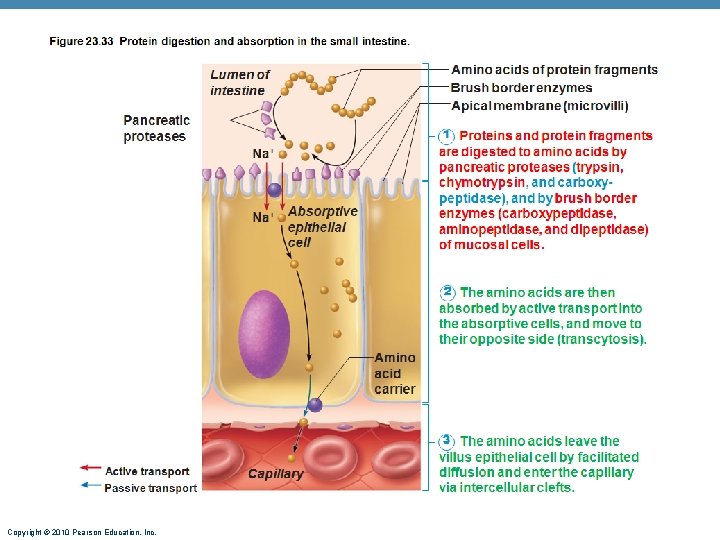
PART 3: PHYSIOLOGY OF CHEMICAL DIGESTION & ABSORPTION—Proteins (pp. 895 -897; Figs. 23. 32 -23. 34 • Proteins digested into amino acids in the GI tract include not only dietary proteins but also enzyme proteins secreted into the GI tract lumen. • Pepsin, secreted by the chief cells, begins the chemical digestion of proteins in the stomach. • Rennin is produced in infants and breaks down milk proteins. • Pancreatic enzymes, such as trypsin and chymotrypsin, further break down proteins in the small intestine. • The brush border enzymes carboxypeptidase, aminopeptidase, and dipeptidase work on freeing single amino acids in the small intestine. Copyright © 2010 Pearson Education, Inc.
Copyright © 2010 Pearson Education, Inc.
Copyright © 2010 Pearson Education, Inc.
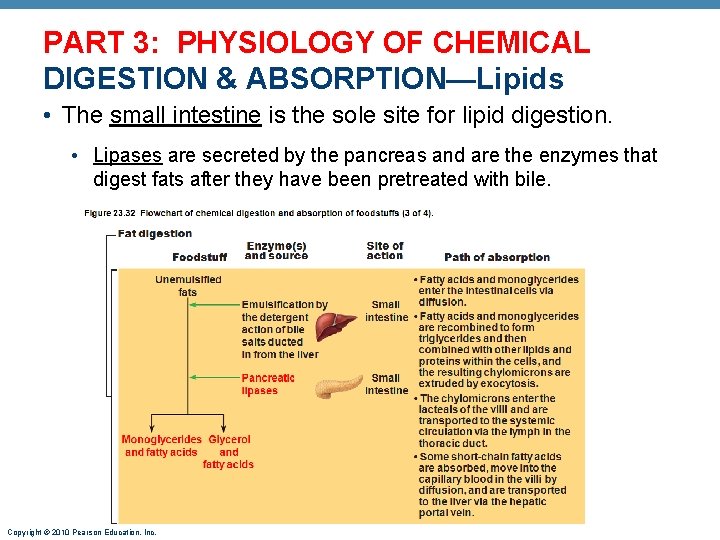
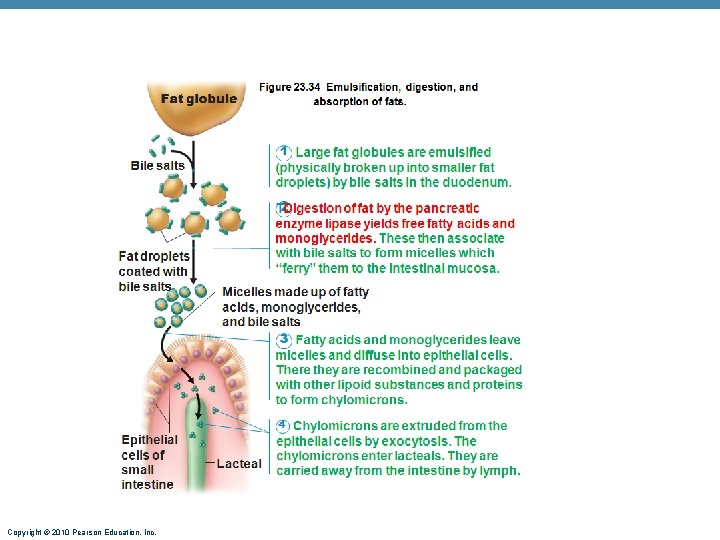
PART 3: PHYSIOLOGY OF CHEMICAL DIGESTION & ABSORPTION—Lipids • The small intestine is the sole site for lipid digestion. • Lipases are secreted by the pancreas and are the enzymes that digest fats after they have been pretreated with bile. Copyright © 2010 Pearson Education, Inc.
Copyright © 2010 Pearson Education, Inc.
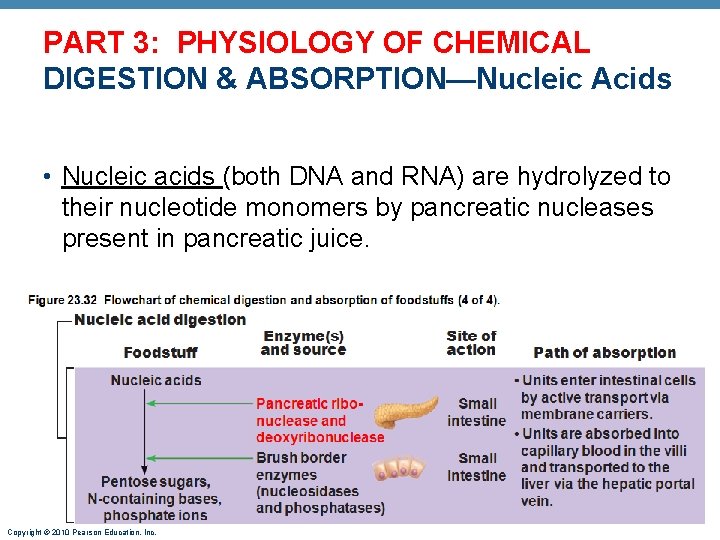
PART 3: PHYSIOLOGY OF CHEMICAL DIGESTION & ABSORPTION—Nucleic Acids • Nucleic acids (both DNA and RNA) are hydrolyzed to their nucleotide monomers by pancreatic nucleases present in pancreatic juice. Copyright © 2010 Pearson Education, Inc.
ABSORPTION--Intro (pp. 898 -901; Fig. 23. 34) • Absorption occurs along the entire length of the small intestine, and most of it is completed before the chyme reaches the ileum (pp. 898– 901; Fig. 23. 34). Copyright © 2010 Pearson Education, Inc.
ABSORPTION—Special Nutrients (pp. 898 -901; Fig. 23. 34) • Absorption of Specific Nutrients • Glucose and galactose are transported into the epithelial cells by common protein carriers and are then moved by facilitated diffusion into the capillary blood. • Several types of carriers transport the different amino acids before entering the capillary blood by diffusion. • Monoglycerides and free fatty acids of lipid digestion become associated with bile salts and lecithin to form micelles, which are necessary for lipid absorption. Copyright © 2010 Pearson Education, Inc.
ABSORPTION—Special Nutrients (pp. 898 -901; Fig. 23. 34) • Absorption of Specific Nutrients • Pentose sugars, nitrogenous bases, and phosphate ions are transported actively across the epithelium by special transport carriers in the villus epithelium. • The small intestine absorbs dietary vitamins, while the large intestine absorbs vitamins B and K. • Electrolytes: • actively absorbed along the entire length of the small intestine • except for calcium and iron, which are absorbed in the duodenum. • Water is the most abundant substance in chyme and 95% of it is absorbed in the small intestine by osmosis. Copyright © 2010 Pearson Education, Inc.
ABSORPTION—Malabsorption (pp. 898 -901; Fig. 23. 34) • Malabsorption of nutrients can result from anything that interferes with the delivery of bile or pancreatic juices, as well as factors that damage the intestinal mucosa. Copyright © 2010 Pearson Education, Inc.