
Advance in Endoscopic Submucosal Dissection ESD Tommy Siuman
Advance in Endoscopic Submucosal Dissection (ESD) Tommy Siu-man Yip Department of Surgery North District Hospital
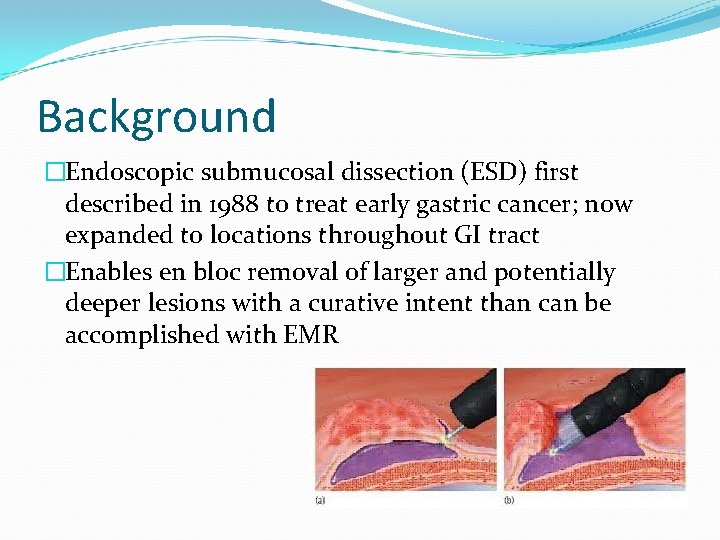
Background �Endoscopic submucosal dissection (ESD) first described in 1988 to treat early gastric cancer; now expanded to locations throughout GI tract �Enables en bloc removal of larger and potentially deeper lesions with a curative intent than can be accomplished with EMR
Introduction of ESD procedures & devices
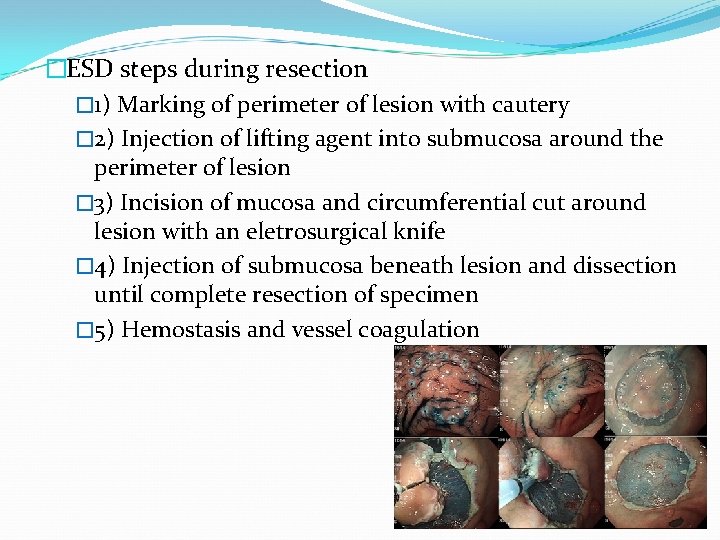
�ESD steps during resection � 1) Marking of perimeter of lesion with cautery � 2) Injection of lifting agent into submucosa around the perimeter of lesion � 3) Incision of mucosa and circumferential cut around lesion with an eletrosurgical knife � 4) Injection of submucosa beneath lesion and dissection until complete resection of specimen � 5) Hemostasis and vessel coagulation
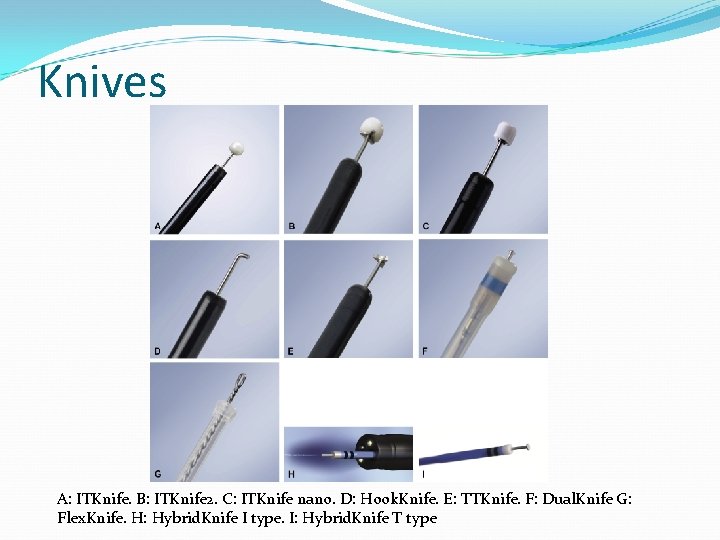
Knives A: ITKnife. B: ITKnife 2. C: ITKnife nano. D: Hook. Knife. E: TTKnife. F: Dual. Knife G: Flex. Knife. H: Hybrid. Knife I type. I: Hybrid. Knife T type
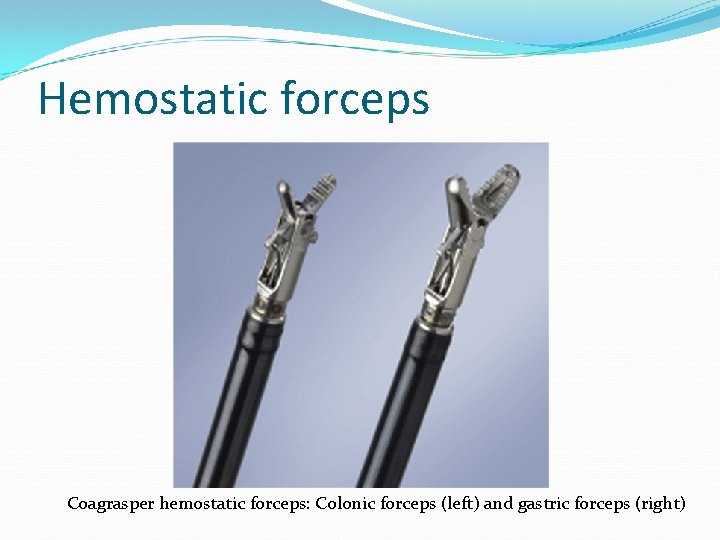
Hemostatic forceps Coagrasper hemostatic forceps: Colonic forceps (left) and gastric forceps (right)
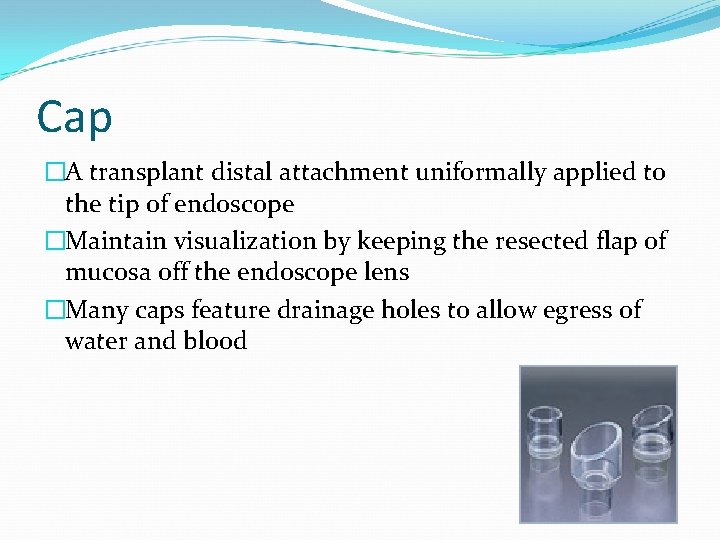
Cap �A transplant distal attachment uniformally applied to the tip of endoscope �Maintain visualization by keeping the resected flap of mucosa off the endoscope lens �Many caps feature drainage holes to allow egress of water and blood
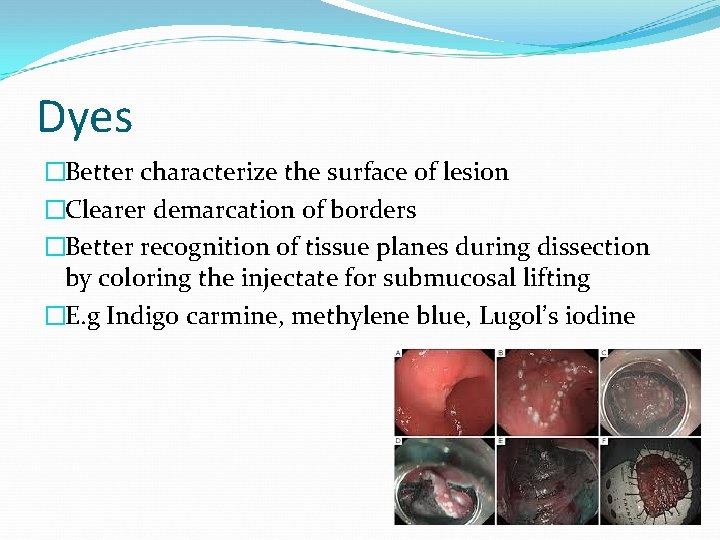
Dyes �Better characterize the surface of lesion �Clearer demarcation of borders �Better recognition of tissue planes during dissection by coloring the injectate for submucosal lifting �E. g Indigo carmine, methylene blue, Lugol’s iodine
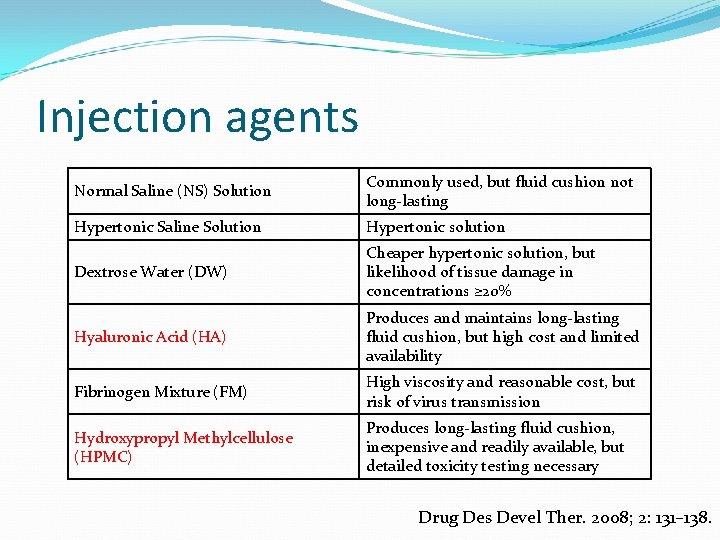
Injection agents Normal Saline (NS) Solution Commonly used, but fluid cushion not long-lasting Hypertonic Saline Solution Hypertonic solution Dextrose Water (DW) Cheaper hypertonic solution, but likelihood of tissue damage in concentrations ≥ 20% Hyaluronic Acid (HA) Produces and maintains long-lasting fluid cushion, but high cost and limited availability Fibrinogen Mixture (FM) High viscosity and reasonable cost, but risk of virus transmission Hydroxypropyl Methylcellulose (HPMC) Produces long-lasting fluid cushion, inexpensive and readily available, but detailed toxicity testing necessary Drug Des Devel Ther. 2008; 2: 131– 138.
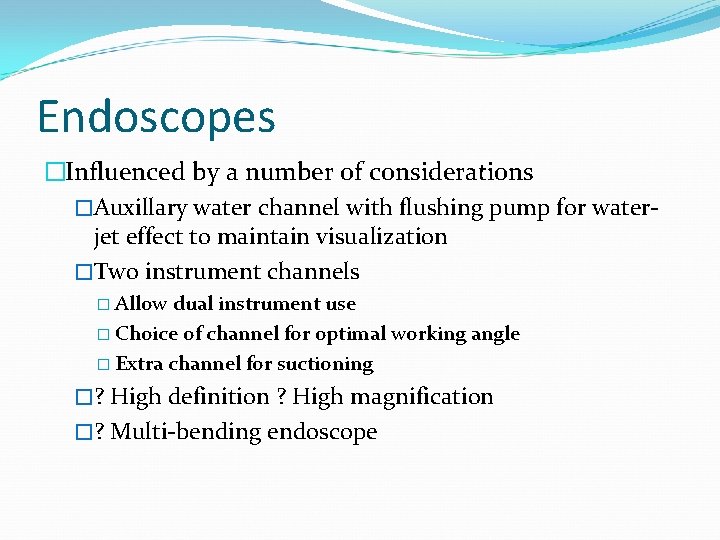
Endoscopes �Influenced by a number of considerations �Auxillary water channel with flushing pump for waterjet effect to maintain visualization �Two instrument channels � Allow dual instrument use � Choice of channel for optimal working angle � Extra channel for suctioning �? High definition ? High magnification �? Multi-bending endoscope
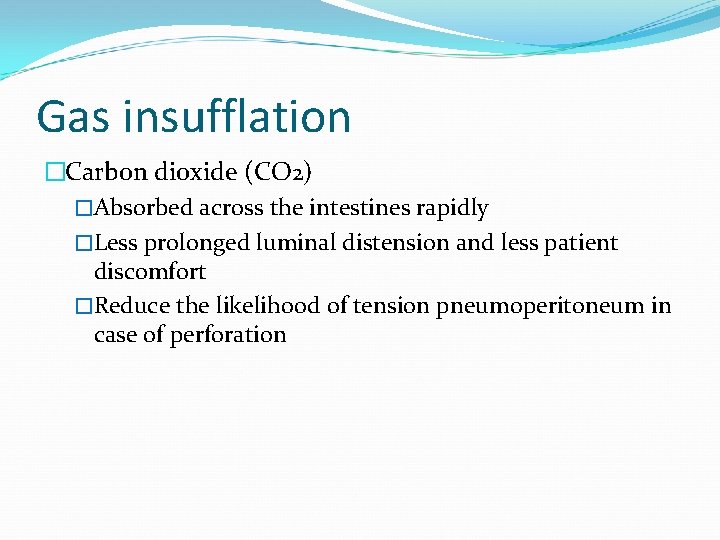
Gas insufflation �Carbon dioxide (CO 2) �Absorbed across the intestines rapidly �Less prolonged luminal distension and less patient discomfort �Reduce the likelihood of tension pneumoperitoneum in case of perforation
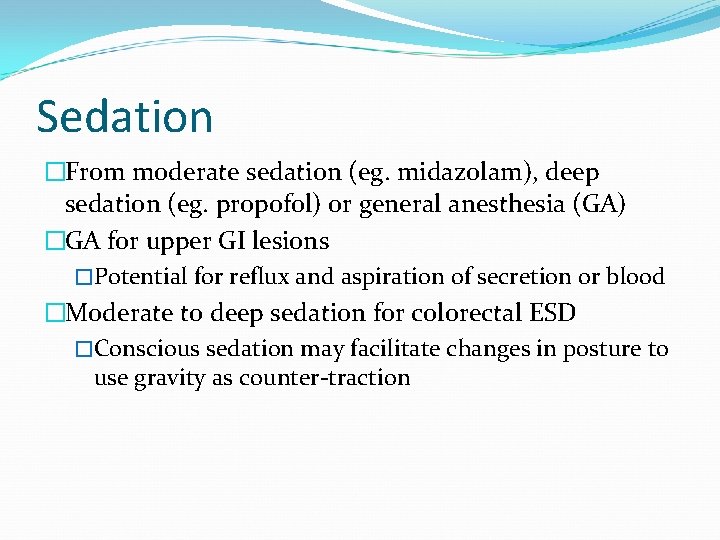
Sedation �From moderate sedation (eg. midazolam), deep sedation (eg. propofol) or general anesthesia (GA) �GA for upper GI lesions �Potential for reflux and aspiration of secretion or blood �Moderate to deep sedation for colorectal ESD �Conscious sedation may facilitate changes in posture to use gravity as counter-traction
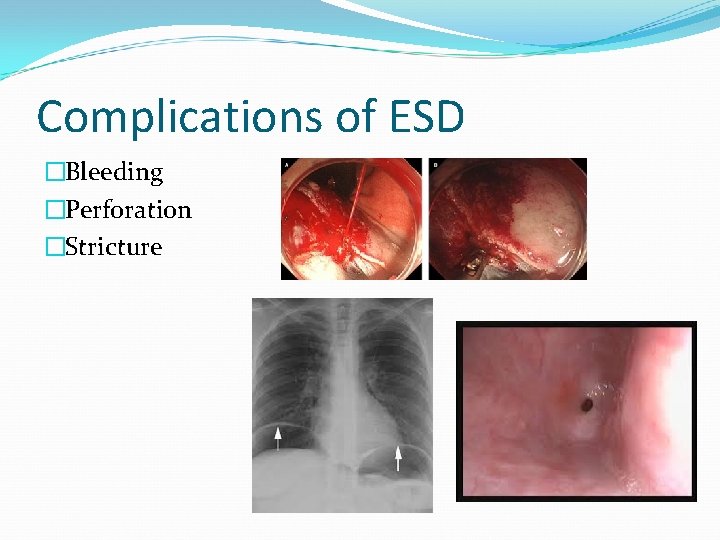
Complications of ESD �Bleeding �Perforation �Stricture
Bleeding �Coagulation by ESD knife / hemostatic forceps �Delayed bleeding more common in gastric ESD (4. 5%, up to 15. 6%) �PPI +/- mucosal protective agent �Urgent surgery

Perforation � 2. 3 -10% in oesophageal ESD 4. 5% for gastric ESD 4. 8% in colorectal ESD �Most amendable by clip closure �Gastric ESD �≤ 1 cm defect: Primary clip closure �Larger defect: “omental patch” method �NG tube, TPN, antibiotics �Urgent surgery
Stricture � 12 -17% after oesophageal ESD �Highest risk if resection >75% circumference of oesophagus �Management �Prophylactic serial dilatation �Intralesional / topical steroid application �Prophylactic placement of SEMS
Advance in ESD �Problems to be tackled �Dissection � Traction � Ease of dissection of submucosal plane �Prevention of Complications
Advance in ESD �Problems to be tackled �Dissection � Traction � Ease of dissection of submucosal plane �Prevention of Complications
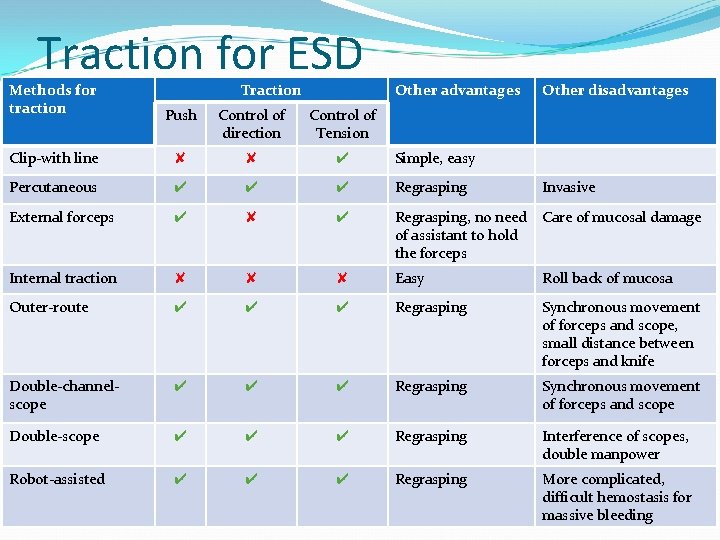
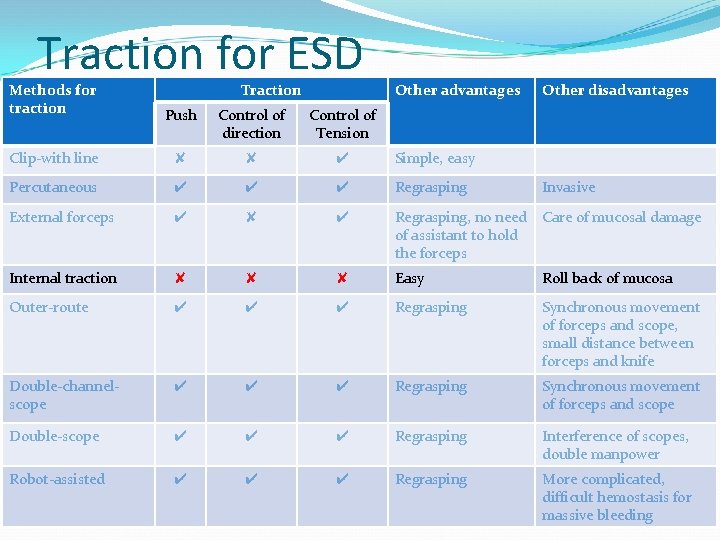
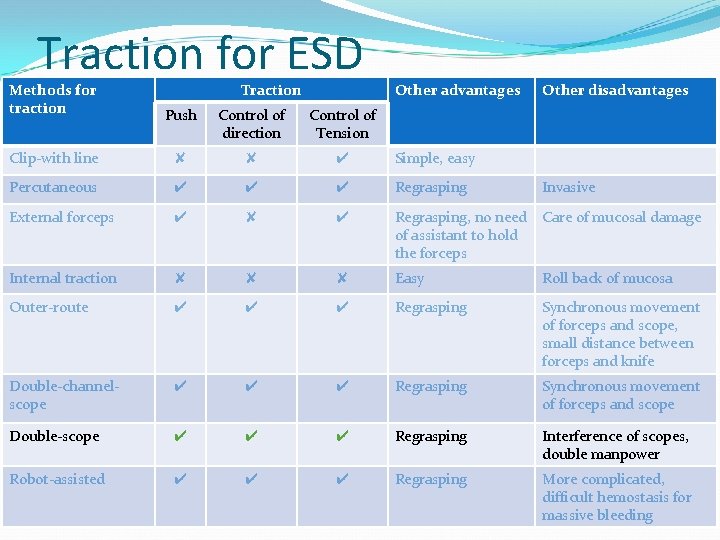
Traction for ESD Methods for traction Traction Other advantages Other disadvantages Push Control of direction Control of Tension Clip-with line ✘ ✘ ✔ Simple, easy Percutaneous ✔ ✔ ✔ Regrasping Invasive External forceps ✔ ✘ ✔ Regrasping, no need of assistant to hold the forceps Care of mucosal damage Internal traction ✘ ✘ ✘ Easy Roll back of mucosa Outer-route ✔ ✔ ✔ Regrasping Synchronous movement of forceps and scope, small distance between forceps and knife Double-channelscope ✔ ✔ ✔ Regrasping Synchronous movement of forceps and scope Double-scope ✔ ✔ ✔ Regrasping Interference of scopes, double manpower Robot-assisted ✔ ✔ ✔ Regrasping More complicated, difficult hemostasis for massive bleeding
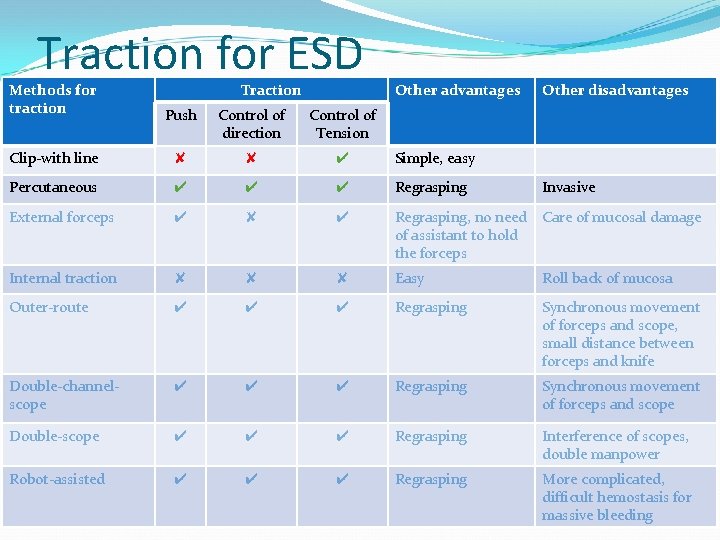
Traction for ESD Methods for traction Traction Other advantages Other disadvantages Push Control of direction Control of Tension Clip-with line ✘ ✘ ✔ Simple, easy Percutaneous ✔ ✔ ✔ Regrasping Invasive External forceps ✔ ✘ ✔ Regrasping, no need of assistant to hold the forceps Care of mucosal damage Internal traction ✘ ✘ ✘ Easy Roll back of mucosa Outer-route ✔ ✔ ✔ Regrasping Synchronous movement of forceps and scope, small distance between forceps and knife Double-channelscope ✔ ✔ ✔ Regrasping Synchronous movement of forceps and scope Double-scope ✔ ✔ ✔ Regrasping Interference of scopes, double manpower Robot-assisted ✔ ✔ ✔ Regrasping More complicated, difficult hemostasis for massive bleeding
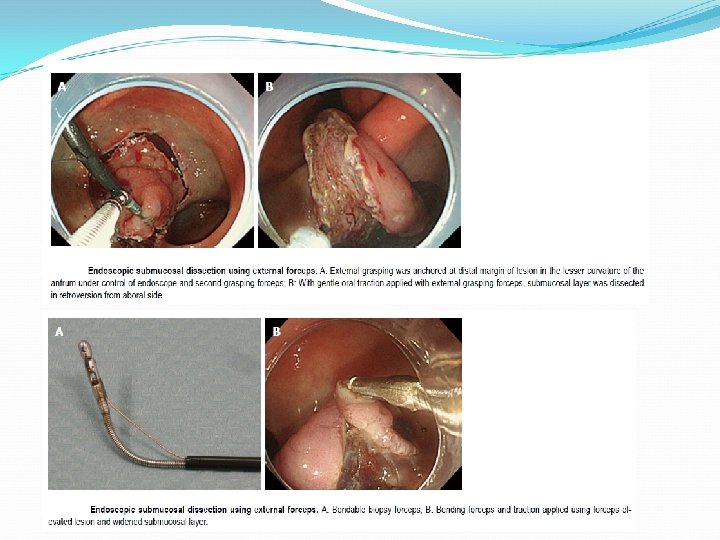
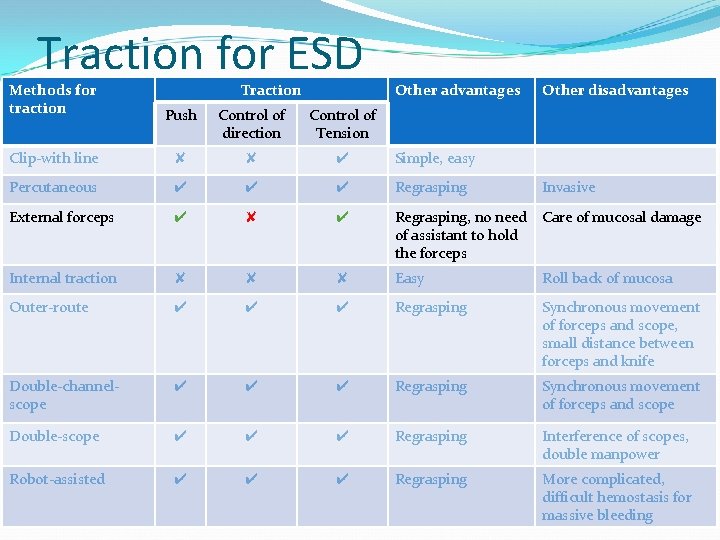
Traction for ESD Methods for traction Traction Other advantages Other disadvantages Push Control of direction Control of Tension Clip-with line ✘ ✘ ✔ Simple, easy Percutaneous ✔ ✔ ✔ Regrasping Invasive External forceps ✔ ✘ ✔ Regrasping, no need of assistant to hold the forceps Care of mucosal damage Internal traction ✘ ✘ ✘ Easy Roll back of mucosa Outer-route ✔ ✔ ✔ Regrasping Synchronous movement of forceps and scope, small distance between forceps and knife Double-channelscope ✔ ✔ ✔ Regrasping Synchronous movement of forceps and scope Double-scope ✔ ✔ ✔ Regrasping Interference of scopes, double manpower Robot-assisted ✔ ✔ ✔ Regrasping More complicated, difficult hemostasis for massive bleeding
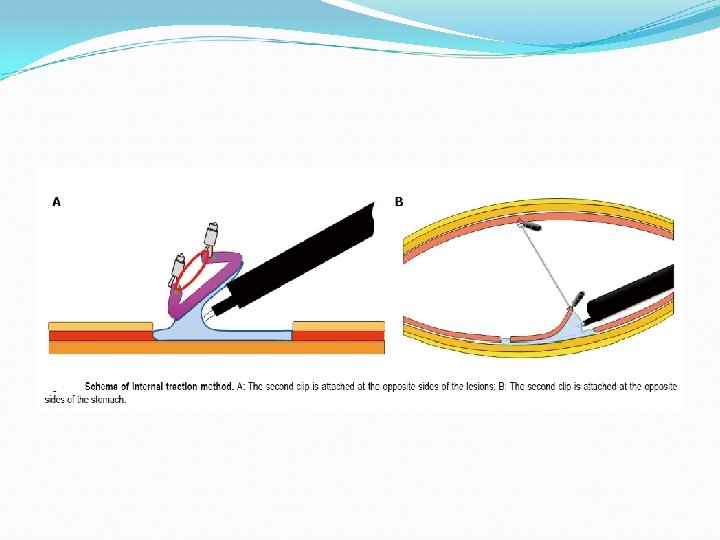
Traction for ESD Methods for traction Traction Other advantages Other disadvantages Push Control of direction Control of Tension Clip-with line ✘ ✘ ✔ Simple, easy Percutaneous ✔ ✔ ✔ Regrasping Invasive External forceps ✔ ✘ ✔ Regrasping, no need of assistant to hold the forceps Care of mucosal damage Internal traction ✘ ✘ ✘ Easy Roll back of mucosa Outer-route ✔ ✔ ✔ Regrasping Synchronous movement of forceps and scope, small distance between forceps and knife Double-channelscope ✔ ✔ ✔ Regrasping Synchronous movement of forceps and scope Double-scope ✔ ✔ ✔ Regrasping Interference of scopes, double manpower Robot-assisted ✔ ✔ ✔ Regrasping More complicated, difficult hemostasis for massive bleeding
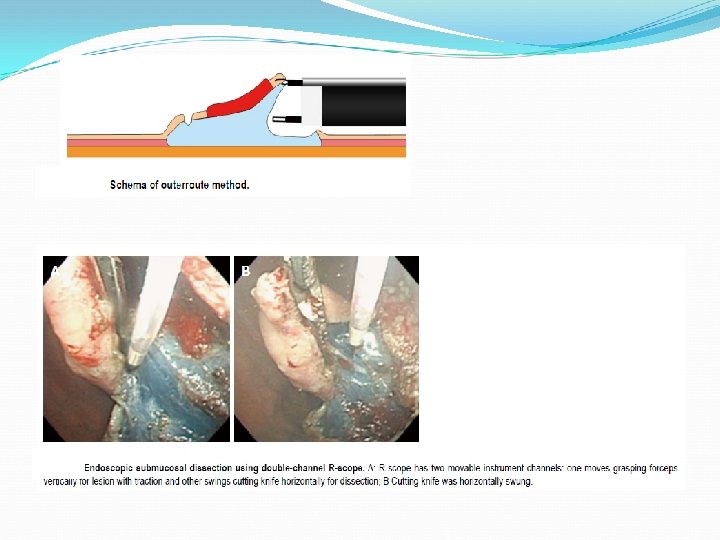
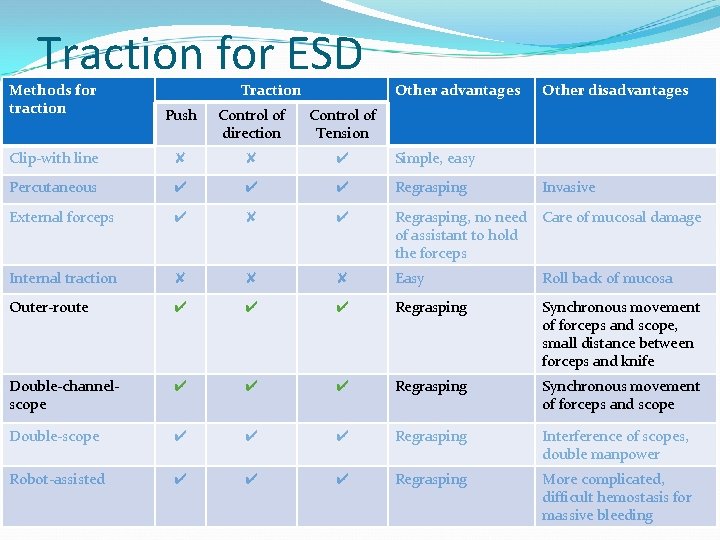
Traction for ESD Methods for traction Traction Other advantages Other disadvantages Push Control of direction Control of Tension Clip-with line ✘ ✘ ✔ Simple, easy Percutaneous ✔ ✔ ✔ Regrasping Invasive External forceps ✔ ✘ ✔ Regrasping, no need of assistant to hold the forceps Care of mucosal damage Internal traction ✘ ✘ ✘ Easy Roll back of mucosa Outer-route ✔ ✔ ✔ Regrasping Synchronous movement of forceps and scope, small distance between forceps and knife Double-channelscope ✔ ✔ ✔ Regrasping Synchronous movement of forceps and scope Double-scope ✔ ✔ ✔ Regrasping Interference of scopes, double manpower Robot-assisted ✔ ✔ ✔ Regrasping More complicated, difficult hemostasis for massive bleeding
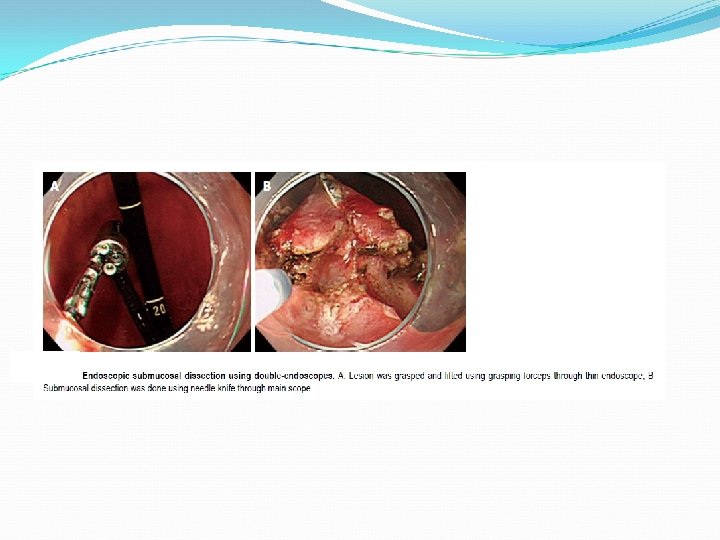
Traction for ESD Methods for traction Traction Other advantages Other disadvantages Push Control of direction Control of Tension Clip-with line ✘ ✘ ✔ Simple, easy Percutaneous ✔ ✔ ✔ Regrasping Invasive External forceps ✔ ✘ ✔ Regrasping, no need of assistant to hold the forceps Care of mucosal damage Internal traction ✘ ✘ ✘ Easy Roll back of mucosa Outer-route ✔ ✔ ✔ Regrasping Synchronous movement of forceps and scope, small distance between forceps and knife Double-channelscope ✔ ✔ ✔ Regrasping Synchronous movement of forceps and scope Double-scope ✔ ✔ ✔ Regrasping Interference of scopes, double manpower Robot-assisted ✔ ✔ ✔ Regrasping More complicated, difficult hemostasis for massive bleeding
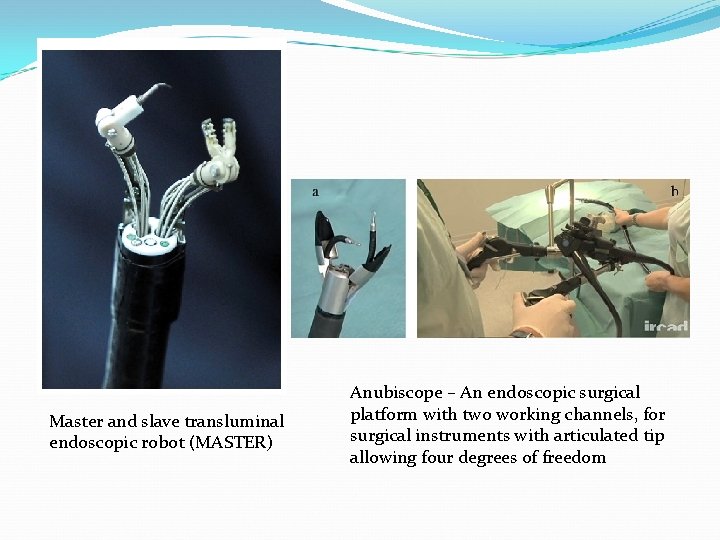
Master and slave transluminal endoscopic robot (MASTER) Anubiscope – An endoscopic surgical platform with two working channels, for surgical instruments with articulated tip allowing four degrees of freedom
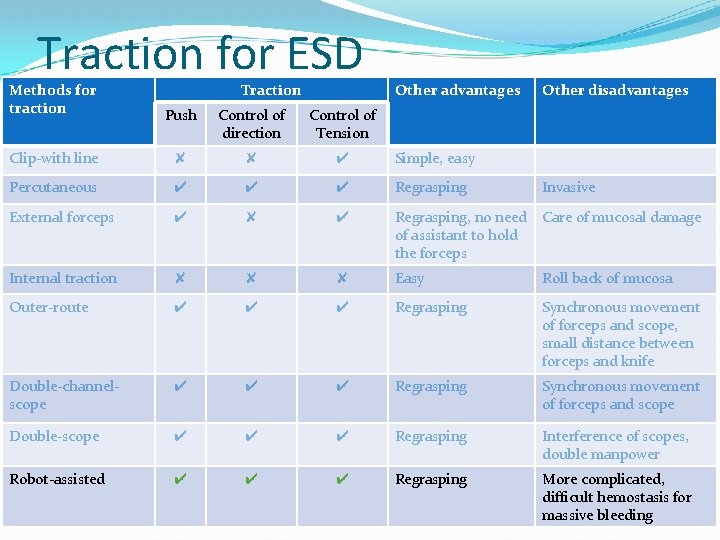
Traction for ESD Methods for traction Traction Other advantages Other disadvantages Push Control of direction Control of Tension Clip-with line ✘ ✘ ✔ Simple, easy Percutaneous ✔ ✔ ✔ Regrasping Invasive External forceps ✔ ✘ ✔ Regrasping, no need of assistant to hold the forceps Care of mucosal damage Internal traction ✘ ✘ ✘ Easy Roll back of mucosa Outer-route ✔ ✔ ✔ Regrasping Synchronous movement of forceps and scope, small distance between forceps and knife Double-channelscope ✔ ✔ ✔ Regrasping Synchronous movement of forceps and scope Double-scope ✔ ✔ ✔ Regrasping Interference of scopes, double manpower Robot-assisted ✔ ✔ ✔ Regrasping More complicated, difficult hemostasis for massive bleeding
Advance in ESD �Problems to be tackled �Dissection � Traction � Ease of dissection of submucosal plane �Prevention of Complications
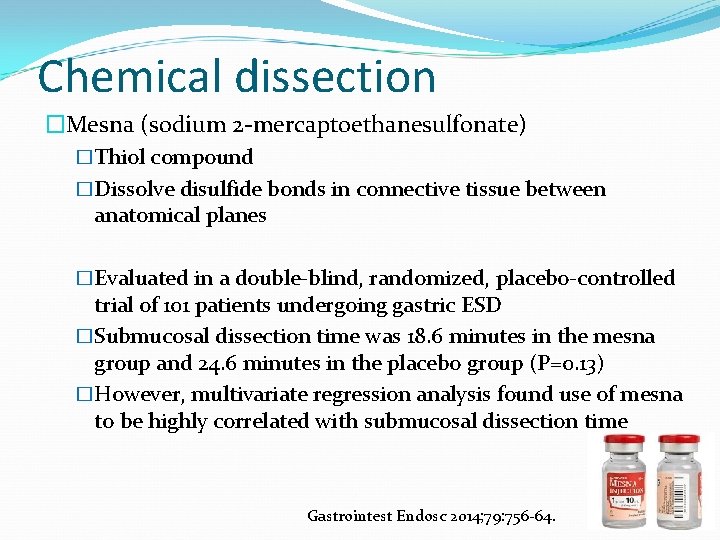
Chemical dissection �Mesna (sodium 2 -mercaptoethanesulfonate) �Thiol compound �Dissolve disulfide bonds in connective tissue between anatomical planes �Evaluated in a double-blind, randomized, placebo-controlled trial of 101 patients undergoing gastric ESD �Submucosal dissection time was 18. 6 minutes in the mesna group and 24. 6 minutes in the placebo group (P=0. 13) �However, multivariate regression analysis found use of mesna to be highly correlated with submucosal dissection time Gastrointest Endosc 2014; 79: 756 -64.
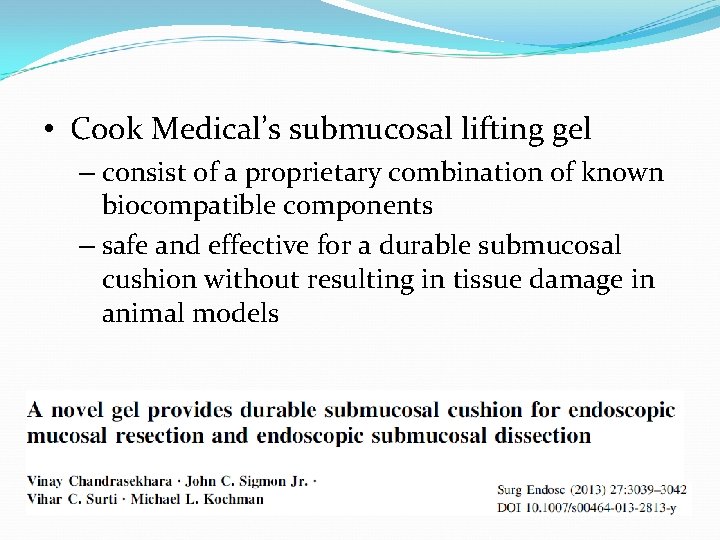
• Cook Medical’s submucosal lifting gel – consist of a proprietary combination of known biocompatible components – safe and effective for a durable submucosal cushion without resulting in tissue damage in animal models
Advance in ESD �Problems to be tackled �Dissection � Traction � Ease of dissection of submucosal plane �Prevention of Complications
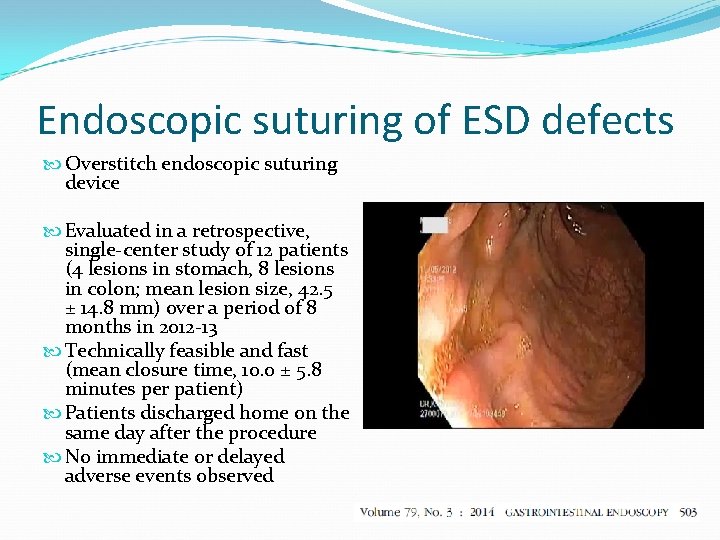
Endoscopic suturing of ESD defects Overstitch endoscopic suturing device Evaluated in a retrospective, single-center study of 12 patients (4 lesions in stomach, 8 lesions in colon; mean lesion size, 42. 5 ± 14. 8 mm) over a period of 8 months in 2012 -13 Technically feasible and fast (mean closure time, 10. 0 ± 5. 8 minutes per patient) Patients discharged home on the same day after the procedure No immediate or delayed adverse events observed
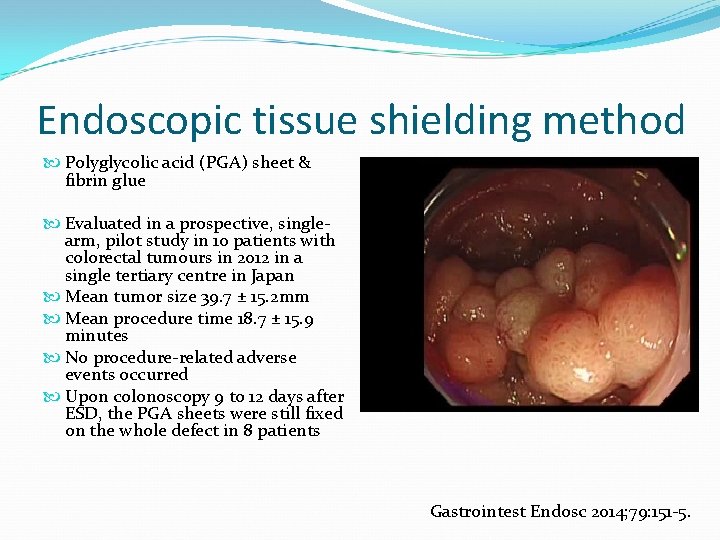
Endoscopic tissue shielding method Polyglycolic acid (PGA) sheet & fibrin glue Evaluated in a prospective, singlearm, pilot study in 10 patients with colorectal tumours in 2012 in a single tertiary centre in Japan Mean tumor size 39. 7 ± 15. 2 mm Mean procedure time 18. 7 ± 15. 9 minutes No procedure-related adverse events occurred Upon colonoscopy 9 to 12 days after ESD, the PGA sheets were still fixed on the whole defect in 8 patients Gastrointest Endosc 2014; 79: 151 -5.
Conclusion �ESD is an effective treatment modality for premalignant and early-stage malignant lesions of stomach, oesophagus and colorectum �ESD is technically demanding and has a higher rate of adverse events than most endoscopic procedures �Additional refinements in the technique, instruments, devices and training would be necessary to further reduce the higher risk of complications and longer procedure times

END
General indications for ESD �Oesophageal ESD: �Endoscopic signs of early lesions or echo endoscopic examination confirming tumor limited to the mucosa or up to the superficial submucosa (Sm 1) �Histological confirmation of squamous cell carcinoma or high grade intraepithelial neoplasia restricted to the mucosa (M 1 and M 2). �Lesions with M 3 or Sm 1 invasion without lymphatic and vascular involvement, no larger superficial size (< 2. 5 mm) �No signs of LN metastases
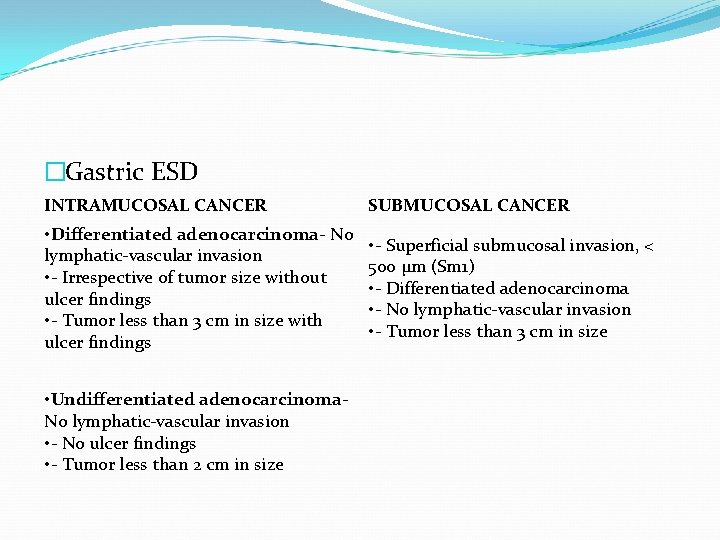
�Gastric ESD INTRAMUCOSAL CANCER SUBMUCOSAL CANCER • Differentiated adenocarcinoma- No lymphatic-vascular invasion • - Irrespective of tumor size without ulcer findings • - Tumor less than 3 cm in size with ulcer findings • - Superficial submucosal invasion, < 500 μm (Sm 1) • - Differentiated adenocarcinoma • - No lymphatic-vascular invasion • - Tumor less than 3 cm in size • Undifferentiated adenocarcinoma. No lymphatic-vascular invasion • - No ulcer findings • - Tumor less than 2 cm in size
�Colorectal ESD: �≥ 2 cm lesions in which en bloc resection by snare EMR difficult � LST-NG type particularly pseudo-depressed lesion � Kudo V pit pattern � Cancer with submucosal infiltration �Mucosal lesion with fibrosis �Local residual early cancer after endoscopic resection �Sporadic localized tumours in chronic inflammation such as UC
- Slides: 42