
ADVANCE FAMILY PLANNING SPITFIRE SMART CHART TRAINING FACILITATION
- Slides: 62
ADVANCE FAMILY PLANNING SPITFIRE SMART CHART™ TRAINING FACILITATION WORKSHOP AFP May 2013 SMART chart reprinted with permission from Spitfire Strategies © 2008, Johns Hopkins University. All rights reserved.
Workshop Objectives § Note to Trainer: Choose from list below in notes section and present with bullets § Objective 2
Rules for Advocacy Planning § Start with the issue to address § Go in order—systematic, disciplined approach § Make choices— focus on limited number of things 3
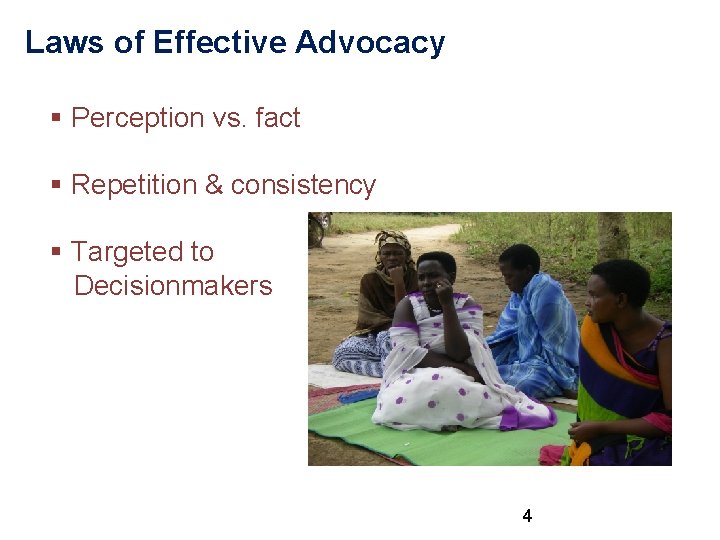
Laws of Effective Advocacy § Perception vs. fact § Repetition & consistency § Targeted to Decisionmakers 4
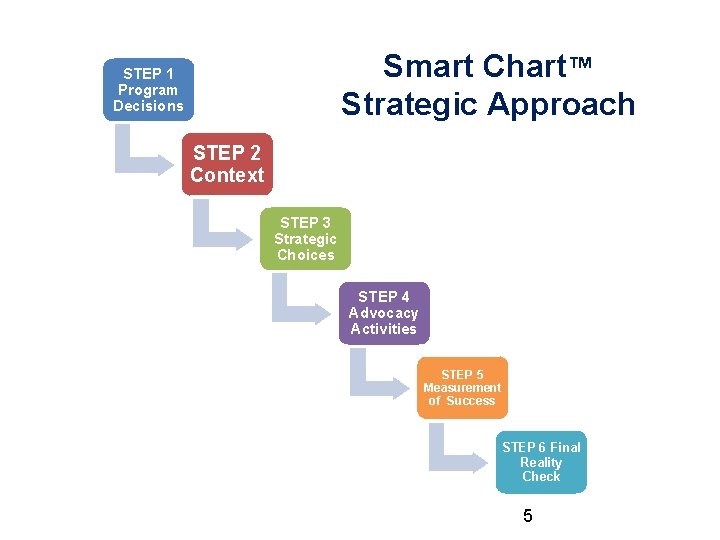
Smart Chart™ Strategic Approach STEP 1 Program Decisions STEP 2 Context STEP 3 Strategic Choices STEP 4 Advocacy Activities STEP 5 Measurement of Success STEP 6 Final Reality Check 5
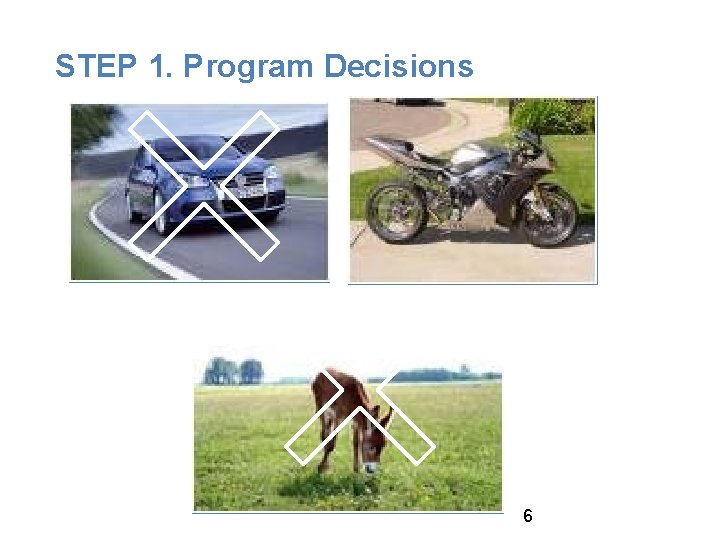
STEP 1. Program Decisions 6
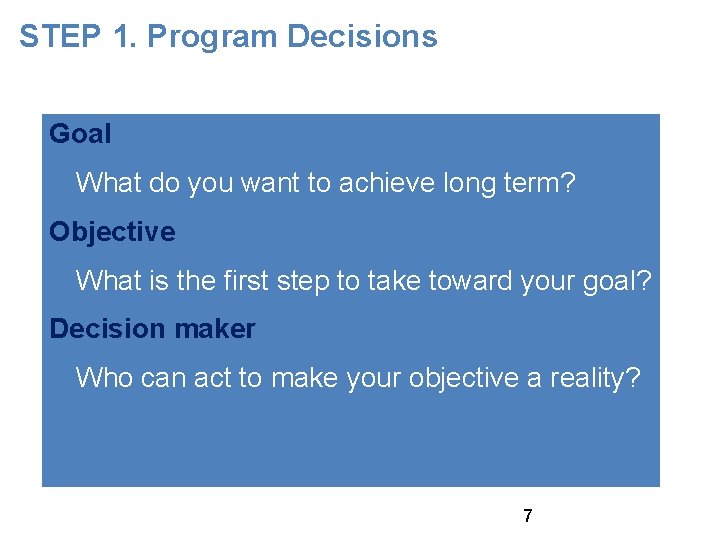
STEP 1. Program Decisions Goal What do you want to achieve long term? Objective What is the first step to take toward your goal? Decision maker Who can act to make your objective a reality? 7
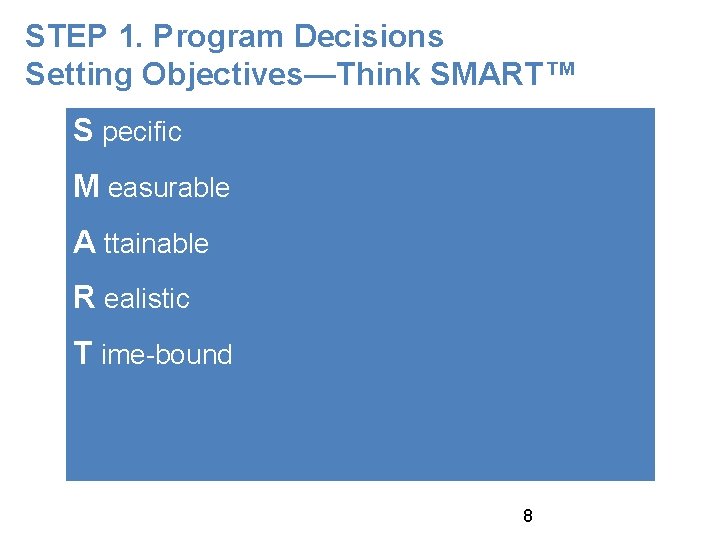
STEP 1. Program Decisions Setting Objectives—Think SMART™ S pecific M easurable A ttainable R ealistic T ime-bound 8
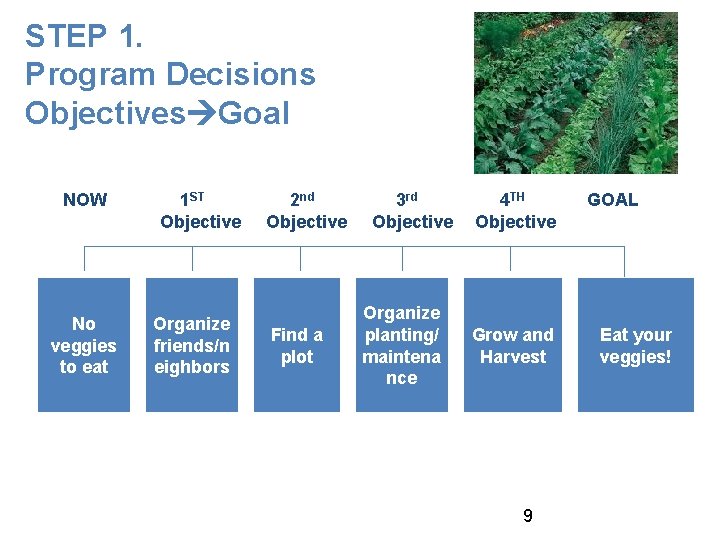
STEP 1. Program Decisions Objectives Goal NOW No veggies to eat 1 ST Objective Organize friends/n eighbors 2 nd Objective Find a plot 3 rd Objective Organize planting/ maintena nce 4 TH Objective Grow and Harvest 9 GOAL Eat your veggies!
STEP 1. Program Decisions Goal and Objective Group work to develop broad goal and SMART policy objective 10
STEP 1. Program Decisions Who Makes the Decision? Who has the power to help reach your objective? Who can ensure that contraceptive supplies and services are available? 11
STEP 1. Program Decisions Who Makes the Decision? Group work to identify decision maker(s) who can make your objective a reality? 12
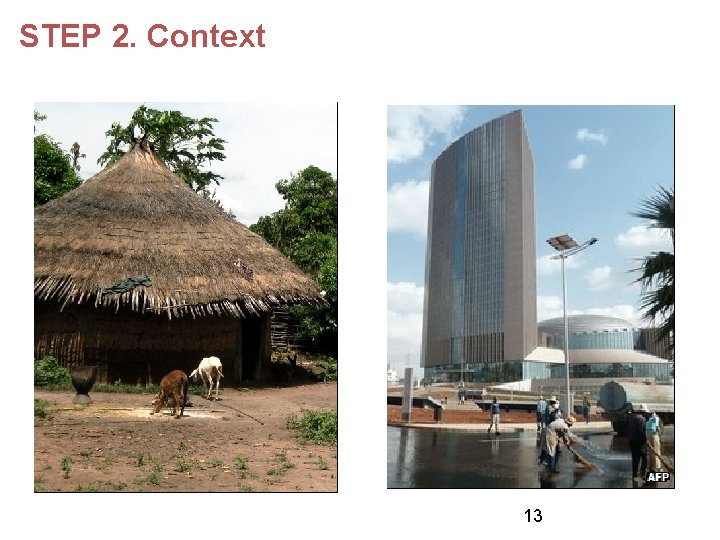
STEP 2. Context 13
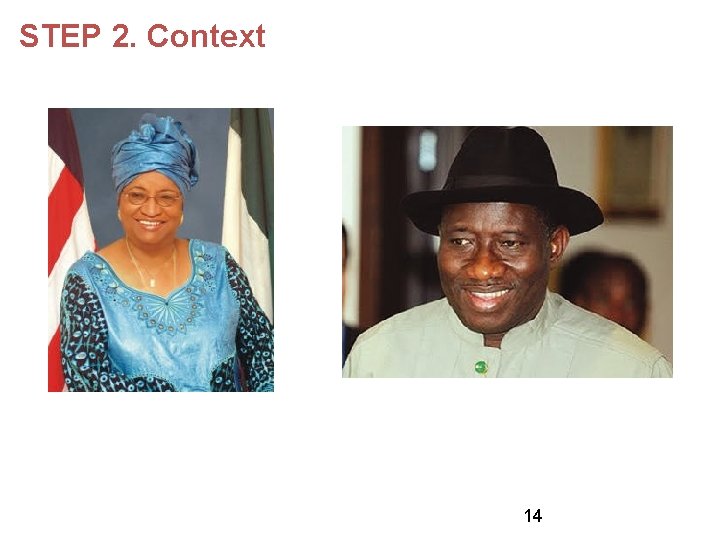
STEP 2. Context 14
STEP 2. Context Internal Review—What Do You Control? § Money § Staff & Volunteer Time § Expertise § Spokespeople § Relationships § Allies & Coalitions § Communication Channels 15
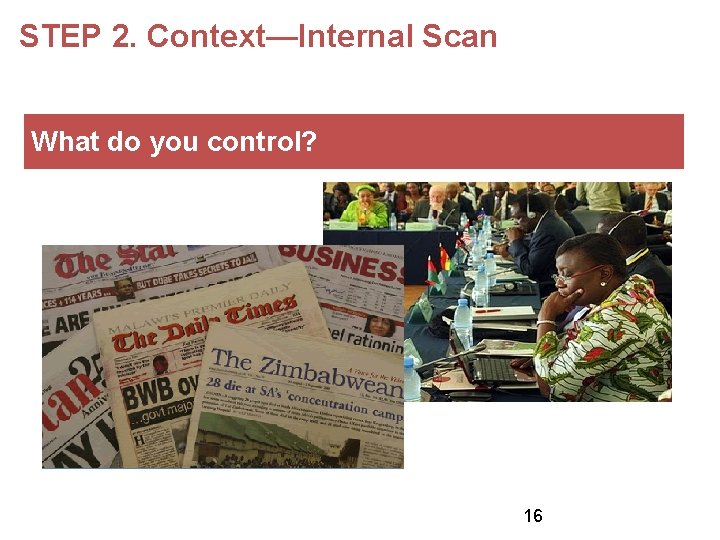
STEP 2. Context—Internal Scan What do you control? 16
STEP 2. Context External Review—Outside Influences § Planned Events § Opposition § Competition § Audience Perceptions § Media Coverage § External Forces § Global Alliances 17
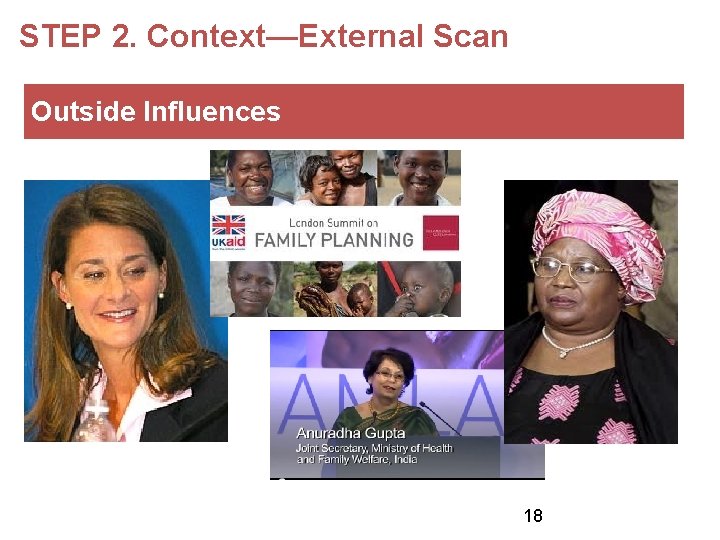
STEP 2. Context—External Scan Outside Influences 18
STEP 2. Context Internal and External Review Group work to do internal and external review 19
STEP 2. Context Define Your Position Frame Fortify and Amplify Reframe 20
STEP 2. Context Position 1—Frame Your Issue Take this approach when § No current discussion exists § Few people have relevant knowledge § Few misperceptions exist 21
STEP 2. Context Position 2—Fortify or Amplify Your Issue Take this approach when § The debate is already in motion § The terms of the debate are favorable § People agree with you 22
STEP 2. Context Position 3—Reframing Your Issue Take this approach when § There is no way to win within the existing frame § It is time create space for a new, more productive conversation 23
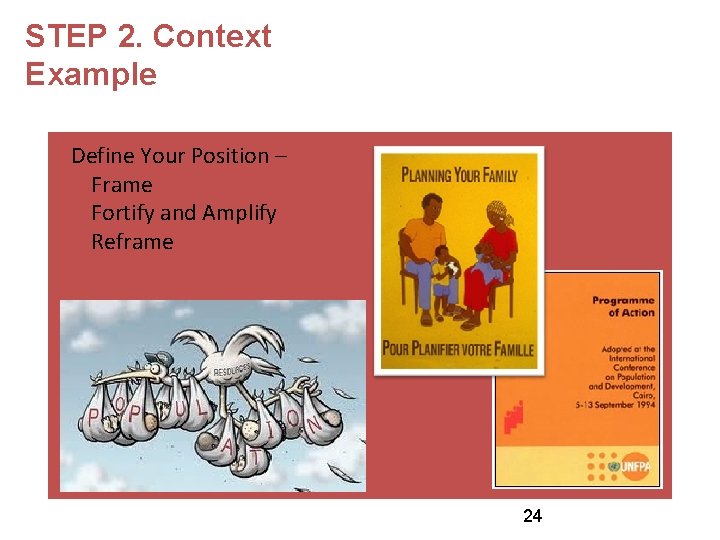
STEP 2. Context Example Define Your Position – Frame Fortify and Amplify Reframe 24
STEP 2. Context Discussion – Where are we now? 25
STEP 2. Context Position 3—Define Your Position Group work to define your position 26
STEP 3. Strategic Choices Audience Target Who must you reach? Readiness Where is your audience on your issue? Core Concerns What existing belief or value can you tap into with your audience? What existing belief might be a barrier? Theme What theme will guide messaging that reinforces the core concerns? 27
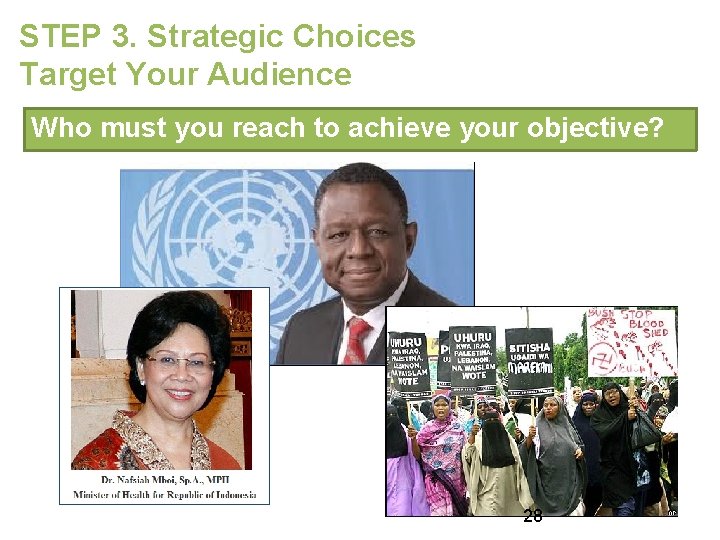
STEP 3. Strategic Choices Target Your Audience Who must you reach to achieve your objective? 28
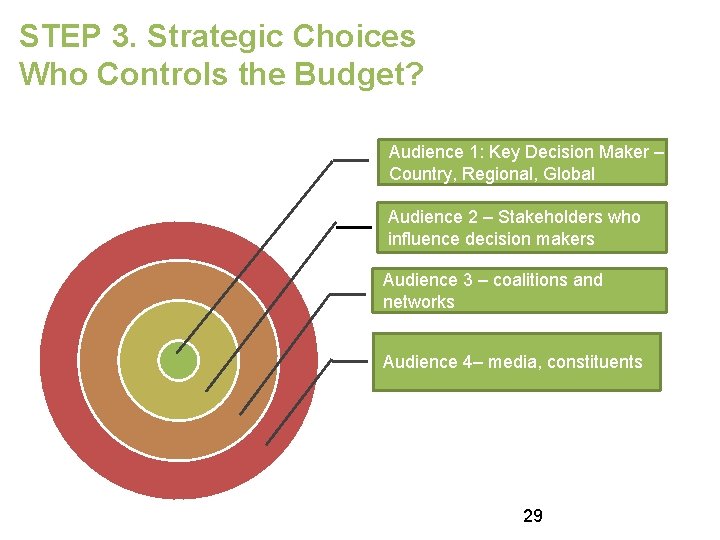
STEP 3. Strategic Choices Who Controls the Budget? Audience 1: Key Decision Maker – Country, Regional, Global Audience 2 – Stakeholders who influence decision makers Audience 3 – coalitions and networks Audience 4– media, constituents 29
STEP 3. Strategic Choices Target Your Audience § Share knowledge § Build will § Reinforce action 30
STEP 3. Strategic Choices Sharing Knowledge § Does not know information § Knows but does not care § Knows but does not believe 31
STEP 3. Strategic Choices Building Will § Know what the barriers are § Stay in the comfort zone § Make the reward bigger than the risk 32
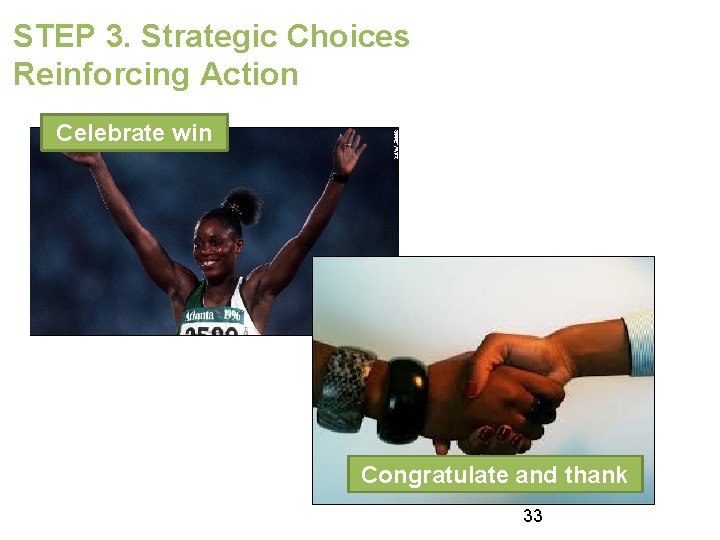
STEP 3. Strategic Choices Reinforcing Action Celebrate win Congratulate and thank 33
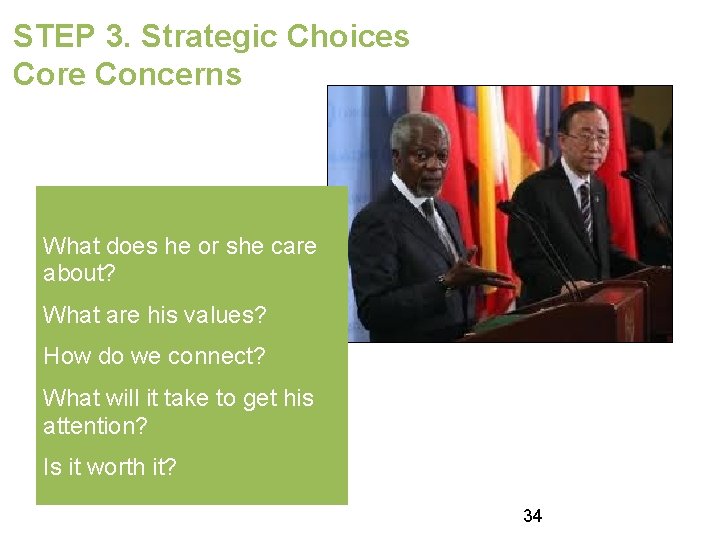
STEP 3. Strategic Choices Core Concerns What does he or she care about? What are his values? How do we connect? What will it take to get his attention? Is it worth it? 34
STEP 3. Strategic Choices Building Will Group work to target your audience 35
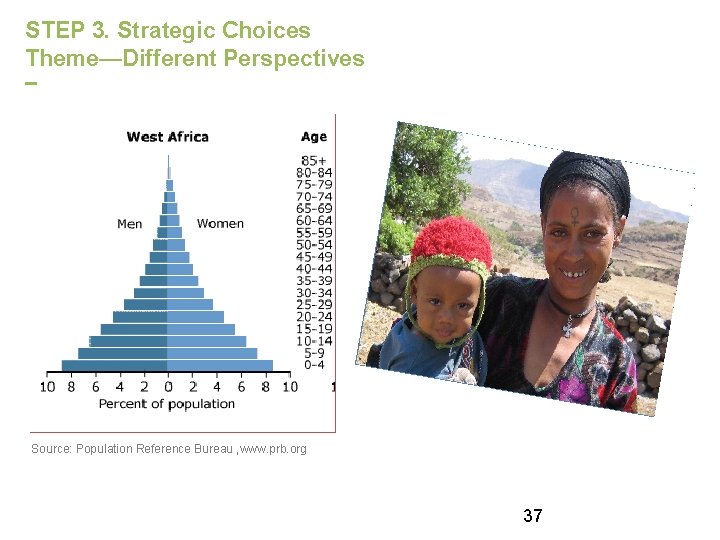
STEP 3. Strategic Choices Theme What is a theme? A theme is a unifying element that gives meaning to your messages. 36
STEP 3. Strategic Choices Theme—Different Perspectives -- Source: Population Reference Bureau , www. prb. org 37
STEP 3. Strategic Choices Theme—Overview Themes will change depending on your decision maker Examples: • Rational– evidence or facts are used • Emotional – stories • Moral – rights based approach 38
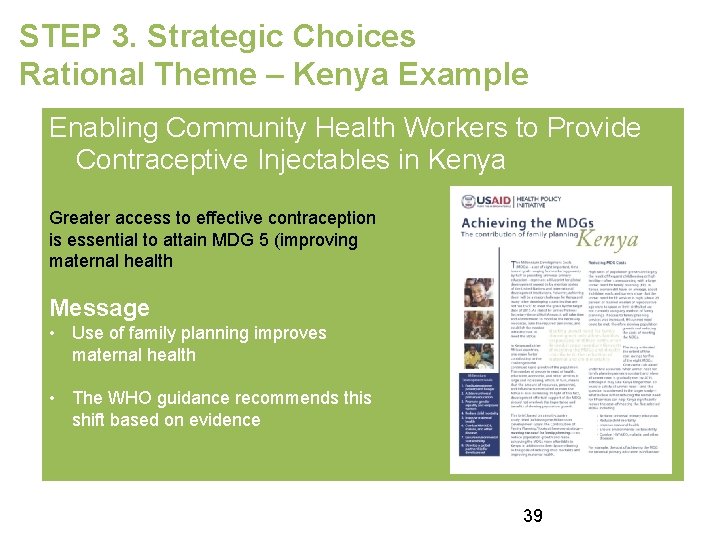
STEP 3. Strategic Choices Rational Theme – Kenya Example Enabling Community Health Workers to Provide Contraceptive Injectables in Kenya Greater access to effective contraception is essential to attain MDG 5 (improving maternal health Message • Use of family planning improves maternal health • The WHO guidance recommends this shift based on evidence 39
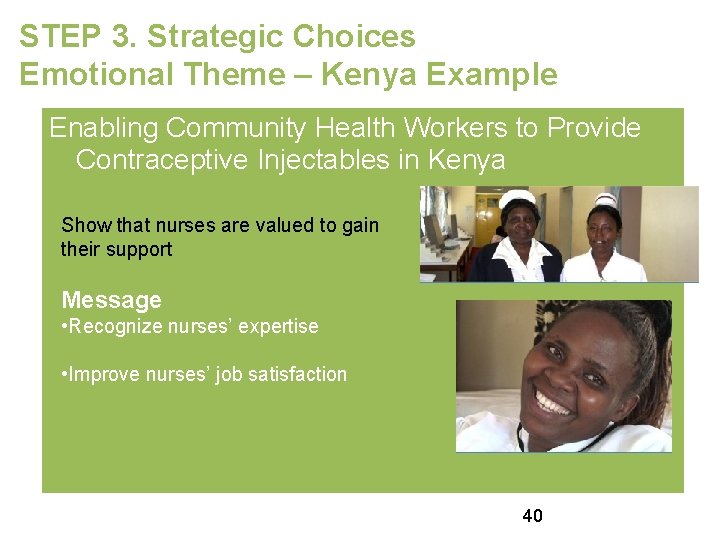
STEP 3. Strategic Choices Emotional Theme – Kenya Example Enabling Community Health Workers to Provide Contraceptive Injectables in Kenya Show that nurses are valued to gain their support Message • Recognize nurses’ expertise • Improve nurses’ job satisfaction 40
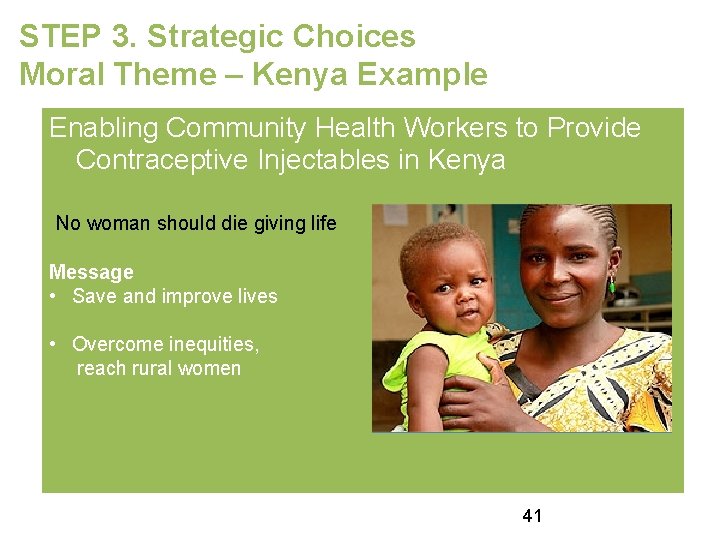
STEP 3. Strategic Choices Moral Theme – Kenya Example Enabling Community Health Workers to Provide Contraceptive Injectables in Kenya No woman should die giving life Message • Save and improve lives • Overcome inequities, reach rural women 41
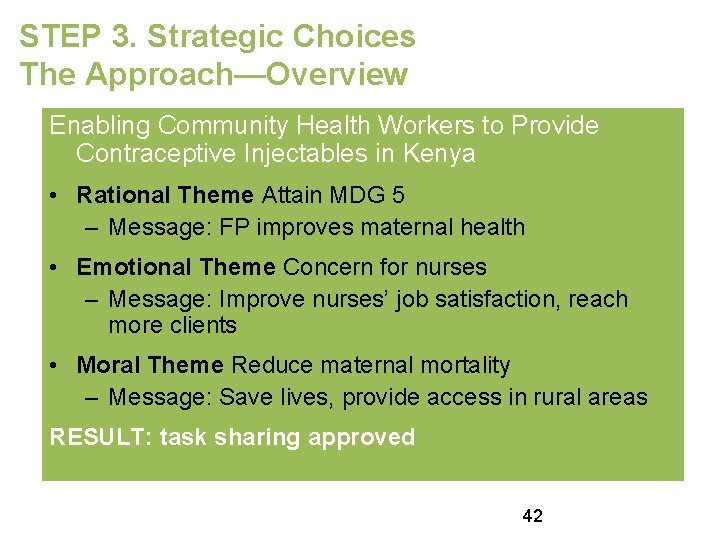
STEP 3. Strategic Choices The Approach—Overview Enabling Community Health Workers to Provide Contraceptive Injectables in Kenya • Rational Theme Attain MDG 5 – Message: FP improves maternal health • Emotional Theme Concern for nurses – Message: Improve nurses’ job satisfaction, reach more clients • Moral Theme Reduce maternal mortality – Message: Save lives, provide access in rural areas RESULT: task sharing approved 42
STEP 3. Strategic Choices Theme and Message Group work to determine theme for the message 43
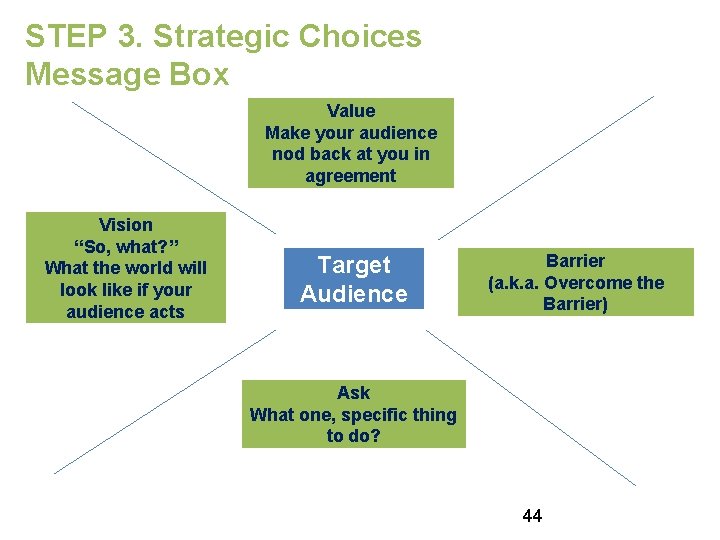
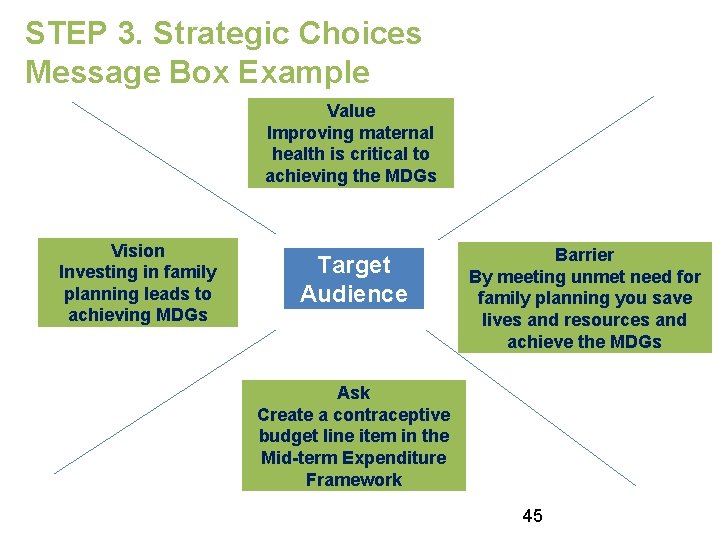
STEP 3. Strategic Choices Message Box Value Make your audience nod back at you in agreement Vision “So, what? ” What the world will look like if your audience acts Target Audience Barrier (a. k. a. Overcome the Barrier) Ask What one, specific thing to do? 44
STEP 3. Strategic Choices Message Box Example Value Improving maternal health is critical to achieving the MDGs Vision Investing in family planning leads to achieving MDGs Target Audience Barrier By meeting unmet need for family planning you save lives and resources and achieve the MDGs Ask Create a contraceptive budget line item in the Mid-term Expenditure Framework 45
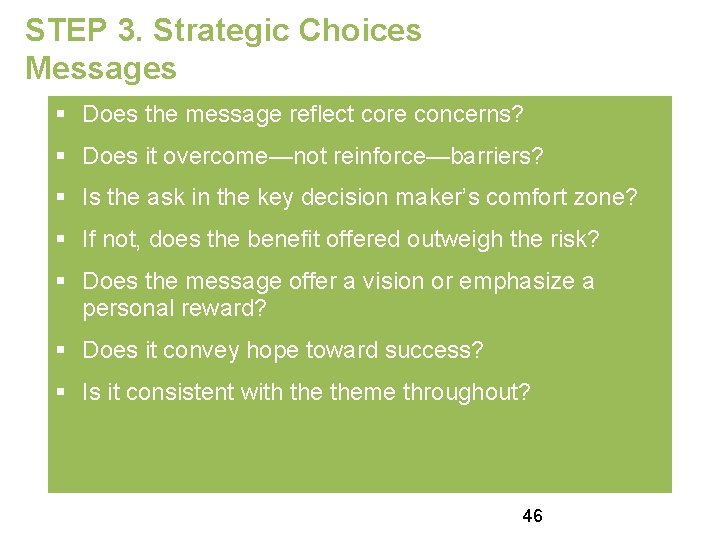
STEP 3. Strategic Choices Messages § Does the message reflect core concerns? § Does it overcome—not reinforce—barriers? § Is the ask in the key decision maker’s comfort zone? § If not, does the benefit offered outweigh the risk? § Does the message offer a vision or emphasize a personal reward? § Does it convey hope toward success? § Is it consistent with theme throughout? 46
STEP 3. Strategic Choices Messages Group work to develop message box 47
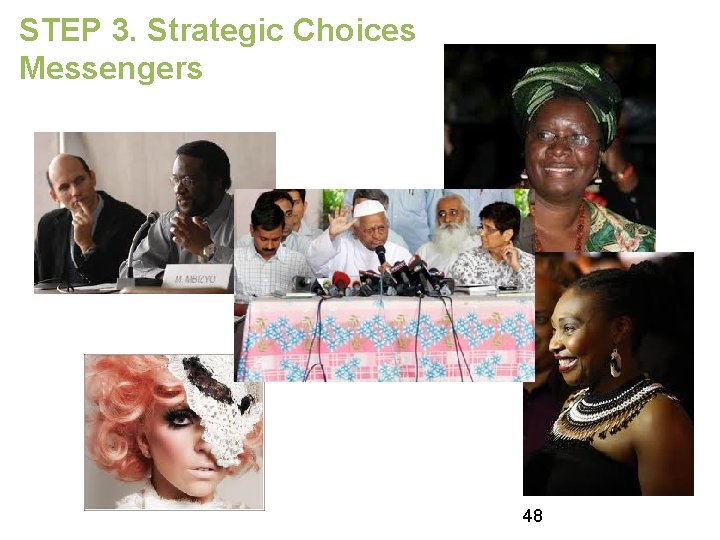
STEP 3. Strategic Choices Messengers 48
STEP 3. Strategic Choices Decisions to make Message § Key points for each target audience Messengers § Who will best connect? § Are they available? Do they have knowledge? § Who is the audience’s social reference group on this issue? § Can you show a trusted leader taking action? 49
STEP 3. Strategic Choices Four Sins of Messages Boring! Enough already! Statistical overload Lack of interesting story 50
STEP 3. Strategic Choices Group work to determine messenger, and develop role plays to present the ask 51
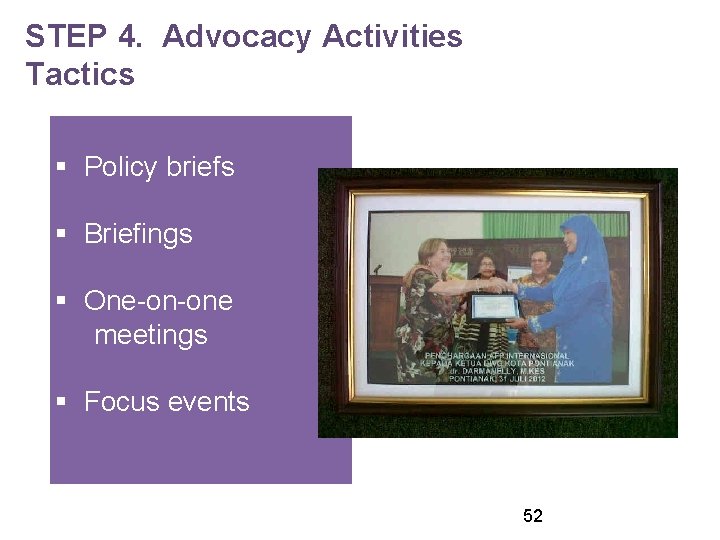
STEP 4. Advocacy Activities Tactics § Policy briefs § Briefings § One-on-one meetings § Focus events 52
STEP 4. Advocacy Activities Timeline § Natural opportunities § Forced/Unexpected opportunities § Planned events 53
STEP 4. Advocacy Activities Assignments and Accountability Which person in which organization will be responsible for making an activity happen? How will you manage activities, monitor progress, and hold everyone accountable? 54
STEP 4. Advocacy Activities Budget How much does it cost? Who will pay? 55
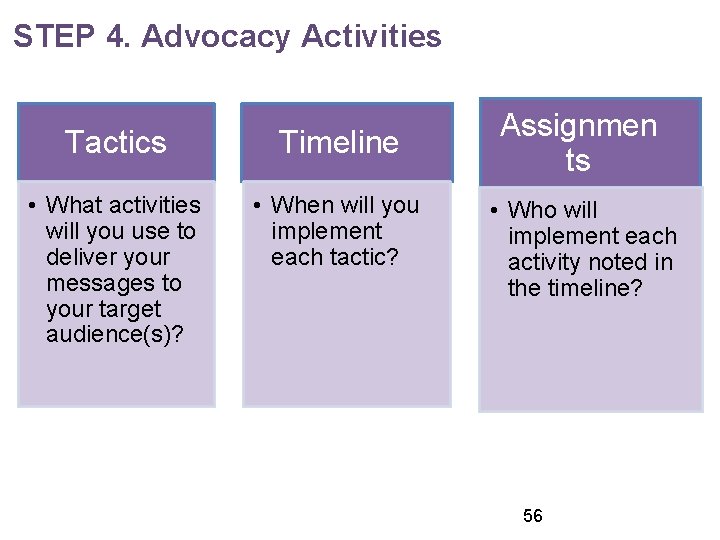
STEP 4. Advocacy Activities Tactics Timeline • What activities will you use to deliver your messages to your target audience(s)? • When will you implement each tactic? Assignmen ts • Who will implement each activity noted in the timeline? 56
STEP 4. Advocacy Activities Assignments and Accountability Group work to determine advocacy tactics, budget and timeline 57
STEP 5. Measurements of Success Outputs Outcomes What you will do What you will achieve 58
STEP 5. Measurements of Success Group work to determine Outputs and Outcomes 59
STEP 6. Final Reality Check Doable Look for inconsistency Test assumptions Integrate into overall plan Review progress regularly 60
STEP 6. Final Reality Check Group work to do final reality check 61
For more information on the Smart Chart™ http: //www. spitfirestrategies. com/ 62