
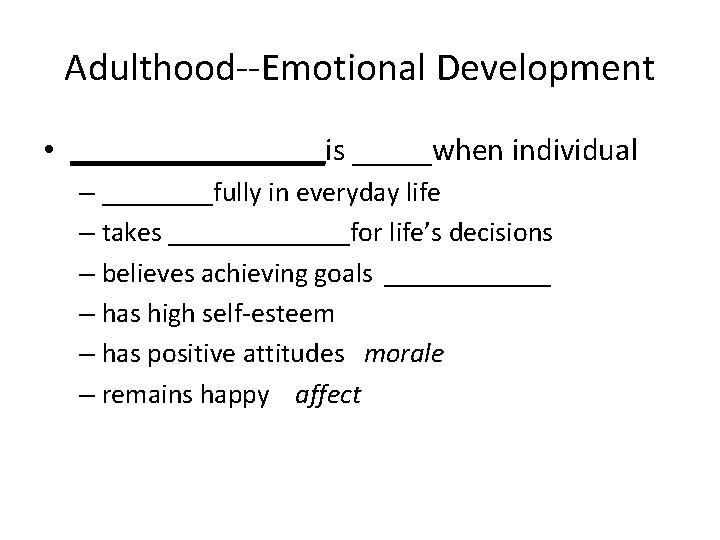
AdulthoodEmotional Development is when individual fully in everyday
- Slides: 4
Adulthood--Emotional Development • ________is _____when individual – ____fully in everyday life – takes _______for life’s decisions – believes achieving goals ______ – has high self-esteem – has positive attitudes morale – remains happy affect
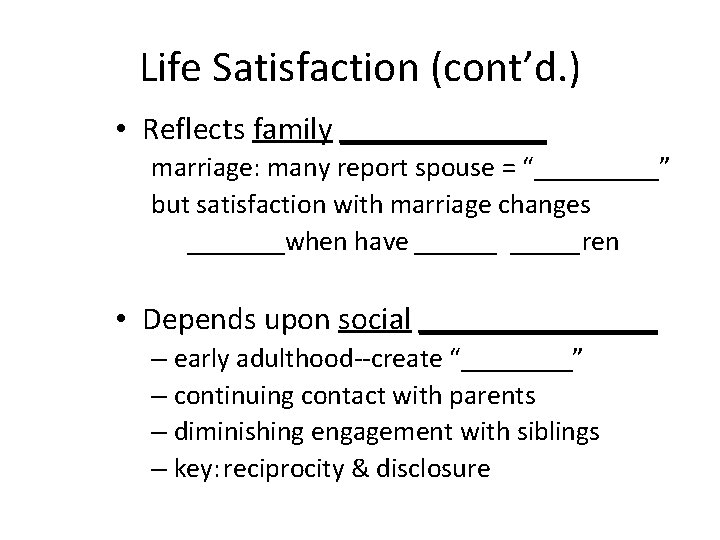
Life Satisfaction (cont’d. ) • Reflects family _______ marriage: many report spouse = “_____” but satisfaction with marriage changes _______when have ______ren • Depends upon social ________ – early adulthood--create “____” – continuing contact with parents – diminishing engagement with siblings – key: reciprocity & disclosure
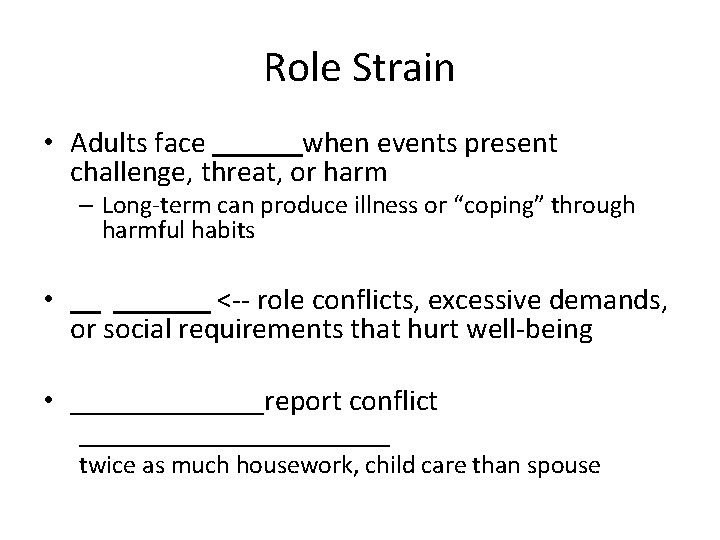
Role Strain • Adults face ______when events present challenge, threat, or harm – Long-term can produce illness or “coping” through harmful habits • __ ______ <-- role conflicts, excessive demands, or social requirements that hurt well-being • _______report conflict ____________ twice as much housework, child care than spouse
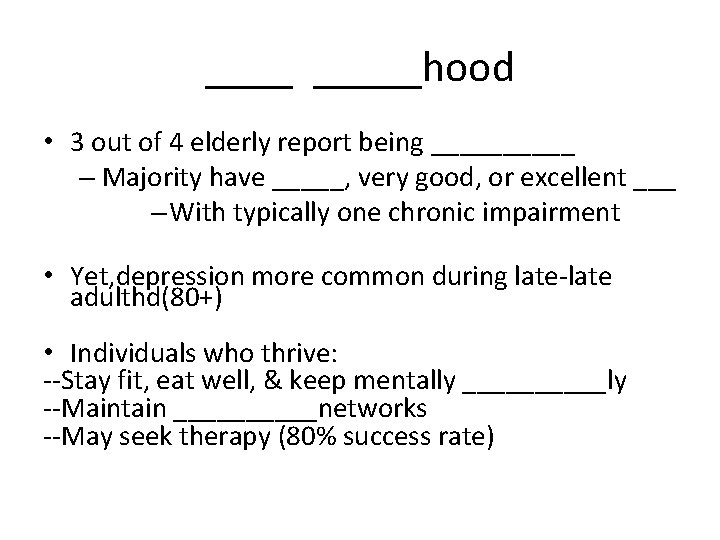
_____hood • 3 out of 4 elderly report being _____ – Majority have _____, very good, or excellent ___ – With typically one chronic impairment • Yet, depression more common during late-late adulthd(80+) • Individuals who thrive: --Stay fit, eat well, & keep mentally _____ly --Maintain _____networks --May seek therapy (80% success rate)