
Adult Safeguarding Introductions Name and work role What
- Slides: 30
Adult Safeguarding
Introductions • Name and work role • What does safeguarding mean to you ? • Health warning
Learning outcomes for today • To deliver a basic awareness session • To discuss safeguarding adults • Identify signs and symptoms of abuse • Take part in group activities • Understand mental capacity and decision making • How to report abuse
Who does Safeguarding apply to? The safeguarding duties apply to an adult who: Has needs for care and support (Whether or not the local authority is meeting any of those needs) and Is experiencing, or at risk of, abuse or neglect and As a result of those care and support needs is unable to protect themselves from either the risk of, or the experience of abuse or neglect. All 3 conditions must apply From Care and Support Statutory Guidance Nov 2014
Definition of Care and Support Care and support includes assessment of people’s needs, provision of services and the allocation of funds to enable a person to purchase their own care and support. It could include care home, home care, personal assistants, day services, or the provision of aids and adaptations.
In the news ……. . Winterbourne View care home staff jailed for abusing residents Six staff are jailed and five given suspended sentences after abuse of disabled patients was secretly filmed by reporter Oxfam scandal deepens with allegations of 'sex for aid' and abuse in charity shops Council staff suspended over death of 81 year old woman left to starve
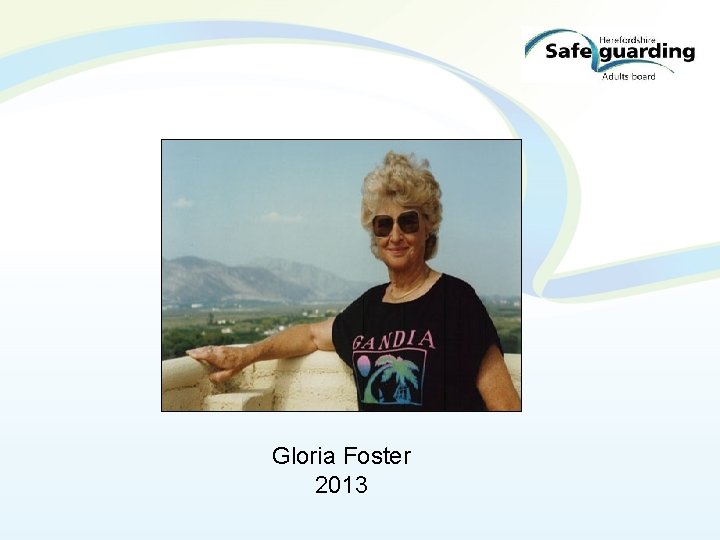
Gloria Foster 2013
Categories and indicators of abuse
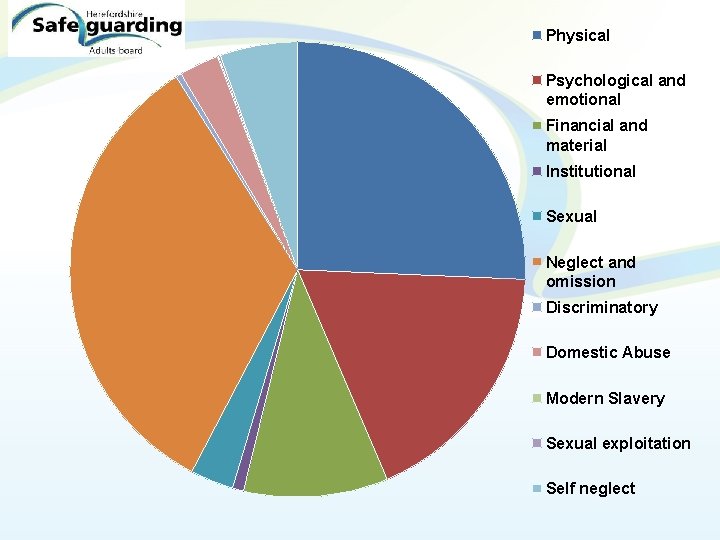
Physical Psychological and emotional Financial and material Institutional Sexual Neglect and omission Discriminatory Domestic Abuse Modern Slavery Sexual exploitation Self neglect
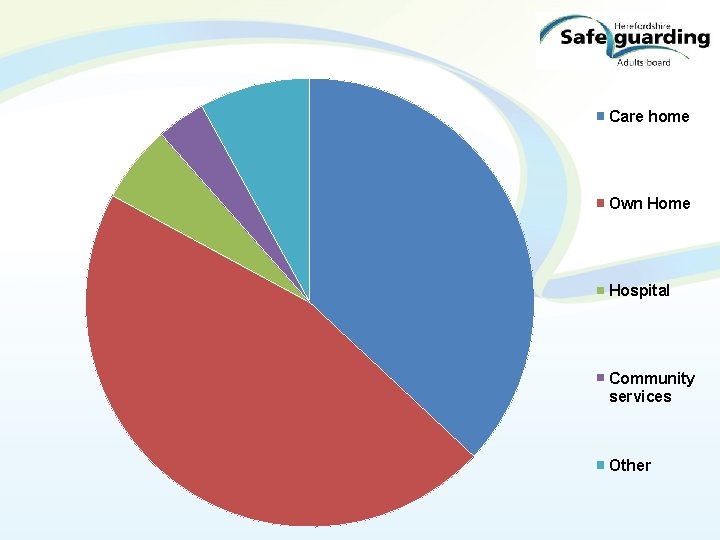
Care home Own Home Hospital Community services Other
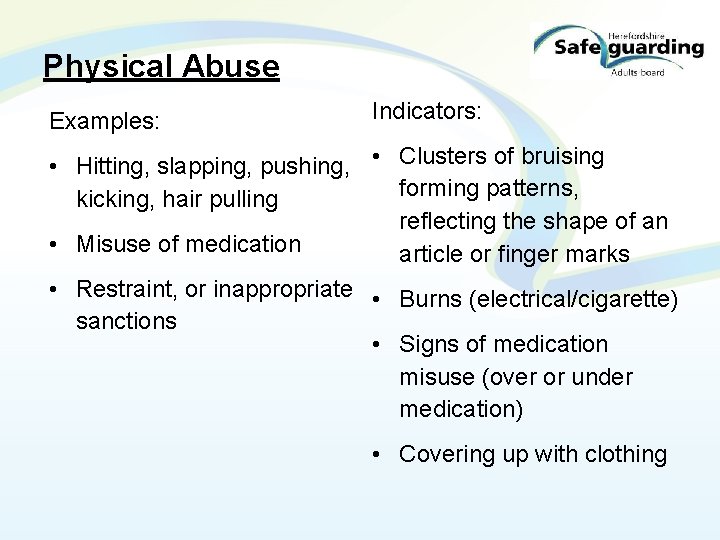
Physical Abuse Examples: Indicators: • Hitting, slapping, pushing, • Clusters of bruising forming patterns, kicking, hair pulling reflecting the shape of an • Misuse of medication article or finger marks • Restraint, or inappropriate • Burns (electrical/cigarette) sanctions • Signs of medication misuse (over or under medication) • Covering up with clothing
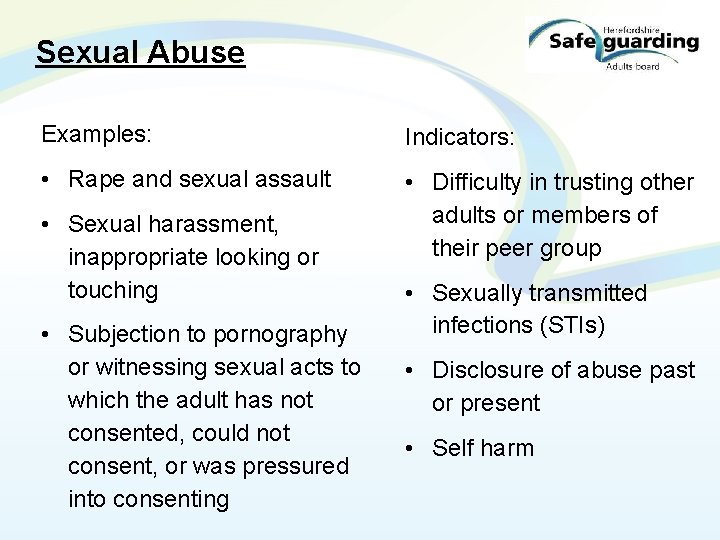
Sexual Abuse Examples: Indicators: • Rape and sexual assault • Difficulty in trusting other adults or members of their peer group • Sexual harassment, inappropriate looking or touching • Subjection to pornography or witnessing sexual acts to which the adult has not consented, could not consent, or was pressured into consenting • Sexually transmitted infections (STIs) • Disclosure of abuse past or present • Self harm
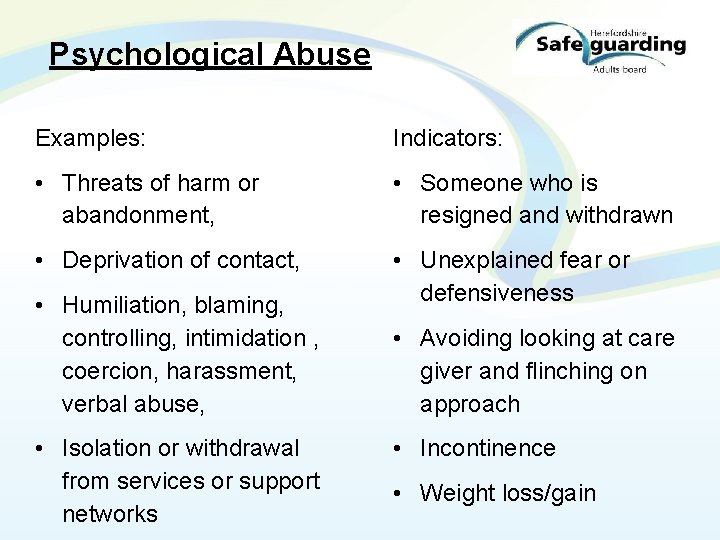
Psychological Abuse Examples: Indicators: • Threats of harm or abandonment, • Someone who is resigned and withdrawn • Deprivation of contact, • Unexplained fear or defensiveness • Humiliation, blaming, controlling, intimidation , coercion, harassment, verbal abuse, • Isolation or withdrawal from services or support networks • Avoiding looking at care giver and flinching on approach • Incontinence • Weight loss/gain
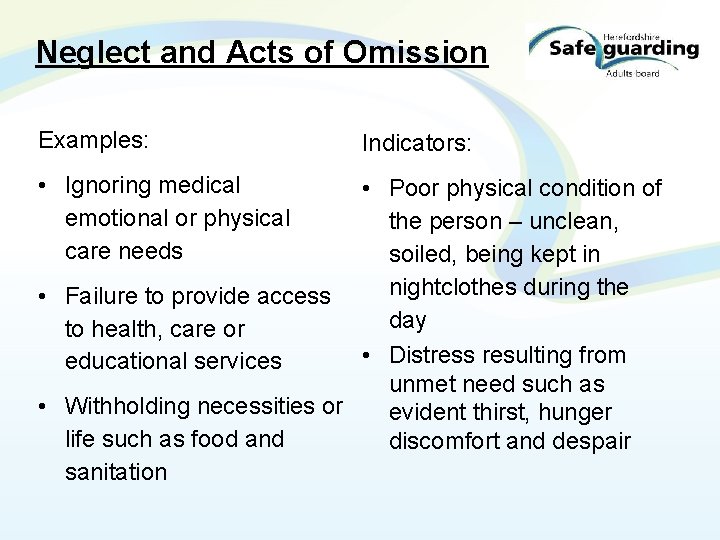
Neglect and Acts of Omission Examples: • Ignoring medical emotional or physical care needs Indicators: • Poor physical condition of the person – unclean, soiled, being kept in nightclothes during the • Failure to provide access day to health, care or • Distress resulting from educational services unmet need such as • Withholding necessities or evident thirst, hunger life such as food and discomfort and despair sanitation
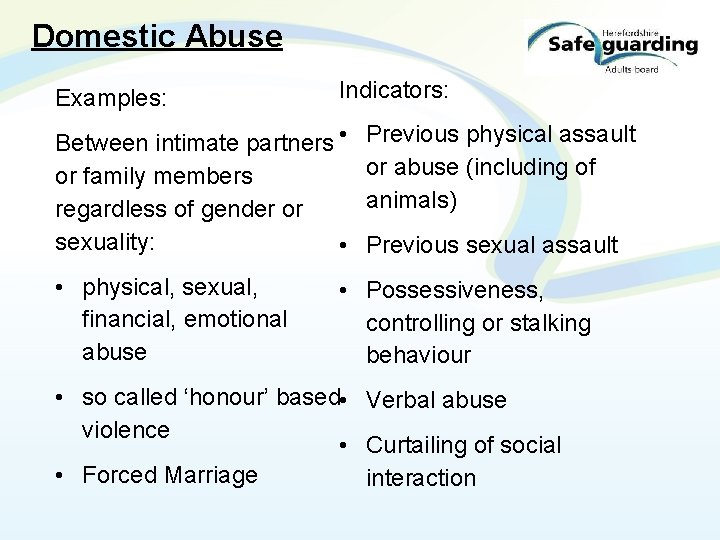
Domestic Abuse Examples: Indicators: Between intimate partners • or family members regardless of gender or sexuality: • • physical, sexual, financial, emotional abuse Previous physical assault or abuse (including of animals) Previous sexual assault • Possessiveness, controlling or stalking behaviour • so called ‘honour’ based • Verbal abuse violence • Curtailing of social • Forced Marriage interaction
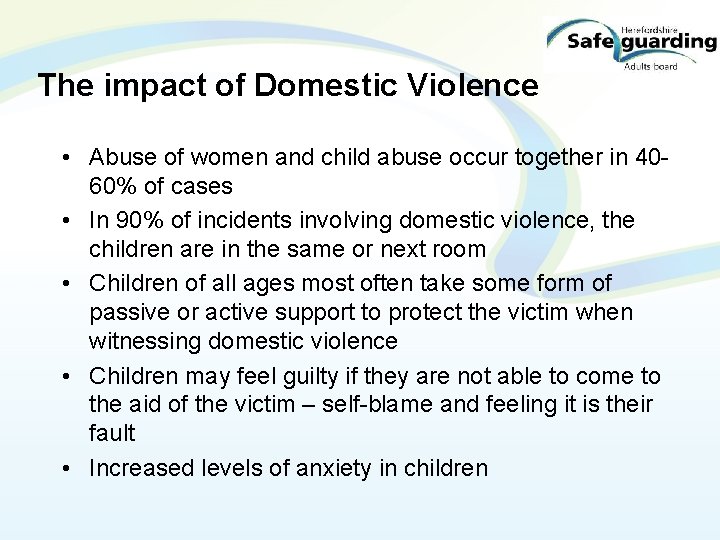
The impact of Domestic Violence • Abuse of women and child abuse occur together in 4060% of cases • In 90% of incidents involving domestic violence, the children are in the same or next room • Children of all ages most often take some form of passive or active support to protect the victim when witnessing domestic violence • Children may feel guilty if they are not able to come to the aid of the victim – self-blame and feeling it is their fault • Increased levels of anxiety in children
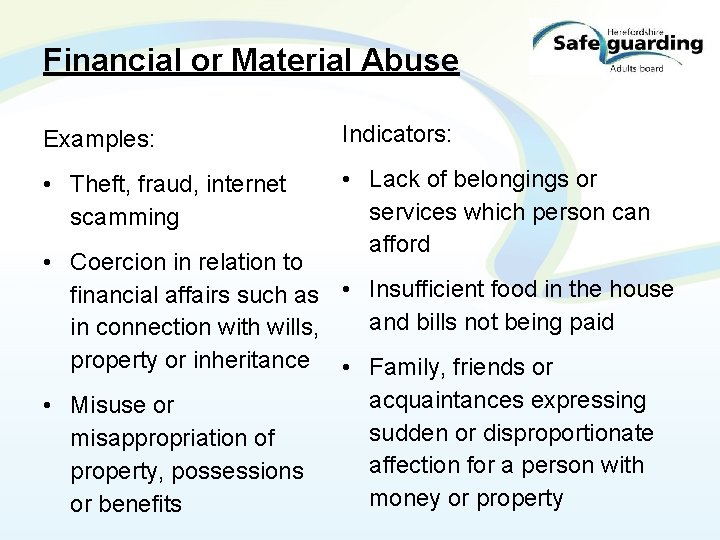
Financial or Material Abuse Examples: Indicators: • Theft, fraud, internet scamming • Lack of belongings or services which person can afford • Coercion in relation to financial affairs such as • Insufficient food in the house and bills not being paid in connection with wills, property or inheritance • Family, friends or acquaintances expressing • Misuse or sudden or disproportionate misappropriation of affection for a person with property, possessions money or property or benefits
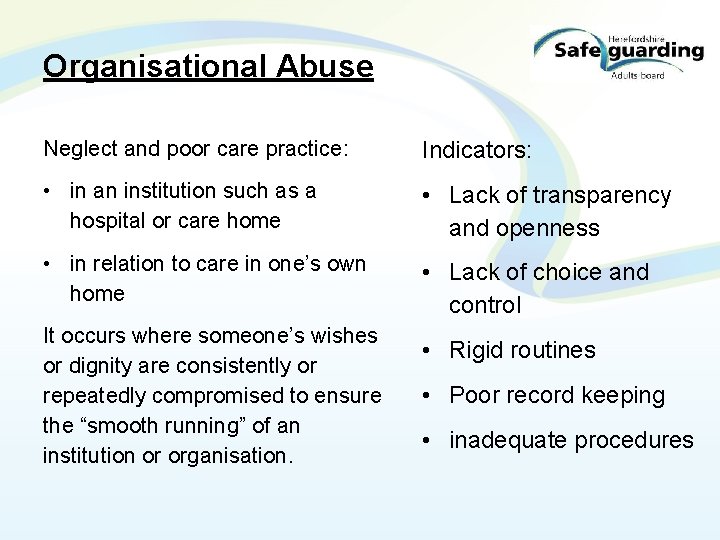
Organisational Abuse Neglect and poor care practice: Indicators: • in an institution such as a hospital or care home • Lack of transparency and openness • in relation to care in one’s own home • Lack of choice and control It occurs where someone’s wishes or dignity are consistently or repeatedly compromised to ensure the “smooth running” of an institution or organisation. • Rigid routines • Poor record keeping • inadequate procedures
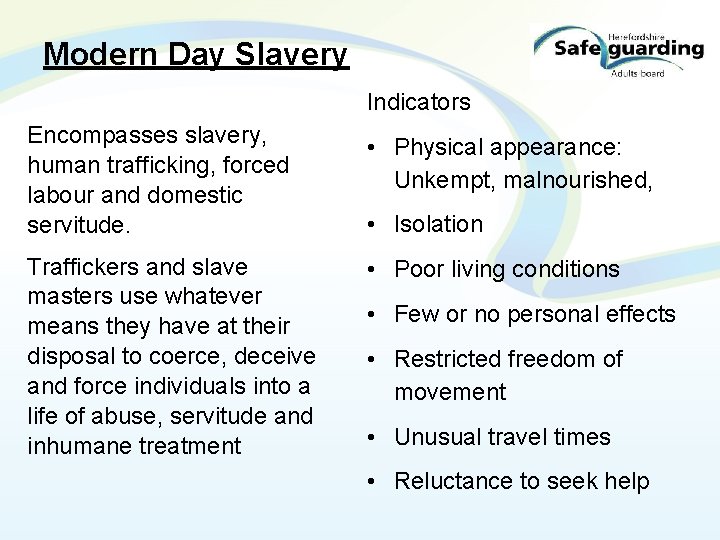
Modern Day Slavery Indicators Encompasses slavery, human trafficking, forced labour and domestic servitude. • Physical appearance: Unkempt, malnourished, Traffickers and slave masters use whatever means they have at their disposal to coerce, deceive and force individuals into a life of abuse, servitude and inhumane treatment • Poor living conditions • Isolation • Few or no personal effects • Restricted freedom of movement • Unusual travel times • Reluctance to seek help
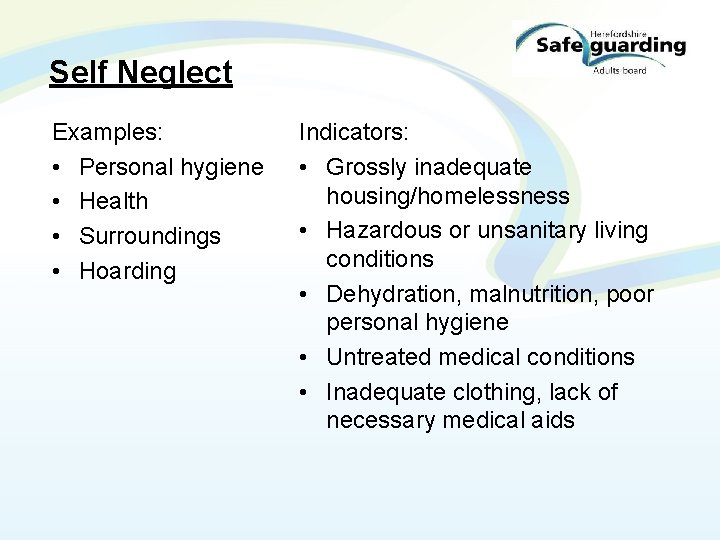
Self Neglect Examples: • Personal hygiene • Health • Surroundings • Hoarding Indicators: • Grossly inadequate housing/homelessness • Hazardous or unsanitary living conditions • Dehydration, malnutrition, poor personal hygiene • Untreated medical conditions • Inadequate clothing, lack of necessary medical aids
Mental Capacity Act 2005 The Mental Capacity Act provides a statutory framework for decision making for those over the age of 16 who are incapable of making certain decisions for themselves due to injury, impairment or illness. Mental capacity issues potentially affect everyone at some time in their lives.
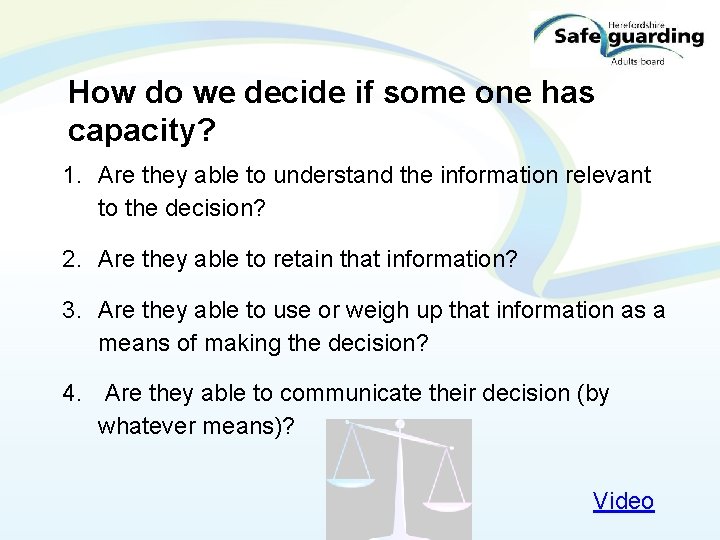
How do we decide if some one has capacity? 1. Are they able to understand the information relevant to the decision? 2. Are they able to retain that information? 3. Are they able to use or weigh up that information as a means of making the decision? 4. Are they able to communicate their decision (by whatever means)? Video
Case study • Graham –discuss the case • Any questions
Why does it matter to me? Safeguarding is everybodys responsibility This includes staff and volunteers working in health agencies, police, social care, voluntary sector and charities as well as people who might be concerned about neighbours, friends and family members.
We ALL have a duty to act on a concern/allegation of harm/abuse when an individual Has needs for care and support (Whether or not the local authority is meeting any of those needs) and Is experiencing, or at risk of, abuse or neglect and As a result of those care and support needs is unable to protect themselves from either the risk of, or the experience of abuse or neglect.
It is always best practice to speak to the adult involved at as early a stage as possible to get their views and wishes on the concerns. This should help to guide what next steps should be taken and whether the concern should be reported as an adult safeguarding concern or should be dealt with by another means.
We ALL have a duty to act on a concern / allegation of harm or abuse • Consider the immediate safety of the adult at risk and others who may also be at risk as a result of the concerns • Where a criminal act is suspected this should be reported to the Police • Ensure immediate risks are addressed • Follow your agencies safeguarding procedure
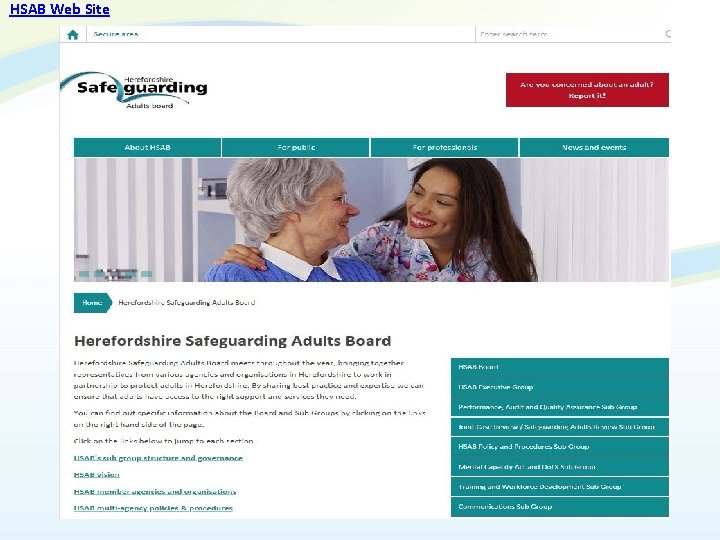
HSAB Web Site
Thank you for attending