
Adult Brain Tumors Incidence of primary brain tumors
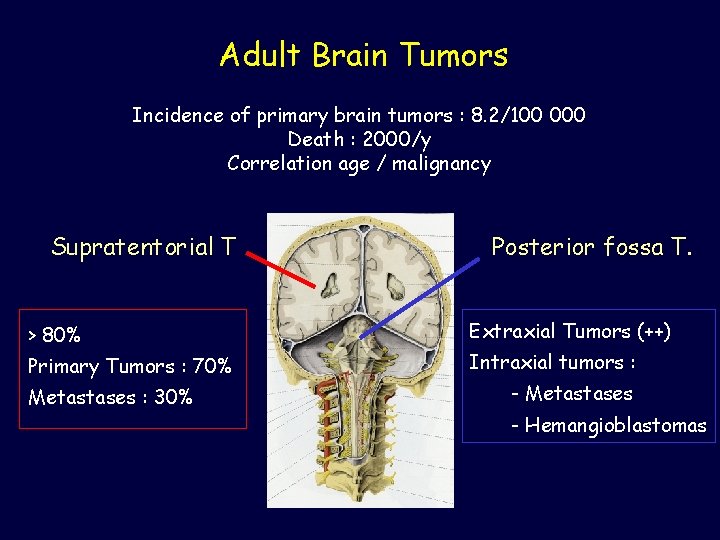
Adult Brain Tumors Incidence of primary brain tumors : 8. 2/100 000 Death : 2000/y Correlation age / malignancy Supratentorial T > 80% Primary Tumors : 70% Metastases : 30% Posterior fossa T. Extraxial Tumors (++) Intraxial tumors : - Metastases - Hemangioblastomas
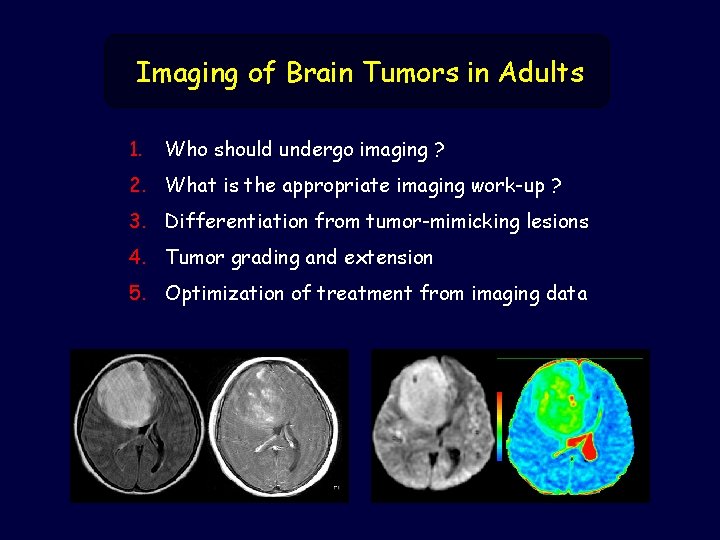
Imaging of Brain Tumors in Adults 1. Who should undergo imaging ? 2. What is the appropriate imaging work-up ? 3. Differentiation from tumor-mimicking lesions 4. Tumor grading and extension 5. Optimization of treatment from imaging data
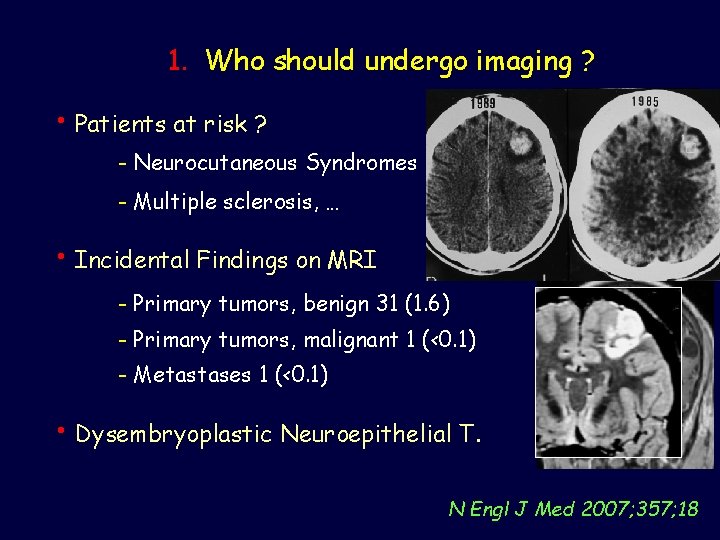
1. Who should undergo imaging ? • Patients at risk ? - Neurocutaneous Syndromes - Multiple sclerosis, … • Incidental Findings on MRI - Primary tumors, benign 31 (1. 6) - Primary tumors, malignant 1 (<0. 1) - Metastases 1 (<0. 1) • Dysembryoplastic Neuroepithelial T. N Engl J Med 2007; 357; 18
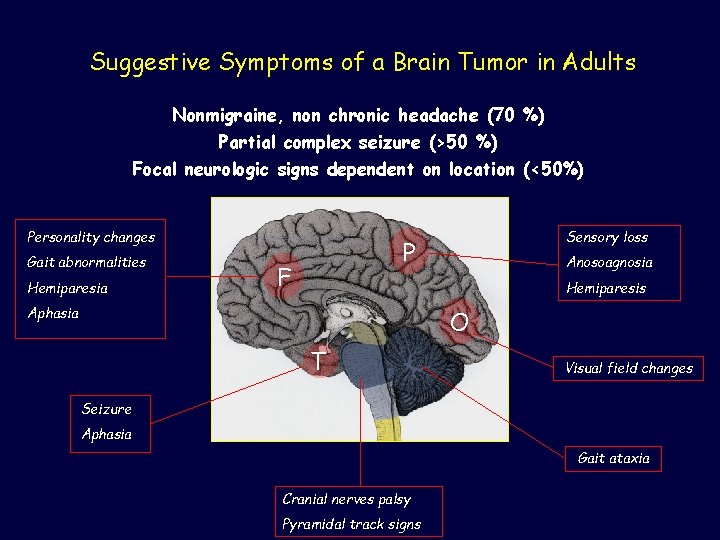
Suggestive Symptoms of a Brain Tumor in Adults Nonmigraine, non chronic headache (70 %) Partial complex seizure (>50 %) Focal neurologic signs dependent on location (<50%) Personality changes Gait abnormalities Hemiparesia Sensory loss P F Anosoagnosia Hemiparesis Aphasia O T Visual field changes Seizure Aphasia Gait ataxia Cranial nerves palsy Pyramidal track signs
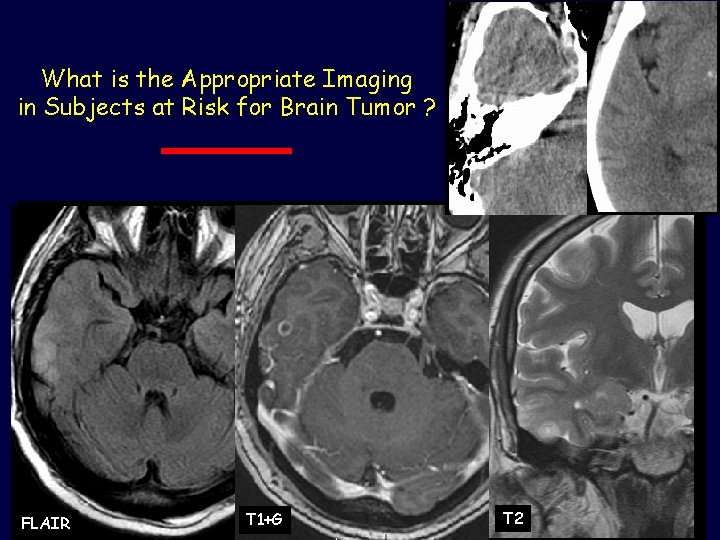
What is the Appropriate Imaging in Subjects at Risk for Brain Tumor ? FLAIR T 1+G T 2
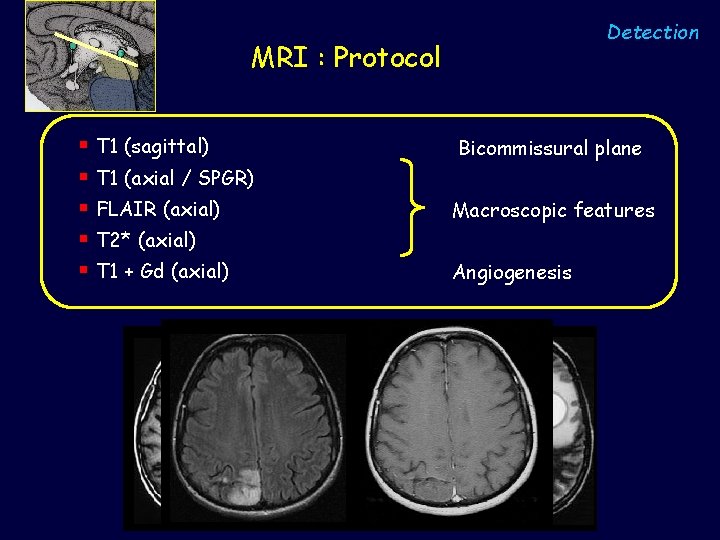
Detection MRI : Protocol § T 1 (sagittal) § T 1 (axial / SPGR) § FLAIR (axial) § T 2* (axial) § T 1 + Gd (axial) Bicommissural plane Macroscopic features Angiogenesis
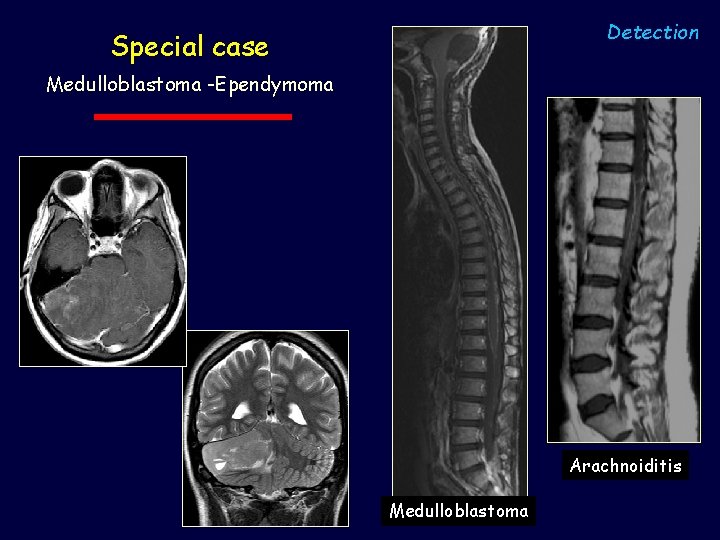
Detection Special case Medulloblastoma -Ependymoma Arachnoiditis Medulloblastoma
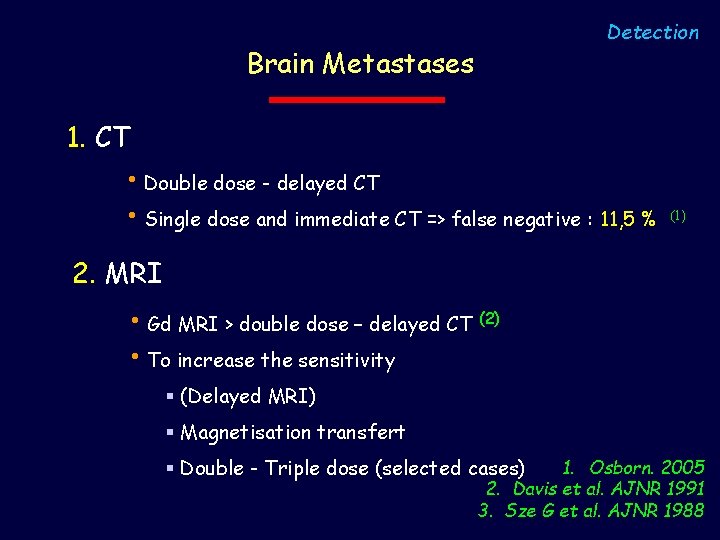
Detection Brain Metastases 1. CT • Double dose - delayed CT • Single dose and immediate CT => false negative : 11, 5 % (1) 2. MRI • Gd MRI > double dose – delayed CT (2) • To increase the sensitivity § (Delayed MRI) § Magnetisation transfert § Double - Triple dose (selected cases) 1. Osborn. 2005 2. Davis et al. AJNR 1991 3. Sze G et al. AJNR 1988
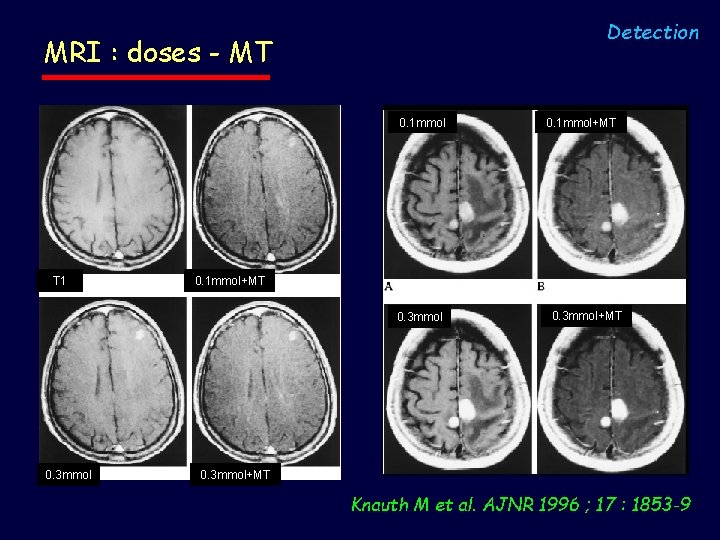
Detection MRI : doses - MT 0. 1 mmol T 1 0. 1 mmol+MT 0. 3 mmol+MT Knauth M et al. AJNR 1996 ; 17 : 1853 -9
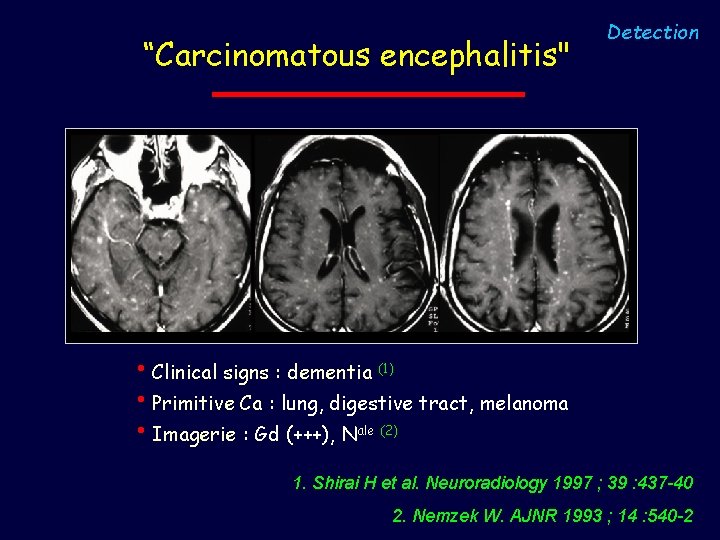
“Carcinomatous encephalitis" Detection • Clinical signs : dementia (1) • Primitive Ca : lung, digestive tract, melanoma • Imagerie : Gd (+++), Nale (2) 1. Shirai H et al. Neuroradiology 1997 ; 39 : 437 -40 2. Nemzek W. AJNR 1993 ; 14 : 540 -2
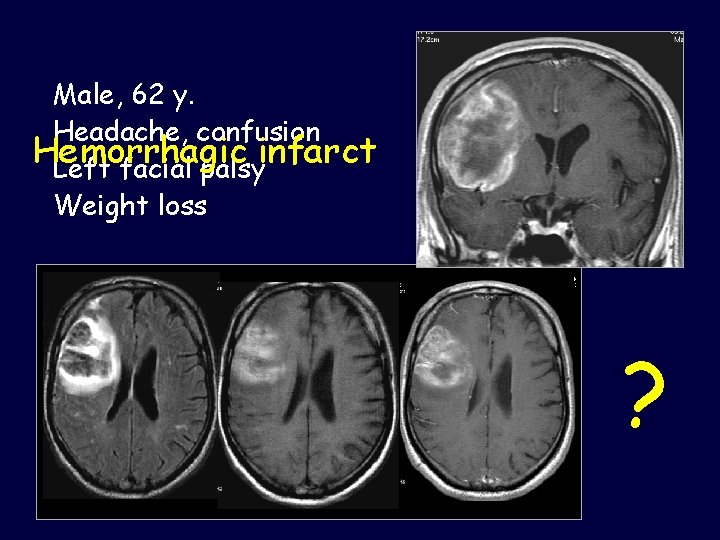
Male, 62 y. Headache, confusion Hemorrhagic infarct Left facial palsy Weight loss ?
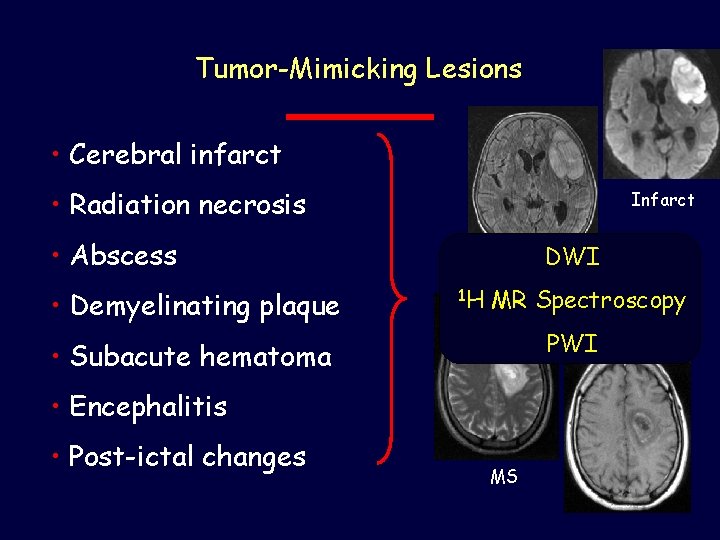
Tumor-Mimicking Lesions • Cerebral infarct • Radiation necrosis Infarct • Abscess • Demyelinating plaque DWI 1 H MR Spectroscopy PWI • Subacute hematoma • Encephalitis • Post-ictal changes MS
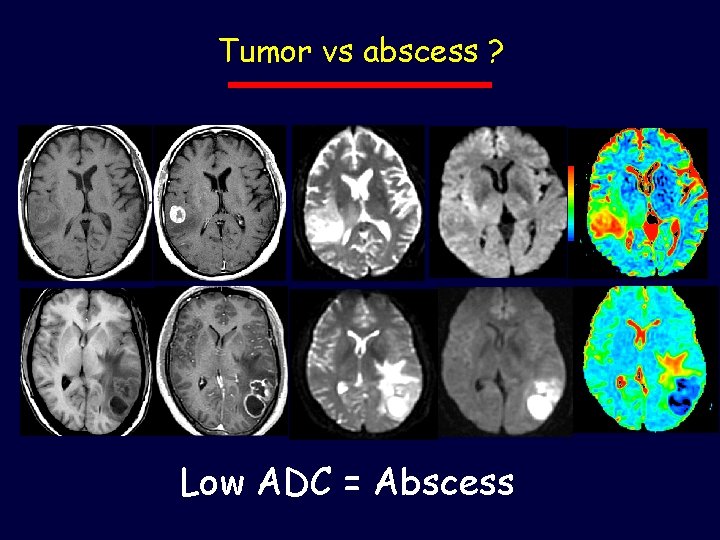
Tumor vs abscess ? Low ADC = Abscess
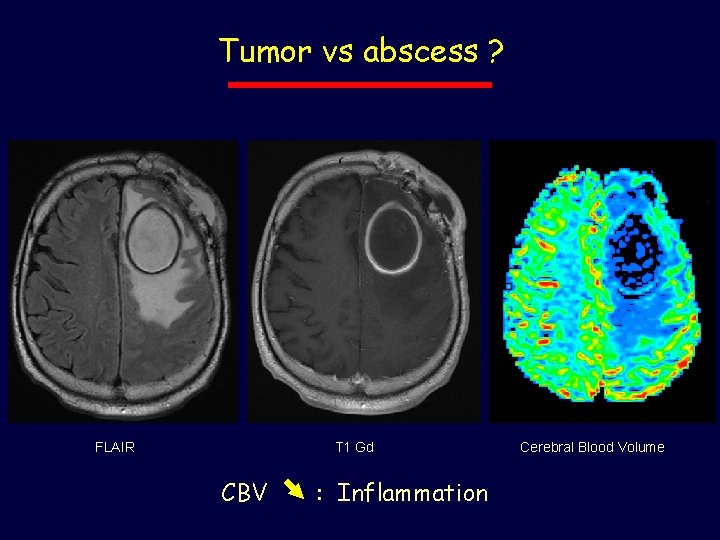
Tumor vs abscess ? FLAIR T 1 Gd CBV : Inflammation Cerebral Blood Volume
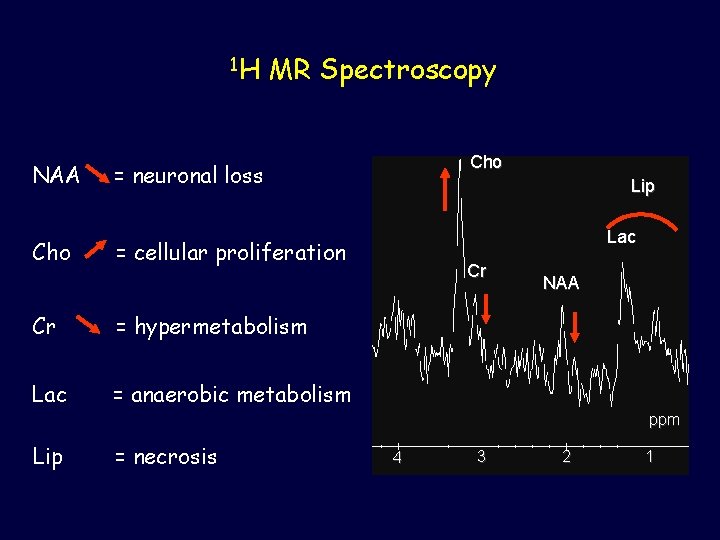
1 H NAA Cho MR Spectroscopy Cho = neuronal loss Lip Lac = cellular proliferation Cr = hypermetabolism Lac = anaerobic metabolism Cr NAA ppm Lip = necrosis 4 3 2 1
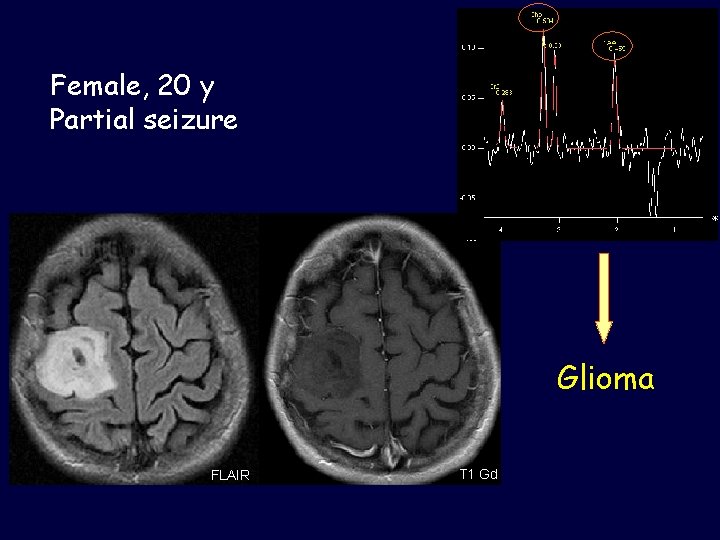
Female, 20 y Partial seizure Glioma FLAIR T 1 Gd
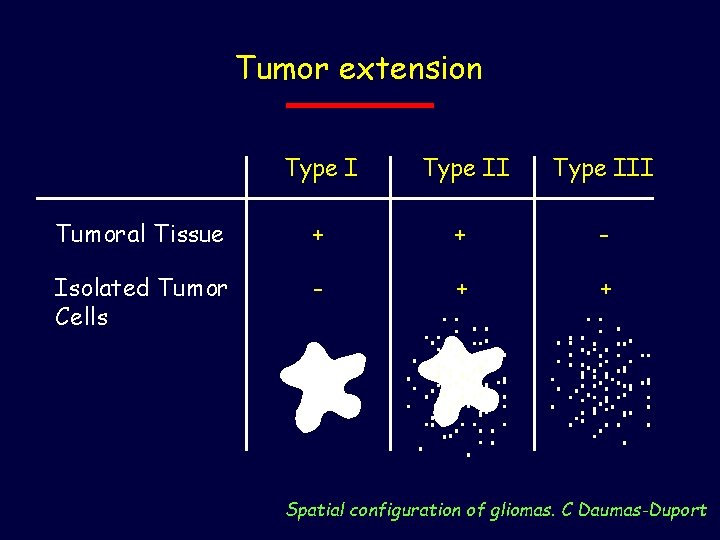
Tumor extension Type III Tumoral Tissue + + - Isolated Tumor Cells - + + Spatial configuration of gliomas. C Daumas-Duport
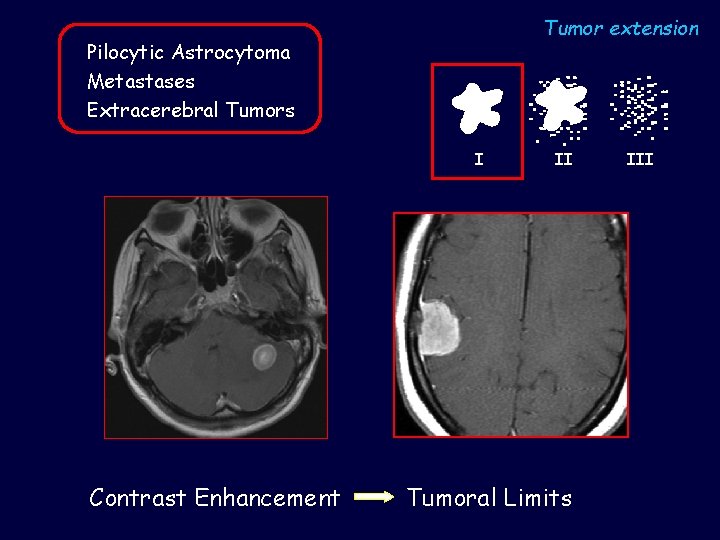
Tumor extension Pilocytic Astrocytoma Metastases Extracerebral Tumors I Contrast Enhancement II Tumoral Limits III
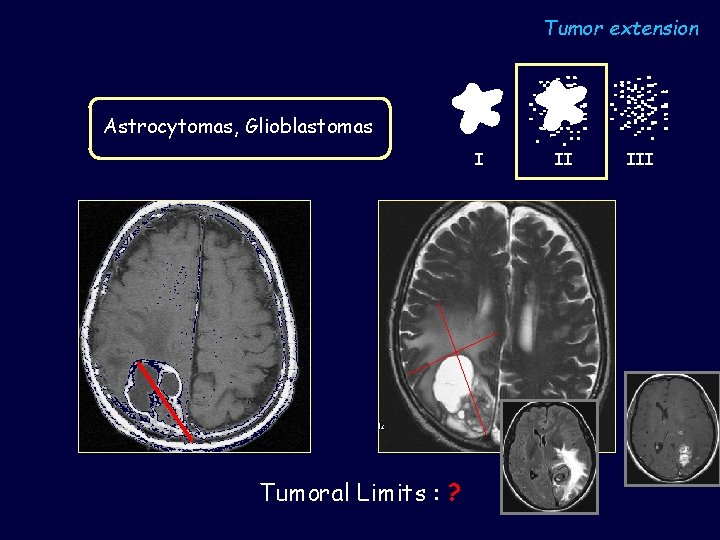
Tumor extension Astrocytomas, Glioblastomas I Tumoral Limits : ? II III
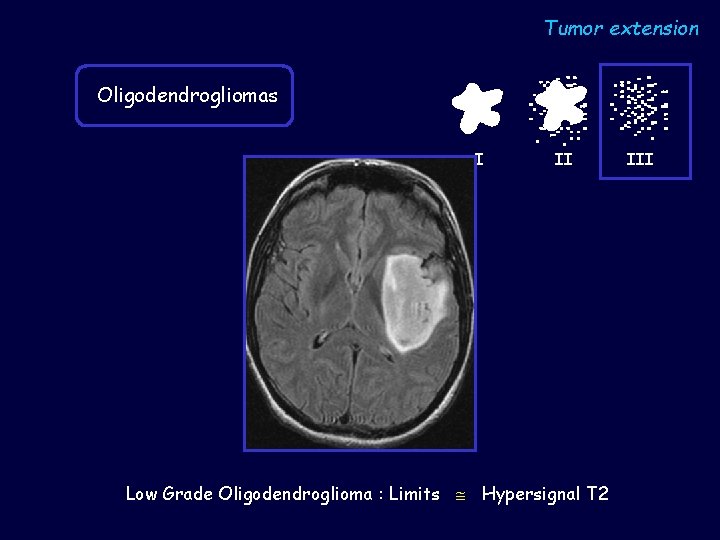
Tumor extension Oligodendrogliomas I II Low Grade Oligodendroglioma : Limits Hypersignal T 2 III
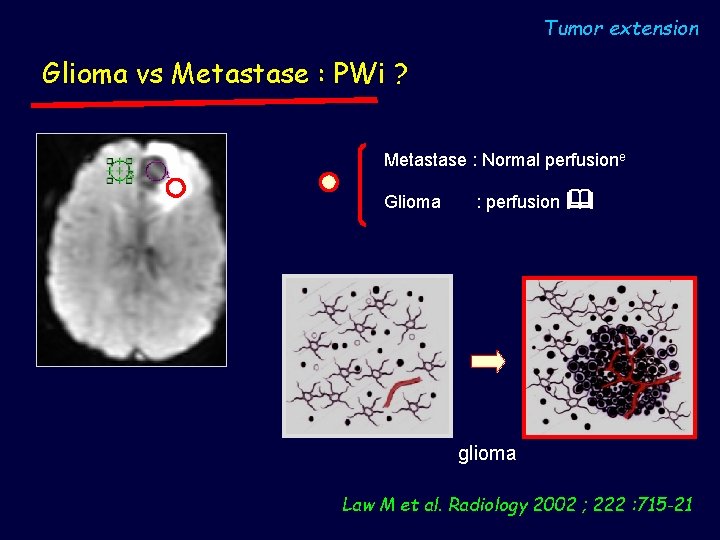
Tumor extension Glioma vs Metastase : PWi ? Metastase : Normal perfusione Glioma : perfusion glioma Law M et al. Radiology 2002 ; 222 : 715 -21
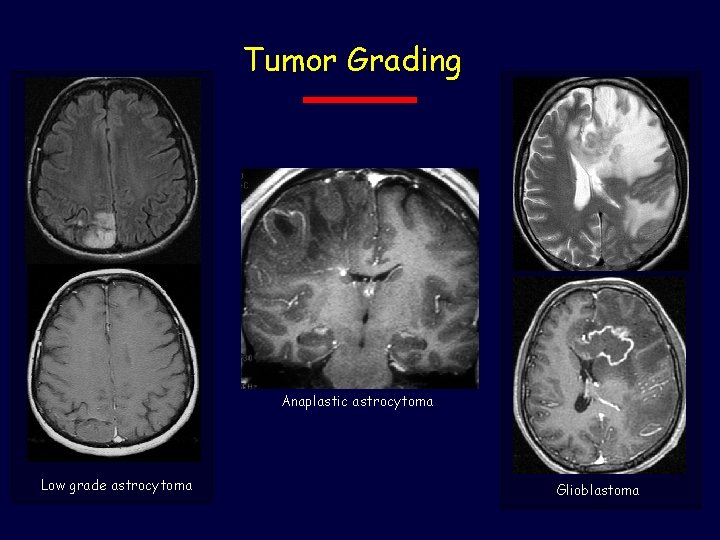
Tumor Grading Anaplastic astrocytoma Low grade astrocytoma Glioblastoma
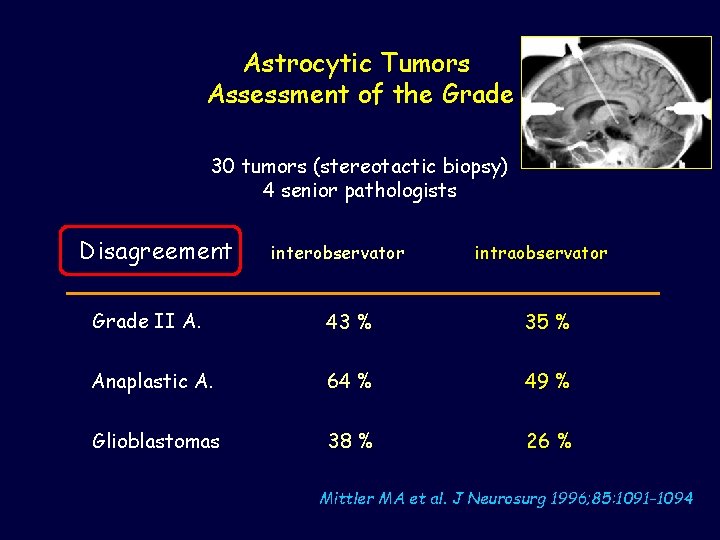
Astrocytic Tumors Assessment of the Grade 30 tumors (stereotactic biopsy) 4 senior pathologists Disagreement interobservator intraobservator Grade II A. 43 % 35 % Anaplastic A. 64 % 49 % Glioblastomas 38 % 26 % Mittler MA et al. J Neurosurg 1996; 85: 1091 -1094
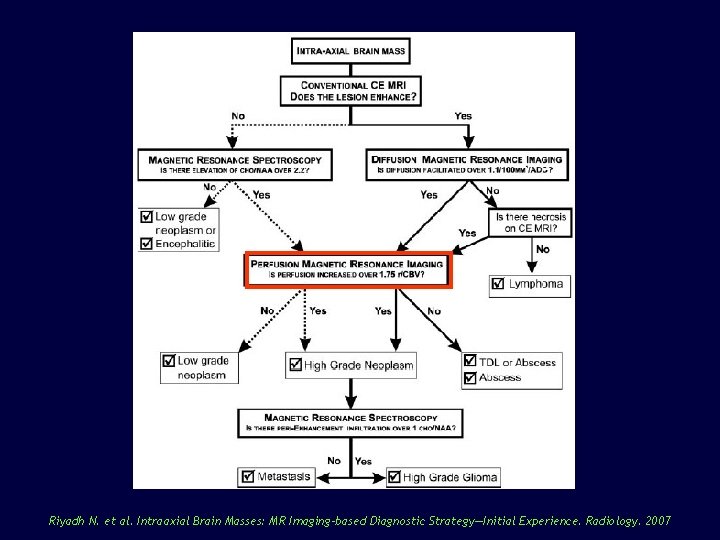
Riyadh N. et al. Intraaxial Brain Masses: MR Imaging–based Diagnostic Strategy—Initial Experience. Radiology. 2007
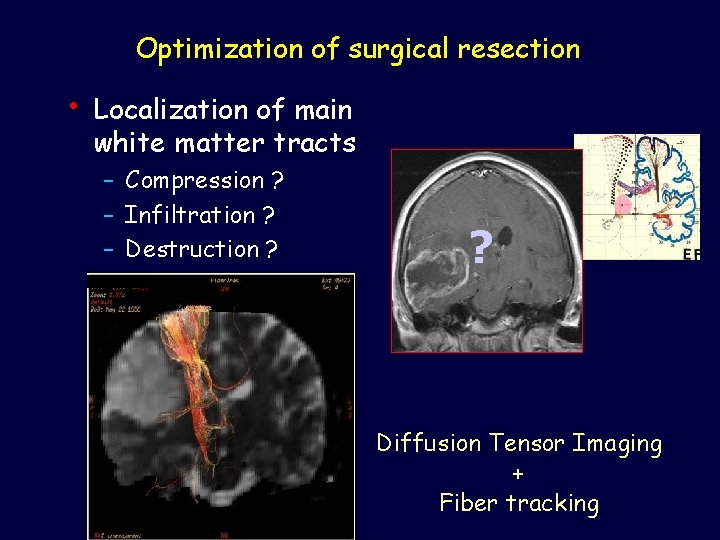
Optimization of surgical resection • Localization of main white matter tracts – Compression ? – Infiltration ? – Destruction ? ? Diffusion Tensor Imaging + Fiber tracking
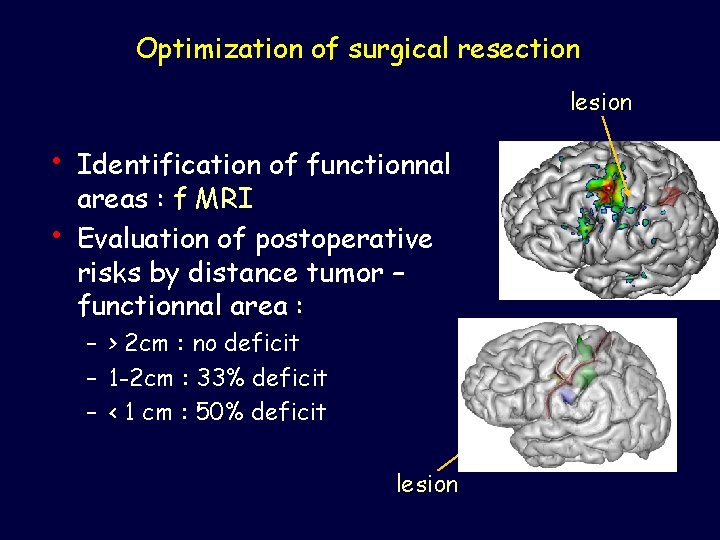
Optimization of surgical resection lesion • • Identification of functionnal areas : f MRI Evaluation of postoperative risks by distance tumor – functionnal area : – > 2 cm : no deficit – 1 -2 cm : 33% deficit – < 1 cm : 50% deficit lesion
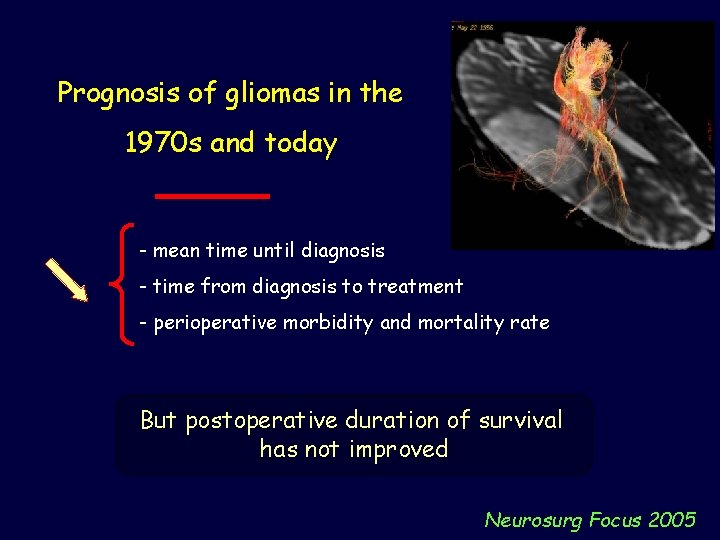
Prognosis of gliomas in the 1970 s and today - mean time until diagnosis - time from diagnosis to treatment - perioperative morbidity and mortality rate But postoperative duration of survival has not improved Neurosurg Focus 2005
- Slides: 27