
Adult Attachment Patterns Typically measured using an extensive


- Slides: 18
Adult Attachment Patterns Typically measured using an extensive interview Main et al. AAI Bartholomew’s 4 category model – Model of self – Model of other
Adult Attachment Patterns Secure Dismissing Preoccupied Fearful
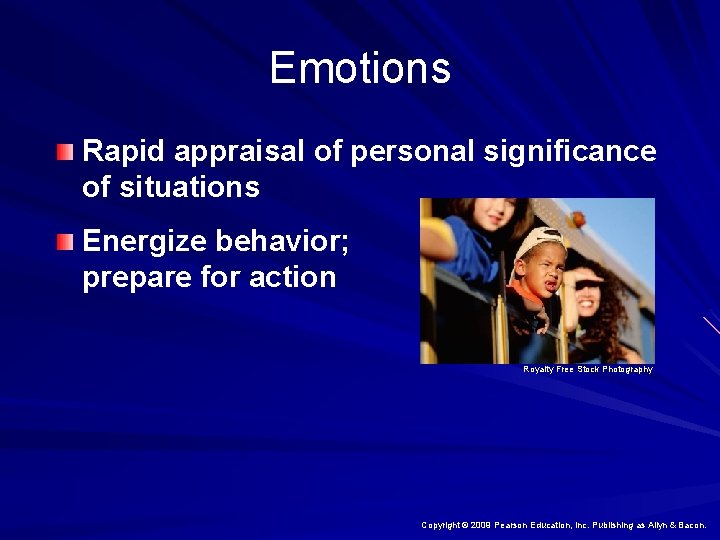
Emotions Rapid appraisal of personal significance of situations Energize behavior; prepare for action Royalty Free Stock Photography Copyright © 2009 Pearson Education, Inc. Publishing as Allyn & Bacon.
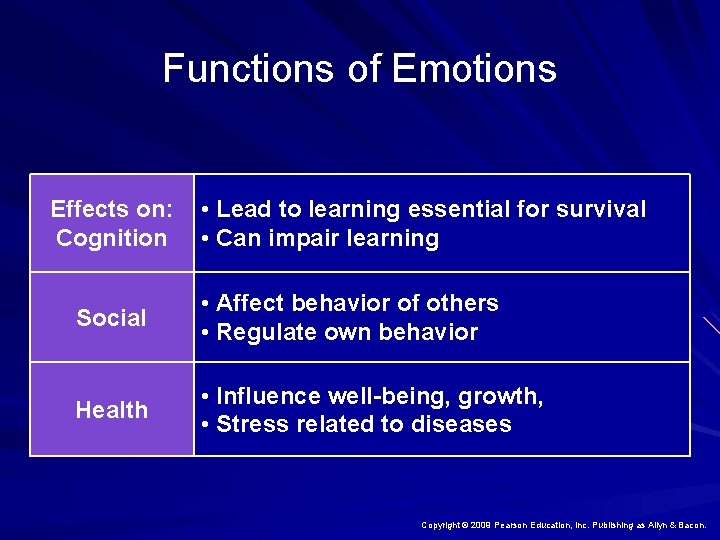
Functions of Emotions Effects on: Cognition • Lead to learning essential for survival • Can impair learning Social • Affect behavior of others • Regulate own behavior Health • Influence well-being, growth, • Stress related to diseases Copyright © 2009 Pearson Education, Inc. Publishing as Allyn & Bacon.
Parental Depression and Child Development Infants of depressed mothers sleep poorly, are less attentive to their surroundings, and have elevated levels of cortisol. Paternal depression is a strong predictor of behavior problems. Children who are subjected to parental negativity develop a pessimistic world-view. Early treatment and quality of parenting are very important. More likely to be insecurely attached. Copyright © 2009 Pearson Education, Inc. Publishing as Allyn & Bacon.
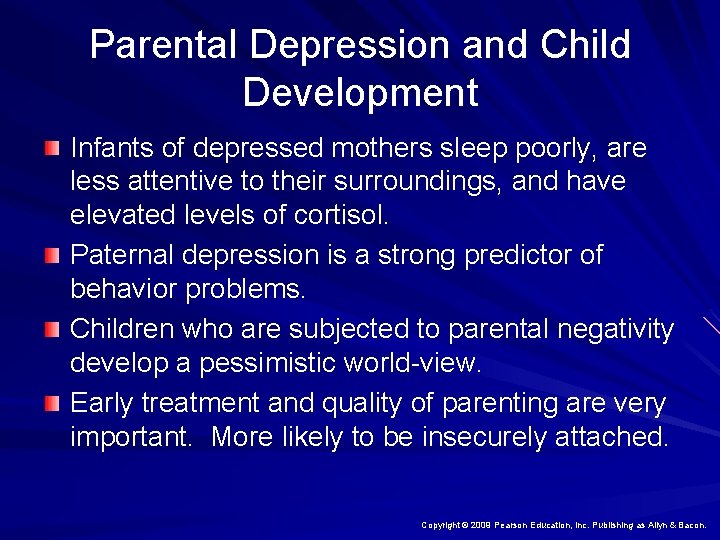
Emotional expressions
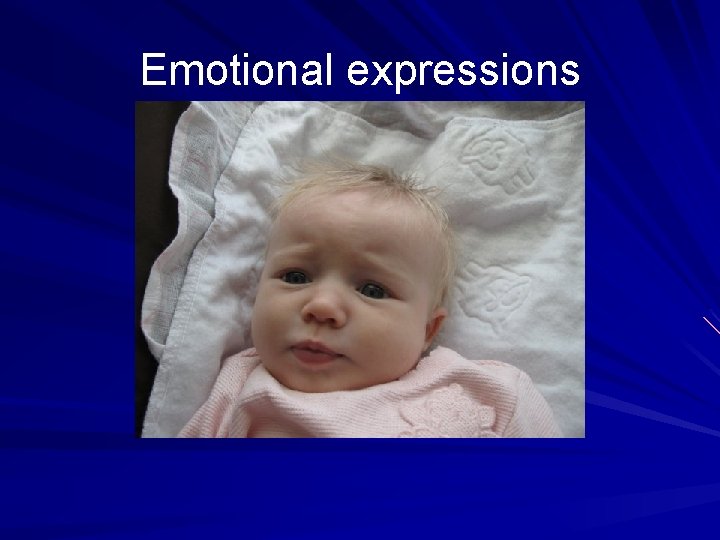
Emotional expressions
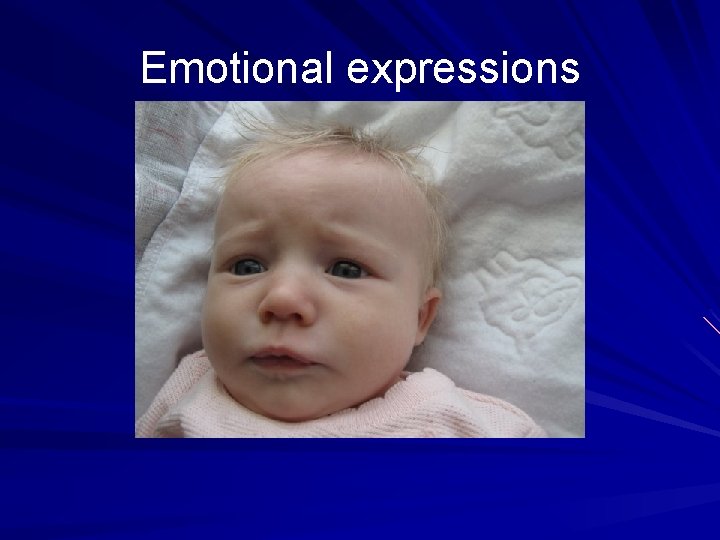
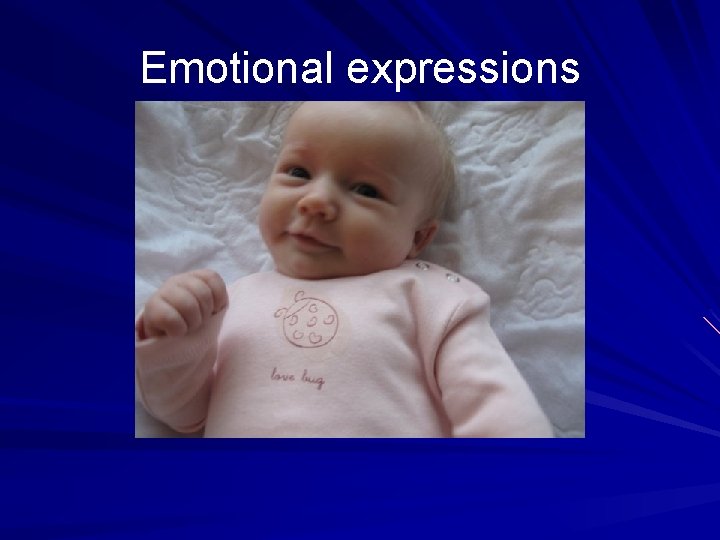
Emotional expressions
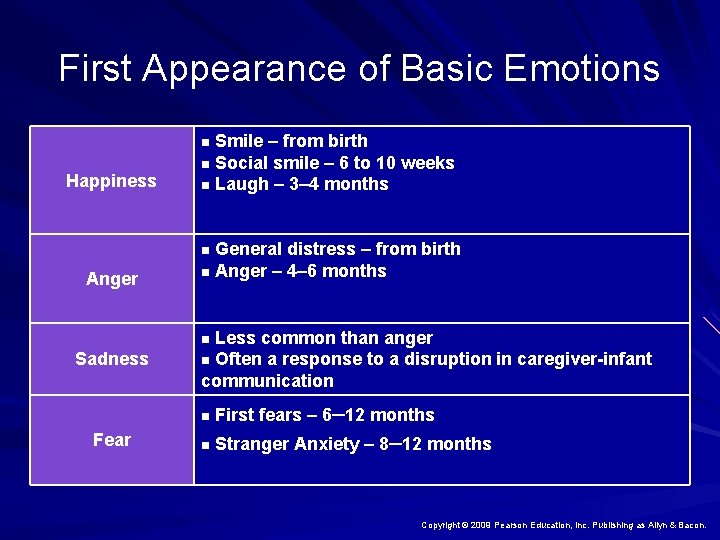
First Appearance of Basic Emotions Smile – from birth n Social smile – 6 to 10 weeks n Laugh – 3– 4 months n Happiness General distress – from birth n Anger – 4– 6 months n Anger Less common than anger n Often a response to a disruption in caregiver-infant communication n Sadness Fear n First fears – 6– 12 months n Stranger Anxiety – 8– 12 months Copyright © 2009 Pearson Education, Inc. Publishing as Allyn & Bacon.
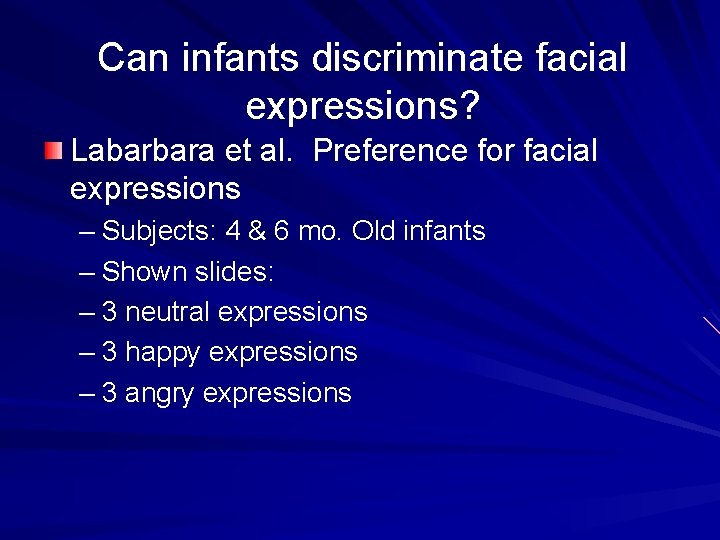
Can infants discriminate facial expressions? Labarbara et al. Preference for facial expressions – Subjects: 4 & 6 mo. Old infants – Shown slides: – 3 neutral expressions – 3 happy expressions – 3 angry expressions
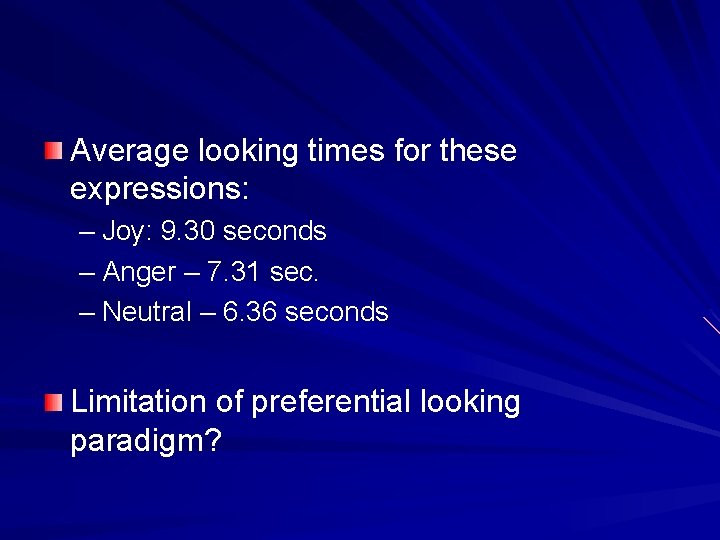
Average looking times for these expressions: – Joy: 9. 30 seconds – Anger – 7. 31 sec. – Neutral – 6. 36 seconds Limitation of preferential looking paradigm?
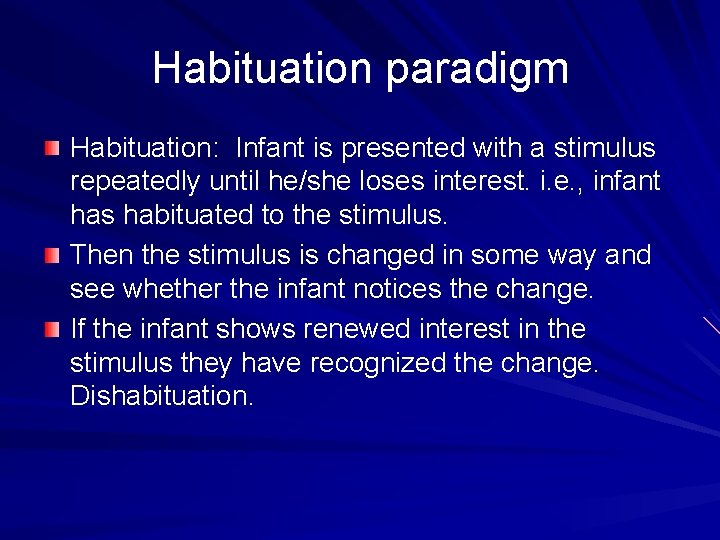
Habituation paradigm Habituation: Infant is presented with a stimulus repeatedly until he/she loses interest. i. e. , infant has habituated to the stimulus. Then the stimulus is changed in some way and see whether the infant notices the change. If the infant shows renewed interest in the stimulus they have recognized the change. Dishabituation.
Young-Brown, Rosenfeld, & Horowitz (1977). – 3 -month-olds – used sad, happy, and surprised facial expressions modeled by a male model. – Test of discrimination ability: Does the infant’s looking time recover (dishabituate) when picture changes to a new expression?
Caron, & Myers (1985). – 4, 5. 5, & 7 month-olds – “toothiness” hypothesis
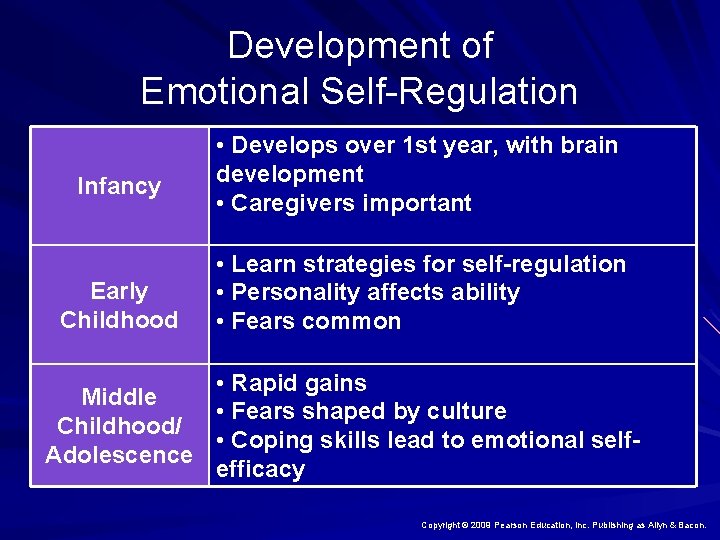
Development of Emotional Self-Regulation Infancy Early Childhood • Develops over 1 st year, with brain development • Caregivers important • Learn strategies for self-regulation • Personality affects ability • Fears common • Rapid gains Middle • Fears shaped by culture Childhood/ • Coping skills lead to emotional self. Adolescence efficacy Copyright © 2009 Pearson Education, Inc. Publishing as Allyn & Bacon.
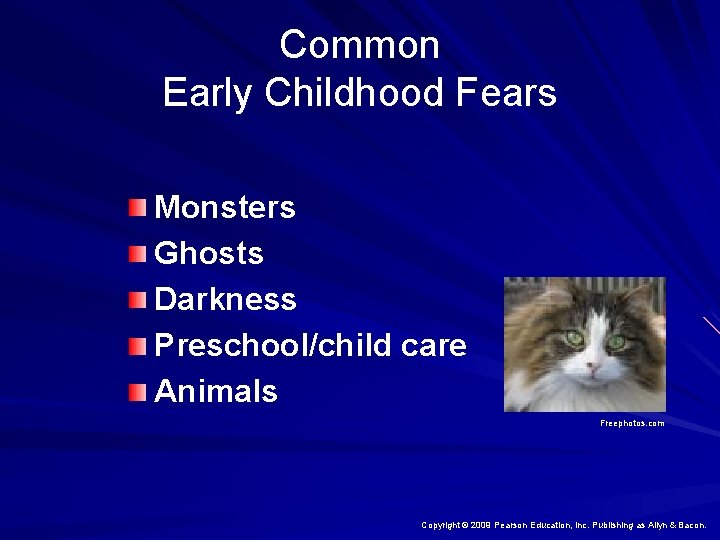
Common Early Childhood Fears Monsters Ghosts Darkness Preschool/child care Animals Freephotos. com Copyright © 2009 Pearson Education, Inc. Publishing as Allyn & Bacon.