
AdsorptionDesorption of Pollutants to Nanoparticles Mason Tomson V
- Slides: 29
Adsorption/Desorption of Pollutants to Nanoparticles Mason Tomson, V. L. Colvin Xuekun Cheng, Y. Gao, R. Wahi, A. T. Kan Center for Biological and Environmental Nanotechnology Civil and Environmental Engineering and Chemistry Departments Rice University September 15, 2003
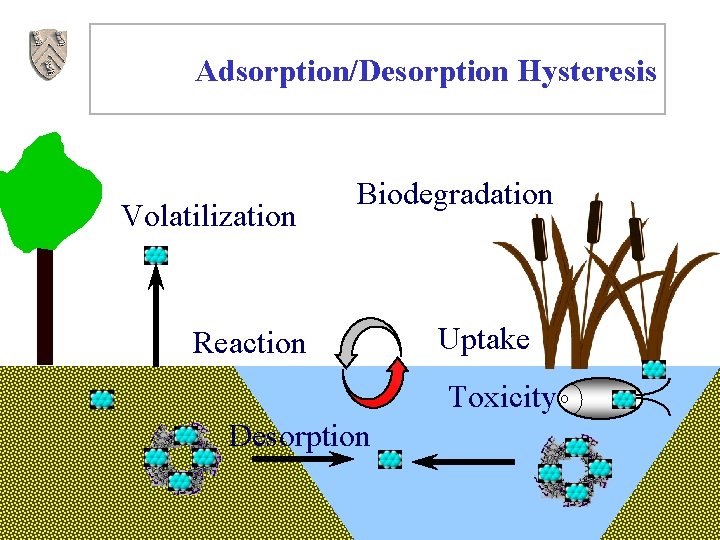
Adsorption/Desorption Hysteresis Volatilization Biodegradation Reaction Uptake Toxicity Desorption
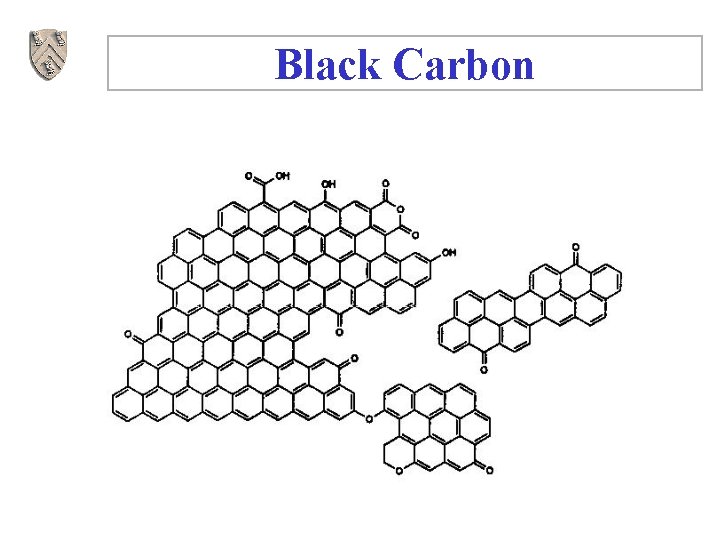
Black Carbon
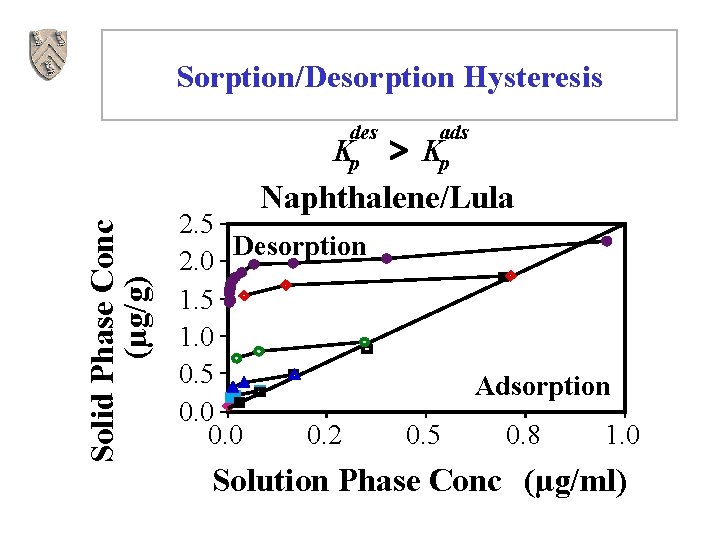
Sorption/Desorption Hysteresis des Kp > ads Kp Solid Phase Conc (µg/g) Naphthalene/Lula 2. 5 Desorption 2. 0 1. 5 1. 0 0. 5 0. 0 0. 2 Adsorption 0. 5 0. 8 1. 0 Solution Phase Conc (µg/ml)
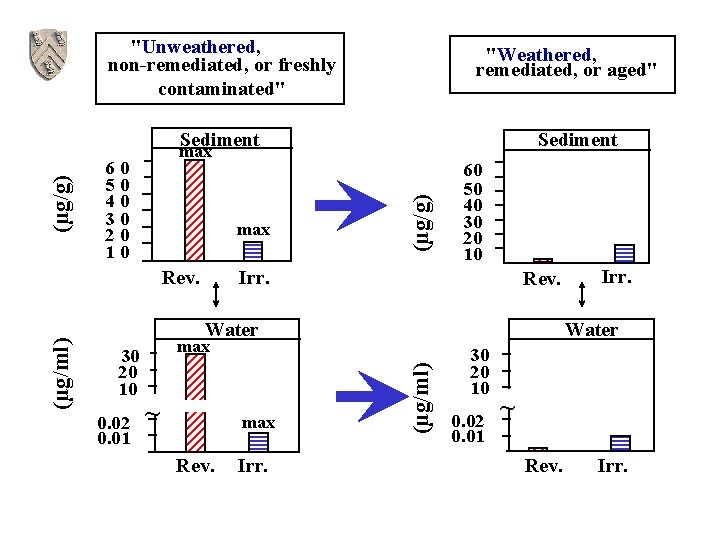
"Unweathered, non-remediated, or freshly contaminated" "Weathered, remediated, or aged" Sediment 0 0 0 max (µg/ml) Rev. (µg/g) 6 5 4 3 2 1 60 50 40 30 20 10 Irr. Rev. 30 20 10 0. 02 0. 01 max ~ max Rev. Irr. Water (µg/ml) (µg/g) Sediment max 30 20 10 0. 02 0. 01 ~ Rev. Irr.
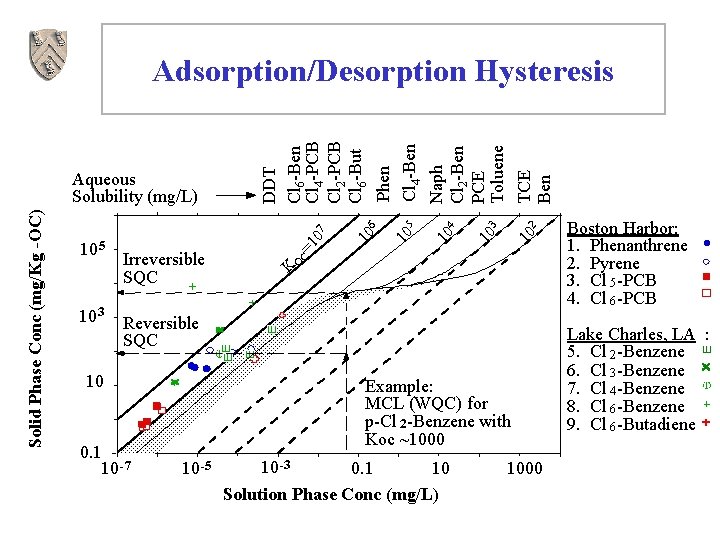
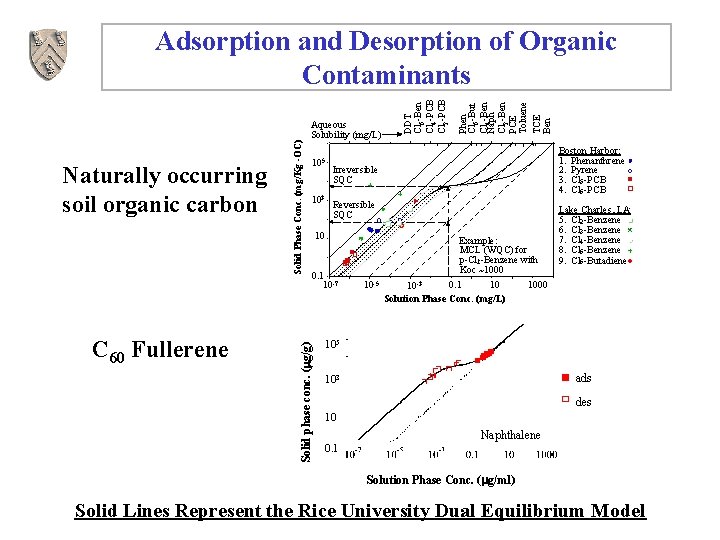
10 3 TCE Ben 10 2 10 3 10 4 Phen Cl 4 -Ben Naph Cl 2 -Ben PCE Toluene 10 5 10 6 10 7 C= Irreversible SQC O 10 5 K Solid Phase Conc (mg/Kg -OC) Aqueous Solubility (mg/L) DDT Cl 6 -Ben Cl 4 -PCB Cl 2 -PCB Cl 6 -But Adsorption/Desorption Hysteresis Reversible SQC 10 0. 1 10 -7 Example: MCL (WQC) for p-Cl 2 -Benzene with Koc ~1000 10 -5 10 -3 0. 1 10 Solution Phase Conc (mg/L) 1000 Boston Harbor: 1. Phenanthrene 2. Pyrene 3. Cl 5 -PCB 4. Cl 6 -PCB Lake Charles, LA : 5. Cl 2 -Benzene 6. Cl 3 -Benzene 7. Cl 4 -Benzene 8. Cl 6 -Benzene 9. Cl 6 -Butadiene
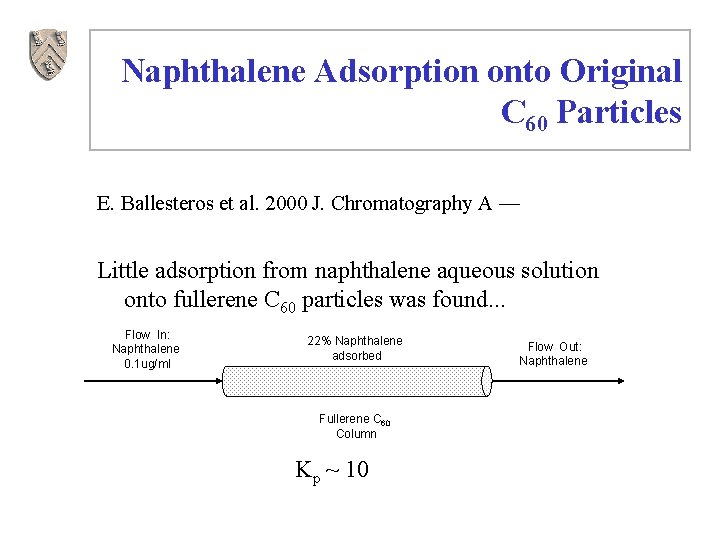
Naphthalene Adsorption onto Original C 60 Particles E. Ballesteros et al. 2000 J. Chromatography A — Little adsorption from naphthalene aqueous solution onto fullerene C 60 particles was found. . . Flow In: Naphthalene 0. 1 ug/ml 22% Naphthalene adsorbed Fullerene C 60 Column Kp ~ 10 Flow Out: Naphthalene
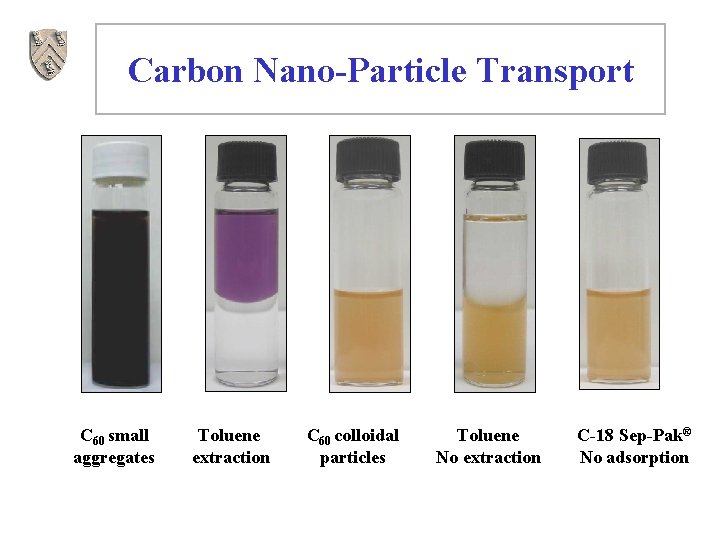
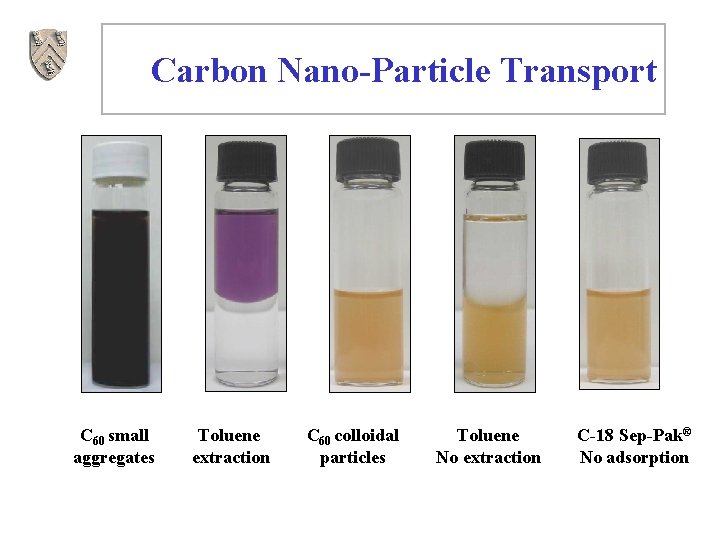
Carbon Nano-Particle Transport C 60 small aggregates Toluene extraction C 60 colloidal particles Toluene No extraction C-18 Sep-Pak® No adsorption
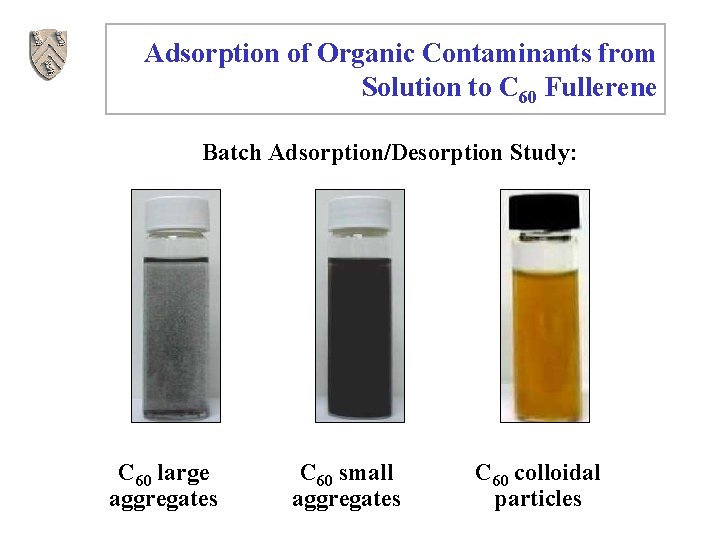
Adsorption of Organic Contaminants from Solution to C 60 Fullerene Batch Adsorption/Desorption Study: C 60 large aggregates C 60 small aggregates C 60 colloidal particles
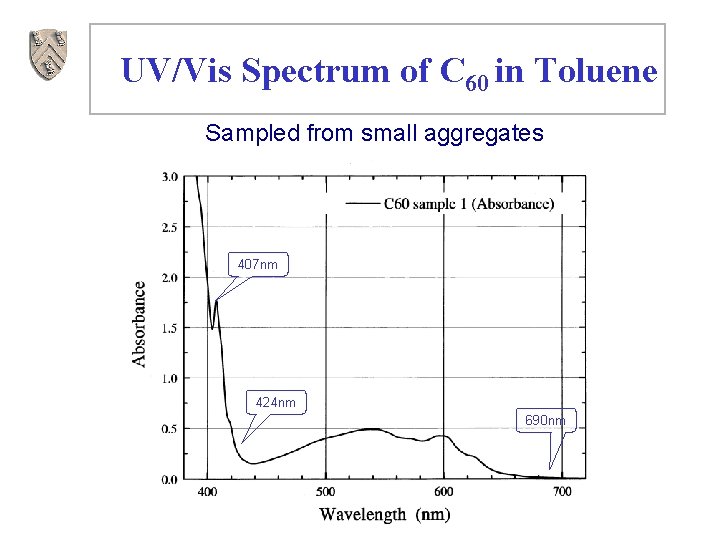
UV/Vis Spectrum of C 60 in Toluene Sampled from small aggregates 407 nm 424 nm 690 nm
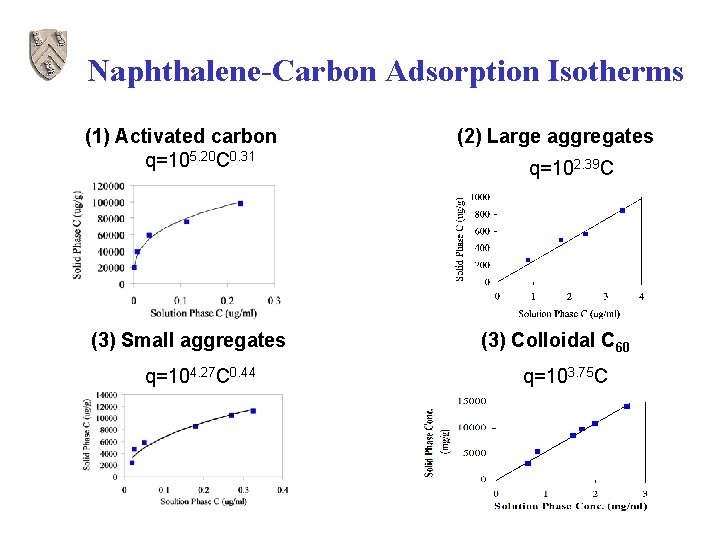
Naphthalene-Carbon Adsorption Isotherms (1) Activated carbon q=105. 20 C 0. 31 (3) Small aggregates q=104. 27 C 0. 44 (2) Large aggregates q=102. 39 C (3) Colloidal C 60 q=103. 75 C
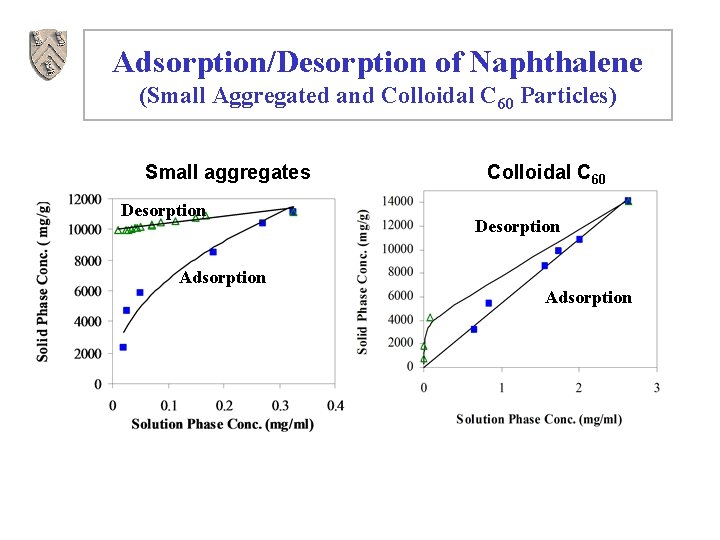
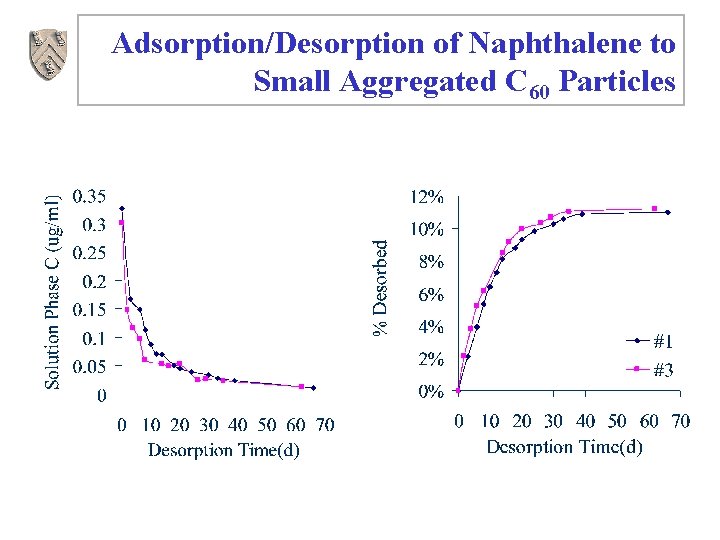
Adsorption/Desorption of Naphthalene (Small Aggregated and Colloidal C 60 Particles) Small aggregates Desorption Adsorption Colloidal C 60 Desorption Adsorption
Adsorption/Desorption of Naphthalene to Small Aggregated C 60 Particles
C 60 Fullerene 103 10 2 10 3 10 5 10 4 Phen Cl 6 -But Cl 4 -Ben Naph Cl 2 -Ben PCE Toluene TCE Ben 10 6 10 7 oc = Irreversible SQC K 105 DDT Cl 6 -Ben Cl 4 -PCB Cl 2 -PCB Aqueous Solubility (mg/L) Reversible SQC 10 0. 1 10 -7 Solid phase conc. (mg/g) Naturally occurring soil organic carbon Solid Phase Conc. (mg/Kg -OC) Adsorption and Desorption of Organic Contaminants 10 -5 Example: MCL (WQC) for p-Cl 2 -Benzene with Koc ~1000 -3 0. 1 10 1000 10 Solution Phase Conc. (mg/L) Boston Harbor: 1. Phenanthrene 2. Pyrene 3. Cl 5 -PCB 4. Cl 6 -PCB Lake Charles, LA: 5. Cl 2 -Benzene 6. Cl 3 -Benzene 7. Cl 4 -Benzene 8. Cl 6 -Benzene 9. Cl 6 -Butadiene 105 ads 103 des 10 Naphthalene 0. 1 Solution Phase Conc. (mg/ml) Solid Lines Represent the Rice University Dual Equilibrium Model
Carbon Nano-Particle Transport C 60 small aggregates Toluene extraction C 60 colloidal particles Toluene No extraction C-18 Sep-Pak® No adsorption
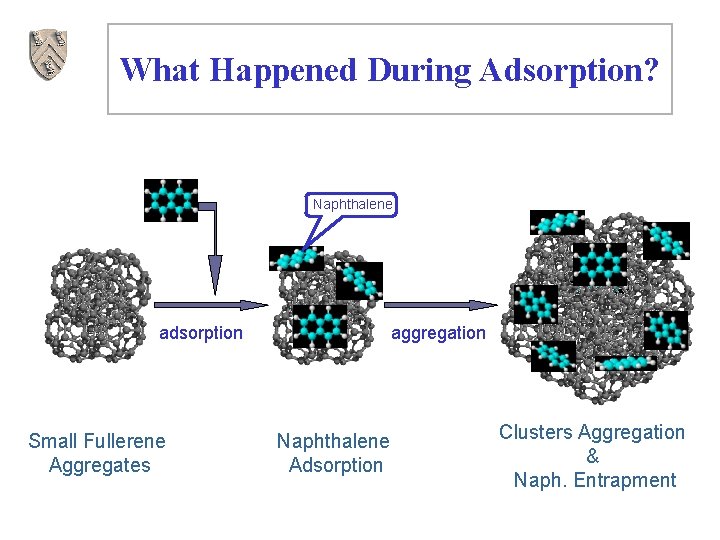
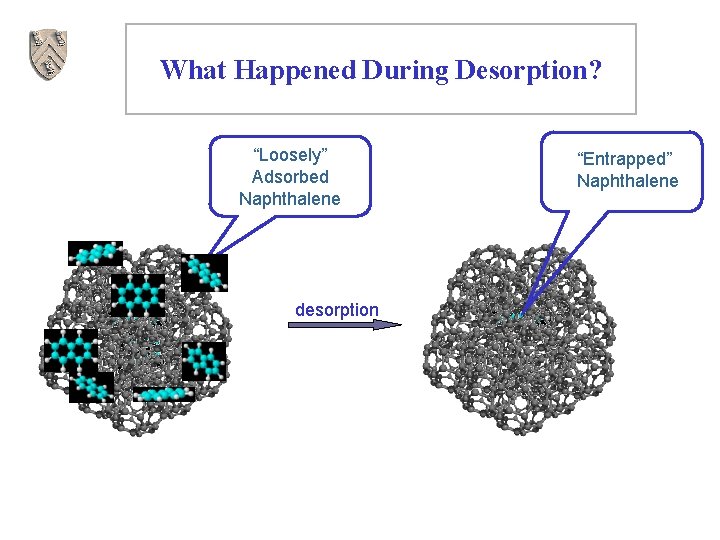
What Happened During Adsorption? Naphthalene adsorption Small Fullerene Aggregates aggregation Naphthalene Adsorption Clusters Aggregation & Naph. Entrapment
What Happened During Desorption? “Loosely” Adsorbed Naphthalene desorption “Entrapped” Naphthalene
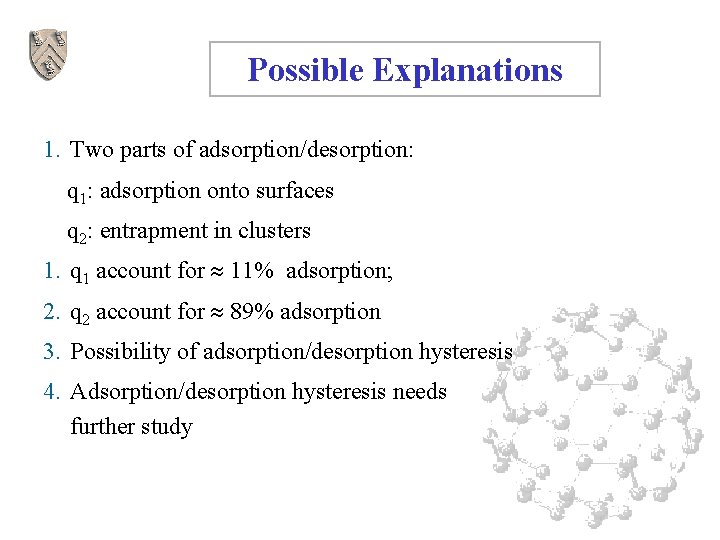
Possible Explanations 1. Two parts of adsorption/desorption: q 1: adsorption onto surfaces q 2: entrapment in clusters 1. q 1 account for 11% adsorption; 2. q 2 account for 89% adsorption 3. Possibility of adsorption/desorption hysteresis 4. Adsorption/desorption hysteresis needs further study
Adsorption of Cadmium to Anatase Nanoparticles
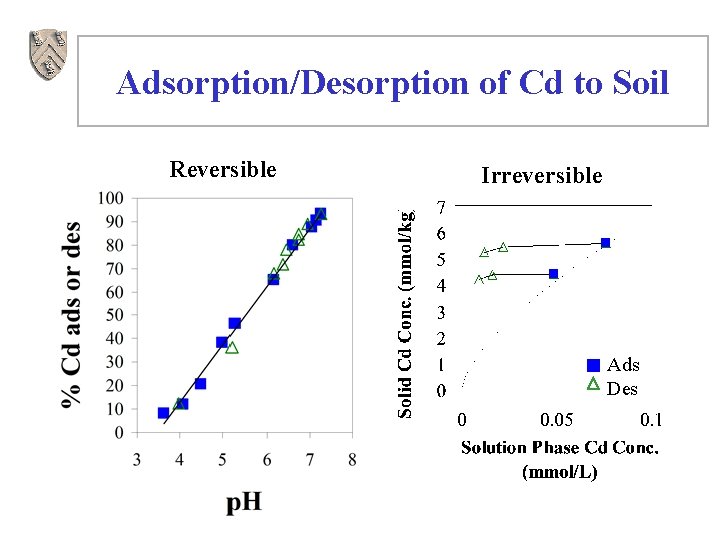
Adsorption/Desorption of Cd to Soil Reversible Irreversible Ads Des
Physical Characteristics of Anatase
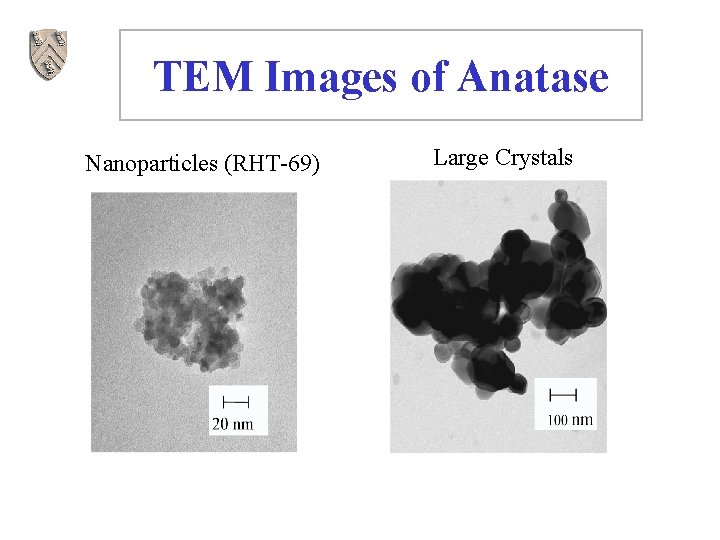
TEM Images of Anatase Nanoparticles (RHT-69) Large Crystals
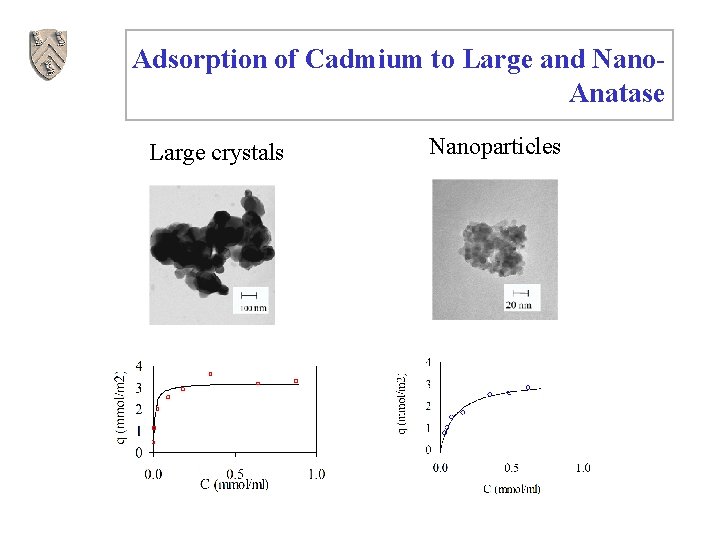
Adsorption of Cadmium to Large and Nano. Anatase Large crystals Nanoparticles
Langmuir Adsorption Isotherm Parameters
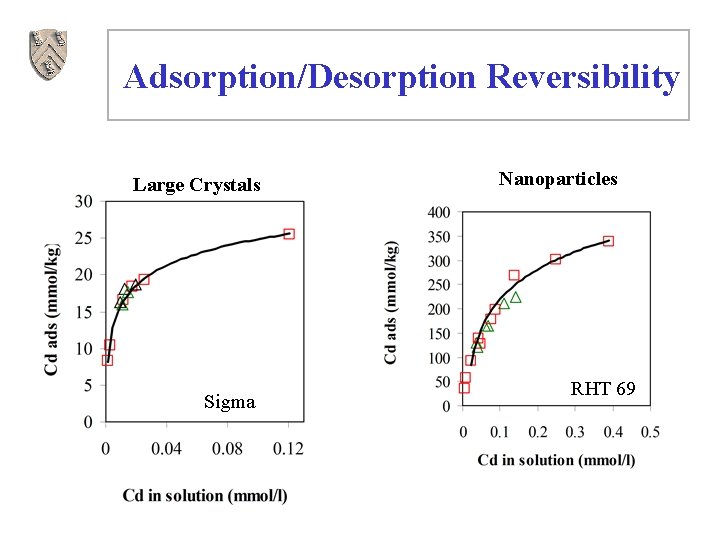
Adsorption/Desorption Reversibility Large Crystals Sigma Nanoparticles RHT 69
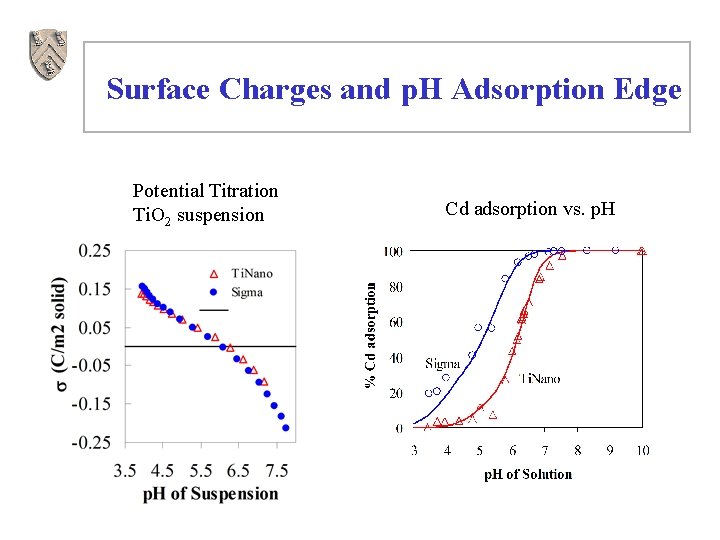
Electrochemical Properties Reported pzc: 5. 8 - 6. 1 p. H
Surface Charges and p. H Adsorption Edge Potential Titration Ti. O 2 suspension Cd adsorption vs. p. H
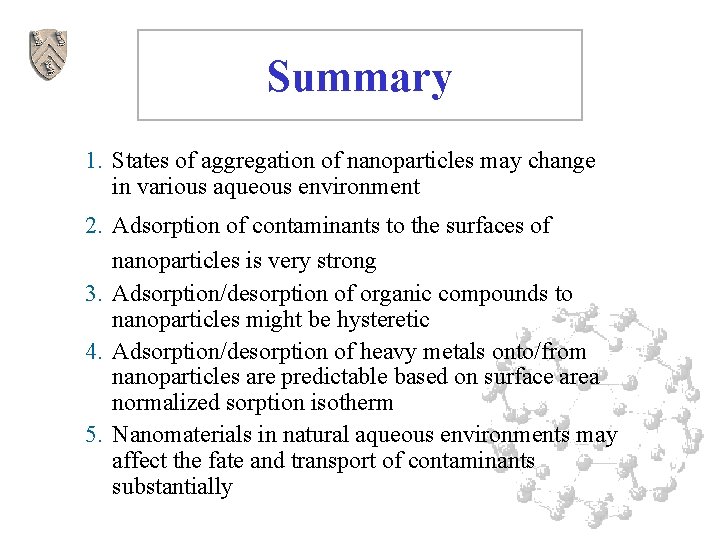
Summary 1. States of aggregation of nanoparticles may change in various aqueous environment 2. Adsorption of contaminants to the surfaces of nanoparticles is very strong 3. Adsorption/desorption of organic compounds to nanoparticles might be hysteretic 4. Adsorption/desorption of heavy metals onto/from nanoparticles are predictable based on surface area normalized sorption isotherm 5. Nanomaterials in natural aqueous environments may affect the fate and transport of contaminants substantially
Future n Responsible Use n Remediation