
Adsorption Equilibrium and Kinetic Study for the Removal
Adsorption Equilibrium and Kinetic Study for the Removal of Nitrate from Drinking Water Supplies By Chitosan Composite Wondalem Misganaw Golie Dr. Sreedevi Upadhyayula Department of Chemical Engineering, Indian Institute of Technology Delhi, India
Outline § Introduction § Objectives § Experimental § Results and discussion § Conclusions
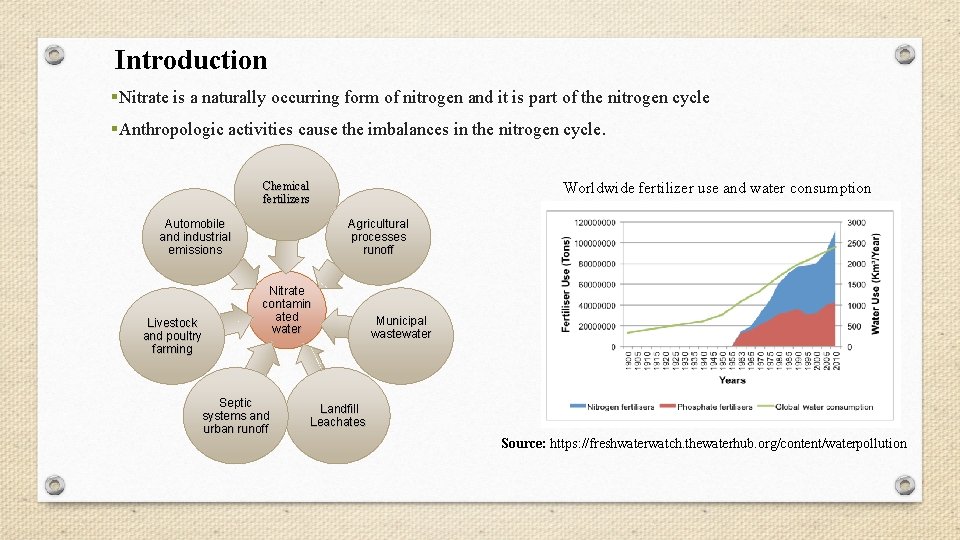
Introduction §Nitrate is a naturally occurring form of nitrogen and it is part of the nitrogen cycle §Anthropologic activities cause the imbalances in the nitrogen cycle. Worldwide fertilizer use and water consumption Chemical fertilizers Automobile and industrial emissions Livestock and poultry farming Agricultural processes runoff Nitrate contamin ated water Septic systems and urban runoff Municipal wastewater Landfill Leachates Source: https: //freshwaterwatch. thewaterhub. org/content/waterpollution
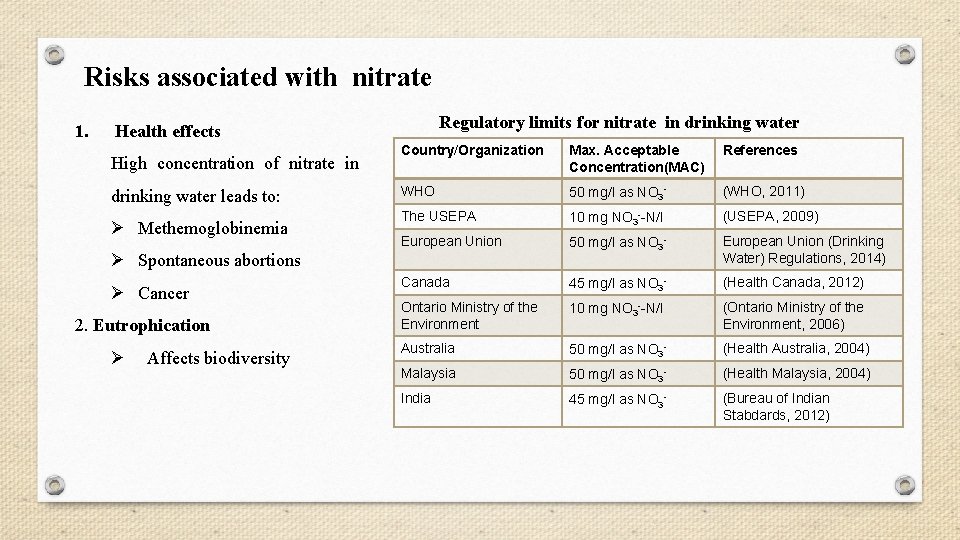
Risks associated with nitrate 1. Regulatory limits for nitrate in drinking water Health effects High concentration of nitrate in drinking water leads to: Ø Methemoglobinemia Country/Organization Max. Acceptable Concentration(MAC) References WHO 50 mg/l as NO 3 - (WHO, 2011) The USEPA 10 mg NO 3 --N/l (USEPA, 2009) European Union 50 mg/l as NO 3 - European Union (Drinking Water) Regulations, 2014) Canada 45 mg/l as NO 3 - (Health Canada, 2012) Ontario Ministry of the Environment 10 mg NO 3 --N/l (Ontario Ministry of the Environment, 2006) Australia 50 mg/l as NO 3 - (Health Australia, 2004) Malaysia 50 mg/l as NO 3 - (Health Malaysia, 2004) India 45 mg/l as NO 3 - (Bureau of Indian Stabdards, 2012) Ø Spontaneous abortions Ø Cancer 2. Eutrophication Ø Affects biodiversity
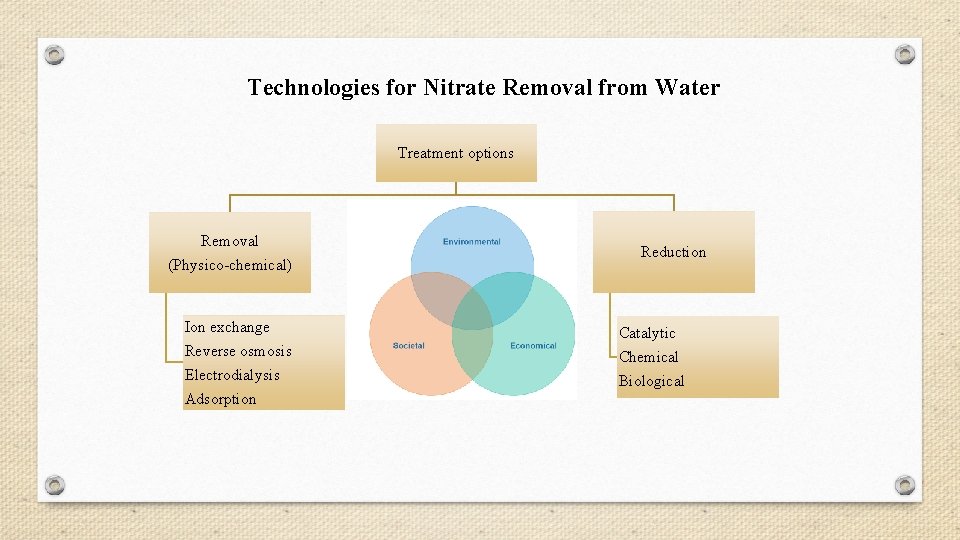
Technologies for Nitrate Removal from Water Treatment options Removal (Physico-chemical) Ion exchange Reverse osmosis Electrodialysis Adsorption Reduction Catalytic Chemical Biological
Objectives üPreparation and characterization of of chitosan/alumina composite for the removal of nitrate from drinking water üExamine the effect of different parameters on the adsorption of nitrate üDetermine kinetic and equilibrium parameters using batch adsorption experimental data üInvestigate the re-usability of adsorbent by cyclic adsorption-regeneration study
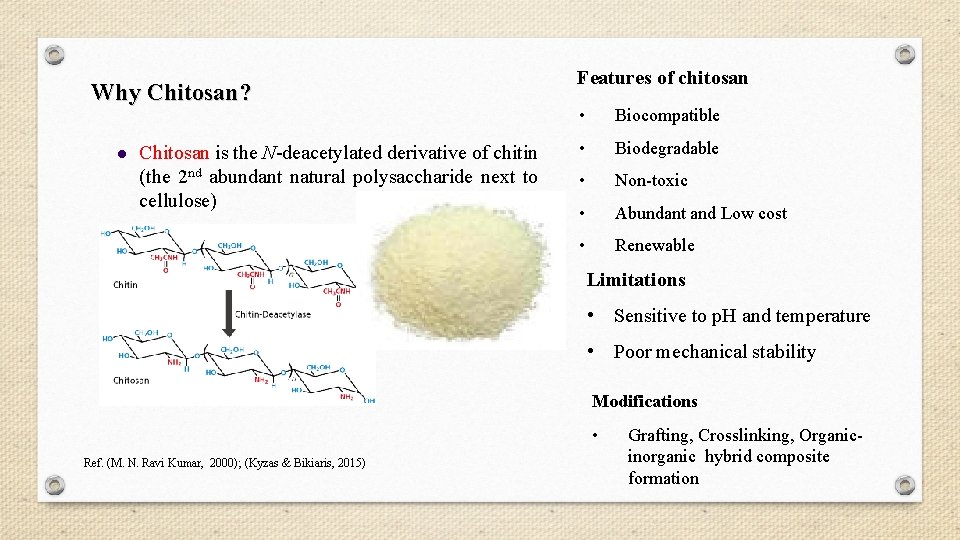
Why Chitosan? l Chitosan is the N-deacetylated derivative of chitin (the 2 nd abundant natural polysaccharide next to cellulose) Features of chitosan • Biocompatible • Biodegradable • Non-toxic • Abundant and Low cost • Renewable Limitations • Sensitive to p. H and temperature • Poor mechanical stability Modifications • Ref. (M. N. Ravi Kumar, 2000); (Kyzas & Bikiaris, 2015) Grafting, Crosslinking, Organicinorganic hybrid composite formation
Experimental (Batch adsorption study) • Approach ü Adsorbent preparation and characterization ü Adsorption (investigation of the effects of operating parameters) ü Regeneration study ü Adsorption equilibrium isotherm study ü Kinetic study ü Thermodynamic parameters
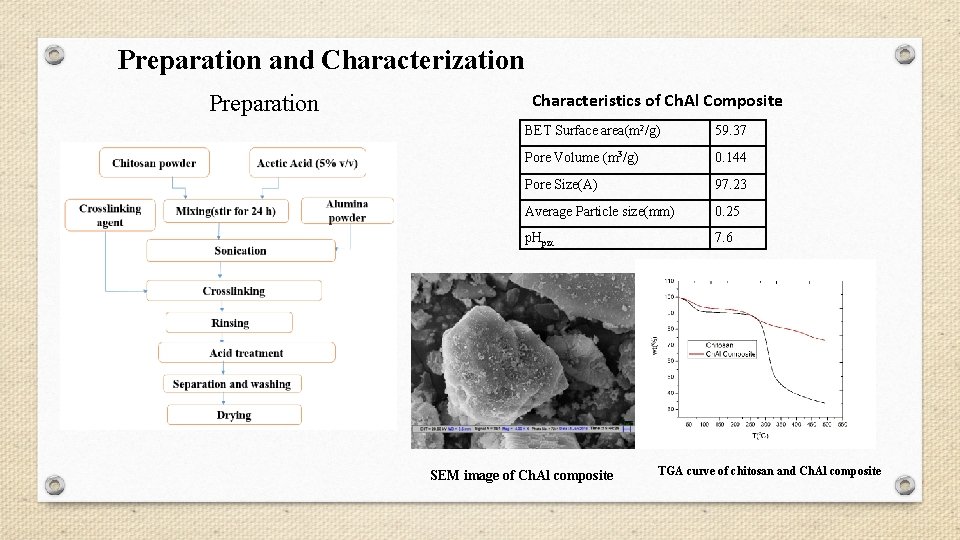
Preparation and Characterization Preparation Characteristics of Ch. Al Composite BET Surface area(m 2/g) 59. 37 Pore Volume (m 3/g) 0. 144 Pore Size(A) 97. 23 Average Particle size(mm) 0. 25 p. Hpzc 7. 6 SEM image of Ch. Al composite TGA curve of chitosan and Ch. Al composite
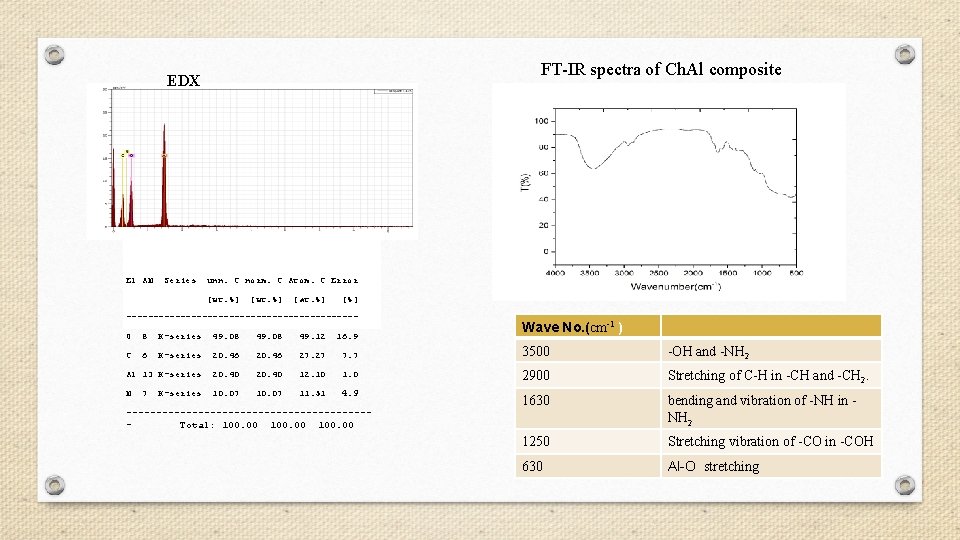
FT-IR spectra of Ch. Al composite EDX El AN Series unn. C norm. C Atom. C Error [wt. %] [at. %] [%] ---------------------- Wave No. (cm-1 ) O 8 K-series 49. 08 49. 12 16. 9 C 6 K-series 20. 46 27. 27 7. 7 3500 -OH and -NH 2 Al 13 K-series 20. 40 12. 10 1. 0 2900 Stretching of C-H in -CH and -CH 2. N 10. 07 11. 51 4. 9 1630 bending and vibration of -NH in NH 2 1250 Stretching vibration of -CO in -COH 630 Al-O stretching 7 K-series --------------------Total: 100. 00

Adsorption study • Batch adsorption was conducted in an orbital shaker • Effects of significant parameters were investigated • Exhausted adsorbent was regenerated
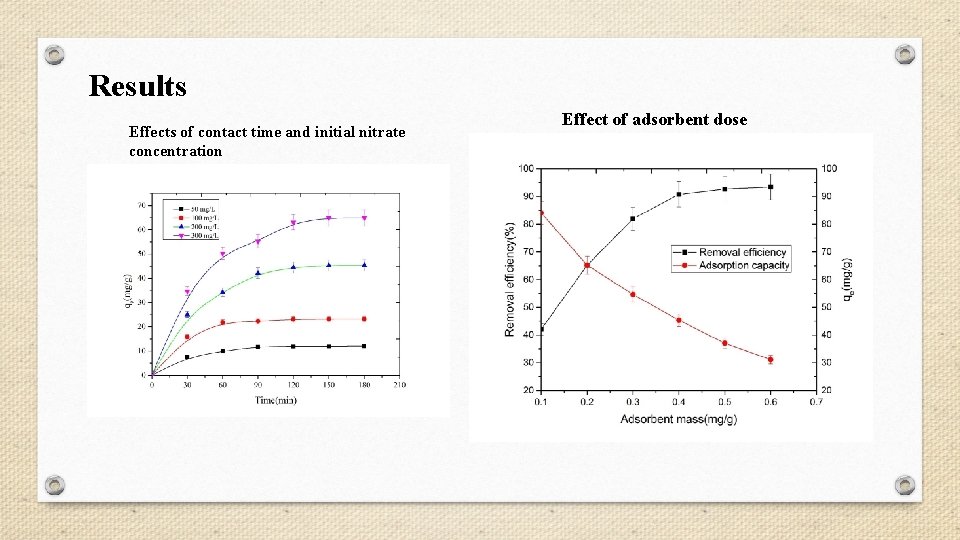
Results Effects of contact time and initial nitrate concentration Effect of adsorbent dose
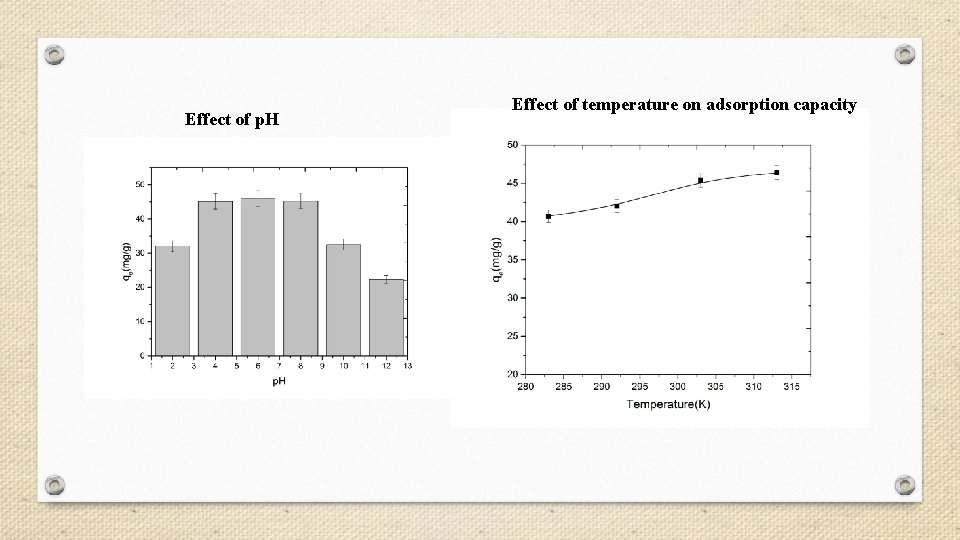
Effect of p. H Effect of temperature on adsorption capacity
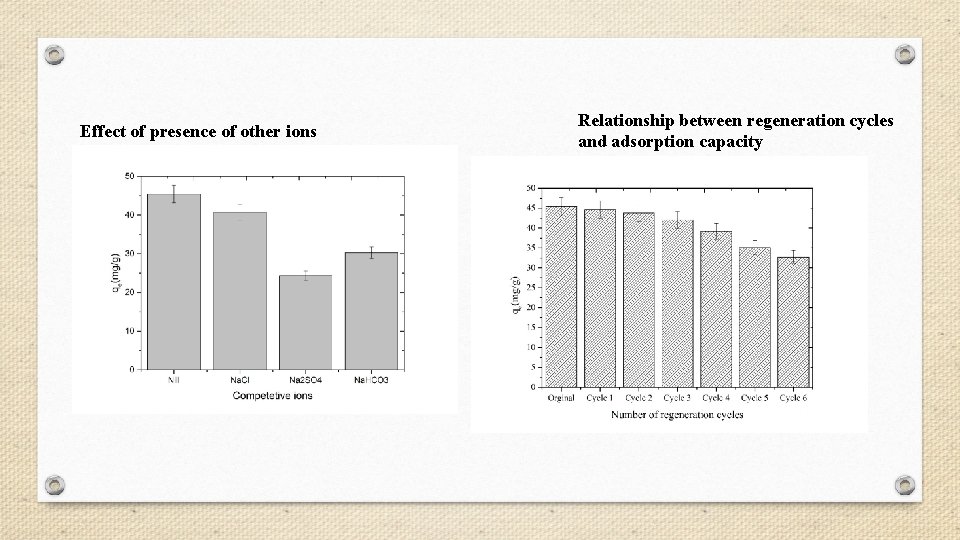
Effect of presence of other ions Relationship between regeneration cycles and adsorption capacity
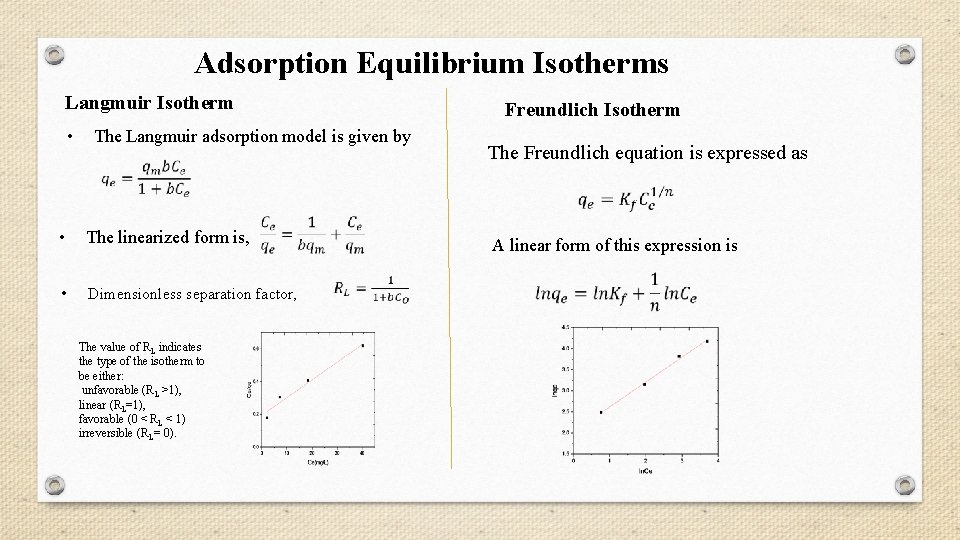
Adsorption Equilibrium Isotherms Langmuir Isotherm • Freundlich Isotherm The Langmuir adsorption model is given by The Freundlich equation is expressed as • The linearized form is, • Dimensionless separation factor, The value of RL indicates the type of the isotherm to be either: unfavorable (RL >1), linear (RL=1), favorable (0 < RL < 1) irreversible (RL= 0). A linear form of this expression is
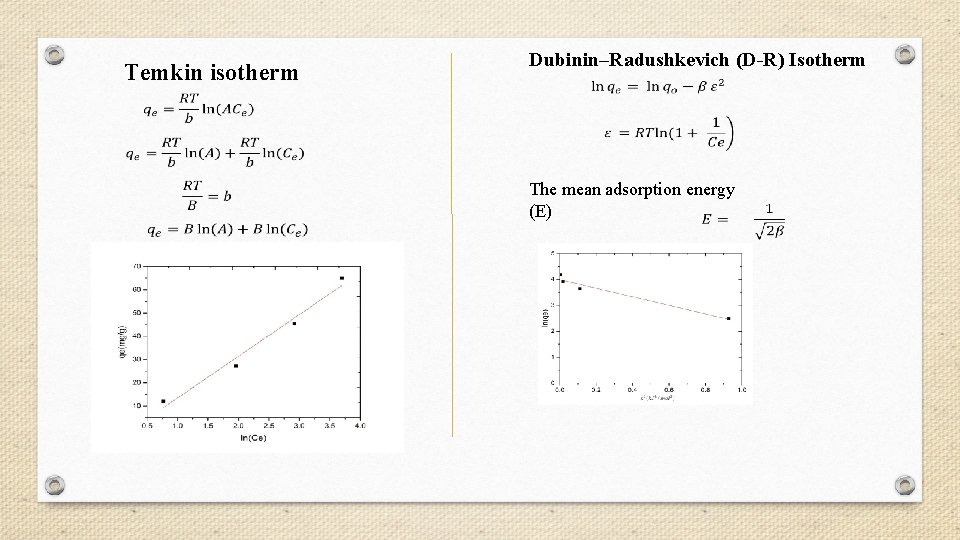
Temkin isotherm Dubinin–Radushkevich (D-R) Isotherm The mean adsorption energy (E)
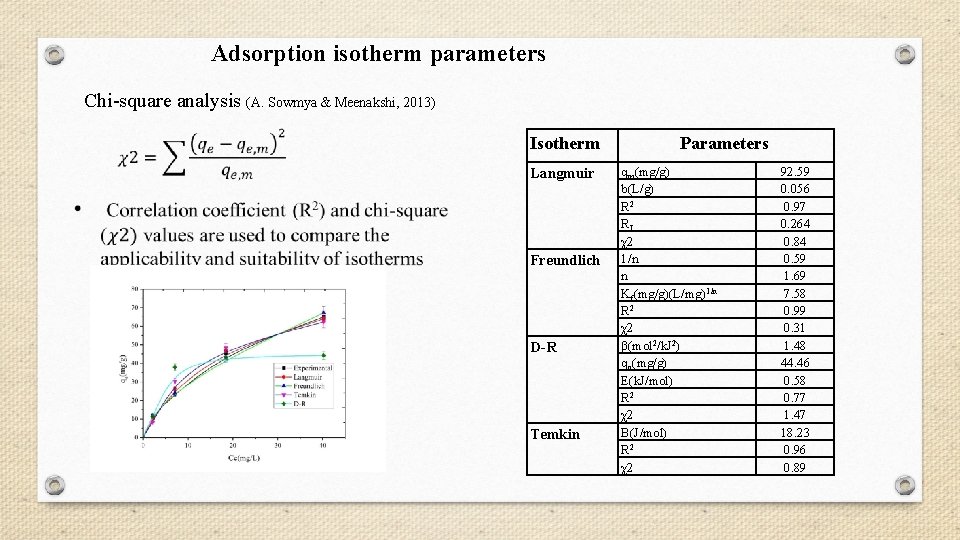
Adsorption isotherm parameters Chi-square analysis (A. Sowmya & Meenakshi, 2013) Isotherm Langmuir Freundlich D-R Temkin Parameters qm(mg/g) b(L/g) R 2 RL χ2 1/n n Kf(mg/g)(L/mg)1/n R 2 χ2 β(mol 2/k. J 2) qo(mg/g) E(k. J/mol) R 2 χ2 B(J/mol) R 2 χ2 92. 59 0. 056 0. 97 0. 264 0. 84 0. 59 1. 69 7. 58 0. 99 0. 31 1. 48 44. 46 0. 58 0. 77 1. 47 18. 23 0. 96 0. 89
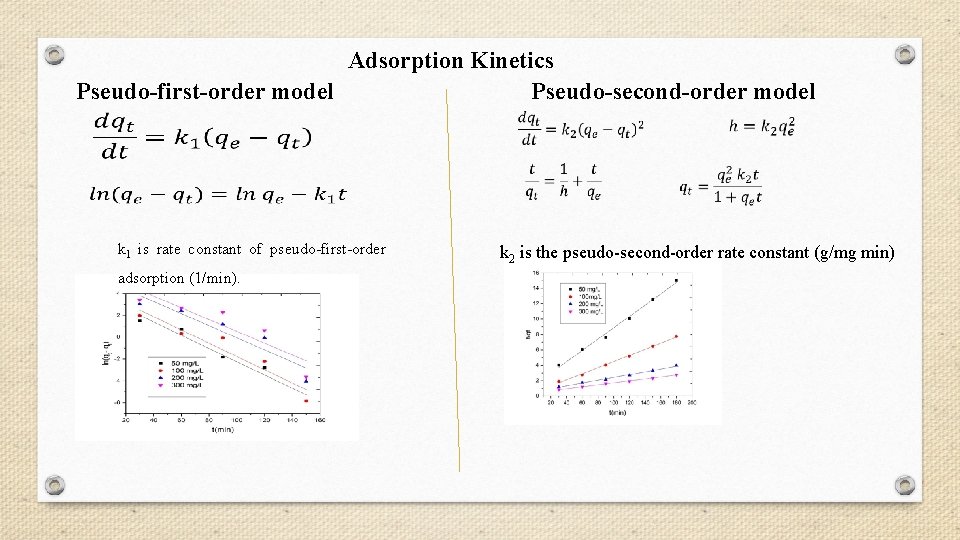
Adsorption Kinetics Pseudo-first-order model Pseudo-second-order model k 1 is rate constant of pseudo-first-order adsorption (1/min). k 2 is the pseudo-second-order rate constant (g/mg min)
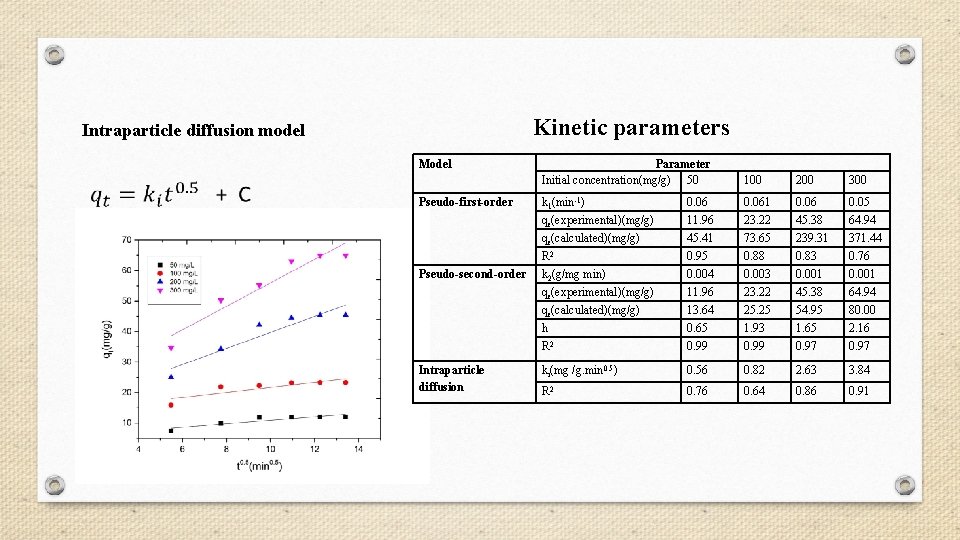
Kinetic parameters Intraparticle diffusion model Model Pseudo-first-order Pseudo-second-order Intraparticle diffusion Parameter Initial concentration(mg/g) 50 100 200 300 k 1(min-1) 0. 061 0. 06 0. 05 qe(experimental)(mg/g) 11. 96 23. 22 45. 38 64. 94 qe(calculated)(mg/g) 45. 41 73. 65 239. 31 371. 44 R 2 0. 95 0. 88 0. 83 0. 76 k 2(g/mg min) 0. 004 0. 003 0. 001 qe(experimental)(mg/g) 11. 96 23. 22 45. 38 64. 94 qe(calculated)(mg/g) 13. 64 25. 25 54. 95 80. 00 h 0. 65 1. 93 1. 65 2. 16 R 2 0. 99 0. 97 ki(mg /g. min 0. 5) 0. 56 0. 82 2. 63 3. 84 R 2 0. 76 0. 64 0. 86 0. 91
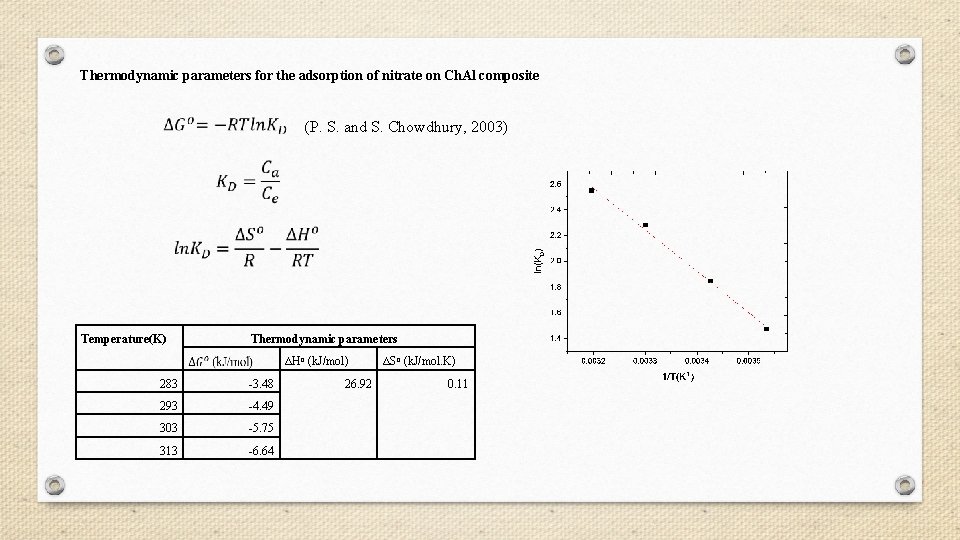
Thermodynamic parameters for the adsorption of nitrate on Ch. Al composite (P. S. and S. Chowdhury, 2003) Temperature(K) Thermodynamic parameters ∆Ho (k. J/mol) 283 -3. 48 293 -4. 49 303 -5. 75 313 -6. 64 26. 92 ∆So (k. J/mol. K) 0. 11
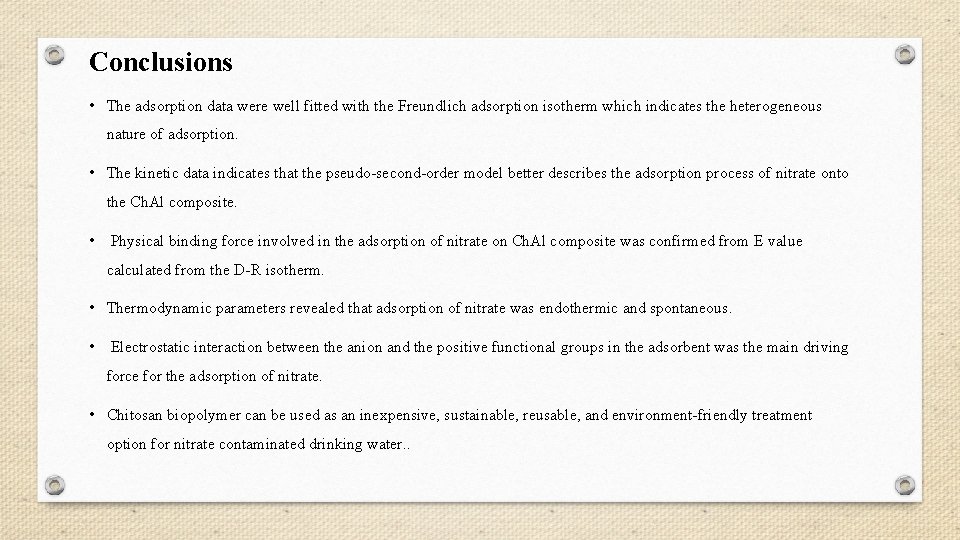
Conclusions • The adsorption data were well fitted with the Freundlich adsorption isotherm which indicates the heterogeneous nature of adsorption. • The kinetic data indicates that the pseudo-second-order model better describes the adsorption process of nitrate onto the Ch. Al composite. • Physical binding force involved in the adsorption of nitrate on Ch. Al composite was confirmed from E value calculated from the D-R isotherm. • Thermodynamic parameters revealed that adsorption of nitrate was endothermic and spontaneous. • Electrostatic interaction between the anion and the positive functional groups in the adsorbent was the main driving force for the adsorption of nitrate. • Chitosan biopolymer can be used as an inexpensive, sustainable, reusable, and environment-friendly treatment option for nitrate contaminated drinking water. .

Thank You
- Slides: 22