
Adrenocorticotropic Hormone Corticotropin Regulation of ACTH release Triggered




- Slides: 55
Adrenocorticotropic Hormone (Corticotropin) • Regulation of ACTH release • Triggered by hypothalamic corticotropinreleasing hormone (CRH) in a daily rhythm • Internal and external factors such as fever, hypoglycemia, and stressors can alter the release of CRH
Gonadotropins • Follicle-stimulating hormone (FSH) and luteinizing hormone (LH) • Secreted by gonadotrophs of the anterior pituitary • FSH stimulates gamete (egg or sperm) production • LH promotes production of gonadal hormones • Absent from the blood in prepubertal boys and girls
Gonadotropins • Regulation of gonadotropin release • Triggered by the gonadotropin-releasing hormone (Gn. RH) during and after puberty • Suppressed by gonadal hormones (feedback)
Prolactin (PRL) • Secreted by lactotrophs of the anterior pituitary • Stimulates milk production
Prolactin (PRL) • Regulation of PRL release • Primarily controlled by prolactin-inhibiting hormone (PIH) (dopamine) • Blood levels rise toward the end of pregnancy • Suckling stimulates PRH release and promotes continued milk production
The Posterior Pituitary • Contains axons of hypothalamic neurons • Stores antidiuretic hormone (ADH) and oxytocin • ADH and oxytocin are released in response to nerve impulses • Both use PIP-calcium second-messenger mechanism at their targets
Oxytocin • Stimulates uterine contractions during childbirth by mobilizing Ca 2+ through a PIP 2 Ca 2+ second-messenger system • Also triggers milk ejection (“letdown” reflex) in women producing milk • Plays a role in sexual arousal and orgasm in males and females
Antidiuretic Hormone (ADH) • Hypothalamic osmoreceptors respond to changes in the solute concentration of the blood • If solute concentration is high • Osmoreceptors depolarize and transmit impulses to hypothalamic neurons • ADH is synthesized and released, inhibiting urine formation
Antidiuretic Hormone (ADH) • If solute concentration is low • ADH is not released, allowing water loss • Alcohol inhibits ADH release and causes copious urine output
Homeostatic Imbalances of ADH • ADH deficiency—diabetes insipidus; huge output of urine and intense thirst • ADH hypersecretion (after neurosurgery, trauma, or secreted by cancer cells)— syndrome of inappropriate ADH secretion (SIADH)
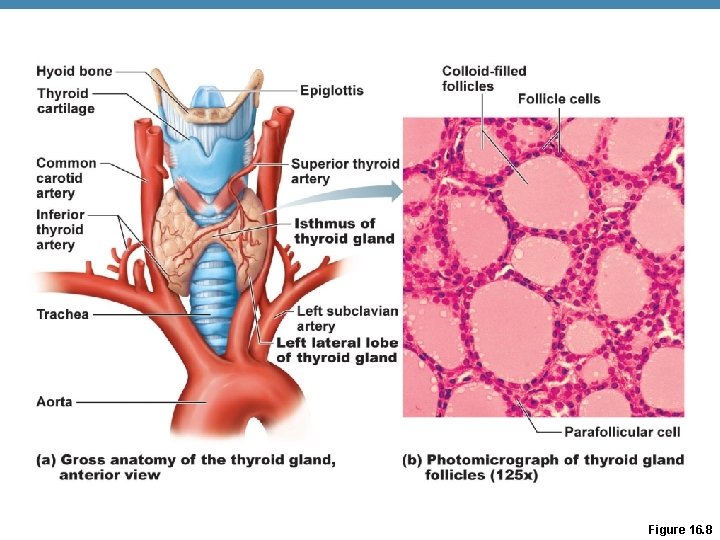
Thyroid Gland • Consists of two lateral lobes connected by a median mass called the isthmus • Composed of follicles that produce the glycoprotein thyroglobulin • Colloid (thyroglobulin + iodine) fills the lumen of the follicles and is the precursor of thyroid hormone • Parafollicular cells produce the hormone calcitonin
Figure 16. 8
Thyroid Hormone (TH) • Actually two related compounds • T 4 (thyroxine); has 2 tyrosine molecules + 4 bound iodine atoms • T 3 (triiodothyronine); has 2 tyrosines + 3 bound iodine atoms
Thyroid Hormone • Major metabolic hormone • Increases metabolic rate and heat production (calorigenic effect) • Plays a role in • Maintenance of blood pressure • Regulation of tissue growth • Development of skeletal and nervous systems • Reproductive capabilities
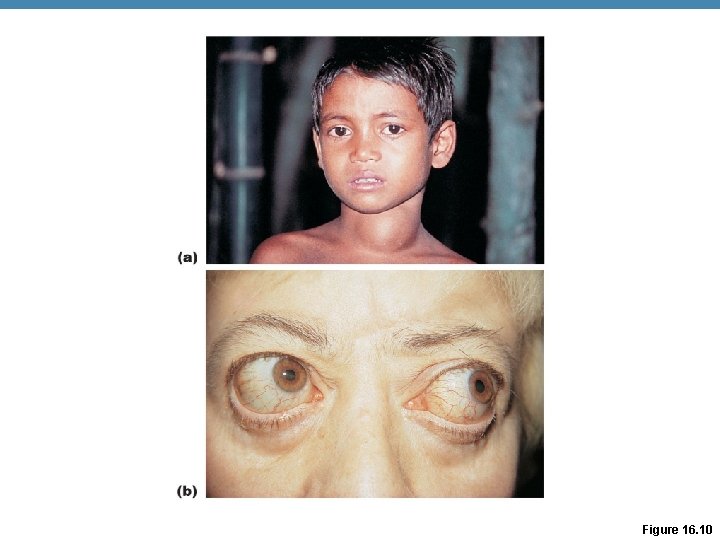
Homeostatic Imbalances of TH • Hyposecretion in adults—myxedema; endemic goiter if due to lack of iodine • Hyposecretion in infants—cretinism • Hypersecretion—Graves’ disease
Figure 16. 10
Calcitonin • Produced by parafollicular (C) cells • Antagonist to parathyroid hormone (PTH) • Inhibits osteoclast activity and release of Ca 2+ from bone matrix
Calcitonin • Stimulates Ca 2+ uptake and incorporation into bone matrix • Regulated by a humoral (Ca 2+ concentration in the blood) negative feedback mechanism • No important role in humans; removal of thyroid (and its C cells) does not affect Ca 2+ homeostasis
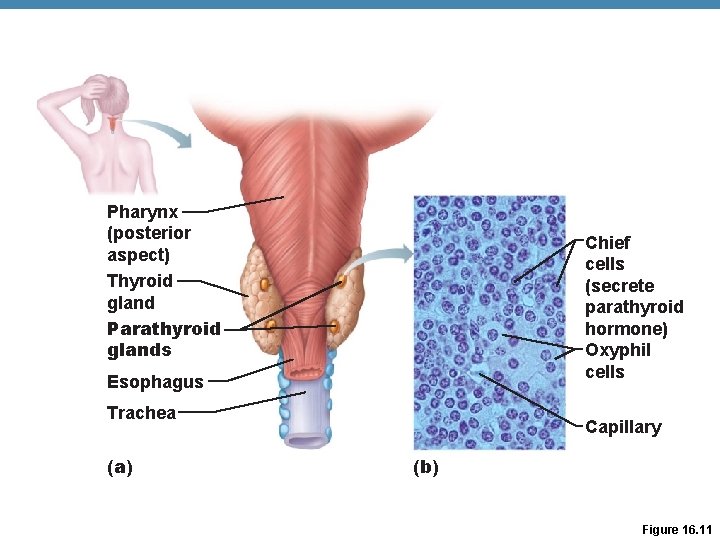
Parathyroid Glands • Four to eight tiny glands embedded in the posterior aspect of the thyroid • Contain oxyphil cells (function unknown) and chief cells that secrete parathyroid hormone (PTH) or parathormone • PTH—most important hormone in Ca 2+ homeostasis
Pharynx (posterior aspect) Thyroid gland Parathyroid glands Chief cells (secrete parathyroid hormone) Oxyphil cells Esophagus Trachea (a) Capillary (b) Figure 16. 11
Parathyroid Hormone • Functions • Stimulates osteoclasts to digest bone matrix • Enhances reabsorption of Ca 2+ and secretion of phosphate by the kidneys • Promotes activation of vitamin D (by the kidneys); increases absorption of Ca 2+ by intestinal mucosa • Negative feedback control: rising Ca 2+ in the blood inhibits PTH release
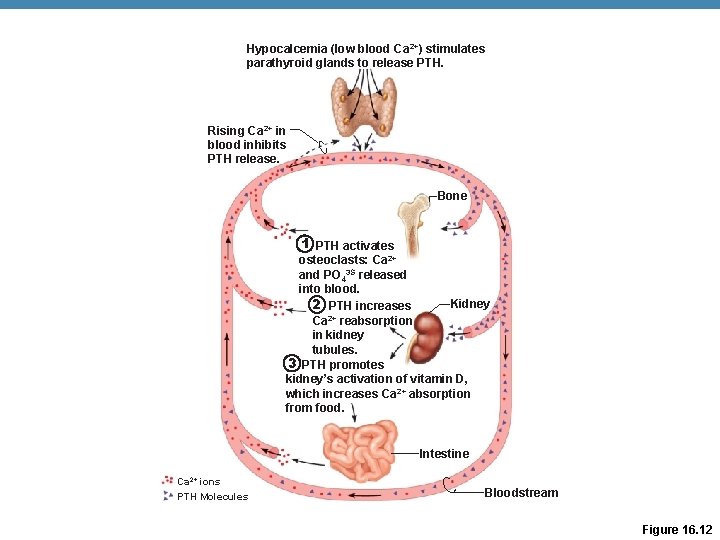
Hypocalcemia (low blood Ca 2+) stimulates parathyroid glands to release PTH. Rising Ca 2+ in blood inhibits PTH release. Bone 1 PTH activates osteoclasts: Ca 2+ and PO 43 S released into blood. Kidney 2 PTH increases 2+ Ca reabsorption in kidney tubules. 3 PTH promotes kidney’s activation of vitamin D, which increases Ca 2+ absorption from food. Intestine Ca 2+ ions PTH Molecules Bloodstream Figure 16. 12
Homeostatic Imbalances of PTH • Hyperparathyroidism due to tumor • Bones soften and deform • Elevated Ca 2+ depresses the nervous system and contributes to formation of kidney stones • Hypoparathyroidism following gland trauma or removal • Results in tetany, respiratory paralysis, and death
Adrenal (Suprarenal) Glands • Paired, pyramid-shaped organs atop the kidneys • Structurally and functionally, they are two glands in one • Adrenal medulla—nervous tissue; part of the sympathetic nervous system • Adrenal cortex—three layers of glandular tissue that synthesize and secrete corticosteroids
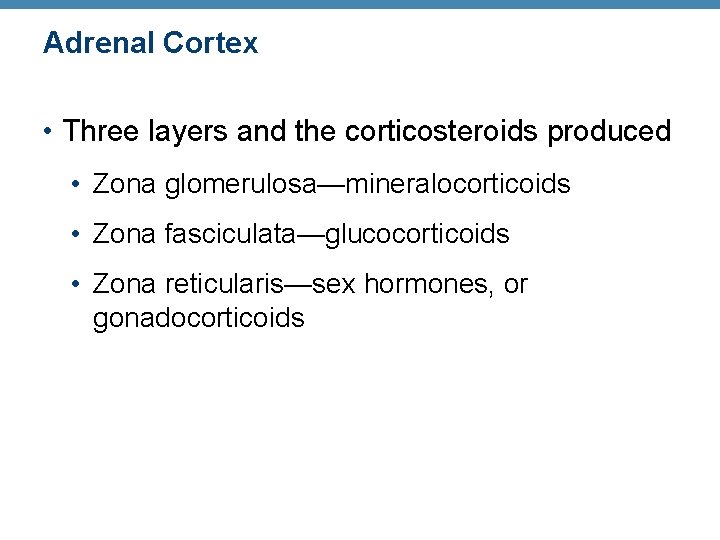
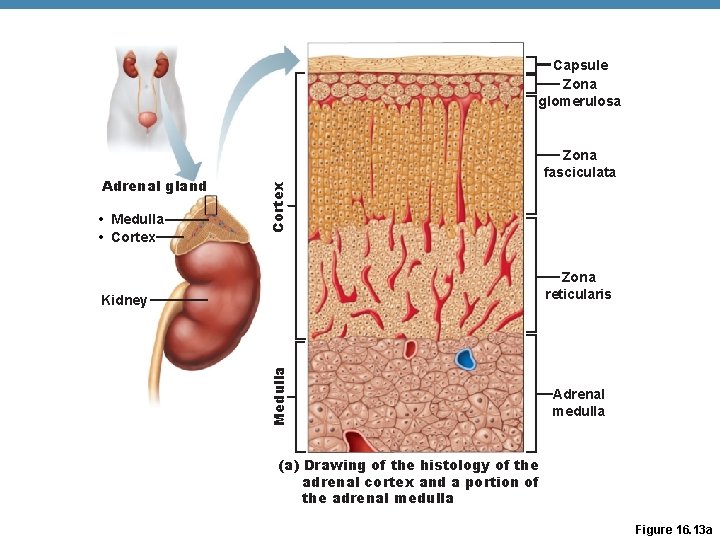
Adrenal Cortex • Three layers and the corticosteroids produced • Zona glomerulosa—mineralocorticoids • Zona fasciculata—glucocorticoids • Zona reticularis—sex hormones, or gonadocorticoids
Capsule Zona glomerulosa • Medulla • Cortex Adrenal gland Zona fasciculata Zona reticularis Medulla Kidney Adrenal medulla (a) Drawing of the histology of the adrenal cortex and a portion of the adrenal medulla Figure 16. 13 a
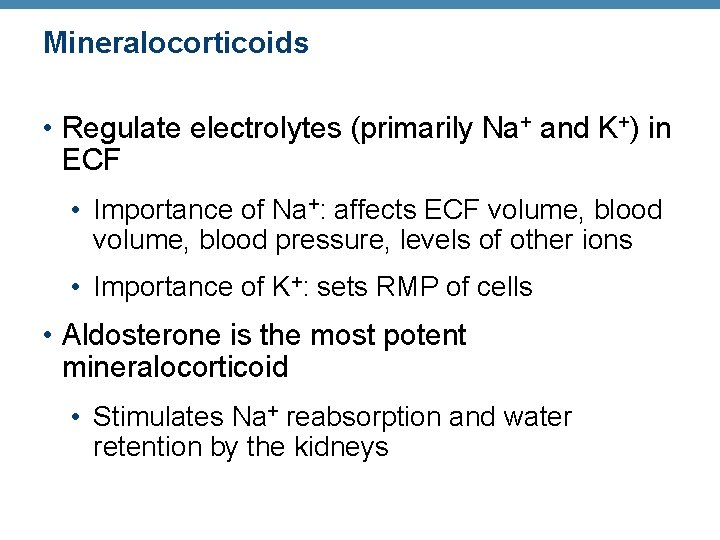
Mineralocorticoids • Regulate electrolytes (primarily Na+ and K+) in ECF • Importance of Na+: affects ECF volume, blood pressure, levels of other ions • Importance of K+: sets RMP of cells • Aldosterone is the most potent mineralocorticoid • Stimulates Na+ reabsorption and water retention by the kidneys
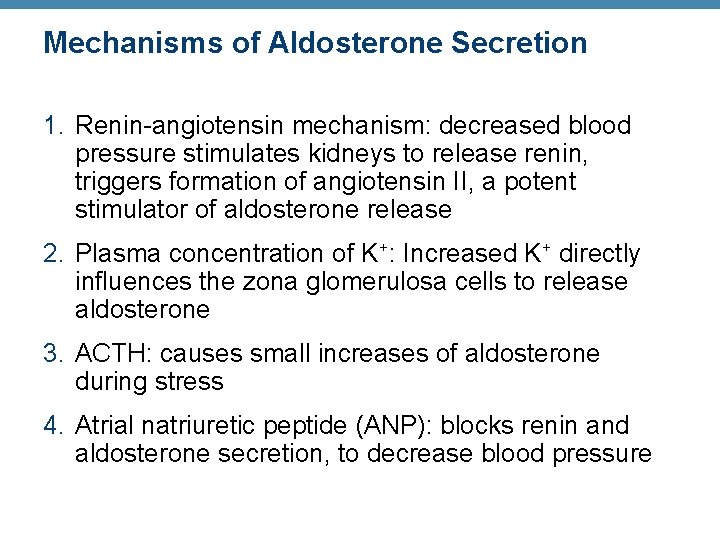
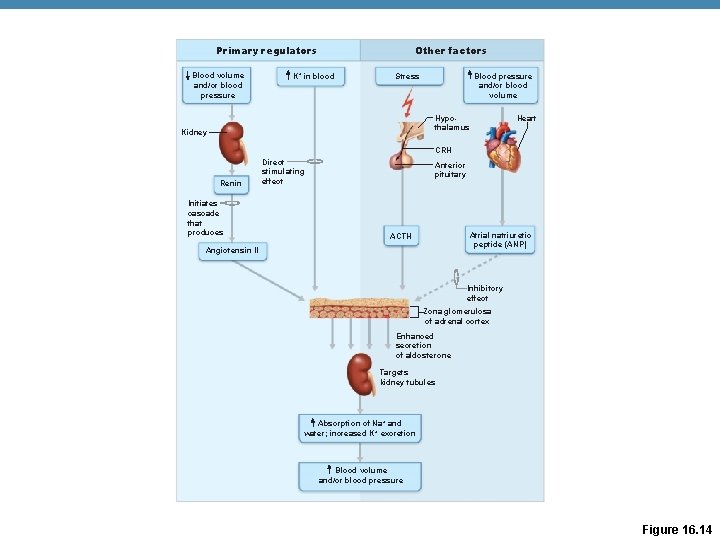
Mechanisms of Aldosterone Secretion 1. Renin-angiotensin mechanism: decreased blood pressure stimulates kidneys to release renin, triggers formation of angiotensin II, a potent stimulator of aldosterone release 2. Plasma concentration of K+: Increased K+ directly influences the zona glomerulosa cells to release aldosterone 3. ACTH: causes small increases of aldosterone during stress 4. Atrial natriuretic peptide (ANP): blocks renin and aldosterone secretion, to decrease blood pressure
Primary regulators Blood volume and/or blood pressure Other factors K+ in blood Stress Blood pressure and/or blood volume Hypothalamus Kidney Heart CRH Renin Initiates cascade that produces Direct stimulating effect Anterior pituitary Atrial natriuretic peptide (ANP) ACTH Angiotensin II Inhibitory effect Zona glomerulosa of adrenal cortex Enhanced secretion of aldosterone Targets kidney tubules Absorption of Na+ and water; increased K + excretion Blood volume and/or blood pressure Figure 16. 14
Homeostatic Imbalances of Aldosterone • Aldosteronism—hypersecretion due to adrenal tumors • Hypertension and edema due to excessive Na+ • Excretion of K+ leading to abnormal function of neurons and muscle
Glucocorticoids (Cortisol) • Keep blood sugar levels relatively constant • Maintain blood pressure by increasing the action of vasoconstrictors
Glucocorticoids (Cortisol) • Cortisol is the most significant glucocorticoid • Released in response to ACTH, patterns of eating and activity, and stress • Prime metabolic effect is gluconeogenesis— formation of glucose from fats and proteins • Promotes rises in blood glucose, fatty acids, and amino acids
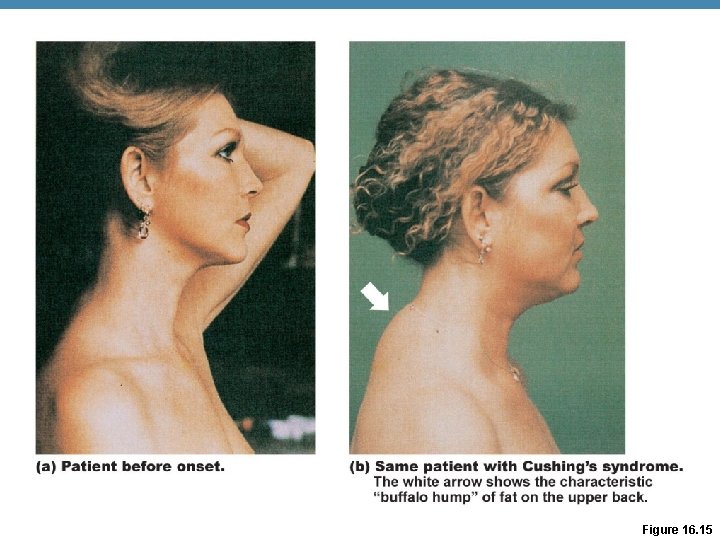
Homeostatic Imbalances of Glucocorticoids • Hypersecretion—Cushing’s syndrome • Depresses cartilage and bone formation • Inhibits inflammation • Depresses the immune system • Promotes changes in cardiovascular, neural, and gastrointestinal function • Hyposecretion—Addison’s disease • Also involves deficits in mineralocorticoids • Decrease in glucose and Na+ levels • Weight loss, severe dehydration, and hypotension
Figure 16. 15
Gonadocorticoids (Sex Hormones) • Most are androgens (male sex hormones) that are converted to testosterone in tissue cells or estrogens in females • May contribute to • The onset of puberty • The appearance of secondary sex characteristics • Sex drive
Adrenal Medulla • Chromaffin cells secrete epinephrine (80%) and norepinephrine (20%) • These hormones cause • Blood glucose levels to rise • Blood vessels to constrict • The heart to beat faster • Blood to be diverted to the brain, heart, and skeletal muscle
Adrenal Medulla • Epinephrine stimulates metabolic activities, bronchial dilation, and blood flow to skeletal muscles and the heart • Norepinephrine influences peripheral vasoconstriction and blood pressure
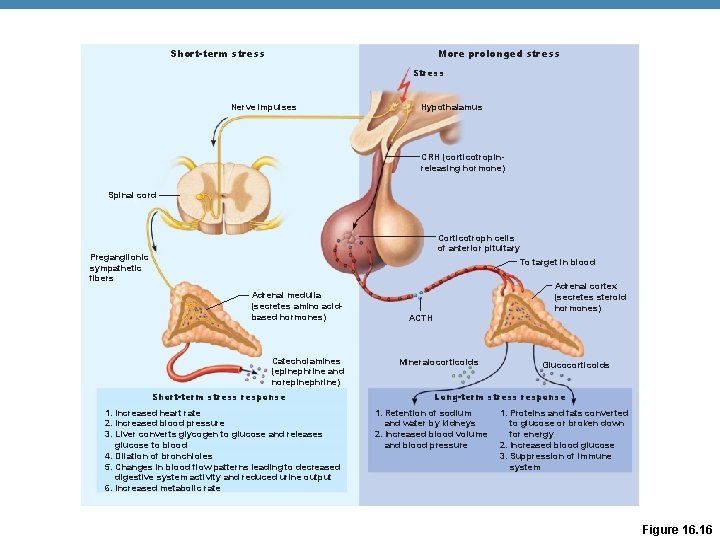
Short-term stress More prolonged stress Stress Nerve impulses Hypothalamus CRH (corticotropinreleasing hormone) Spinal cord Corticotroph cells of anterior pituitary To target in blood Preganglionic sympathetic fibers Adrenal medulla (secretes amino acidbased hormones) Catecholamines (epinephrine and norepinephrine) Short-term stress response 1. Increased heart rate 2. Increased blood pressure 3. Liver converts glycogen to glucose and releases glucose to blood 4. Dilation of bronchioles 5. Changes in blood flow patterns leading to decreased digestive system activity and reduced urine output 6. Increased metabolic rate Adrenal cortex (secretes steroid hormones) ACTH Mineralocorticoids Glucocorticoids Long-term stress response 1. Retention of sodium and water by kidneys 2. Increased blood volume and blood pressure 1. Proteins and fats converted to glucose or broken down for energy 2. Increased blood glucose 3. Suppression of immune system Figure 16. 16
Pineal Gland • Small gland hanging from the roof of the third ventricle • Pinealocytes secrete melatonin, derived from serotonin • Melatonin may affect • Timing of sexual maturation and puberty • Day/night cycles • Physiological processes that show rhythmic variations (body temperature, sleep, appetite)
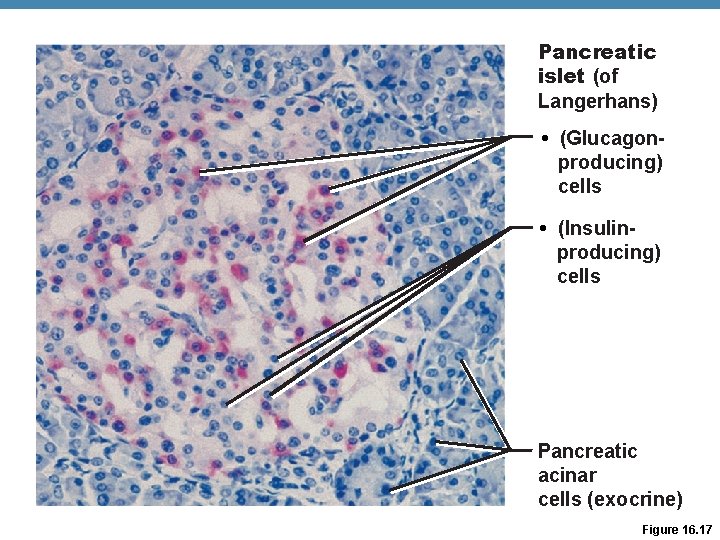
Pancreas • Triangular gland behind the stomach • Has both exocrine and endocrine cells • Acinar cells (exocrine) produce an enzyme-rich juice for digestion • Pancreatic islets (islets of Langerhans) contain endocrine cells • Alpha ( ) cells produce glucagon (a hyperglycemic hormone) • Beta ( ) cells produce insulin (a hypoglycemic hormone)
Pancreatic islet (of Langerhans) • (Glucagonproducing) cells • (Insulinproducing) cells Pancreatic acinar cells (exocrine) Figure 16. 17
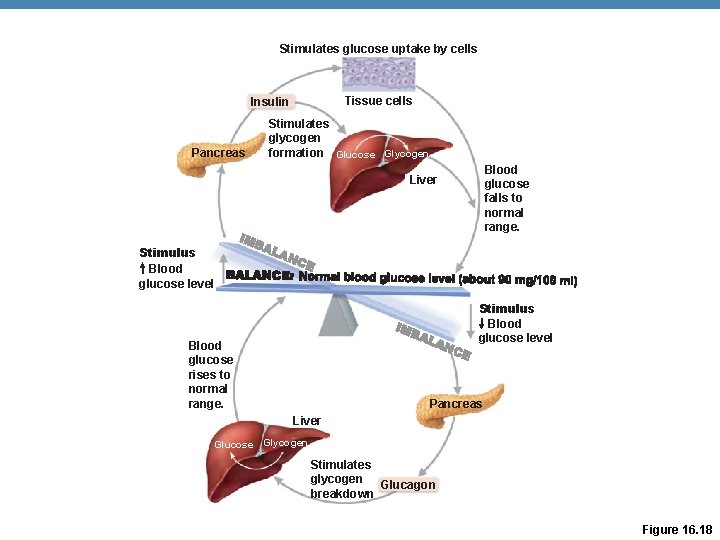
Glucagon • Major target is the liver, where it promotes • Glycogenolysis—breakdown of glycogen to glucose • Gluconeogenesis—synthesis of glucose from lactic acid and noncarbohydrates • Release of glucose to the blood
Insulin • Effects of insulin • Lowers blood glucose levels • Enhances membrane transport of glucose into fat and muscle cells • Participates in neuronal development and learning and memory • Inhibits glycogenolysis and gluconeogenesis
Insulin Action on Cells • Activates a tyrosine kinase enzyme receptor • Cascade leads to increased glucose uptake and enzymatic activities that • Catalyze the oxidation of glucose for ATP production • Polymerize glucose to form glycogen • Convert glucose to fat (particularly in adipose tissue)
Stimulates glucose uptake by cells Tissue cells Insulin Pancreas Stimulates glycogen formation Glucose Glycogen Blood glucose falls to normal range. Liver Stimulus Blood glucose level Blood glucose rises to normal range. Pancreas Liver Glucose Glycogen Stimulates glycogen Glucagon breakdown Figure 16. 18
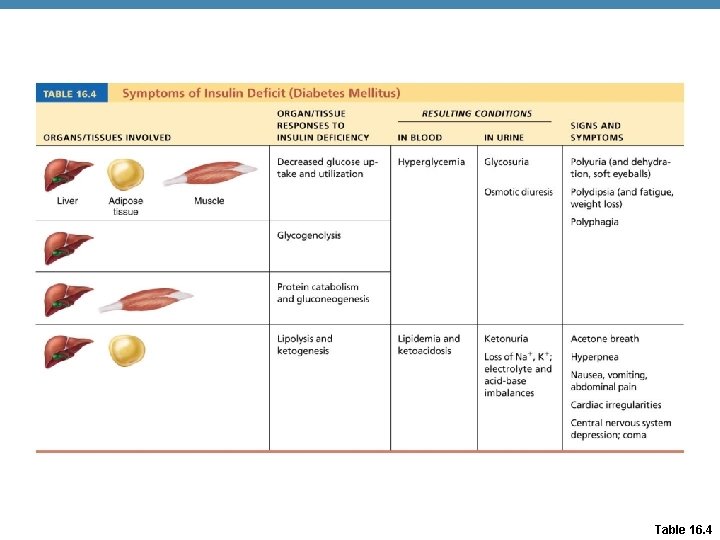
Homeostatic Imbalances of Insulin • Diabetes mellitus (DM) • Due to hyposecretion or hypoactivity of insulin • Three cardinal signs of DM • Polyuria—huge urine output • Polydipsia—excessive thirst • Polyphagia—excessive hunger and food consumption • Hyperinsulinism: • Excessive insulin secretion; results in hypoglycemia, disorientation, unconsciousness
Table 16. 4
Ovaries and Placenta • Gonads produce steroid sex hormones • Ovaries produce estrogens and progesterone responsible for: • Maturation of female reproductive organs • Appearance of female secondary sexual characteristics • Breast development and cyclic changes in the uterine mucosa • The placenta secretes estrogens, progesterone, and human chorionic gonadotropin (h. CG)
Testes • Testes produce testosterone that • Initiates maturation of male reproductive organs • Causes appearance of male secondary sexual characteristics and sex drive • Is necessary for normal sperm production • Maintains reproductive organs in their functional state
Other Hormone-Producing Structures • Heart • Atrial natriuretic peptide (ANP) reduces blood pressure, blood volume, and blood Na+ concentration • Gastrointestinal tract enteroendocrine cells • Gastrin stimulates release of HCl • Secretin stimulates liver and pancreas • Cholecystokinin stimulates pancreas, gallbladder, and hepatopancreatic sphincter
Other Hormone-Producing Structures • Kidneys • Erythropoietin signals production of red blood cells • Renin initiates the renin-angiotensin mechanism • Skin • Cholecalciferol, the precursor of vitamin D • Adipose tissue • Leptin is involved in appetite control, and stimulates increased energy expenditure
Other Hormone-Producing Structures • Skeleton (osteoblasts) • Osteocalcin prods pancreatic beta cells to divide and secrete more insulin, improving glucose handling and reducing body fat • Thymus • Thymulin, thymopoietins, and thymosins are involved in normal the development of the T lymphocytes in the immune response
Developmental Aspects • Hormone-producing glands arise from all three germ layers • Exposure to pesticides, industrial chemicals, arsenic, dioxin, and soil and water pollutants disrupts hormone function • Sex hormones, thyroid hormone, and glucocorticoids are vulnerable to the effects of pollutants • Interference with glucocorticoids may help explain high cancer rates in certain areas
Developmental Aspects • Ovaries undergo significant changes with age and become unresponsive to gonadotropins; problems associated with estrogen deficiency begin to occur • Testosterone also diminishes with age, but effect is not usually seen until very old age
Developmental Aspects • GH levels decline with age and this accounts for muscle atrophy with age • TH declines with age, contributing to lower basal metabolic rates • PTH levels remain fairly constant with age, but lack of estrogen in older women makes them more vulnerable to bone-demineralizing effects of PTH