
ADR and ODR in Colorado by Cynthia A
ADR and ODR in Colorado by Cynthia A. Savage, ODR Director
AGENDA • What is Alternative Dispute Resolution (“ADR”)? • Why use ADR? • ADR in Colorado • The Office of Dispute Resolution (“ODR”)
Dispute Resolution: Many Different Roads
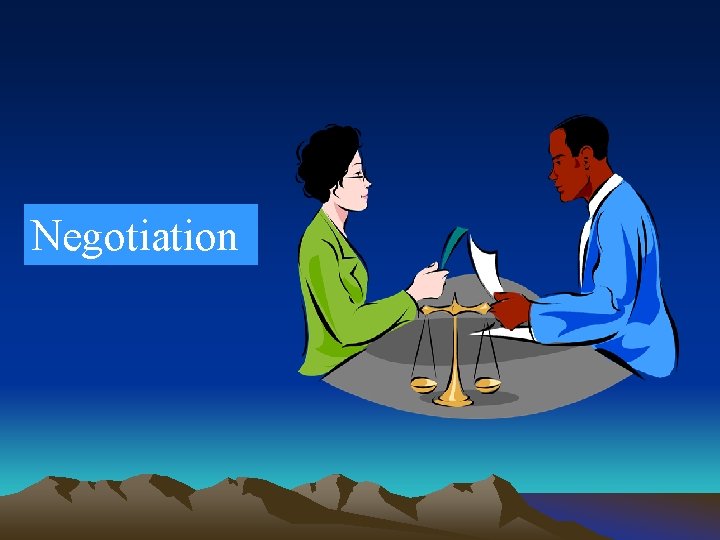
Negotiation
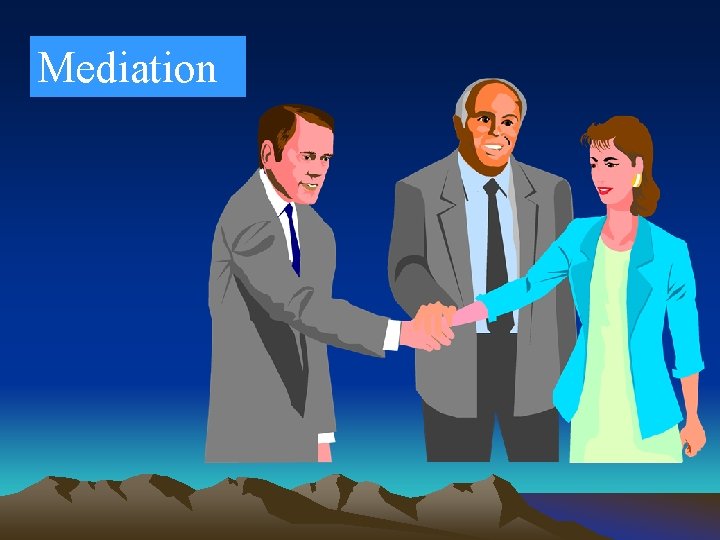
Mediation
Arbitration
Litigation
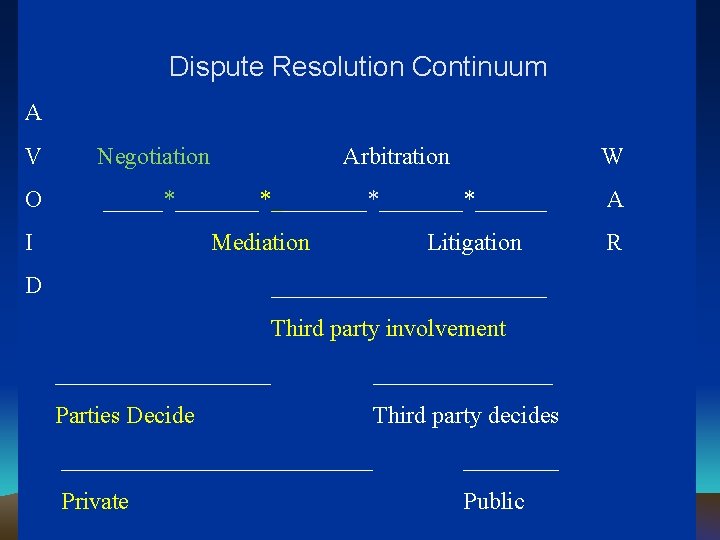
Dispute Resolution Continuum A V Negotiation O _____*_______*______ I Arbitration Mediation D W Litigation ____________ Third party involvement _________ Parties Decide Third party decides _____________ Private Public A R
Why Mediation? ü Cost and time effective ü Saves judicial resources ü High quality solutions ü Preserves relationships ü Prevents problems from recurring ü High satisfaction
Why Arbitration? • Cost and time effective • Saves judicial resources • Decision-maker(s) can have subject matte expertise • Creature of contract: – Party choice of decision-maker and process • More informal than trial
Mediation and Alternative Dispute Resolution In Colorado’s State Courts Legislation z. Colorado Dispute Resolution Act z. House Joint Resolution 97 -1020 z. Hundreds of Statutory References
Colorado Dispute Resolution Act § 13 -22 -301, et seq. (C. R. S. ) v Court authority to refer to mediation or ADR v Exemption from referral v Creation of Office of Dispute Resolution v Parties’ choice of mediator or ADR provider v Confidentiality provided v Limitation on mediator liability v Definitions
House Joint Resolution 97 -1020 • Legislature finds: in the public interest that citizens be able to resolve civil disputes without having to resort to litigation; – Much time and money could be saved, – the courts would be more accessible, and – the public would be better served • Encourages the Judicial Department and the courts to – expand the use of the “Dispute Resolution Act” and – to find and use other techniques and programs to permit and encourage the resolution of disputes without the necessity for litigation.
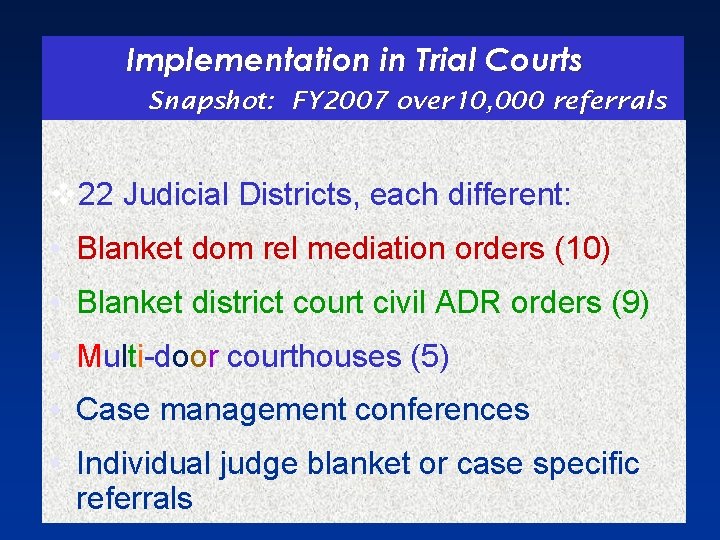
Implementation in Trial Courts Snapshot: FY 2007 over 10, 000 referrals v 22 Judicial Districts, each different: • Blanket dom rel mediation orders (10) • Blanket district court civil ADR orders (9) • Multi-door courthouses (5) • Case management conferences • Individual judge blanket or case specific referrals
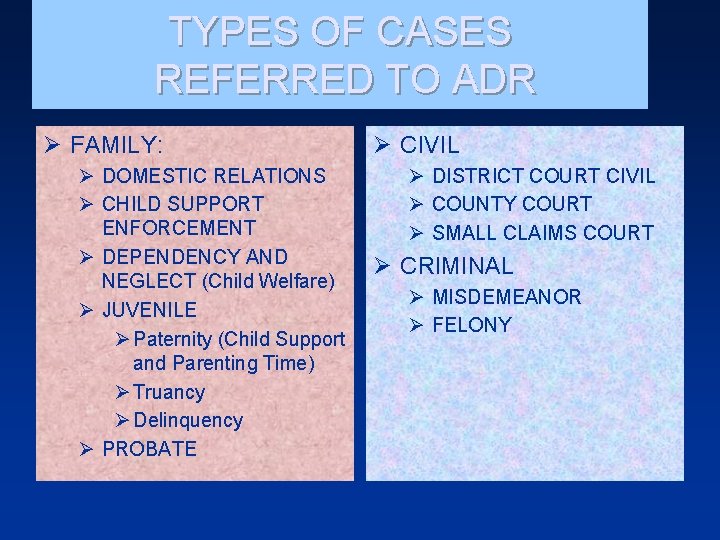
TYPES OF CASES REFERRED TO ADR Ø FAMILY: Ø DOMESTIC RELATIONS Ø CHILD SUPPORT ENFORCEMENT Ø DEPENDENCY AND NEGLECT (Child Welfare) Ø JUVENILE Ø Paternity (Child Support and Parenting Time) Ø Truancy Ø Delinquency Ø PROBATE Ø CIVIL Ø DISTRICT COURT CIVIL Ø COUNTY COURT Ø SMALL CLAIMS COURT Ø CRIMINAL Ø MISDEMEANOR Ø FELONY
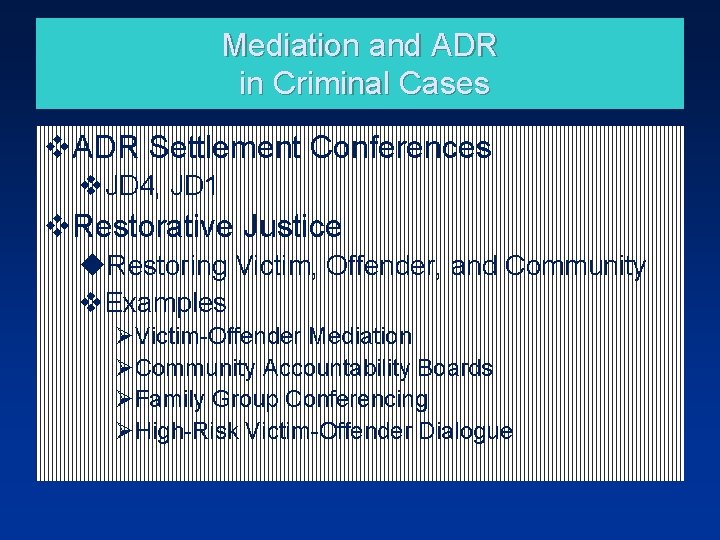
Mediation and ADR in Criminal Cases v. ADR Settlement Conferences v. JD 4, JD 1 v. Restorative Justice u. Restoring Victim, Offender, and Community v. Examples ØVictim-Offender Mediation ØCommunity Accountability Boards ØFamily Group Conferencing ØHigh-Risk Victim-Offender Dialogue
Implementation in the Colorado Court of Appeals § Civil Settlement Program § Administrator: Senior Judge John Criswell § Cases Screened by Staff Attorney § Assigned to senior appellate judges § Scheduling by ODR • Domestic Relations Mediation Pilot – Administrator: ODR and COA – Cases Assigned by COA – Mediation provided by ODR and private sector
ODR Mission and Statutory Authority • The Office of Dispute Resolution, created by the Colorado Dispute Resolution Act, sections 13 -22 -301 et seq. (C. R. S. ) in 1983, is a part of the Colorado Judicial Branch, and is charged with establishing and making available dispute resolution services throughout Colorado. • The courts were encouraged to expand use of the Dispute Resolution Act by HJR 97 -1020.
ODR Mission and Statutory Authority ODR carries out its mission as follows: • assisting the courts in designing, implementing, and administering dispute resolution programs; • consulting with state and local governments; • providing dispute resolution services; • providing information to the public; • collaborating with other individuals and organizations, to increase access to dispute resolution services; and • providing dispute resolution education and training.
ODR Mission and Statutory Authority ODR’s ultimate goals are: 1. To increase access to justice in the form of affordable, effective, appropriate, and humane methods of dispute resolution; 2. To decrease inappropriate methods of dispute resolution, including physical and psychological violence; and 3. To provide an alternative to protracted or bitter litigation.
ODR Staff – FY 08 • Central Office (Denver) – – – Director Projects Manager Business Manager Scheduler Data Specialist/Scheduler • 8 Regional Program Administrators • JD 4 – Assistant to the Program Administrator – 2 Schedulers • JD 18 – Scheduler
ADR Providers W Office of Dispute Resolution ØIndependent Contractors from Private Sector W Community Mediation Services ØLimited Staff ØVolunteers W Private Sector ØPaid Professionals ØVolunteers
Mediation and ADR Professionals - Qualifications § Statutory Reference to “Trained” Mediator § No State Regulation in Colorado O ODR Policies O Voluntary Recommendations for Mediator Education/ Training and Experience O Colorado Model Standards of Conduct for Mediators
ODR ADR Caseload • 1984 – 1985: – 3 volunteer mediators – 54 domestic relations cases from Denver • FY 08: – 55 professional mediators and ADR professionals (independent contractors) – over 5, 000 cases statewide: • Family • Civil • Criminal
ODR SPECIAL PROJECTS • Access and Visitation Grant (federal) – Indigent/low income mediation, parenting facilitation, and PC/DM – CSE pilot projects – Parenting education training for trainers – Supervised parenting conference – CFI Training • Indigent Services – – Domestic relations D&N Truancy other • Mini-Grants for Community Conflict Resolution and Restorative Justice • ADR Statewide Conference
Evaluation of Mediation and ADR in Colorado’s State Courts • Outside Evaluators – Dependency Mediation in Colorado’s Fourth Judicial District (Colorado Springs) – Dissolution of Marriage in the Tenth Judicial District (Pueblo) • Internal Evaluations – ICON (Judicial Computer Network) Statistics – ODR Client Surveys – Customized Pilot Project Evaluations
- Slides: 26