
ADP ATP and Cellular Respiration What Is ATP
- Slides: 25
ADP, ATP and Cellular Respiration
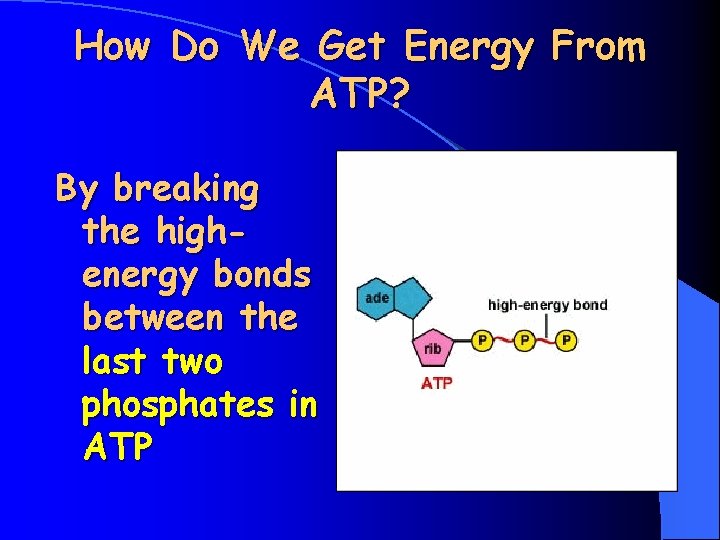
What Is ATP? Energy used by all Cells Adenosine Triphosphate Organic molecule containing highenergy Phosphate bonds
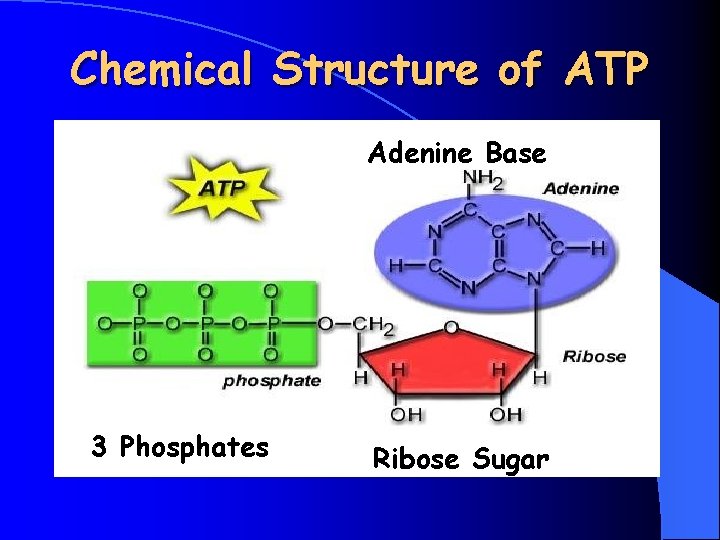
Chemical Structure of ATP Adenine Base 3 Phosphates Ribose Sugar
What Does ATP Do for You? It supplies YOU with ENERGY!
How Do We Get Energy From ATP? By breaking the highenergy bonds between the last two phosphates in ATP
When is ATP Made in the Body? During a Process called Cellular Respiration that takes place in both Plants & Animals
Why do Cellular Respiration? l To release the energy stored in glucose!
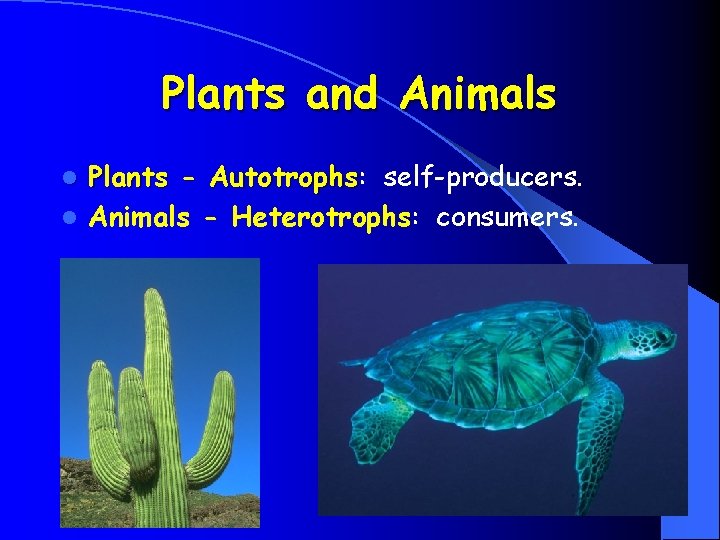
Question: l In what kinds organisms does cellular respiration take place?
Plants and Animals Plants - Autotrophs: Autotrophs self-producers. l Animals - Heterotrophs: consumers. l
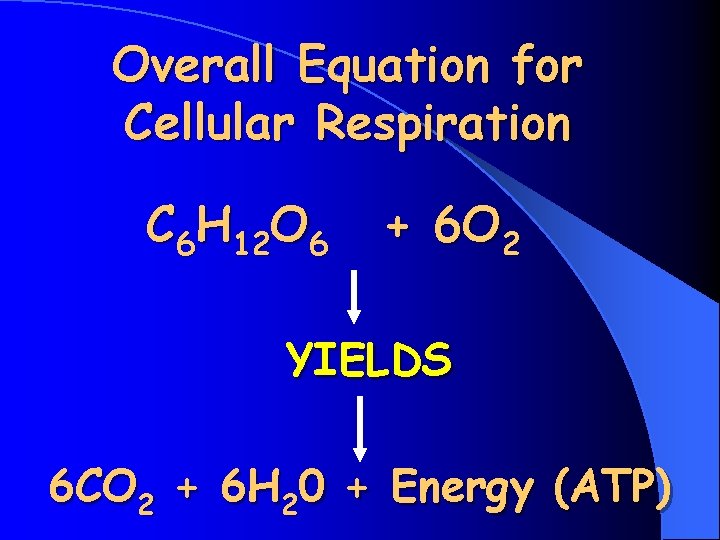
Overall Equation for Cellular Respiration C 6 H 12 O 6 + 6 O 2 YIELDS 6 CO 2 + 6 H 20 + Energy (ATP)
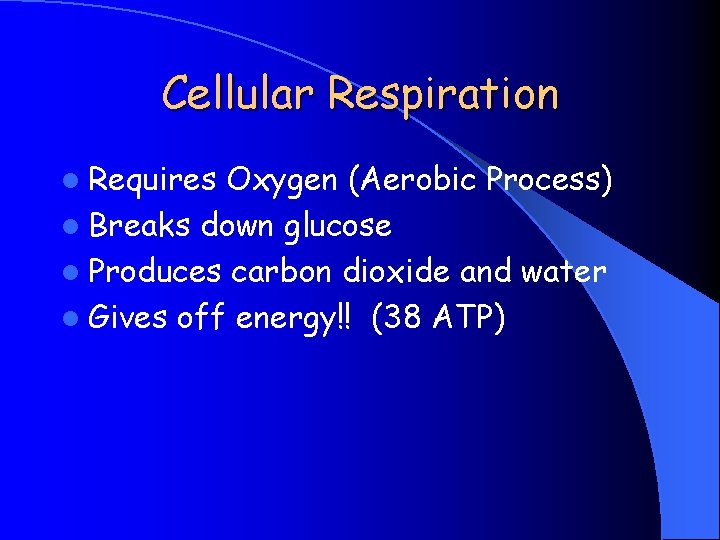
Cellular Respiration l Requires Oxygen (Aerobic Process) l Breaks down glucose l Produces carbon dioxide and water l Gives off energy!! (38 ATP)
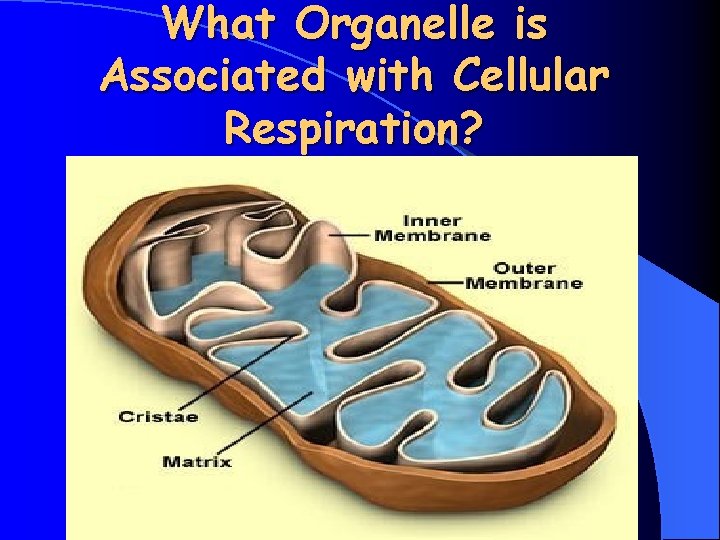
What Organelle is Associated with Cellular Respiration?
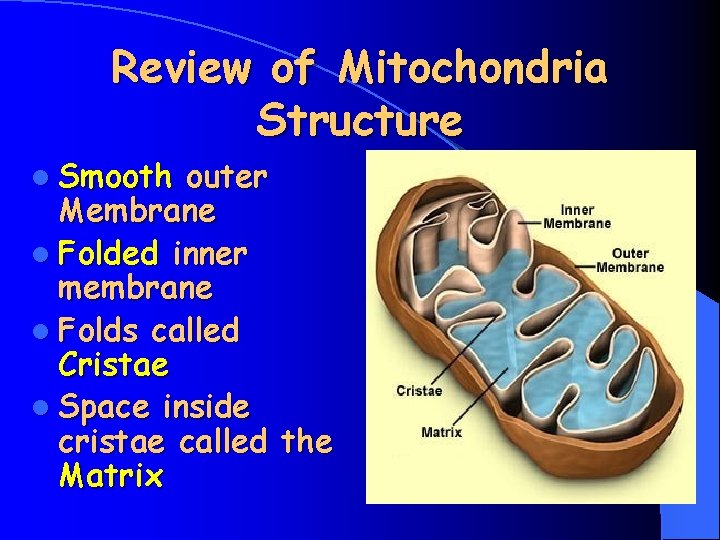
Review of Mitochondria Structure l Smooth outer Membrane l Folded inner membrane l Folds called Cristae l Space inside cristae called the Matrix
What are the Stages of Cellular Respiration? l Glycolysis l The Krebs Cycle l The Electron Transport Chain
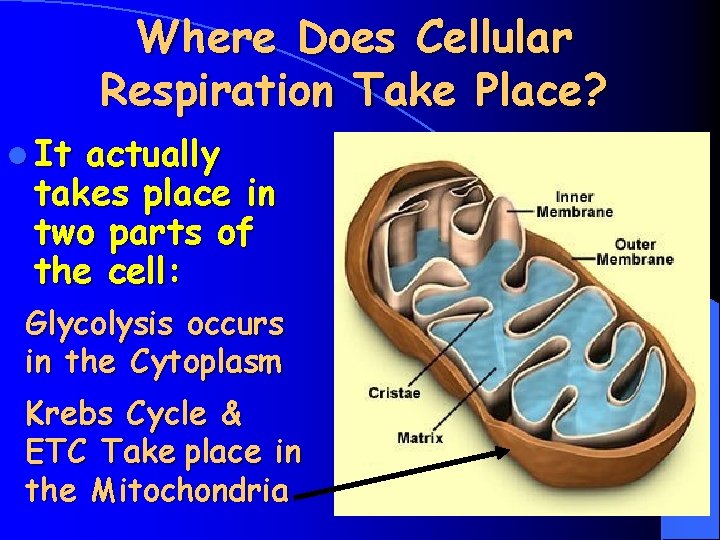
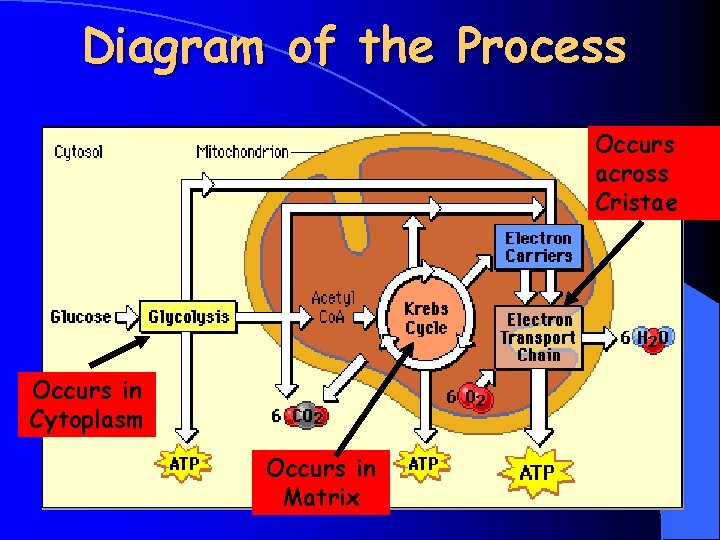
Where Does Cellular Respiration Take Place? l It actually takes place in two parts of the cell: Glycolysis occurs in the Cytoplasm Krebs Cycle & ETC Take place in the Mitochondria
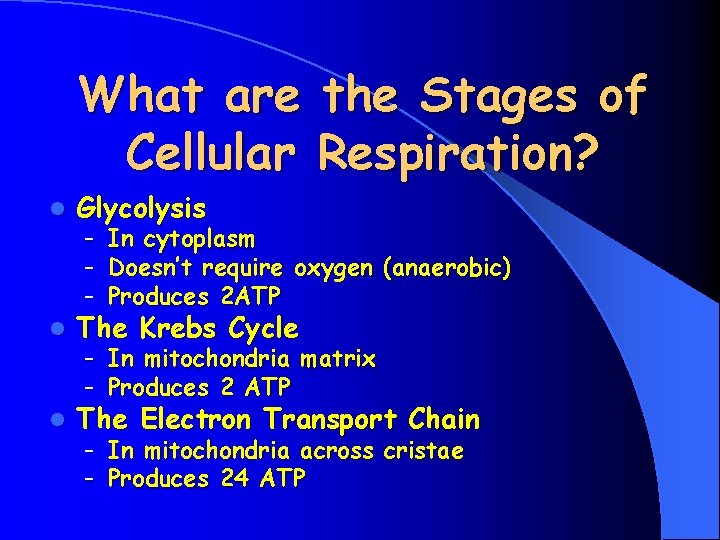
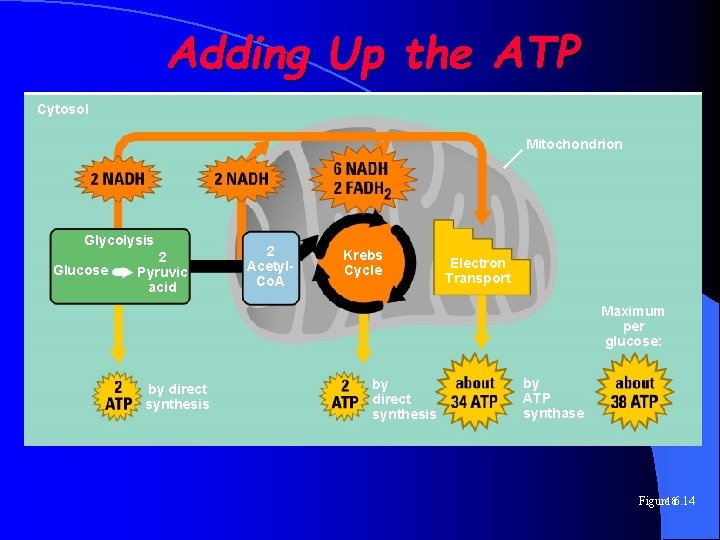
What are the Stages of Cellular Respiration? l Glycolysis l The Krebs Cycle l The Electron Transport Chain – – – In cytoplasm Doesn’t require oxygen (anaerobic) Produces 2 ATP – In mitochondria matrix – Produces 2 ATP – In mitochondria across cristae – Produces 24 ATP
Diagram of the Process Occurs across Cristae Occurs in Cytoplasm Occurs in Matrix
Adding Up the ATP Cytosol Mitochondrion Glycolysis Glucose 2 Pyruvic acid 2 Acetyl. Co. A Krebs Cycle Electron Transport Maximum per glucose: by direct synthesis by ATP synthase Figure 186. 14
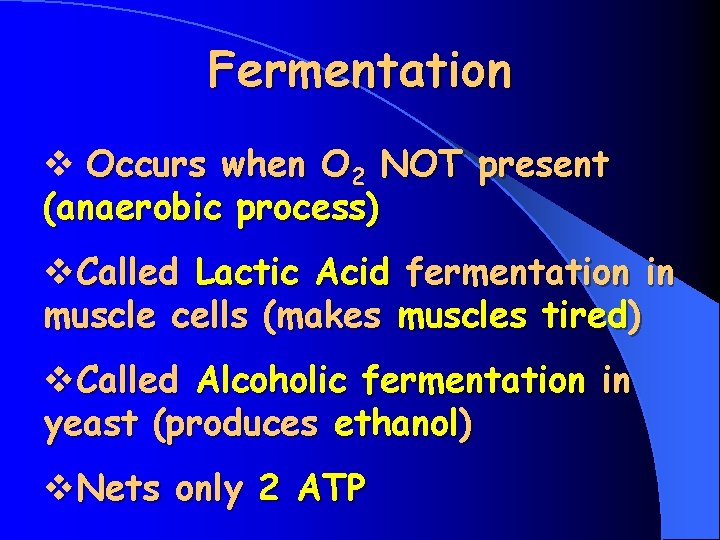
Fermentation v Occurs when O 2 NOT present (anaerobic process) v. Called Lactic Acid fermentation in muscle cells (makes muscles tired) v. Called Alcoholic fermentation in yeast (produces ethanol) v. Nets only 2 ATP
Lactic Acid Fermentation l Can occur in your muscle cells l How glucose is broken down when O 2 is NOT present (anaerobic process) l Lactic Acid is produced (makes muscles tired) l Only makes 2 ATP!
Alcoholic Fermentation l l l Happens in yeast – how they get ATP! How glucose is broken down when O 2 is NOT present (anaerobic process) Produces CO 2 and Ethanol Only makes 2 ATP! How bread is made! How beer and wine are made!
FEELING THE “BURN” When you exercise: l Muscles need energy in order to perform work l Your cells use oxygen to release energy from the sugar glucose l Both aerobic and anaerobic burning of glucose can take place in your cells 22
Aerobic & Anaerobic Metabolism l Aerobic metabolism - When enough oxygen reaches cells to support energy needs - Maximum energy production (38 ATP) l Anaerobic metabolism – When the demand for oxygen outstrips the body’s ability to deliver it – Low energy production (2 ATP) 23
Anaerobic Metabolism l Without enough oxygen, muscle cells break down glucose to produce lactic acid l Lactic acid is associated with the “burn” associated with heavy exercise l If too much lactic acid builds up, your muscles give out 24
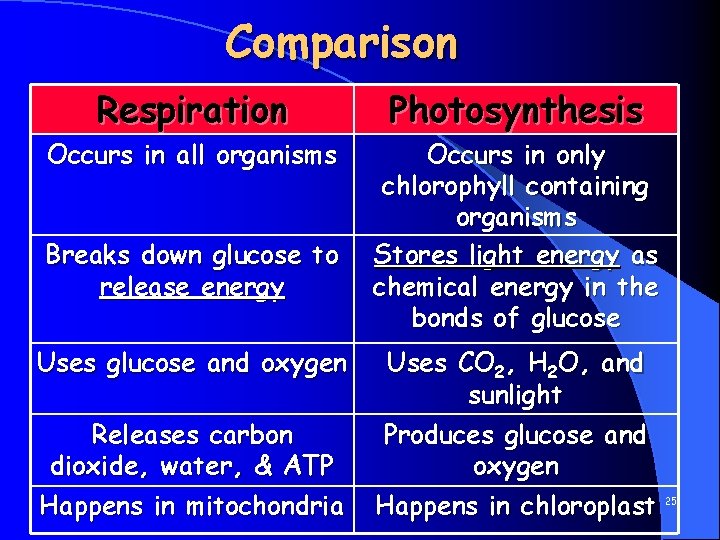
Comparison Respiration Photosynthesis Occurs in all organisms Occurs in only chlorophyll containing organisms Stores light energy as chemical energy in the bonds of glucose Breaks down glucose to release energy Uses glucose and oxygen Releases carbon dioxide, water, & ATP Happens in mitochondria Uses CO 2, H 2 O, and sunlight Produces glucose and oxygen Happens in chloroplast 25