
ADP ATP and Cellular Respiration Cellular Respiration Have

- Slides: 36
ADP, ATP and Cellular Respiration
Cellular Respiration Have you ever wondered why you need to breathe? What happens when you stop breathing? [Think about life on a molecular level!]
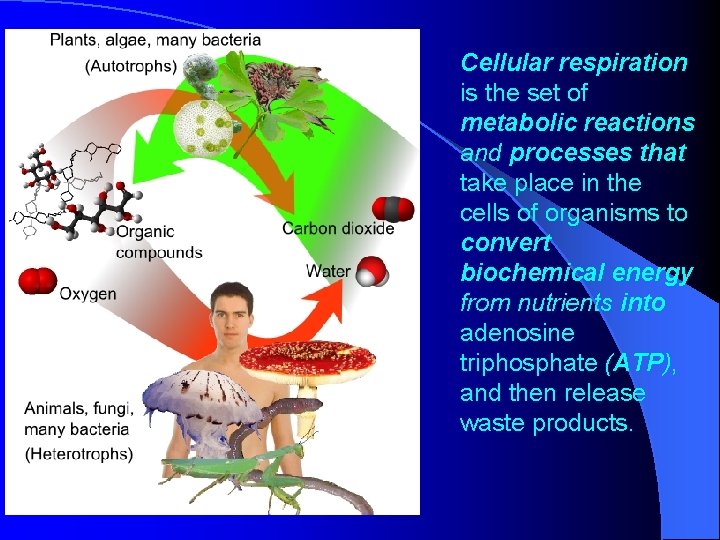
Cellular respiration is the set of metabolic reactions and processes that take place in the cells of organisms to convert biochemical energy from nutrients into adenosine triphosphate (ATP), and then release waste products.
What Is ATP? Adenosine Triphosphate Energy used by all Cells Organic molecule containing highenergy Phosphate bonds
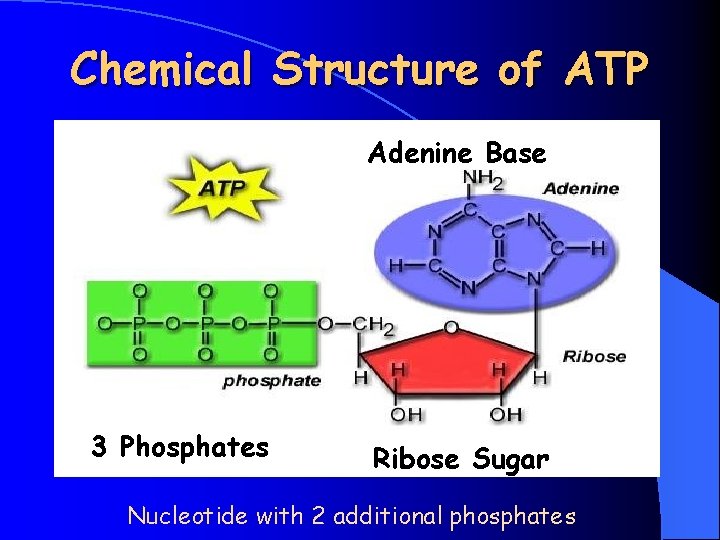
Chemical Structure of ATP Adenine Base 3 Phosphates Ribose Sugar Nucleotide with 2 additional phosphates
What Does ATP Do for You? It supplies YOU with ENERGY!
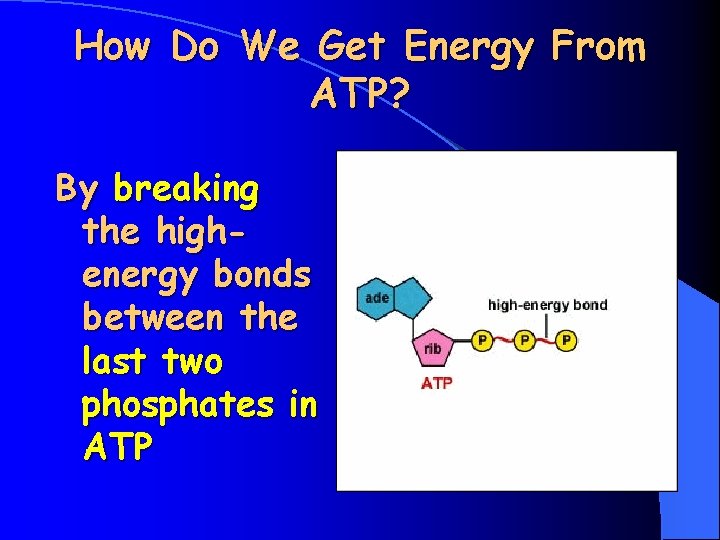
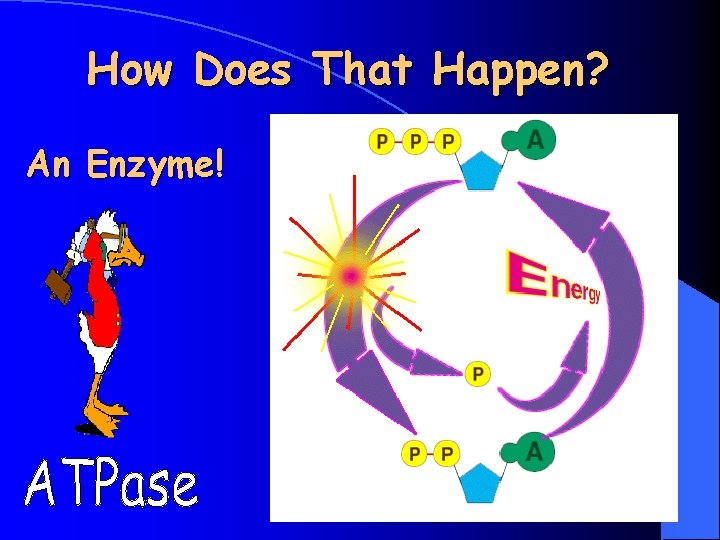
How Do We Get Energy From ATP? By breaking the highenergy bonds between the last two phosphates in ATP
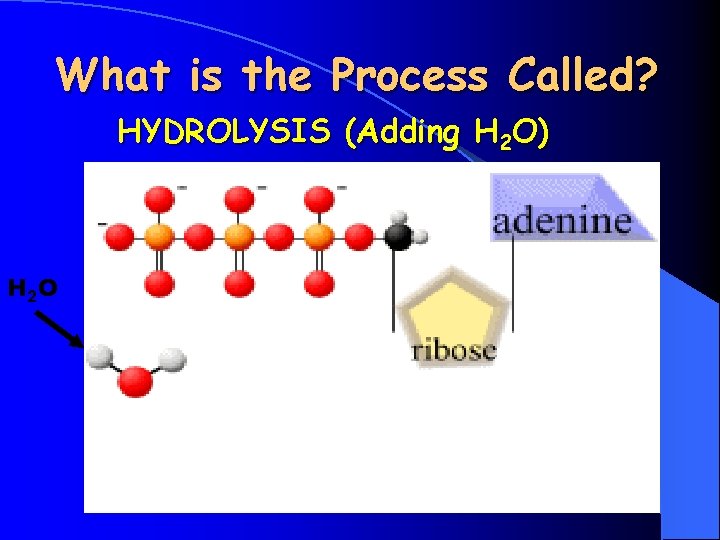
What is the Process Called? HYDROLYSIS (Adding H 2 O) H 2 O
How Does That Happen? An Enzyme!
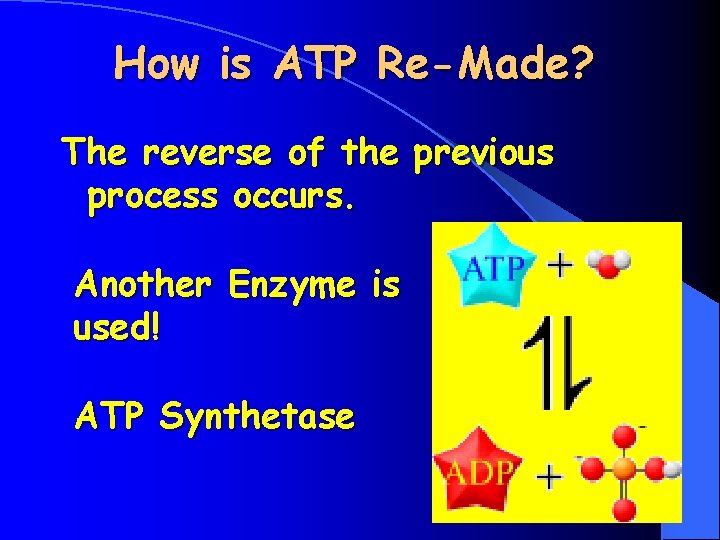
How is ATP Re-Made? The reverse of the previous process occurs. Another Enzyme is used! ATP Synthetase
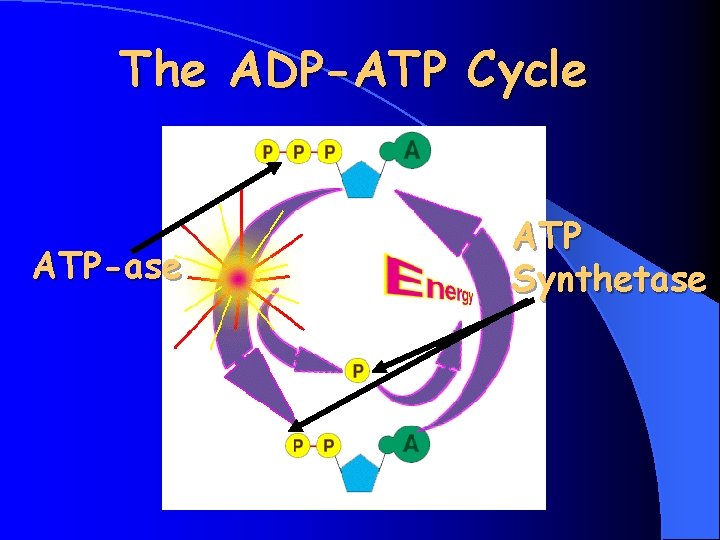
The ADP-ATP Cycle ATP-ase ATP Synthetase
When is ATP Made in the Body? During a Process called Cellular Respiration that takes place in both Plants & Animals
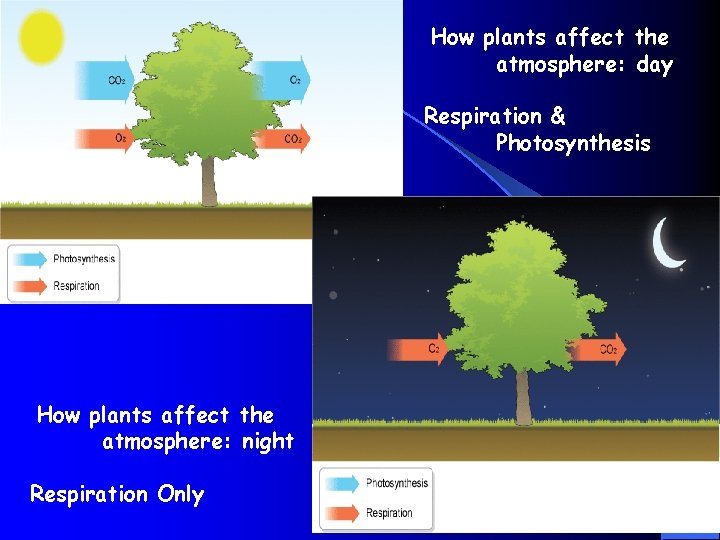
Do Plants RESPIRE ? ? ? l. How do you know? [Think about what you know about photosynthesis. ]
How plants affect the atmosphere: day Respiration & Photosynthesis How plants affect the atmosphere: night Respiration Only
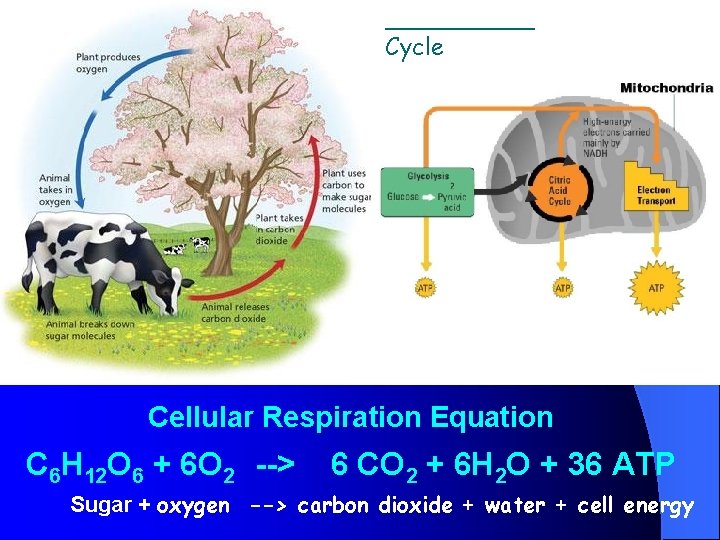
_____ Cycle Cellular Respiration Equation C 6 H 12 O 6 + 6 O 2 --> 6 CO 2 + 6 H 2 O + 36 ATP Sugar + oxygen --> carbon dioxide + water + cell energy
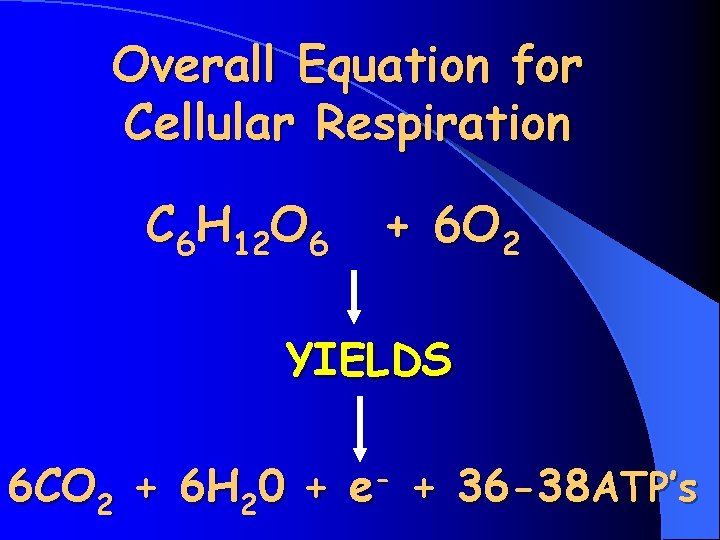
Overall Equation for Cellular Respiration C 6 H 12 O 6 + 6 O 2 YIELDS 6 CO 2 + 6 H 20 + e- + 36 -38 ATP’s
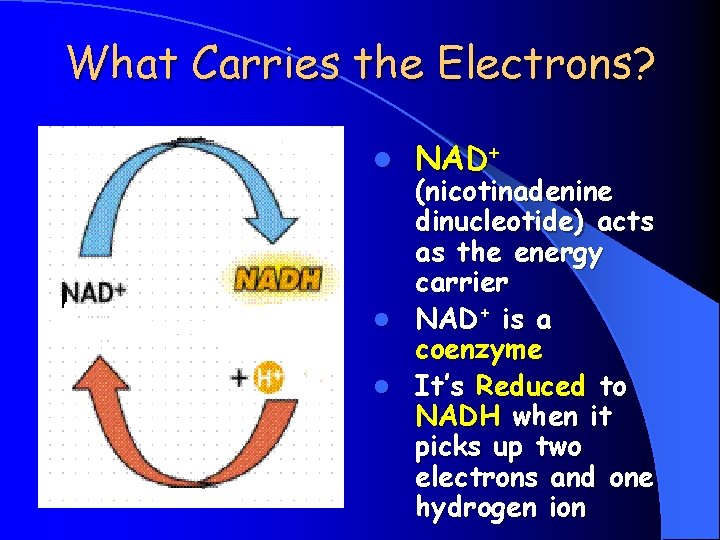
What Carries the Electrons? l NAD+ (nicotinadenine dinucleotide) acts as the energy carrier l NAD+ is a coenzyme l It’s Reduced to NADH when it picks up two electrons and one hydrogen ion
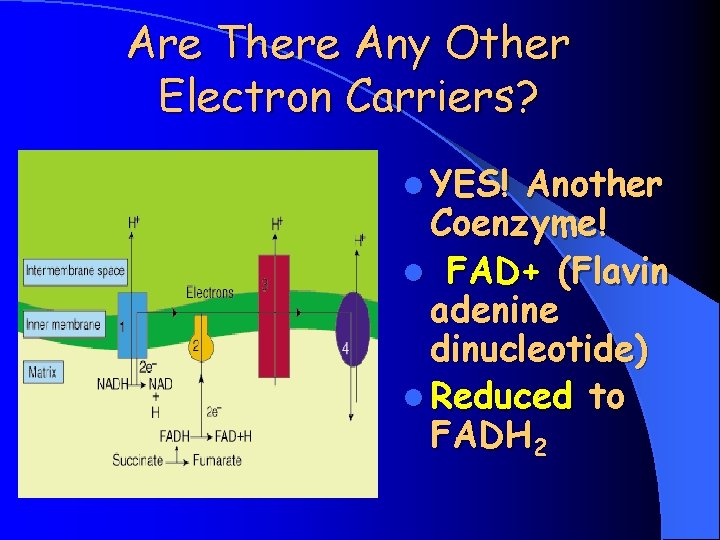
Are There Any Other Electron Carriers? l YES! Another Coenzyme! l FAD+ (Flavin adenine dinucleotide) l Reduced to FADH 2
Other Cellular Respiration Facts l Metabolic Pathway that breaks down carbohydrates [sugar=food] l Process is Exergonic as High-energy Glucose is broken into CO 2 and H 2 O energy is released! l Process is also Catabolic because larger Glucose breaks into smaller molecules.
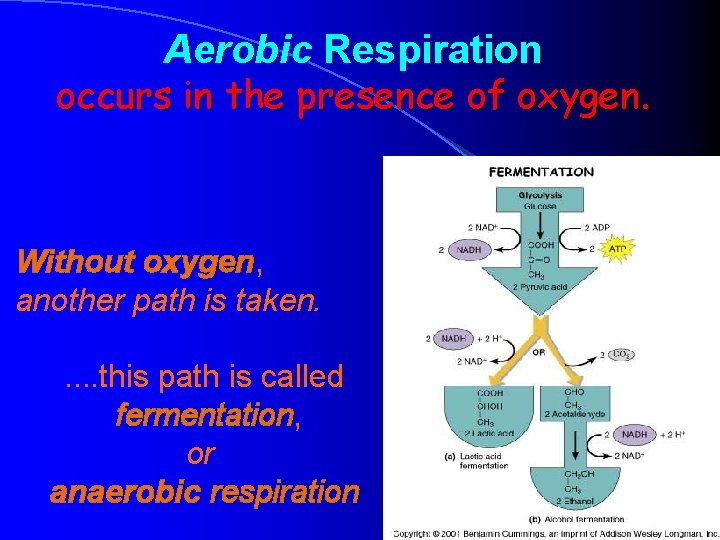
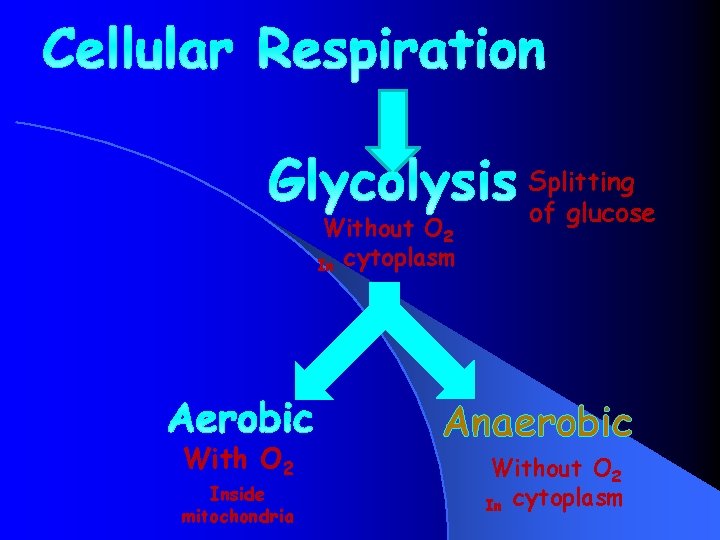
Aerobic Respiration occurs in the presence of oxygen. Without oxygen, another path is taken. . . this path is called fermentation, or anaerobic respiration
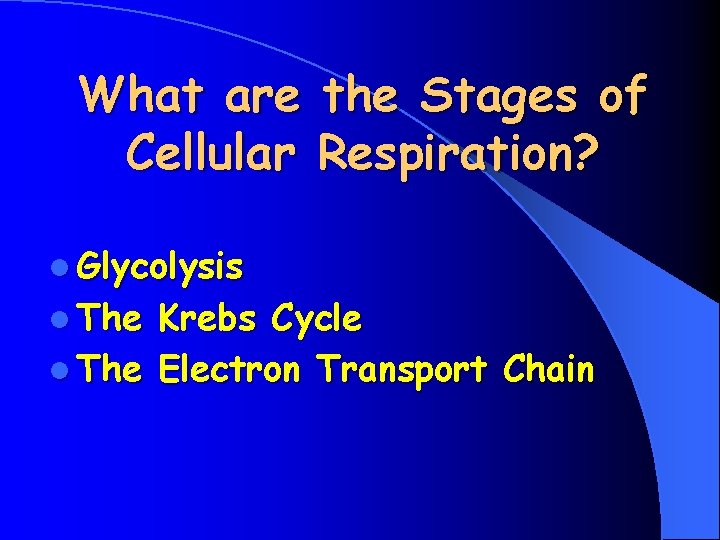
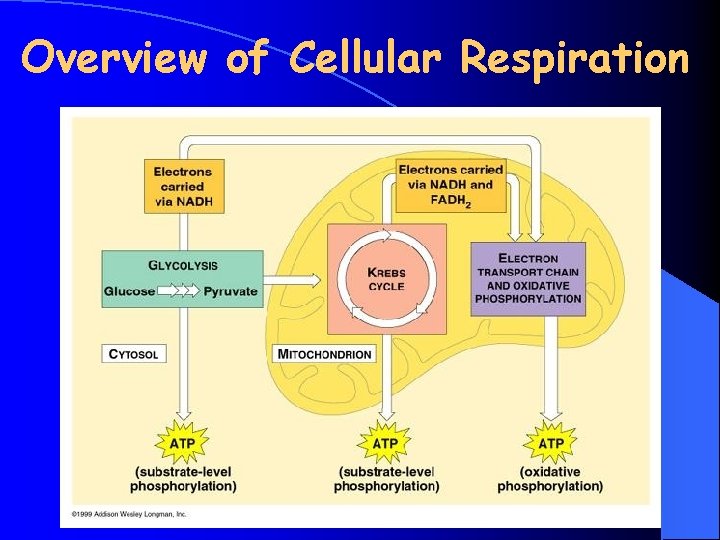
What are the Stages of Cellular Respiration? l Glycolysis l The Krebs Cycle l The Electron Transport Chain
Where Does Cellular Respiration Take Place? l It actually takes place in two parts of the cell: 1. Glycolysis occurs in the Cell’s Cytoplasm 2. Krebs Cycle & ETC Take place in the Mitochondria
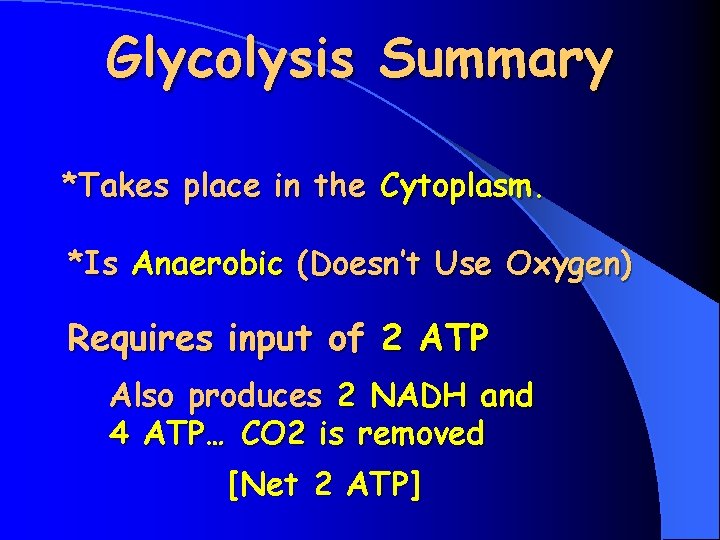
Glycolysis Summary *Takes place in the Cytoplasm. *Is Anaerobic (Doesn’t Use Oxygen) Requires input of 2 ATP Also produces 2 NADH and 4 ATP… CO 2 is removed [Net 2 ATP]
Without O 2 In cytoplasm With O 2 Inside mitochondria Splitting of glucose Anaerobic Without O 2 In cytoplasm
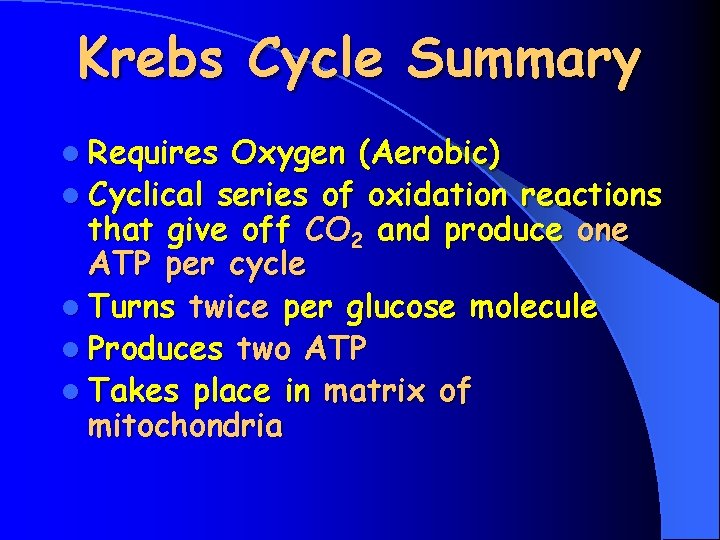
Krebs Cycle Summary l Requires Oxygen (Aerobic) l Cyclical series of oxidation reactions that give off CO 2 and produce one ATP per cycle l Turns twice per glucose molecule l Produces two ATP l Takes place in matrix of mitochondria
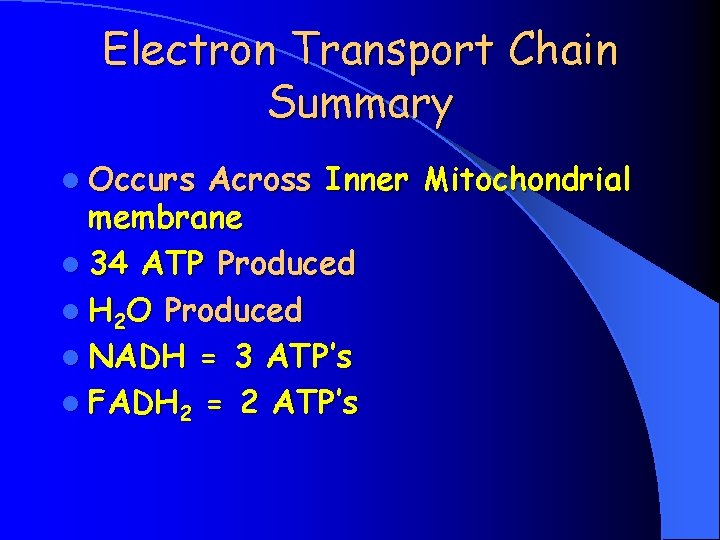
Electron Transport Chain Summary l Occurs Across Inner Mitochondrial membrane l 34 ATP Produced l H 2 O Produced l NADH = 3 ATP’s l FADH 2 = 2 ATP’s
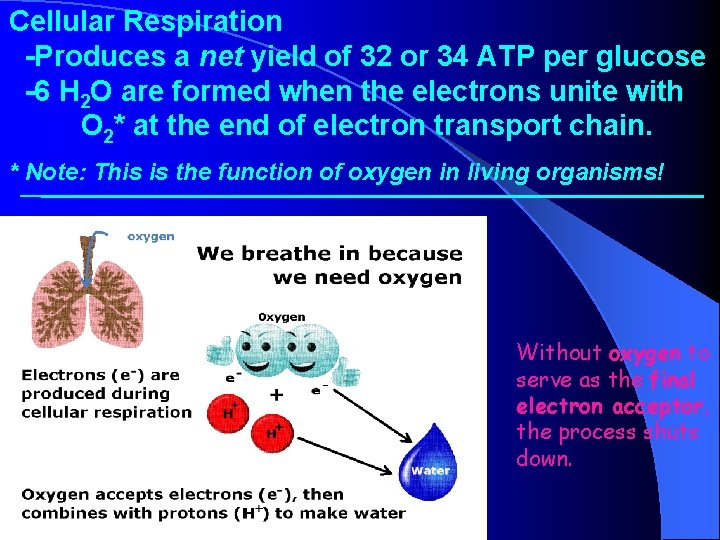
Cellular Respiration -Produces a net yield of 32 or 34 ATP per glucose -6 H 2 O are formed when the electrons unite with O 2* at the end of electron transport chain. * Note: This is the function of oxygen in living organisms! Without oxygen to serve as the final electron acceptor, the process shuts down.
Fermentation v Occurs when O 2 NOT present (anaerobic) v. Called Lactic Acid fermentation in muscle cells (makes muscles tired) v. Called Alcoholic fermentation in yeast (produces ethanol) v. Nets only 2 ATP
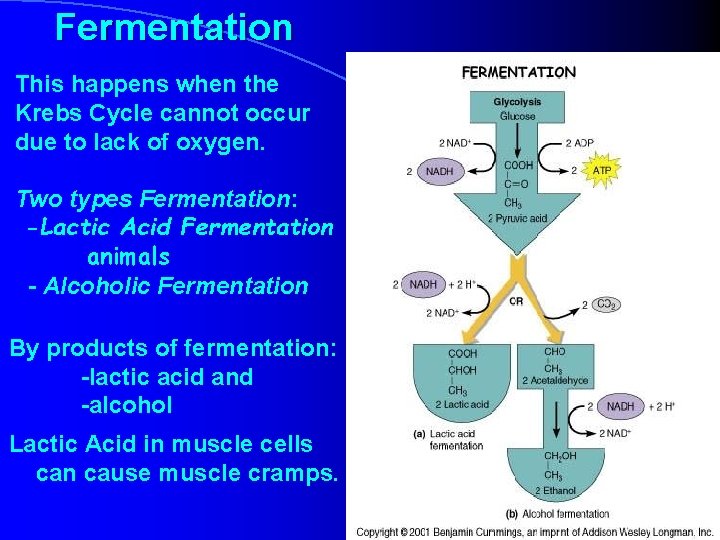
Fermentation This happens when the Krebs Cycle cannot occur due to lack of oxygen. Two types Fermentation: -Lactic Acid Fermentation animals - Alcoholic Fermentation By products of fermentation: -lactic acid and -alcohol Lactic Acid in muscle cells can cause muscle cramps.
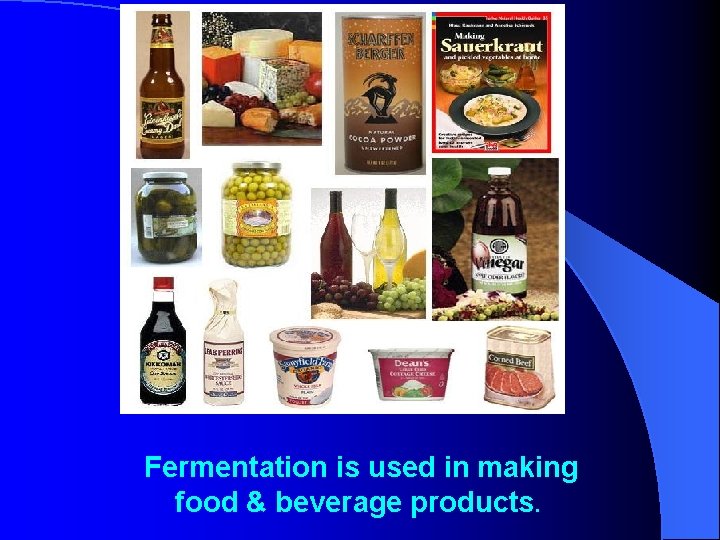
Fermentation is used in making food & beverage products.
Overview of Cellular Respiration
Food for thought. . . 1. What is the purpose of cellular respiration? 2. Where does cellular respiration occur within the cell? 3. What is the waste product of cellular respiration?
4. Compare Photosynthesis to Respiration a. Where does each occur? b. What are the products of each? c. What compounds are needed to start the processes? d. What is the function of the electron transport chain in each process? HONORS e. Describe the role of ATPase in both processes.
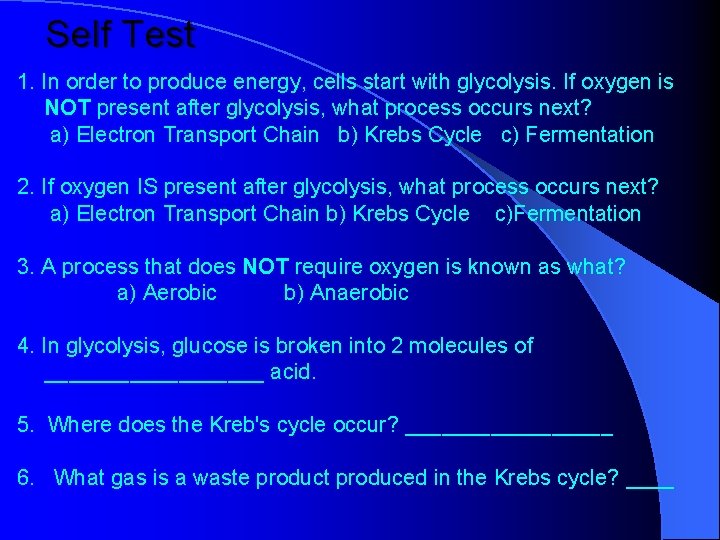
Self Test 1. In order to produce energy, cells start with glycolysis. If oxygen is NOT present after glycolysis, what process occurs next? a) Electron Transport Chain b) Krebs Cycle c) Fermentation 2. If oxygen IS present after glycolysis, what process occurs next? a) Electron Transport Chain b) Krebs Cycle c)Fermentation 3. A process that does NOT require oxygen is known as what? a) Aerobic b) Anaerobic 4. In glycolysis, glucose is broken into 2 molecules of _________ acid. 5. Where does the Kreb's cycle occur? _________ 6. What gas is a waste product produced in the Krebs cycle? ____
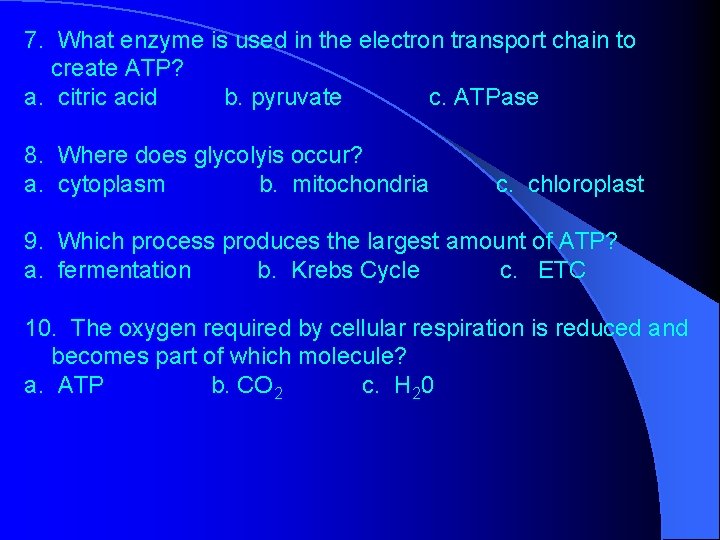
7. What enzyme is used in the electron transport chain to create ATP? a. citric acid b. pyruvate c. ATPase 8. Where does glycolyis occur? a. cytoplasm b. mitochondria c. chloroplast 9. Which process produces the largest amount of ATP? a. fermentation b. Krebs Cycle c. ETC 10. The oxygen required by cellular respiration is reduced and becomes part of which molecule? a. ATP b. CO 2 c. H 20
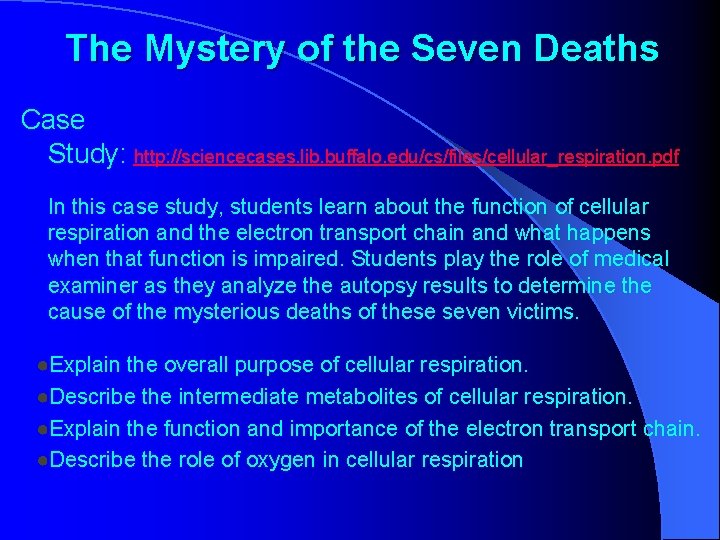
The Mystery of the Seven Deaths Case Study: http: //sciencecases. lib. buffalo. edu/cs/files/cellular_respiration. pdf In this case study, students learn about the function of cellular respiration and the electron transport chain and what happens when that function is impaired. Students play the role of medical examiner as they analyze the autopsy results to determine the cause of the mysterious deaths of these seven victims. ●Explain the overall purpose of cellular respiration. ●Describe the intermediate metabolites of cellular respiration. ●Explain the function and importance of the electron transport chain. ●Describe the role of oxygen in cellular respiration