
Adorno et al 1950 The Authoritarian Personality What







- Slides: 25
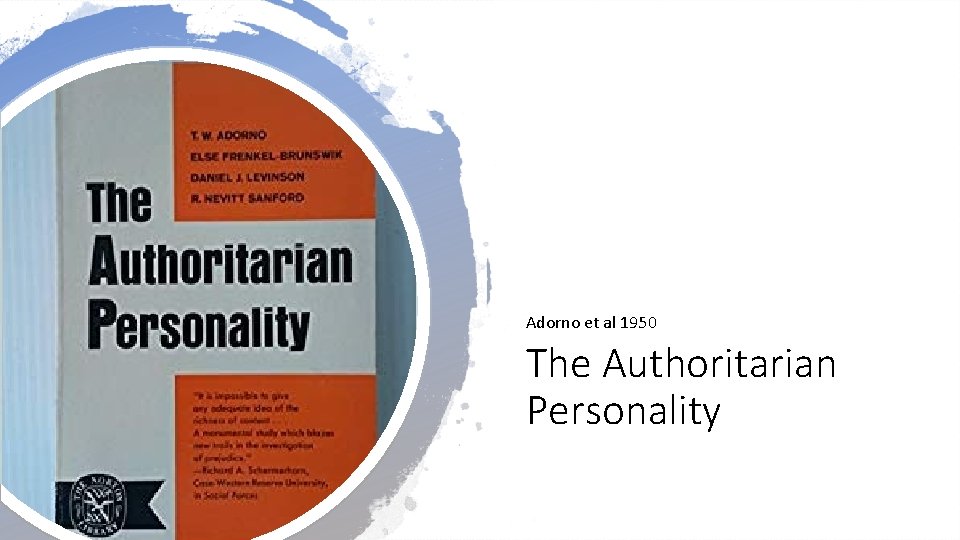
Adorno et al 1950 The Authoritarian Personality
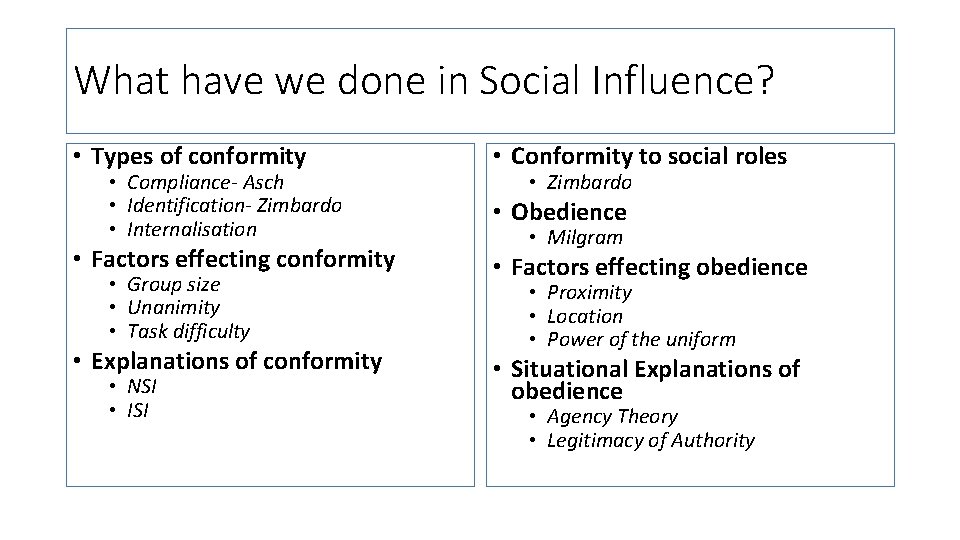
What have we done in Social Influence? • Types of conformity • Compliance- Asch • Identification- Zimbardo • Internalisation • Factors effecting conformity • Group size • Unanimity • Task difficulty • Explanations of conformity • NSI • ISI • Conformity to social roles • Zimbardo • Obedience • Milgram • Factors effecting obedience • Proximity • Location • Power of the uniform • Situational Explanations of obedience • Agency Theory • Legitimacy of Authority
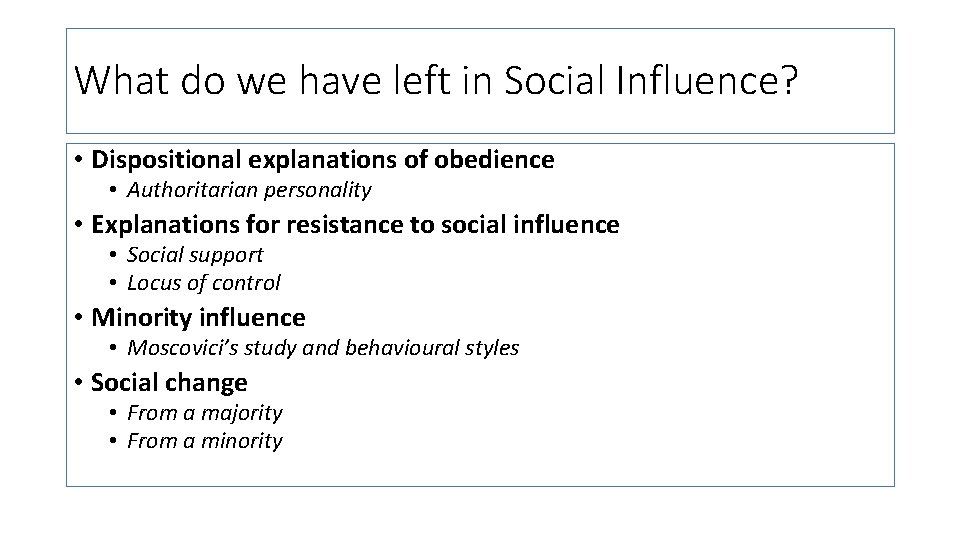
What do we have left in Social Influence? • Dispositional explanations of obedience • Authoritarian personality • Explanations for resistance to social influence • Social support • Locus of control • Minority influence • Moscovici’s study and behavioural styles • Social change • From a majority • From a minority
Whiteboards…
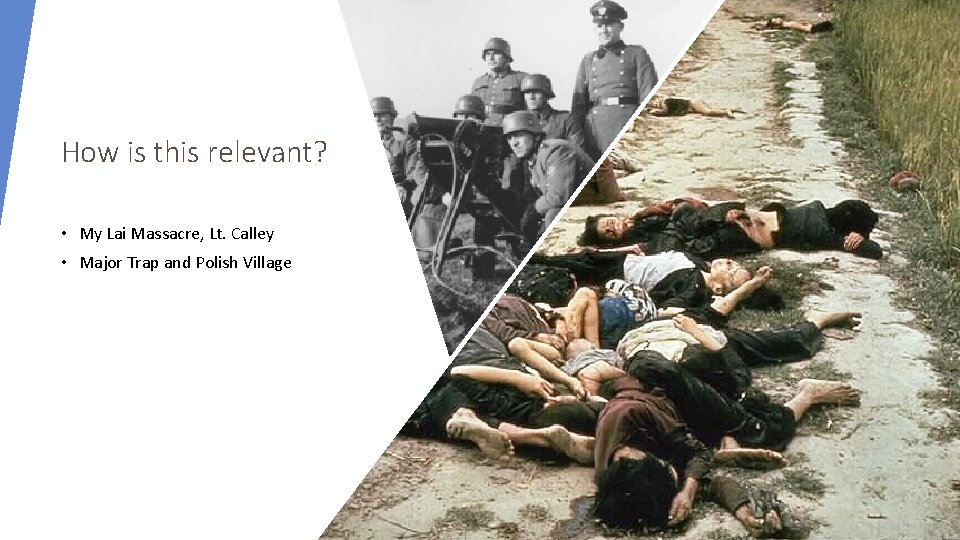
How is this relevant? • My Lai Massacre, Lt. Calley • Major Trap and Polish Village
Summary Sheet
What does it mean to be right wing?
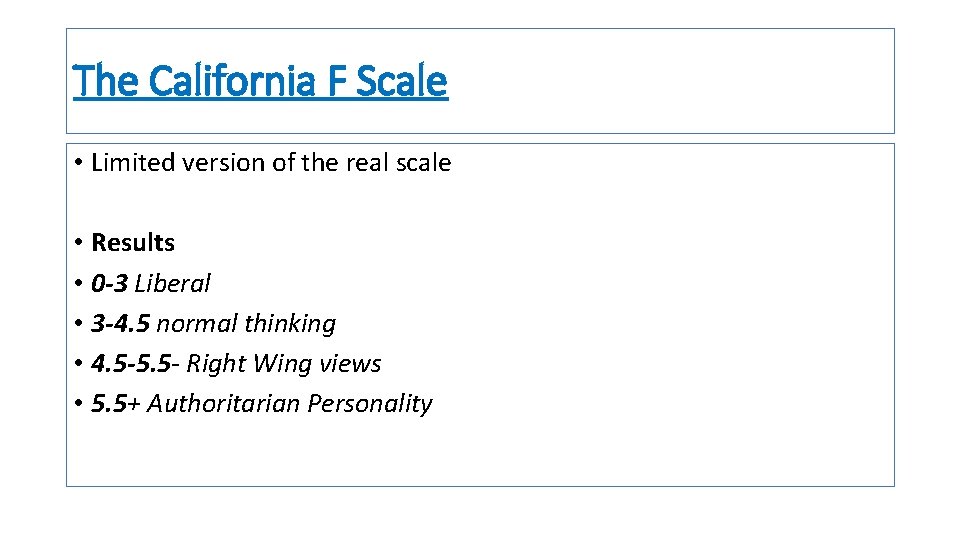
The California F Scale • Limited version of the real scale • Results • 0 -3 Liberal • 3 -4. 5 normal thinking • 4. 5 -5. 5 - Right Wing views • 5. 5+ Authoritarian Personality
AO 1… The Authoritarian Personality • Read the information about he Authoritarian Personality. • Label the man with 6 key characteristics. • Read the excerpt from the F Scale. • Discuss the questions at the bottom together.
Procedure 20 obedient to 450 V 20 defiant at some point Elms and Milgram 1966 Personality questionnaire and F Scale, open qs about feelings towards parents and those in the study. Findings Obedient less close to fathers, more negative. Admired experimenter, much less for learner. Not the case for defiant Conclusion More authoritarian=more obedient Still part of AO 1…
Can’t explain widespread obedience Can’t explain other variations by Milgram based on situations Could be education or left wing instead? Middendorp ’ 90 - Less educated more obedient Begue et al 14 - replication of Milgram in a game show then World Values Survey. Left less obedient. Evaluation- in groups. Annotate.
Resistance to Social Influence • Social support • Conformity • Obedience • Locus of Control • Internal • External
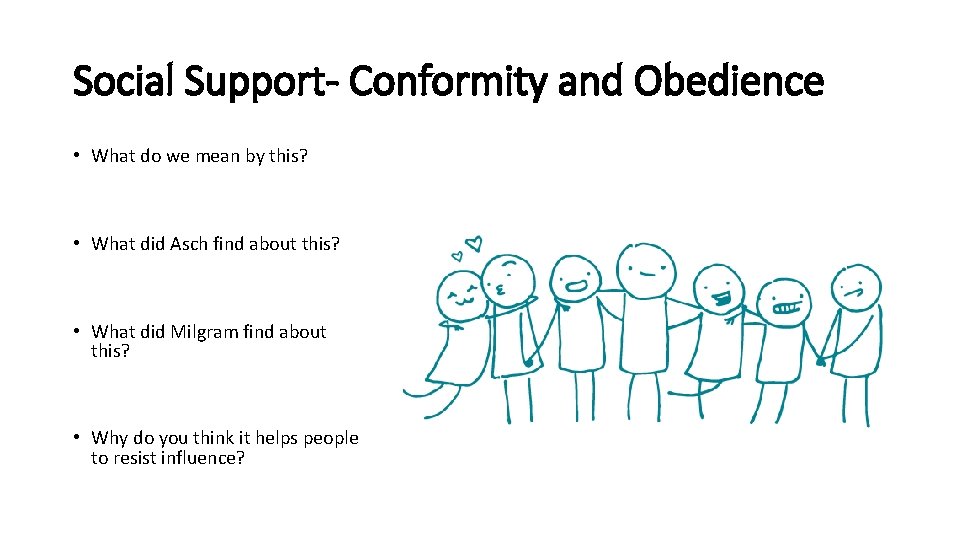
Social Support- Conformity and Obedience • What do we mean by this? • What did Asch find about this? • What did Milgram find about this? • Why do you think it helps people to resist influence?
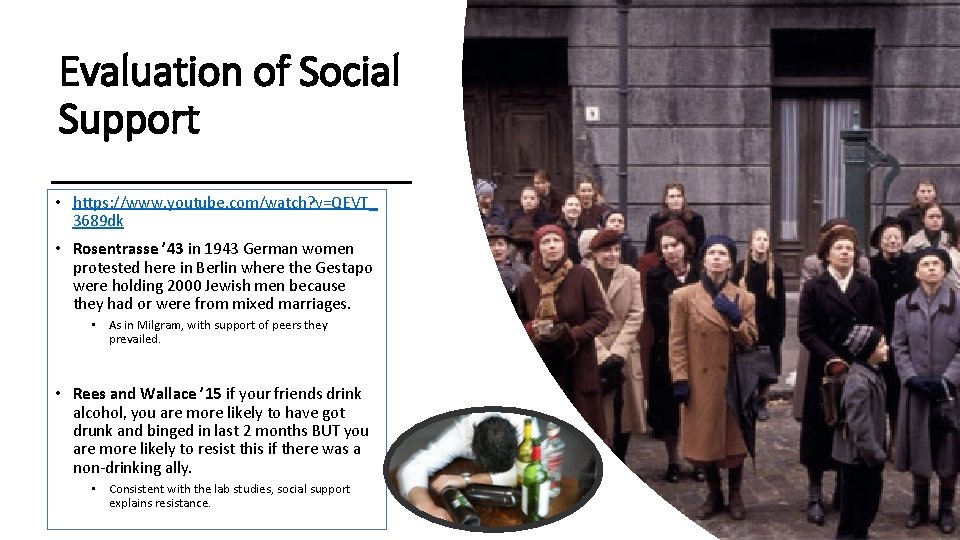
Evaluation of Social Support • https: //www. youtube. com/watch? v=QEVT_ 3689 dk • Rosentrasse ’ 43 in 1943 German women protested here in Berlin where the Gestapo were holding 2000 Jewish men because they had or were from mixed marriages. • As in Milgram, with support of peers they prevailed. • Rees and Wallace ’ 15 if your friends drink alcohol, you are more likely to have got drunk and binged in last 2 months BUT you are more likely to resist this if there was a non-drinking ally. • Consistent with the lab studies, social support explains resistance.
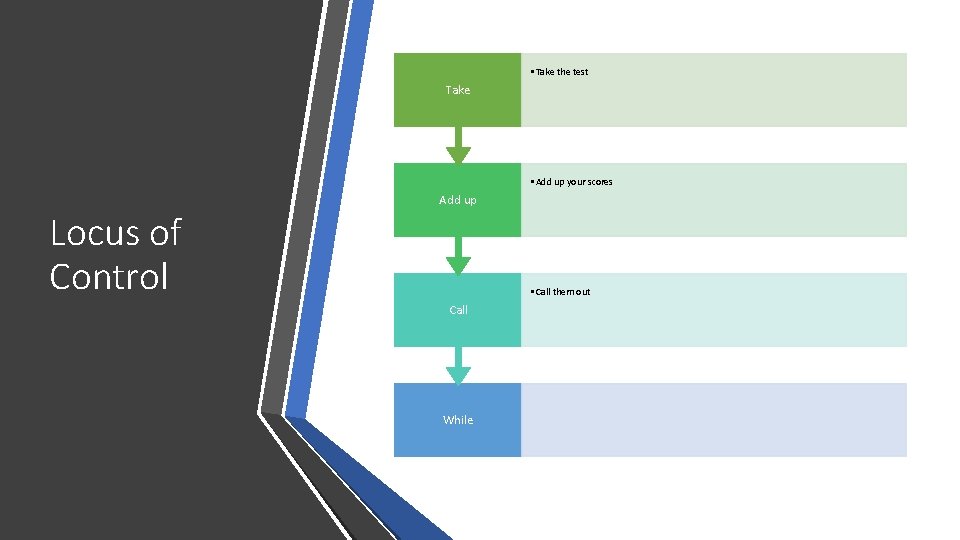
• Take the test Take • Add up your scores Locus of Control Add up • Call them out Call While
It’s not my fault!!
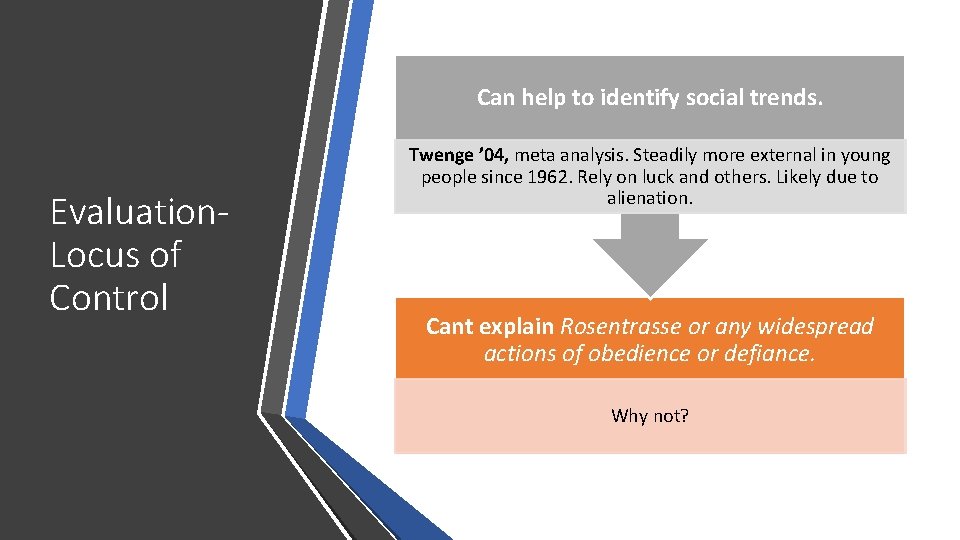
Can help to identify social trends. Evaluation. Locus of Control Twenge ’ 04, meta analysis. Steadily more external in young people since 1962. Rely on luck and others. Likely due to alienation. Cant explain Rosentrasse or any widespread actions of obedience or defiance. Why not?
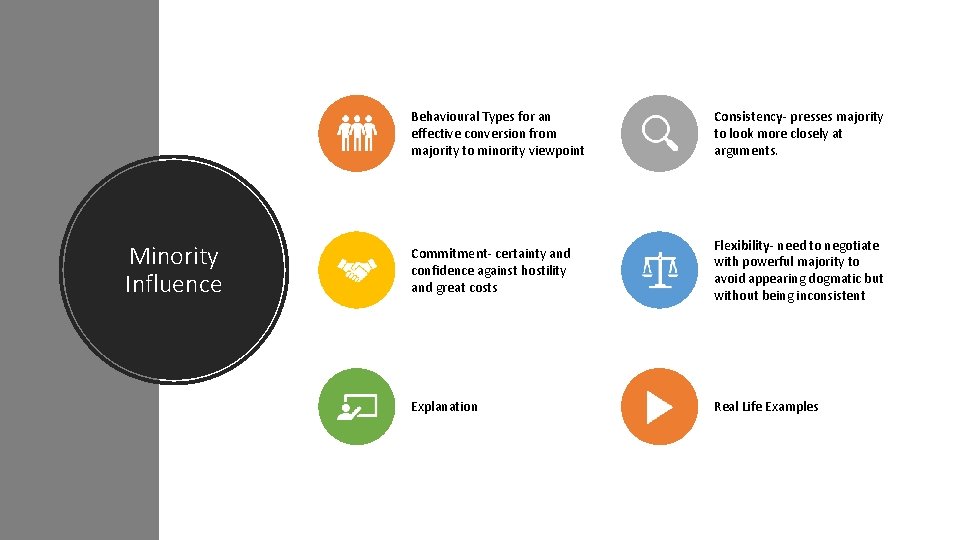
Minority Influence Behavioural Types for an effective conversion from majority to minority viewpoint Consistency- presses majority to look more closely at arguments. Commitment- certainty and confidence against hostility and great costs Flexibility- need to negotiate with powerful majority to avoid appearing dogmatic but without being inconsistent Explanation Real Life Examples
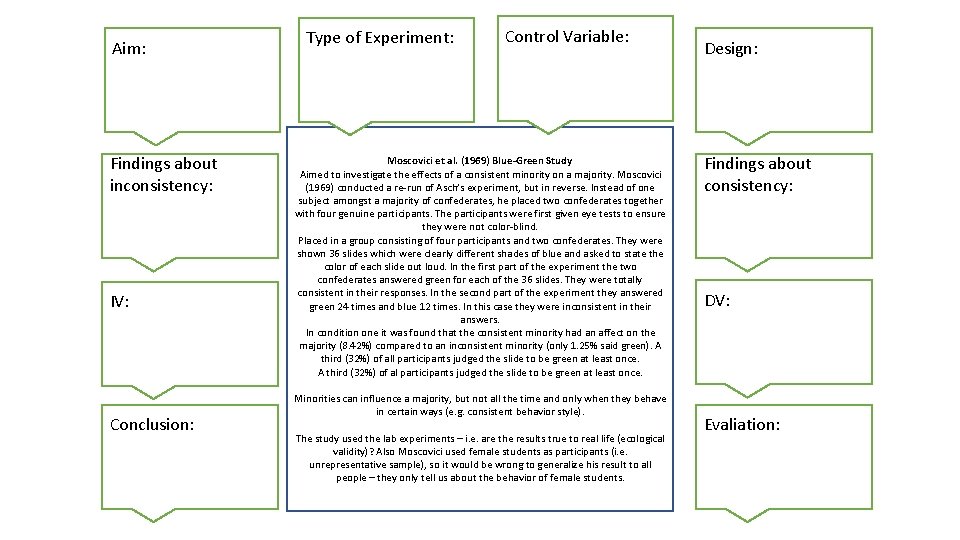
Aim: Findings about inconsistency: IV: Conclusion: Type of Experiment: Control Variable: Moscovici et al. (1969) Blue-Green Study Aimed to investigate the effects of a consistent minority on a majority. Moscovici (1969) conducted a re-run of Asch’s experiment, but in reverse. Instead of one subject amongst a majority of confederates, he placed two confederates together with four genuine participants. The participants were first given eye tests to ensure they were not color-blind. Placed in a group consisting of four participants and two confederates. They were shown 36 slides which were clearly different shades of blue and asked to state the color of each slide out loud. In the first part of the experiment the two confederates answered green for each of the 36 slides. They were totally consistent in their responses. In the second part of the experiment they answered green 24 times and blue 12 times. In this case they were inconsistent in their answers. In condition one it was found that the consistent minority had an affect on the majority (8. 42%) compared to an inconsistent minority (only 1. 25% said green). A third (32%) of all participants judged the slide to be green at least once. A third (32%) of al participants judged the slide to be green at least once. Minorities can influence a majority, but not all the time and only when they behave in certain ways (e. g. consistent behavior style). The study used the lab experiments – i. e. are the results true to real life (ecological validity)? Also Moscovici used female students as participants (i. e. unrepresentative sample), so it would be wrong to generalize his result to all people – they only tell us about the behavior of female students. Design: Findings about consistency: DV: Evaliation:
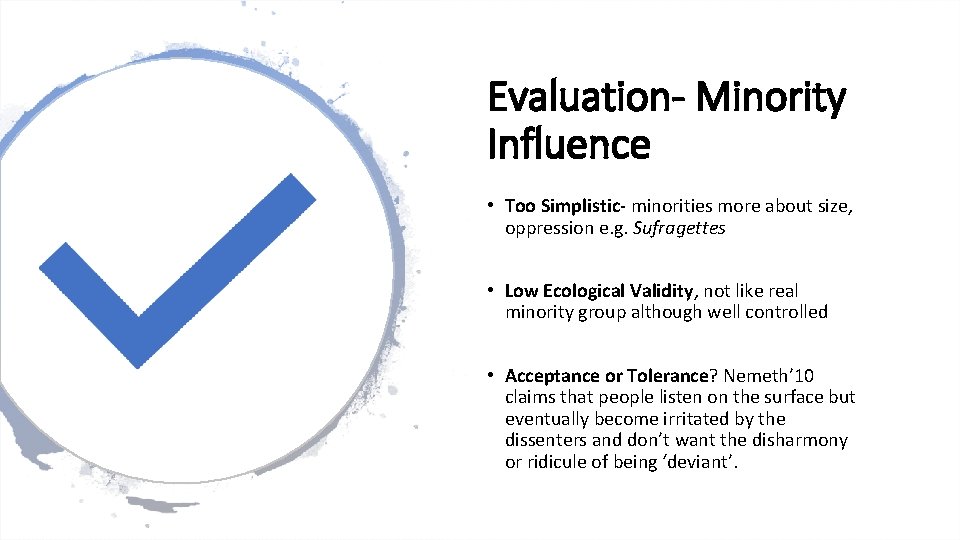
Evaluation- Minority Influence • Too Simplistic- minorities more about size, oppression e. g. Sufragettes • Low Ecological Validity, not like real minority group although well controlled • Acceptance or Tolerance? Nemeth’ 10 claims that people listen on the surface but eventually become irritated by the dissenters and don’t want the disharmony or ridicule of being ‘deviant’.
Social Influences Processes in Social Change • Minority influence • Majority influence
What is social change
Change through minority influence • Draw attention • Cognitive Conflict • Consistency • Augmentation Principle • Snowball Effect
Change through majority influence • Most of us don’t drink and drive
Evaluation • Minority • Very challenging, often gradual e. g. suffragettes • Seen as deviant, e. g. gay rights 60 s but the Communist Manifesto • Majority • Boomerang Effect, Shultz ’ 07 dragging down majority. • Doesn’t always work, De. Jong ’ 09 and drinking