
Adopting a Trauma Informed Approach for LGBTQQIA Youth
Adopting a Trauma Informed Approach for LGBTQQIA+ Youth JEFF ZACHARIAS ACSW, LCSW, CSAT, CAADC PREFERRED PRONOUNS: HE/HIM/HIS
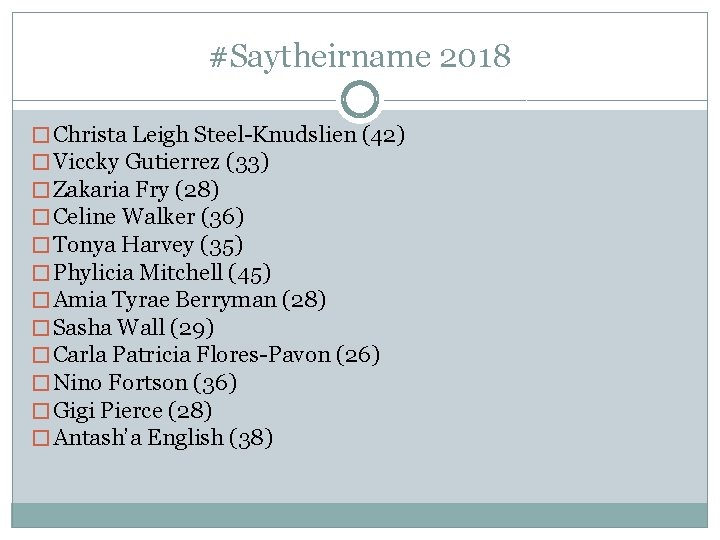
#Saytheirname 2018 � Christa Leigh Steel-Knudslien (42) � Viccky Gutierrez (33) � Zakaria Fry (28) � Celine Walker (36) � Tonya Harvey (35) � Phylicia Mitchell (45) � Amia Tyrae Berryman (28) � Sasha Wall (29) � Carla Patricia Flores-Pavon (26) � Nino Fortson (36) � Gigi Pierce (28) � Antash’a English (38)
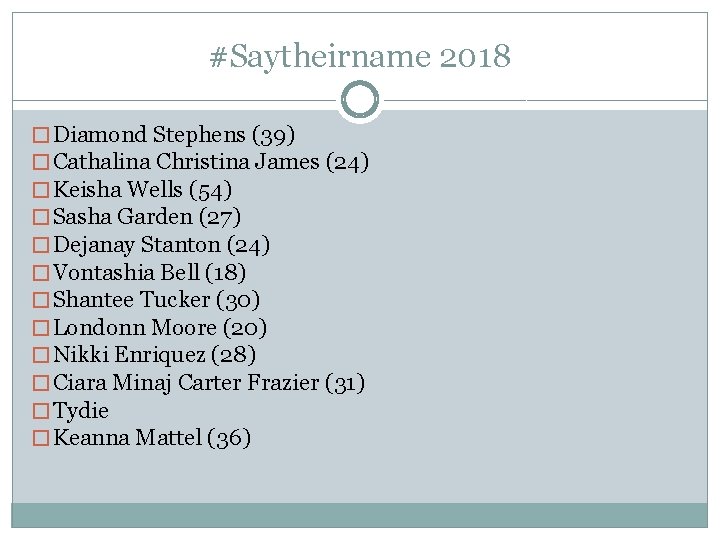
#Saytheirname 2018 � Diamond Stephens (39) � Cathalina Christina James (24) � Keisha Wells (54) � Sasha Garden (27) � Dejanay Stanton (24) � Vontashia Bell (18) � Shantee Tucker (30) � Londonn Moore (20) � Nikki Enriquez (28) � Ciara Minaj Carter Frazier (31) � Tydie � Keanna Mattel (36)
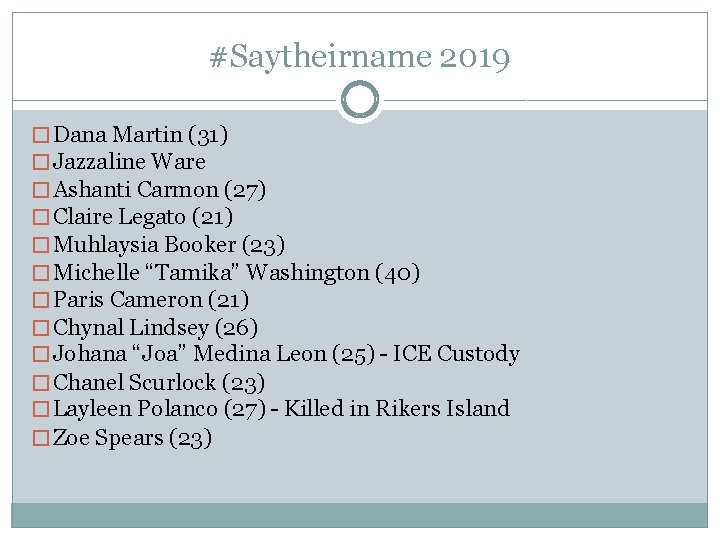
#Saytheirname 2019 � Dana Martin (31) � Jazzaline Ware � Ashanti Carmon (27) � Claire Legato (21) � Muhlaysia Booker (23) � Michelle “Tamika” Washington (40) � Paris Cameron (21) � Chynal Lindsey (26) � Johana “Joa” Medina Leon (25) – ICE Custody � Chanel Scurlock (23) � Layleen Polanco (27) – Killed in Rikers Island � Zoe Spears (23)
#Saytheirname 2019 � Ellie Marie Washtock, 38 � Brooklyn Lindsey, 32 � Denalie Berries Stuckey, 29 � Tracy Single, 22 � Kiki Fantroy, 21 � Pebbles La. Dime Doe, 24 � Jordan Coffer, 22 � Bailey Reeves, 17 � Bee Love Slater, 23 � Elisha Chanel Stanley, 46 � Itali Marlowe, 29 � Briana “BB” Hill, 30
Tolerance vs Acceptance vs Affirmative �Tolerance: “You can be here as long as………. . ” �Acceptance: “You can be here even if…………. . . ” �Affirming: You can be here because you are…. ”
Language is Everything � Attachment from parents and caregivers � Start of not feeling safe/cared for/respected � Messages we heard – school, institutions, peers, family, etc. � Stereotypes � Let’s all step away from binary constructs!!! � How do others hear you? � How do you practice cultural humility? � Connection and intimacy are the antidotes!
LGBTQQIA Youth Overview �Over 150, 000 transgender students in schools � 75% feel unsafe at school � 70% avoid restrooms because of safety concerns �Only 13 states have non-discrimination policies � 39% of youth have considered suicide in the past year � 2 in 3 youth have reported someone tried to convince them to change (conversion therapy ban) � 76% said current political climate is impacting their mental health/safety � 73% have received verbal/physical threats due to their actual or perceived identity
How do LGBTQQIA Youth Experience: � Stigma (Isolation, social exclusion, discrimination) � Shame (I’m bad and fundamentally flawed) � Gender: Getting out of the binary � Power: To have and/or do not have � Privilege: To have and/or do not have � Oppression: Individual, Institutional, Cultural (Intersectionality) � Sexism, racism, ageism, anti-semitism, classism, heterosexism, ableism, islamaphobia, etc
Micro aggressions and Macro aggressions � Language, name, pronoun use � Transphobic comments � Assumptions � Eroticization � Discomfort/disapproval � Gender normative/binaried beliefs (“passing”) � Denial of transphobia (individual and systemic) � Denial of bodily privacy � Environmental micro aggressions � Goal of eliminating pathology only � Providing treatment without competency � Harassment, overt hostility, physical threat � Pathologizing
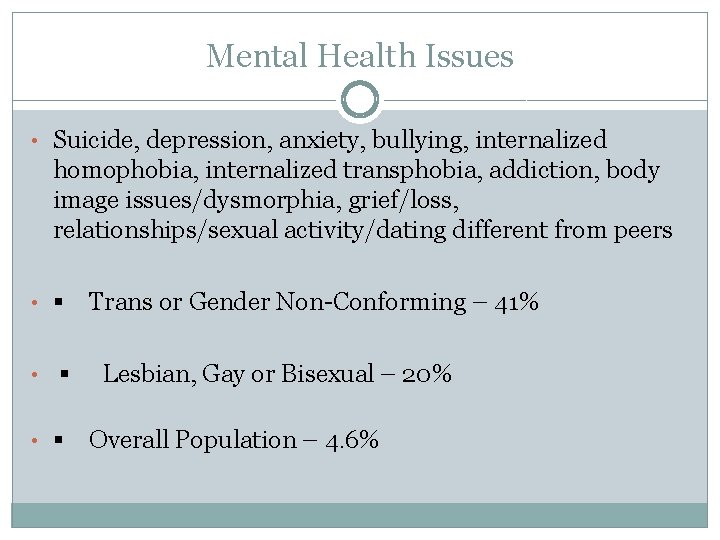
Mental Health Issues • Suicide, depression, anxiety, bullying, internalized homophobia, internalized transphobia, addiction, body image issues/dysmorphia, grief/loss, relationships/sexual activity/dating different from peers • • • Trans or Gender Non-Conforming – 41% Lesbian, Gay or Bisexual – 20% Overall Population – 4. 6%
Multiple Stories – LGBTQQIA Youth �Gender identities, gender expressions, roles, experiences �Work �Family of origin �Friends �Chosen family �Faith community �Clubs/groups �Home �Strangers �Vacation �Coming out experiences
Gender and Sexuality Basics �Gender is who you go to bed AS �Sexuality is who you go to bed WITH �Biological: Body, brain �Social: Cultural messages, life circumstances �Psychological: Personal experience, reflection
The Vicious Cycle �Dehumanization of LGBTQQIA People Lack of family acceptance Hostile political climate Cultural marginalization and invisibility
The Vicious Cycle �Denial of opportunity for LGBTQQIA People Setbacks in education Employment discrimination Exclusion from healthcare and social services Barriers to legal identification Barriers for immigrants/refugees/asylum seekers Unequal policing and criminal justice system
The Vicious Cycle �Increased risk factors Intimate partner violence and sexual assault Poverty and homelessness Physical and mental health disparities Engagement in survival sex work
Theories in working with LGBTQIA Youth �Biopsychosocial systems perspective, including family systems and the impact on child/adolescent development (ACES Test) �Impact of abuse/neglect (educational, medical, physical, emotional, sexual, etc) and the resilience of the youth �Intersectionality �Strengths Based Perspective and positive youth development �Adolescent development compounded by LGBTQQIA identities
The 3 E’s Of Trauma �Individual trauma results from an event, a series of events, or a set of circumstances that is experienced by an individual as physically or emotionally harmful or threatening and that has lasting adverse effects on the individual’s functioning and physical, social, emotional or spiritual well being. �Event – Experienced - Effects
Trauma �How do we know if our LGBTQQIA+ youth have had/are currently experiencing trauma? What’s covert trauma? What’s overt trauma? �EX: Sexual violence, physical abuse, intimate partner violence, institutional harrassment, secondary/vicarious trauma, bullying, religious trauma, invisibility
Types of Trauma Acute Chronic Physical Emotional/Behavioral – Attachment disruption due to perceived/open sexual orientation, life lived in secret due to shame over orientation (“don’t tell anyone”) Sexual – HIV survivors Endurance – prolonged sense of feeling unsafe, neglect by primary caregivers Caused naturally Caused by people: Accidents/technological catastrophes Caused by people: Intentional acts (suicides – witnessed through social media? , coverage of politics – IN/TX/NC, cyberbullying)
What Is Trauma Informed? �A program, organization or system that is trauma informed: Realizes the widespread prevalence and impact of trauma Understands potential paths for healing Recognizes signs/symptoms of trauma and how trauma not only impacts the client but all people within the organization including parents, teachers, friends, etc. Responds by fully integrating knowledge about trauma into practices, policies, procedures and environment.
Risk Factors for Traumatic Response q q q How recent or distant in time the abuse happened Whether or not the survivor was believed How much support and validation or blame and rejection were received Cultural norms/rituals/values towards abuse Intellectual or developmental capacity to understand the abuse
Implications of Complex Trauma �Impact on the individual and relationships q q q Sense of self/self-esteem Social support network Sense of safety in the world/trust toward others and trusting systems Suicide risk/self-harm Substance use Increased depression/anxiety
Trauma-specific Intervention �Trauma-informed programing recognizes. . . The survivor's need to be respected, informed, connected, and hopeful regarding their own recovery The interrelation between trauma and symptoms of trauma such as substance abuse, eating disorders, depression, and anxiety The need to work in a collaborative way with survivors, family and friends of the survivor, and other human services agencies in a manner that will empower survivors and consumers.
Trauma Informed Care �Emphasizes: � Safety Trustworthiness and transparency Peer support Collaboration and mutuality Empowerment, voice and choice Cultural, historical, and gender Issues
Social Work 101 �Meet the client where they’re Assess for safety What is their priority? Tell me what I need to know about Tell me what you don’t want me to know What does healthy sexuality look like? Medication adherence – education Tap into resiliency through family of choice How do you get connection?
Support People �Dignity �Respect �Inclusivity �Empathy �Listen
Educate Others �Don’t Be Afraid �Focus on the positive �Celebrate �Medication – talk about it, ask about it, learn
Be A Role Model �Don’t be afraid �Be a mentor �Be an innovator �Inspire change
Recommendation to Develop Protective Factors � LGBTQ community support (e. g. , GSAs, support groups, etc. ) � Family acceptance � Communities of faith � Self-Determination � Pride � Resilience � Diversity � Creativity � Resourcefulness � Courage
Tools and Resources o If you don’t know something, ASK! o Listen for signs of Intimate Partner Violence (IPV) o Operate from a multicultural perspective o Resiliency, collaboration, non-judgmental, wise mind path, examine the spectrum of healing
The Need For Addressing Cultural Humility �Mistreatment within the medical and mental health fields �Access to trained clinicians �Sharing the duty �Lack of training �Lack of understanding �Access to referrals for mental health/medical interventions
Therapist Qualities (Attitudes) �Affirm gender identity, expression, presentation and diversity beyond a male-female binary �Acknowledge own biases �Recognize intersections of identities �Refute pathology of gender dysphoria �Understand ongoing nature of humility and empathy building �Affirm mental health/medical care needs of trans/GNC individuals
Therapist Qualities (Attitudes) �Trans/GNC affirmative care and support increases the potential for positive life outcomes �Understand that we may misstep/make mistakes �Acknowledge that both trans/GNC and cis-gender therapists are vulnerable to concerns in therapeutic relationship and clinical humility with trans/GNC clients
Cultural Humility: How Is It Observed? � Developing an awareness of gender identity and transitioning issues � Empathy, compassion, care, sensitivity, support, directness, flexibility � Experience in working with specific populations/areas (expertise) � Knowledge of resources, referrals, processes � Foster self acceptance/validation and coping with painful experiences � Challenge without prescribing � Confidentiality � Understand potential long term treatment need for therapy
Cultural Humility: Training �Textbook knowledge isn’t enough �Supervision, consultation, training, CEU’s �Familiarization with WPATH and other published guidelines �Ongoing consultation and professional development �Consider differential/co-occurring diagnoses �Distress isn’t pathology �Psychological assessment instruments �Acknowledge experiences, training and expertise working with gender issues at the start of engagement
Cultural Humility: Further Skills �Awareness of the following: �Expectations of others around the binary �Complexities/ongoing nature of the coming out process �Transphobia, heterosexism, cisgenderism at individual/institutional/systemic levels �Variance of expression across the lifespan �Distinct/interrelated nature of gender identity and sexual orientation �Social, biological, familial, cultural, psychological, economic factors that influence development, identity and distress
Cultural Humility: Further Skills �Various ways of living consistently with one’s gender identity �Trans/GNC positive resources/referrals in your area such as support groups, providers for individual/partner/family/group, medical providers for general/transitioning, voice training, legal, spiritual �Multiple identities �Climate of community you provide services in �Individuals/groups we can seek collaboration/consultations from
Cultural Humility: Further Skills �Consider differential/co-occurring diagnoses �Distress isn’t pathology �Psychological assessment instruments �Acknowledge experiences, training and expertise working with gender issues at the start of engagement
Therapeutic Relationship: Client and Therapist Identities �Therapeutic relationship holds identity differences �Looks at individual/systemic differences around power, privilege and oppression �Discussion of differences/similarities in identities and how they may impact the relationship �Privileged identities of therapist �Therapists gender identity, expression and concepts are relevant to and influence the relationship
Therapeutic Relationship: Other Factors �Discuss the following: �Name and pronoun usage which can be ongoing �Restroom access in your space �Feelings of comfort/safety in your space like how the client will “show up” �How clients will be identified in your system �Awareness of: �Language, how it evolves, clients wishes/desires �Presenting issues may not be related to gender identity
Therapeutic Relationship: Other Factors �Openness to discussing experiences of discrimination and oppression �What does your space look like? �What message does your space send? �Do your clients see you practice watch you preach?
Cultural Empathy �Defined as: �Empathic responses capable of transcending cultural differences �Ability to understand/accept/feel the clients situation while separating own person/cultural experience �Boundary between self and other �Don’t expect clients to adopt your values �We understand empathy from our own position influenced by our own experiences/identities/values/cultures
Cultural Empathy �Importance of understanding the context for trans/GNC individuals �Acquire knowledge needed �Ability to recognize what we don’t know and how to obtain that information �Acknowledge we cannot genuinely understand the clients unique positions
Cultural Empathy: Development �Seek out perspectives/narratives of the trans/GNC community �Understand/accept the context of family/community for clients of different backgrounds �Incorporate providers/practices familiar with or requested by the clients �Learn about the historical/political backgrounds of the community �Seek knowledge about psychosocial adjustment to new environments/situations �Oppression related to intersecting identities �Position yourself as an ally/advocate
Advocacy �Social justice and advocacy should be part of our work �Use our position to advocate for institutional changes �Educate professionals/students/supervisors �Empower clients in underprivileged/devalued positions �Advertise yourself, be visible, network, build a reputation
Reading Material �The Transgender Teen: Stephanie Brill �Becoming Nicole: Amy Ellis Nutt �Beyond Magenta: Susan Kuklin �Helping Your Transgender Teen: Krieger �Trans Ally Workbook Dacey Slascko �How To Understand Your Gender: Alex Iantaffi �New Gender Workbook: Kate Bornstein �You And Your Gender Identity: Dara Hoffmann-Foxx �Second Son: Ryan Sallan �The Teaching Transgender Toolkit: Eli Green �A Guide To Gender: Sam Killerman
Organizations � WPATH: World Professional Association for Transgender Health � National Center For Transgender Equality � The Center Of Excellence for Transgender Health � FORGE � Rad Remedy � Gender Spectrum � The Trevor Project � Gender Diversity � PFLAG � GLAAD � GLSEN � Family Acceptance Project � It Gets Better � GSA Network � Human Rights Campaign
�THANK YOU!!!! �Jeff Zacharias ACSW, LCSW, CSAT, CAADC �Jeffrey. zacharias@gmail. com � 773 -720 -0068 �Jeffrey@new-hope-recovery. com � 773 -883 -3912
- Slides: 50