
Adolescent Psychology Annie Robertson Jenn Bodine Meagan Berry
Adolescent Psychology Annie Robertson, Jenn Bodine, Meagan Berry

Who are these creatures?
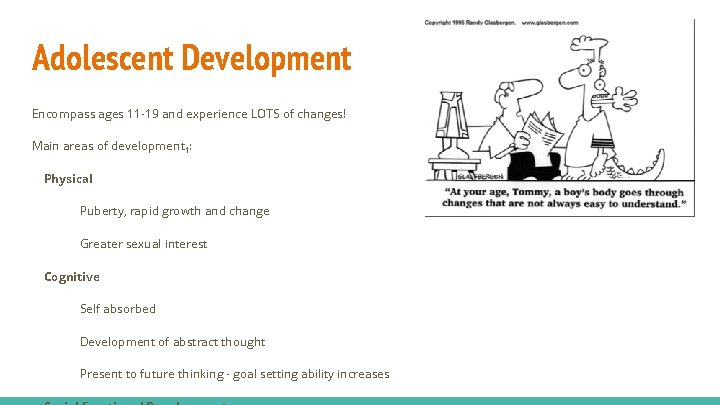
Adolescent Development Encompass ages 11 -19 and experience LOTS of changes! Main areas of development 1: Physical Puberty, rapid growth and change Greater sexual interest Cognitive Self absorbed Development of abstract thought Present to future thinking - goal setting ability increases
Psychological Tasks of Adolescents Needs of the adolescent: To stand out - the need to develop an identity and autonomy To fit in - the need to gain acceptance from peers To measure up - the need to feel competent and develop skills To take hold - the need to make commitments to particular goals, activities, and beliefs Adolescent behavior can either foster or impede the accomplishment of these tasks and behavior can also be a reflection of coping with failing to accomplish these tasks.
Who are they? What makes them “At-risk? ” “Being endangered, as from exposure to disease or from a lack of parental or familial guidance and proper health care, ” and a child who may struggle or fail to progress successfully into adulthood. Behaviors of youth who may be at risk 3: School and Community - children who drop out of school and local group activities. Family - rebellious Law - frequent run ins with the authorities Unusual Behavior - extreme loss of control over emotions; exhibits violent behaviors. Substance abuse, or eating disorders Depression - spend a lot of time alone, usually in their room. Potentially suicidal. Sexuality - very sexually active; lots of partners

Internal vs. External At-risk Behaviors Internal Problems: distorted processing Depression Anxiety Eating Disorders External Problems: lack of processing ADHD Violence Suicide Aggression Delinquency Sexual Behavior
ADHD Definition: developmental disorder featuring maladaptive levels of inattention, excessive activity, and impulsiveness Symptoms: Lack of attention Hyperactivity Impulsive behavior Signs and Tests: symptoms must be present for at least 6 months, seen in two or more settings, and not caused by another problem. Risks: driving
Suicide Second leading cause of death in adolescents Females are more likely to attempt suicide, but males are more likely to succeed Suicide as a solution Signs of suicide: Giving up one’s self, starting to use or abuse drugs, threatening to kill one’s self, preparing for death, giving away favorite possessions, writing goodbye letters or making a will, verbal hints, suddenly cheerful after time of depression Suicide hotlines
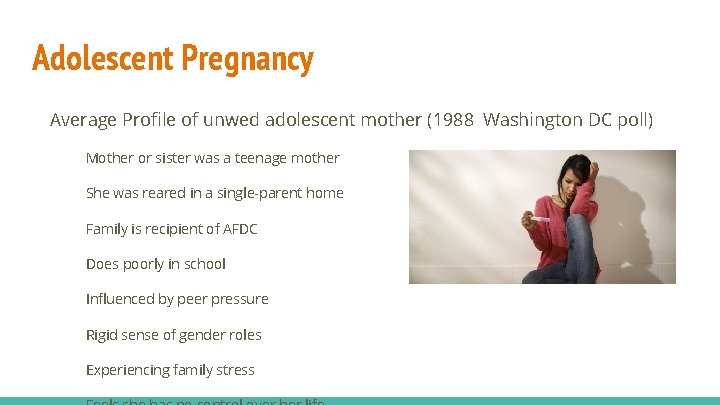
Adolescent Pregnancy Average Profile of unwed adolescent mother (1988 Washington DC poll) Mother or sister was a teenage mother She was reared in a single-parent home Family is recipient of AFDC Does poorly in school Influenced by peer pressure Rigid sense of gender roles Experiencing family stress
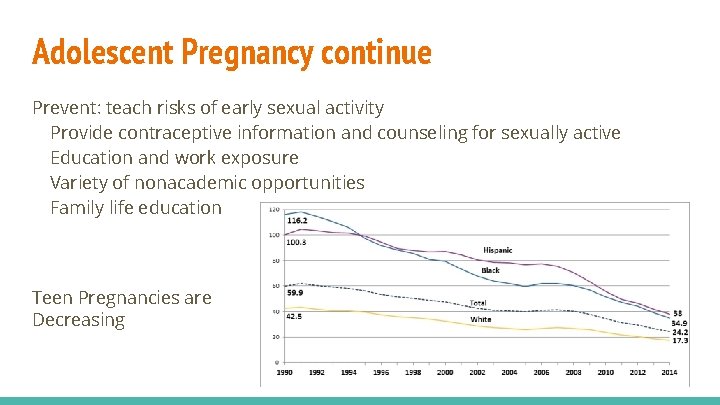
Adolescent Pregnancy continue Prevent: teach risks of early sexual activity Provide contraceptive information and counseling for sexually active Education and work exposure Variety of nonacademic opportunities Family life education Teen Pregnancies are Decreasing
Conduct Disorder Definition: a behavioral and emotional disorder of children and adolescents. Diagnostic Criteria for CD Aggression to People and Animals Destruction of Property Deceitfulness or Theft Serious Violations of Rules Treatment: Behavioral modification schools, boot camps, wilderness programs Fix issues within the home
Bullying Oh no you didn't. What is bullying? Bullying involves the repeated exposure of one person to physical and/or relational aggression where the victim is hurt with teasing, name calling, mockery, threats, harassment, taunting, social exclusion or rumors. As many as 50% of children are bullied at some time during their life. ● Female bullies are usually more verbally abusive and target other females. ● Male bullies are usually more physical and target other males. 6 Different types of bullying: Physical Bullying Verbal Bullying Relational Aggression Cyberbullying
Profiles The bully and the victim usually fit a specific profile: Bully Thrive on control and dominating others; usually bully in front of a crowd Could have been a victim of abuse and bullying More likely to abuse drugs and alcohol and drop out of school Usually experience behavioral problems Victim Usually a more passive personality Possibly suffers with self-esteem issues and has few friends Depression and/or anxiety
Support Emotional: promotes self-esteem and helps with coping Informational: provides advice and instruction, reduces confusion Instrumental: money, goods, and services for coping ***SOCIAL: parents, peers, teachers Support group/counseling
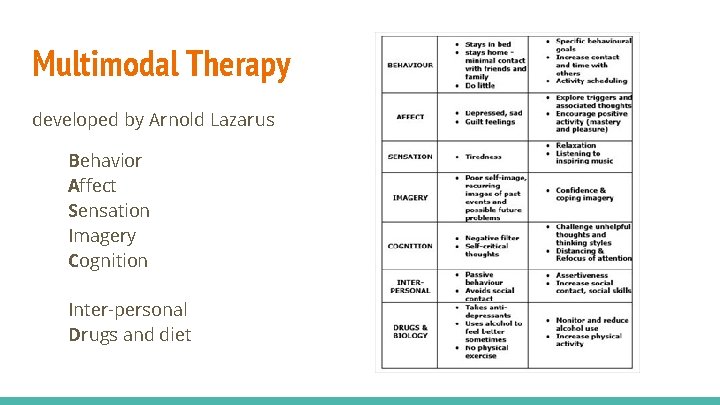
Multimodal Therapy developed by Arnold Lazarus Behavior Affect Sensation Imagery Cognition Inter-personal Drugs and diet
Local, State, National, & International Resources Recreation Programs: White River Academy Residential Treatment Programs: Newport Academy Girls’ and Boys’ Ranches Troubled Teen Programs by States http: //www. troubledteenprograms. org
Continued Parks and Recreation Departments State Hospitals American Psychology Association: Developing Adolescents American Academy of Child and Adolescent Psychiatry IACAPAP-International Association for Child and Adolescent Psychiatry and Allied Professions World Congress
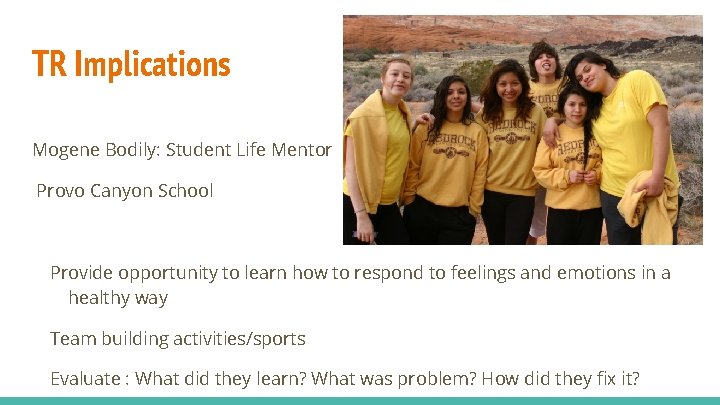
TR Implications Mogene Bodily: Student Life Mentor Provo Canyon School Provide opportunity to learn how to respond to feelings and emotions in a healthy way Team building activities/sports Evaluate : What did they learn? What was problem? How did they fix it?
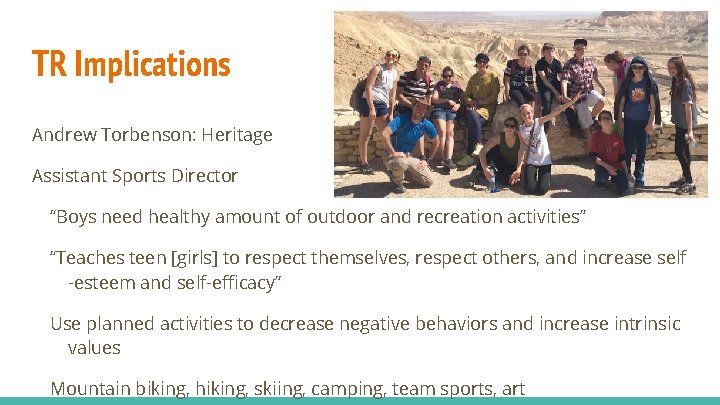
TR Implications Andrew Torbenson: Heritage Assistant Sports Director “Boys need healthy amount of outdoor and recreation activities” “Teaches teen [girls] to respect themselves, respect others, and increase self -esteem and self-efficacy” Use planned activities to decrease negative behaviors and increase intrinsic values Mountain biking, hiking, skiing, camping, team sports, art
TR Implications http: //www. heritagertc. org/life-at-heritage/sports-recreation/
The End
Depression signs: self-critical, withdrawal from pleasurable activities, loss of energy, change of appetite, disturbed sleeping, sense of inadequacy Leads to depression in adulthood Aggression: violent, manipulation in social relationships Strong need for social interaction Desire for popularity, leadership and power Delinquency: graffiti, damaging property, stealing, fights Causes: disrupted family structure, inability to identify emotions, Forecast: substance abuse, mental disabilities
Through a person’s life-span development, adolescence is considered as an important developmental period because adolescence is a sense of personal identity achievement period which implies the assessments of strengths, weaknesses and the power to deal with them and results in the establishment of a meaningful and satisfying self-concept; a feeling of harmony with self. behavior problems hinder the adolescents from the acquisition of the developmental tasks, from presenting the expected social roles, from feelings of competence and success and from a successful transition to young adulthood Disruption in relationship emerges behavior problems Youth at risk: (internal)social withdrawal, depression/anxiety withdrawal Feelings of worthlessness, demand for attention, dependency, social (external) agression and deliquncy
Barriers to care ➔Lack of resources ◆ Financial ◆ Facilities ◆ Healthcare professionals ➔Stigma surrounding adolescents and caregivers ◆ Lack of knowledge and inclusivity for children and adolescents with mental health disorders ➔Lack of transportation
- Slides: 24