
ADOLESCENT GROWTH AND DEVELOPMENT PERIOD OF ADOLESCENCE Rapid
- Slides: 24
ADOLESCENT GROWTH AND DEVELOPMENT
PERIOD OF ADOLESCENCE � � � Rapid growth Interaction of physical, psychological, and environmental factors Off timing of systems (Dahl, 2004) � Puberty � Physical growth � Emotion and behavior regulation Importance of understanding interaction of all the systems; Transitions all occur sequentially but not necessarily at the same time
PHYSICAL DEVELOPMENT � Height & Weight Changes � Secondary Sex Characteristics � Continued Brain Development
RAPID GAINS IN HEIGHT & WEIGHT � 4. 1 to 3. 5 inches per year � Girls mature about 2 years earlier than boys � Weight gain = muscles for boys; fat for girls
SECONDARY SEX CHARACTERISTICS: � Voice changes for boys � Underarm hair � Facial hair growth for boys � Increased production of oil, sweat glands, acne
CONTINUED BRAIN DEVELOPMENT � Not completely developed until late adolescence � Emotional, physical and mental abilities incomplete � May explain why some seem inconsistent in controlling emotions, impulses, and judgements
UNDERSTANDING THE ADOLESCENT BRAIN � Advances in brain imaging allow for better understanding of what occurs � Evidence for frontal lobe delays Inability to delay gratification; impulse control � Suggestion that puberty represents a period of synaptic reorganization and as a consequence the brain might be more sensitive to experiential input at this period of time in the realm of executive function and social cognition � Prefrontal cortex of interest
HOW DO THESE CHANGES AFFECT TEENS? � Adolescents are uniquely vulnerable to risk taking
HOW DO THESE CHANGES AFFECT TEENS? � Frequently sleep longer - 9 1/2 hours � May be more clumsy because of growth spurts-body parts grow at different rates � Girls may become sensitive about weight - 60% trying to lose weight � � 1 -3% have eating disorder Concern if not physically developing at same rate as peers - need to “fit” in (early vs. late maturation) � Feel awkward about showing affection to opposite sex parent � Ask more direct questions about sex - trying to figure out values around sex
WHAT CAN WE DO? � Expect inconsistency in responsibility taking and in decision making � Provide opportunities for “safe” risk taking � Avoid criticizing/comparing to others � Encourage enough sleep � Encourage/model healthy eating � Encourage/model activity
COGNITIVE DEVELOPMENT � Advanced Reasoning Skills � Abstract Thinking Skills � Meta-Cognition
BEGINNING TO GAIN ADVANCED REASONING SKILLS � Options � Possibilities � Logical � Hypothetically � What if?
THINK ABSTRACTLY � Can take others’ perspective think about non-concrete things like faith, trust, beliefs, and spirituality
ABILITY TO THINK ABOUT THINKING � Meta-cognition � Think about how they feel and what they are thinking � Think about how they think they are perceived by others � Can develop strategies for improving their learning
WHAT CAN WE DO? � Discuss their behavior rules/consequences � Provide opportunities for community service � Ask teens their view and share own
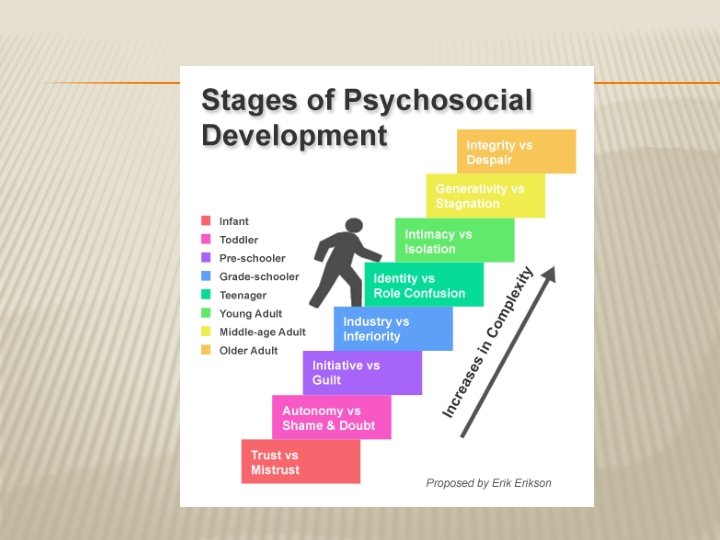
PSYCHO-SOCIAL DEVELOPMENT � Establishing identity � Establishing autonomy � Establishing intimacy � Become comfortable with one’s sexuality � Achievement
ESTABLISHING IDENTITY � Integrates opinions of other into own likes/dislikes—needs interactions with diverse others for this to occur � Outcome is clear sense of values, beliefs, occupational goals, and relationship expectations � Secure identities-knows where they fit
ESTABLISHING AUTONOMY � Becoming independent and self-governing within relationships � Make � Live and follow through with decisions with own set of principles of right/wrong � Less emotionally dependent on parents
ESTABLISHING INTIMACY � Learns intimacy and sex not same thing � Learned within context of same-sex friendships; then in romantic relationships � Develops close, open, honest, caring, and trusting relationships � Learn to begin, maintain, and terminate relationships; practice social skills, and become intimate from friends
ACHIEVEMENT � Society fosters and values attitudes of competition and success � Can see relationship between abilities, plans, aspirations � Need to determine achievement preferences, what good at, and areas willing to strive for success
HOW DO THESE CHANGES AFFECT TEENS? � More time with friends � May keep a journal � More questions about sexuality � Begin to lock bedroom door � Involved in multiple hobbies/clubs � More argumentative � Interact with parents as people
WHAT CAN WE DO? � Encourage � Praise involvement in groups for efforts and abilities � Help explore career goals and options � Help set guidelines/consequences � Know friends and what they are doing � Provide structured environment/clear expectations
VIDEOS: � Please watch the following videos that go more in depth about how to handle adolescent behavior. � https: //www. youtube. com/watch? v=LWUk. W 4 s 3 Xx. Y � https: //www. youtube. com/watch? v=Vbj. OJz. B 7 LY