
Adolescent Growth and Development Angela Huebner Ph D
Adolescent Growth and Development Angela Huebner, Ph. D. Associate Professor Department of Human Development Virginia Tech ahuebner@vt. edu 703. 538 -8491 February 7, 2008
Period of Adolescence Rapid growth Interaction of physical, psychological, and environmental factors Off timing of systems (Dahl, 2004) l Puberty l Physical growth l Emotion and behavior regulation Importance of understanding interaction of all the systems; Transitions all occur sequentially but not necessarily at the same time
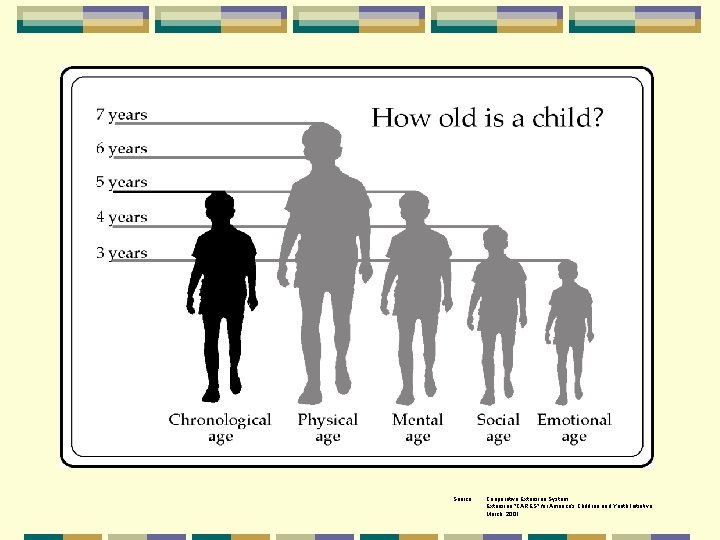
Source: Cooperative Extension System Extension "CARES" for America's Children and Youth Initiative March, 2001
What’s the Big Deal? Adolescent morbidity l Health Paradox (Dahl, 2004): Developmental period of strength and resilience both physically and cognitively l Yet, morbidity & mortality rates increase 200% l DIFFICULTIES IN CONTROLLING BEHAVIOR AND EMOTION l
Overview I. III. Physical Development Cognitive Development Psycho-Social Development
I. Physical Development Height & Weight Changes Secondary Sex Characteristics Continued Brain Development
Rapid Gains in Height & Weight 4. 1 to 3. 5 inches per year Girls mature about 2 years earlier than boys Weight gain = muscles for boys; fat for girls
Secondary Sex Characteristics: Pubic hair Menarche or penis growth Voice changes for boys Underarm hair Facial hair growth for boys Increased production of oil, sweat glands, acne
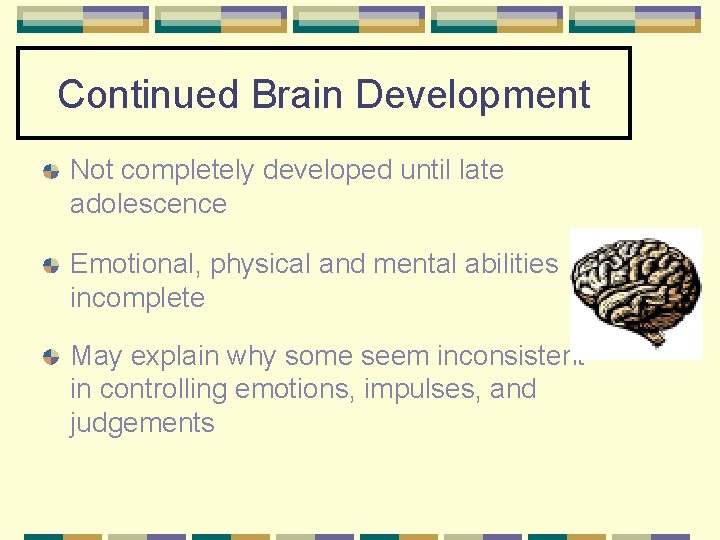
Continued Brain Development Not completely developed until late adolescence Emotional, physical and mental abilities incomplete May explain why some seem inconsistent in controlling emotions, impulses, and judgements
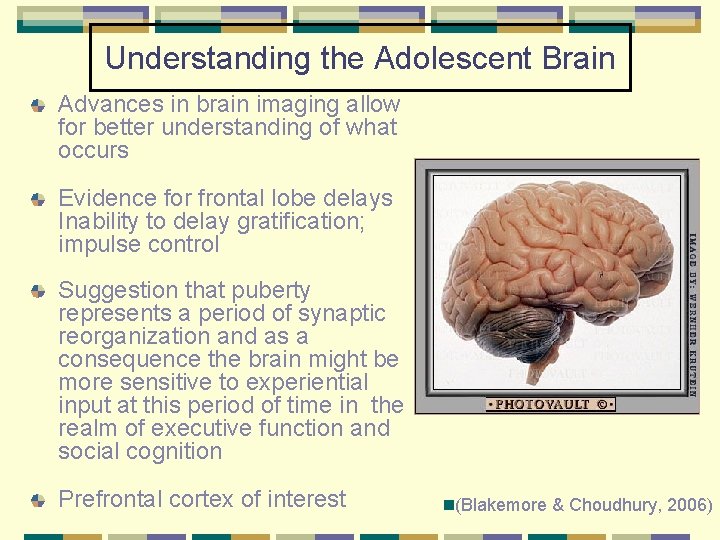
Understanding the Adolescent Brain Advances in brain imaging allow for better understanding of what occurs Evidence for frontal lobe delays Inability to delay gratification; impulse control Suggestion that puberty represents a period of synaptic reorganization and as a consequence the brain might be more sensitive to experiential input at this period of time in the realm of executive function and social cognition Prefrontal cortex of interest n(Blakemore & Choudhury, 2006)

Brain: Developmental Changes Synaptogenesis: proliferation of synapses Myelinazation: insulation around synapses Synaptic pruning: frequently used connections are strengthened, infrequently used connections are eliminated (Blakemore & Choudhury, 2006)
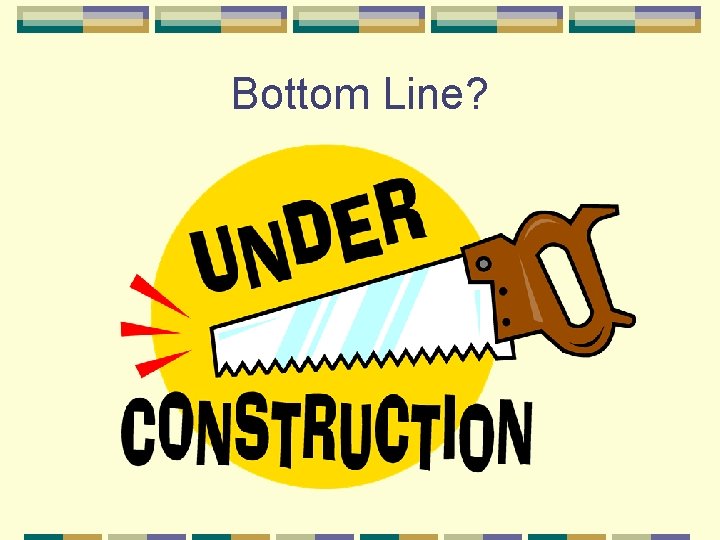
Bottom Line?
How do these change affect teens? Usually studied as decision making (Steinberg, 2004) l In lab: similarities in adolescent & adult decision making processes Adolescents are uniquely vulnerable to risk taking l l Novelty & sensation seeking increase dramatically at puberty Development of self-regulation lags behind Risk taking as group behavior (Steinberg, 2004)
How Do These Changes Affect Teens? Frequently sleep longer - 9 1/2 hours May be more clumsy because of growth spurts-body parts grow at different rates Girls may become sensitive about weight 60% trying to lose weight 1 -3% have eating disorder
How Do These Changes Affect Teens? Concern if not physically developing at same rate as peers - need to “fit” in (early vs. late maturation) Feel awkward about showing affection to opposite sex parent Ask more direct questions about sex - trying to figure out values around sex
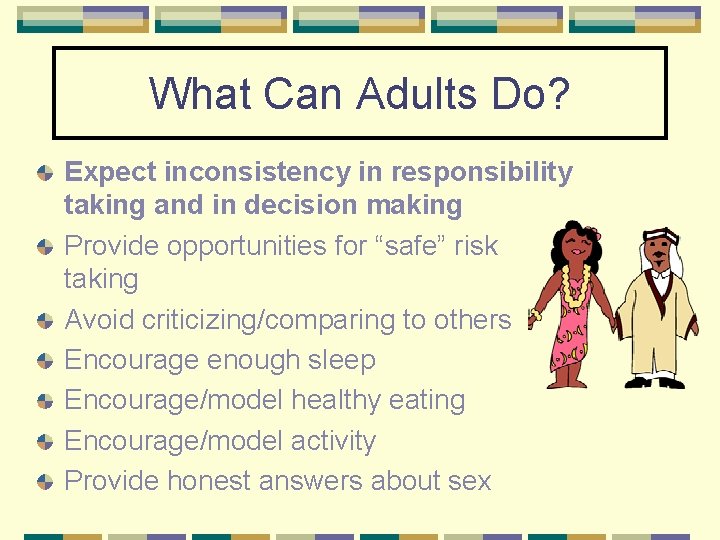
What Can Adults Do? Expect inconsistency in responsibility taking and in decision making Provide opportunities for “safe” risk taking Avoid criticizing/comparing to others Encourage enough sleep Encourage/model healthy eating Encourage/model activity Provide honest answers about sex
II. Cognitive Development Advanced Reasoning Skills Abstract Thinking Skills Meta-Cognition
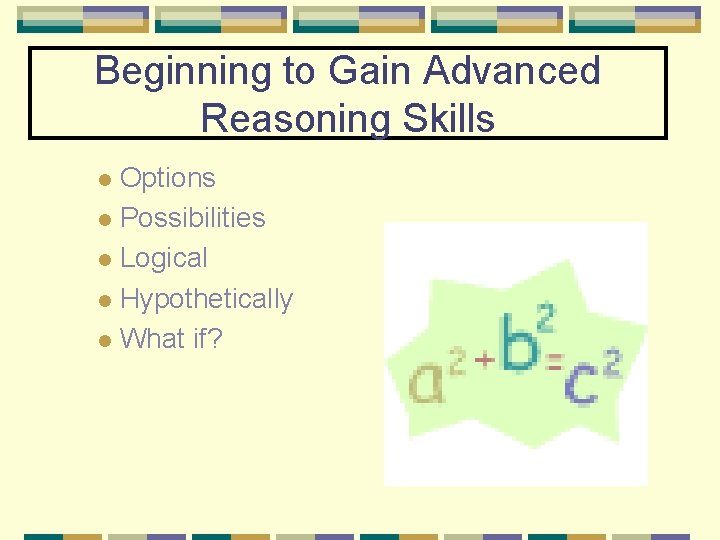
Beginning to Gain Advanced Reasoning Skills Options l Possibilities l Logical l Hypothetically l What if? l
Think Abstractly Can take others’ perspective Can think about non-concrete things like faith, trust, beliefs, and spirituality
Ability to Think About Thinking Meta-cognition Think about how they feel and what they are thinking Think about how they think they are perceived by others Can develop strategies for improving their learning
How Do These Changes Affect Teens? Heightened self-consciousness Believes no one else has experienced feelings/emotions Tend to become cause-oriented Tend to exhibit a “justice orientation” “It can’t happen to me” syndrome
What Can Adults Do? Don’t take it personally when teens discount experience Discuss their behavior rules/consequences Provide opportunities for community service Ask teens their view and share own
III. Psycho-Social Development Establishing identity Establishing autonomy Establishing intimacy Become comfortable with one’s sexuality Achievement
Establishing Identity Erikson (1959): identity vs. identity diffusion Integrates opinions of other into own likes/dislikes—needs interactions with diverse others for this to occur Outcome is clear sense of values, beliefs, occupational goals, and relationship expectations Secure identities-knows where they fit
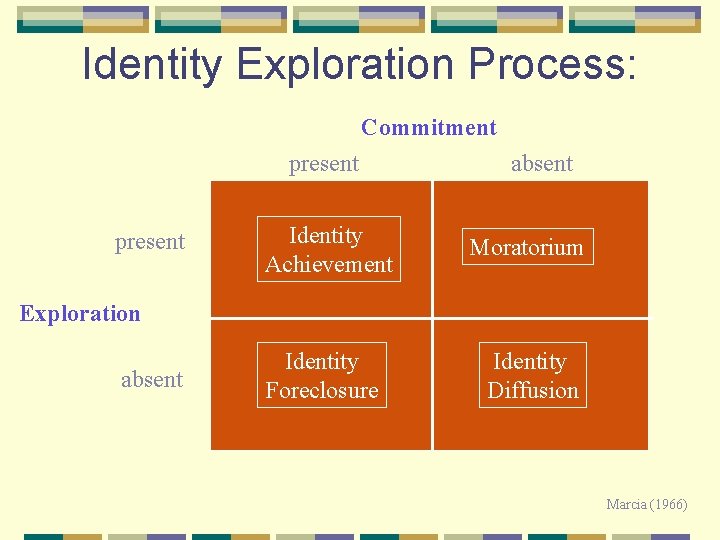
Identity Exploration Process: Commitment present Identity Achievement absent Moratorium Exploration absent Identity Foreclosure Identity Diffusion Marcia (1966)
Establishing Autonomy Becoming independent and self-governing within relationships Make and follow through with decisions Live with own set of principles of right/wrong Less emotionally dependent on parents
Establishing Intimacy Learns intimacy and sex not same thing Learned within context of same-sex friendships; then in romantic relationships Develops close, open, honest, caring, and trusting relationships Learn to begin, maintain, and terminate relationships; practice social skills, and become intimate from friends
Becoming Comfortable with One’s Sexuality How educated/exposed to sexuality largely determines if healthy sexual identity develops More than half high school students are sexually active Mixed messages contribute to teen pregnancy and sexually transmitted diseases
Predictors of Sexual Activity Having a steady boy/girlfriend Using alcohol regularly Having parents with permissive values about sex Being worried about one’s future occupational success Implication: focus on more than one risk factor
Achievement Society fosters and values attitudes of competition and success Can see relationship between abilities, plans, aspirations Need to determine achievement preferences, what good at, and areas willing to strive for success
How Do These Changes Affect Teens? More time with friends May keep a journal More questions about sexuality Begin to lock bedroom door Involved in multiple hobbies/clubs More argumentative Interact with parents as people
What Can Adults Do? Encourage involvement in groups Praise for efforts and abilities Help explore career goals and options Help set guidelines/consequences Establish rituals for significant passages Know friends and what they are doing Provide structured environment/clear expectations
- Slides: 32