
Admit Slip 912 When you hear the term

- Slides: 37
Admit Slip 9/12 When you hear the term “Stone Age” what do you think of? - How do you think people living during this time got their food? - Where do you think people lived during this time? - If you lived during this time period, how would you feed yourself and where would you live?
Paleolithic Age The first people lived more than two million years ago This time period was known as the Old Stone Age, or Paleolithic Age people were nomads, meaning they moved from place to place, hunting and gathering food They were forced to move from place to place because they followed traveling animal herds These people also made simple tools like digging sticks and spears for hunting
Paleolithic Age people adapted to their environment by using animal skins for clothing and fire for warmth People also developed primitive writing and language to organize hunts Paleolithic people developed their own religion, by burying their dead with care, which suggested they believed in an afterlife. The earliest people lived in East Africa, and migrated to every part of the world Migration led to cultural diffusion, or the exchange of ideas, customs,
Video Clip https: //www. youtube. com/watch? v=bs. Iv. Cd. BS_a. I
Admit Slip 9/15 Review How did Paleolithic people acquire food from their natural environment? Where did Paleolithic people live? Take a Guess If something is considered a turning point what does that mean? Can you think of turning point in your life?
Turning Point- Neolithic Revolution Environmental changes brought about new climate patterns, which ended the Paleolithic Age. Around 10, 000 B. C. , people made two important discoveries; how to grow food and how to domesticate animals. These discoveries meant that people no longer had to be nomads, and wander around in search of food. People could now live in permanent settlements. This changed sparked the beginning of what was know as the Neolithic Revolution, or the Agricultural Revolution.
Impact of the Agriculture After the Neolithic Revolution, more abundant food helped the population increase. Permanent Settlements- people settled in villages New Social Classes- when resources became scarce, groups went to war. Some men gained prestige as warriors and leaders. New Technology- People began to develop new tools, such as calendars and plow. Other tools
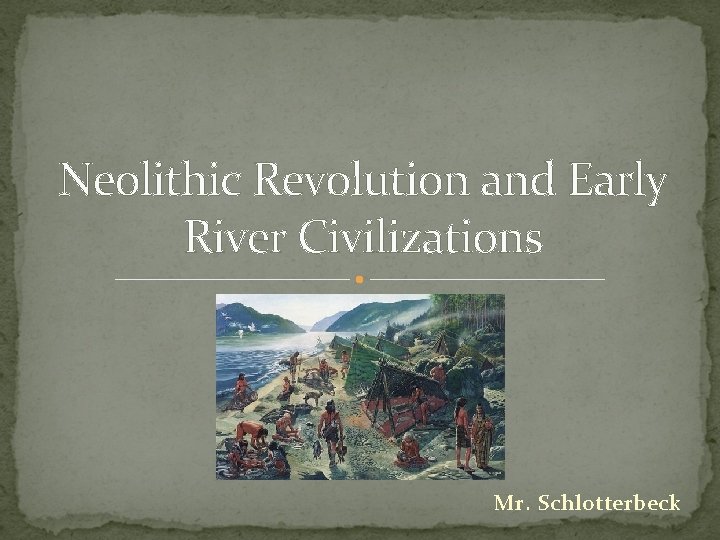
Neolithic Revolution and Early River Civilizations Mr. Schlotterbeck
Paleolithic Age vs. Neolithic Revolution Paleolithic Age Neolithic Revolution - Nomadic lifestyle - Also known as the - Primarily hunted and gathered to obtain food - Special tools were created in an attempt to aid hunting strategies - Development of simple language Agricultural Revolution - Emphasis on food production rather than food gathering - Domestication of animals - Permanent settlements
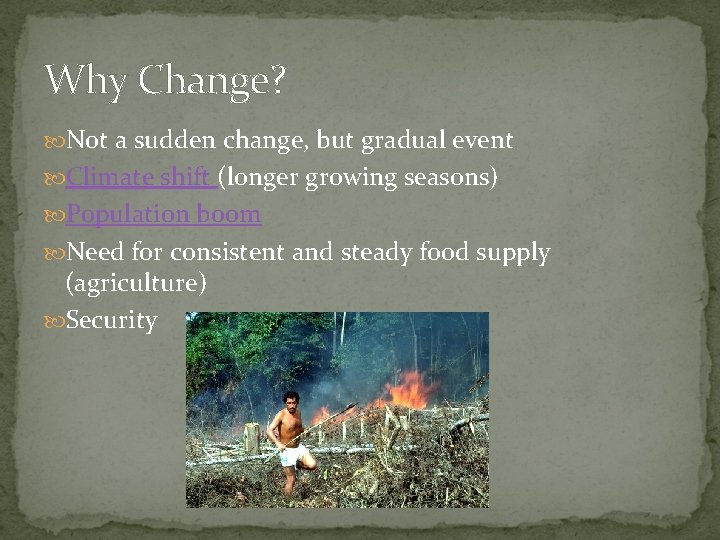
Why Change? Not a sudden change, but gradual event Climate shift (longer growing seasons) Population boom Need for consistent and steady food supply (agriculture) Security
Admit Slip 9/11 What is a civilization? What elements in a society are needed for it to be considered a civilization? Think of our society that we live in today…
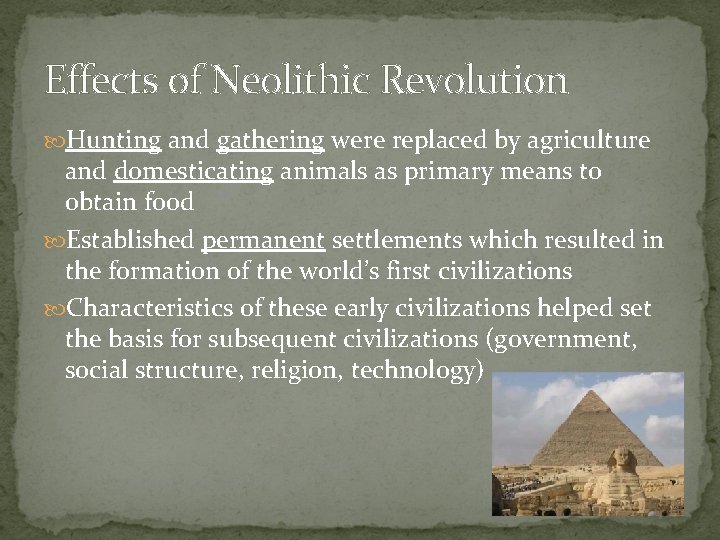
Effects of Neolithic Revolution Hunting and gathering were replaced by agriculture and domesticating animals as primary means to obtain food Established permanent settlements which resulted in the formation of the world’s first civilizations Characteristics of these early civilizations helped set the basis for subsequent civilizations (government, social structure, religion, technology)
The Rise of Civilization The first civilizations developed along river valleys. The rich, fertile soil of river valleys helped these civilizations thrive. Civilization can be defined as a community characterized by elements such as a system of writing, development of social classes, and cities.
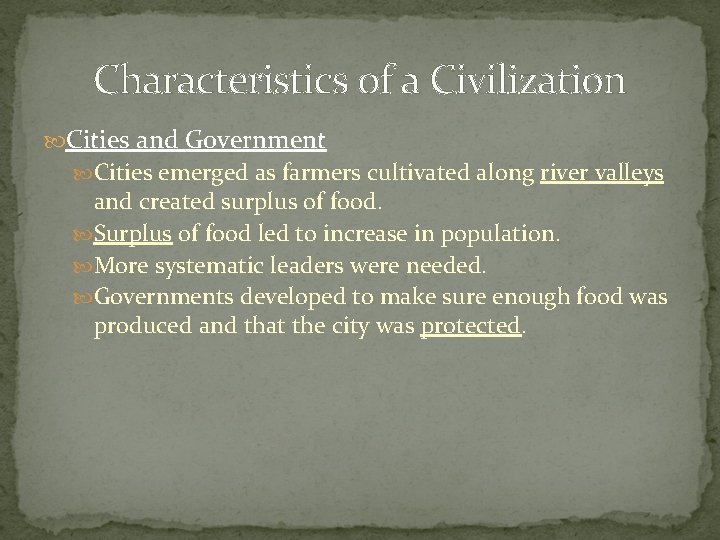
Characteristics of a Civilization Cities and Government Cities emerged as farmers cultivated along river valleys and created surplus of food. Surplus of food led to increase in population. More systematic leaders were needed. Governments developed to make sure enough food was produced and that the city was protected.
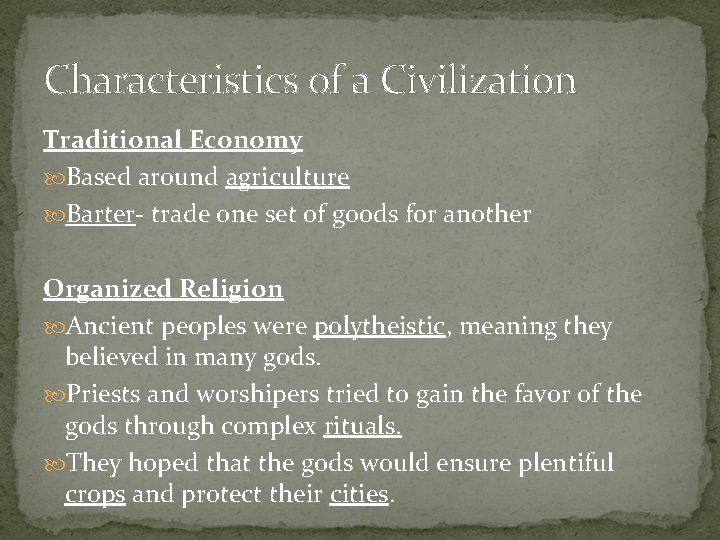
Characteristics of a Civilization Traditional Economy Based around agriculture Barter- trade one set of goods for another Organized Religion Ancient peoples were polytheistic, meaning they believed in many gods. Priests and worshipers tried to gain the favor of the gods through complex rituals. They hoped that the gods would ensure plentiful crops and protect their cities.
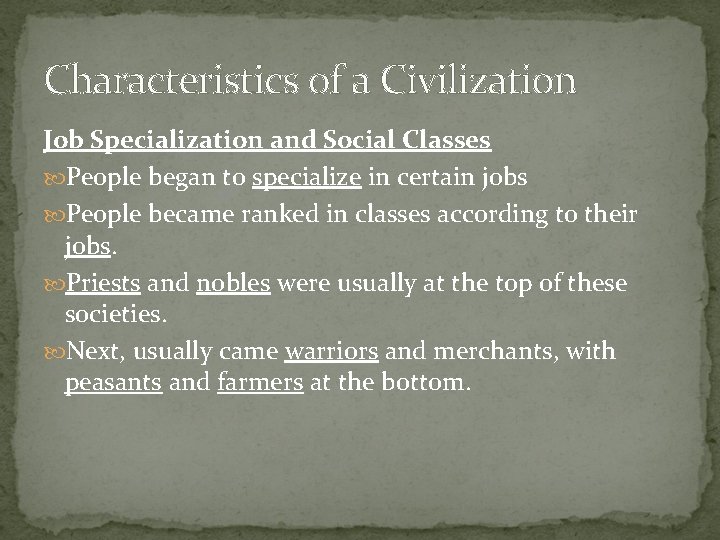
Characteristics of a Civilization Job Specialization and Social Classes People began to specialize in certain jobs People became ranked in classes according to their jobs. Priests and nobles were usually at the top of these societies. Next, usually came warriors and merchants, with peasants and farmers at the bottom.
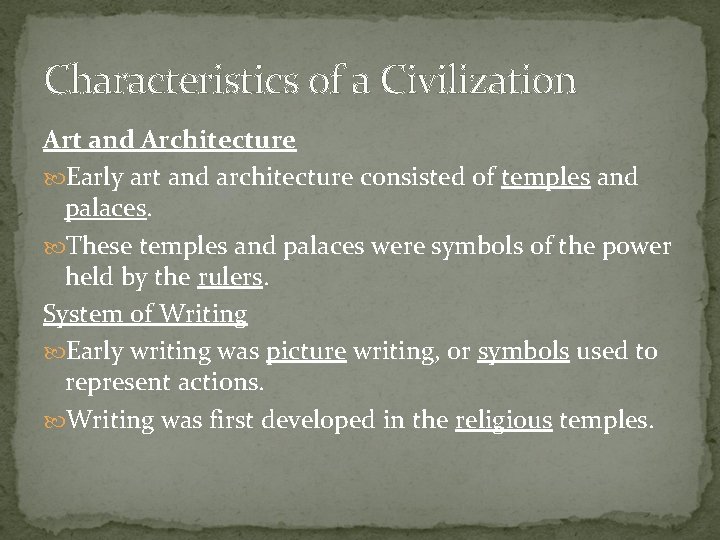
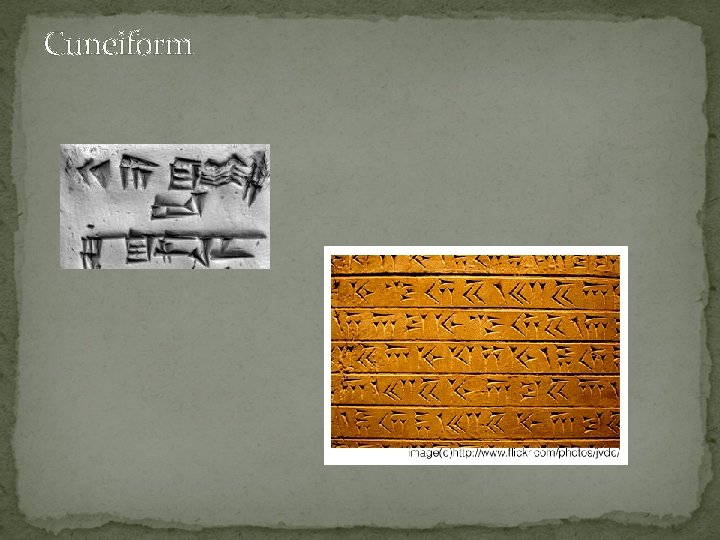
Characteristics of a Civilization Art and Architecture Early art and architecture consisted of temples and palaces. These temples and palaces were symbols of the power held by the rulers. System of Writing Early writing was picture writing, or symbols used to represent actions. Writing was first developed in the religious temples.
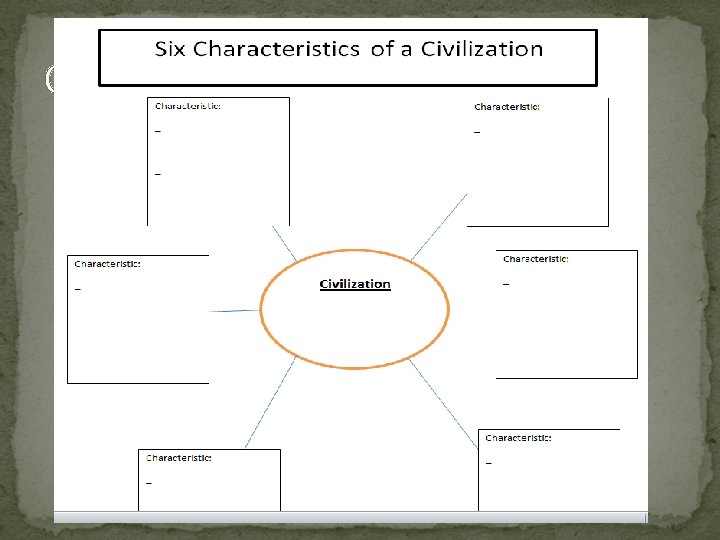
Graphic Organizer
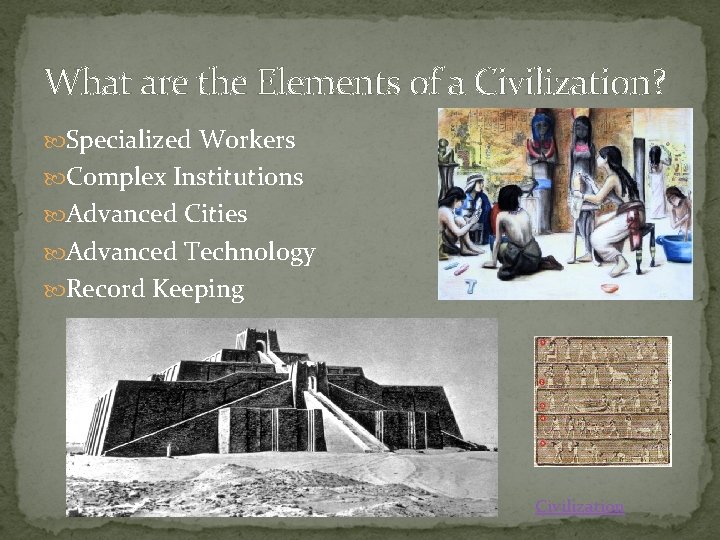
What are the Elements of a Civilization? Specialized Workers Complex Institutions Advanced Cities Advanced Technology Record Keeping Civilization
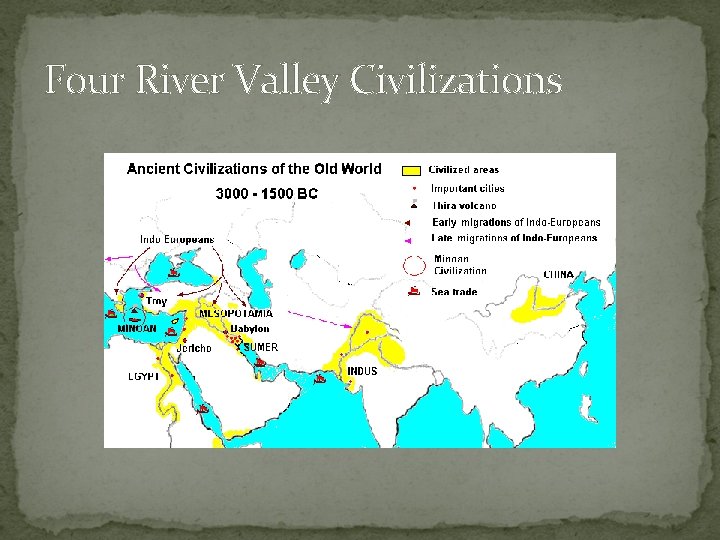
Four River Valley Civilizations
Time Periods of Ancient River Civilizations China, 3950 -1000 B. C. Mesopotamia, 3500 -1600 B. C. Ancient Egypt, 3000 -2000 B. C. Indus River Valley, 2500 -1700 B. C. Timeline
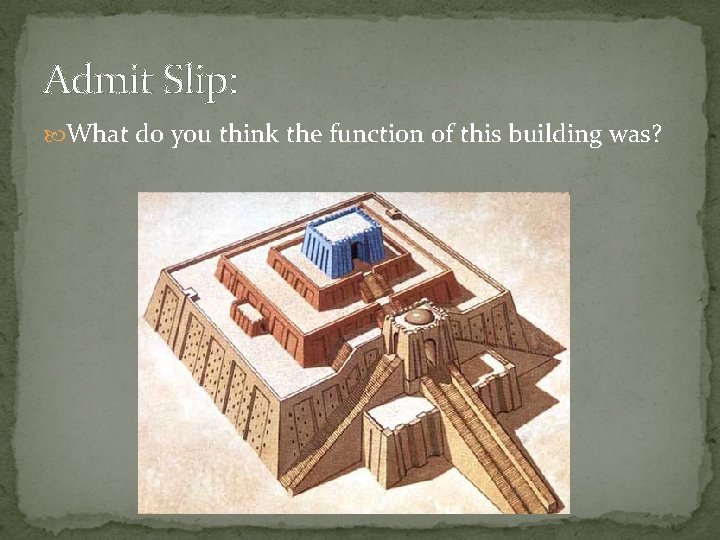
Admit Slip: What do you think the function of this building was?
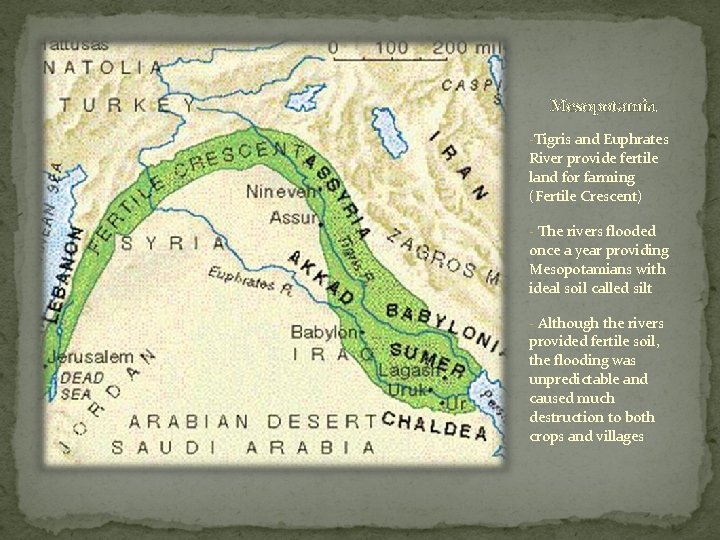
Mesopotamia -Tigris and Euphrates River provide fertile land for farming (Fertile Crescent) - The rivers flooded once a year providing Mesopotamians with ideal soil called silt - Although the rivers provided fertile soil, the flooding was unpredictable and caused much destruction to both crops and villages
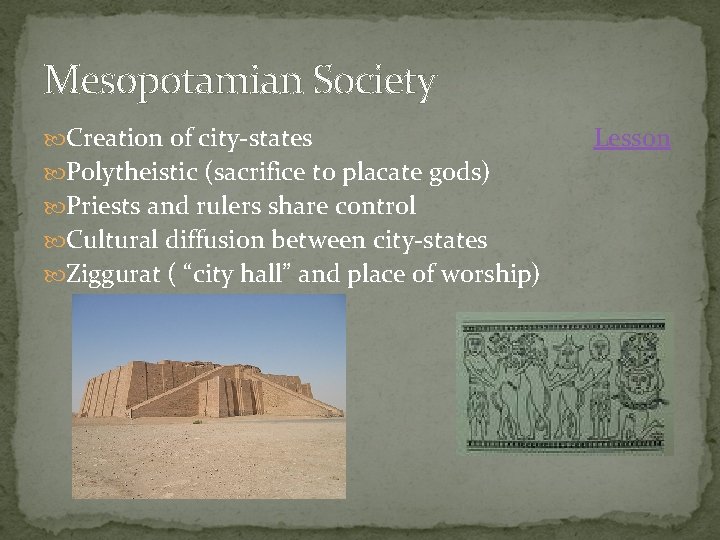
Mesopotamian Society Creation of city-states Polytheistic (sacrifice to placate gods) Priests and rulers share control Cultural diffusion between city-states Ziggurat ( “city hall” and place of worship) Lesson
Cuneiform
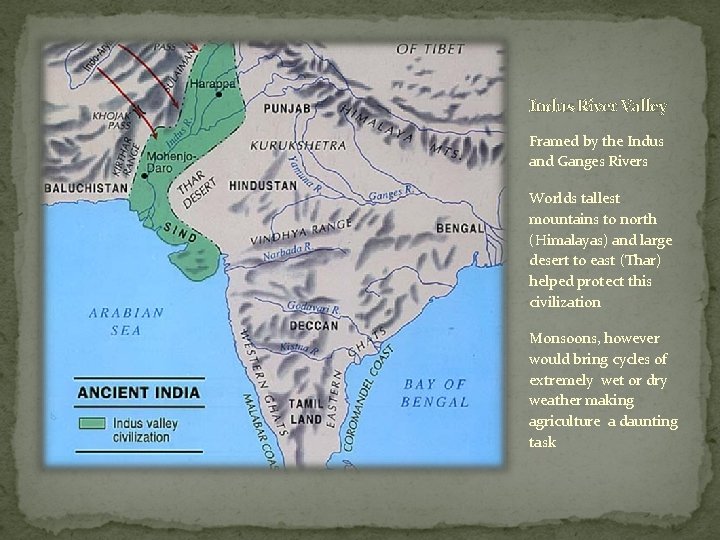
Indus River Valley Framed by the Indus and Ganges Rivers Worlds tallest mountains to north (Himalayas) and large desert to east (Thar) helped protect this civilization Monsoons, however would bring cycles of extremely wet or dry weather making agriculture a daunting task
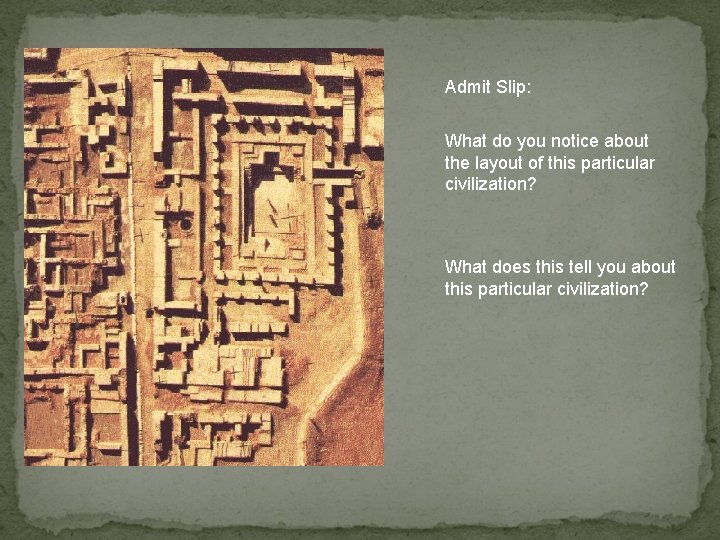
Admit Slip: What do you notice about the layout of this particular civilization? What does this tell you about this particular civilization?
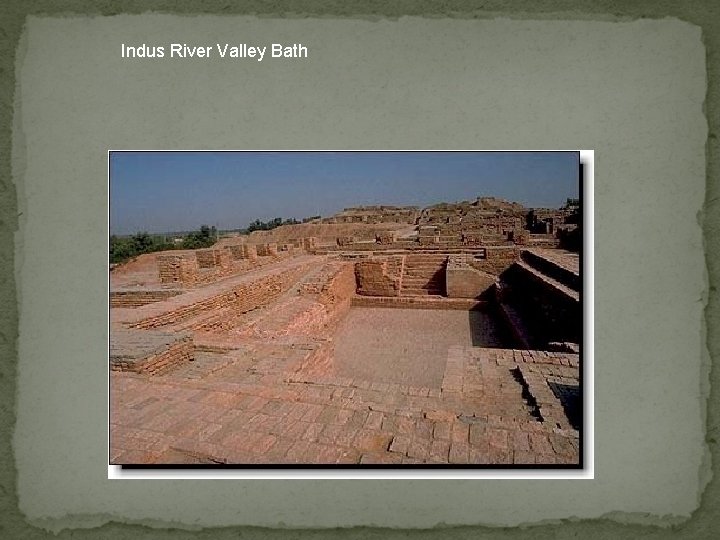
Indus River Valley Bath
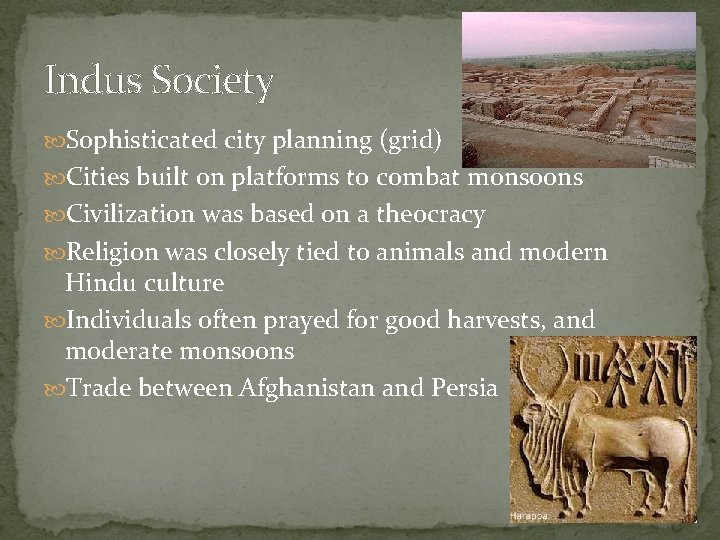
Indus Society Sophisticated city planning (grid) Cities built on platforms to combat monsoons Civilization was based on a theocracy Religion was closely tied to animals and modern Hindu culture Individuals often prayed for good harvests, and moderate monsoons Trade between Afghanistan and Persia
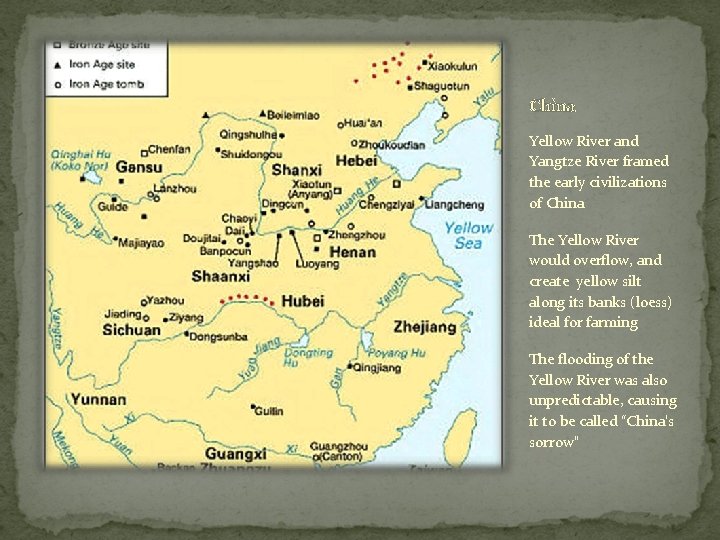
China Yellow River and Yangtze River framed the early civilizations of China The Yellow River would overflow, and create yellow silt along its banks (loess) ideal for farming The flooding of the Yellow River was also unpredictable, causing it to be called “China’s sorrow”
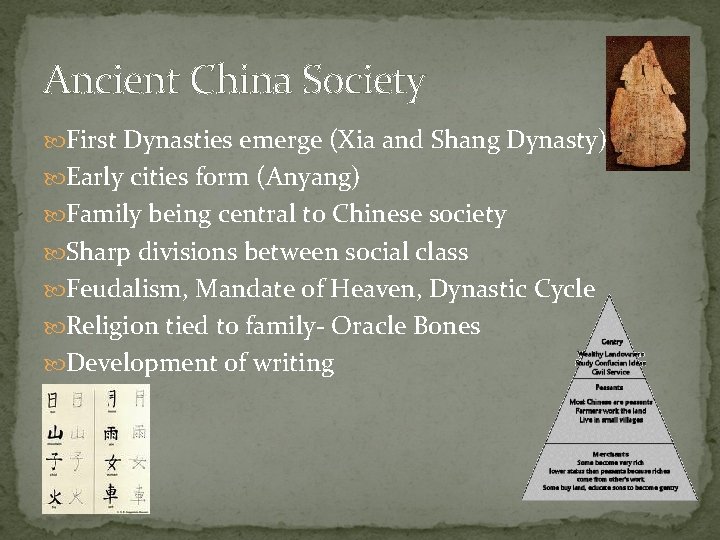
Ancient China Society First Dynasties emerge (Xia and Shang Dynasty) Early cities form (Anyang) Family being central to Chinese society Sharp divisions between social class Feudalism, Mandate of Heaven, Dynastic Cycle Religion tied to family- Oracle Bones Development of writing
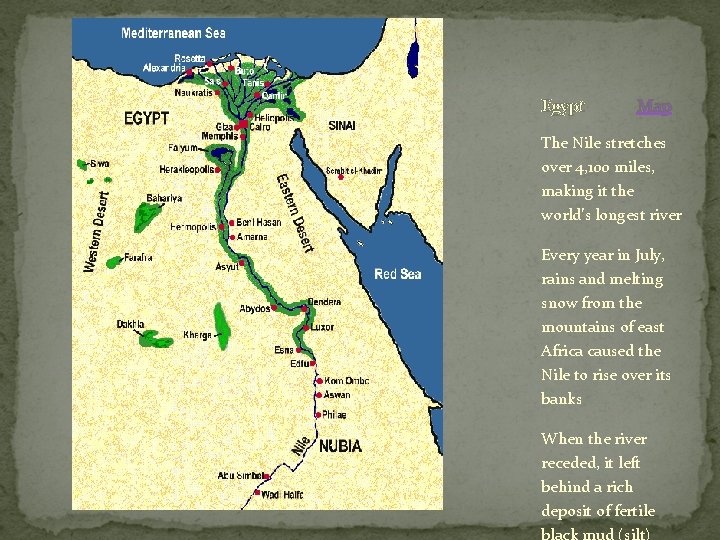
Egypt Map The Nile stretches over 4, 100 miles, making it the world’s longest river Every year in July, rains and melting snow from the mountains of east Africa caused the Nile to rise over its banks When the river receded, it left behind a rich deposit of fertile
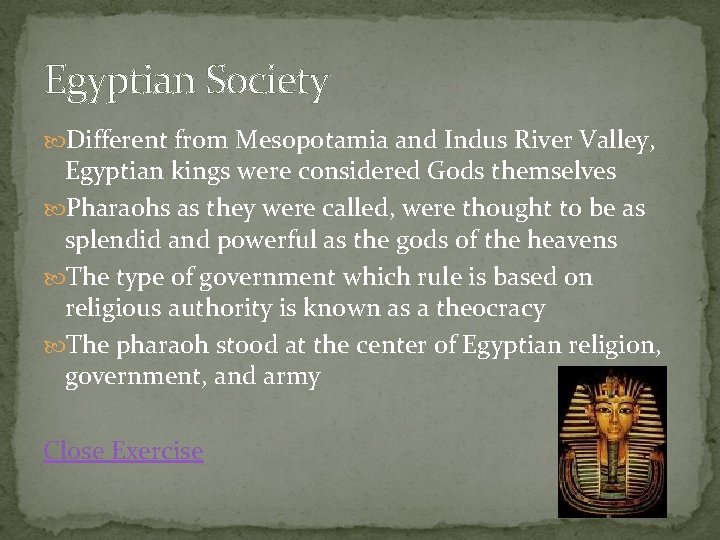
Egyptian Society Different from Mesopotamia and Indus River Valley, Egyptian kings were considered Gods themselves Pharaohs as they were called, were thought to be as splendid and powerful as the gods of the heavens The type of government which rule is based on religious authority is known as a theocracy The pharaoh stood at the center of Egyptian religion, government, and army Close Exercise
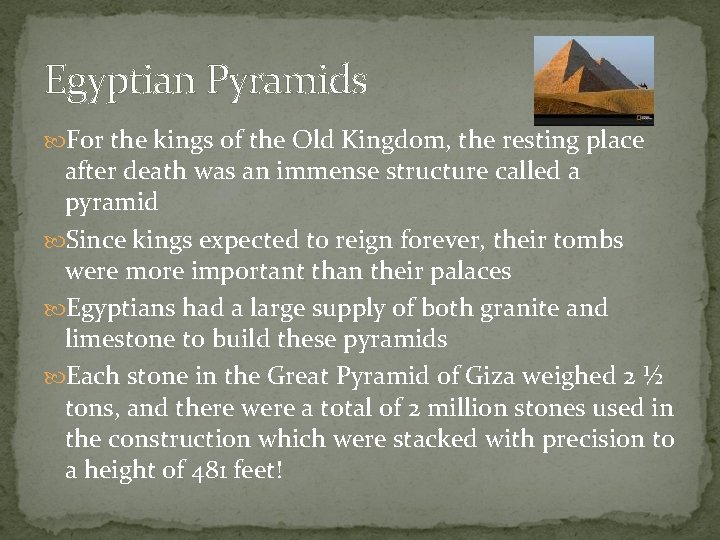
Egyptian Pyramids For the kings of the Old Kingdom, the resting place after death was an immense structure called a pyramid Since kings expected to reign forever, their tombs were more important than their palaces Egyptians had a large supply of both granite and limestone to build these pyramids Each stone in the Great Pyramid of Giza weighed 2 ½ tons, and there were a total of 2 million stones used in the construction which were stacked with precision to a height of 481 feet!
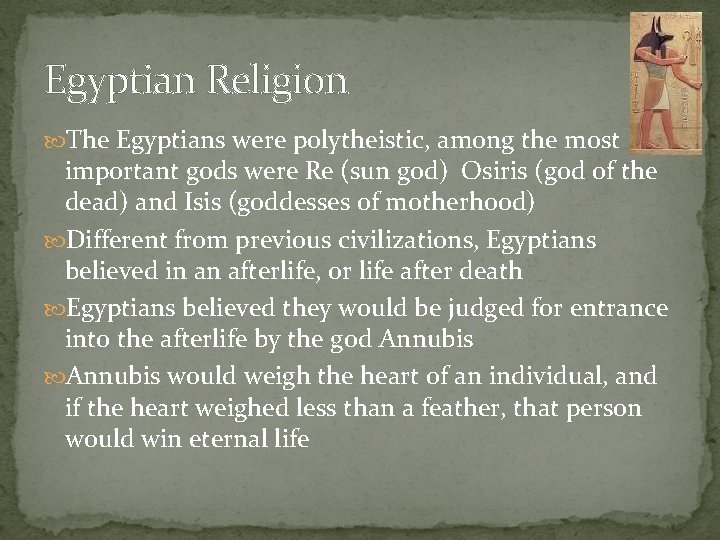
Egyptian Religion The Egyptians were polytheistic, among the most important gods were Re (sun god) Osiris (god of the dead) and Isis (goddesses of motherhood) Different from previous civilizations, Egyptians believed in an afterlife, or life after death Egyptians believed they would be judged for entrance into the afterlife by the god Annubis would weigh the heart of an individual, and if the heart weighed less than a feather, that person would win eternal life
Mummification
Making Connections Prior to 10, 000 B. C. (Paleolithic Age) nomads relied heavily on hunting and gathering techniques in order to survive. A remarkable and important turning point transpired that changed the traditional way of life, which consisted of hunting, gathering, and nomadic lifestyle, into a more permanent settlement lifestyle. This period was known as the Neolithic Revolution, where agriculture and the domestication of animals came to the forefront of new civilizations. This turning point would forever change history and would help set the foundation for subsequent civilizations. The river civilizations that followed were unique, and each provided contributions that are still utilized in today’s society. Summary http: //www. youtube. com/watch? v=h. KCKg. HVf 1 j. I